Welcome cemetery followers to this new blog launching today.
Radnor Street Cemetery tells the history of Swindon. The civic dignitaries and members of the Great Western Railway hierarchy; the boilermakers and platelayers; the philanthropic benefactors and trailblazing women; the teachers and tradespeople and the 104 servicemen who lost their lives as a result of their military service in two world wars. The ordinary men, women and children of the town.
This blog will combine research and fictional, re-imagined stories to create an account of those lives.
So, if you enjoy local history with a different slant, please read on. You might like to read the ‘essential information’ first.
The re-imagined story …
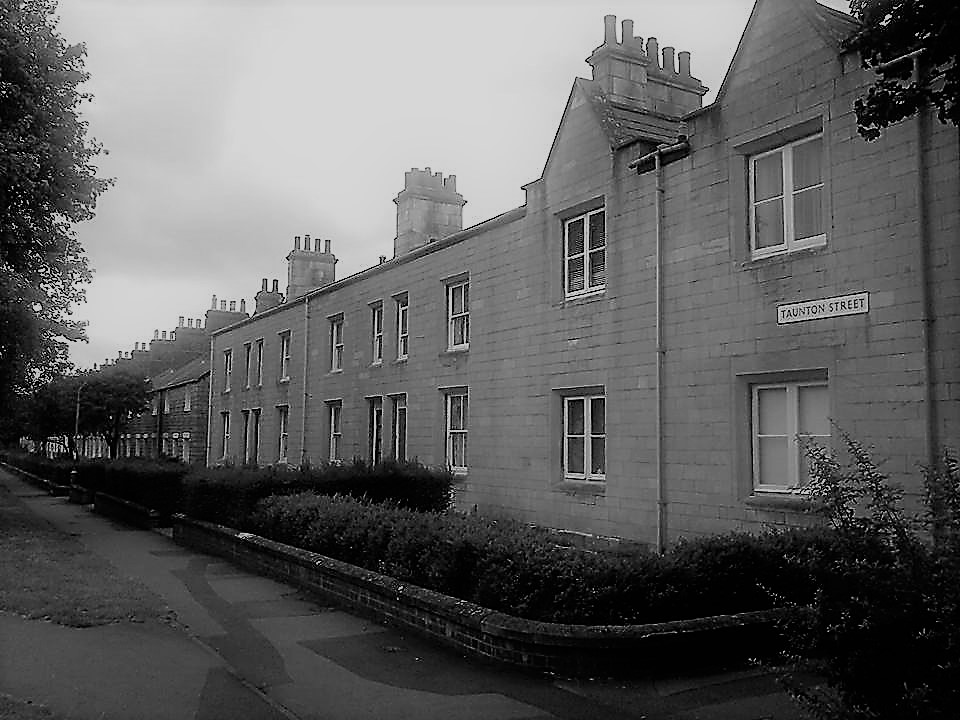
Night had drawn in early on a grey, sullen afternoon. A biting, north easterly wind accompanied me home on the walk from Old Swindon to Taunton Street, chilling my body but not so much as the events of that afternoon had chilled my heart.
A lamp was lit in the front room window. Emily opened the front door, clutching her shawl about her. I removed my coat, shaking off a dusting of snow. My worn garment served little protection against the elements and I badly needed something thicker, newer, but the boys needed boots and they must come first.
I took my seat before the range and warmed my hands as Emily brewed a fresh pot of tea.
“How did the meeting progress?”
“There were a great many people there. The meeting had to move from the Vestry to the Town Hall to accommodate the crowd,” I cradled the warming mug in my cold hands.
“Was Mr Morris there?”
“He was, and so was anyone of importance. Mr Hill had a lot to say as did Mr Hurt. And a lot of opposition to raising the parish rate was made in consideration of the poor people.”
“So little heed was made of our wishes?” Emily sat down wearily on the chair opposite and I wished I could have brought her better news.
“There was some mention of dissenters objecting to the burial of their dead in the parish church yard. However greater emphasis was given that it was the gentlemen’s considered opinion there was sufficient burial space in Swindon for years to come and the condition of the waterlogged graveyard in Old Swindon was an exaggeration.”
“That is an end to the matter then.”
“There is to be a poll next Saturday at the Mechanics’ but I am not hopeful.”
We sat in silence.
Twelve dissenting chapels, Mr Pruce had noted at the Vestry meeting. Swindon had two churches and twelve chapels. I could name them all. Chapels with a growing congregation, a Sunday School and Bible classes and volunteers who helped where there was a need, not only in the New Town but in the poor streets of Old Swindon, and yes there was poverty in prosperous Old Swindon. Twelve chapels but nowhere to bury our dead in the beliefs we held dear. Local dignitaries boasted that Swindon had an ethos of acceptance and tolerance but maybe that did not extend to religion. I considered that at the meeting this afternoon there had been more than a whiff of prejudice.
“So that’s an end to it then,” said Emily as she dampened the hearth and made everything safe for the night.
“Let us see what the result of the poll will bring,” I said, but I feared she was probably correct.
The facts …
A CEMETERY FOR SWINDON. The question, shall Swindon have a cemetery, and in this matter be put on a par with other towns and villages? has again cropped up.
There no single question where the principles of right and good taste are more clear than they are in this question of a public cemetery. There is no call made by the religious liberty we as a nation enjoy more emphatic than is the call that each religious denomination should enjoy the right to consign its dead to the earth after its own fashion. Yet there are to found those who can stand in the way of this right being granted, and who can prate loudly about increased burdens on the shoulders of the poor, and such like prattle, without the real interests the poor being for one moment seriously thought of, and we are therefore to see a pretty squabble before this question, ” Shall Swindon have a Cemetery” is settled.
A short time since a proposition was before the nonconformist bodies of our town for providing a purely unsectarian cemetery, open to all parties, influenced by none. This plan it was perfectly within the power of those whom it would have served to have adopted, and have made successful. Had it been adopted it would have carried with it this recommendation—it would have been in strict conformity with the very principles of nonconformity: it would been established on purely independent grounds, and no man against his will would been compelled to pay a single farthing.
But no sooner was this independent course suggested to those who profess to love and live by independency, than there were found those who could cry out most lustily, “We don’t want to be independent; let tax others for that which we are asking.” The scheme was in consequence knocked in the head, and now we have the question, “Shall a cemetery be provided by a rate on all property within the parish claiming the attention of ratepayers.”
There is this to be said in favour of the proposition as it now stands before ratepayers: a public burying place is a public necessity, and should, therefore, be provided for out the most broadly collected public fund we have. The public weal demands that the dead body should be at once consigned to the earth this being so it surely can be no act of injustice if we call upon the public purse for funds to accomplish that which the public weal demands.
There is another aspect to this question to which we need not refer beyond this: In a town like Swindon, with its two churches, established as by law, and its twelve chapels, established in conformity with the consciences of men, that religious liberty upon which we so much pride ourselves, and which has been fought for, through many generations, cannot said truly to exist among us long as we are deprived of the opportunity of burying our dead after our own fashion; so long as it remains the power of one man to harrow and distress the feelings, by an arbitrary act. Of those who dare to hold independent views on some mere matter of detail in the great scheme of God’s religion. But, as we have said, we are to have a fight over this cemetery business, and Saturday next is appointed for the first great marshalling of the forces.
There was a skirmish on Saturday last, but it was mere babbling piece of business; the fight has yet to come.
Extracts taken from a report in The Swindon Advertiser published Monday February 1, 1869

Coming next …
Mr Morris’s Editorial – The ‘cemetery question’ as it had become known, had raged for many years and was particularly personal to our family.
published on Radnor Street Cemetery blog January 10, 2019.

 Radnor Street Cemetery
2 thoughts on “Proposed Cemetery for Swindon”