
The re-imagined story …
It was a stupid thing to do, something I realised immediately. As I furiously pedalled home on the stolen cycle, I wondered what to tell my mum. Should I add to the litany of lies I had already told her or should I dump the cycle and the £5 note in a hedge somewhere?
As it turned out I was spared the dilemma as I had been seen climbing out of the window of a house in Tydeman Street and stealing the cycle – by a police constable.
My poor mum was beside herself with worry and shame. She struggled to raise four unruly sons alone after my dad was killed in the war. Just feeding us and putting clothes on our back was difficult enough without the trouble we kept bringing to her door. But this was the first time the police had been involved.
By the time I appeared at the Police Court we were both quietly resigned that I would end up in juvenile detention.
My mates all commiserated, but in fact it was the most fortunate thing that could have happened to me, and as a result, to my brothers as well.
My mum was heartbroken. She felt she had failed me, failed as a mother. She feared for my future. Borstal was seldom the cure-all for youthful miscreants. More often it set them on the path of a lifelong criminal career.
She was in the court room when I appeared – she looked small and broken, sitting there wringing her handkerchief in her hands.
The court officials all looked as I had expected them to – old, serious and not short of a bob or two. How could they possibly understand my life, the life I lived with my mum and my brothers?
Then I noticed the woman sitting at the solicitor’s table – the only woman, and I guessed that must be pretty unusual in itself. And she was knitting! While the men pontificated and poured derision on me and my family, that woman sat quietly knitting, barely paying attention, or so I thought.
It was Mrs Whitworth who saved me. She saved my mum and gave her the confidence to carry on being the best mum she could to us boys. She gave my brothers a wake up call and saved them as well. And she saved countless other lost boys, not just in Swindon and not just in that time.
She said I was an intelligent boy and I should use that intelligence to help others. I hope I have. Over the years I have sat in court rooms just like that one and looked at boys just like me and I’ve helped give them a second chance. And every time I do so I think of Mrs Whitworth – and her knitting!
The facts …
Edith Dawson and her husband Albert Whitworth were not from this neck of the woods. Both of them came from Lancashire. Albert was born in Rochdale and Edith in Bury, the daughter of John Thomas Dawson, a cotton merchant. In 1881 Edith was living with her widowed father at 129 Manchester Street, Heap.
Edith and Albert married in Bury in 1886 and in 1891 were living in Monmouth. In the 19th century most people moved to Swindon for a job in the GWR Works, but Albert was not a railway man. By the time the family moved to Swindon he was working as a Tailor and Draper’s Traveller. The couple had eight children and sadly by 1911 two of them had already died.
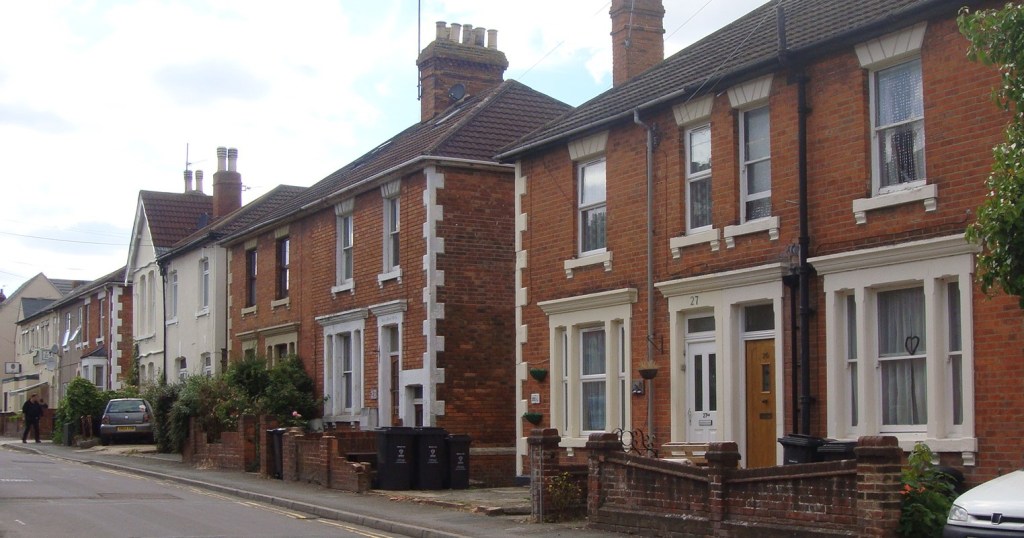
The family lived first at 109 Dixon Street, then at 112 Dixon Street and at the time of Edith’s death in 1925 they were at 26 Dixon Street.
The census returns of 1901 and 1911 tell us nothing of Edith’s occupation.
So, let’s run through a few of Edith’s accomplishments! From 1908 she served in a role described as ‘lady police court missionary’ later becoming a magistrate in 1921. In the obituary that appeared in the North Wilts Herald she was described as having a ‘broad minded disposition that fitted her eminently for the post’ and that there were ‘many young men and women in the town today who have reason to bless the name of Edith Whitworth.’ During the First World War she was heavily involved with the YMCA and working with the ‘Comfort for Soldiers’ volunteers. She was later awarded the MBE for her wartime work.
After the war Edith Whitworth continued to work with war widows and orphans and was a member of the local War Pensions Committee. She also worked for the welfare of the blind alongside Mr E. Jones who later became Mayor.
Edith Whitworth died at her home in Dixon Street following a short illness. She was 59 years old.
A Social Worker
Death of a Swindon Lady
Mrs. E. Whitworth
After a few days’ illness, Mrs. Whitworth, J.P., M.B.E. of 26 Dixon Street, Swindon, who was one of the best known social workers in Swindon, died on Saturday morning at the age of 59 years. She attended a concert at the Empire Theatre on the previous Sunday in aid of the British Legion’s Christmas tea and entertainment for the fatherless children of ex-service men. Next day she was taken ill, and collapsed whilst making preparations for a journey to London.
Medical assistance was called and Mrs Whitworth was found to be suffering from inflammation of the lungs. On Saturday morning she was found dead in bed by her married daughter, Mrs. Marsh.
Mrs. Whitworth was appointed a magistrate in July, 1921, the honour being conferred upon her, after she had relinquished the post, in recognition of her services as lady police court missionary under the Probation Act. It was in the latter capacity, perhaps, that Mrs. Whitworth was best known. Regularly, for 13 years, from the coming into force of the Probation of Offenders Act in January, 1908, she attended the police courts at Swindon, where, seated at the solicitors’ table, she could be seen industriously applying her knitting needles, but all the time following the cases closely, and there are many young men and women in the town to-day who have reason to bless the name of Edith Whitworth.
Mrs. Whitworth will also be remembered for the valued work which she accomplished during the war. Her activities at the Y.M.C.A. in looking after the comfort of the soldiers were very well known, and after the termination of hostilities they were rewarded by the award to Mrs. Whitworth of the M.B.E.
Since the war, Mrs. Whitworth had devoted a great part of her time to the welfare of widows and fatherless children of Swindon men who made the supreme sacrifice, and as a member of the local War Pensions Committee she rendered much useful service. The women’s section of the British Legion also claimed her interest and attention, and she worked wholeheartedly in co-operation with Mr. E. Jones, J.P., for the welfare of the blind, being one of the Swindon representatives of the Wilts County Association.
In the cause of temperance she was also an ardent worker, while in politics she served for a number of years on the Executive of the local Library Association.
Sympathetic references to the death of Mrs. Whitworth were made at Swindon Borough Police Court on Monday.
The Chairman (Mr. G.H. Marshman) said the Bench had lost a valuable colleague, and one who always did her utmost to help suffering humanity. All would mourn her loss.
The Magistrates’ Clerk said the public had lost a very able, experienced and loving public servant.
The Deputy Chief Constable (Supt. Brooks) associated himself with all that the Chairman and Clerk had said.
The Funeral
The funeral took place on Tuesday. The route of the procession to and from deceased’s late residence was lined with spectators, who stood with bowed heads as the cortege passed.
The Trinity Presbyterian Church, Victoria Road, where the first part of the service was conducted, was filled with a congregation of mourners. The Rev. J.H. Gavin, B.D., conducted the service, and special hymns were sung, “O, God, our help in ages past,” and “Now the labourer’s task is o’er.”
Miss Baden presided at the organ and played the Dead March in “Saul” as the mourners were leaving the church.
In a brief address Mr. Gavin paid feeling tribute to the work which deceased had always identified herself with, and said Mrs. Whitworth was a woman with a great heart. If he had to write a modern version of Bunyan’s “Pilgrim’s Progress,” he would describe Mrs. Whitworth as “Mrs. Great Heart.” She was the friend of widows and orphans of our soldiers who gave their lives in the war, and no-one could number the many acts of kindness on her part during that troublesome time in succouring the depressed and distracted. Ever doing good amongst her fellows, she had now passed to the Great Beyond, where he was sure she would receive the “Come, blessed of My Father.”
The interment took place in the Cemetery in the presence of a large number of people, the Rev. J.H. Gavin again officiating.
North Wilts Herald, Friday, December 18, 1925.


Cemetery volunteers have recently rescued Mrs. Whitworth’s headstone and restored it to it’s correct position on her grave.

 Radnor Street Cemetery
An amazing lady
LikeLike