The re-imagined story …
They began dismantling the Baptist Tabernacle as if it were a child’s construction kit. The classically designed building dominated the top end of town but not everyone was a big fan. Some said it was too posh for Swindon and that it didn’t sit well among the other red brick buildings in the town centre.
Gran was a Sunday School teacher at the Tabernacle and insisted we grandchildren attend. My sister and I were reluctant bible students. I’d have rather been up the Rec playing football with my mates and my sister was terrified the building would fall down about our ears. Any number of pictures and paintings would fail to cheer up that dank schoolroom and my sister was forever watching out for falling lumps of masonry.
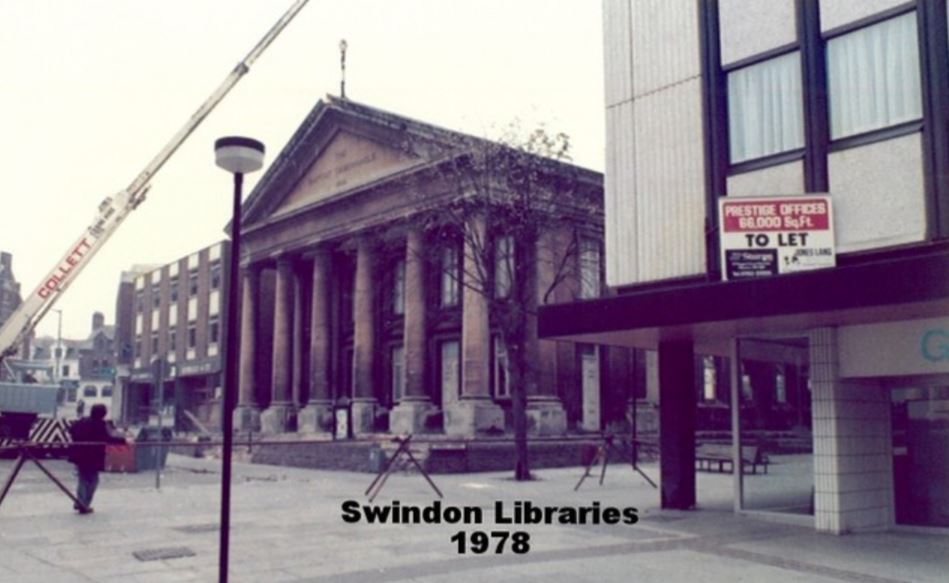
Demolition of the Baptist Tabernacle published courtesy of Local Studies, Swindon Central Library.
And that’s what sounded the final death knell for the building. It wasn’t demolished by the Council as everyone has repeated for the last forty or more years, but by the Baptist church itself. The congregation was too small and the reduced income not enough to pay for the vast amount of repair work necessary.
Today it is difficult to imagine a magnificent, classically designed building with a colonnade of six Tuscan columns and a flight of stone steps the width of the building lording it over the shops in Regent Street.
I would have liked to have one last look around inside, for old times’ sake. I’d have liked to have stood in the pulpit, forbidden to us as children. Neither were we allowed to hang over the gallery to see who sat below us, we soon felt the warmth of Gran’s hand if we stood up in our seat.
Funnily enough my sister wouldn’t have stepped inside that building again if you paid her.

The Baptist Tabernacle in its heyday – published courtesy of Local Studies, Swindon Central Library.
The facts …
William Henry Read was a popular and prolific local architect whose commissions included the Victoria Hospital, the Anderson’s Almshouses in Cricklade Street and the Baptist Tabernacle.
He was born at Croft House, Swindon in 1850 the son of surveyor William Read and his wife Louisa and educated at Henry C. Lavander’s Grammar School in New Park Street, Devizes. The family later moved to 31 Wood Street and William Henry married Susannah Elizabeth Chandler, the girl who lived next door, in 1876.
The couple lived at Moravia, 10 Bath Road where they raised their family of four sons, William, Kenneth and Norman, and a daughter Grace.
William died at his Bath Road home on Sunday November 3, 1901. The announcement in the local press noted that ‘although a prominent townsman [he] took small part in local government.’

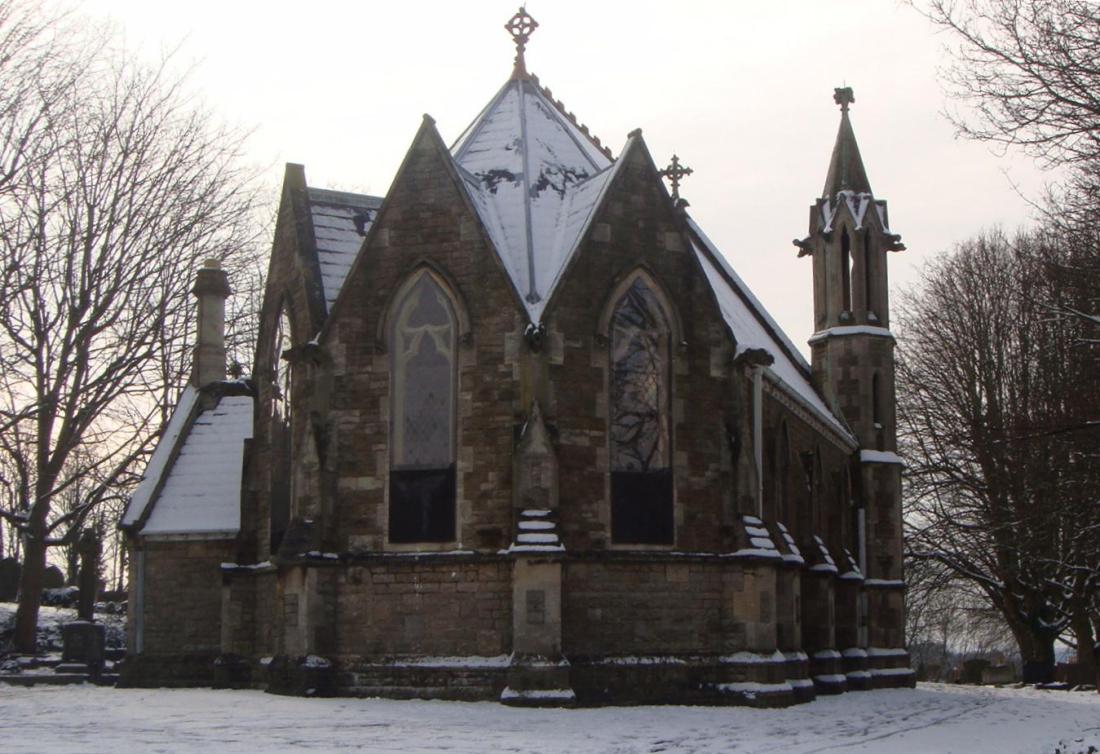
William designed the chapel, mortuary building and caretakers lodge at Radnor Street Cemetery in 1881 where he was buried twenty years later. He must have liked how it all turned out! Susannah died on March 21, 1903 and is buried with her husband.
The best bits of the Baptist Tabernacle building materials were sold off. The portico was bought by artist Stanley Frost, the columns, bases and façade wall went elsewhere. People had big plans, which sadly never came to fruition. Then in 2006 Swindon Borough Council bought back the remains at a cost of £360,000 but so far their plans to incorporate them into a town centre regeneration project have failed to materialise and these remain in storage.
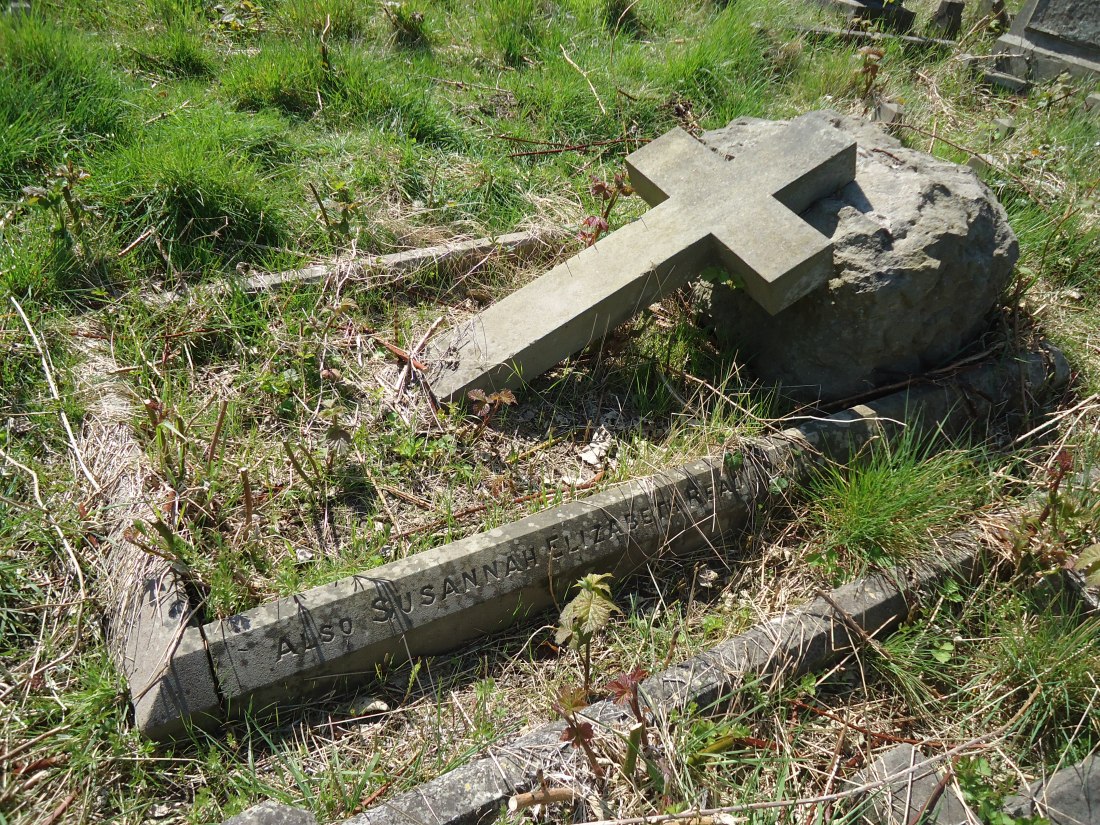

 Radnor Street Cemetery
4 thoughts on “W.H. Read – local architect”