The re-imagined story …
My father loved a bargain. Our house was full of them. But sadly, everything he bought home was broken and he wasn’t what you’d call ‘handy.’ In a town full of men who could make and mend anything, usually ‘on the quiet’ in the Works, my father was the exception.
“They can see you coming,” my mother said. She was the fixer in our house.
My mother loved a bargain too and as fast as the battered and broken objects came into our house, mother got rid of them.
“Is that Raggy on his rounds,” she would call to me at play in the street. “Ask him to stop by.”
Raggy regularly came round the streets with his horse and cart, ringing his bell, buying the flotsam and jetsam of people’s lives. He would take most items, a bit like my father, and he always gave mother a fair price. He particularly liked a painting in a broken frame she sold him. That was the only thing father was ever really angry about, that painting of the Old Parish Church.
“I was going to mend the frame and hang it in the front room.”
Mother raised her eyebrow. We both knew he would never have got the job done and the painting would have stood in his shed behind the door forever.
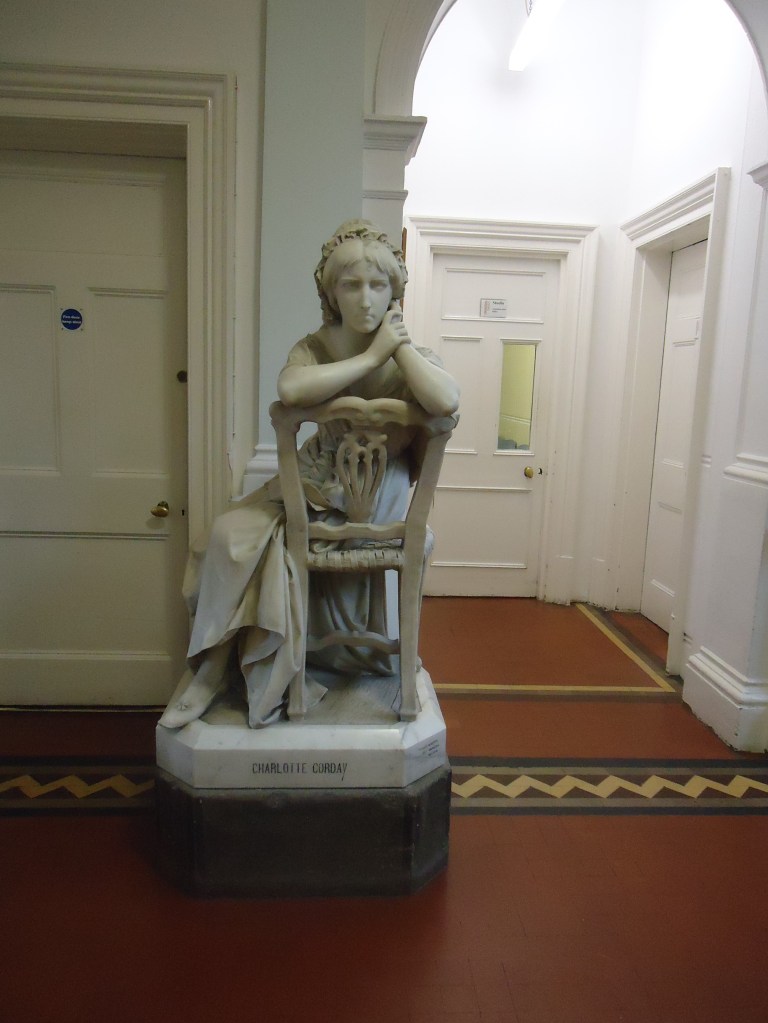
“And if you don’t do something with the marble maiden in the garden, I’ll see what Raggy will give me for that as well,” mother threatened. “Blooming thing gives me the creeps.”

The facts …
Little is known of the early life of James Powell who was born in Dublin in about 1850. It was previously thought he had not arrived in Swindon until the 1890s but he is found living at 15 Rolleston Street with his parents and five boarders at the time of the 1871 census. Then aged 21, James was working as a hawker, another word for an itinerate street seller. James never moved far from the town centre. In 1881 he and his first wife Theresa lived over a green grocer’s shop at No 1 Byron Street. Theresa Clancey Powell died in 1889 and she is also buried in Radnor Street Cemetery.
By the 1890s James had set up home in Regent Close where he worked as a Marine Store Dealer. This was the name given to a licensed broker who bought and sold used rags, timber and general waste material; a rag and bone man, an occupation that earned him the nickname Raggy. In 1891 he married his second wife Harriet Maggs, a widow with two children, and it is with her that he is buried in Radnor Street Cemetery.
James had received little education but he constantly sought to improve himself by attending lectures at the Mechanics’ Institution and he turned to that other great champion of the people, Reuben George, who taught him how to read.
Although James was uneducated he appreciated the pieces of artwork he came across on his rounds, repairing broken frames and putting the paintings in good order before donating them to Swindon’s first museum housed in a former Catholic Church called Victoria Hall in Regent Street. Paintings by local artists George Puckey, John Hood and David Gaddon, donated by James still form part of the collection once housed in the Swindon Museum and Art Gallery in Bath Road.
Perhaps one of the most extraordinary objects donated to the people of Swindon by James is the statue that stands in the foyer of the Town Hall. The white Carrara marble statue by Italian sculptor Pasquale Miglioretti depicts Charlotte Corday who in 1793 stabbed and murdered Jean-Paul Marat, a radical journalist during the period of the French Revolution. How James came across this work of art on his Swindon rounds remains unknown but it surely deserves a more prominent position where more people can see it.
James stood for election following the incorporation of the Borough of Swindon in 1901 and served as a councillor for both the North and West Wards until the 1920s. One of his fellow Councillors later described him as ‘one of nature’s princes.’
He was an Alderman and also made a Freeman of the Borough in 1920 along with George Churchward, Chief Mechanical Engineer of the Great Western Railway, the first two men to be so honoured.
James owned various tracts of land, which he later gifted to the people of Swindon. A parcel of land in Savernake Street was given ‘for the benefit of scholars’ along with a plot in Gorse Hill.
James Powell was at the very heart of fund raising in Swindon during the Great War, arranging flag days and working with the Central Cinema and the Empire Theatre, organising family events. In 1917 he arranged numerous tea parties held in Town Gardens for members of The Social Club for the Wives and Mothers of Members of the Armed Forces.
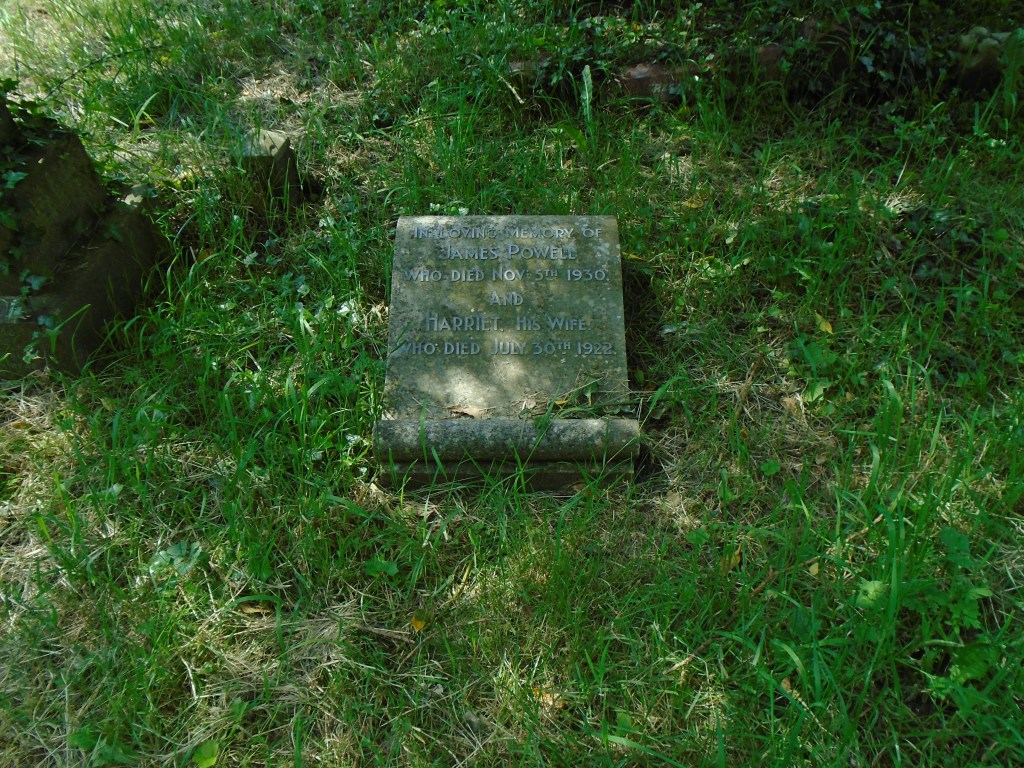

 Radnor Street Cemetery
One thought on “James ‘Raggy’ Powell – one of nature’s princes.”