Why I didn’t get to meet a Princess

Princess Helena Victoria

Princess Helena Victoria visited Swindon on April 21, 1923 published courtesy of Local Studies, Swindon Central Library.

The re-imagined story …

When I told mum the Mayor had selected me to meet Princess Helena Victoria when she came to Swindon, she said nothing at first.

I joined the Girl Guides when I was 12 and went on to become a Ranger. It was in this role that the Mayor, Cllr Harding, had invited me to meet the Princess when she came to town to open the Boys’ Red Triangle Club.

I loved everything about being a Guide. I loved the fellowship and the feeling that I was making a contribution to society. I had made some good friends. Where we met was the only place I could relax and have fun and laugh and be myself. There wasn’t much laughter in our house. Mum’s grief was all consuming, to laugh seemed to be making a mockery of her sadness.

She hadn’t always been a serious kind of person, it was dad who was the sombre character. She would tease him and tickle him when he refused to smile and I can hear her tinkling laughter somewhere in my memory.

“I’d rather you didn’t meet her, Sylvia.”

I was stunned. The Mayor had paid me a huge honour, selecting me to meet the Princess.

“It’s a real privilege mum. The Mayor has only asked George Akins from the Scouts and me to meet her.”

“She’s German,” said mum, blunt just like that. ‘She’s German.’

“She’s Queen Victoria’s granddaughter.” I was incredulous.

“And she was German, too. I’ll not have a daughter of mine shake hands with a German.”

I couldn’t argue with her, that would have been too cruel. She had lost dad and my uncle in the war. Sometimes it felt as if the war had been in another age, at other times it felt as if we were still living through it. Some people would bear the scars for a lifetime, limbs lost, faces disfigured, minds broken. My mum had a broken heart and I doubted whether she would ever recover.

Everyone was excited about seeing the Princess. There was to be a luncheon at the Queen’s Royal Hotel first before she opened the Boys’ Red Triangle Club and a Civic Gathering in the Town Hall afterwards.

I explained to the Mayor why I couldn’t greet the Princess. I thought he would be angry, but actually he seemed to understand.

Sometimes it felt as if the war had been in another age; at other times it felt as if we were still living through it.
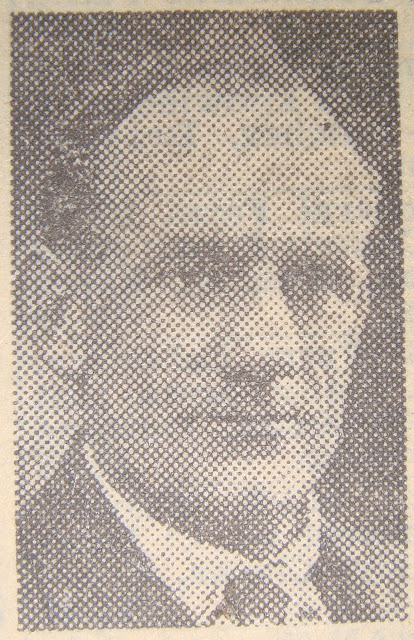
Councillor A.E. Harding

Mayor A.E. Harding

The facts …

Princess Helena Victoria visited Swindon on Saturday, April 21, 1923. The Princess was the elder daughter of Prince Christian of Schleswig-Holstein and Princess Helena, the daughter of Queen Victoria and Prince Albert. She was born at Frogmore House in 1870 and lived her entire life in Britain. During the First World War she visited British troops in France and afterwards worked to promote and support the YMCA and the YWCA. During the war King George V relinquished the use of German royal titles for himself and his numerous cousins.

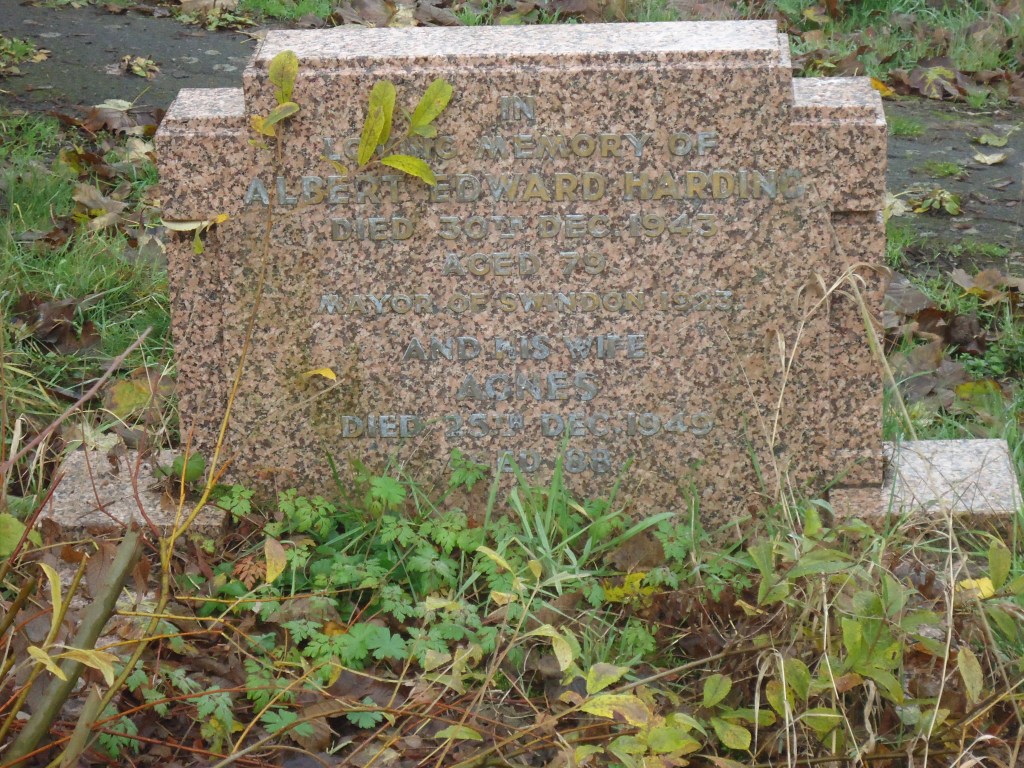
Albert Edward Harding was born in London in 1865. At the time of the 1881 census he was working in the railway factory as a clerk and lodging with the Hunt family at 38 Prospect. He married Agnes Westmacott in 1889 and the couple had three children, Stewart Jasper, Myrtle Marion Westmacott and Albert Edward Benjamin Harding.

The family first lived at 115 Princes Street where in 1898 Harding was the divisional secretary to the National Deposit Friendly Society, in addition to his job as a Clerk in the railway works. The family later moved to their long-time home at 56 Victoria Road.

Albert Edward Harding was a Councillor representing the East Ward from about 1911 and served as Mayor of Swindon in 1922/23, the year that Princess Helena Victoria visited Swindon.

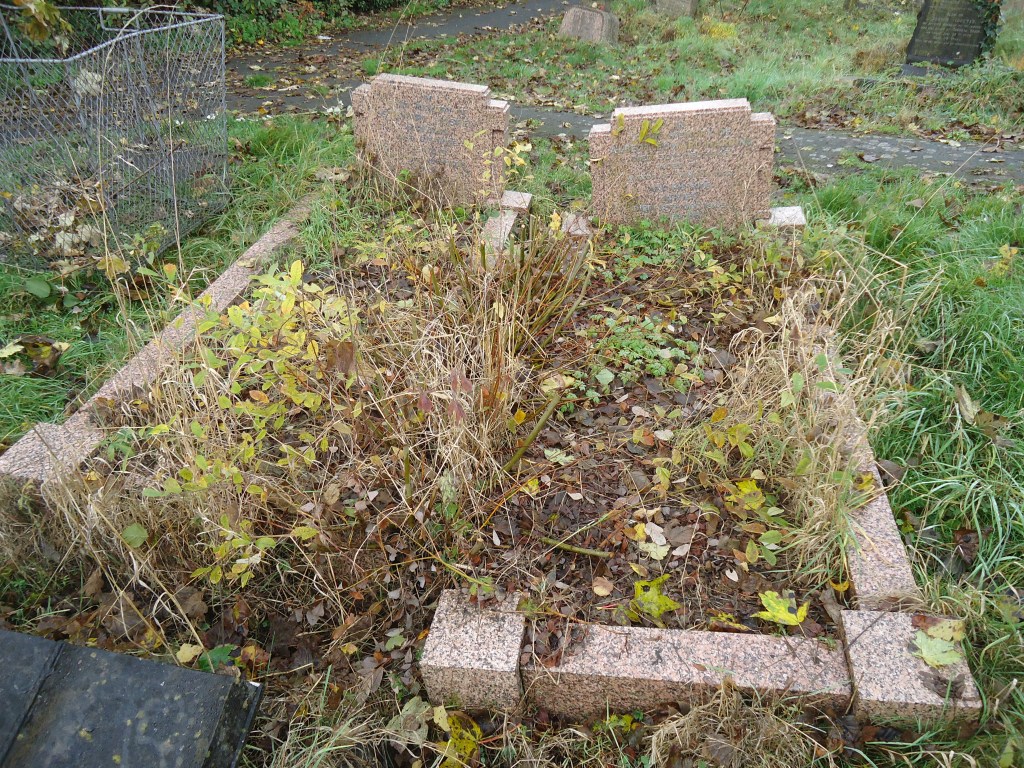
Albert Edward Harding died at his home on December 30, 1943. He is buried in plot E8568 with his wife Agnes, their son Albert Edward Benjamin Harding and daughter in law Kathleen.

Their eldest son Stewart Jasper Harding is buried in the neighbouring grave plot E8569 with his wife Gladys.

You might also like to read
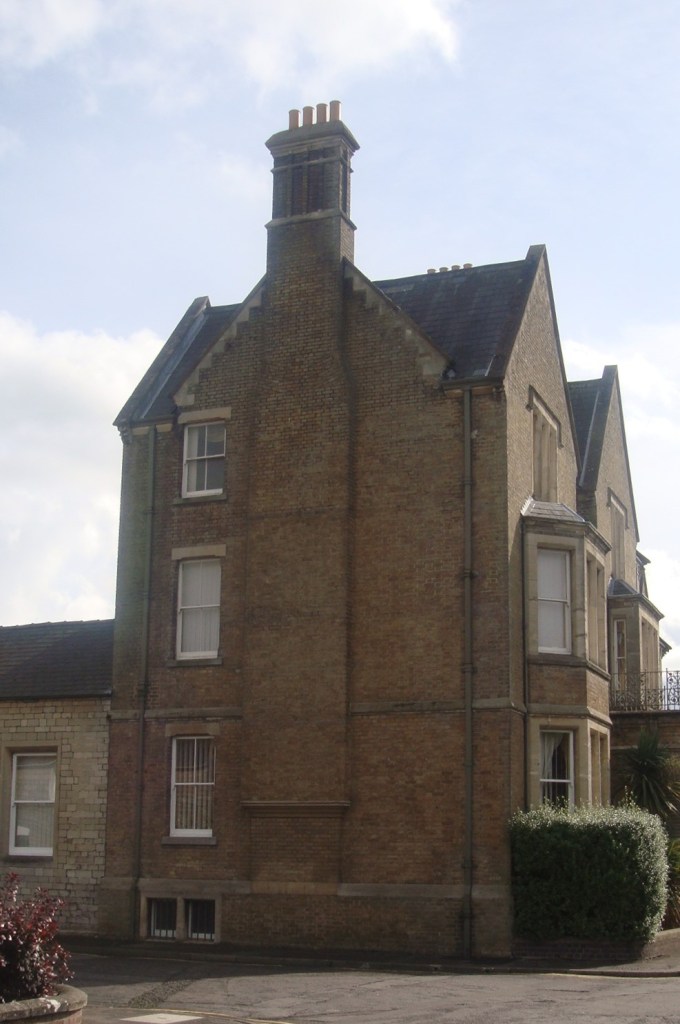
Agnes Harding – Methodist and Mayoress

Maurice Carew Swinhoe – banana planter and exporter

Dr George Money Swinhoe was the GWR surgeon at Swindon between c1861 to his death in 1908. He and his wife Diana produced a large family based first at 4 London Street and then later at Park House, which served as family home and doctor’s surgery. They had eight daughters, one of whom died in infancy, five who married and two who didn’t; of their five sons one entered the military, one trained as an engineer and two became doctors working alongside their father. Youngest child Maurice chose a somewhat different career – that of banana planter and fruit exporter working with Elder & Fyfe in Kingston, Jamaica.

Unfortunately Maurice was in Jamaica when an earthquake occurred on January 14, 1907. The first terrifying reports stated that almost all the buildings in Kingston had been destroyed and there was a great loss of life. In the following days an estimated 20,000 people were made homeless, camping out on the racecourse. One report told how ‘continual religious services are being held, in which the people join with hysterical fervour.’ While fires continued to rage in the dock area, a tsunami flooded the lower part of Kingston. The death toll quickly escalated with 1,000 declared dead, although this figure was thought to be an inaccurate and low estimation. The earthquake was described as one of the world’s deadliest recorded in history with aftershocks still being recorded up to March 22, 1907.

Maurice survived and in due course returned to England, but it would appear from the obituary published in the North Wilts Herald, Friday, September 29, 1911 that he never fully recovered from the ordeal.

A Swindonian in Jamaica

News from Mr Maurice C. Swinhoe

On Sunday a cable message was received by Dr George Money Swinhoe from his youngest son, Mr C. Maurice Swinhoe, who went out to Jamaica and settled near Kingston some five or six years ago, stating that he is safe, having, happily, escaped those terrible consequences of the recent earthquake which have been shared by so many.

It is hardly necessary to say that the message, so eagerly looked for, has afforded considerable relief to Dr. Swinhoe and the members of his family.

As stated a fortnight ago in the “Advertiser,” Mr Maurice Swinhoe went out to Jamaica some five or six years ago, and settled some three miles outside Kingston, where he threw in his lot with a partner, possessing an extensive banana plantation, as a planter. Close by the plantation is the racecourse, covering a wide stretch of turf, and, according to the reports received from the stricken area, it was upon this racecourse that the desolated people camped out. Dr. Swinhoe, however, received no news from or concerning his son, and, naturally, the absence of any intelligence gave rise to a little anxiety.

Dr Rodway Swinhoe was, perhaps, the most sanguine member of the family for when fears for the absent one’s safety were beginning to be felt, he said to an “Advertiser” reporter in the course of an interview, “I don’t think anything can have happened to my brother. You see, he picked up a little medical knowledge while out there, and no doubt he has been so busy doing what he can for the sufferers that he has not had the time or opportunity to send any word home.”

The Evening Swindon Advertiser Monday, January 28, 1907

Death of Mr M.C. Swinhoe

The death occurred on Wednesday at the residence of his sister, 11, St. Mary Abbott’s Terrace, London, W., of Mr Maurice Carew Swinhoe, [the youngest age,] was the thirteenth child of Dr. G.M. Swinhoe and was, of course, a brother of Dr. G.R. Swinhoe, of Swindon. Some years ago he went to Jamaica and was occupied as a fruit exporter, being connected with the well known firm of Elder & Fyfe at Kingston. He was in Jamaica at the time of the great earthquake, and a series of letters was published in the columns of this paper at that time vividly descriptive of the stirring phases of danger which the deceased experienced. He suffered much in consequence from nervous derangement, and returned to England, and some two years ago underwent an operation at Bournemouth. It subsequently transpired that this was of little avail, and a further operation was performed at St. Thomas’s Hospital, London. The deceased had been ill for a considerable time previous to his death.

North Wilts Herald, Friday, September 29, 1911.

The body of Maurice Carew Swinhoe was returned to Swindon where he was buried in grave E8228, a large family plot. He was 30 years old.

You might also like to read –
The Death of Mrs Swinhoe

Agnes Harding – Methodist and Mayoress

The following words were published in the North Wilts Herald in 1939 as part of a much longer article celebrating the Golden Wedding anniversary of former Mayor A.E. Harding and his wife Agnes. Of course the article concentrated on the work of the Mayor but his wife was more than an equal in this partnership.

Agnes Westmacott was born in Somerford Keynes into a staunchly Primitive Methodist family. Her father, Samuel Westmacott, was a baker and grocer who moved to Swindon by the time of the 1871 census. He became a member of the Regent Street Chapel with which Agnes would be involved throughout her life.

Agnes married Albert Edward Harding, a railway clerk in 1889 and the couple had three children, Stewart, Myrtle and Albert. The family’s long time home was ‘Apsley.’ Not Apsley House, former home of the Swindon Museum and Art Gallery, but a property called Apsley at 56 Victoria Road.

Albert entered politics in 1907 serving as a councillor representing the East Ward on the Swindon Town Council and in 1922 was appointed Mayor. However, family life continued to centre around Primitive Methodism and the Regent Street chapel where Agnes served as a Sunday School teacher for many years. She was also the first secretary of the Brinkworth and Swindon district branch of the Primitive Methodist Women’s Missionary Society.

Agnes Harding died at her home and was buried with her husband, who had died six years previously, in Radnor Street Cemetery in grave plot E8568 on December 30, 1949. The couple were later joined by their youngest son Albert and his wife Kathleen. Buried in the neighbouring plot is their eldest son Stewart, who predeceased his parents, dying in 1931. He is buried in plot E8569 with his wife Gladys who died in 1968.

Married for Fifty Years

Golden Wedding of Mr and Mrs A.E. Harding of Swindon

Mrs Harding’s Record.

Mrs Harding was born at Somerford Keynes and came to Swindon with her parents in her youth. She was a scholar in the day school at the Regent street Primitive Methodist Church, and one of the first scholars to attend the College street school. For many years she was a teacher in the Primitive Methodist Sunday School, Regent street, with which church she has been associated all her life. She was elected to teach a class of unruly youths – and then for many years taught the infants class of some seventy children. During this period she was presented with the diploma for long service.

For many years she has been a class leader, with at one time 95 members on her book, but of late years has had to have more assistants.

Mrs Harding was one of the first pupils of the Art School which was held in the old Town Hall, The Square, whilst the College was being built.

When the Primitive Methodist Women’s Missionary Society was established she was one of the first to form a branch in Swindon, and was secretary of the Brinkworth and Swindon district branch. At the conference at Cardiff in 1924, Mrs Harding was elected national president of the society; she represented the District Sunday School at the triennial conference at Liverpool, was a delegate to the annual synod at Aylesbury and to the conference at Sheffield.

During her year of office as Mayoress, Mrs Harding was presented by the branch with a silver purse and an album of the members’ names. As Mayoress she helped to form the Nursing Association and has continued as a member.

A member of the Red Triangle Club at its formation, she still continues her association with the women’s section.

When the Linen Guild at the hospital was formed, Mrs Harding became a member, and still continues with the weekly meetings. She is president of the sewing circle of the Regent street Church and in connection with these organisations, she has made hundreds of articles and is still an active member of all these societies.

At her silver wedding she was presented with a silver salad bowl by the British Women’s Temperance Organisation.

Councillor and Mrs A.E. Harding were presented to Her Highness Princess Helena Victoria at the opening of the Red Triangle Club; in 1933 to their Majesties King George the Fifth and Queen Mary, when they visited Swindon, and to the Duke of Gloucester on his recent visit when opening the Civic Offices.

Extract North Wilts Herald, Friday, 17 March, 1939

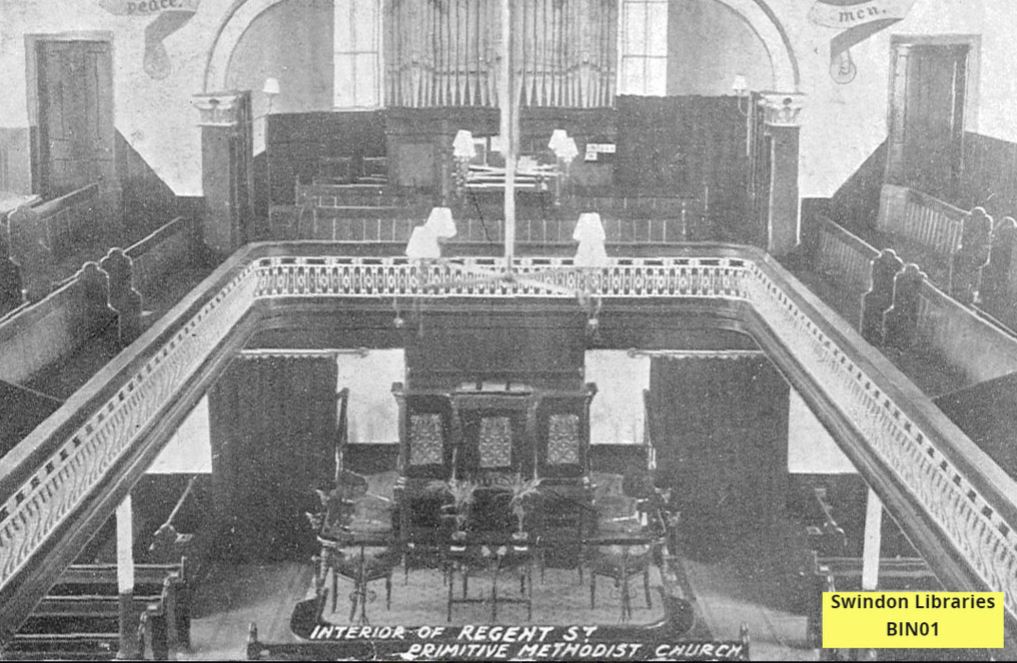
Regent Street Primitive Methodist Chapel

It cannot be denied how important the growth of Primitive Methodism in Swindon was to the development of the town itself. It has been argued that nonconformity arrived in Swindon with the establishment of the Great Western Railway as railwaymen came from across the country bringing with them a tradition of working class, chapel attendance, but this is not the whole story. Evidence of nonconformity was present in the area long before and in 1924 the Primitive Methodists celebrated the Centenary of the Brinkworth and Swindon District Synod.

By 1828 there was a growing Primitive Methodist membership in what was then known as Eastcott, an area around where Regent Circus would later be built. Open air meetings were delivered by travelling preachers until a plot of land was gifted by Thomas and James Edwards in fulfilment of their father’s bequest. It was here, on what would later become Regent Street, that the Primitive Methodists built a chapel.

Charles Morse, a pioneer of Primitive Methodism in North Wiltshire, said ‘that it was like building a Chapel in some foreign land, scarcely a house was near, there was a road through the field, but not a stone to be seen upon it.’

Rev. G. Pilgrim, Minister of the Newport Street Congregational Church, attended the inaugural meeting and he commented that there were very few people there, and of them the greater part were old women and he was at a loss to know how the Primitives were to build a Chapel and pay for it.

But build it they did, and what’s more they rebuilt twice more as their membership grew and out grew three buildings. The first modest chapel was demolished and rebuilt in 1863 followed by a third Chapel providing accommodation for 600 built in 1876 at a cost of £3,110.

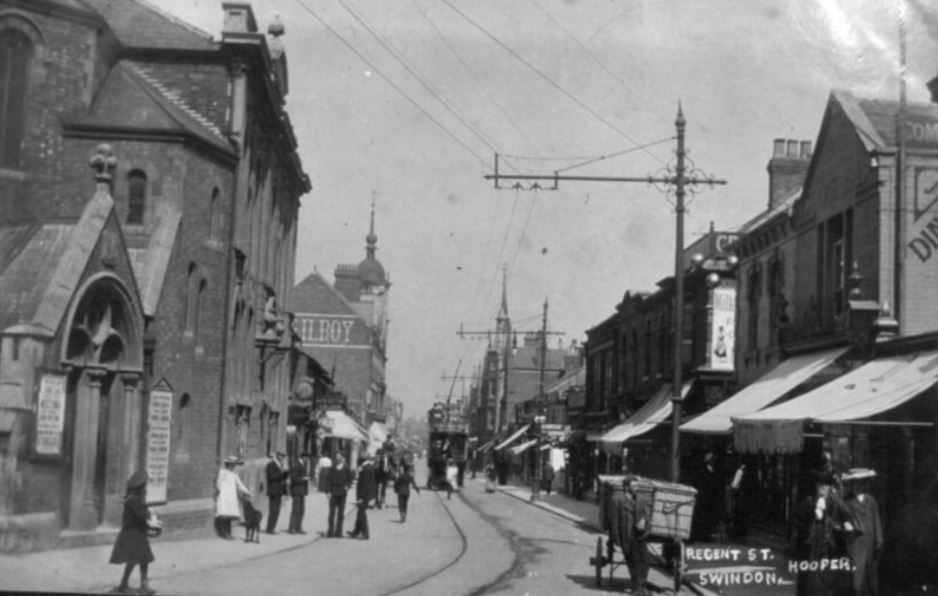
Regent Street with Primitive Methodist Chapel on the left of the image. Published courtesy of Local Studies, Swindon Central Library.

The Regent Street chapel became the parent church of the Second Circuit. However, its situation on Swindon’s busy shopping street became increasingly problematic. Sadly, it was demolished in 1957, its funds used to improve other Methodist churches in Swindon.

Image published courtesy of Local Studies, Swindon Central Library.

A public health report and an urgent need for burial space in the rapidly developing town along with the growth of nonconformity contributed to the building of a new cemetery in 1881. Now the nonconformists could bury their loved ones without the strictures or rites of the established church. Radnor Street Cemetery, an area of unconsecrated ground, became the last resting place of some notable nonconformists including Mayors, Councillors and Alderman alongside others who worshipped in the numerous churches and chapels. You might like to read more by following these links …

James Hinton

Florence Martha Hinton

William & Sarah Tydeman

Amy Edna Riddick

Henry Raggett

Levi Lapper Morse

Agnes Harding

Graveyards to die for.

What better way to start the week than with a talk entitled ‘Graveyards to die for.’

View down the Egyptian Avenue at Highgate Cemetery

London Guide Charlie Forman was the guest speaker at the Arts Society Kennet and Swindon at the Ellendune Community Centre, Wroughton on October 17. Charlie began by talking about burial practices in London at the beginning of the 19th century and the later movement to out-of -town cemeteries.

Until the rapid growth of mid 19th century London, burials were very much a local affair with the deceased interred in the parish churchyard where they once lived, remaining close to family. But as London expanded, churchyards quickly filled up and Charlie told of some truly gruesome and insanitary burial practises.

We learned about the enterprising and much feared grave robbers, ‘the resurrectionists,’ who stole the bodies of the recently dead to provide fresh cadavers for the anatomists. A change in the law in 1831 allowed anatomists access to unclaimed bodies from the Workhouses for medical research and therefore brought an end to the body snatchers’ trade.  

For the cemetery lover there were plenty of photographs taken at some of London’s Magnificent Seven cemeteries including West Norwood, Highgate and Kensal Green. There were photos of catacombs and Egyptian mausoleums and the memorials of Princess Sophia and her brother Augustus, Duke of Sussex in Kensal Green. Charlie’s favourite cemetery (well, we all have one) is Kensal Green.

And I love coming away from a talk with a new discovery. At the end of his talk Charlie briefly mentioned Isabella Holmes. Having studied John Rocque’s 18th century maps of London and making a comparison with 1884 Ordinance maps, Mrs Holmes noticed that a great many of the cemeteries on the earlier maps no longer existed – so she set about conducting her own survey to find out what had happened to them all. Ten years later and the London County Council Parks Committee commissioned Mrs Holmes to continue her work and record the size, condition and ownership of London’s cemeteries.

Mrs Holmes walked the streets of London, consulting the Ordnance Survey maps and looking for burial grounds in use and those that had disappeared; knocking on doors and asking for permission to look out of windows.

She writes: “One day I climbed a high, rickety fence in a builder’s yard in Wandsworth in order to see over the wall into the Friends’ [Quakers] burial ground. No doubt the men in the place thought me mad, – anyhow they left me in peace.”

In 1894 Mrs Holmes discovered 362 burial grounds, 41 that were still in use and 90 that had become public gardens and playgrounds and submitted her report with colour coded maps to the Metropolitan Public Gardens Association. In 1895 the work of the redoubtable Mrs Holmes was published by the Council and her book, The London Burial Grounds – Notes on Their History from the Earliest Times to the Present Day is available to read online.

I salute you Mrs Holmes. And Charlie’s talk was excellent as well.

Henry Hustings – Swindon’s Jack of All Trades

The re-imagined story …

Mr Hustings gave me a job when no one else would.

I’d returned from the war pretty much fit for nothing. But my wounds were not obvious. I had not lost a limb, I was not scarred or hideous to look upon.

I suffered from being subjected to heavy shelling, day after day, week after week, from living on the edge of terror.

Others seem to return home unaffected from the hell they had endured, although I would question that. I don’t think any returning soldier was the man he had been when he left for the war. Even now, twenty years later, you can see the men ravaged by their experiences. The men who drink too much, the men whose temper is easily ignited, the men who retreat into silence. We all carry our wounds, the obvious ones and the hidden ones.

Mr Hustings must have wondered if he had been ill advised employing me. I’m sure plenty of his other workmen must have thought so to. At first I couldn’t go up a ladder, but there were plenty of jobs I could do at the yard. Gradually my life became more of the now and less of the then. My confidence grew, my health improved and I began to pull my weight in the firm.

I shall add Mr Hustings to the memory of those others I mourn. He gave me a job when no one else would, he gave me back my life.

The facts …

With just a week left to complete his term of office as Mayor, Councillor H.R. Hustings died suddenly at the Victoria Hospital on Sunday, October 27, 1940.

A tough speaking, no nonsense Labour politician, Henry Russell Hustings, Swindon’s 40th successive Mayor, took office on Thursday, November 9th 1939 as the town got to grips with the black out, air raid warnings and wartime restrictions.

A former trade union organiser for the National Union of Vehicle Workers and the Transport and General Workers’ Union, Henry had enjoyed a varied working life and the Swindon Advertiser styled him as the ‘Jack of All Trades Mayor.’

His first job was with a firm of agricultural engineers in Dorset followed by stints as a traction engine driver, shop assistant, porter, engine driver in a laundry, miner, stoker, baker and in 1939 he was a window cleaning contractor.

Henry was born in 1883 in the Dorset village of Hilton to John W. Hustings and his wife Susan. In 1903 he married Alice Maud Ball and the couple had four children.

A member of the Labour party since 1919 Henry began his political career in Devizes in 1921 where he was the first Labour member of the Town Council. By 1927 he was living at 38 Regent Circus, Swindon and represented the West Ward on the Swindon Town Council.

Councillor Hustings was a founder member of the Unemployed Association, launched at a time when Swindon had more than 5,000 unemployed. In 1939 he was President of both the Swindon branch of the Labour Party and the Swindon Trades Council. He also served on the Management Committee of the Swindon Co-operative Society, the Council of Social Service, the local Food Control Committee and the Western Area Federation of Trades Councils.

On August 22, 1940 Henry launched Swindon’s own Spitfire Fund. The aim was to raise £5,000 and in less than a week the fund stood at £245. By October Swindonians had raised £3,300 and were well on the way to achieving their target. Donations came from across the Swindon and district area. Two little girls sold some of their toys and gave the 8 shillings they had raised to the fund while Kingsdown brewer J. Arkell & Sons presented the Mayor with a cheque for £100.

At the time of the Mayor’s death the fund stood at £3,956, just over £1,000 short of its £5,000 target.

“The fund had a very good start, but it seems to have slowed down during the last two or three weeks,” said Mr Raymond Thompson, director and general manager of the Swindon Press who was behind the last desperate drive to complete the fund. “We owe this and a lot more to our late Mayor.”

In just seven days generous Swindonians had donated £1,352 to complete the project inaugurated by Henry Hustings. A cheque for £5,308 was presented to Col J.J. Llewellin, Parliamentary Secretary to the Minister of Aircraft Production by Swindon’s MP Mr W.W. Wakefield in January 1940.

Henry’s death at the age of 57 followed recent surgery from which it was thought he was making a good recovery, and came as a great shock to fellow members of the Council.

The funeral service conducted by Major W.J. Hills of the Salvation Army took place at the Mission Hall followed by interment at Radnor Street Cemetery.

“Representatives of practically every industrial and social organisation in the town and district took their place in the cortege, and also paid their last tribute at the graveside at Radnor Street Cemetery,” reported the Advertiser.

“The public life of Swindon will be much poorer by the passing of Councillor Hustings,” Mr G.A. Marshman, presiding magistrate said paying tribute to a man who had devoted his life to the underdog – Swindon’s Jack of All Trades Mayor Henry Russell Hustings.

Surprisingly there is no headstone to mark Henry’s grave.

Adelaide Carlton – on the move

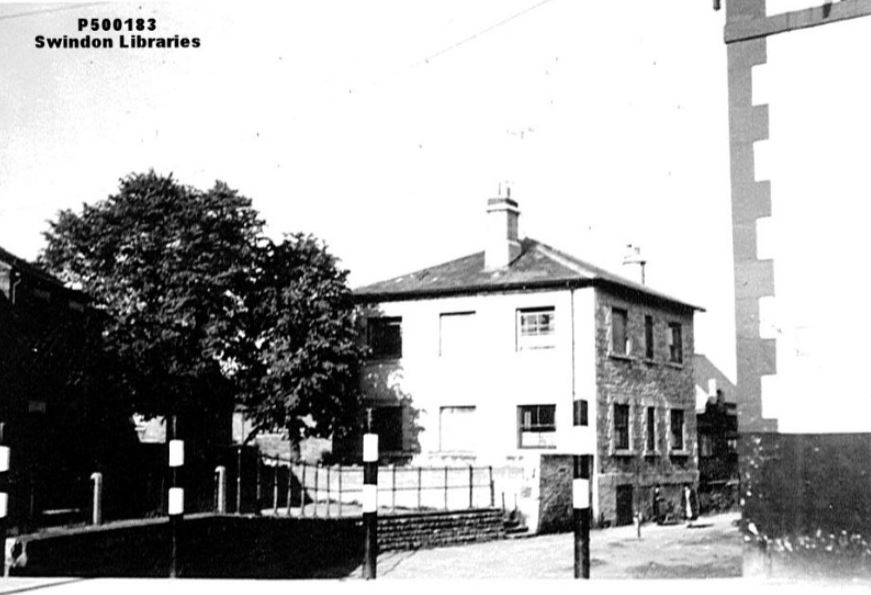
Elm Villa published courtesy of Local Studies, Swindon Central Library.

We tend to mistakenly believe that in the past people lived and died in the area in which they were born, but in Swindon this was far from the case. The town of New Swindon was built on the migration of skilled railway workers arriving from all over the UK and Adelaide Carlton’s husband was one of them.

Samuel Carlton began his long and successful career as an apprentice at the Edge Hill and Crewe Works before moving on to marine engineers Pearson & Company and then to the Vulcan Foundry before joining the Great Western Railway at Wolverhampton.

In 1851 he was lodging at 12 Liverpool Street, Crewe with John Aston and his family, quite possibly a relative of dressmaker Adelaide Aston, whom he married that same year. Adelaide was born in Dudley, Staffordshire in 1834 and was only 17 years old when she married Samuel. She would spend the next 26 years producing babies and moving house.

Adelaide’s first child, Thomas William was born in 1852 and baptised at Christ Church, Crewe. Nine more children would follow and the birthplace of each one would log Samuel’s career progress and the many homes Adelaide would find herself living in.

In 1861 the family were living in North Road, Wolverhampton but Adelaide would soon be packing up the numerous knick knacks beloved by the Victorian middle-class housewife as they were on the move. In 1864 Joseph Armstrong, Superintendent of the Northern Division of the Great Western Railway at the Wolverhampton Works, moved to Swindon and an appointment as Locomotive, Carriage and Wagon Superintendent of the GWR. A year later Samuel followed him down to Swindon when Armstrong appointed him as manager of the Locomotive Works.

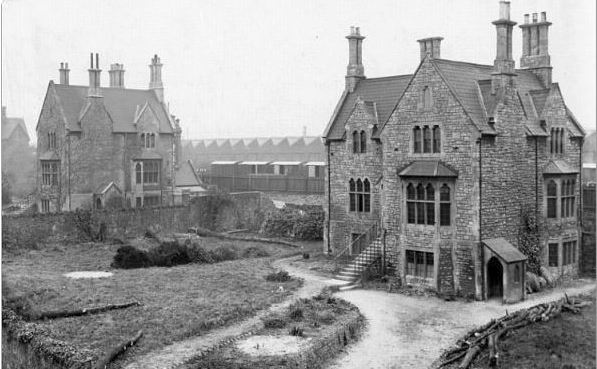
Marlow House left of image

At last Adelaide would be able to make a settled home for her growing family, but even once they arrived in Swindon that was not the case. Between 1871 and 1891 Adelaide and her family lived first at Elm Villa in Wellington Street before moving to Clifton House and then Marlow House, two managers’ properties built to the north of Swindon station.

Samuel retired in 1895 and died the following year. But Adelaide would occupy one more home before she joined her husband in Radnor Street Cemetery. For just a few brief years she lived at Lyndhurst House in Devizes Road with her unmarried daughter May and Minnie Nurden, a domestic servant. It was here that she died on July 19, 1901 following a long illness. She was 67 years old. Her funeral was described as being ‘of a very quiet character,’ much like Adelaide’s life had been. The first part of the service took place, quite fittingly, at St. Saviour’s, the little wooden church in Ashford Road which had been built by railway workers in 1889.

The pink granite obelisk memorial on Samuel and Adelaide’s grave was raised by the subscription of colleagues at the Swindon Works. The inscription reads:

This Memorial was erected by Officials and Workmen of the Great Western Railway and other Friends, to Mark the Esteem in which he was held during the 32 years he was Manager of the Locomotive Works at Swindon.

The grave covers two plots E8276 and E8277 and a note is mentioned in the registers, somewhat unusually, that it is a brick grave 7ft deep. Samuel and Adelaide were joined by their eldest daughter Alma when she died in 1948 at the grand old age of 91. There is also a memorial to the couple’s eldest son Thomas William who died on May 14, 1896 during a voyage to South Africa and was buried at sea.

You may also like to read:

Samuel Carlton – held in esteem

Henry Raggett – a humble God fearing Christian

The re-imagined story …

“Did you know that Raggett Street is the only street in Swindon with no front doors?”

“Well, that can’t be right. How would people get into their houses?”

“I’m telling you – there are no front doors on Raggett Street.”

“Look, there’s a front door at the top, on the corner.”

“That’s 124 Stafford Street.”

“What about on the opposite corner? There’s a front door, I can see it from here.”

“That’s 123 Stafford Street.”

“But they’re both in Raggett Street.”

“Oh no they’re not.”

“Was there ever a Mr. Raggett?”

“I’m guessing so.”

But there are no front doors on Raggett Street?”

“Nope.”

“And no houses either?”

“Nope.”

“Unbelievable.”

Raggett Street

The facts …

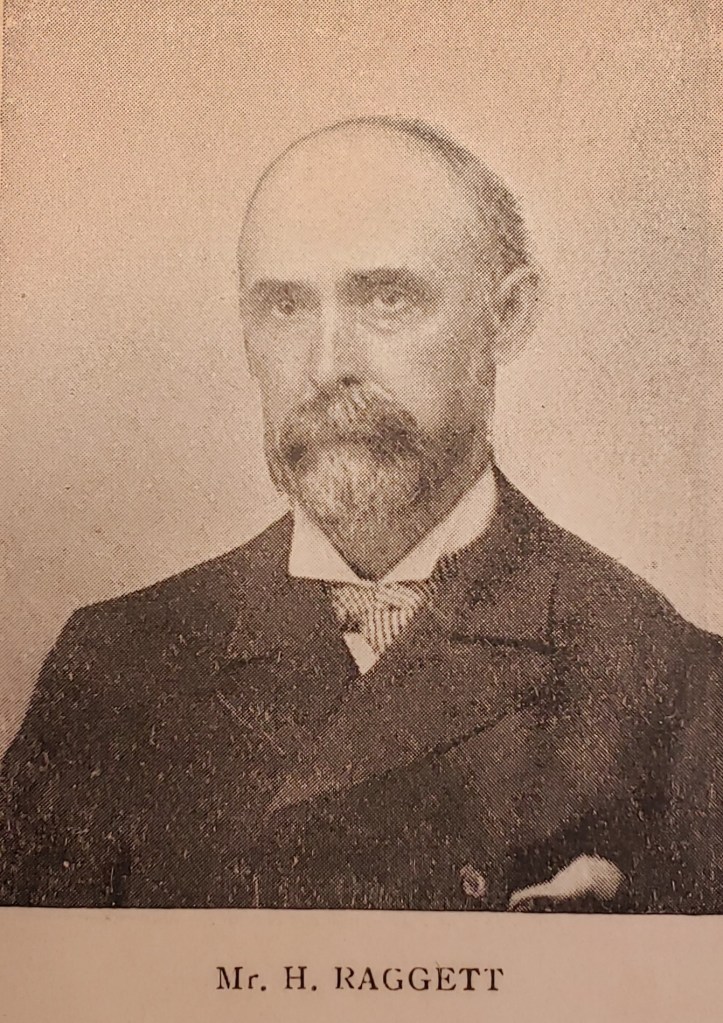
Henry Raggett, grocer and tailor, had a shop on the corner of Eastcott Hill and Stafford Street at the end of the 19th century.

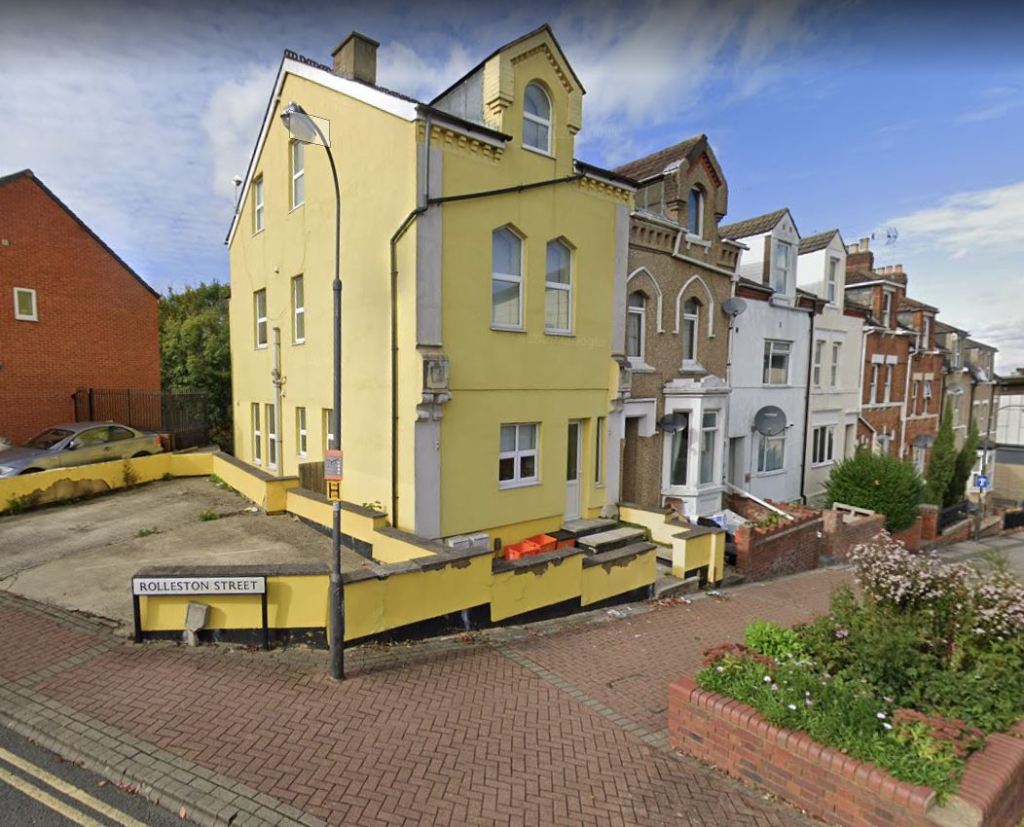
Henry’s home was at 35 Rolleston Street, one of the few houses to avoid demolition in the 1960s when the college was built. A substantial property, which no doubt was pretty impressive in its day. In his will Henry left £2,584 which would be worth today in the region of £300,000.

Rolleston Street

A prosperous, middle class Edwardian tradesman, but Henry had a tough act to follow.

Henry’s wife was the former Amy Edna Morse, the elder sister of Levi Lapper Morse. Amy’s father Charles had been a shopkeeper in Stratton but Levi went on to far greater things.

Henry is buried with his daughter Milinda who died aged 28 in 1905 and his son Henry Charles Edgar who died the same year as Henry, aged 21.

Henry’s widow Amy went on to marry Silas Riddick, a retired outfitter and tailor from Wootton Bassett in 1912. However it was with her first husband Henry Raggett that Amy chose to be buried when she died in 1931 aged 80.

Extract from the funeral report

Funeral of Mr Henry Raggett

Impressive Obsequies

Very solemn and impressive were the funeral rites which accompanied the interment of the remains of Mr Henry Raggett in Swindon Cemetery on Wednesday. The body was brought from London on Saturday and taken to the residence in Rolleston Street, whence the funeral procession started about 3 o’clock.

At Prospect Place Primitive Methodist Chapel a service was held. This proved to be in accord with the sentiments and feelings of the numerous congregation who had assembled, and at times was deeply affecting and moved many to tears.

For the occasion the pulpit was draped in black cloth. The service opened with a hymn, after which the Rev. J. Neville offered prayer. Another hymn having been sung the Rev. S. Ainsworth read an appropriate lesson from I Corinthians and then the well known “Lead, kindly light” was rendered.

The Rev. J.E. Sunderland delivered a short address. Speaking as the representative of the Brinkworth and Swindon District of the Primitive Methodist Connexion, he paid a warm tribute to the memory of their deceased brother, whom he had had the privilege of knowing for a quarter of a century. He had watched his life and had marked his conduct and spirit in church life, and he had learned to trust him. He had admired him and the more he had known him the more he had respected and reverenced his sterling character. They had known something of him as a citizen. He had been interested in imperial affairs; he had taken a deep interest in their municipal and local matters; and he had been concerned for the welfare of the poor and for the good government of his neighbors. But beneath and through and around all those their dear brother was a Christian – a humble God fearing Christian.

He was a Churchman, a Free Churchman and a Primitive Methodist Free Churchman. He loved their church and he gave to it his supreme thought and the consecration of all his powers. He counted no sacrifice too great if he might promote its interest in any respect whatever.

They had gathered there from the town and neighborhood to show their regard and respect for him. They all felt that they had lost a trusted councillor, a wise guide, a devoted member of their church and a worker of whom they need not be ashamed for rightly dividing the word of truth. His memory would be blessed and he would live among them for many a day.

North Wilts Herald Friday May 6, 1904.

A short street that runs between Stafford Street and Dixon Street was named in his honour.

Henry Charles Cook – builder

St Margaret’s Road published courtesy of P.A. Williams and Local Studies, Swindon Central Library.

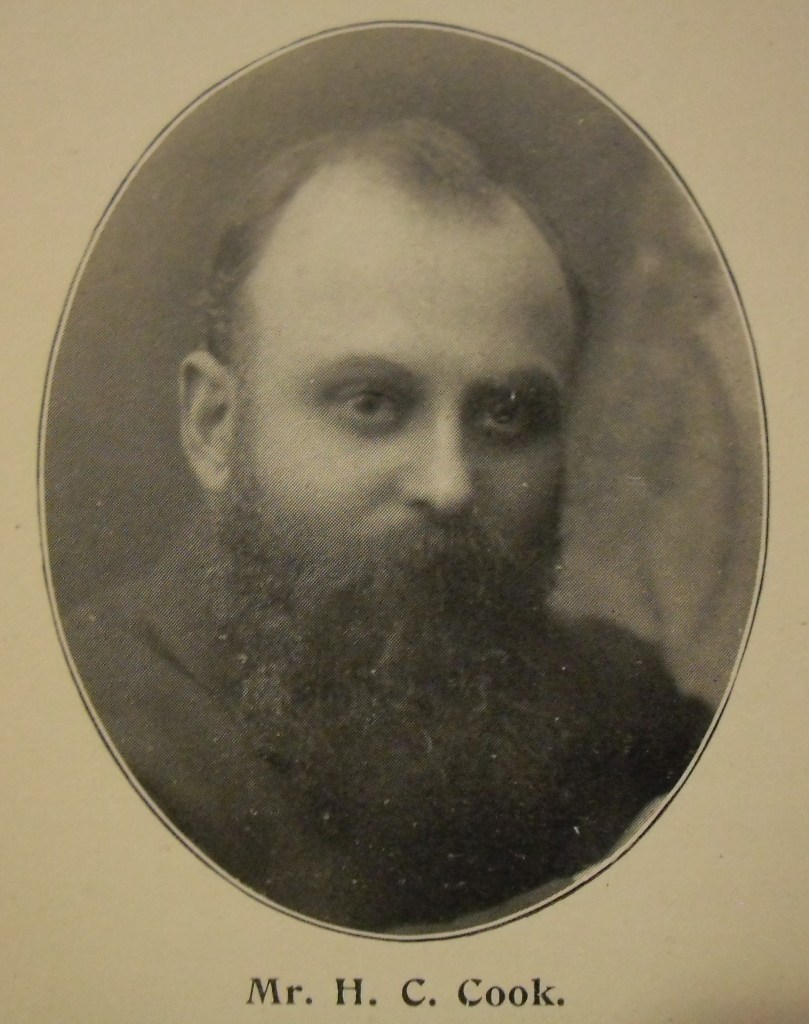
Henry Charles Cook was born in Bledington, Gloucestershire in 1860 the son of Charles Cook, a carrier, and his wife Jemima. By 1881 Henry had moved to Swindon with his mother and her second husband Thomas Smith where the family lived at 19 Prospect Hill. Henry, then aged 21, was working as a plumber and glazier. In 1882 Henry married Elizabeth Jane Carpenter and the couple went on to have three children, William, Daisy and Frederick.

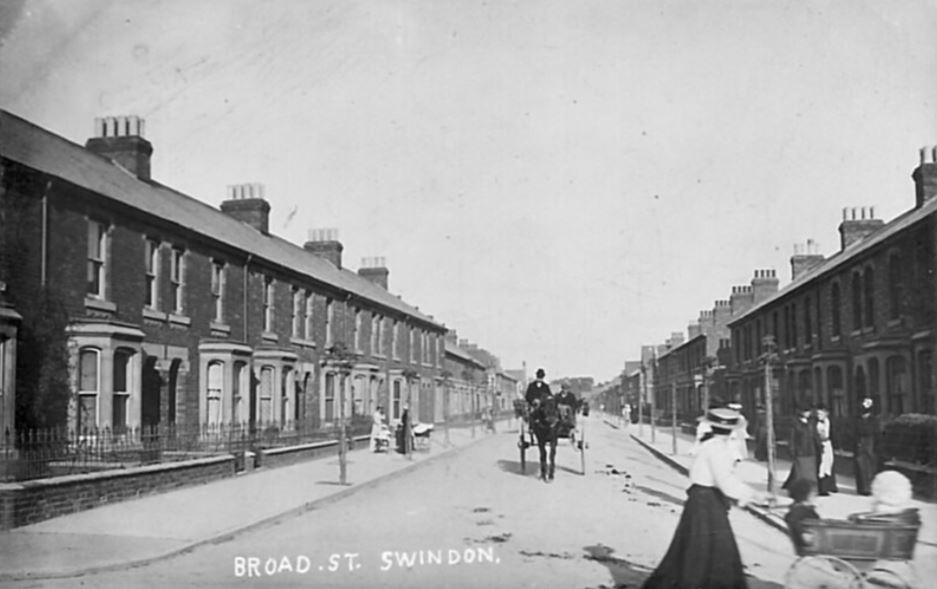
Henry’s building business was soon up and running with projects in progress by 1884. He built numerous properties in Gorse Hill including houses in Florence Street, Omdurman Street and in 1907 he built property in Osbourne Terrace, a new street off Ferndale Road. But he didn’t confine himself to this area of town. In 1897 he was building in St Margaret’s Road and Goddard Avenue and in 1903 he built 23 houses in Devizes Road. During the 1920s Henry’s firm returned to Gorse Hill where they built more than 25 houses in Harcourt Road and another 9 properties just round the corner in Cobden Road.

And like so many men of his generation, Henry took an active part in the civic, political and religious life of the town.

Elizabeth died in 1925 aged 66 and was buried on June 13 in Radnor Street Cemetery plot E8273. Henry died at his home, 59 Broome Manor Lane, ten years later. He was buried with his wife on August 14, 1935.

Death of Mr H.C. Cook

Well Known Swindon Methodist

The death occurred on Saturday night, at his residence, 59, Broome Manor lane, Swindon, of Mr Henry Charles Cook, who for 50 years had been prominent in the business and civic life of Swindon. He was 75 years of age.

Mr Cook came to Swindon as a youth and was apprenticed to the decorating trade. He began in business on his own account as a very young man, later taking up building, and was in business in the town for over 60 years, for a great part of that time at his present premises in Wood Street.

Mr Cook had been an Alderman of the Borough and had served capably as chairman of the Education Committee. He was also active in Methodist circles in the town, being attached to the Regent Street church; he was Circuit Steward for many years, and was a splendid delegate to conference. He was an ex-president of the Swindon Liberal Association.

Mrs Cook died ten years ago, and there are left three children – Mr W.H. Cook, chemist, of Faringdon; Mrs J.B. Hodges, of Andover; and Mr F.C. Cook of Wood street, Swindon.

The Funeral

The funeral took place on Wednesday. The service took place at the Regent Street Methodist Church, and was conducted by the Rev. T. Allison Brown, the interment being at Radnor Street Cemetery.

The principal mourners were Mr and Mrs W.H. Cook Faringdon (son and daughter in law), Mr and Mrs J.B. Hodges, Andover (son in law and daughter), Mr S.C. Cook, Swindon, (son), Mrs Button and Mrs Cull, Swindon (sisters), Mr B.W. Cook, Faringdon, (grandson), Mr K.L.W. Cook, Swindon, (grandson), Messrs W.H. Kent, F. Tucker, W. Smith, E. Liddiard and Covey.

Messrs A.E. Smith and Son, Gordon Road, Swindon, had charge of the funeral arrangements.

Extracts published from North Wilts Herald, Friday, 16 August, 1935

Goddard Avenue published courtesy of P.A. Williams and Local Studies, Swindon Central Library.

You might also like to read

James Spackman – a well known builder and contractor

Thomas and John George – leaving their mark on Swindon

James Spackman – a well-known builder and contractor

Published courtesy of P.A. Williams and Local Studies, Swindon Central Library.

James Spackman was born in Wootton Bassett in 1844 the son of Richard and Mary Ann Spackman. He was born into a ready made family firm where he began work as a plasterer alongside his father and uncle.

However, following his marriage to Margaretta Pozzi, the daughter of Italian born jeweller (and sometime innkeeper) James set about building his own dynasty.

By 1881 James and his family had moved into Swindon and were living at 2 Merton Street. At the time of the 1891 census they were living at 1 Clifton Street where James described himself as a builder. Working alongside him were his two sons Hubert (sometimes called Herbert) and Charles who were both carpenter’s apprentices.

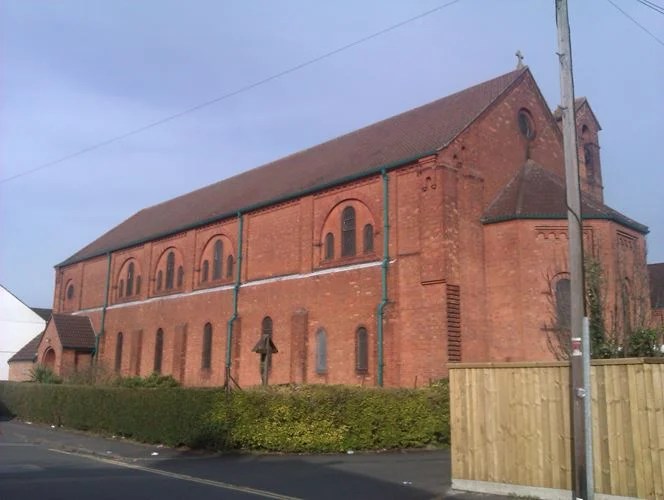
The Spackman family business went from strength to strength as the firm built properties in Broad Street, Volta Road and Ponting Street. They began work on St Augustine’s Church in Rodbourne in 1907 and in 1931 they built the sacristy at Holy Rood R.C. Church. They built villas in Bath Road and Okus Road, which became Spackman family homes.

James Spackman died in 1930 at the age of 87 and was described as a well-known builder and contractor in the obituary (see below) published in the North Wilts Herald. He was buried in grave plot E8540 with his wife Margaretta who had died in 1918. They were joined by their unmarried daughter Florence Alice who died in 1961.

The Radnor Street Cemetery burial registers list the grave of James’s son Charles Mortimer Spackman who died in 1945 aged 72 years. He is buried in grave plot C1192 with his wife Annie and their infant son Herbert who died in September 1899 just days old.

New Church, Swindon – The foundation stone of a new church, to be dedicated to St. Augustine, was laid recently at Swindon. The plans have been prepared by Mr W.A. Masters, architect, of Swindon, and the contract let to Messrs. H. & C. Spackman, builders, Swindon, at 3,100l (£3,100). The plan is of the Basilican type and the first portion to be erected at once will be the nave to accommodate 500 persons. It will be constructed of brick throughout.

The Builder May 4, 1907.

Death of a Swindon J.P.

Former Member of Town Council

The death took place at his residence, 8, Okus road, Swindon, on Thursday in last week, of Mr James Spackman, J.P., at the age of 87 years.

Mr Spackman was a native of Wootton Bassett, but had lived the greater part of his life in Swindon and was a well-known builder and contractor.

For a number of years he was a member of the Swindon Town Council, but retired from municipal life about ten years ago.

Mrs Spackman died in 1918.

There are four sons and two daughters, two of the sons being Messrs. H. and C. Spackman, builders and contractors of Hunt street.

Mr Spackman was one of the founders of Sanford street Congregational Church, and had held the office of deacon since it was founded.

The funeral took place at Radnor Street Cemetery, Swindon, on Saturday.

The service was conducted at the house and graveside by the Rev. A.R. Smart. The chief mourners were: Messrs. H.J. Spackman, C.M. Spackman and E.A. Spackman (sons), Mrs Fulton and Miss F. Spackman (daughters), Messrs R. Spackman, H. Spackman, A. Spackman, and R. Spackman (grandsons).

North Wilts Herald, Friday, December 12, 1930.

You might also like to read
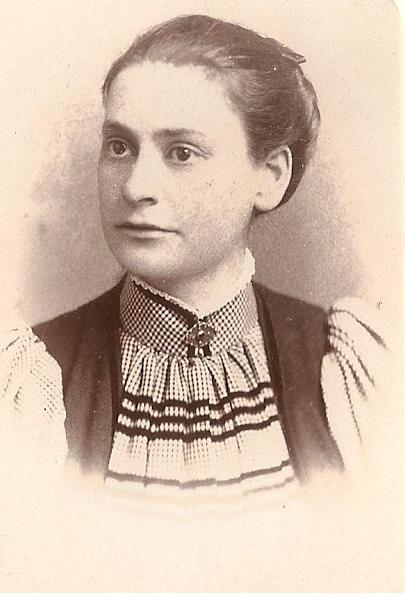
Henry Charles Cook – builder

Thomas and John George – leaving their mark on Swindon