
The re-imagined story …
“Did you know that Raggett Street is the only street in Swindon with no front doors?”
“Well, that can’t be right. How would people get into their houses?”
“I’m telling you – there are no front doors on Raggett Street.”
“Look, there’s a front door at the top, on the corner.”
“That’s 124 Stafford Street.”
“What about on the opposite corner? There’s a front door, I can see it from here.”
“That’s 123 Stafford Street.”
“But they’re both in Raggett Street.”
“Oh no they’re not.”
“Was there ever a Mr. Raggett?”
“I’m guessing so.”
But there are no front doors on Raggett Street?”
“Nope.”
“And no houses either?”
“Nope.”
“Unbelievable.”

The facts …
Henry Raggett, grocer and tailor, had a shop on the corner of Eastcott Hill and Stafford Street at the end of the 19th century.
Henry’s home was at 35 Rolleston Street, one of the few houses to avoid demolition in the 1960s when the college was built. A substantial property, which no doubt was pretty impressive in its day. In his will Henry left £2,584 which would be worth today in the region of £300,000.
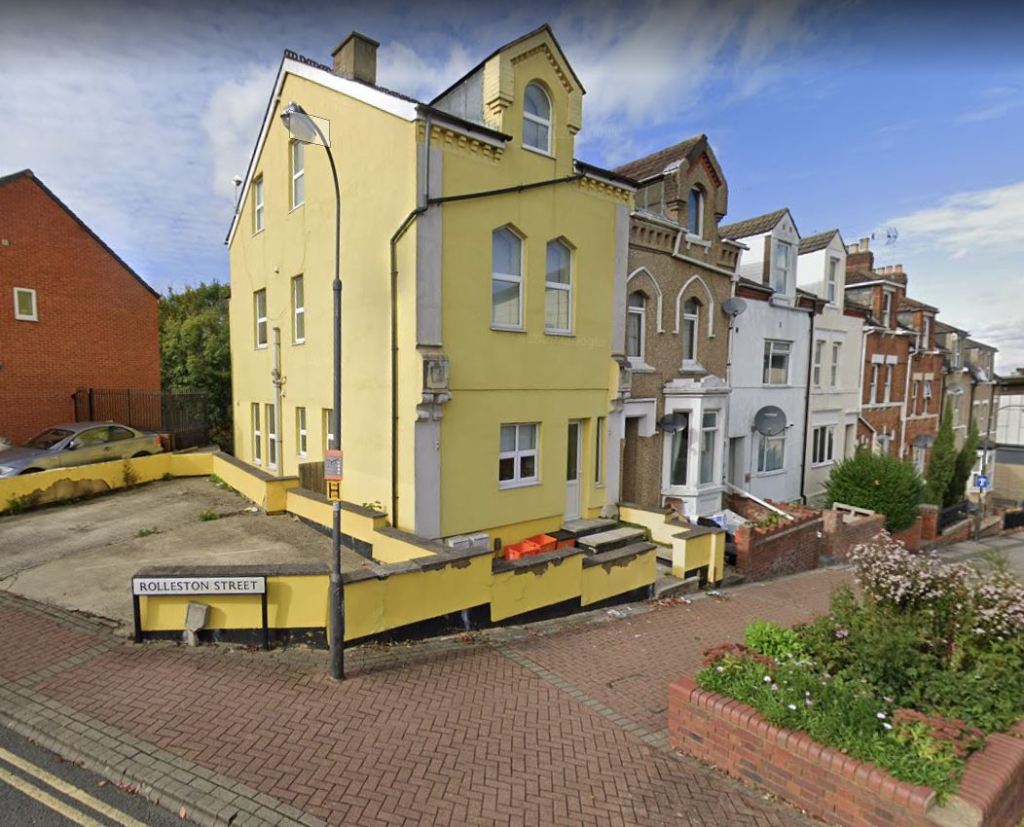
A prosperous, middle class Edwardian tradesman, but Henry had a tough act to follow.
Henry’s wife was the former Amy Edna Morse, the elder sister of Levi Lapper Morse. Amy’s father Charles had been a shopkeeper in Stratton but Levi went on to far greater things.
Henry is buried with his daughter Milinda who died aged 28 in 1905 and his son Henry Charles Edgar who died the same year as Henry, aged 21.
Henry’s widow Amy went on to marry Silas Riddick, a retired outfitter and tailor from Wootton Bassett in 1912. However it was with her first husband Henry Raggett that Amy chose to be buried when she died in 1931 aged 80.
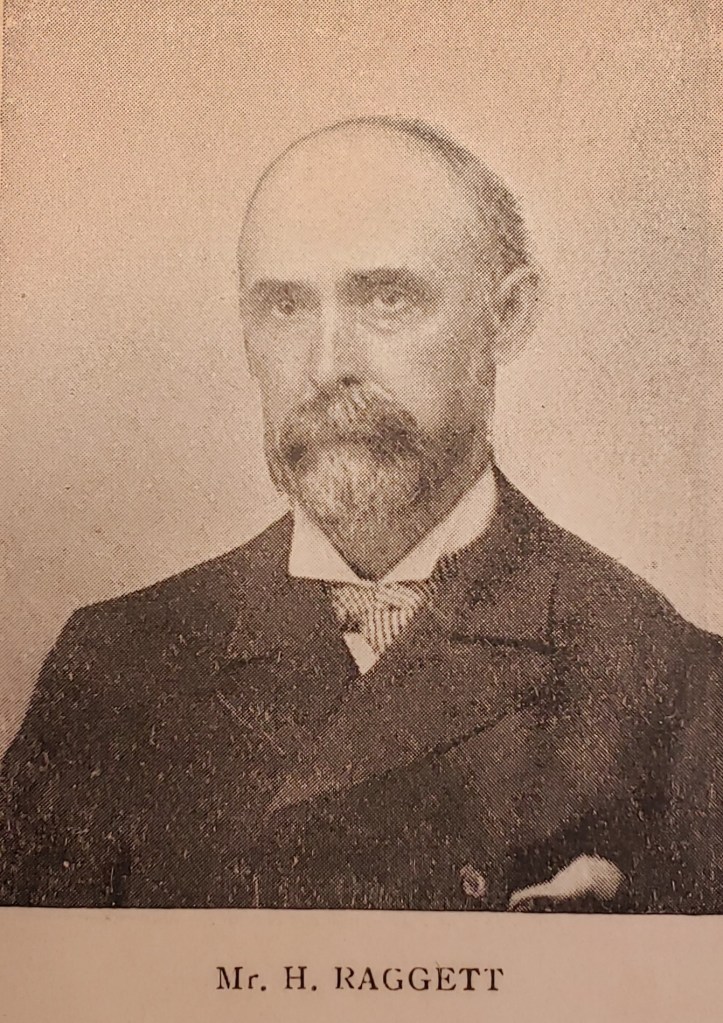
Extract from the funeral report
Funeral of Mr Henry Raggett
Impressive Obsequies
Very solemn and impressive were the funeral rites which accompanied the interment of the remains of Mr Henry Raggett in Swindon Cemetery on Wednesday. The body was brought from London on Saturday and taken to the residence in Rolleston Street, whence the funeral procession started about 3 o’clock.
At Prospect Place Primitive Methodist Chapel a service was held. This proved to be in accord with the sentiments and feelings of the numerous congregation who had assembled, and at times was deeply affecting and moved many to tears.
For the occasion the pulpit was draped in black cloth. The service opened with a hymn, after which the Rev. J. Neville offered prayer. Another hymn having been sung the Rev. S. Ainsworth read an appropriate lesson from I Corinthians and then the well known “Lead, kindly light” was rendered.
The Rev. J.E. Sunderland delivered a short address. Speaking as the representative of the Brinkworth and Swindon District of the Primitive Methodist Connexion, he paid a warm tribute to the memory of their deceased brother, whom he had had the privilege of knowing for a quarter of a century. He had watched his life and had marked his conduct and spirit in church life, and he had learned to trust him. He had admired him and the more he had known him the more he had respected and reverenced his sterling character. They had known something of him as a citizen. He had been interested in imperial affairs; he had taken a deep interest in their municipal and local matters; and he had been concerned for the welfare of the poor and for the good government of his neighbors. But beneath and through and around all those their dear brother was a Christian – a humble God fearing Christian.
He was a Churchman, a Free Churchman and a Primitive Methodist Free Churchman. He loved their church and he gave to it his supreme thought and the consecration of all his powers. He counted no sacrifice too great if he might promote its interest in any respect whatever.
They had gathered there from the town and neighborhood to show their regard and respect for him. They all felt that they had lost a trusted councillor, a wise guide, a devoted member of their church and a worker of whom they need not be ashamed for rightly dividing the word of truth. His memory would be blessed and he would live among them for many a day.
North Wilts Herald Friday May 6, 1904.
A short street that runs between Stafford Street and Dixon Street was named in his honour.


 Radnor Street Cemetery
2 thoughts on “Henry Raggett – a humble God fearing Christian”