We tend to mistakenly believe that in the past people lived and died in the area in which they were born, but in Swindon this was far from the case. The town of New Swindon was built on the migration of skilled railway workers arriving from all over the UK and Adelaide Carlton’s husband was one of them.
Samuel Carlton began his long and successful career as an apprentice at the Edge Hill and Crewe Works before moving on to marine engineers Pearson & Company and then to the Vulcan Foundry before joining the Great Western Railway at Wolverhampton.
In 1851 he was lodging at 12 Liverpool Street, Crewe with John Aston and his family, quite possibly a relative of dressmaker Adelaide Aston, whom he married that same year. Adelaide was born in Dudley, Staffordshire in 1834 and was only 17 years old when she married Samuel. She would spend the next 26 years producing babies and moving house.
Adelaide’s first child, Thomas William was born in 1852 and baptised at Christ Church, Crewe. Nine more children would follow and the birthplace of each one would log Samuel’s career progress and the many homes Adelaide would find herself living in.
In 1861 the family were living in North Road, Wolverhampton but Adelaide would soon be packing up the numerous knick knacks beloved by the Victorian middle-class housewife as they were on the move. In 1864 Joseph Armstrong, Superintendent of the Northern Division of the Great Western Railway at the Wolverhampton Works, moved to Swindon and an appointment as Locomotive, Carriage and Wagon Superintendent of the GWR. A year later Samuel followed him down to Swindon when Armstrong appointed him as manager of the Locomotive Works.
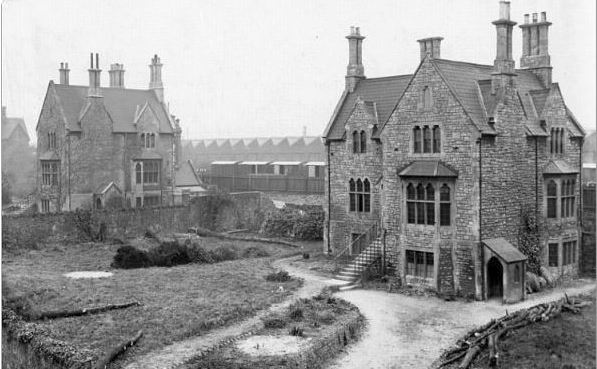
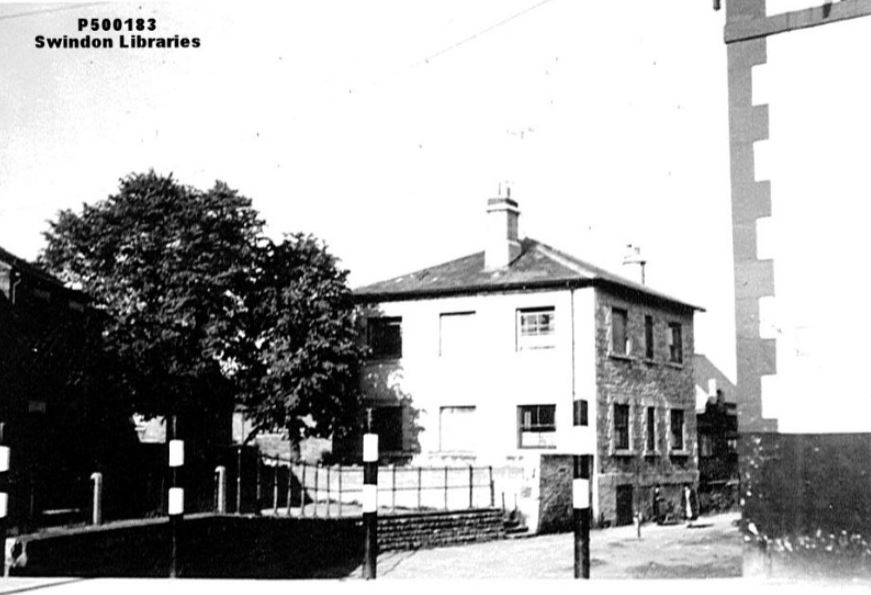
At last Adelaide would be able to make a settled home for her growing family, but even once they arrived in Swindon that was not the case. Between 1871 and 1891 Adelaide and her family lived first at Elm Villa in Wellington Street before moving to Clifton House and then Marlow House, two managers’ properties built to the north of Swindon station.
Samuel retired in 1895 and died the following year. But Adelaide would occupy one more home before she joined her husband in Radnor Street Cemetery. For just a few brief years she lived at Lyndhurst House in Devizes Road with her unmarried daughter May and Minnie Nurden, a domestic servant. It was here that she died on July 19, 1901 following a long illness. She was 67 years old. Her funeral was described as being ‘of a very quiet character,’ much like Adelaide’s life had been. The first part of the service took place, quite fittingly, at St. Saviour’s, the little wooden church in Ashford Road which had been built by railway workers in 1889.
The pink granite obelisk memorial on Samuel and Adelaide’s grave was raised by the subscription of colleagues at the Swindon Works. The inscription reads:
This Memorial was erected by Officials and Workmen of the Great Western Railway and other Friends, to Mark the Esteem in which he was held during the 32 years he was Manager of the Locomotive Works at Swindon.
The grave covers two plots E8276 and E8277 and a note is mentioned in the registers, somewhat unusually, that it is a brick grave 7ft deep. Samuel and Adelaide were joined by their eldest daughter Alma when she died in 1948 at the grand old age of 91. There is also a memorial to the couple’s eldest son Thomas William who died on May 14, 1896 during a voyage to South Africa and was buried at sea.

You may also like to read:

 Radnor Street Cemetery
2 thoughts on “Adelaide Carlton – on the move”