Archibald Edward Knee was born in Stroud in 1892, the son of Francis and Rose Knee. The family later moved to 123 Albion Street where Francis worked as a railway carriage painter in the GWR Works and Rose cared for their seven young children. Archibald joined his father in the GWR Works on leaving school, working as a railway carriage painter and sign writer; a job he could safely expect to hold for life.
Archibald enlisted in the Wiltshire Regiment in July 1915, when a war initially anticipated to be over by Christmas 1914 approached its first anniversary. He embarked for France on New Year’s Eve 1915, part of desperately needed reinforcements at the front.
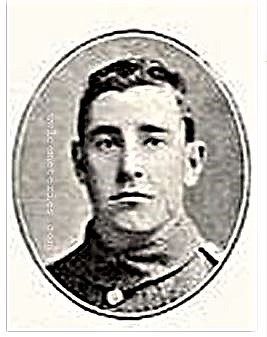
The British army began preparing for the ‘big push,’ in the Spring of 1916. It was believed this allied offensive would finish the war. The Battle of the Somme, in which more than 57,000 British soldiers were killed, wounded or reported missing during the first 24 hours of action, was yet to come.
The 1st Battalion of the Wiltshire Regiment was at Pylones, three kilometres north of the German held Vimy Ridge. The German army bombarded this section of the Western Front on May 21, firing everything at their disposal, including gas and lachrymatory (tear gas) shells.
The men of D Company were in battle by day and making running repairs to fencing and trenches throughout the night.
Lt Col W.S. Brown recorded the events of May 24 in the regimental war diary:
“In the trenches. The enemy were able to reach the Birkin Crater post with Cylinder stick bombs and some casualties were caused.
Many rifle grenades were fired at the outpost line of P73: those fired in retaliation appeared to do considerable damage. After 5 p.m. the enemy fired several heavy trench mortars at P74 and P75 and also at the head of Grange C.T. Snipers claimed three Germans. Repairs to the P line were carried out and a large amount of wire was put out along the whole front during the night of 24th/25th.”
Private F. Daniels of A Company was killed outright. Lance Corporal Knee was among 10 other casualties that night.
Archibald was taken to the 22nd General Hospital at Etaples where he received emergency treatment. He had suffered a gunshot wound to his left thigh, which in itself would probably not have proved life threatening. It was the effect of the German gas attack that proved fatal. Archibald developed gas gangrene and died at 11.20 on the morning of May 29. He is buried in the Etaples Military Cemetery.
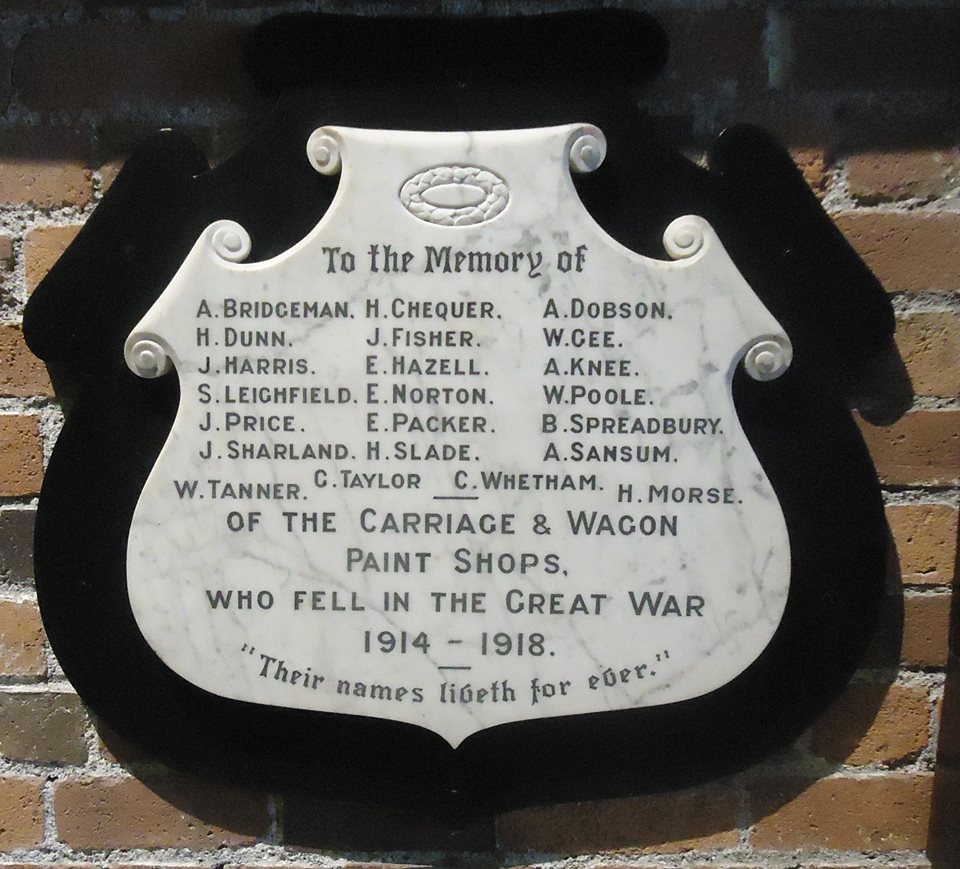
Archibald’s name appears on the memorial dedicated to the memory of those from the Carriage & Wagon Paint Shops who gave their lives in the Great War. This plaque can now be seen in the STEAM Museum.
#TellThemofUs
#MarkSutton

 Radnor Street Cemetery