Image of Albert Street and Little London published courtesy of Local Studies, Swindon Central Library.
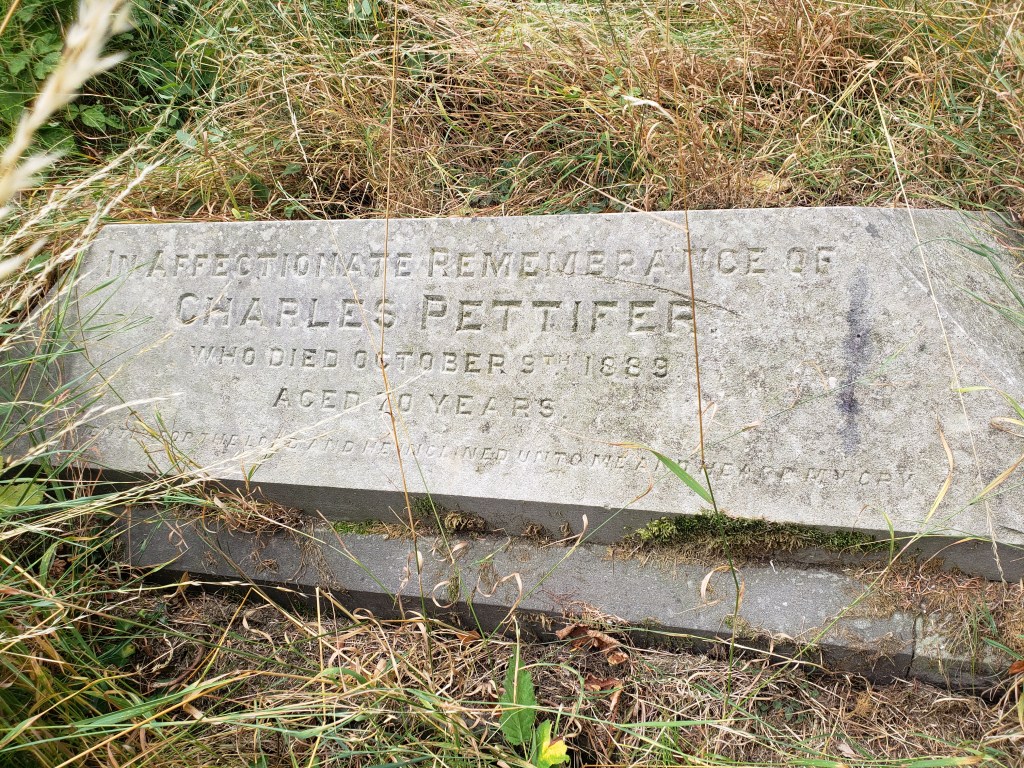
Charles Pettifer married Elizabeth Hawks in the summer of 1847. They were both born in Bampton in Oxfordshire and they set up home in the village at a house in Lavender Square where they were living at the time of the 1851 census. Isn’t that a lovely address – Lavender Square? I bet it’s all quaintly Cotswoldy now. In 1851 there was probably no running water, the privy was at the bottom of the garden and it was cold and damp.
Charles and Elizabeth first appear in Swindon on the 1871 census. Charles had previously worked as a cordwainer (a shoemaker) but once he arrived in Swindon he states that his occupation was that of a mason. That might sound like an astonishing career change, but as his father was a stonemason I’m guessing he had learned the trade alongside him. In 1871 Charles and Elizabeth were living with their two sons George 23, a bricklayer and Alfred 17, a bricklayer’s labourer, at 2 Eastcott Lane.
Charles had already set up in business by then and in 1875 he was joined by George. In the early days the Pettifers worked almost exclusively at the top end of Victoria Road, then called Victoria Street North. In 1872 they built houses and a workshop in that area and in 1877 they built a house, stable and workshop on the corner of Victoria Street North and King John Street and several cottages in Albert Street.
They continued in partnership until around 1881. Charles died in 1889 and was buried in grave plot E8304 on October 14.
George married Ruth Hill, a widow, in 1884. They were married for thirteen years when George died in 1897. They do not appear to have had any children. Ruth married again in 1900. Her third husband was George Popjoy, a joiner, so possibly a colleague of her second husband, George Pettifer. Ruth died on May 11, 1905 and was buried with George Pettifer (her second husband) in grave plot D33.
There is no entry for builder William Crombey in the comprehensive Architects and Building Craftsmen with Work in Wiltshire compiled by Pamela M. Slocombe and published by the Wiltshire Buildings Record in 2006. In that excellent book Roadways published in 1979 by Peter Sheldon & Richard Tomkins, Crombey Street is given a construction date of 1891 and a description that William Crombey was a local building speculator who developed much of the Rolleston Estate.
His death warranted just a brief mention in the Swindon Advertiser and so far I haven’t been able to discover an obituary, yet a search through the local newspapers reveal just how busy Mr Crombey actually was.
Crombey Street area of Swindon – Market bottom left
New Swindon Local Board
New Streets and New Buildings
The following plans were presented and passed:- Three new streets on the Rolleston Estate, to be known as Deacon Street, Curtis Street and Cromby Street; hotel and stable in the new road, for Mr W Cromby; nine shops and dwelling houses in Commercial Road for Mr W. Cromby; six houses in Lorne Street for Mr W. Bennett; one cottage in a new street at Gorse Hill for Mr C. Davis; alteration to the Three Cups Coffee Palace, Regent Street, for Mr S.B. Foss; additions to house in Dover street, for Mr E. Chamber; two new cottages in a new road abutting on to Rolleston Street and Eastcott Hill, for Mr E. Chambers; a house and shop and seven cottages in Maxwell Street, for Mr C. Williams; an assembly room for Mr A.E. Withy, to be erected near his house; one house in Gordon Road, Princes Street, for Mr J. Webb; eleven houses in Dean Street, for Mr T. George; fourteen houses in Deacon Street, ten in Cromby Street and two in Curtis street for Messrs Cromby and Horsell; additions at rear of 35, Regent Street, for Mrs S.J. Coleman; four houses in Victoria Road, for Mr H.C. Cook. One plan that of a house and shop to be erected in Groundwell Road, for Mr J.E. Campbell, was disapproved, owing to no sewer being shown on the plan.
Swindon Advertiser, Saturday, July 26, 1890.
So, why has William Crombey received so little attention in the history of the building of Swindon? Perhaps one reason could be that his day job was that of an Engine Driver.
William was born in Houghton le Spring, Durham in about 1825. He first appears in Swindon on the 1861 census when he was one of three boarders lodging at 15 Fleet Street. By 1881 he was lodging with Anne Elizabeth Harvey at Park Hotel, Cambria Bridge Road and in business with her brother-in-law Edwin Harvey. The partnership was dissolved ‘by mutual consent’ in March 1884. However, this was not the only partnership in which William was involved as he was also working with John Horsell. This partnership was dissolved on March 1, 1891, which is hardly surprising as William was obviously terminally ill and died on March 13.
His personal estate was valued at £1,463 1s 6d and probate was awarded to George James Harvey of Newport the son of his landlady Anne Elizabeth Harvey and nephew of his old business partner Edwin Harvey. William does not appear to have married or left any family. He was buried in Radnor Street Cemetery on March 16, 1891 in plot E8003.
William’s various properties came on the market on May 2, 1892 and were auctioned by Messrs Bishop & Day. These included No 1 Brunel Street ‘a freehold dwelling house and shop at the corner of Brunel and Cromwell Streets; adjoining Regent Street (the chief thoroughfare), and near the New Market; a spacious and lofty Building readily converted into Commodious Business Premises;’No 23 William Street which contained a ‘palisaded forecourt,’ a spacious Corner Shop, Bakery and Residence No 1, Cambria Bridge Road; A Capital Shop and Residential Premises, No 2, Cambria Bridge Road; A Capital Shop and Residence, No 3, Cambria Bridge Road and A Capital Shop and Premises, with a slaughter house, No 4. Cambria Bridge Road.
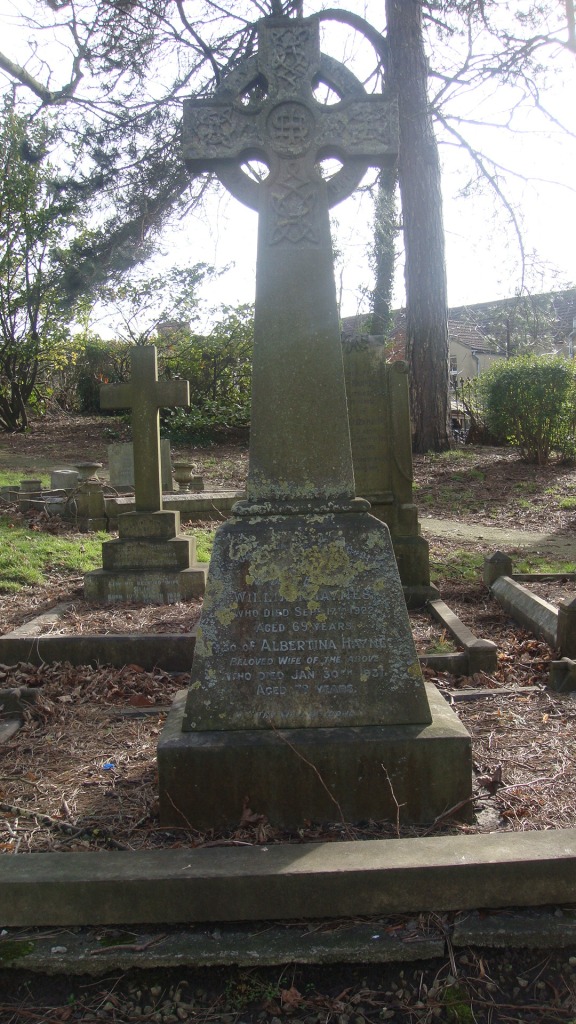
This magnificent Celtic Cross shouts wealth and must have been a pretty expensive monument in its time.
The Celtic Cross design combines the ancient Celtic circle symbol with the Christian cross, and was usually a free standing stone monument. In Ireland examples have been found dating back to the 7th century.
In the mid 19th century there was a Celtic Revival when monuments like this became extremely popular and the Celtic Cross has since become associated with graveyard memorials. The Celtic Cross on the Haynes grave includes the letters IHS symbolising the Greek spelling of Jesus Christ.
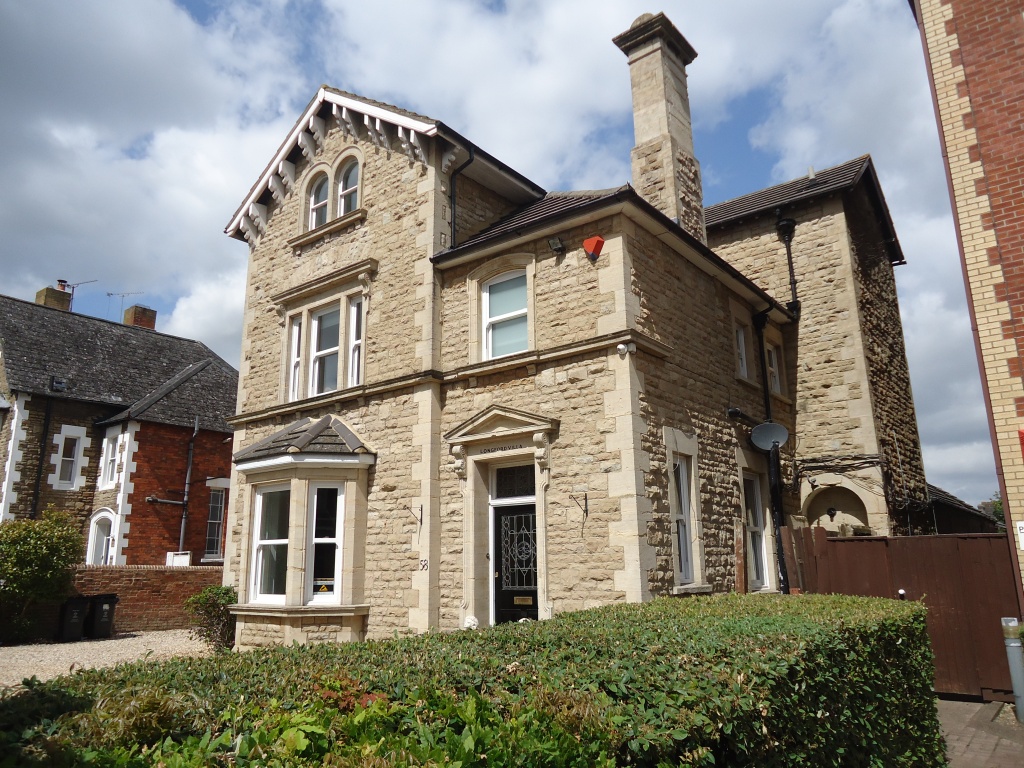
This is the final resting place of William and Albertina Haynes. In their retirement the couple lived at Longford Villa one of those impressive Victorian properties on Bath Road. William died on September 17, 1922 and Albertina on January 30, 1931.
William had grown up in Fairford where his father worked as a confectioner. He moved to Purton to begin an apprenticeship in Edward Kempster’s grocer’s shop, which is how he met his future wife. Albertina was the daughter of Richard Newman who was a Beer House Keeper in Purton.
The couple married in the summer of 1879 and by the time of the 1881 census they were living at 5 Westcott Place where they ran a grocer’s shop. William employed two assistants including his younger brother Hubert.
By 1891 the establishment had grown somewhat. The couple had six children and employed three grocery assistants and two domestic servants.
Researching the census returns I think the Haynes grocers shop was in the large premises on the corner of Westcott Place and Read Street, which has various signs outside today.
When William died in 1922 he left £65,473 9s 8d worth several million pounds today, an impressive amount of money for those post war times and more than enough to pay for this magnificent memorial.
You might like to visit Swindon Bottles for information about many other Swindon based firms.
James Lott opened his ironmongery business in around 1873. By 1881 he was living above the shop at 91 Regent Street with his wife Ellen and their four young children. However, the changeable fortunes of James Lott saw him forced to declare himself bankrupt in 1889.
But by 1891 business was booming again when James was based at numbers 50 and 51 Regent Street. In 1907 he was advertising “the most varied and up-to-date stock of Brushes, Copper Flower Vases and Kettles, Cutlery, Electro-plated Goods, Curb Fenders, Fire Irons and Brasses, Expanding Wood Trellis, Wire Netting, Garden Arches and Tools, General and Furnishing Ironmongery of every description.”
The 1911 census lists him as living above his shop at 5 Temple Street with his wife Ellen and youngest daughter Maud, an elementary school teacher. Temple Street today is unrecognisable from the busy shopping thoroughfare it once was linking Commercial Road with Regent Street. Temple Street has been the scene of several major reconstruction projects in the past 100 years. Today it is the site of work in progress on a Premier Inn due for completion later this year. Pictured below is the large gap left following the demolition of the Baptist Tabernacle.
This image of the site of the demolished Baptist Tabernacle is published courtesy of Local Studies, Swindon Central Library.
And it is still possible to find evidence of James Lott’s work in the pavements around town.
Death of Mr J. Lott
An Old and Respected Swindon Tradesman
The death has occurred of Mr J. Lott, head of the firm of Messrs. Lott & Sons, of Regent street, Swindon.
Mr Lott was one of the oldest tradesman in Swindon. Born near Holsworthy in Devon he came to the railway town in the early ‘70s, and by his energy and enterprise built up the present extensive business.
Mr Lott was connected with the Gooch Lodge of Freemasons, of which he was a Past Master, and was much respected in the town.
The funeral has been fixed for Monday. Mr. Lott was 76 years of age.
Swindon Advertiser Saturday, 10 December, 1921.
Late Mr J. Lott,
Masonic Funeral at Swindon Yesterday
The funeral of Mr J. Lott, of Swindon, took place yesterday afternoon. The Rev. J.E. Rogers officiated, and the masonic ovation at the graveside was delivered by the Rev. W.L. Waugh, Provincial Grand Chaplain.
The mourners were Mr. J.D. Lott and Mr C.R. Lott (sons), Mr E.W. Lott and Master Stanley Smith (grandsons), Mr J.W. Smith (son-in-law), Mr E.W. Daniel (Hendon) and Mr J. Daniel (nephews), Mr A.S. Deacon, Ald. E. Jones, Mr S. Chappell, Mr T. Butler, Mr F.C. Phelps, Mr A.R. Bray (Bristol), Mr W.E. Chappell, Mr J. Wilmer and Mr H. Mitchcock.
The Freemasons, of which deceased was a Past Provincial Grand Officer, were represented by Brs. A.E. Bottomley, D.C.A Morrison, H.J. Hamp, E.O. Twitcher, A.G. While, J.S. Protheroe, T. Mundy and D.A. Lane. Deceased’s employees also attended.
The floral tributes included one from the widow, and others from sons, sons and daughters-in-law and grandchildren, the Wiltshire Lodge of Freemasons and the staff at Regent street.
I thought I would rescue the identity of the woman buried in this grave before the inscription disintegrated completely. It turned out this was the easy bit.
At the time of the census 1881, a few months before she died, Mary Jane and her husband Joseph were living at 40 Prospect Hill where Joseph worked as a furniture broker. Joseph was 29 years old and Mary Jane was 23. The couple had married on December 18, 1880 at the parish church, Cirencester, less than a year before Mary Jane died. The burial registers record that Mary Jane Gunter lived at 14 Haydon Street when her funeral took place on November 21. She was buried in grave plot A404, only the 62nd burial to take place in what was then a new cemetery.
Ten years later, on the 1891 census returns Joseph described himself as a widower working as an Engine Fitter’s Labourer and lodging with the Hand family at 128 William Street. Life didn’t treat Joseph kindly. In 1901 he was a patient at the district asylum in Devizes. In 1907 he was a patient in an asylum in Dorset where he died in 1910.
I then checked the grave plot details to see if Joseph was buried with Mary Jane, but what I discovered was not what I had expected. Although a privately purchased grave with a substantial memorial in place, 22 years later the plot was reused.
Charles Hitchings a grocer and shopkeeper lived with his wife Elizabeth and their family at 38 Belle Vue Road where he died suddenly on Sunday July 5, 1903. Mr W.E. Nicolson Browne (county coroner) held an inquest where it was heard that the deceased complained of pains near his heart after which he shortly fell dead. A verdict of “Death from syncope” was recorded and on July 8, 1903 39-year-old Charles Hitchings was buried in plot A404.
And then 35 years later grave plot A404 was used for the third and final time. Charles Edward Iles aged 74 and formerly of the Rolleston Hotel, died in the Stratton Infirmary and was buried on October 5, 1938.
Was there any family connection between Mary Jane and the two men later buried with her? Am I missing a clue somewhere?
Image published courtesy of Local Studies, Swindon Central Library.
Opportunities for women to serve in public office in the 19th century were few and far between but in 1894 significant changes came about. The Local Government Act of that year removed restrictive property, gender and status qualifications, enabling single and married women to vote and stand for election on the newly constituted urban rural district councils.
The local government reforms also extended to the Poor Law Board of Guardians, a bastion of male dominance, responsible for apportioning poor relief and in charge of the local Workhouse.
On January 2, 1895 the new Board of Guardians met for the first time. The Returning Officer laid before the Board his certificate of the result of the Elections of Guardians and Rural District Councillors with the names of four women among their number; Miss Elizabeth House, Mrs Elinor L. Buller, Mrs Elizabeth Williams and Mrs Maria Matthews. Three of these remarkable women are buried here in Radnor Street Cemetery.
The first four women elected to the Highworth & Swindon Poor Law Board of Guardians came from widely different backgrounds.
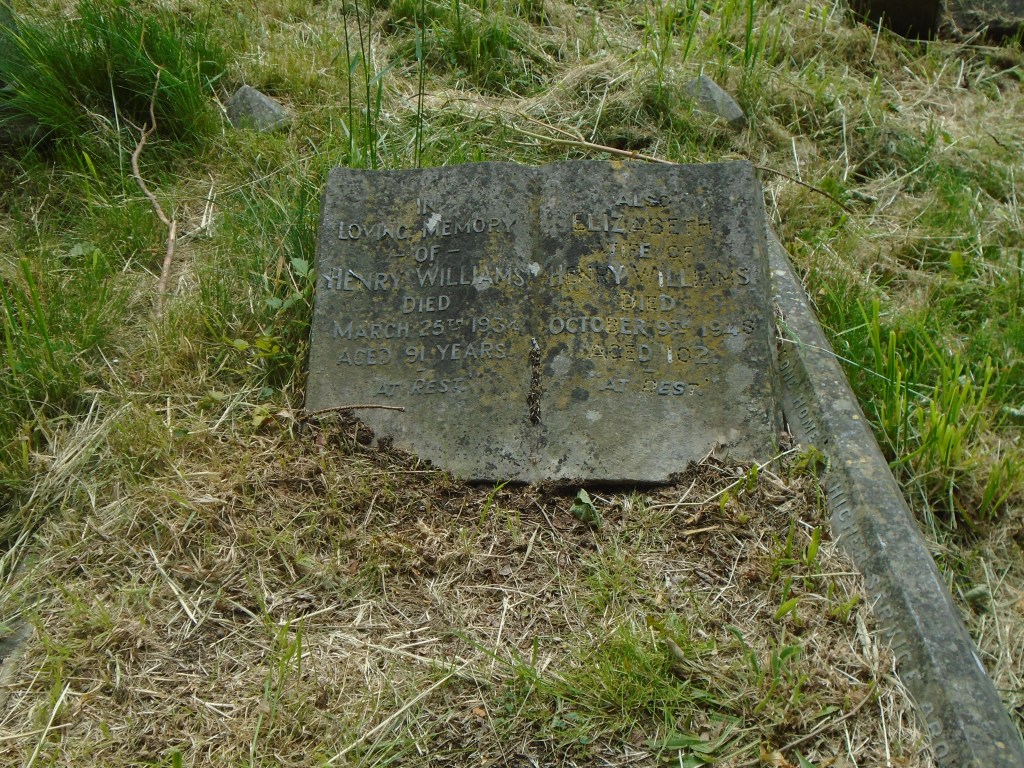
Elizabeth Williams was born in Wanborough in 1846 in a house attached to the Shepherd’s Rest public house. She was one of ten children, nine daughters and a son Henry who died aged 10. Her father Thomas Edwards, was an agricultural labourer and by the age of 15 Elizabeth was working as a general servant in Upper Stratton. Elizabeth married Henry Williams, a gas and water fitter and they had three children. The family lived at various addresses in Swindon and at the time of Elizabeth’s election to the Board of Guardians they lived at 23 Oxford Terrace, Faringdon Road.
Elizabeth served on the Ladies Workhouse Visiting and Boarding Out Committee for many years and in 1901 she was elected on to a new committee set up to address the payment of the Foster Children’s Quarterly Clothing Allowance. In 1902/3 Elizabeth also served on the Finance and House Committee where she objected to the proposal to award the Workhouse Master Mr Kilby seven guineas for his services in the preparation of Dietary Tables.
Elizabeth was a devout Primitive Methodist and strictly teetotal. Her great granddaughter Mrs Hazel Grace tells of how Elizabeth once tried to stop the male inmate’s Christmas beer allowance, a matter recorded in the Minute Book on November 20, 1901 during a discussion about the Workhouse Christmas dinner. The amendment ‘that no Beer be given but that Tea, Coffee or aerated waters be substituted,’ was proposed by local businessman Henry Raggett and seconded by Mrs Williams. However, the amendment was defeated by 16 votes to 12 and the inmates received their Christmas cheer.
In later years Elizabeth lived with her granddaughter’s family and Hazel remembered her great grandmother as a forceful character.
Elizabeth Williams died in 1948, aged 102. She is buried here, her grave marked by a headstone in the shape of an open book, symbolic of a love of learning and religious faith.
Tonight I shall raise a glass to Mr William Drew, although sadly not in The Lamb and Flag, a favourite watering hole of mine back in the day. When it came to pubs William Drew knew what he was talking about.
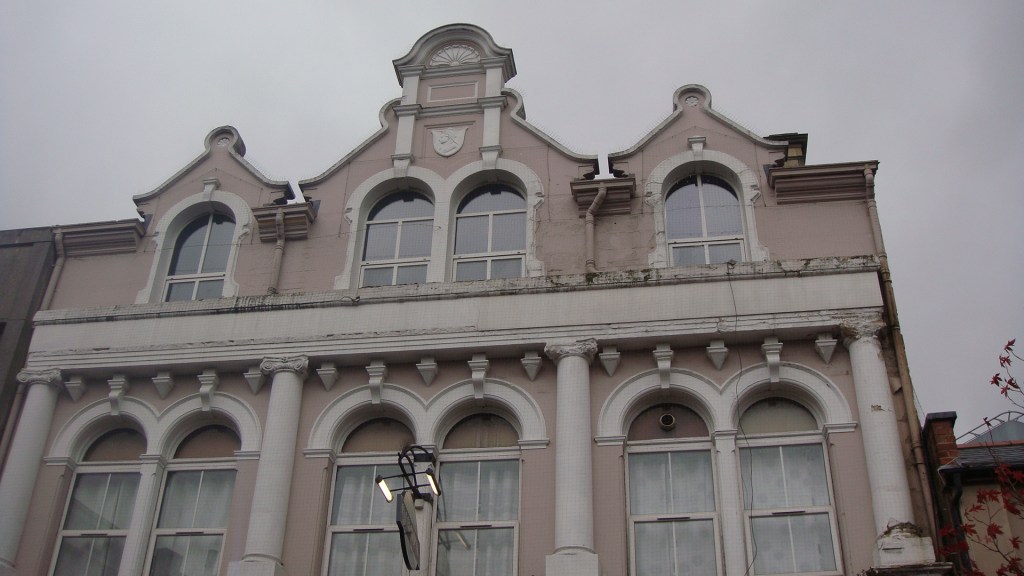
You youngsters might remember The Litten Tree in Fleet Street but of course that building was never designed as a pub, oh no, that property began life as the North Wilts Conservative and Liberal Unionist Club. It was built by Charlie Williams in 1897, the year of the old Queen’s Diamond Jubilee. You can see the commemorative plaque if you look up – past the blocked gutters and peeling paint.
They say some developer has got a plan for the building – well, they all have don’t they?
Death of an Architect. – The death occurred at Swindon on Monday of Mr William Drew, senior member of the firm of Messrs W. Drew and Sons, architects and surveyors. The deceased gentleman was at one time a very familiar figure in Swindon and the neighbourhood, but during the past three or four years he has more or less been confined to his house by illness.
Deceased was in his 68th year, and was one of the oldest members of the Society of Architects, having been admitted in 1887. He commenced practice at Highworth, where he remained for 12 years, and then removed to Swindon, where he has always earned and received the esteem and regard of his patrons and of all with whom he has had business or social relations. As a hotel valuer he was known over a wide district, while the results of his skill as an architect are to be seen in many large buildings in Swindon and the surrounding neighbourhood.
For over 30 years he has held the responsible position of architect to Messrs T. and J. Arkell, of Kingsdown Brewery, and he designed the majority of that firm’s licenced houses at Swindon, Faringdon, Lechlade, Cirencester, and many other towns and villages in the district.
Amongst other large buildings for the plans of which Mr Drew was responsible were the Clarence Street Schools (at that time amongst the finest in the west of England), the Rodborne Road Schools and enlargements, the Gorse Hill Schools (the first in the district conducted on the central hall principle), the Upper and Lower Stratton Schools, the Rodborne Cheney and Haydon Wicks Schools, Mr E. Arkell’s residence at Kingsdown, the Conservative and Unionist Club in Fleet Street, Faringdon Post Office, the Primitive Methodist Chapels at Rodborne Road and Stratton St. Margaret, the Cricklade Road Baptist Chapel and many others. Mr Drew prepared the plans of the original sewage tanks at Rodborne for the New Swindon Local Board; he developed the Kingshill Estate for Mr J. Hinton, the first street laid out being Clifton Street; and he also laid out and developed the Even Swindon Estate for Mr J. Morrison. –
The deceased gentleman has been assisted in the conduct of his business by his sons, Messrs Edward and William Drew, and they will continue to act in the same capacity as their late father.
The Faringdon Advertiser, Saturday, May 20, 1905.
*Rodborne is a spelling error in the original text.
As a valuer his services were constantly in demand, and no man was more conversant with the growth and growing importance of Swindon during the past forty years.
Deceased never took any part in the public life of the town, preferring a quiet life. In politics he was a staunch Conservative, but the only occasion on which he took an active part in the political arena was in support of the late Sir Daniel Gooch, when he was returned for the old Cricklade Division.
Mr Drew leaves a widow and family of nine children:- four sons and five daughters – for whom the deepest sympathy will be felt in their bereavement.
Some few years ago deceased took into partnership in his business two of his sons, Mr Edward Drew and Mr William Drew, by whom the bulk of the work has been carried on during their father’s long illness.
The Funeral
The mortal remains of the late Mr William Drew, were laid to rest in the Swindon Cemetery on Thursday. The funeral cortege left deceased’s late residence in Victoria Road at half-past three. Deceased was a man of great weight – considerably over 20 stone – and the remains were enclosed in an elm shell, within a coffin of immense size, of polished oak, with massive brass fittings. The inscription on the breast-plate was as follows:- “William Drew, born 29th October, 1837; died 15th May, 1905.”
The coffin was conveyed in a hearse, and there were six mourning carriages.
At the graveside there was a large assembly of sympathising friends, the funeral service being conducted by the Vicar of Swindon, the Rev. Canon Estcourt.
The funeral arrangements were satisfactorily carried out by Mr J. Williams, of Bath Road, Swindon, assisted by his son, Mr Fred J. Williams.
Extract from the obituary published in The Swindon Advertiser, Friday, May 19, 1905.
For more and better photographs of this building you might like to visit Duncan and Mandy Ball’s website.
When David Watson heard about the new railway town being built in Wiltshire, he decided to apply for a job.
He packed his apprenticeship indentures in a leather pouch, kissed his wife and his two daughters goodbye and set off from his home in Scotland. He intended making the journey of 500 miles on foot.
That was the story handed down through generations of railwaymen. Today such an epic effort is unfathomable. In 1843 the railway network was in its infancy and the road system was basic and hazardous. Today a journey by car travelling on the M6 would taken an estimated 7 and a half hours and even a train journey would take more than 8 hours. How long did it take David Watson and which route did he follow? Did he hitch a ride with a passing carter or did he travel part the way by stagecoach? Did he stop to sleep on route at a roadside inn or did he shelter in the hedgerow over night? Did he really walk 500 miles?
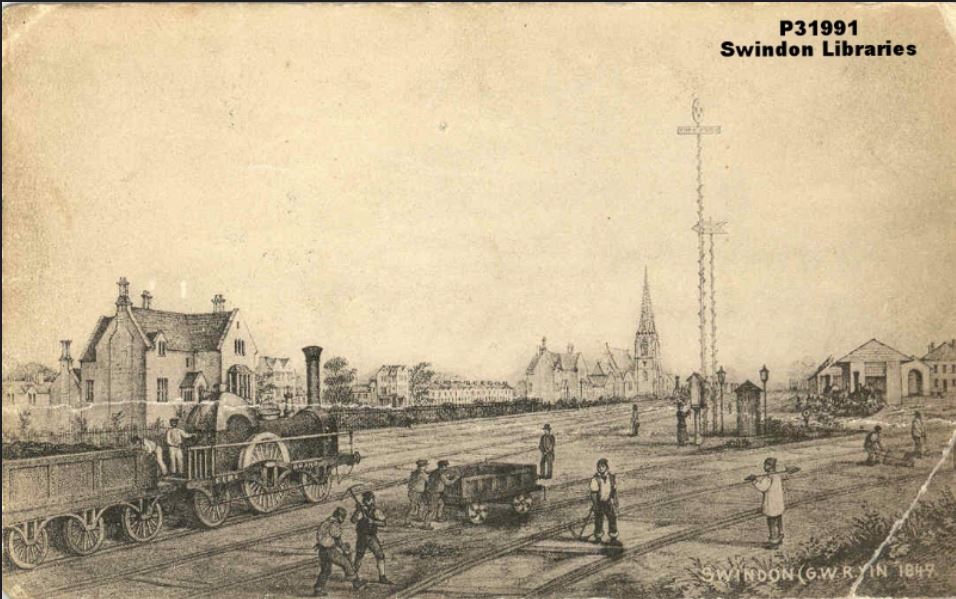
New Swindon 1847
The facts …
Death of Mr David Watson
ASwindon Octogenarian
The news of the deathof Mr. David Watson which occurred on Wednesday at the residence of his son, Mr. Alex. Watson, 24 Cambria Place, will be received with keen regret by a host of friendsamongst the older generation of Swindonians. Mr. Watson was 89 years old about a month ago, but, notwithstanding his great age, he had until recently been a familiar figure in that part of the town near his home. As recently as a week before his death, the old gentleman was seen out, but on Friday he had an attack of bronchitis, to which he succumbed shortly after noon on Wednesday.
A fine, burly figure of a Scotsman, Mr. Watson was born at Cragie, near Glasgow, in 1824. Serving his apprenticeship as a fitter in Dundee, he came to Swindon as long ago as 1843, and obtained employment in the GWR Factory. For about 30 years, the old gentleman, whose hearty and genial manner soon won him a large circle of friends, was chargeman over the fitters in the R Shop, and even after advancing years compelled him to give up the chargemanship he continued to work “Inside.” Indeed, it was only 11 years ago, in ’99, when Mr Watson had reached the age of 79 years, that he finally left the GWR Company’s employ, thus severing a 56 years’ connection with the Railway Company.
Mr Watson had been a member of the ASE for about 71 years, being superannuated by that Society when he gave up work. One of the first members of the Mechanics’ Institution and Medical Fund Society he was President of the latter on one occasion in the “fifties.”
In politics, the deceased was an ardent Liberal. During the whole of his residence in Swindon he had staunchly supported the Progressive cause, and took a prominent and active part in local contest in the old days.
Mr Watson, it might be mentioned, was one of the earliest contributors to the columns of the “Advertiser.” He was living in Swindon when this paper was founded in 1854, and he was a friend of the late Mr. William Morris, the founder, and, for nearly forty years, editor of this paper. Amongst his most treasured possessions was an old copy of the Swindon Advertiser, dated June 31st 1859, containing a report of a speech given by Mr Watson when presiding over a “Bobbie Burns” Centenary dinner at the Union Hotel, Swindon.
Mr Watson leaves three sons and two daughters out of a family of eleven, to mourn his loss.
The funeral of deceased will take place in Swindon Cemetery tomorrow (Saturday) afternoon.
The Swindon Advertiser, Friday, April 15, 1910.
At the time of the 1851 census David and Elizabeth and their five children were living at 7 Reading Street. By 1881 the widowed David was living at 31 Sheppard Street, his four sons were all working as engine fitters in the railway factory.
David Watson aged 89 of 24 Cambria Place was buried in grave plot B2967 on April 16, 1910. Hewas later joined by his son Alexander and daughter-in-law Eliza.
There can be no doubt about who is buried in this grave.
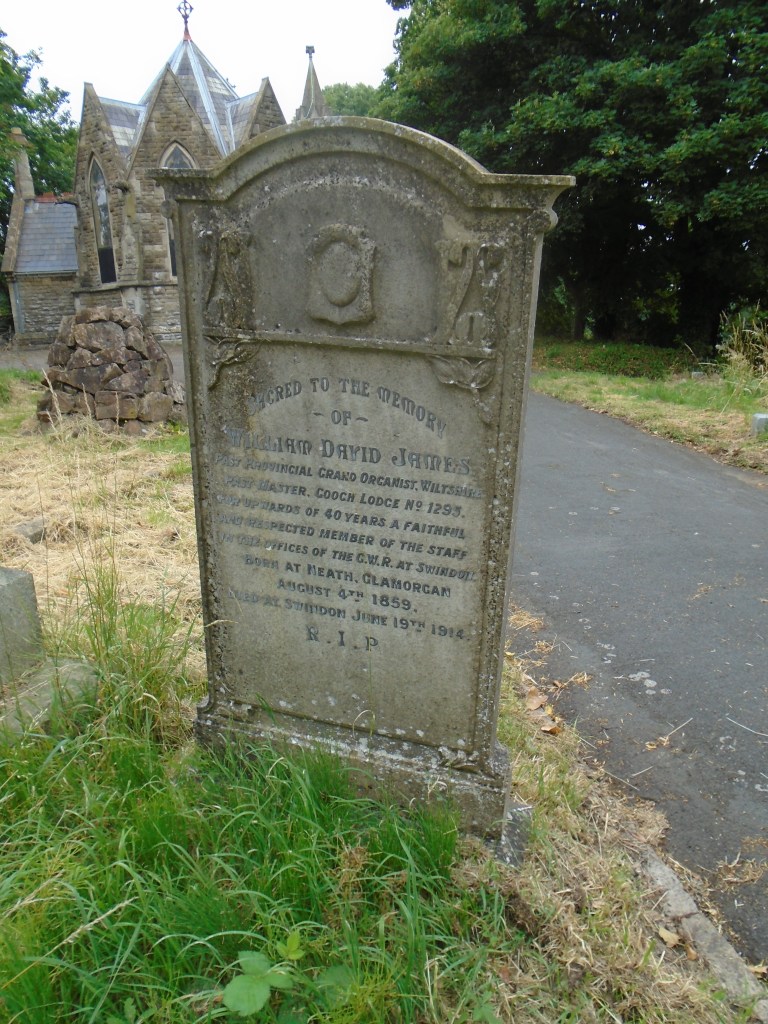
Mr James had led a very interesting and eventful life, as you will read in the detailed obituary published in the North Wilts Herald, but I do have one quibble. Well, not just one. In the obituary there is but a passing reference to the wife who predeceased him. She is however, mentioned on the kerbstone of this elaborate headstone along with her mother. Sadly, both sides have sunk into the heavy clay soil and are almost lost.
Death of Mr. W.D. James
A Well-Known Swindon Musician
The death has taken place, at the age of 55, of Mr William David James, of Victoria Road, Swindon, a member of a well-known family of musicians and one of four brothers who have achieved considerable renown in musical circles.
Deceased was, perhaps, the least famous of the quartet, but there were few more accomplished violinists in the West of England, and there is little doubt that, had he chosen, he would have made his mark, as his brothers have done.
What he knew about music he learned from his uncle, Mr. William Hawkins, of Wellington Street, Swindon, who for nearly a quarter of a century was bandmaster in the 2nd Battalion Wilts Volunteers and for many years musical director to the GWR Mechanics’ Institute. Mr. Hawkins took his nephews in hand when they were quite youngsters, and under his tuition they soon became proficient. Deceased played the trombone, both in the Regimental Band and the New Swindon Amateur Minstrels, which was an orchestra of 40 performers, and of which Mr. Hawkins was also conductor.
Subsequently, heleft the GWR Works to enter the musical profession, and for a short period he played first violin in the Royal Aquarium Orchestra at Brighton, but family considerations induced him to return to Swindon, and he took up his old position as a clerk in the Locomotive Department at the Great Western Works.
Practically the whole of Mr James’ life was spent in Swindon. As a boy he sang in St. Mark’s Church choir, his uncle being choirmaster, and in later years his services as a violinist were in great demand at local concerts. On many occasions he played first violin at performances given by the Swindon ChoralSociety and the Cirencester Choral Union, and, following in the footsteps of his uncle, he conducted an excellent orchestra of his own. Devotees of dancing invariably found it a pleasure to indulge in their favourite pastime to musicfurnished by Mr. James’s orchestra, and for many years it has been one of the best known in the district.
Deceased’s three brothers – Messrs. Edwin Fred James, Frank G. James and Wilfred G.T. James – are all at the top of the tree in their profession, being members of the King’s Private Band and also professors of the Royal College and the Royal Academy of Music. At one time and another they have been engaged at all the principal musical festivals in the country, and some time ago they visited the United States with the London Symphony Orchestra, under the direction of Arthur Nikisch. Mr. Frank James plays the trumpet, and the other two brothers are the principal bassoon players at Covent Garden Opera and all the great London concerts. It was as a old employe in the Great Western Works that Mr. Wilfred James gained a scholarship at the Royal College ofMusic, and from Swindon he went to London and quickly made a name for himself in the profession. At the present time he is the principal bassoon player in the Queen’s Hall Orchestra, under Sir Henry J. Wood.
The late Mr. James, in addition to being a well-known musician, was prominently identified with Freemasonry in Swindon. He was initiated into the Gooch Lodge in 1896, and, having passed the various degrees, was 10 years later made Worshipful Master of the Lodge. Latterly, his health had not been robust. He had a seizure some time ago and was compelled to go into a convalescent home at Weston-Super-Mare. After treatment at that institution he returned to Swindon, much improved in health, but some months back he had a second stroke, from which he never really recovered, and on Friday he passed away, to the regret of a wide circle of friends and acquaintances in Swindon and the neighbourhood.
Mr. James’s wife pre-deceased him some years ago. He leaves four sons and one daughter.
Extracts from the North Wilts Herald, Friday, June 26, 1914.
If Ada Hack’s grave ever had a headstone it has sadly been lost.
Ada Hack stood for election to the Swindon School Board in 1883. There was some opposition to her suitability, although not on account of her gender or her teaching experience. The 33-year-old mother of two had taught for 12 years in Board Schools and had run a private, middle class school of her own but W.H. Stanier, chief clerk to William Dean, Chief Locomotive Engineer for the Great Western Railway, challenged her impeccable qualifications, arguing that she was a relative newcomer to Swindon, so apparently didn’t know how the town worked. Ada responded by drawing attention to the election of Rev Ponsonby in 1880 when he too was a newcomer to the town.
Ada was born in Lambeth in 1850, the daughter of Charles Brocklehurst, a merchant clerk, and his wife Eliza. She studied at the British and Foreign School Society’s Training College for Mistresses in Stockwell, South London. She married Ebenezer Hack, a postal clerk, in 1880 and soon after moved to Swindon.
Standing as an Independent candidate, Ada voiced her opinion that school boards had nothing to do with politics and that political interest should not override the interests of the children. As a Quaker, Ada was against corporal punishment, conceding while it may be necessary to use the cane on some occasions, but she had never had cause to use it.
Ada came top of the 1883 poll, beating her nearest rival by more than 650 votes and defeating two newspaper proprietors, William Morris of the Swindon Advertiser and Joshua Piper of the North Wilts Herald. Her nomination was said to have received support from ‘some members of the Bristol and London school boards and from women all over the country.’
Having secured an unqualified victory in 1883 Ada unfortunately made little impression on the running of the School Board as she attended few meetings due to ill health. She was persuaded to stand for re-election in 1886 much against her wishes and received just 394 votes, finishing 14th in the poll.
But this was not the end of her involvement in the public sector. Ada became a member of the Women’s Peace and Arbitration Association and also the Moral Reform Union, an organisation that pressed for the need to eradicate sexual double stands in society and focused on the Contagious Diseases Acts, and the poor moral conduct of public figures.
At the time of the 1891 census Ada lived at 26 Belle Vue with her husband and two young sons where she described her occupation as ‘Artist Sculp.’
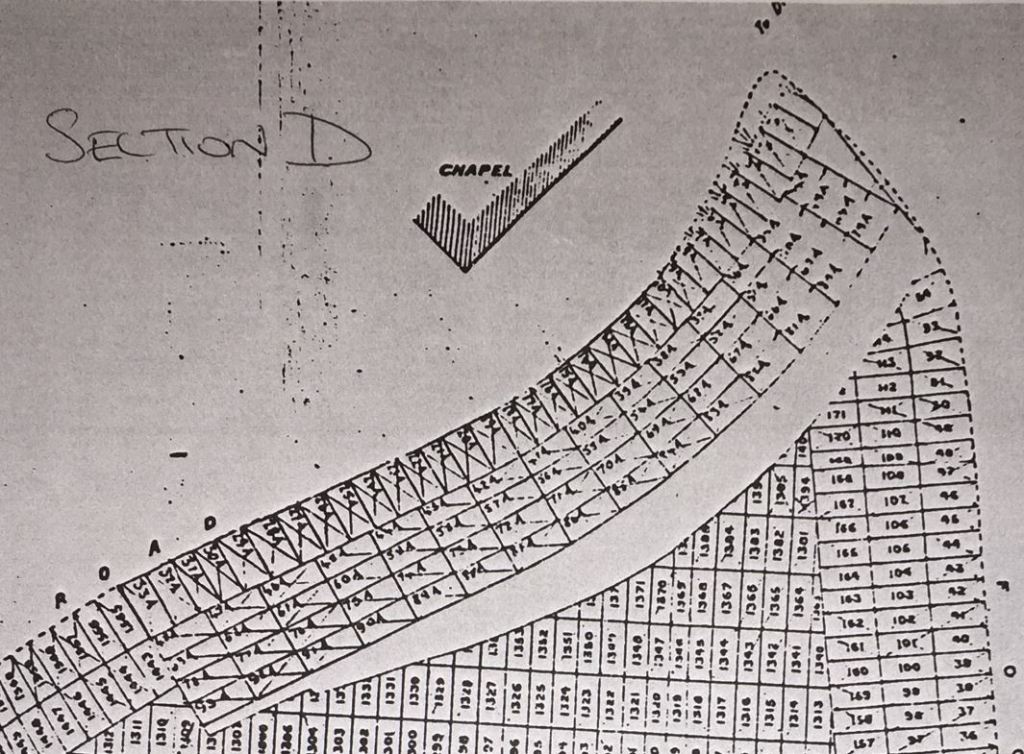
The 1883 newcomer to Swindon died at her home, Elm Villa, Wellington Street in January 1931. She is buried in grave plot D89A, close to the cemetery chapel, with her husband Ebenezer Benjamin, her son John Victor Campbell Hack and her daughter-in-law Alice Margaret Louisa Hack.









 Radnor Street Cemetery