The Cost of a Kiss?

The re imagined story …

Arranging this evening had been an organisational nightmare, I can tell you. I had to persuade Daisy to come out with me in the first place, then I had to wait until she had a Saturday evening off work. Probably the most difficult task was getting my father to allow me the use of the pony and trap. I couldn’t tell him I planned to take a young lady for an evening drive, he already thought I was irresponsible and not to be trusted. In the end I told him a lie. I said a friend had to make an emergency trip into the Medical Fund Hospital. I could hardly have guessed how prophetic this would be.

I managed to drive the pony and trap out of the yard without him glimpsing me. He would surely have seen through my deception had he caught me wearing a new collar and my Sunday best jacket.

I pulled up outside the manor house and waited for Daisy. I didn’t really know what we could do or where we could go, I hadn’t planned that far ahead. But it was a beautiful evening so I suggested we go for a walk through the copse to the stream.

I parked the pony and cart at the road’s edge along Church Hill. Mol was a placid old horse, I knew she would stay where she was left. I never thought of the bend in the road or that the light might soon be fading. I never imagined there would be any other traffic at that time of the evening, quite forgetting the shopper’s bus from Moredon to Swindon.

All I could think about was Daisy and how beautiful she looked that summer’s evening and whether she would let me kiss her as we walked down by the stream.

We had hardly walked into the copse before we heard the sound of galloping horses and raised voices and the Moredon bus travelling down the hill at a furious speed. Suddenly there were shouts and screams and a splintering crash.

Daisy had already begun to run back to the roadside. The pony and trap still stood where I had left them, but all around was a scene of mayhem. The bus had crashed into the bank, throwing several passengers out of the vehicle and onto the road. The driver must have climbed out, or perhaps was thrown out, as he stood between the two horses holding their bridles, attempting to calm them.

Everything was in chaos. A woman lay on the ground beneath the bus while others were trapped inside. I saw one poor man so covered in blood I could hardly see his features.

Daisy rushed forward to be of assistance while I stood rooted to the spot. “What will I tell my dad?” I pleaded. Could the trap I had left unattended just beyond the bend in the road be the cause of this disaster? I could tell by the expression on Daisy’s face that she thought so.
Valentine 2

The facts …

Road Car Accident at New Swindon

Several Persons Injured

One Man Dies

As already reported, an accident occurred on Saturday evening that to the 8.40 pm car from Moredon to Swindon, by which several persons received injuries, and unfortunately in one case a fatal result has followed. It appears that on Friday and Saturdays special cars are run to Moredon by the Swindon Road Car Company to enable persons to visit Swindon for shopping purposes, etc.

On Saturday last this car left Moredon as usual. On arriving at the Church Hill, Rodbourne, we are informed (and we give it with all reserve) that the driver did not put the brake full on, but allowed the horses to keep up the pace whilst descending the hill. The car was running on the right side of the road, and on turning the corner just below the churchyard a baker’s cart belonging to Mr H. Robins, baker, of Moredon, was seen. The driver immediately pulled to the left side, and ran into the bank, the swing turned the car over on its side. The occupants of the front seats were thrown out, and those inside were violently thrown about.

Assistance was soon to hand, and everything was done on the spot that was possible. Just after a waggonette belonging to Mr Hall, of New Swindon, and conveying a party of cricketers to Swindon, arrived. This party quitted the conveyance, and the injured were conveyed to the GWR Medical Fund Hospital therein. There were five adults and three children brought to the Hospital. After they had been attended to by Dr. G. Rodway Swinhoe, they were sent home with the exception of a man named Harry Marshall, a married man with a family, and residing at 17 Morse Street. He was suffering from a nasty scalp sound and an injury to his back. On enquiring this morning, we find he is progressing favourably.

Another man, named Herbert Newsome, a cripple, living with his parents in Spring Gardens, was found to be suffering from a cut on the forehead and chin. After receiving attention he was driven home. It appears however, that he suffers from bleeding, and on Tuesday it became so serious that he was removed to the Hospital about 2 am. Under the careful treatment of the staff the haemorrhage was stopped. He died, however, last evening and the cause of death will be the subject of an inquiry this afternoon. Deceased who was quite a young man had been a cripple for some seven years He was a member of the Wesleyan Chapel in Princes street and on the day of the accident was returning from the anniversary tea in connection with the Moredon Wesleyan Chapel in company with friends.

The Matron told us that the people presented an awful sight on their arrival at the Hospital on Saturday evening last ….

Extract from the Swindon Advertiser Friday June 9 1899

 At the inquest the bus driver told how he had worked around horses all his life and was an experienced coachman who had until recently lived in London. He said he had never had an accident before in his life.

A number of contributory factors to the accident were revealed – the bus was overloaded, braking equipment had failed and passengers said the driver was travelling too fast.

‘The Doctor’s Evidence

Dr G.R. Swinhoe said he was called to the cases at about 11 o’clock on Saturday night, and found two women and three men at the GWR Hospital, suffering from injuries received in the accident. They were all brought there in a carriage. Amongst them was the deceased, and when witness saw him he was told that he (deceased) was a “bleeder,” or a person who would bleed at the slightest scratch. Witness therefore attended him first. They did what they could for the man and put on such pressure as he could stand, and they apparently stopped all bleeding. He went home, but haemorrhage started again, and on Tuesday he was taken worse, and sent back to the Hospital. He (witness) would not have sent him out, but he had a little doubt as to whether he should or not, because he was not a factory hand. He eventually died from the effects of bleeding as a result of the accident. There were two cuts – one on the scalp and a very tiny one on the chin. It was this latter which caused the most trouble, for they could not get any pressure on it to stop the bleeding. Deceased must have lost a tremendous amount of blood before he came to the Hospital.

The Coroner said he thought they could all understand how the accident happened, and from the evidence no blame rested on the driver of the car.

The jury then returned a verdict of “Accidental death.”’

Extract from the Swindon Advertiser published Friday, June 16th 1899

Herbert Newsome was born in Twerton on Avon, the eldest son of Joshua and Lydia Newsome. At the time of the 1891 census the family were living at 6 Spring Gardens. Joshua was a general labourer in the GWR Works while Herbert worked as a Clothier’s Assistant. Herbert was buried in plot C934 on June 13, 1899.

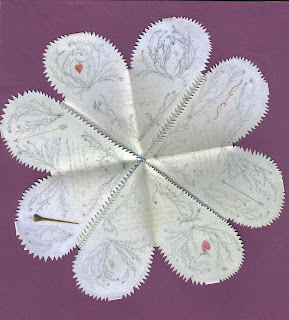
You might also like to read a story I wrote some years ago about a local Valentine card (see above) that appeared on the Antiques Roadshow in 2008.

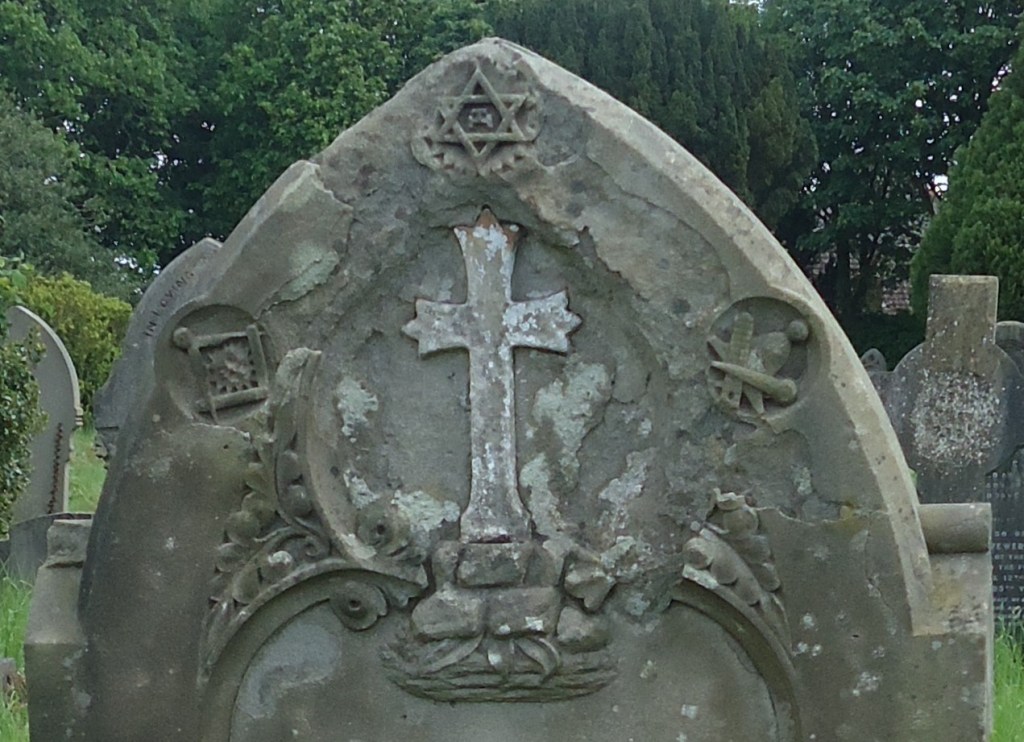
Edwin Browne – Past Master of Gooch Lodge

This headstone is decorated with numerous symbols, clearly indicating that Edwin Browne, who is buried here, was a Freemason.

Edwin was born in Newbury, Berkshire in 1833. By 1851 he was living with his widowed mother Mary at No. 2 Kimbers Alms Houses in Newbury where his mother is described as an ‘Almswoman’. Seventeen-year-old Edwin was working as a Postmaster’s Assistant but a year later he had left Newbury and was in Swindon where in October 1852 he began work as a clerk in the GWR Works stores.

But he was soon on the move again. In 1860 he married Anna Maria Heathcote at St. Peter & St Paul’s Church, in Aston and at the time of the 1861 census they were living in Coleman Street, Wolverhampton with their daughter Emily Vine Browne.

They remained in Wolverhampton for at least six years where two more daughters were born, Annie Amelia and Florence Lucy. Their first-born daughter Emily died in 1867 and is buried in Merridale Cemetery, Wolverhampton.

By the time of the 1871 census the family were living at 24 Prospect, Swindon before moving to 3 Church Place where Edwin died on June 2, 1885.

Research has revealed that Edwin was initiated into the Gooch Lodge on July 4, 1870 when the Lodge was only recently established. He would serve as Past Master of Gooch Lodge and PPSGO of Wiltshire.

Edwin died at his home 3 Church Place on June 2, 1885 and was buried in plot E8435 on June 5. He was 51 years old. The headstone leaves plenty of space for more inscriptions, but Edwin lies here alone.

Edwin’s second daughter Annie Amelia married Henry Simpson, a Steam Engine Fireman, in Wolverhampton in 1891. She died in Newport, Monmouthshire in 1961.

Youngest daughter Florence Lucy married Sidney Herbert Webber and remained living in Swindon. She is buried with her husband, two daughters and a son in Christ Church Burial Ground.

Edwin’s wife Annie Maria Browne remarried in 1900 in Cirencester and died there in 1913.

Mr Edwin Browne, deputy chief store-keeper to the Great Western Railway Company, died in a sudden manner on Tuesday, from heart disease, at his residence in Church Place, New Swindon. Mr Browne, who has been many years in Swindon, was generally liked by all with whom he came in contact. He was an enthusiastic Mason, being P.M. of 1295 and 355, and a P.P.S.G.O. of Wilts. The Masonic brethren of the deceased attended the funeral yester (Friday) afternoon at the Cemetery.

The Swindon Advertiser, Saturday, June 6, 1885.

Consecration of the Gooch Lodge, No. 1295

The interesting ceremony of the consecration and dedication of the Gooch Lodge, No. 1295, which had been looked forward to by the brethren in the province with a considerable degree of interest, took place at the Queen’s Royal Hotel, Swindon, on Saturday last. A very considerable number of brethren attended from London, Bath, Bristol, Gloucestershire, and several lodges in the province. Brother H. Muggeridge, as presiding officer on the occasion of the consecration, took the chair, and at once proceeded with the ceremony of consecration and dedication, which he most effectively and impressively performed. His opening address was a great treat and was listed to with much attention. The oration by the P.G.C. Brother the Rev. C. Raikes Davy also received great attention, being an exhortation to adhere to and promote the well-known objects of the Masonic Order – Charity, Benevolence, Good Will, etc.

The Lodge was afterwards formally dedicated and consecrated.

The installation of Brother Kinneir was then performed by Brother Sir D. Gooch, and the following officers were installed and invested:- Bros. J.J. New, S.W.; H.C. Tombs, Treasurer; F.J. New, S.D.; C. Lidsley, I.G.; H.J. Birch, J.W.; T. Coall, Secretary; W. Hall, J.D.; J. Burrows, Tyler.

The Banquet, to which upwards of 60 brethren sat down, was presided over by Brother Henry Kinneir, now W.M. 1295, supported on his right by the V.W. the D.P.G.M., and Brother Muggeridge, and on his left by the R.W. the P.G.M. of Berks and Bucks (Bro. Sir D. Gooch), Brother Rev. C.R. Davy, P.C.G., etc. the repast was served by Brother Westmacott, at the Goddard Arms, the resources of whose establishment were fully equal to doing honour to such an auspicious event. After the cloth was removed, the usual loyal and Masonic toasts were eloquently proposed and heartily responded to, song and glees most pleasantly alternating with the toasts.

The whole ceremony passed off with great eclat, and many brethren who came from a distance and had witnessed the consecration ceremony congratulated the members of the Gooch Lodge most warmly on a successfully inauguration.

Extracts from a much longer report published in the North Wilts Herald, Monday February 14, 1870.

Alfred James Charsley – theatrical impresario

“For someone who clearly loved the limelight, Alfred James seems to have been quite camera shy,” said Rhoda Murray who kindly supplied this story of her ancestor. The grainy, black and white photograph (see below) is all that Rhoda has been able to find.

Alfred was a colourful character, changing his name to James Allington Charsley and somewhat creative when applying his age to official documents. Born in Leicester in 1867, the fourth of Joseph and Lucy Charsley’s five sons, Alfred took to the stage performing a song and step-dance routine in pantomime aged 11-13. however on leaving school he worked in the boot making industry as did the rest of his family.

In 1892 Alfred briefly joined the London Metropolitan Police Force, but by the time of the 1901 census he was living in Northampton, once again working in the shoe and boot making industry, while continuing to pursue his theatrical career. By the time of his marriage to Emily Beatrice Wheeler in 1910, Alfred described his occupation as ‘Theatrical Manager.’

Alfred and Emily arrived in Swindon in 1934 when he took on the lease of the Playhouse Theatre in the Mechanics’ Institution.

He died on October 17, 1940 at Roundway Hospital, Devizes. His cause of death was recorded as broncho-pneumonia.

Emily took over the lease of the Playhouse and continued to live at the home she had shared with Alfred at 94 Croft Road. In April 1950 she married Arthur William Thraves and moved to Stratton St Margaret. She died in January 1962 and was buried with Alfred in grave plot C1750.

The Mechanics’ Institution Theatre c1931

Death of Mr J.A. Charsley

Swindon Playhouse Lessee

One of the best known personalities in the provincial theatrical world, Mr J. Allington Charsley, lessee of the Playhouse, Swindon, died last night after a short illness. He was 69 years of age.

Mr Charsley was taken seriously ill less than a fortnight ago.

A native of Staffordshire, Mr Charsley had been associated with the theatre from his early days, filling with distinction the roles of actor, producer and lessee. He was particularly interested in opera, and for many years toured the biggest company that has ever been assembled to play in provincial towns and cities. Many men and women, who have since gained world wide fame, were first brought to public notice as members of Mr Charsley’s companies.

He had a remarkable memory for names and dates, and would often recall how some of the stars-to-be were discovered in the back row of his choruses.

Mr Charsley has made a host of friends during his six years at the Playhouse, and in face of great difficulties has succeeded in bringing to his theatre – the only one in Wiltshire presenting flesh and blood shows – many of the best known variety and revue stars of the present day.

A fine sportsman, he was particular interested in racing and football, and his generosity, when approached to assist any deserving cause, was widely appreciated.

He leaves a widow, who is carrying on the Playhouse.

A brother of Mr Charsley, Mr, Chris Charsley, who is now living in retirement at Weston-super-Mare, was formerly Chief Constable of Coventry.

North Wilts Herald, Friday, 18 October, 1940.

Many thanks to family historian Rhoda Murray for providing the story of Alfred James Charsley – theatrical impresario.

George Henry Barefoot – like father, like son.

There is nothing I can add to the history of George Henry Barefoot that isn’t already mentioned in this detailed obituary (see below). Born in 1850 he was the first generation of Swindon-born railwaymen. Like his father he entered fully into the life of the railway town, supporting and working with the Mechanics’ Institution.

Published courtesy of Local Studies, Swindon Central Library.

Death of Mr G.H. Barefoot

A Sudden End

A well-known resident of Swindon passed away on Saturday night, when Mr George Henry Barefoot, foreman of the coppersmiths in the GWR Works, expired with painful suddenness after having pursued his daily avocation throughout the morning. Deceased went home to dinner in the ordinary way and partook of a meal. He then suggested to his niece, who had been keeping house for him at 19, William Street, since the death of his wife 11 months ago, that they should go to the football match together. He washed and changed, but on coming downstairs he complained of pains in the head and commenced vomiting. His condition grew worse, and Drs. Gilmore and Mason, of the GWR Medical Fund staff, bestowed upon him constant attention, but the end came at 10.45 p.m. The late Mr Barefoot had suffered from diabetes for two years, but he appeared to have completely recovered from this malady, and his death arose from an unexpected and a tragic relapse.

Born at Swindon in October, 1850, Mr Barefoot had attained the age of 61 years and his is a rare case of a man of advanced years predeceasing his father. Mr George Barefoot, who, at the great age of 83 years, is still hale and hearty and vigorous.

In January, 1864, deceased entered the locomotive department of the Great Western Railway at Gloucester – whither he went as a child for a few months – as an apprentice to the trade of a copper and tin-smith. He was transferred to the Swindon Works whilst still an apprentice in 1868, and continued to remain there up to his death. Being a workman of exceptional ability, he was promoted to a foremanship in 1900 in succession to Mr Laxon, and enjoyed the esteem of everyone with whom he was associated.

Mr Barefoot was a Forester and an Odd-Fellow, but, apart from his Works career, he was during his long residence in Swindon chiefly identified with the evolution of the GWR Mechanics’ Institute, which he had been instrumental in helping forward for a considerable period. He was a member of the Council for no less than 26 years, and when he had to retire upon his preferment to the status of a foreman 11 years ago it was realised that his services were so valuable that he quickly returned to take part in the deliberations of that body as a foremen’s representative.

He acted as secretary to the Juvenile Fete for about 13 years and at the time when the Institute were prominently concerned in conducting the education of the town Mr Barefoot was much to the fore.

In his young days he was more fortunate than most lads, for he received a good foundation of knowledge at Sir Thomas Rich’s Grammar School at Gloucester, and this advantage was of practical use to him throughout his career.

For many years he acted as MC of the Institute dancing class, acting in that capacity before the time of Mr A. Warburton, at whose death he again undertook the work, and it is interesting that he is the immediate predecessor of Mr F.H. Howard in conducting the class.

The late Mr Barefoot married Miss Mary Ann Berry, a native of Swindon, who, as stated above, died nearly twelve months ago. A family of four remains – one son and three daughters. All are married, and the former – Mr A.G. Barefoot resides at Birmingham, whilst the three daughters are Mrs G.F. Randell (Swindon), Mrs H. Moody (Australia), and Mrs H. Bryant (Swindon). The greatest sympathy will be extended to them in their unexpected bereavement.

Funeral

The funeral, which took place on Wednesday, was an impressive tribute to one who enjoyed high esteem. Leaving deceased’s late residence in William Street promptly at 2.20, the long procession was headed by a hand bier bearing beautiful floral offerings, and then followed the shillibier and eight carriages, while the followers on foot, who walked in double file, numbered quite 140.

The cortege wended its way to St. Mark’s Church, where deceased had been a worshipper, and which was almost filled with mourners.  The service here was taken by the Rev K.M.S. Graeme (curate), who also performed the last rites at the Cemetery, where in spite of the miserable weather, a good number, apart from the followers were present. Deceased was buried with his wife and adjacent to the grave containing his mother’s remains.

Long list of mourners…

Mr A Tyler represented the Stores Department clerical staff. K Shop of the Works, of which deceased had charge, was specially closed for the occasion, and considerably more than 100 men took a respectful part in the sad ceremony.

The coffin was of polished elm with brass fittings, and it bore the following inscription:

George Henry Barefoot

Died Jan. 7th, 1911

Aged 61 years.

A long list of floral tributes, including:-

A token of sympathy and esteem from the men and boys of K. Shop.

A token of respect from the GWR Foremen’s Association.

The funeral arrangements were in the hands of Messrs H. Smith & Son, Gordon Road.

Extracts from North Wilts Herald, Friday, January 13, 1911.

George Henry Barefoot was buried in Radnor Street Cemetery on January 11, 1911 in grave plot E7793 which he shares with his wife Mary Ann and in the neighbouring plot to his mother Mary Elizabeth Barefoot and later his father, George Barefoot.

You might also like to read:

George Barefoot – an investor in people

Mabel Maria Edith Summers Morris

On January 18, 1905 Mabel Plaister married William Summers Morris at St. Mark’s Church. William was the grandson of William Morris, founder of the Swindon Advertiser. Their son was born on March 22, 1906. Two months after the birth of their baby William Summers Morris was found drowned in the Thames at Molesey Lock near Hampton Court. He had been missing from his Swindon home for a week.

Mabel Maria Edith Catherine Harriett was the fourth child and eldest daughter of James Plaister and his wife Symper Rosa. The couple’s first three children were born in Wolverhampton. By the time of Mabel’s birth they were living in Swindon, although Mabel was baptised at St Barnabas’ Church, Bristol on June 1, 1879.

At the time of the 1881 census the family were living at 20 Read Street, alongside the canal. Ten years later James and Symper Rosa had moved to 1 Park Terrace with their nine children, Sarah Terry who was Symper Rosa’s niece and a boarder William Preston, a Steam Engine Fitter and Turner. James was employed as a railway clerk in the Works where five of his sons would follow him. Daughters Rosa and Lilian both became schoolteachers but the census returns make no record of Mabel’s occupation. Perhaps as the eldest daughter she was consigned to a domestic role helping her mother.

Following the discovery of his brother-in-law, Charles A. Plaister travelled to Surrey where he identified the body and appeared as a witness at the inquest. Here he read a very long statement written by William before his death in which he expressed sorrow and regret for the action he had taken. He referred to his financial difficulties and said he had been pressed by his creditors, which led him to take the step he did.

Mr F.A. Morris, William’s uncle, said his nephew had never spoken of any financial difficulties and that family members would have helped in any way they could had they known. William’s stationery, newsagents and book seller’s business appeared to be doing well.

The coroner suggested a verdict of “found drowned” which the jury duly returned.

But what happened to Mabel? Well, first she buried her husband. William’s funeral took place on June 2 at St. Mark’s, the church where they had been married less than 18 months previously. Two weeks later she had her three month old baby son baptised William James George Summers Morris at the same church. Then like other women in her position, she got on with the job of living and raising her young child.

In 1911 Mabel and her five year old son were living with the large Plaister family at 26 The Mall, Swindon. She never remarried and at the time of her death in 1936 she was still living at 26 The Mall with her two unmarried sisters, Lilian and Rosa. She was buried with her husband and her parents in a large double plot D105/6. Her sisters joined them when Rosa died in 1962 and Lilian in 1963.

Mabel’s will was proved at Winchester on May 4 with probate going to her brother Charles Anthony Plaister, a retired stores superintendent, who had served as Mayor of Swindon in 1918/1919. Her effects were valued at £274 5s 10d.

Jason Johnson – a homegrown railwayman

Here we have Jason Johnson who served alongside Robert Laxon on the Medical Fund Committee from 1853-1859.

Jason was a homegrown railway man, and in the early days there weren’t too many of them around.

Jason was born in nearby Baydon in 1819. Jason married Emma Adams in 1846 and by 1851 they were among the early residents to move into Taunton Street. According to the 1851 census returns Emma was 21, which would have made her just 17 when they married. You have to be a bit flexible when reading census returns – until civil registration was introduced in 1837 people were not always certain of their birthdate, and of course people told fibs for all manner of reasons. A wife older than her husband might shave off a few years. A child born out of wedlock might have a year added to their age and a boy out at work might also add a year to qualify for a higher rate of pay.

Jason’s job ‘Inside,’ which was the local term for the railway works, was that of blacksmith.

In 1861 the couple lived at 30 Taunton Street with their six children. Ten years later and they had moved to 27 Gloucester Street. During the intervening 10 years Emma had five more babies with one last one born in 1874.

The boys all went into the Works; Arthur and Alfred worked as blacksmiths; John and Daniel as coach body makers while Thomas worked as a railway clerk.

Jason died at his home 19 Gloucester Street on December 2, 1891 and left effects to the value of £404.

You might also like to read:

Robert Laxon – first secretary of the Medical Fund

Robert Laxon – first secretary of the Medical Fund

I was surprised to find these two decorative headstones when I started researching Robert Laxon and Jason Johnson, two of the early settlers in the railway village. I had wrongly made the assumption that they would not have left enough money to pay for something like this. But the more I looked into their lives the more interesting I found these two men.

This is the last resting place of Robert Laxon who died at his home No 2 Faringdon Street on January 16, 1890 aged 86.

Robert was born in Lowestoft on May 10, 1804 and grew up in Gt Yarmouth, Norfolk. By 1835 he had married his wife Maria (who is buried here with him) and the couple were living in the parish of St Pancras in London.

The couple had a large family – two sons and six daughters, the youngest three children were born in Swindon. Robert’s sons, Robert and Frederick both became coppersmiths while the girls worked as dressmakers and tailoresses. Matilda had worked as a Pupil Teacher and in the 1871 census Maria describes herself as a bookseller, but eventually all the women earned their living by sewing.

The UK Railway Employment Records state that Robert’s service with the GWR began in December 1838 at Paddington where he worked as a coppersmith and that he was Foreman in K Shop of the Loco factory by June 24, 1843, the first to hold that position.

Robert held another first – in 1853 he was the first secretary of the Medical Fund. He also belonged to both the Oddfellows and the Ancient Order of Foresters, two Friendly Societies, which provided insurance, pensions and a banking service for members, so he was a careful and a canny man. When he died he left £878.

The employment records state that Robert left the GWR employment on January 16, 1890 – the date that he died. Did he continue working until his death? It is quite possible.

Robert Laxon pictured in old age

Death of an Old Forester. – On Thursday last, there passed from our midst, one of the oldest Foresters in Wiltshire, in the person of Bro. Robert Laxon, at the ripe old age of 85 years. Bro. Laxon was one of the founders of Forestry in Swindon, being one of the opening members of Court Briton’s Pride, No. 1597, of which Court he remained a member till the time of his death. For nearly 50 years he took an active part in the work of Forestry, not only in Swindon, but in the district round about. Bro. Laxon honourably filled the various offices of his Court for many years, holding the important office of treasurer. On Tuesday last, by the wish of his friends, he was accorded a Forester’s funeral. The brethren met at the Court House, the Union Hotel, at 2 o’clock, and having donned the funeral regalia of the Order, marched to Bro. Laxon’s house; the procession being headed by the D.C.R. Bro. T. Smith and Bro. J. Mitchel, P.D.C.R. At the house the workmen from the K shop (where Bro. Laxon was foreman), the foremen from the GWR Works, and other friends joined the procession, which numbered upwards of 100. At the grave the Forester’s funeral service was read by the D.C.R., Bro. T. Smith. Afterwards the brethren marched back to the Court House, where they separated. Bro. Dean, D.S., Bro. Baker, D.T., and Bro. G. Thomas were unavoidably absent.

In the year 1840 Mr R. Laxon was employed by the firm of Braithwaits, the engineers in London. The GWR Company being in want of a coppersmith, borrowed Mr Laxon from the above firm, to work for them at Paddington. After a month or two the railway company took him into their employ entirely. For some time he remained at Paddington, eventually being sent by the company to work at Swindon in the year 1844 (the Swindon Works being then in its infancy). Mr Laxon was placed in charge of the coppersmiths shop, their being two coppersmiths and one apprentice employed here at that time. After a short time, Mr Laxon was made foreman, which honoured position he has held till the time of his death.

Swindon Advertiser, January 25, 1890.

You might also like to read:

Jason Johnson – a homegrown railwayman

William Henry Bennett – Press Reader

We tend to think that back in the day people remained pretty much where they were born, growing up, marrying and dying in the same village or somewhere very close. But it has always been a fact of life that people went where the work was and Swindon is a perfect example. Take William Henry Bennett and his wife Edith, buried in Radnor Street Cemetery.

William and Edith married at St Michael’s Church, Wood Green on April, 8, 1888. William was a 32-year-old widower and Edith was just 20 years old. At the time of their marriage they both lived in Wood Green. William worked as a Press Reader and the couple lived at various addresses in Kentish Town and Camden for most of their married life.

But by the time of her death in 1931 Edith was living at 43 Stafford Street, Swindon. William died less than three years later when he was also living at 43 Stafford Street. Their eldest daughter Elizabeth Mary Sophia is buried with them and at the time of her death in 1952 she was living at 14 Prospect Hill.

So, what had brought the family to Swindon? Not a job in the Works, which is what invariably was once the attraction. The clue comes with Elizabeth Mary Sophia’s home in Prospect Hill in 1952.

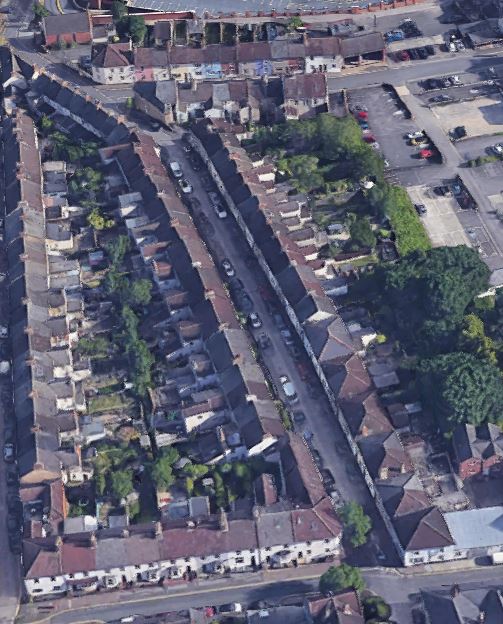
Prospect Hill begins at the Beehive pub on the corner of Western Street with the Rehoboth Chapel opposite and climbs up to the junction with North Street. Prospect Hill doesn’t appear to come within any of the Swindon Borough Council’s Conservation Areas, which is a bit of a shame as it is one of the streets that links the history of the two towns, Old and New Swindon.

When the railway settlement at the bottom of the hill was first built in the 1840s the amenities were pretty poor. The only shops were in Old Swindon, which constituted a long, muddy walk for the housewives across fields and up Prospect Hill. Development of this area began in 1869 when the Berkshire Estates Company laid out Dover Street, Western Street, North Street and Prospect Hill with part of Cross Street, although building was not completed until after 1885.

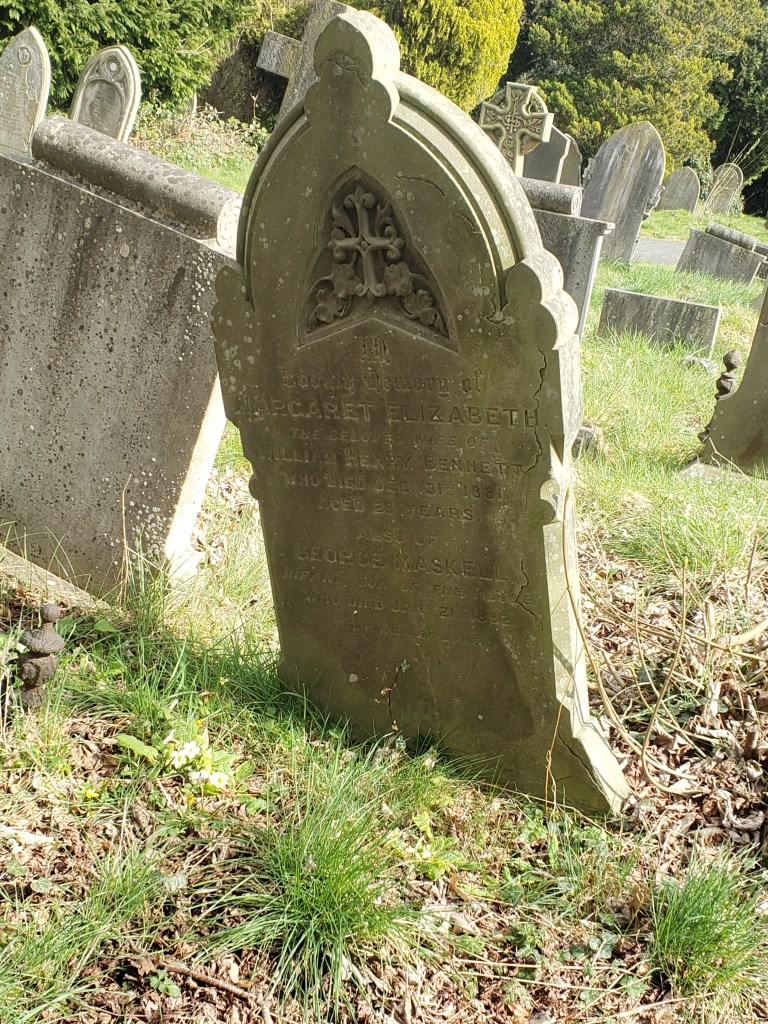
The 1911 census records George Smith living at No. 14 Prospect Hill with his son Arthur. George worked as a groom, most probably for one of the wealthy Old Swindon families, while Arthur was an Engine Fitter’s labourer in the GWR Works; a family embracing both halves of Swindon’s history. But George and Arthur were only tenants at No 14, the house belonged to our William Henry Bennett. In 1881, twenty years earlier, William was working as a jobbing printer and lived at No. 14 with his first wife Margaret Elizabeth.

Sadly, Margaret died in January 1882 aged just 29 years old, shortly after giving birth to a baby boy. Her son, George Maskell Bennett, died later that same month. They are buried together in Radnor Street Cemetery in plot E8212.

When did William decide to move to London? Perhaps he could not face living at No. 14 where he and Margaret had excitedly prepared to welcome their baby? 

When he eventually returned to Swindon with his second wife Edith, more than 20 years later, they made their home in Stafford Street. However, he had obviously held on to the house in Prospect Hill during the time he lived in London as this is where his daughter Elizabeth Mary Sophia ended her days in 1952.

Edith died on September 10, 1931 at 43 Stafford Street. William died on May 2, 1934 at the Stratton Infirmary and was buried with Edith in plot C2A close to the cemetery chapel. Their daughter Elizabeth Mary Sophia was buried with them in 1952.

Margaret and her baby are buried not too far away.

Prospect Hill

The grave of William, Edith and Elizabeth Bennett

Helene Celine Sawyer – distinguished public servant

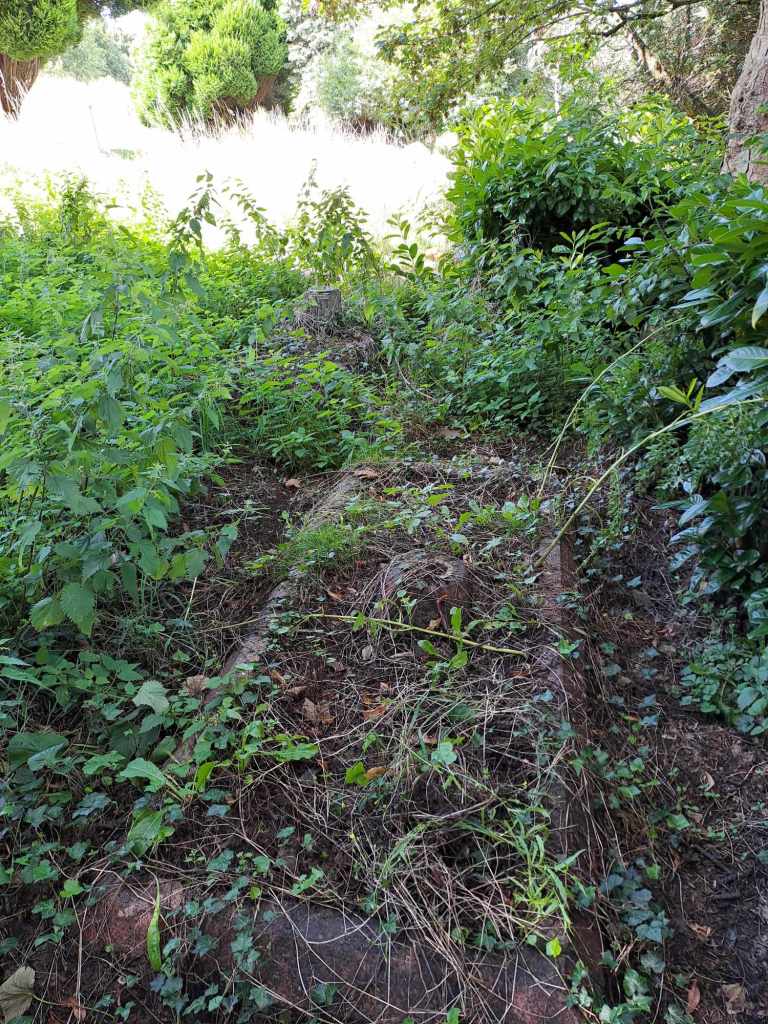
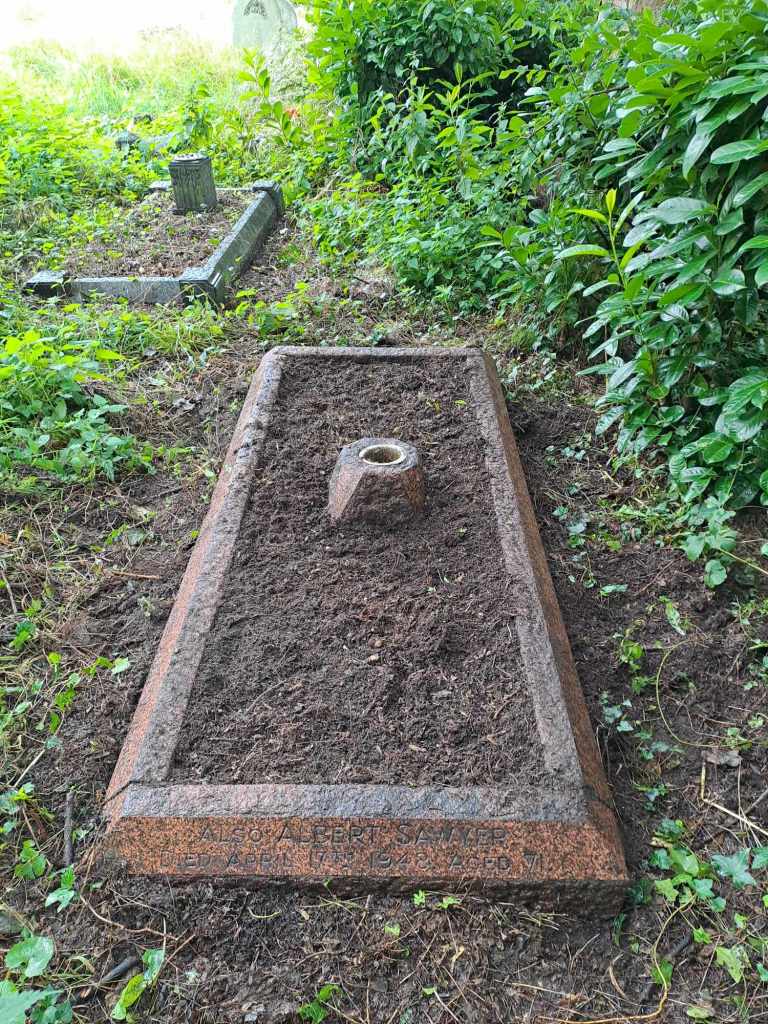
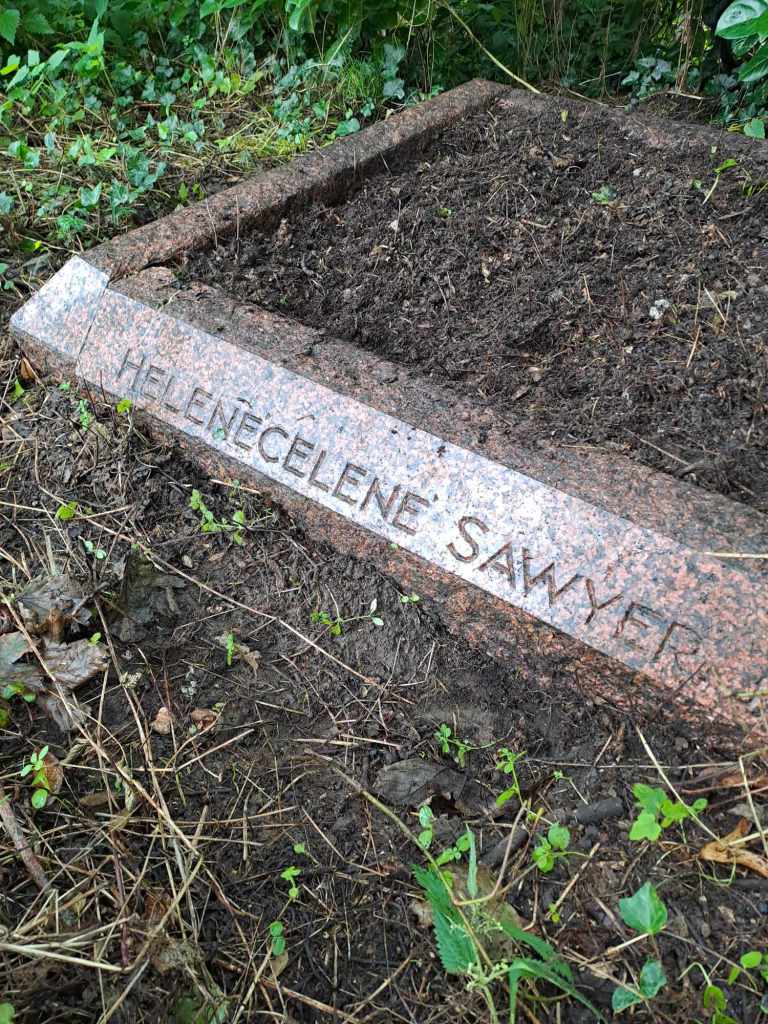
Helene Celine Sawyer is buried in a dark and overgrown area of the cemetery and when I first wrote about her I thought she had no headstone or memorial. I bemoaned the fact that often the people who worked the hardest for others during their lifetime leave no lasting memorial following their death, but since then one of our cemetery volunteers has been able to find Helene’s grave.

Helene Celine was born in Stroud, Gloucestershire in 1877, the eldest child in a family of eleven. Her father Thomas Hobbs was a butcher, her mother Elizabeth was born in Switzerland. Following the death of her husband in 1896, Elizabeth became Sub Post Mistress at the Post Office in Westcott Place where Helene was working at the time of her marriage to Albert Sawyer, a brass finisher in the railway works. The couple were married at St Mark’s Church, Swindon on September 21, 1902 and moved into 72 Dean Street where they would live together for the next 31 years.

Helene and her husband Albert were both members of the Swindon Labour Party and Helene was involved with other local organisations such as the Workers’ Educational Association (WEA) and the Young Men’s Christian Association (YMCA).

Helene began her lifetime of public service as a member of the Swindon and Highworth Board of Guardians where she was described as an energetic member of that committee. She continued to work with the Wiltshire Public Assistance Committee, which replaced the Board of Guardians following the Local Government Act 1929.

In 1920 Helene was appointed a Justice of the Peace, one of 234 women magistrates created nationwide, and was the first to serve on the Swindon Bench. The long list of names was published in the Women’s Freedom League newspaper, The Vote, where the women were described as having “rendered themselves conspicuous by distinguished public service.”

Helene had been suffering from failing health for some months during 1933 and died at her home on December 11. She was 56 years old. The obituary published in the North Wilts Herald on December 15 noted that Helene “had always carried out her duties very rigorously and with a great deal of judgement and sagacity” and that her work with the Children’s Court would always been remembered.

The funeral took place on Friday, December 15 with the service at St Mark’s Church followed by interment in Radnor Street Cemetery. Helene lies in plot B2647 where her husband was also buried in 1948. The cremated ashes of their only daughter, Kathleen were interred with them following her death in 1986.

James and Elizabeth Murgatroyd – two of Swindon’s ordinary people

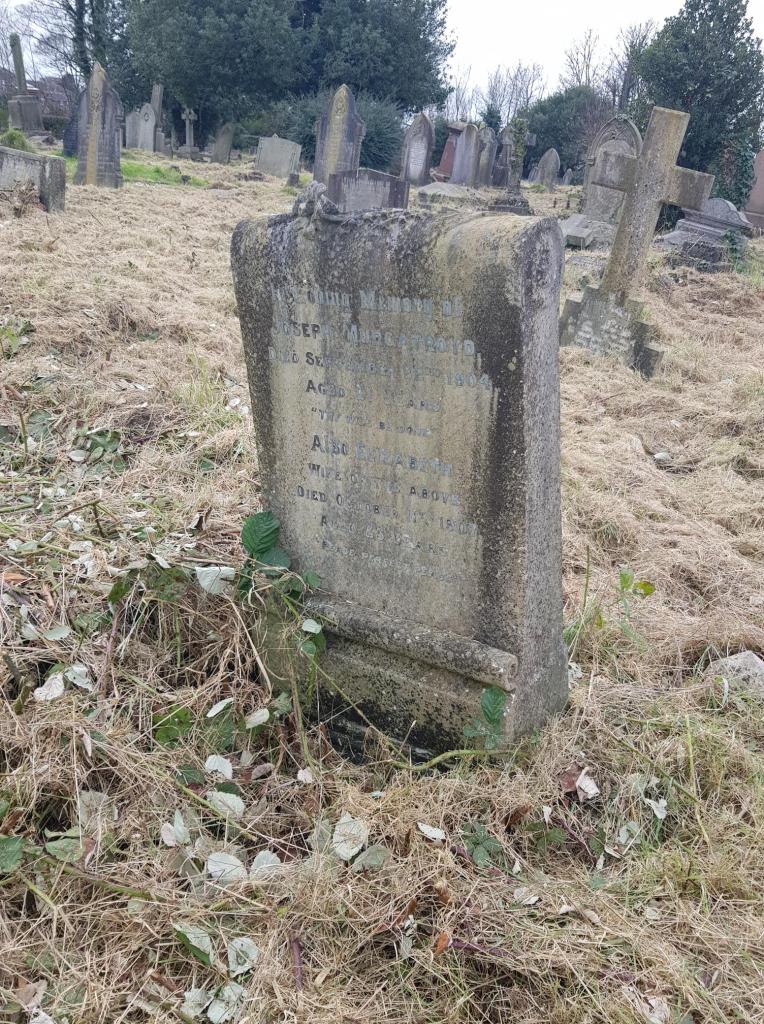
Swindon Borough Council have been busy at Radnor Street Cemetery in recent weeks and have cleared a great swathe of brambles from Section E, a particularly difficult area to navigate. Section E has probably the greatest collection of headstones and memorials in the cemetery and as Noel, Andy and I took a walk, Andy’s eye was drawn to the grave of James and Elizabeth Murgatroyd.

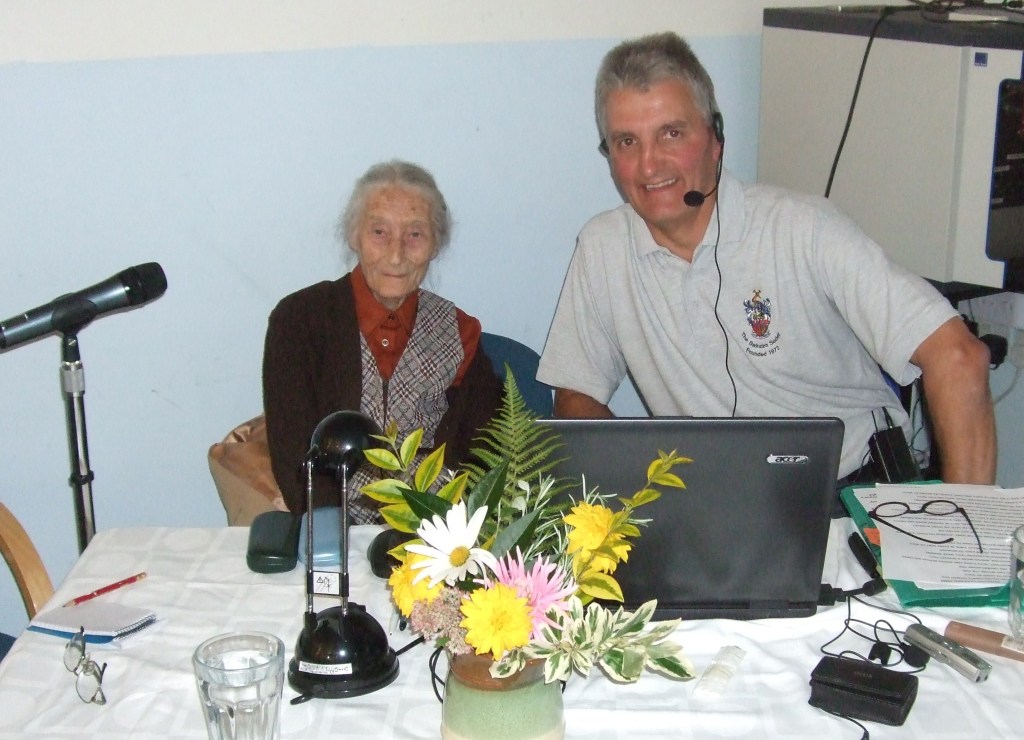
Joyce Murgatroyd was a great friend of Andy’s for many years. Teacher, artist, poet, musician and repository of Swindon’s history, Joyce died in 2017 aged 100 years.

I have written about Joyce’s family, including her great grandmother Sarah Peaple and cousin Elsie Morse but have never looked into the history of her husband Henry Murgatroyd’s, family.

The headstone we discovered was that of Joseph Murgatroyd, born in Bradford in 1823. He married Elizabeth Dewhirst at St. Peter’s Church, Bradford on August 26, 1844. At the time of the 1851 census Joseph and Elizabeth were living in Okehampton Street, Exeter where Joseph’s occupation was engineer. They had two children Alfred, 5 and Priscilla, 3. It seems as if they may have already lived in Swindon at some point as this is where Priscilla was born.

By 1861 they were living at No 7, Alliance Terrace, Bridge Road, Swindon where Joseph was a Fitter & Turner at the Engine Factory. Their eldest son had died by that time – now their family comprised three children, Priscilla 13, Alfred Edwin 3 and one year old Sarah.

In 1871 they were living at 8 York Place before moving to 12 Sheppard Street, which would remain Joseph’s home until he died. His funeral took place on September 21, 1904 when he was buried in plot E7809. Elizabeth died in 1907 at her son’s home, 54 Eastcott Hill. Her funeral took place on October 15 when she was buried with Joseph. Their son Alfred Edwin, his wife Ellen and their daughter Annie Irene are buried in E7810, the neighbouring plot.

Joyce and Andy pictured together getting ready for a Swindon Society presentation in 2012.

Sadly, I did not establish a link to Joyce and Henry Murgatroyd, but I have been able to add another account to the Radnor Street Cemetery archives remembering Swindon’s ordinary people.