This is the last resting place of Charles and Millicent Blackford.
Charles Herbert Blackford was born on August 8, 1898 in Malmesbury, one of wheelwright and carpenter Daniel Blackford, and his wife Kate’s four children. Millicent was born in Polperro, Cornwall on January 5, 1897, the daughter of fisherman Richard Libby and his wife Ellen.
Charles enlisted with the Royal Naval Reserve in 1916 and served for three years during the First World War. Upon demobilisation Charles joined the GWR. Using the UK Railway Employment Records it is possible to follow Charles’ career on the railways.
He began work as an engine cleaner in January 1919 before quickly becoming a fireman. An entry dated December 14 1920 records that he was making the fire upon engine 3412 when his hand was pinned against a piece of coal. Top of middle finger on his right hand was crushed.
By 1939 Charles was working as a temporary Acting Driver at Didcot, after which he worked as a driver in Swindon. During the Second World War he was working as a temporary Relief Supervisor.
Charles married Millicent Libby in the June quarter of 1923 and the couple had two children, Vilonia and Royston. Vilonia died in infancy. Royston followed his father into the railway works as a coach finisher. Charles and Millicent lived at 23 Poulton Street, Gorse Hill until the time of Charles’ death in 1962. (Millicent may have remained at that address after his death.)
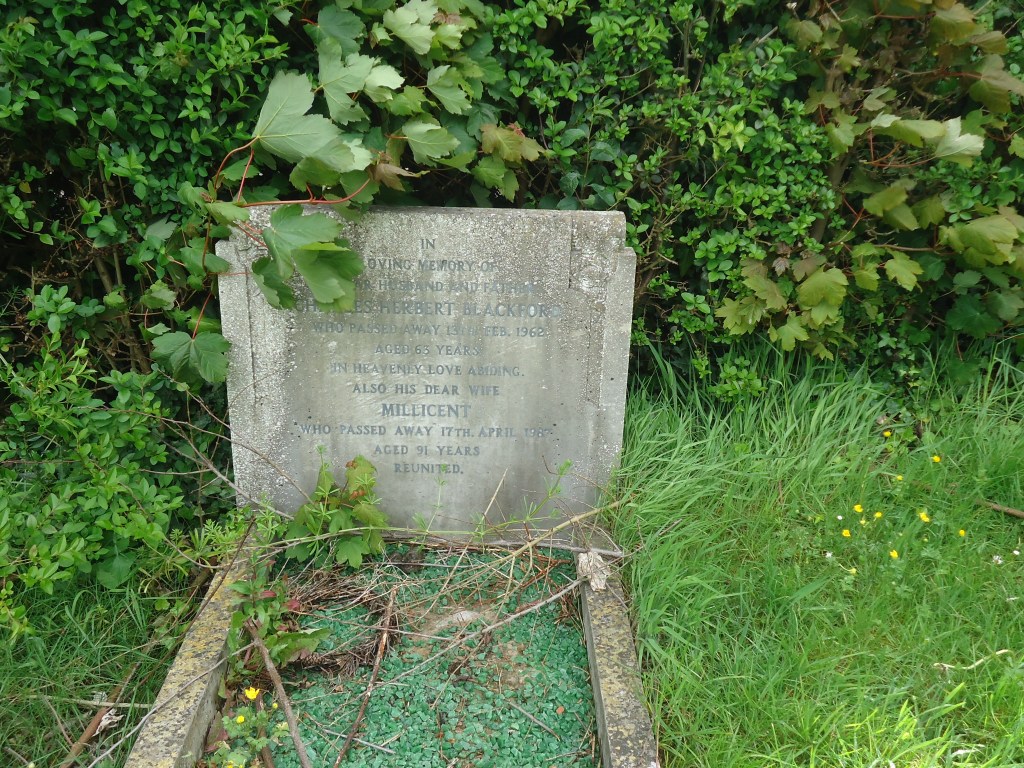
Charles died in February 1962. Millicent survived him by 25 years. She died in 1987 at the age of 91. They are buried together in grave plot C3351-0. This area of the cemetery has experienced some renumbering of the plots, but Charles and Millicent’s grave has an elegant headstone and is easy to find.
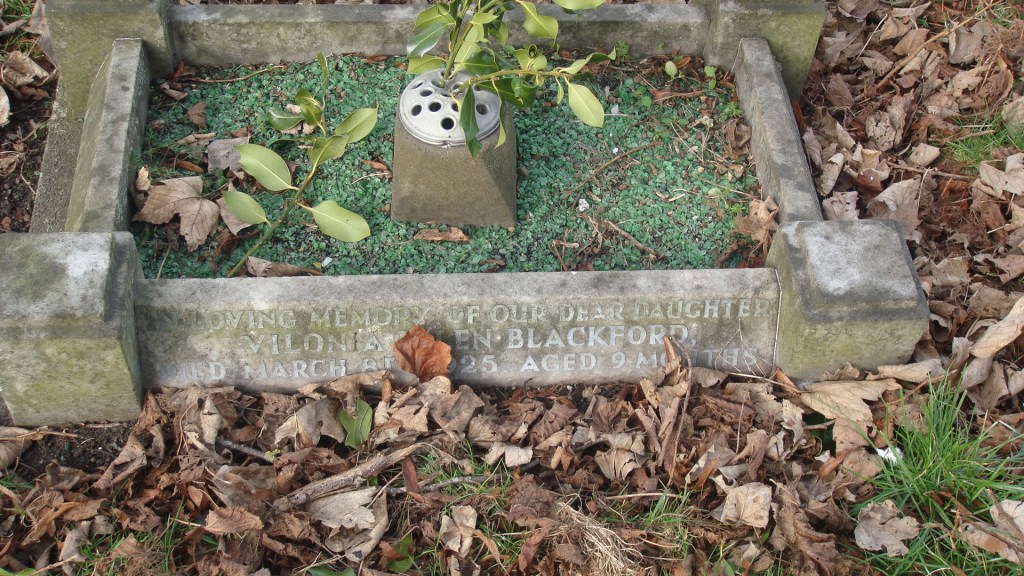
The burial of infants depended very much on the parent’s financial situation. In the past some babies were buried in a family plot, their names added to the memorial at a later date. Others were placed in a communal grave with other babies. Vilonia is buried in this beautiful little grave, close to the path leading to the cemetery chapel.

 Radnor Street Cemetery