The re-imagined story …
New Swindon has been much criticised for its rows and rows of red brick housing, but it wasn’t always like that. In the beginning there was the Works and the company houses, constructed from stone quarried locally at Kingshill and Bath and Corsham. But granddad said those early cottage were built just for show.
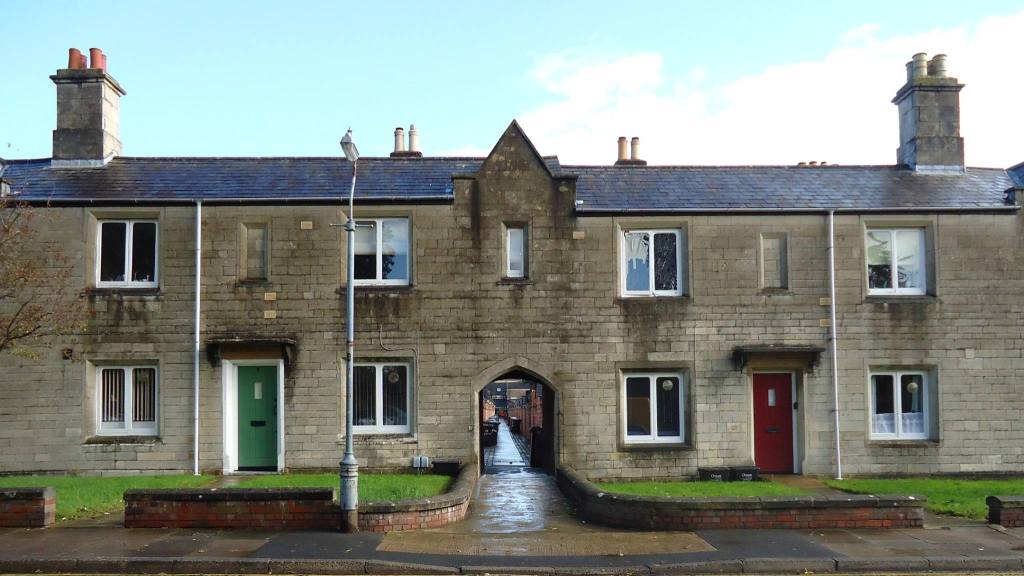
“Railway men and their families began arriving in such numbers that those building their homes couldn’t finish them quickly enough. The first cottages were little more than hovels, just two rooms often with two large families sharing one property.”
Mr granddad used to say Swindon was a work in progress.
“The whole place was one big building site.”
Granddad could remember Bath Street before it was renamed Bathampton Street and Faringdon Street before it became Faringdon Road.
“Mr Hall lived at number 1, Mr Laxon at number 2 and the Laverick family at number 3,” he recalled. “Mr William Laverick senior lived there first and then his son, William junior took on the property.
There was a sad story surrounding young Mr William Laverick, but granddad would never tell me what it was.
“Old Mr Laverick was the Superintendent at the Wesleyan Sunday School. My mother would have had me go, but my father wasn’t insistent so I managed to avoid it.” That made him chuckle, which brought on his cough.
My granddad used to say Swindon was a work in progress. I wonder what he would say if he could see it now.

The facts …
William Laverick was born in Bedlington, Northumberland on September 16, 1843 the son of William and Mary Ann.
He entered employment in the GWR Works on July 3, 1858 as a Door Boy in the Loco Factory before beginning his apprenticeship as a forgeman in 1860. In 1885 he was made a foreman.
The family were Wesleyan Methodists and William Laverick senior was Superintendent of the Wesleyan Methodist Sunday School for 35 years.
William Laverick junior and his wife Maria had a large family and the registers for the Wesleyan Methodist Chapel, Faringdon Road list the baptisms of six of their children.
Sadly, four of their children died young – Henry Allen Laverick at 9 months old and Arundel Laverick also died before his first birthday. Francis Charles died aged 2 and James Lightford Laverick aged 6 years. James died shortly after the opening of Radnor Street Cemetery and is buried in plot A100. Henry Allen died the following year and is buried in plot E7035. The other two children died before the cemetery opened in 1881 and are most likely buried in the churchyard at St. Marks. There is a mention of the four children on William’s memorial, but the inscription is badly weathered and incomplete.
William was admitted to the County Asylum at Devizes on July 22, 1890 where he died on November 9, aged 46 years.
William was buried in plot A2497 on November 13. In the 1891 census William’s widow Maria continued to live at number 3 Faringdon Street with her three remaining children, William Richard a 19 year old Engine Pattern Maker apprentice, Muriel Beatrice, 18, and six year old Arthur George. She married Francis Davies Morgan in 1895. Maria died in 1904 and is buried with her first husband in Radnor Street Cemetery.


 Radnor Street Cemetery