He’d been gone a long time – Arthur Jeffreys Lewis White

The re-imagined story …

You saw it happen so often in those days, a mother or father would die suddenly, but to lose both parents within a matter of three years was heart-breaking for those poor children. Little Arthur was just four years old when his mother died and only seven when he lost his father.

I would have happily taken that little boy into our home. It would have been what his mother would have wanted. We were close, the two of us. But his father had obviously made provision for his family.

It would have been hard on those children had their father not been a Freemason. The girls received a good education and Walter, the brother just a couple of years older than Arthur, went into the railway factory before moving to Wolverhampton and a job as a fitter in the GWR Stafford Road works. But I never knew what had happened to that little boy.

I often thought about young Arthur then one day there was a knock on my door and who do you think was standing there but him. My, he had grown into a handsome young man – I could see something of his mother in him. He came in for a cup of tea and a piece of my sponge cake and he told me he was about to start work as a clerk in the Works, following in his father’s footsteps.

He had been to the burial ground at St. Mark’s to visit his parents’ grave, but things looked very different to how he remembered them and he came away without paying his respects. Perhaps someone could help him find the grave? He’s been gone a long time.
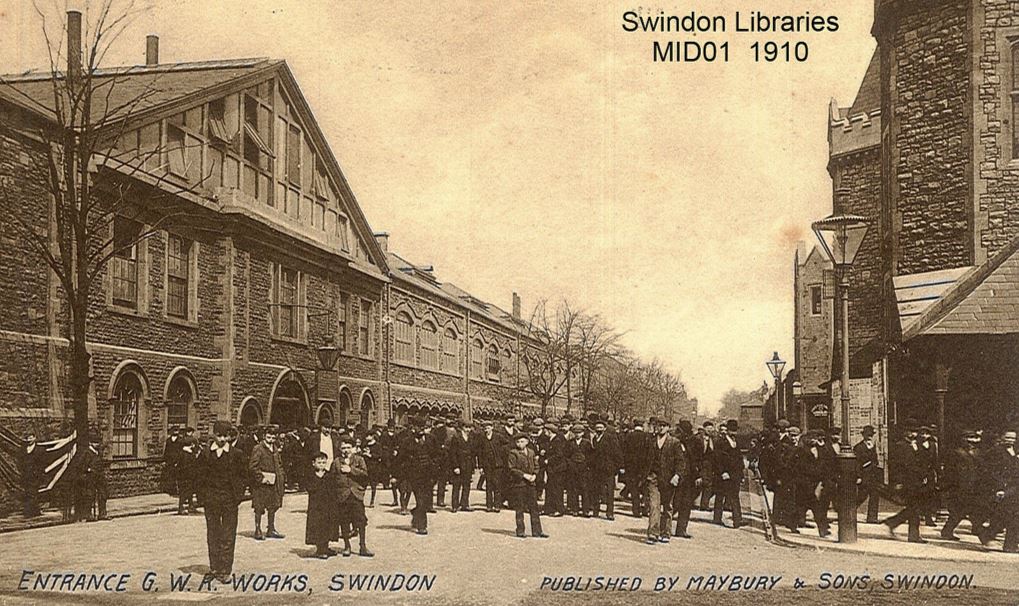
This image has an empty alt attribute; its file name is london-street.jpg

The facts …

When Arthur White’s father Richard Lewis White died in 1879 it seems likely it was members of Swindon’s Freemasonry who provided for the young boy and his family of siblings. 

Richard Lewis White, secretary and chief accountant for the GWR locomotive and carriage department, was a member of The Gooch Lodge when he died in 1879, leaving behind six orphaned children from his first marriage. 

The first clue to what happened to the children comes in a newspaper article published in the Western Daily Press, Bristol on Wednesday, September 17, 1879:-

Somerset and Wilts Freemasonry – The balloting papers for the election of daughters of Freemasons to the Royal Masonic Institution for Girls have just been issued. The election will take place at the Freemasons’ Tavern, London, on Saturday October 11th. There are 48 candidates on the list, and 18 vacancies in the school. Among the candidates are one from Somerset and one from Wilts. The Somerset candidate is Mabel Jane Sampson, whose father, Thos. Sampson, nurseryman and farmer, was initiated, in the Lodge of Brotherly Love, No. 329, Yeovil, on the 16th March, 1859. The Wiltshire candidate is Adelaide Louisa White, ten years of age, whose father, Richard Lewis White, a clerk on the Great Western Railway, died on the 6th of February last. He was initiated in the Gooch Lodge, No. 1,395, New Swindon, on the 4th of April, 1870, of which he became Worshipful Master. He was also Past Provincial Grand Sword Bearer of Wilts.’

Adelaide was one of the successful candidates, polling 1,118 votes and at the time of the 1881 census she is recorded as a pupil at the Royal Masonic Institution for Girls, Battersea. In the same census Eleanor, aged 17, is recorded as a pupil at Queen’s College, a private school in Islington and 12-year-old Walter is a pupil at The College, Beach Road, Weston Super Mare.

Arthur’s eldest brother Richard Corbett White died in 1877 aged 15 while his sister Frances worked first as a domestic servant and then a dressmaker at the time of her marriage in 1893. 
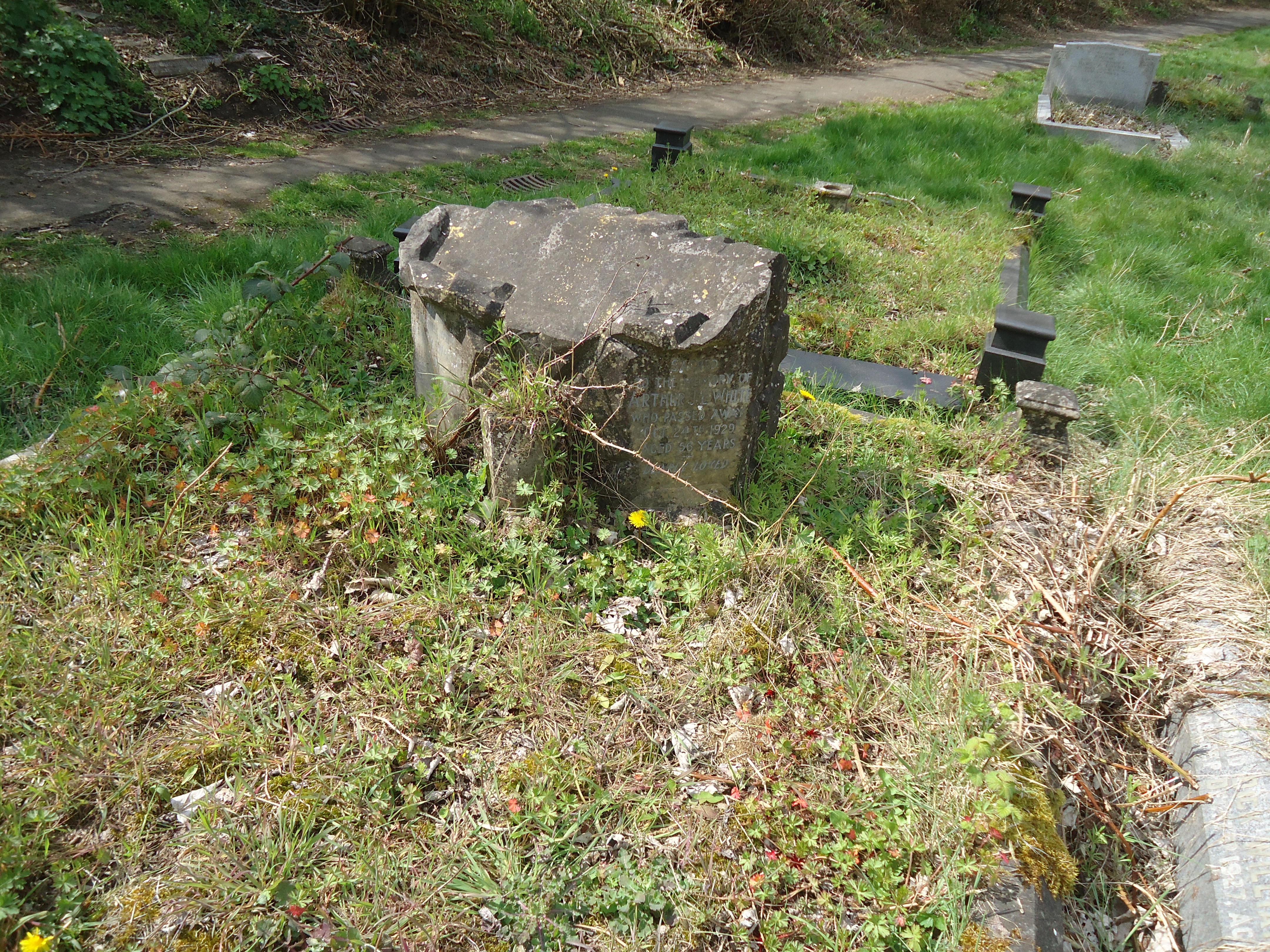
Arthur J L White and Emily White

And what of little Arthur who was just four when his mother died and seven when his father died. 

The first definite sighting of Arthur is on January 4, 1887 when he enters the GWR employment as a Lad Clerk and it is possible to track his employment record in the Swindon Works. By 1902 he is Assistant Chief Clerk and in 1918 he is promoted to Chief Clerk. His annual salary rose from £45 in 1889 to £1,000 in 1924, so the boy orphaned as a seven-year-old did well. And like his father he also became a Freemason, joining the Royal Sussex Lodge of Emulation in 1919.

Arthur married Emily Sendell in October 1917. He was 45 and she was 41. They did not have any children.

Arthur died on October 24, 1929 at his home in Okus Road. He left effects valued at more than £4,000 to his widow Emily. He was buried in plot E8134 in Radnor Street Cemetery on October 29, 1929, where Emily joined him when she died in 1968 aged 92.
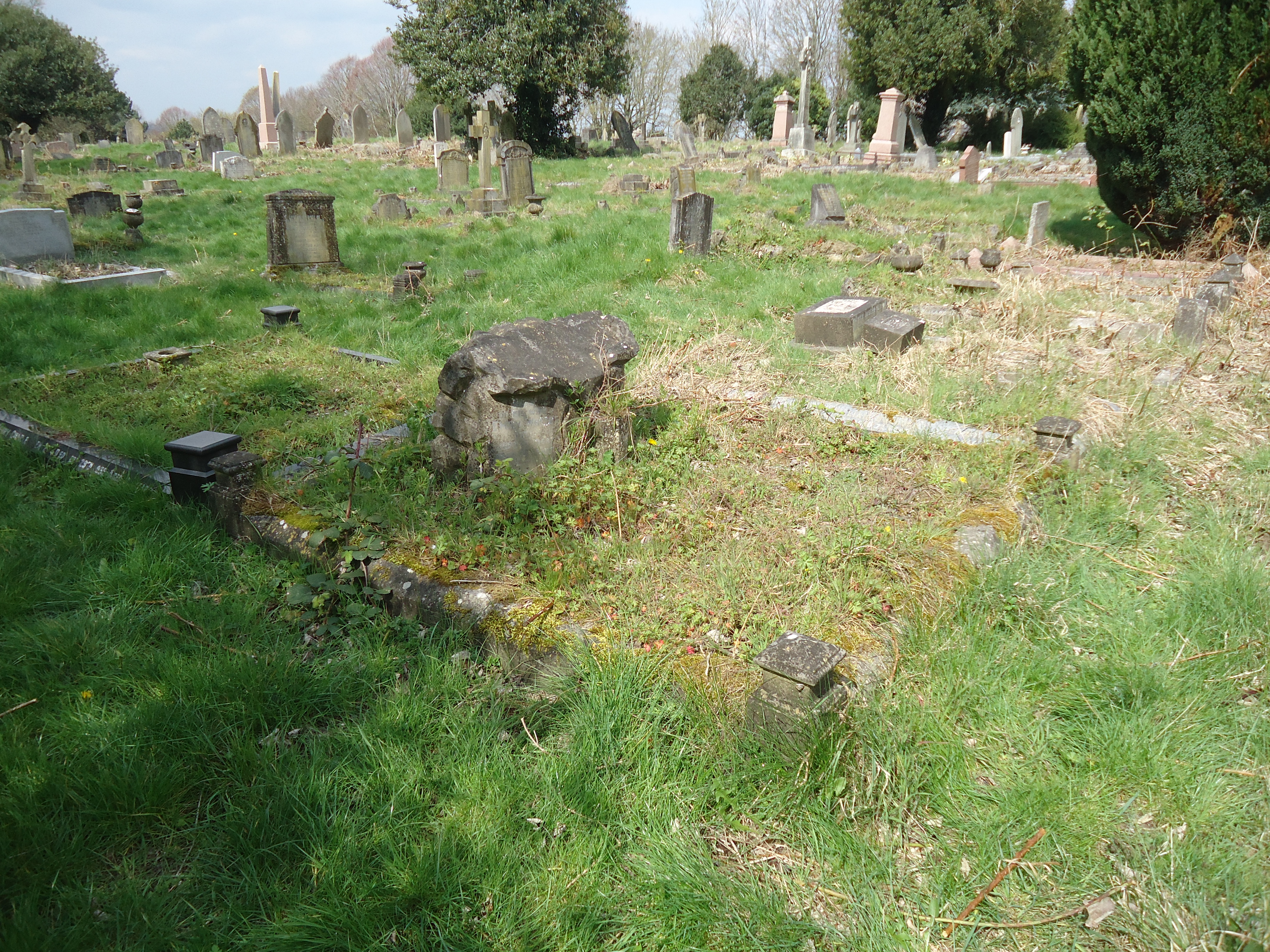
Arthur J L White and Emily White (2)

Images of London Street published courtesy of Local Studies, Swindon Central Library.

Dr George Rodway Swinhoe – GWR Company doctor

The GWR Company doctors came and left, but the Swinhoe family of physicians were a constant presence from 1859 until 1918.

George Rodway Swinhoe was born on December 15, 1867 at 4/5 London Street, a property in the railway village which served as both accommodation for the GWR company doctor and as a surgery. George was the sixth child and first son of George Money Swinhoe and his wife Diana.

A member of the Royal College of Surgeons (England) and a Licentiate of the Royal College of Physicians (London) Dr George Rodway Swinhoe was appointed to the medical staff at the GWR in 1893. His name appears in the Register of Staff alongside such railway luminaries as Charles Benjamin Collett, Chief Mechanical Engineer; Wm Arthur Stanier, Principal Assistant to the Chief Mechanical Engineer and Frederick George Wright, Chief Assistant Locomotive and Carriage Superintendent.

In 1894 he married Mary Canning Gertrude Glass and the couple had two daughters.

Dr Swinhoe died at him home on November 10, 1929. The following obituary was published in the North Wilts Herald.

Death of Dr. G. Rodway Swinhoe

Popular Swindon Medical Man

Useful Career

Dr George Rodway Swinhoe, of The Close, Church Place, Swindon, passed peacefully away at his residence at 6.40 on Sunday evening.

He had been in ill health for some time, but was only taken seriously ill a week ago. On the previous Monday he was engaged in his professional duties as consulting surgeon and examiner to the GWR Company at Swindon.

Dr Swinhoe was 61 years of age and had lived in Swindon practically all his life. “Roddy” Swinhoe, as he was popularly known to a host of friends, was a son of the late George Money Swinhoe, who came of a very old Northumbrian family.

Dr. G.M. Swinhoe was born in Calcutta, and he went through the Crimean War, but came out of the ordeal unscathed. He came to Swindon as chief medical superintendent on the GWR Medical Fund staff, on the special recommendation of the late Sir Daniel Gooch.

Appointed to the Staff.

At a later period the medical staff comprised Drs. Swinhoe, Howse and Bromley. The last named died in 1894, and Dr. G. Rodway Swinhoe was then appointed to the staff. Dr. Howse retired in 1899, and Dr Rodway Swinhoe became chief assistant to his father, whilst his brother, the late Dr. Astley Swinhoe, became third assistant.

The father and two sons carried on the three chief positions on the GWR Medical Fund staff til 1905, when Dr. Astley Swinhoe died.

In 1908 Dr George Money Swinhoe died, and Dr. G. Rodway Swinhoe was appointed to the office of Chief Medical Officer, a position which he held till the year 1917.

Dr “Roddy” Swinhoe, who was the eldest of a large family*, was a zealous and most able physician and surgeon. He was a member of the Royal College of Surgeons (England) and a Licentiate of the Royal College of Physicians (London). His post on the GWR Medical Fund staff and with the GWR was an onerous and responsible one.

Services During the War

During the war Dr “Roddy” rendered valuable medical services. He was previously in the old Swindon Volunteer Corps, afterwards taken over by the Wilts Territorials. Then he was promoted to the rank of Major in the RMTC.

In Charge of Labour Battalion

For a period of the war Dr. Swinhoe was in charge of a Labour Battalion in the Park and Drill Hall. Later he was in charge of a private military hospital at Bowood, Calne, which was placed at the disposal of the authorities by the late Lord Lansdowne.

Dr Rodway Swinhoe was also a keen worker in connection with the GWR St. John Ambulance Association, and was the experienced lecturer to the classes for a number of years. For his services he was, on his retirement, made an Honorary Associate of the Grand Priory of the Order of St John of Jerusalem.

Interest in Sport

Always a lover of clean, good sport, Dr. Roddy was closely identified with the Swindon Amateur Swimming Club, the Swindon Amateur Athletic Association, the Gymnastic Societies, and many other sports associations. In his younger days fishing and shooting were his hobbies, and he used often to tell some good stories at dinners of various societies to which he was always invited.

The Funeral

The funeral took place on Wednesday.

The first portion of the service was conducted in St. Mark’s Church by Canon A.G. Gordon Ross (vicar). Canon Ross also read the committal sentences at the graveside in Radnor street cemetery.

A long list of mourners included family members, and representatives from the GWR Company and the Medical Fund Society.

Many beautiful floral tributes were placed on the grave.

The funeral arrangements were carried out by Mr A.E. Smith, of Gordon Road.

North Wilts Herald Friday, November 15, 1929

*He was the 6th child but the eldest son

Dr George Rodway Swinhoe was buried in a large grave plot numbered E8228/29/30 which he shares with his parents and three brothers.

You may also like to read:-

George Money Swinhoe – Swindon doctor

Maurice Carew Swinhoe – banana planter and exporter

The death of Mrs Swinhoe

Lydia Fry – For Services Rendered

Following the horrors of the First World War an increasing number of women began to take their place on the political stage at both national and local level.

Lydia Fry was already serving as a member of the Swindon and Highworth Poor Law Board of Guardians, before standing at the Town Council elections in December 1919.

Lydia was born in 1871, the fourth child and only daughter of agricultural labourer Richard Wilson and his wife Fanny.

She spent her childhood at Buscot, Berkshire but by 1891 Richard, Fanny and Lydia were living at 35 Bright Street in Gorse Hill. Richard worked as a platelayer labourer on the railway and Lydia was a shirt seamstress.

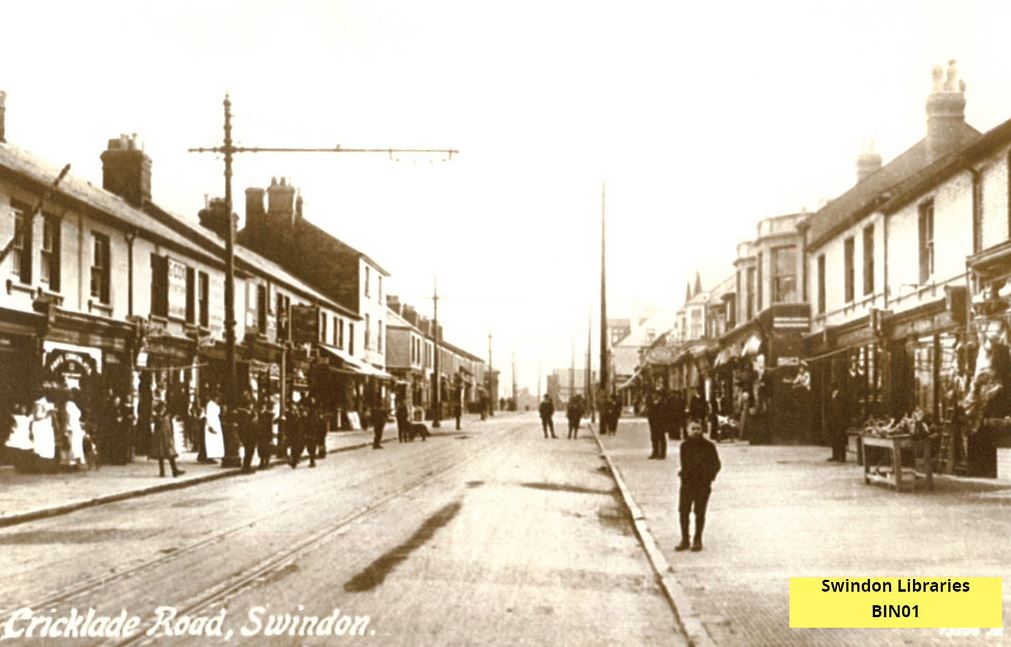
In 1892 Lydia married Silas Fry. Their first daughter Esther was born in December of that year. A second daughter Miriam was born in 1893. In 1901 the family lived at 110 Chapel Street and from around 1911 until the death of Silas in 1925 at 71 Cricklade Road.

Image of Cricklade Road, Gorse Hill published courtesy of Andy Binks, Local Studies, Swindon Central Library.

When Silas died in 1925 the North Wilts Herald published a fulsome obituary detailing his many accomplishments. However, when Lydia died on April 24, 1941 only a brief account of her funeral was published in the same newspaper. There was no mention of her political career or her public service. Fortunately, in 1924 the North Wilts Herald published this account of Lydia’s life and work, written by W. Bramwell Hill.

For Services Rendered

Mrs Silas Fry’s Good Record

By W Bramwell Hill

Public service of all kinds has its times of difficulty, and, frequently, of irritation. You are not your own. You are bought with the price of the lurid light of criticism, half truth, misunderstanding, and misrepresentation. Happily that is not the only state. Such work does on occasion know a transition into the realm of tangible reward, even though the true reward is in the race well run, and the game well played, with patience and imperturbability of fine motive as the fairy hand-maidens of high endeavour. For what they receive in the unalloyed joy of doing a great work, whatever the sphere, multitudes toil on and in their toil rejoice.

To such a band the subject of our brief sketch this week belongs.

Mrs Silas Fry, of Cricklade Road, Gorse Hill, wife of Councillor S. Fry, is a lady well known for a splendid record of faithful work in her own area. Her chief activities have been in connection with the Swindon and Highworth Board of Guardians (of which she has been a member for some 17 years, I believe) and the Cricklade Road Primitive Methodist Sunday School. It is quite possible – yea, it is more than probable – that the energy for the one task has been found in the service of the other. In the realm of the Sunday School she has put in no fewer than 26 years of successive service, and during the recent Sunday School rally held amid the sylvan setting of Bassett Down House (by kind permission of Mrs Arnold Forster) Mrs. Fry was presented with a diploma of honour, the gift of the Connexional Sunday School Union.

Mrs Fry’s record, by the way, is largely confined to one school – Cricklade Road. In young people’s work, in the choir, the Christian Endeavour movement, as a representative to the Quarterly Board, as well as being a most effective speaker, she is well known. In these times of women’s recognition a certain appropriateness is found in the projection of the good record of Mrs Fry, who, in co-operation with her husband, has put in a vast amount of unostentatious service for the public weal.

North Wilts Herald, Friday, June 6, 1924.

Lydia Elizabeth Fry died aged 69 years at 24 Dudmore Road. She was buried on April 27, 1940 in grave plot D808 she shares with her husband Silas.

Private Albert William Hall – Royal Army Medical Corps

The report of the death of Albert William Hall published in the North Wilts Herald in 1920 is, in my opinion, a carefully worded account of an interview with his grieving family. Only they could have known the awful development of his ill health, the repeated operations, his re-admission to hospital again and again and the agonies of his final days.

Swindon Family’s Bereavement

The Late Mr A.W. Hall

The death occurred on July 13th, at 86 Ponting Street, Swindon, of Albert William Hall, the only son of Mr. and Mrs W.J. Hall, from disease contracted on active service.

Prior to the war deceased was employed at the Town Hall, under Mr. H.J. Hamp (the borough surveyor). Enlisting in the local Territorials in January, 1914, he was in training at the outbreak of war and was mobilised for service with the Wilts RAMC (T). Through a minor defect he was marked for home service, and subsequently transferred to the 2/1st Wilts RAMC (T) on the formation of that Unit.

As soon as possible he underwent an operation, thus fitting him for foreign service, and, joining the staff of the “Aquitania” in December, 1916, he proceeded abroad, and was attached to the Mediterranean Expeditionary Force. On the outward journey he contracted pneumonia, and on the ship’s return he was admitted to Netley Hospital, on December, 1916.

Following a successful operation in that hospital, he was in May transferred to the War Hospital at Bath. After a further five months in Hospital he was taken to Winsley Sanatorium for treatment lasting over four months. He arrived home in January, 1918, but progress was unsatisfactory, and two months later he was admitted to University College Hospital, London, where another operation was performed. In September he was transferred to a convalescent hospital at Cobham, Surrey, and remained there until January, 1919. He then returned home, but two months later was re-admitted to the University College Hospital, to undergo yet another operation.

After four months in this hospital he was, at his own wish, brought to the GWR Hospital, Swindon, where he remained an in-patient for three months. From October, 1919, until a few days before his death he attended the hospital daily for surgical treatment. Altogether his illness extended over 3½ years, during which time he was constantly brave and cheery, thus commanding the respect and admiration of doctors and nurses, and, indeed, of all with whom he came in contact. What he really suffered can never be known, because he always hated to complain, and it was only latterly when he began to experience great difficulty with his breathing, that he showed any signs of weakening under the strain. He was confined to his bed for a day or two only before his rather sudden death, and though suffering great pain during that time he retained consciousness to the last, and passed away very peacefully.

The greatest sympathy is felt by all for his parents and fiancée, who in the midst of their great sorrow can yet feel justly proud of a life which, though taken so early, has been one of such splendid example.

The funeral took place on Saturday, and the presence of so many old friends from church, school, office, etc., spoke eloquently of the sympathy manifested by all who knew him. Leaving his home in Ponting Street, the cortege proceeded to the Railway Mission, where the first part of the burial service was conducted by Mr. Ernest M. Lewis (former Sunday School teacher), the bearers being old Sunday School friends. During the service special tribute was made to the brave and patient manner in which deceased bore his long illness, and the hymn, “Loved with an everlasting love,” was sung. The interment was in the Radnor Street Cemetery, and at the graveside Mr. Lewis again officiated, a prayer being offered by Mr. Ludlow (Supt. Of the Railway Mission Sunday School). The coffin was of polished elm with brass fittings, and bore the following inscription:-

Albert William Hall,

Died

July 13th, 1920.

Aged 23 years.

Mr and Mrs W.J. Hall and family desire to tender their heart-felt thanks for the many beautiful tokens and the sympathy shown to them in their sad bereavement, also for the many kind enquiries made during their son’s long illness.

Extracts North Wilts Herald, July 23 1920

Albert William 23 years of 86 Ponting Street was buried on July 17, 1920 in grave plot D1088. He shares the plot with his father and mother – William John Hall who died in 1946 and Esther Tucker Hall who died in 1958.

This photograph was taken several years ago before the Radnor Street Cemetery volunteers began caring for the war graves. Today you will find access across the cemetery to the headstones via a mown path. The area around each headstone is kept clear and maintained by the Eyes On, Hands On team of volunteers working under the supervision of the Commonwealth War Graves Commission.

The much married Martha Leyshon

Sometimes the information on a headstone leads to a story quite different to the one you thought you might find.

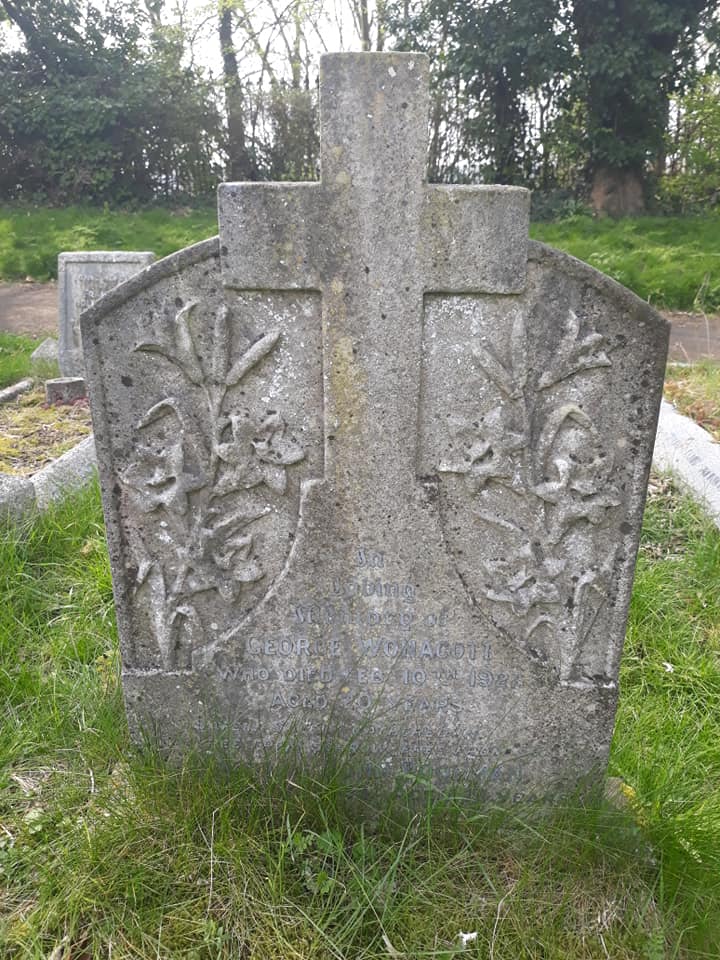
I was attracted to this stylish headstone with its central cruciform shape and Easter Lilies symbolising hope of the resurrection.

The first name recorded on the headstone is that of George Wonacott who died on February 10, 1927 aged just 20 years old. The only way to discover how he died would be to purchase the death certificate, but the cost is prohibitive on a project such as Radnor Street Cemetery with 33,000 burials.

So I turned to the available historical resources to see what I could discover but despite a search of the British Newspapers Archive I was unable to find any reports connected to young George. Next I searched the Ancestry website to find his family.

George’s mother was born Martha Lauretta Leyshon in 1878 in Burbage, a small Wiltshire village in the Vale of Pewsey. Martha was the youngest child of Evan A. Leyshon and his wife Mary. During the intervening years between the 1891 and 1901 census, the Leyshon family moved to Swansea. By 1901 Mary was widowed and living in two rooms at 30 Argyll Street, Swansea with her son William 26, a railway signalman, her 10 year old grandson Edmund Parsons and our Martha, then aged 20 who worked as a general domestic servant.

In 1905 Martha married Wallace Ackland Wonacott, a bottler, and at the time of the 1911 census they were living at 91 High Street, Swansea with their two children Dorothy 5 and four year old George.

The family moved to Swindon and a home in Princes Street but by 1920 Martha’s husband William had died. It’s difficult to imagine how Princes Street looked back in Martha’s day. Built in 1876 and named after Queen Victoria’s grandson Prince Albert Victor, Princes Street was long with shoulder to shoulder terraced housing stretching from Regent Circus to the Whale Bridge.

In the summer of 1920 Martha married the recently widowed John Poolman, a labourer in the GWR Carriage Works. The couple continued to live at 44 Princes Street where John died in January 1933.

Martha didn’t hang about and in the winter of 1933 she married for the third time. Her husband was George Higgins and the 1939 list describes him as a retired engine driver. The couple continued to live at 44 Princes Street, sharing their home with two lodgers, Alfred Andrews, a railway shop clerk and William Barnes, a general labourer in the Works.

Martha died in December 1942 and was buried with her son and second husband in plot D331. She was 64 years old. Her third husband survived her by 16 years. He died in 1958 but does not appear to be buried in Radnor Street Cemetery.

What began as a quest to discover how a young man died turned into the story of his much married mother, Martha Leyshon/Wonacott/Poolman/Higgins.

The Perkins family rediscovered

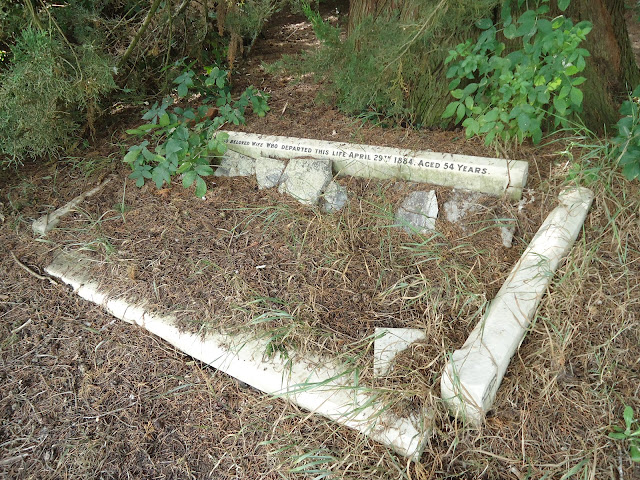
You may think that when a memorial is in this condition that it is impossible to discover who is buried there.

Aha! Not if you have access to comprehensive records such as the ones existing for Radnor Street Cemetery.

The burial registers for Radnor Street Cemetery come in various forms. There is a set of alphabetical indices plus a set of chronological volumes. I was able to check the date closest to Mary’s death on April 29, 1884 and soon found her surname and the date of her burial on May 3. The entry in the burial registers provided her address as 10 Bridge Street, Swindon and, helpfully, that she was the wife of John Perkins. From here I was able to search the grave plot register and discover with whom she was buried.

Then it was back to the Ancestry website to piece together the family history.

In 1881, three years before Mary’s death, the family were living at 10 Bridge Street. John aged 47, was born in Banbury, Oxfordshire and worked as an Iron Moulder in the railway factory. Mary was 51 and was from Burton upon Trent, Staffs. Living with them were their three children, Mary A. 23, Joseph 21 who also worked as an Iron Moulder in the Works, and Emily 16. They also had a year old baby living with them, Seth John Perkins who is described as John’s nephew and was born in Bristol. There appears to be some confusion concerning this baby as he is described on subsequent census returns as son and grandson.

Following Mary’s death, John married for a second time in 1886. The marriage took place in Brackley, Northamptonshire and in 1891 John is still living at 10 Bridge Street with his second wife Sarah 49 and Seth aged 11. By 1901 John, Sarah and Seth are living at 63 Curtis Street.

Sarah died at her home 39 Bathampton Street in February 1911 and was buried with Mary in grave plot A529.

John remained living at Bathampton Street until his death in 1915 aged 81 years old.  He was buried with his two wives.

And I bet they wonder who planted the blooming great tree next to their grave.

George Money Swinhoe – Swindon doctor

The re-imagined story …

I remember wondering why Dr Swinhoe had a sword on the top of his coffin. I kept pulling on my mother’s coat and asking – ma, ma until in exasperation she hissed at me ‘because he served in the Crimea War.’

Well, of course, I was none the wiser.

It was only years later that I learned about that bloody war where some 500,000 lost their lives due to the incompetence of commanding officers and the appalling conditions in the hospital in the converted barracks at Scutari. This was the war in which Florence Nightingale transformed nursing practices in the battlefield hospitals and back home here in England.

The Crimea War was the greatest military horror in a generation, that is until millions were sent to their death in the Great War.

Dr Swinhoe served as a medical officer in the Crimea War and I served as one in the Second World War. I didn’t get a sword though, shame about that!

Dr George Money Swinhoe

The facts …

Impressive Funeral Ceremony

Marked Expression of Public Esteem and Sympathy

The large crowds of people which followed the remains of the late Mr G.M. Swinhoe to their last resting place in the Swindon Cemetery on Saturday afternoon bore eloquent testimony to the very high and general esteem in which the deceased gentleman was held by all classes, for in these crowds were to be seen those of the very poorest circumstances mingling with those occupying important positions in connection with the public life of the town. It was a raw cold afternoon, and yet this did not deter these people from turning out in their hundreds to pay a last tribute of respect to the dead – to the memory of one who in his life time had been to so very many “a guide, philosopher, and friend.”

The solemn cortege was timed to leave the deceased gentleman’s late residence, Park House, Church Place, at two o’clock, but some time before this hour arrived, a very large number of people took up their position at a respectful distance from the house and patiently awaited the appearance of the coffin, which punctually at two o’clock, was borne out of the house. It was entirely covered with the Union Jack, and upon it, resting among a wealth of lovely flowers, was to be seen the trusty sword which the dead Crimean veteran carried with him during that eventful period in English history when he was attached to the medical staff. Within an area of but a few yards four Union Jacks could be observed flying at half mast – that at the GWR Medical Fund Hospital; that at the GWR Mechanics’ Institution; that at the Swimming Baths, and that in the Park over which Park House commands such an extensive view.

A minute or two after the hour had struck, the solemn procession moved slowly towards St Mark’s Church, where Mr Swinhoe was a regular worshipper, and where he for many years discharged the duties of Churchwarden. At the entrance to the Church the crowd was even greater than at Park House. Everyone wanted to gain admission to the sacred building, but accommodation was limited, and the police, of whom there were many on duty, firmly but gently had to stem the tide of those who sought to be present at the service. As it was, the Church was full almost to suffocation, but at no time was there any unseemly rushing, so well was the crowd controlled.

The service, conducted by the Rev. A.G.G. Ross MA Vicar of St Mark’s was of a most quiet and impressive character. As the coffin was borne into the Church, followed by the mourners, “Rock of ages” was sung as the processional hymn. Then the 90th Psalm, “Lord, Thou has been our dwelling place in all generations,” was chanted, the full Choir being present, after which Canon Ponsonby, formerly Vicar, read the Lesson from I. Cor., 15th chapter, from 20th verse. “But now is Christ risen from the dead.” The hymn, “Peace, perfect peace,” was then sung, after which, while the congregation stood, and as the funeral procession moved out of the Church, Mr E. Miles, the organist, played the “Dead March” in Saul.

All along the route to the Cemetery hundreds of people followed, and pedestrians going about their ordinary business stood and uncovered as the procession passed. At the Cemetery between three hundred and four hundred people had assembled. The grave, the same in which the remains of Mrs Swinhoe were interred some fourteen years ago, not far from the Cemetery Chapel, was within a roped enclosure outside which the people were kept back by the police, under the Deputy Chief Constable (Supt. Robinson) and Inspector Moore. The police, however, had not the slightest difficulty in controlling the crowd, no attempt being made to in any way break through the barrier.  As the funeral procession approached the grave the 130th Psalm, “Out of the depths have I cried unto Thee, O Lord,” was chanted. At the graveside the Rev. A.G.G. Ross performed the last portion of the solemn rite; then the hymn, “Now the labourer’s task is o’er,” was sung, and the impressive ceremony concluded.

The following members of the Committee of the GWR Medical fund Society acted as bearers: Messrs H. Morris (Chairman), William Humphries, W. Sansum, A Watson, B. Wheel, and Z. Peskett.

The grave is a brick one, and had been very beautifully lined with moss, snowdrops, violets primroses, crocuses, and auriculas. The remains were enclosed in an unpolished oak coffin, with a brass Latin cross down the full length of the lid, and at the foot was a brass plate bearing the following inscription: George Money Swinhoe, Died Feb 27th, 1908, Aged 77 years.

List of mourners and floral tributes …

Many of the officials connected with the Medical Fund Society carried wreaths.

In the procession of vehicles, it should be added, was to be noticed the deceased gentleman’s carriage in which he covered so many of his no doubt fatiguing rounds.

Extracts from the Swindon Advertiser, Friday March 6, 1908.

George Money Swinhoe 77 years of Park House was buried on February 29, 1908 in a large grave plot numbered E8228/29/30 which he shares with his wife and four sons.

You may also like to read:

Maurice Carew Swinhoe – banana planter and exporter

The Death of Mrs Swinhoe

John and Honor Iles – a little life

And then there are the little lives, the quiet lives, the people who leave little trace. No children, no legacy, no letters, no diaries. No death notice in the local newspaper, no lengthy obituary.

John Iles was born in 1820, possibly in Broad Blunsdon, maybe in Lydiard Tregoze. Born before the introduction of civil registration, there is no birth certificate for him. Neither can I find a baptism entry but we know that by 1841 he was living in the parish of Lydiard Tregoze where he worked as a labourer.

Honor was baptised at the parish church in Lyneham on May 18, 1817, the daughter of John and Mary Burchell, and grew up in the Preston area of Lyneham.

John and Honor were married at St Mary’s Church, Lydiard Tregoze on November 12, 1844. John signed his name in the parish register, Honor made her mark. They both gave their address as Mannington, Lydiard Tregoze. John was a labourer, Honor a servant. Perhaps they worked for Richard Strange, farmer at Mannington Farm. There was little else there in that part of the parish. Or was John working at the recently built GWR Maintenance and Repair Works in New Swindon, just a short walk across the fields? Or maybe he was a builders’ labourer employed by J & C Rigby who were building the GWR company houses.

In 1851 they were living in Moredon, Rodbourne Cheney – John worked as a ‘rail labourer’. Seven years married and no children. Children were not planned in the mid-19th century – they were either conceived or they weren’t. There was little choice. There were old wives’ tales and potions and prayers, to encourage or prevent a birth. Perhaps Honor tried them all. Perhaps there was a child, born between 1844 and 1851, maybe more than one, but they failed to thrive and appear on subsequent census returns. By 1861 the couple were living in Even Swindon. John and Honor had been married 17 years and Honor was 44, perhaps the likelihood of a child was now remote.

In 1861 they were living in Even Swindon, lodging with William and Jane Handy. In 1871 they were living in Cow Lane and in 1881 they were at 22 Eastcott Villas, still in the same area. Then suddenly it was all over. John died in January 1889 aged 69 years. He was buried on January 26 in grave plot E8467. Honor died that same year, aged 72 years and was buried with him.

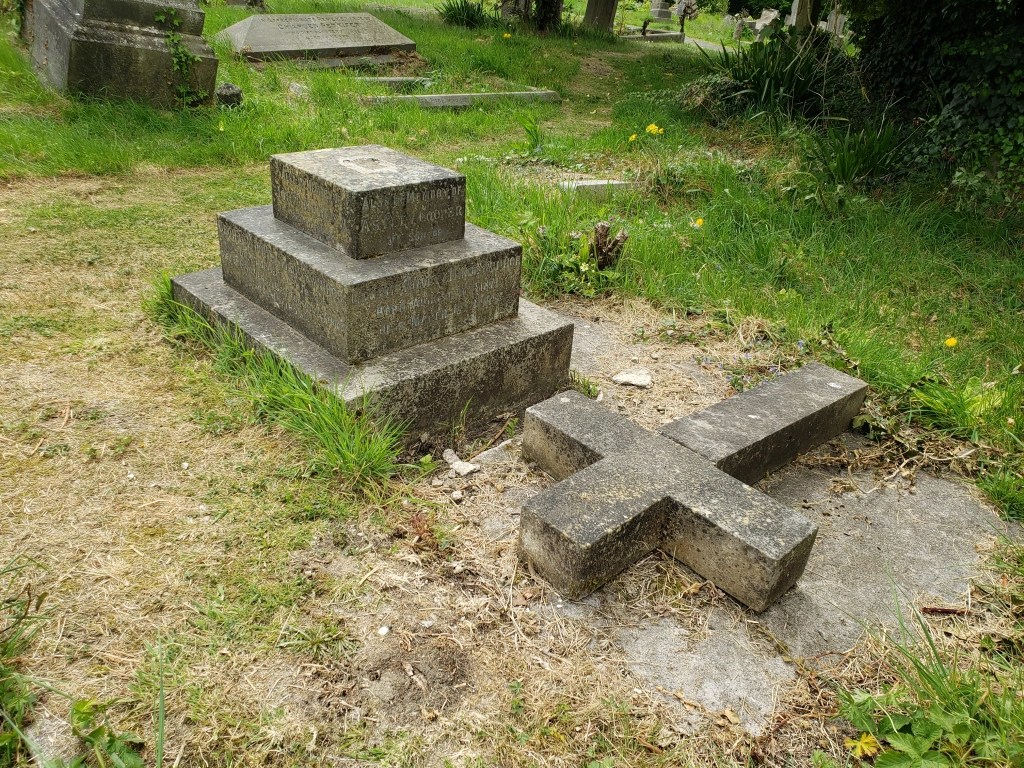
And marking their grave is this substantial memorial. Who paid for it? Who installed it? Perhaps the lives of John and Honor were not so little, not so quiet, after all. Perhaps there is a whole lot about them left to be discovered.

William Laverick – Forge Foreman

The re-imagined story …

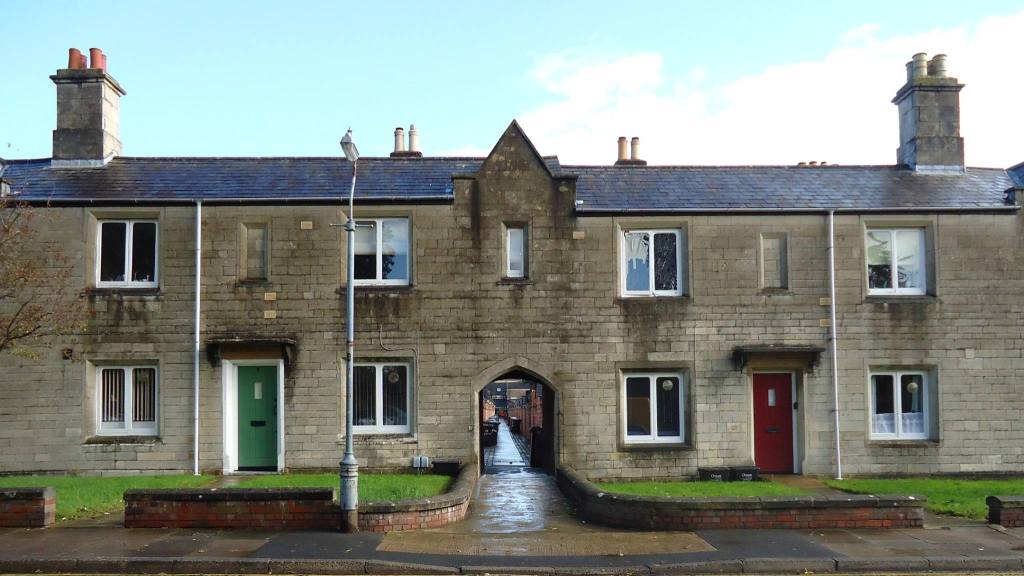
New Swindon has been much criticised for its rows and rows of red brick housing, but it wasn’t always like that. In the beginning there was the Works and the company houses, constructed from stone quarried locally at Kingshill and Bath and Corsham. But granddad said those early cottage were built just for show.

“Railway men and their families began arriving in such numbers that those building their homes couldn’t finish them quickly enough. The first cottages were little more than hovels, just two rooms often with two large families sharing one property.”

Mr granddad used to say Swindon was a work in progress.

“The whole place was one big building site.”

Granddad could remember Bath Street before it was renamed Bathampton Street and Faringdon Street before it became Faringdon Road.

“Mr Hall lived at number 1, Mr Laxon at number 2 and the Laverick family at number 3,” he recalled. “Mr William Laverick senior lived there first and then his son, William junior took on the property.

There was a sad story surrounding young Mr William Laverick, but granddad would never tell me what it was.

“Old Mr Laverick was the Superintendent at the Wesleyan Sunday School. My mother would have had me go, but my father wasn’t insistent so I managed to avoid it.” That made him chuckle, which brought on his cough.

My granddad used to say Swindon was a work in progress. I wonder what he would say if he could see it now.

Wesleyan Methodist Chapel published courtesy of Local Studies, Swindon Central Library.
The facts …

William Laverick was born in Bedlington, Northumberland on September 16, 1843 the son of William and Mary Ann.

He entered employment in the GWR Works on July 3, 1858 as a Door Boy in the Loco Factory before beginning his apprenticeship as a forgeman in 1860. In 1885 he was made a foreman.

The family were Wesleyan Methodists and William Laverick senior was Superintendent of the Wesleyan Methodist Sunday School for 35 years.

William Laverick junior and his wife Maria had a large family and the registers for the Wesleyan Methodist Chapel, Faringdon Road list the baptisms of six of their children.

Sadly, four of their children died young – Henry Allen Laverick at 9 months old and Arundel Laverick also died before his first birthday. Francis Charles died aged 2 and James Lightford Laverick aged 6 years. James died shortly after the opening of Radnor Street Cemetery and is buried in plot A100. Henry Allen died the following year and is buried in plot E7035. The other two children died before the cemetery opened in 1881 and are most likely buried in the churchyard at St. Marks. There is a mention of the four children on William’s memorial, but the inscription is badly weathered and incomplete.

William was admitted to the County Asylum at Devizes on July 22, 1890 where he died on November 9, aged 46 years.

William was buried in plot A2497 on November 13. In the 1891 census William’s widow Maria continued to live at number 3 Faringdon Street with her three remaining children, William Richard a 19 year old Engine Pattern Maker apprentice, Muriel Beatrice, 18, and six year old Arthur George. She married Francis Davies Morgan in 1895. Maria died in 1904 and is buried with her first husband in Radnor Street Cemetery.