I chose to research this memorial as a bit of a challenge. It is often difficult to find sufficient details to tell the story of the men buried in Radnor Street Cemetery, but for the women it is even more so. So many times the census returns make no mention of the married women’s occupation as they worked part-time, seasonal jobs. With numerous children, no modern household appliances and often a family firm to support as well, these women obviously just sat around all day doing the odd bit of embroidery!
Ellen Hill was born in Cirencester in about 1859, the daughter of John Hill, a coach builder’s labourer, and his wife Eliza. She married Jesse Thomas Singer in Melksham in 1880 and at the time of the census the following year Jesse and Ellen are lodging at 32 Oriel Street, Swindon with Horace Wall, his wife and their 7 month old baby.
Jesse worked first as a fireman and then an engine driver and the family moved around a fair bit. Their first child named Jesse after his father, was born in Swindon, the next three children were born in Trowbridge. Ellen gave birth to Arthur in Swindon in 1890 and seven months later at the time of the 1891 census they were living in Newton Abbot. Ellen had two more children during their time in Newton Abbot. Her youngest son Leonard was born in 1898 back in Swindon and in 1901 they lived at 72 Curtis Street.
Ellen died in 1915, aged 55 at her home 31 Curtis Street. She was buried on January 7 in grave plot D1615. And a year later Jesse married Elizabeth Harvey. Jesse Thomas Singer died in May 1926 at 58 Newhall Street aged 69 years. He was buried with Ellen on May 29, 1926. His second wife Elizabeth died at 116 Tydeman Street on November 28, 1936 aged 79 and was buried with Jesse and Ellen.
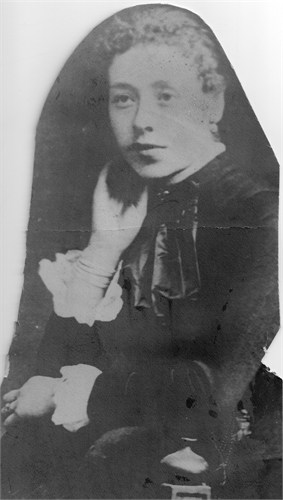
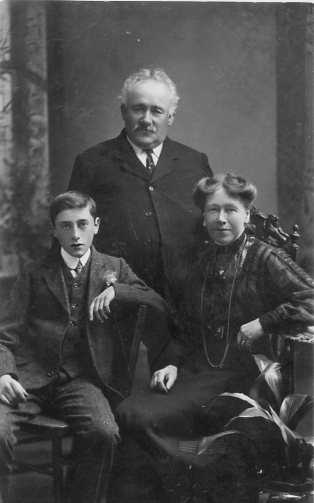
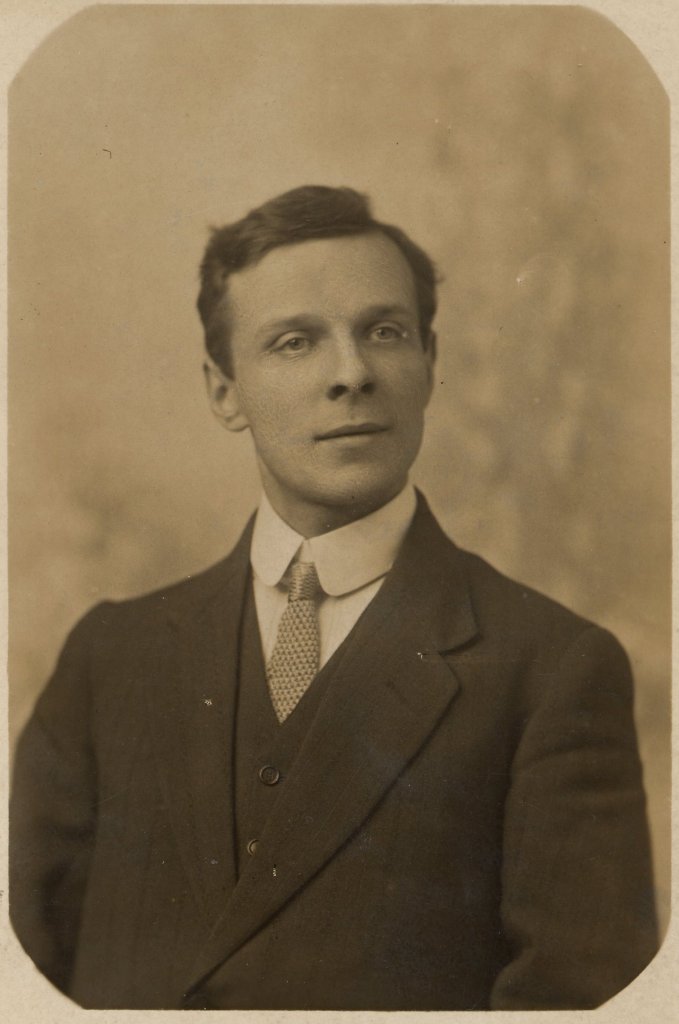
I have been extremely fortunate in being allowed access to family photos, one of Ellen as a young woman, one of her and Jesse and their youngest son Leonard and another of Jesse. Unfortunately none of Elizabeth but would you believe it, of course I find that Jesse goes one better and I have here a portrait of him painted as a young man.
For so many women wartime losses came at an age when they would have expected, or at least hoped, that their life was entering a more peaceful phase; when the worry of raising a family was past.
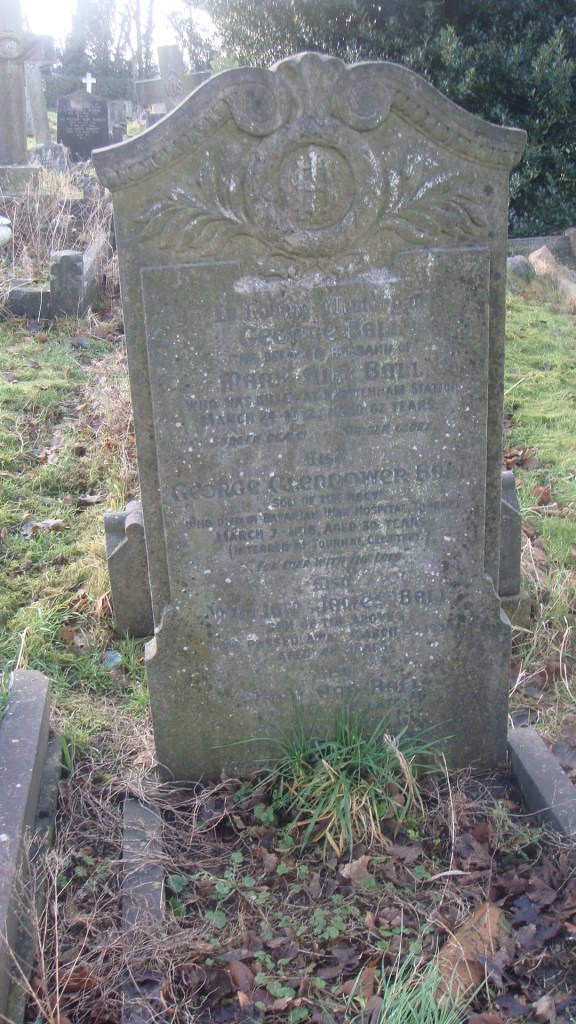
Mary Ann faced some tough challenges during her lifetime. She was 61 years old when her second son, George Glendower Ball, died in 1918 during the First World War. George Glendower Ball was rejected for military service twice before successfully enlisting with the Norfolk Regiment. 33800 Private George Glendower Ball died in the Bavarian War Hospital, Tournai on March 7, 1918, his 30th birthday. He is buried in the Tournai Communal Cemetery.
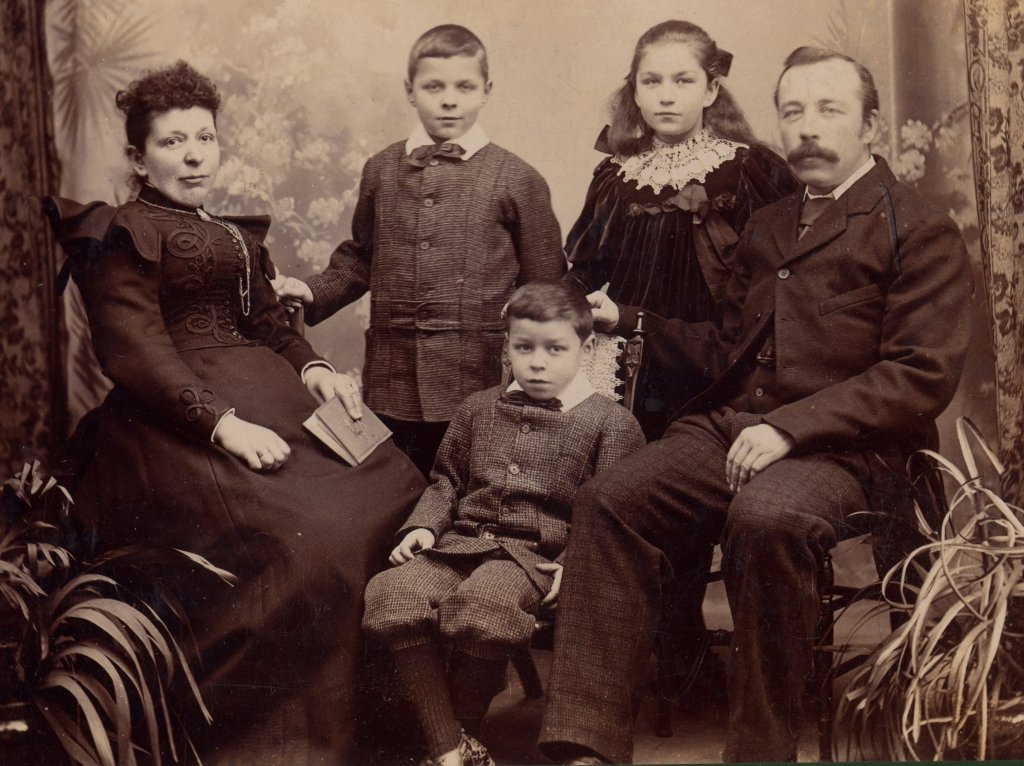
Born in Bristol in 1857 Mary Ann married George Ball in 1885 and by 1891 the couple were running the Temperance Hotel on Station Road. The census returns of that year record their four young children William 5, Millicent 4, Glendower 3 and Samuel just three months old. What the stark facts and figures of subsequent census returns are unable to convey are the tragic circumstances surrounding their eldest son. William had contracted measles at the age of two, which left him disabled; he never appeared in any family photographs.
This photograph of Mary Ann and her family is published courtesy of Duncan and Mandy Ball.
In 1922, when Mary Ann was 65, her husband George was killed in a railway accident when he was struck down while crossing the line at Shrivenham station. Then two years later her disabled son William died aged 48. Mary Ann died just a few months later.
Mary Ann is one of the extraordinary ordinary people buried in Radnor Street Cemetery.
The parents and their son are buried together in grave plot D1305. Their son George Glendower Ball is mentioned on their headstone.
From local dignitaries and Victorian edifices to pageants and poets, photographer James Smith Protheroe and his partner Thomas Henry Simons captured them all. But it could have turned out very differently.
One of tailor Thomas Protheroe’s eleven children, James was born in 1858 over the shop in Goat Street, Swansea, next door to the public library. By 1871 13 year old James was already working alongside his father, described as ‘young tailor’ in the census of that year.
But his artistic leanings had the support of his elder brother Thomas, an artist, who left Wales following his marriage to Emma Chapman in 1872. Thomas moved to Bristol and by 1876 had his own photographic studio at 33 Wine Street and encouraged James with his ambitions.
Thomas remained in Bristol, while James established himself at 30 Regent Street, New Swindon. In 1881 the Protheroe studios won a first class silver medal for oil painting at the Plymouth Art and Industrial Exhibition and proudly declared royal patronage by HRH Prince of Wales.
Image published courtesy of Local Studies, Swindon Central Library.
Towards the end of the century Prothero’s sitters included Queenstown School teacher Edith New who would shortly leave Swindon to join the Women’s Social and Political Union and the fight for Votes for Women. And in 1903 the GWR Hammerman poet Alfred Williams took his bride Mary Peck along to the Regent Street studio to pose for their wedding photograph.
By then James had taken his nephew into the business, Thomas Henry Simons, the son of his sister Elizabeth and her husband Henry, a commercial shipping clerk. James married Fanny Jane Redman, a dress mantle maker, in 1894 and the new century saw the family photography firm based at 96 Victoria Road.
Although the Protheroe name still headed the firm it was Thomas who increasingly took care of the day to day business as James involved himself with the public life of Swindon.
Conductor of the Baptist Tabernacle choir, Justice of the Peace and Wiltshire County Council member, Chairman of the Swindon and Highworth Board of Guardians and member of the Swindon Victoria Hospital Committee are among just a few of the organisations on which James served.
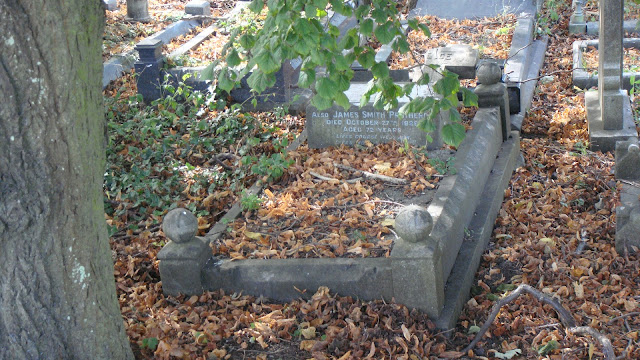
James died at Eirianfa, Newton Villas, Mumbles, overlooking Swansea Bay, in October 1929 aged 72. His body was returned to Swindon for burial in Radnor Street Cemetery.
His obituary published in the North Wilts Herald declared that ‘there was no busier man in Swindon, and few who will be more missed.’
James Smith Protheroe was buried on October 30, 1929 in plot D34A, a plot he shares with his wife Fanny who died in 1925.
Albert Horder was born in Donhead St Mary in 1831, the son of a farmer William and his wife Sylvia. As the couple’s sixth son, Albert realised he was unlikely to inherit the 200 acre Lower Wincombe Farm, so he carved out a career for himself in the drapery business, and never looked back.
The 1861 census finds him living above his shop in the High Street, Shaftesbury with his sister Mary who acted as his housekeeper, a house servant and four assistants. In 1865 he married Mary Ellen Jeeves and the couple had four children.
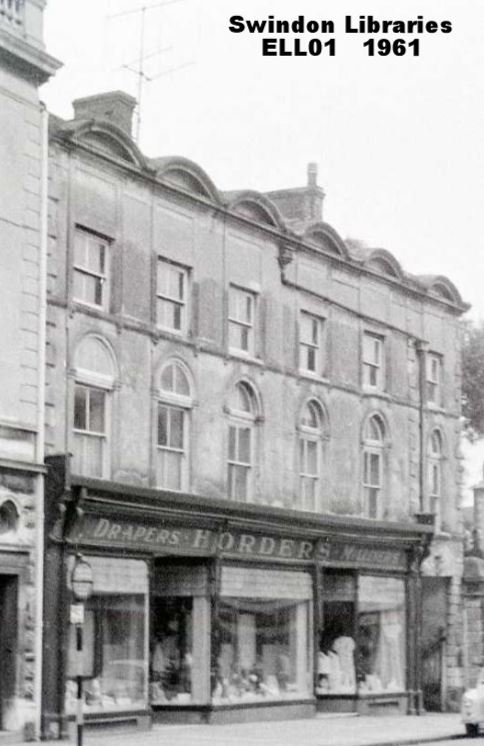
Image published courtesy of Local Studies, Swindon Central Library.
In the early 1870s Albert and Mary Ellen moved to Swindon and set up business in premises in the High Street once occupied by Thomas Strange. Business flourished and the autumn and winter fashions of 1882 included “a good assortment of Tailor-made Ulsters, Jackets, Dolmans in Plain & Broche Cloth, Velvet, Sealskin & Fur” where “an inspection was respectfully solicited.” By the 1890s Horder Bros, Drapers, Milliners, Mantle Makers and Costumiers boasted an expansive three-bay shop frontage.
Having handed over the reins to his son Edward Jeeves Horder, Albert and Mary Ellen retired to a house in Devizes Road, which they named Wincombe after the family farm.
The Horder’s store eventually closed shortly before the firm’s centenary and the building was subsequently demolished. The Pinnacle, a block of apartments, stand on the site of Albert’s drapery business, his name immortalised in the access road, Horder Mews.
Swindon
Death of a well-known resident – The death took place late on Sunday night, at his residence, Wincombe, Swindon, of Mr Albert Horder, who for many years carried on a successful drapery business in the High-street. He was an active member of the Congregational church, having been deacon at the Victoria-street Chapel for many years. Deceased, who was born at Winchcombe, Dorset, nearly 73 years ago, leaves a widow, three sons, and one daughter.
The Wiltshire Advertiser, Thursday, March 27, 1902.
Albert died aged 72 in 1902 and was buried in a large double grave plot E8032/33. He is buried with his wife Ellen, their son Edward Jeeves Horder and his wife Alice Emma.
Florence Rhoda Wilcox was born in Clifton, Bristol, the eldest of three daughters. Her father, Philip Weldon Roberts, was a Pattern Maker and by 1901 the family had moved to Swindon where they lived at 18 Kent Road.
Florence worked as a music teacher when in 1912 she married John Wilcox and the couple moved into number 61, Kent Road. Sadly, their marriage was a short one as John was killed during the first World War. He was serving as a First Engineer in the Merchant Navy and was drowned on May 28, 1917 when his ship was struck by an enemy submarine in the English Channel.
Back home in Swindon Florence made some life changing decisions when on August 14, 1920 she enrolled as a midwife. By the mid 1920s Florence had converted her house in Kent Road into a small maternity home, the Haven Nursing Home, where she worked alongside fellow midwife Gertrude Tucker.
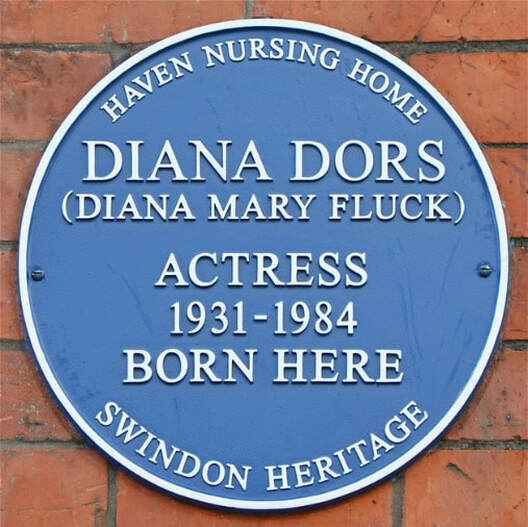
In 1931 numbers 61 and 62 served as both Nursing Home and doctor’s practise and it was on October 23 of that year that Mary Fluck was admitted for what proved to be a traumatic birth during which both mother and baby nearly died. It is likely that Florence and Gertrude were both on duty that day, assisting the doctor during this difficult confinement. The baby who made such a dramatic arrival was named Diana Mary Fluck. She later went on to change her name to Diana Dors and became a film star, Britain’s answer to Marilyn Monroe.
The nursing home remained in operation until the mid 1930s and most probably closed with the opening of the Kingshill Maternity Home.
In 2017 a Swindon Heritage blue plaque was installed on the property to mark the birthplace of Diana Dors.
Florence and Gertrude both moved to Paignton in Devon. Gertrude died aged 59 years at Waterside House, Waterside Road, Paignton and was buried on January 14, 1938 in Radnor Street Cemetery in grave plot D721. Florence died at the same address in February 1952 aged 70. She was buried with Gertrude.
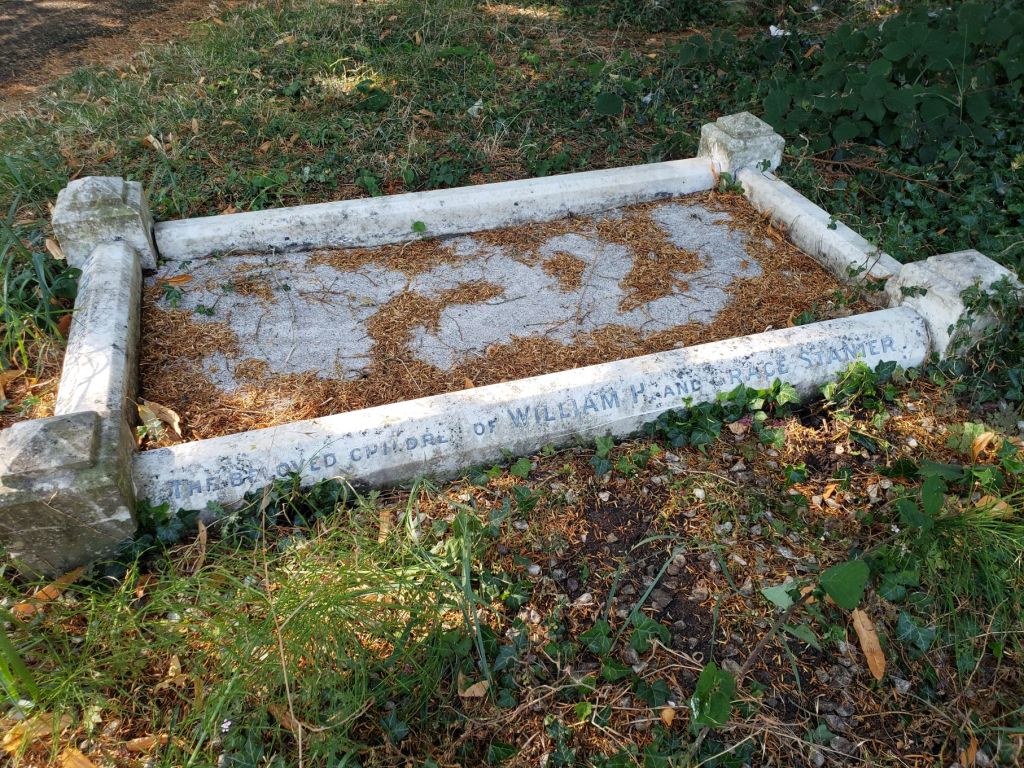
As you might guess, this diminutive grave is that of a child – two young children, infact. Francis John Stanier was born in the summer of 1881 and died in January 1885. He was buried in grave plot A188, aged 3 years old. On May 7, 1886 his 3 week old baby brother Alfred was buried with him. These children were the sons of William Stanier and his wife Grace.
William Henry Stanier was born in Wolverhampton in 1849 and entered the services of the Great Western Railway on November 7, 1864 in the Managers Office, Loco Works, Wolverhampton. He moved to Swindon in 1871 at the insistence of William Dean, Chief Locomotive Engineer and became Dean’s clerk and personal assistant, his right hand man. In 1879 he was appointed Chief Clerk Loco & Carriage Department and in June 1892 he was made Stores Superintendent. He was elected to the Swindon School Board in 1879, serving as chairman for many years. He was appointed JP for Swindon in 1906 and for Wiltshire in 1915. He served as Swindon’s 8th Mayor in 1907-8 and Stanier Street is named after him. William Henry Stanier retired from the GWR in 1919 but continued to serve on the Railway Executive Committee in connection with the distribution of controlled materials.
His son, William Arthur Stanier, the elder brother of these two little ones, was born on May 27, 1876 and went on to have a prestigious railway career. He became Assistant Works Manager at Swindon in 1912 and then Works Manager in 1920 before being head hunted by the London Midland and Scottish Railway where he became the Chief Mechanical Engineer. He was knighted on February 4, 1943. He died in Rickmansworth, Herts in 1965 aged 89.
You can’t help but wonder what future those two little boys might have had – Francis who died in 1885 aged 3 years and Alfred who died in 1886 at just three weeks old.
Charles Hurkett was born on August 3, 1888 and baptised at St. David’s, Carmarthen on August 26. Charles was the son of John Hurkett, a Bat. Sergt. Maj. 3rd Brigade, Welsh Div R.A., and his wife Frances. At the time of Charles’s birth the family were living at Glen Cross Villa, Johnstown, but by 1891 they were living at Lympstone in Devon and by 1901 they had arrived in Swindon.
Charles died in 1907 and his grave is marked by a very distinctive memorial. I thought that perhaps Charles was employed in the GWR Works and that maybe colleagues had made this unusual memorial. However, when you look at the back you can see it has the imprint of Affleck and I think it is more likely that Charles worked at the Affleck foundry in Old Town.
William Affleck was born in Gateshead and served his engineering apprenticeship at Hawkes & Son, a large engineering works and iron foundry in the town. He later joined the prestigious Lambeth based engineering firm of Maudsley and Field before moving on to a job with the Great Western Railway at Paddington and eventually coming to Swindon. By 1853 William had struck out on his own, establishing a foundry and engineering works in Prospect.
While there is still more to discover about the Hurkett family it seems we may have solved the mystery of the unusual memorial.
Charles died on April 25, 1907 aged 18 years of age. He is buried in plot B2607 with his parents.
Lewin Tom Clark was one of five children born to Tom and Sarah Jane Clark. His father died in 1891 after which his mother married Joseph Peart, an Printer Compositor, in 1900 and the couple went on to have two children. Lewin trained as a Bootmaker Clicker and served a five year apprenticeship with Swindon boot and shoe manufacturer W. Reynolds.
He served in the 2nd Vol Bat Wilts Regt and on January 10, 1902 he enlisted with the Imperial Yeomanry. His attestation papers reveal that he was 20 years and 1 month old, 5ft 5ins tall and weighed 129 lbs (just over 9 stones). He had a chest measurement of 34″ with a maximum extension of 36″. He had a fresh complexion, brown eyes and brown hair.
He served 118 days at home before being sent to South Africa where he served from May 8, 1902 to October 17, 1902 – a total of 163 days.
On October 26, 1902 he was discharged ‘at his own request.’ His conduct and character were recorded as very good and he was awarded the South Africa 1902 medal.
He returned to his mother and step-father’s house at 19 Lansdown Road in Swindon and a job in the GWR Works, but who was to know his state of mind or what he had witnessed during his time in South Africa.
Swindon Man Killed at Aldershot
Found Dead on the Railway
A Mysterious Affair
A man named Lewin Tom Clark, of Swindon – his parents reside at 19 Lansdown Road – was found killed on the railway at Aldershot on Friday.
Deceased, who was 22 years of age, had been employed in the GWR Works at Swindon.
It still remains a mystery why the young man journeyed from Swindon toAldershot, and why his life should have come to such a tragic end. When the body was searched, no money was found upon him, nor any articles of value. His head was terribly smashed, and he had sustained other injuries, which caused immediate death.
The body was at once removed to the mortuary, and deceased was quickly identified by means of papers found upon him. These included a discharge paper, which showed that he had served a year in the Imperial Yeomanry in South Africa. He had a medal for war service, and was discharged with a good character. The Aldershot Police communicated with Sup. Robinson and Inspector Everett at once saw the relatives of the deceased, whose step-father, Mr Joseph Peart, proceeded to Aldershot on Friday night, and identified the body.
The Inquest
Was held at Aldershot on Saturday. The first witness called was Joseph Peart, compositor, of 19 Lansdown Road, Swindon, who identified the body as being that of his stepson. He was a single man, 22 years of age. He served in the Imperial Yeomanry in South Africa, and was discharged in October, 1902. Witness did not know why deceased left Swindon, where he had been employed in the GWR Works. Witness did not think deceased was in any trouble. He had seen him a day or two previous with his young lady. Witness had never heard him express a wish to go to Aldershot.
Josiah Marshall, guard on the South Western Railway and living in London, said he was guard in charge of a passenger train which left London at 3.5 a.m. on Friday for Aldershot, where they arrived an hour later. He returned with the empty coaches to Woking, which he left again at 4.12 a.m. When passing the tunnel at Aldershot he was looking out – it was a bright morning – and when about 250 yards from the tunnel, towards London, he saw the body of a man lying by the side of the line. Witness did not stop the train, but afterwards reported the matter to the police.
A Military Funeral
The funeral of the deceased took place in Swindon Cemetery on Tuesday evening last, when the remains of deceased were laid to rest with full military honours.
Despite a great downpour of rain, there was a very large number of people who followed the solemn cortege to the graveside. The members of the local Companies of the Volunteers, F and G and K and M Companies, under Lieut. D.C.A. Morrison, mustered in strong force to pay a last tribute to their deceased comrade. The coffin was enshrouded in a Union Jack, and on it were placed deceased’s busby and belt. Members of the Volunteers acted as bearers. The firing party, under Sergeant A.C. Woolford, marched with rifles reversed, and the Bank, under Bandmaster Sergeant Jago, with muffled drums. On the way to the Cemetery, the Bank played the “Death March.” Large crowds of people lined the route to the Cemetery, and the spectacle was a most impressive one, the sombre aspect of the black uniforms and muffled drums, being added to by the continuous drizzle of rain.
In consequence of the very inclement state of the weather, the last solemn service was taken in the Cemetery Chapel, only a brief committal prayer being offered at the graveside.
During the firing of a volley over the grave one of the sisters of the deceased was seized with hysterics, and had to be assisted from the graveside.
The service was conducted by the Rev H.M. Hull, and the local arrangements for the funeral were in the hands of Mr F.J. Williams, of Bath Road. The coffin was of polished elm, with brass furniture, and the inscription on the plate was: “Lewin Tom Clark, died June 10th, 1904 aged 22 years.”
Extracts from The Swindon Advertiser Friday June 17, 1904
Lewin Tom Clark was buried in plot B1173, a public grave, with two other unrelated persons. As is the case with public graves, there is no headstone to mark the spot.
Richard Bellwood Pattinson was born in Heighton in Durham on November 28, 1841 and moved to Swindon as a child. His father, Richard Renwick Pattison, was one of a large contingent of railway workers from the north east who moved down to Swindon in the early years.
In 1861 Richard married Alice Grandison, the daughter of another early incomer David Grandison, and the couple had three daughters.
Richard jnr followed his father into the Works, as most sons did. The UK Railway Employment Records provide a resume of the various roles he filled in his working career.
His service with the GWR began as an Office Boy in the Goods Department in April 1854 when he was 12 years old. He worked there until he was older enough to begin an apprenticeship. He then worked as a draughtsman, then a valve setter. He became an Assistant Foreman and then a Foreman. He resigned on June 2, 1897 aged 56 after approximately 43 years of service. Perhaps he was secure enough financially to retire early. Richard died on December 2, 1900, just three years after his retirement. His effects were valued at £10,884 11s 2d, a fortune in 1900.
Death of Mr R.B. Pattison – Mr Richard Bellwood Pattison, who for 23 years was foreman of the B1 and C sheds (erectors’) in the GWR Works at Swindon, died at his residence, No. 7 Sheppard street on Sunday, at the age of 59. The deceased gentleman succeeded his father as foreman in 1874, after a previous experience of 20 years in the workshops, and retired in 1897. He leaves a widow and two married daughters.
The Citizen, Tuesday, December 4, 1900
Richard Bellwood Pattison was buried on December 2, 1900 in grave plot E8497. He is buried with his daughter Sarah Bellwood Jones who died in 1926. His wife Alice and their two other daughters are buried in the neighbouring grave plot E8496
James Sweeper was born in Marlborough in about 1824 the son of William and Harriett Sweeper. On December 8, 1845 he married Jane Gilbert at the church of St. Peter, Marlborough.
By 1851 James and Jane with their two young children Eliza 2 and 2 months old George, lived above the stables at the Queens Hotel, Swindon. He was 28 years old and employed as a post boy – a job description open to interpretation. Sometimes described as a mail carrier, a post boy was also a person who rode one of the horses pulling a carriage. The two roles could be, and frequently were, combined.
In 1861 James and Jane and their 5 children lived at the Queens Hotel Tap, Railway Station, Swindon. In 1871 James, now widowed, lived at the Queens Hotel Stable with daughter Eliza and sons George, Henry and William. However, sorting out the various town centre Queens Hotels is confusing.
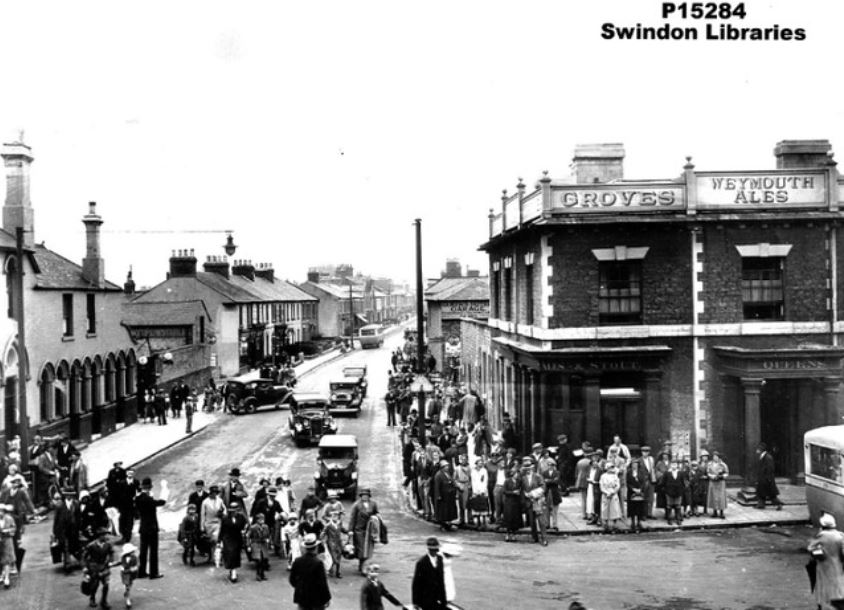
The Queen’s Tap pictured on Trip day 1934 published courtesy of Local Studies, Swindon Central Library.
Swindon Junction Station (now called Swindon Station) was built in 1841-42 by J.D. & C. Rigby. A far more impressive building in those days, it originally consisted of 2 separate 3 storey buildings straddling either side of the railway line and linked by a footbridge. These buildings contained the infamous refreshment rooms and the Queen’s Royal Hotel. Was this where James worked as a post boy and later an ostler (a man employed to look after the horses of people staying at an inn)?
The second candidate is an inn built in 1841 that once stood at the bottom of Corporation Street close to the Whitehouse Bridge. It later became known as The White House and was demolished in 2002, but in James’s day it was called the Queen’s Arms Hotel.
Finally, we have the only one left standing, the Queen’s Tap, opposite the station on the corner of Wellington Street and Station Road.
So where did James live and work between 1850-1870. My money is on the Queens Arms Hotel but then again perhaps he worked at all three hotels at various times.
Jane Sweeper died in April, 1868 aged 44 years and was buried in St. Mark’s churchyard. James married for a second time in 1875 when he was working as a horse dealer in East London. James married Lucy W. Hunt, a widow, at St Leonard’s Church, Bromley and by 1881 had returned to Swindon where they lived at 22 Holbrook Street with James’s son Harry.
It has been much easier to establish James’s last resting place here in Radnor Street Cemetery! He died in 1887 aged 65 and was buried on December 7, in grave plot E8582 with Lucy who had died earlier that same year.









 Radnor Street Cemetery