The Jefferies family – Wesleyan Methodists

I chose to research this grave because I liked the typeface and all the funeral symbolism on the headstone.
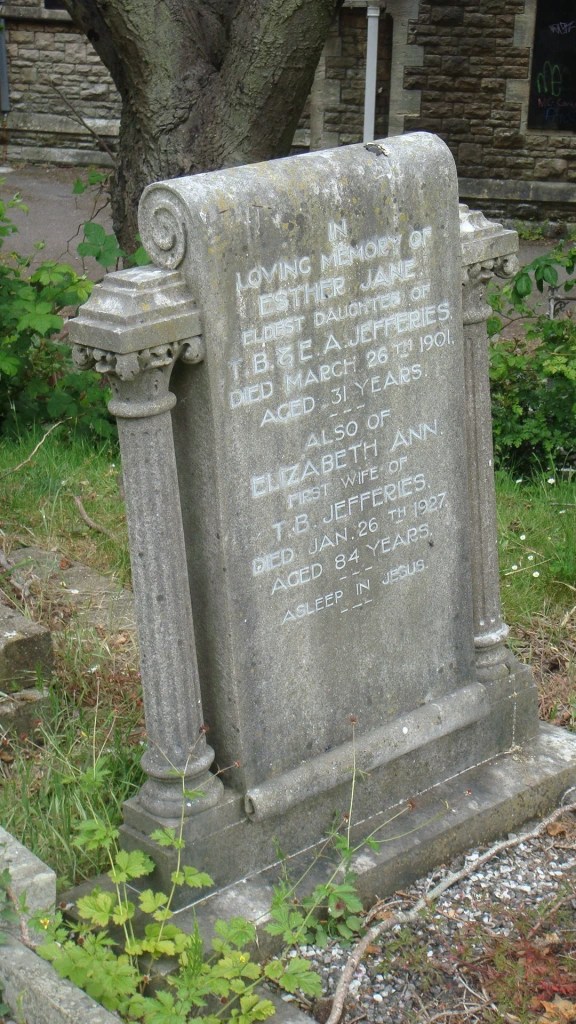
A scroll can mean a number of things in headstone iconography including a love of learning and a religious belief, which is very appropriate for this family. It can also mean a life cut short with the past rolled up and the future yet to unfurl. This would make sense when you note that Esther J. Jefferies, the first person buried in this grave, was only 31 when she died. The pillars either side suggest an entrance and this symbolises an entry into heaven. At the top of the pillars are acanthus leaves, which have several interpretations symbolising the prickly journey of life to death and also enduring life. So, there’s a lot going on with this headstone.

Elizabeth Ann was born in Cricklade in 1843. She worked in service as a young woman before marrying Thomas Bennett Jefferies, a slater and plasterer. Their first home was in Wootton Bassett where Thomas was born. By 1891 they had moved to 18 Union Street, Swindon where the elder sons were now apprentice plasterers.

The 1911 census finds them at 165 Victoria Road and on this census we get some more details about the family. Thomas and Elizabeth had been married 42 years during which time they had 10 children, four of whom had already sadly died. And then I found a fantastic photo of the couple’s five sons, thought to have been taken at the wedding of their sister Ellen to Harry Frederick Keene in 1906. They are pictured in order of seniority left to right – Joseph, Thomas, John, Winfrith Frederick (usually referred to as Fred) and Charles Wesley.

Eldest son Joseph Page Jefferies emigrated to Australia with his family in around 1913. Following his wife’s death, he married for a second time in 1936 in Sydney, where he died in 1939. The couple’s third son, John Nelson became the assistant borough surveyor here in Swindon and in 1903 lived at 2 Hunt Street.

Death of Mrs T.B. Jefferies

With the death of Mrs Elizabeth Ann Jefferies, of 1 Durham Street, there has passed away one of the best known figures in Wesleyan Methodism in the town. Mrs Jefferies, who was 84 years of age, was a native of Cricklade, being the daughter of Mr and Mrs Joseph Page. She married Mr Thomas Bennett Jefferies at Purton Parish Church on September 26th, 1868, and the couple came to live in Swindon 46 years ago. Mr Jefferies is the oldest local preacher on the local Wesleyan plan, and although he has been preaching for over 60 years he continues to take appointments.

Mrs Jefferies was taken ill with influenza, and pneumonia supervened with fatal results. The funeral took place at the Central Mission Church on Monday, and was conducted by Pastor A.E. Stocking, assisted by the Rev. W. Kelson and the Rev. H.B. Turner. The committal rites at the Cemetery were performed by Pastor Stocking. Among the mourners were Mr T.B. Jefferies (widower), Messrs. Thomas Henry, John Nelson and Charles Wesley Jefferies (sons), Mrs Ellen Elizabeth Keene (daughter) Mrs Eliza Priscilla Jefferies (daughter-in-law), Mr Joseph Jefferies (son-in-law), Mrs Cottrill (half-sister), Mr Jesse Jefferies and Mr E. Jones (representing the local preachers of the Circuit).

North Wilts Herald, Friday, February 4, 1927.
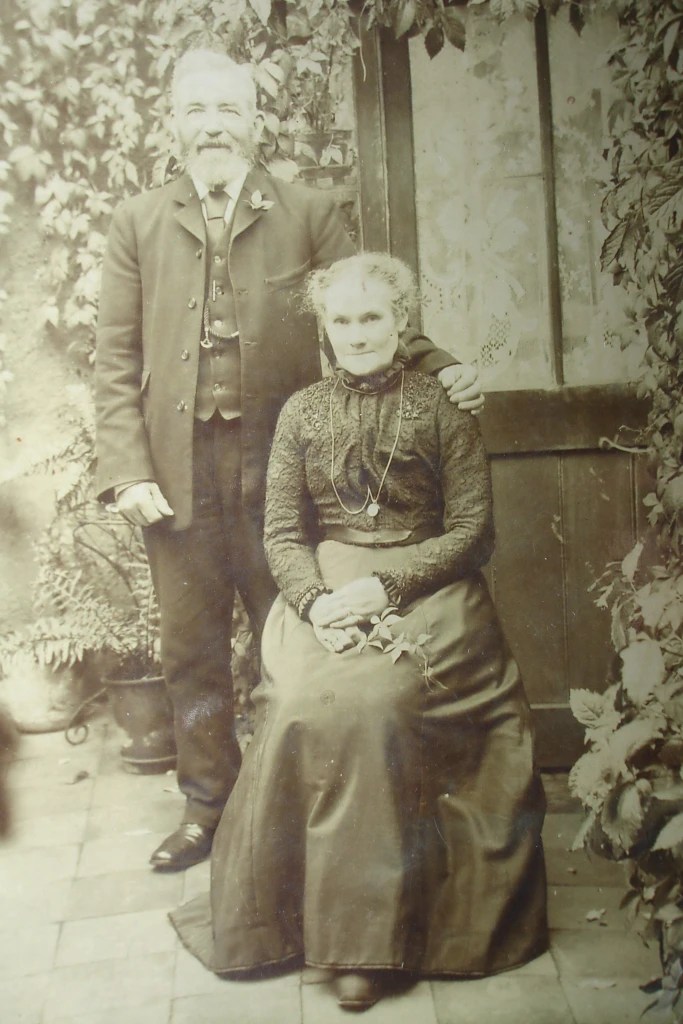
Thomas Bennett and Elizabeth Ann Jefferies

Esther Jane Jefferies (Thomas and Elizabeth’s eldest daughter) was the first person to be buried in grave plot D109. She died in 1901 aged 31 years old. Elizabeth Ann Jefferies (Thomas’s first wife) was buried with her daughter on January 31, 1927. Next came Ellen Jefferies (Thomas’s second wife) who died in 1931 and finally Thomas Bennett Jefferies who was buried on April 18, 1932.
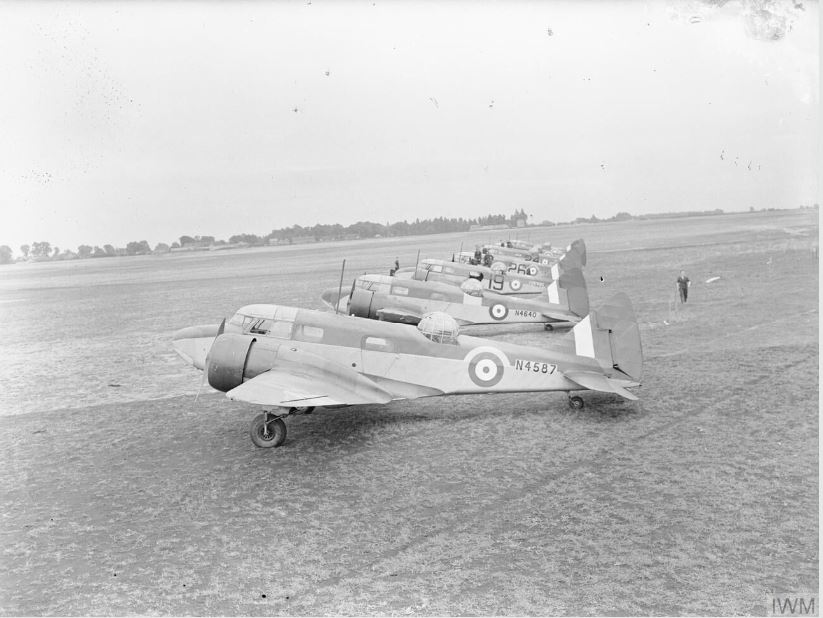
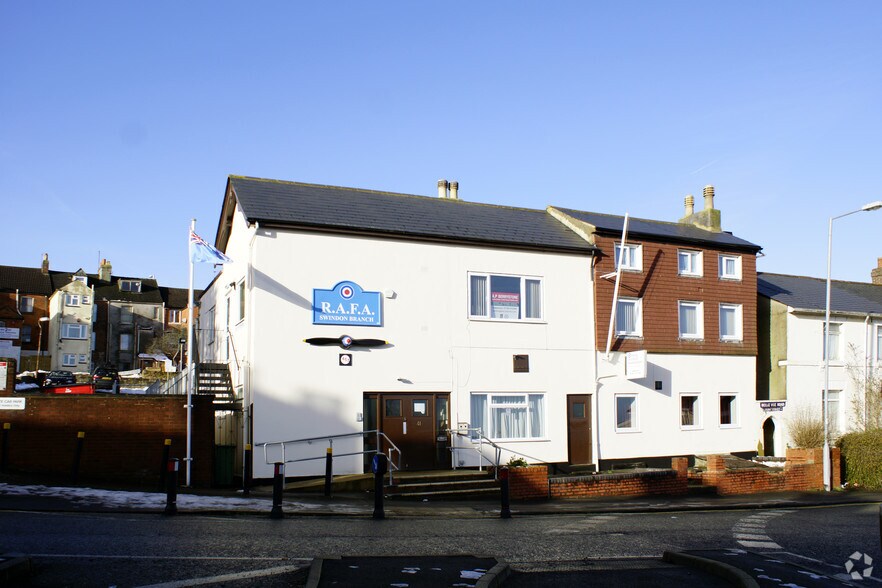
Unveiling of Airspeed Oxford propeller

In recent years the Radnor Street Cemetery chapel has become a repository for rescued and recovered war memorials. Ten years ago Mark Sutton was instrumental in seeing the Sanford Street School War Memorial removed to Radnor Street Cemetery Chapel from the then empty school building where it was considered to be vulnerable.  Then in 2015 a memorial to 19 Gorse Hill men who died during the First World War might also have been lost forever until rescued by Mark. In subsequent years more plaques and memorials have been deposited in the cemetery chapel.

During our next guided cemetery walk we will be unveiling another war time relic that was in danger of being lost to the history of Swindon.

Following the closure of the RAFA Club in Belle Vue Road the propeller mounted on the front of the building faced an uncertain future. Then a group of concerned Swindonians, among them Carole Bent, Neil Robinson, Toby Robson and Graham Carter, stepped in.

The propeller, which has been identified as belonging to an Airspeed Oxford – a trainer for RAF bomber aircrews, has now been installed in the cemetery chapel and will be unveiled by Air Commodore Tony Keeling OBE, Commandant Royal Air Force Air Cadets.

‘I’m delighted to see this propeller returned to display in Swindon. This is a visible celebration of the historic links between the town and the Royal Air Force. I am most grateful to the members of the local community who made this happen. Thank you.’

Following the unveiling our walk will follow a military theme during which we will visit the graves of several airmen who served during both World Wars and are buried in the cemetery.

Join us outside the cemetery chapel on Sunday August 13 for the unveiling at 2 p.m.

published courtesy of Imperial War Museum.

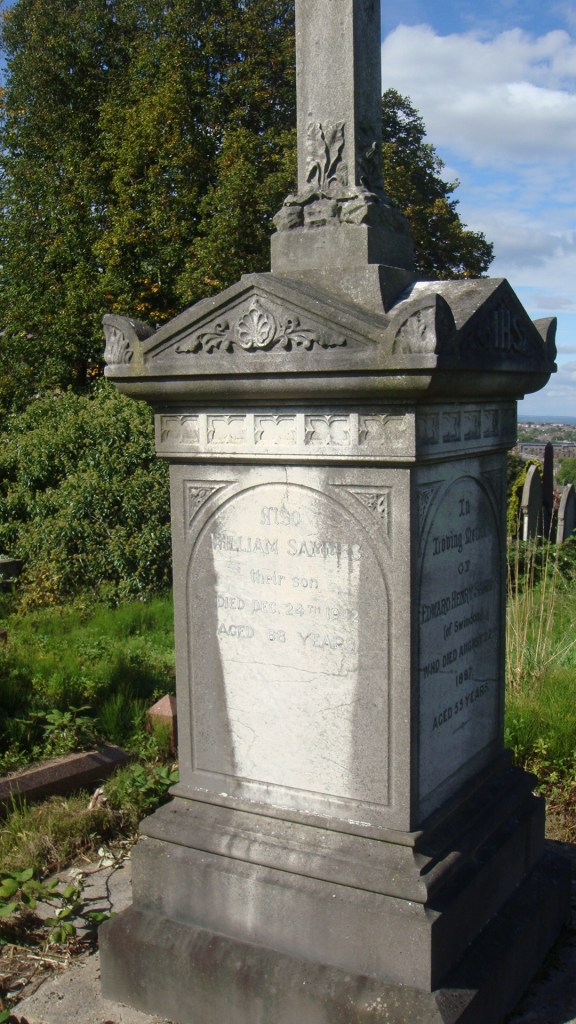
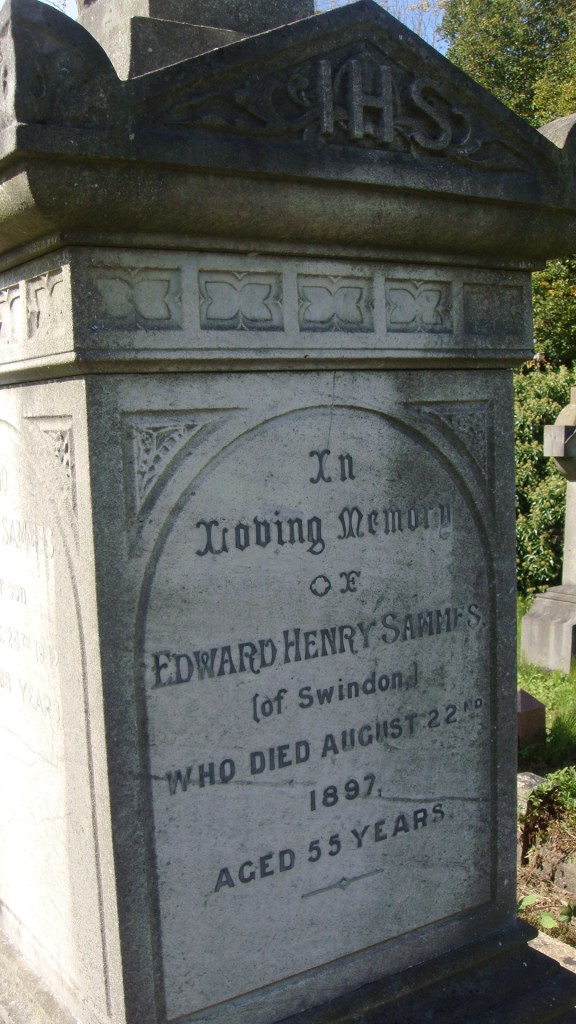
Edward Henry Sammes of Swindon

This is the last resting place of Edward Henry Sammes.  It’s interesting that his family should make a point of adding ‘of Swindon’ to the inscription because Edward was not Swindon born.

Edward was born in Lambeth in January 1842, the son of William and Sarah Sammes.

The first reference to Edward being in Swindon is in the 1871 census when he is 29 years old and living a 1 Belle Vue Road where he describes himself as a grocer.  That same year he married Sarah Anne Spackman from Wootton Bassett and the couple had two children William and Millicent, who are both buried here as well.

By 1889 he was a member of the Old Swindon Local Board, so well placed to know plans for development in the town.  The family were by then living at Wycliffe House in Devizes Road.

In 1892 Edward submitted a planning application to build 8 houses on the corner of Kent Road and Maidstone Road. The building specifications for Edward’s houses describe three bedrooms, a parlour, sitting room, kitchen, conservatory, scullery, WC, coals and pantry.

This area of Kingshill was pretty much one big building site during the 1890s.  The land had originally come on the market in the 1870s with the death of John Harding Sheppard but development was slow to take off. However, by the 1890s numerous speculative builders had snapped up the building plots and were busy at work. A map of Edward’s project shows an empty site next door on the corner of Kent Road and Ashford Road with another empty site opposite.  At the other end of the road rival builder William Chambers had a yard opposite his own development at Ashford Terrace. 

Edward died in 1897 aged 55. He left £5,814 18s 6d to his widow Sarah and son William, worth today somewhere in the region of £2.7 million.

I’m not sure if his son William ever worked or whether he lived off his inheritance.  In 1911 William 35, was living at 31 Devizes Road, with his sister Millicent 27. Both of them were living on ‘private means’.

Local historian David Lewis has been able to add a some further information.

Edward Sammes lived at 31 Devizes Road “Wycliffe” in 1895 according to the Kellys directory as a private residence. Millicent was still there in 1951. Sometime in the 1960/70s, it became the Spiritualist Centre.

Moses Willoughby and the gossips

The re-imagined story …

“You remember Moses Willoughby?”

“Do I?”

“Yes, used to live in King Street, before his wife died.”

“No, I don’t remember him.”

“Yes you do – we always thought she was a lot older than him. Turned out there was only two years in it. We talked about it.”

“Did we?”

“He married again just a few months after she died. Don’t you remember?”

“No, I can’t say I do.”

“He moved up to Gorse Hill. We all reckoned his new wife had a bob or two.”

“Oh yes, I remember now. She was older than him.”

“No, that was his dead wife. His last wife was much younger than him. Give me strength – I think you’re losing your marbles.”

“No, I do remember him now. Moses Willoughby. Used to live in King Street. Moved to Gorse Hill.”

“Yes, that’s him. Well he’s dead.”

Early 20th century photograph of Cricklade Road published courtesy of Mr. T. Midwinter and Local Studies, Swindon Central Library.

The facts …

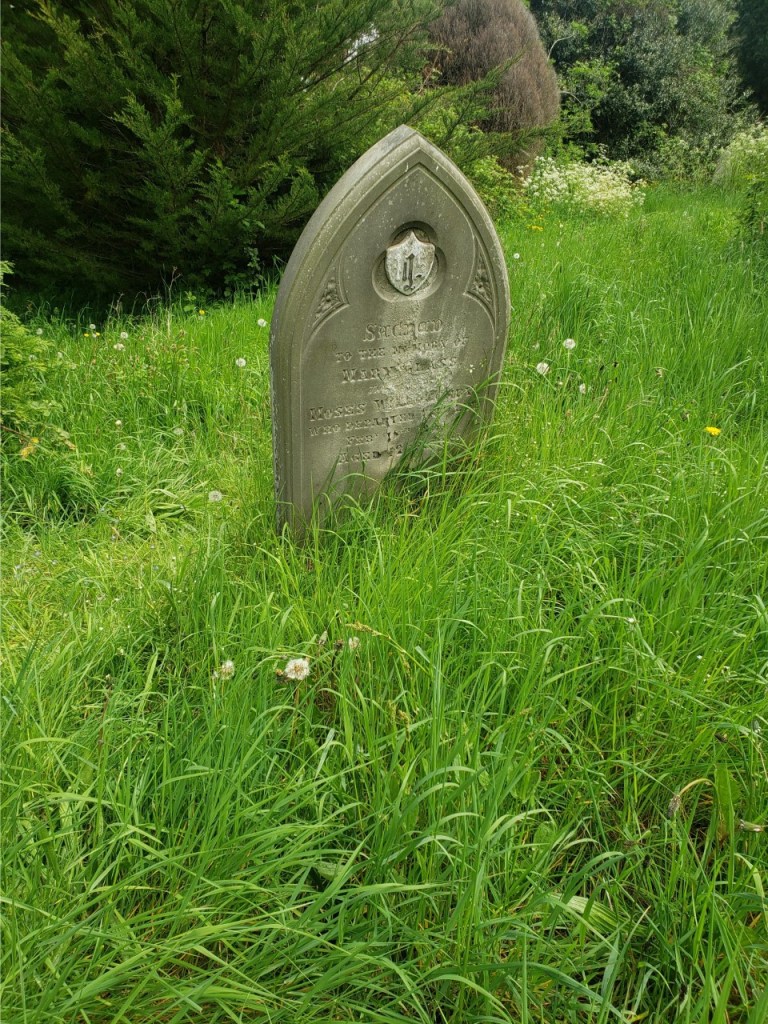
Thanks to the numerous genealogical resources available online it is now possible to piece together the history of those buried in Radnor Street Cemetery, even when the inscription on the headstone has deteriorated.

Moses Willoughby was born on October 22, 1818 and baptised in Highworth. He was the son of Charles and Ann Willoughby and grew up in Eastrop.

He married his first wife Ann Lay in Highworth on November 21, 1840. Their son John was baptised in Highworth on February 6, 1842.

Ann died in 1847. On the 1851 census Moses, 28 was working as an agricultural labourer and living at Bailey’s Piece, Highworth with his ten year old son John.

In 1855 he married for a second time. His bride was Mary Glass and the couple married in the parish church at Purton. They had a daughter Emily Kate baptised at Highworth on June 22, 1857. However, at the time of the census in 1861 there is no mention of Emily Kate, nor John, although he could well have left home/married by then.

By 1871 the couple had moved to Swindon and were living in Cetus Buildings on the canal side where Moses continued to work as a farm labourer. Moses declared that he was 46 and Mary 48.

At the time of the 1881 census Moses was employed as a factory labourer, almost certainly in the railway works. He states that he is 60 and Mary is 62.

Mary died at their home 3 King Street in February 1890, she was 72 years old. The funeral took place on February 19 when Mary was interred in plot A790.

On July 16, 1890 Moses married for the third time. His wife was Mary Ann Haskins, a 49 year old spinster. At the time of the 1891 census the couple were living at 255 Cricklade Road, Gorse Hill. Moses was still working as a General Labourer in the GWR Works and they had two lodgers, both labourers in the Works.

Moses died on March 9, 1892. He left effects valued at £84 0s 7d to his widow Mary Ann Willoughby. He was buried three days later in Radnor Street Cemetery in plot A790, which he shares with his second wife.

Attempts to trace John Willoughby and his half sister Emily Kate have so far been unsuccessful.

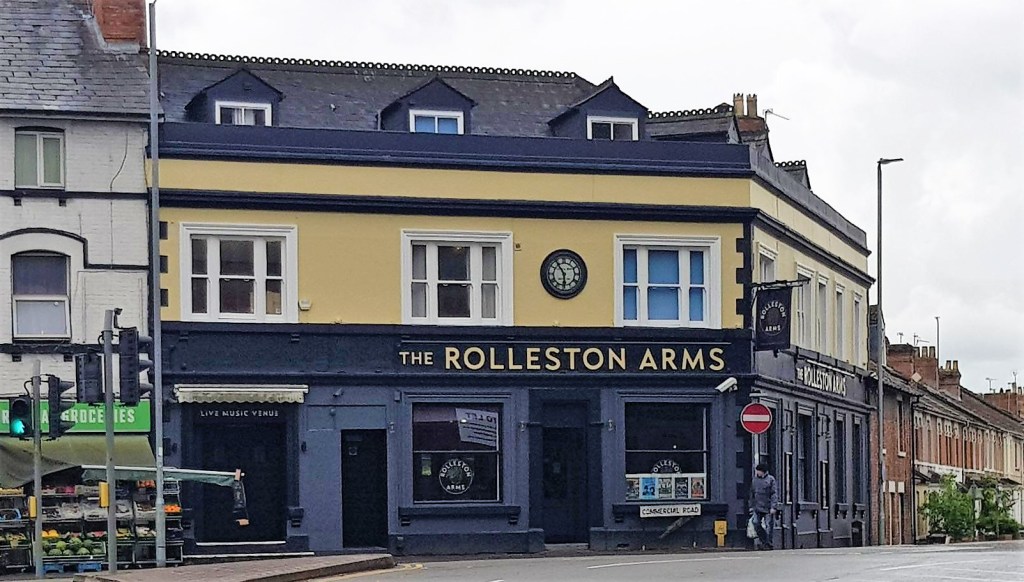
Charles Edward Iles – licensee of the Rolleston Hotel

Today the Rolleston Arms is looking very smart with a new coat of paint and new signage. John Horsell, responsible for developing the new Rolleston Estate in 1890, was the first landlord. Charles Iles was landlord for more than 10 years until his death in 1938.

The Late Mr C.E. Iles

Funeral of a Swindon Licensee

The funeral of Mr Charles Edward Iles, licensee of the Rolleston Hotel, Swindon, who died after a long illness, on 21 March, took place last Thursday afternoon. The service at St Paul’s Church was conducted by the Vicar, the Rev. C.F. Harman, who also officiated at the interment in Radnor street cemetery.

Mr Iles, who leaves a widow, was a native of Swindon, and was 46 years of age. As a youth he was apprenticed as a boilermaker in the GWR Works, and served in the Royal Navy as an artificer from 1914 until 1920 when he was invalided out of the service.

He was licensee of the Foresters, Stroud, for three years, before taking over the Rolleston Hotel, where he has been for the last 12 years. Mr Iles was a member of the Western District United Service Lodge No. 2258 and Chapter Eliot.

The chief mourners were: Mrs Eva Iles (widow), Mr Charles E. Iles (father), Mrs Lawrence (aunt), Miss T. Gascoyne (friend), Mrs D. Kent (sister in law), Miss C. Warren (sister in law) Mrs Wenban (aunt), Mr A. Gerring (cousin), Mr H. Kent (brother in law), Mrs H. Kent and Mrs W. Harris (sisters in law), Mr Eli Mort, Mr J. Coster and Mr Harry Waters (uncles), Mr B. Menham, Mr W. Gascoyne, Mrs W. Gascoyne, Mr Johnson, Mr Cavel (representing Golden Carp Angling Association), Mr and Mrs C. Salmon, Mr Graham Davies, Mr Hayball, Mr J. Spackman and Mr N. Davies (representing Swindon Licensed Victuallers’ Association), Mr H.A. Reeves, Mr G. Beburn, Mr G. Wakefield, Mr F. Burchell, Mr Glass, Mr R. Matthews (representing Cirencester Brewery Co. Ltd.), Mr Halfpenny, Mr Charlie Baxter, Mr Watson and Mr Gilbey (representing A.S.E.).

Funeral arrangements were carried out by Messrs A.E. Smith and Son, 24, Gordon road, Swindon.

North Wilts Herald, Friday, 1 April, 1938.

Charles Edward Iles was buried in grave plot A352 on March 26, 1938. This was previously a public, children’s grave and two burials took place in the first year the cemetery was opened. Three year old Tom Wootton was buried here on October 20, 1881 and the following day Violet Lilian Murray aged 2 was buried in the same plot. The Iles family purchased the grave plot more than 50 years later when Charles died. His wife Eva remarried in 1941 and was buried with him when she died in 1979.

You may also like to read:

John Horsell – builder and licenced victualler

Our cemetery cat

Every cemetery should have a cat – and we used to have one.

We never knew where he lived, only that it was somewhere local – maybe Kent Road or Clifton Street or perhaps Radnor Street itself. Most days he would be in the cemetery, prowling through the long grass on his deathly, daily business; stalking the wildlife. He barely acknowledged us and we never approached him – he wasn’t that kind of cat. He had a distinctive face and we had a nickname for him – too controversial to reveal here.

And then one day I saw his photograph on a local vet’s Facebook page, like a fugitive on a wanted poster – Found in Radnor Street Cemetery – some well meaning animal lover had captured him and deposited him at the vet’s.

We wondered if he would ever find his way back home, and more importantly, back to the cemetery.

Every cemetery should have a cat. We had one once. He looked a bit like this – only more menacing.

George Richman Alley and his family

And just when I thought I’d seen all the Alley family photos, along came two more.

George Richman Alley was born in Trowbridge in 1841, the son of Job Alley, a dyer.  He moved to Southampton in around 1860 where he worked as a Coach Body Maker and in 1865 he married Emma Jane Ross, the daughter of a mariner.  By 1881 they had moved to Swindon where George worked as a wheelwright body maker in the GWR Works.  The couple lived first at 3 Carfax Street and then at 8 Merton Street where George died in 1925.  Emma survived him by seven years.

George and Emma had one son, George pictured in the back row of this photograph, and seven daughters.  Four of the daughters lived into their 90s and one reached her 100th birthday. Only one of the daughters left the Swindon area, of the other six, four went into business in the town.

Eldest daughter Emma trained in London as a ladies tailor before her marriage to Walter Lloyd Hull, a Bournemouth shopkeeper.

Following her husband’s death in 1947 Emma returned to live in Swindon.  Then in her 80s she became a member of the Swindon Business and Professional Women’s Club and was active in many other organisations in the town, including the Richard Jefferies Society and the WEA.

In 1954 Emma gave a talk to the Women’s Club about her involvement with the suffrage campaign. when she had been an active member of the Women’s Freedom League and was arrested on several occasions and imprisoned. At these talks she was said to have worn a badge carrying an engraving of Holloway prison pinned to her dress.  Other suffragette souvenirs she had were a cocoa mug and a salt pot smuggled out of Holloway and a Votes for Women banner.

Second daughter Maud, a dressmaker and upholsterer, married Henry John Lewis, a bootmaker and moved to Chippenham. Third daughter Mabel held the role of Postmistress at Westcott Place for more than 50 years and on the New Year’s Honours List of 1960 she was awarded the British Empire Medal in recognition of her service to the community.

Fourth daughter Amelia Ann, the only daughter to never marry had a milliners business at No. 90 Victoria Road which she ran with her sister Ethel (sixth daughter) until she married Wilfrid Hewer and together they ran the Oddfellows Arms in Cricklade Street. Fifth daughter Flora became a teacher. She married William Harold Hall and lived at 42 County Road.

Youngest daughter Eva pictured standing between her parents, married George Babington on March 1, 1911 at the Baptist Tabernacle.  Eva and George ran a draper’s shop at 92 Victoria Road, next door to her sister Amelia’s millinery shop.

The following photograph was published following the death of George in 1925.

In reference to the death of Mr George Alley, of Swindon, the above photograph of members of the family is of interest from the fact that all were over 80 years of age. Left to right: Mr George Alley (85), Anna Alley (86), Louisa Alley (82), Martha Blatcher (84), and Fred Alley (80). Of the present living members the Misses Anna and Louisa Alley live at The Halve, Trowbridge, and Mr Fred Alley at 8 Merton Street, Swindon.

North Wilts Herald, Friday, December 4, 1925.

And so perhaps the reporter from the North Wilts Herald got a fact or two incorrect. With an exuberant and irrepressible family such as the Alley’s it’s easy to get confused.

The Late Mr G. Alley

A Well-Known Resident of Swindon

By the death of Mr George Richman Alley, of Merton Street, Swindon has lost one of its best-known residents. Deceased, who was 84, came to Swindon from Salisbury 51 years ago, when he entered the service of the Great Western in the Carriage Department. For nearly 25 years he was in charge of the road wagon department and he relinquished his position as foreman 18 years ago, when he entered upon a well-earned period of retirement. Had Mr Alley lived until Christmas he and his wife would have celebrated their diamond wedding, and a pathetic feature of his demise is that one of his daughters was at home at the time making preparations for the celebrations. Deceased leaves seven daughters, five of whom reside in Swindon, one in Bournemouth and one in Chippenham. His only son is a retired naval engineer, and lives in Suffolk. Deceased’s only brother, Mr Fred Alley, who is 80 years old, is the secretary of the GWR Retired Workmen’s Association. He celebrated his diamond wedding 12 months ago.

The funeral took place on Tuesday, a short service being previously held at the house. The coffin was followed to the graveside by deceased’s only son, his six sons-in-law, representatives of the Foreman’s Association and the Baptist Tabernacle.

North Wilts Herald, Friday, December 4, 1925.

George Richman Alley died aged 84 years at his home 8 Merton Street. His funeral took place in Radnor Street Cemetery on December 1, 1925. He was buried in grave plot D31A. Emma Jane Alley died aged 87 at 12 Park Lane and was buried with her husband on October 29, 1932.

My thanks, as always, to the lovely Alley ladies Di, Kay, Wendy and Christine for sharing their information and their photographs.

You may also like to read:

All of us back together again – The Alley Sisters

The Lost Alley family babies

Ellen Amanda Alley – an ordinary woman

The Alley family reunion

A public grave and an unusual discovery

As you look across the cemetery, you will see large areas without headstones or grave markers. But we know there are no empty burial spaces here as the cemetery was full when it closed in the 1970s.

These empty spaces are graves where families were unable to afford a headstone or memorial of any kind. There are also a large number of public graves where families were unable to afford even a burial plot. These plots often contain numerous burials, usually of unrelated persons. And then there are also the infant burial plots where the babies are buried and there are a large number of those in the cemetery.

I came across plot C63 while was researching the death of Emily Hobbs. Emily had died at the Stratton Infirmary aged 75 years old. Her home address was given as 34 Linslade Street and she was buried here on September 24, 1938.

When I looked at the plot details I soon discovered that this was a public plot, so I knew there would not be a headstone. But what surprised me was that there were four other people by the name of Hobbs already buried here when Emily died in 1938.

Research revealed that this plot was originally designated as a babies plot. The first burial to take place was that of Edgar Henry Smith a 10 week old baby who died in June 1896. A week later another baby was buried here 17 month old Grace Emily Hobbs from 31 Linslade Street. In February 1897 Laura Louise Hobbs aged 5 years old from 31 Linslade Street was buried here. In November of that year Myra Agnes Smith, little Edgar’s sister, was buried here aged 3 months old. And on February 13, 1909 the last burial of a baby was that of three day old Violet Mary Bishop. However, nine years before that, William John Hobbs aged 15 months of Groves Street was also buried here.

Could it be a coincidence that so many babies by the name of Hobbs were buried in this plot?

Emily Leviss married Charles Hobbs at St Leonard’s Church, Blunsdon on December 22, 1883. The young couple were both aged 20 and had to obtain the consent of their parents to marry. On the marriage certificate Charles’s father is named as William Hobbs a labourer but Emily has given no father’s name or details, suggesting that she was probably born illegitimately.

The couple moved to Rodbourne where they lived at various address in Groves Street, Linslade Street and Redcliffe Street.

In 1891 Emily and Charles are living at 31 Linslade Street. Charles works as a Blacksmith Striker in the Works. The couple have two children – five year old Frederick Thomas and Henry James aged 3. Living with them is Emily’s grandmother Hannah Matthews aged 75 who works as a Laundress. Charlotte M. Willis is visiting the family on census night.

By 1901 the family are living at 31 Linslade Street and by then they have another son Reginald Charles who is 7 years old.

But it isn’t until we get to the 1911 census that the full tragedy of the family comes to light. Charles and Emily are by then both 48 years old. Elder sons Frederick and Henry have moved out and moved on. Still living at home are Reginald Charles, Edward Alfred and youngest son Norman Stanley Leviss Hobbs aged just 2 years old. Charles and Emily have been married for 27 years and during that time Emily has had 10 children and 5 have died.

As well as the three children buried here Hubert Robert Hobbs died in 1904 aged 10 months and is buried in plot B1318. Florence Maud Hobbs died in January 1907 aged one year old and is buried in B1845.

When Emily’s husband Charles died in 1913, he was buried in grave plot C63 with his children, presumably at Emily’s request, and then when she died 25 years later she joined them. This is quite an unusual situation for a public grave. Perhaps it shows a more compassionate side of an authority that allowed this family to be reunited even though they could not afford to buy their own grave plot.

Lott King – killed in a sandpit on the Rolleston Estate

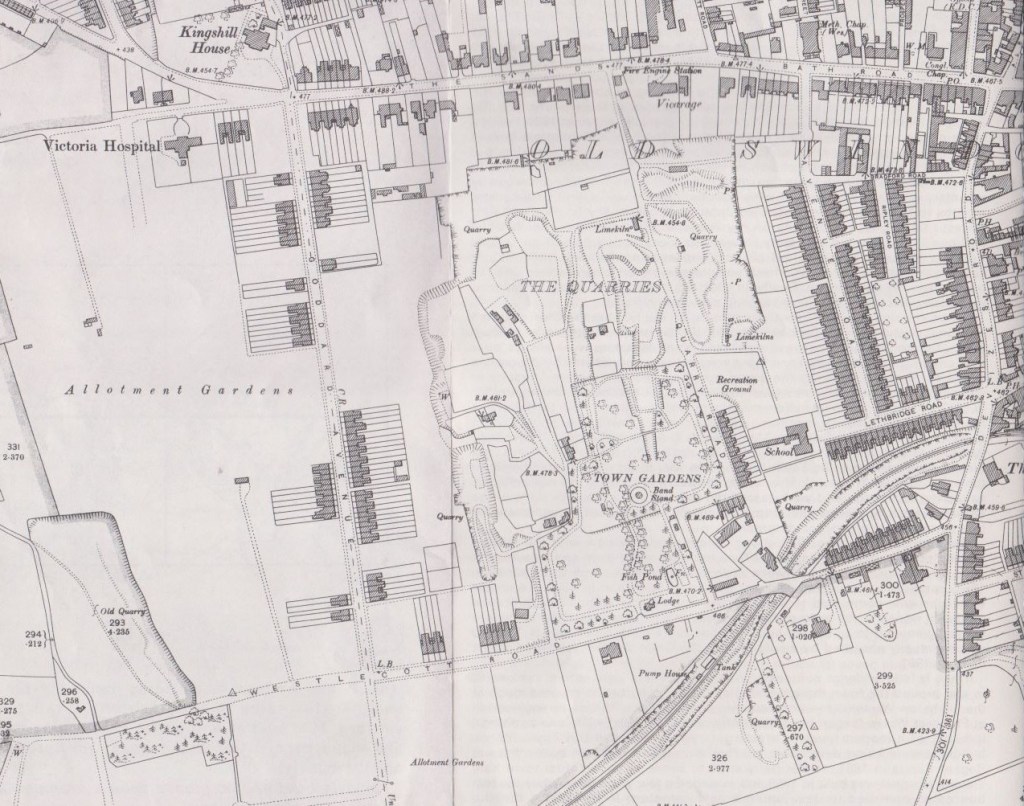
The 1900 map of Swindon reveals a number of quarries in the area of Old Town. Town Gardens was laid out on worked out quarries but the area behind it is possibly still being quarried in 1900. Then there is an Old Quarry at the end of Westlecott Road and smaller outcrops either side of the railway line.

But given that the inquest took place in the Globe Tavern on the corner of North Street I’m guessing that Lott’s fatal accident took place in the sand and gravel pit in the area that is now Savernake Street and play park. (At this time inquests usually took place in a public building close to the site of the accident, most frequently in a public house).

Lott King was born in Castle Eaton and during his lifetime was employed in a variety of jobs, for example, a carter, a labourer and, this his last job, a labourer in a stone quarry. He married widow Leah Matthews in 1870 and raised three step children as well as the couple’s own four children. In 1896 Lott and Leah were living at 4 Eastcott Hill, a short walk to Lott’s place of work.

quarries 2

On Monday afternoon last Mr W E N Browne, County Coroner, held an inquest at the Globe Tavern, Swindon, on the body of Lot King, a labourer, aged 51 years, who was killed in a sandpit on the Rolleston Estate by the fall of a massive stone, weighing nearly three tons, on Saturday last, about noon. Mr T H Williams was chosen foreman of the jury, Mr A. E. Withy was present to represent Messrs Bishop and Pritchett, the lessees of the sand quarry. The jury having viewed the body, the follow evidence was taken:-

James Telling said he was working with deceased on Saturday. They were breaking stone. Asked how the accident happened, witness said he expected it was owing to the heavy rain of the previous night. The whole depth of the quarry was 40ft., but not at the spot where they were working. The stone which fell weighed between two and three ton. The stone did not project, and they did not see any danger of the stone falling, so they continued with their work. The sand slipped from underneath the stone, and it fell quite suddenly, striking deceased on the head, or he would have been buried beneath it. Deceased had no time to get out of the way. At the time of the accident there was only deceased and witness working in the sandpit.

By Mr Withy: He had been working in the quarry some 18 months, and only the day before the accident he got up on the stone to examine it. Witness had ascertained since the accident that there was a joint in the stone and it was that which caused the one portion to fall.

Henry Trueman, a young man in the employ of the New Swindon Urban District Council, said he was drawing stone from the quarry when the accident happened, about noon on Saturday. The stone suddenly gave way, and fell, hitting deceased on the head. Deceased lived for about a quarter of an hour after the doctor’s arrival.

Dr Muir, of Stratton, said he happened to be at Dr Rattray’s on Saturday when a messenger came, and witness went to the sand quarry. Deceased was dying when he arrived. He was internally injured, but the cause of death was the blow on the head. Death was due to shock and concussion of the brain.

Richard Albert Page, the working foreman on the Rolleston Estate said he had employed five men at the quarry but there were only two there on Saturday. The pit was full of sand, with some great boulder stones. Deceased had previously let down some other stones near, which he considered dangerous.

By Mr Withy: The stone fell over, due, he believed, to rain of the previous night getting into the joint.

The Coroner, said it appeared there was no blame to be attached to anyone.

The jury concurred and returned a verdict of ‘Accidental death,’ They passed a vote of condolence with the widow and family of deceased.

The jury, and three of the witnesses gave their fees to the deceased’s widow, the sum total being 11s 3d.

Swindon Advertiser Saturday December 19, 1896

Savernake play park


Savernake Street play park in 1984 published courtesy of Carter Collectables.

Lott was buried on December 16, 1896 in grave plot C352. My guess is that this was possibly a public grave. The jurors gave their fee to the family, which suggests they were in dire straits following the death of the breadwinner. The grave was later purchased by the Theobald family.