In the beginning the cemetery was simply called Swindon Cemetery, but it could so very easily have become known as Redcross Street Cemetery.

Today this is the only reference to Radnor Street’s previous name.
When building began in the street that would begin at the top of the precipitous Stanmore Street and continue to the junction with Shelley Street and Cambria Bridge Road it was known as Redcross Street.
Mr James Hinton, auctioneer, announced that on January 29, 1879 there would be a sale of ‘All those EIGHT NEWLY-ERECTED SIX ROOMED, COTTAGES with GARDENS thereto, Situate on the North side of Redcross-street, Kingshill, Swindon, being Nos. 177, 178, 179, 180, 181, 182, 183, And 184 on the Plan of the Lower Kingshill Estate, which Plan will be produced at the time of Sale.’
Just a week later more properties and additional building plots in Redcross Street came under the hammer. Lot 1. All those five newly-erected six-roomed COTTAGES, and five similar COTTAGES not quite completed, with gardens thereto, situate on the north side of Redcross-street, Kingshill, Swindon, being Nos. 185, 186, 187, 188, 189, 190, 191, 192, 193 and 194 on the plan of the Lower Kingshill Estate, which plan will be produced at the time of sale. Lot 2. All those ten PLOTS of valuable FREEHOLD BUILDING LAND, situate on the south side of Redcross street aforesaid, being Nos. 223, 224, 225, 226, 227, 228, 229, 230, 231, and 232 on the plan of the Lower Kingshill Estate. Each plot has a frontage of 15 feet to Redcross-street.
By 1881, when negotiations for the new cemetery were under way, the street was already being referred to as Radnor Street, however at the time of the census taken in April 1881 it was still called Redcross Street and was apparently renamed sometime later that year.
Jacob Pleydell-Bouverie, 4th Earl of Radnor served as Lord Lieutenant of Wiltshire from 1878 until his death in 1889. The Pleydell-Bouverie Wiltshire base was at Longford Castle, near Salisbury and closer to home, they owned the stately pile that was Coleshill House. Maybe Swindon thought it advantageous to name one of their many streets of red brick terrace houses after the local aristocracy.
Building continued in Radnor Street throughout the 1880s with properties built by S. Spackman, J. Longland and B. Jefferies.
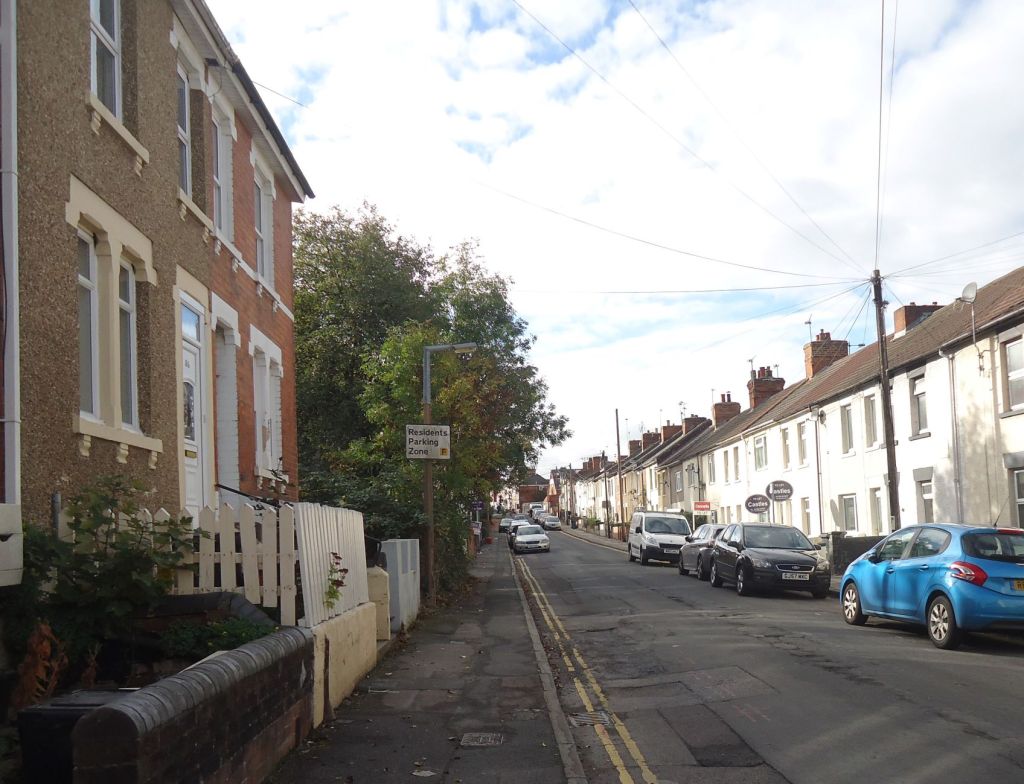


 Radnor Street Cemetery