John Hulme Preece was born on January 1, 1824 at Tenbury, Worcestershire, the son of a Baptist Minister. He married Eliza Sarah Whitmore in the December quarter of 1853 and by 1855 the couple were living in Swindon. The UK Railway Employment Records 1833-1956 state that John began work as a railway clerk in the Locomotive Department on February 2, 1855.
The couple joined the Independent Church, Victoria Street in 1861. This church was demolished in the 1960s for a road widening scheme.
John and Eliza lived first at Union Villa where Eliza ran a Seminary for Young Ladies. They later moved to 8 Gloucester Terrace which had a larger schoolroom and remained their home until John died in 1885 and Eliza in 1905.
In 1861 John was elected to the Council of the Mechanics’ Institution, the first clerk to be elected. Previously it was felt that only railwaymen would be able to appreciate the needs of those working on the shop floor. But John soon proved his worth and the following year was elected as Secretary of the Mechanics’ Institute, a role he fulfilled with energy and commitment until his death.
Trevor Cockbill makes many references to John in his definitive book about the Mechanics’ Institution – Finest Thing Out published in 1988. He describes him as being a quiet, gentle, studious man of a modest and retiring nature. A devoted Christian who was deeply interested in scholarship and education.
Swindon
The death is announced of Mr. John Hulme Preece, who has been for 26 years secretary of the New Swindon Mechanics’ Institute. Mr. Preece who was 61 years of age, was for about 30 years a clerk at the Great Western Railway Works.
Reading Mercury Saturday 29 August 1885.
The Funeral of the late Mr. John Hulme Preece, whose death on the previous Thursday evening we noticed in our last issue, took place on Monday afternoon, at the Cemetery, and afforded another instance, had it been necessary, of the very general respect in which the deceased was held. The coffin, which was conveyed to the cemetery without the customary pall on a portable bier, was completely covered with floral wreaths and offerings. In addition to the relations of the deceased, who had preceded the funeral cortege to the cemetery, there was a very large representation of the Council of the Mechanics’ Institute, and of the G.W.R. Clerks, to the number of over 150.
Extracts from he Swindon Advertiser, Saturday, August 22, 1885.
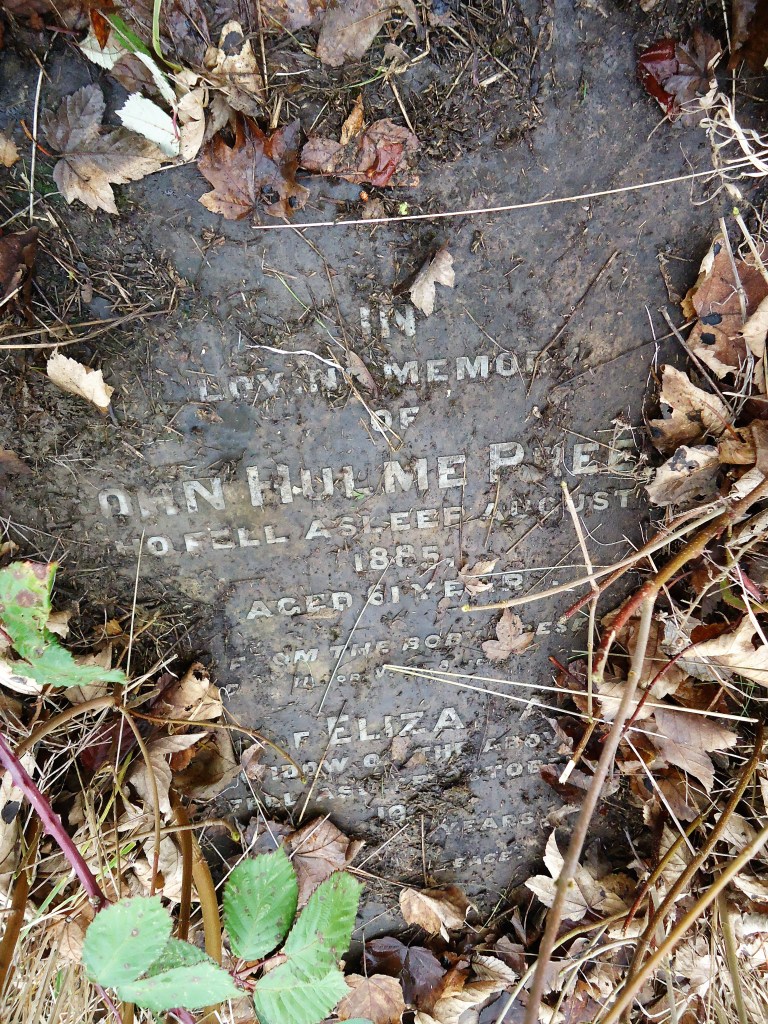

 Radnor Street Cemetery