During this month of remembrance I will be telling the stories of those buried in the cemetery who died as a result of their military service.
Originally published on January 30, 2022.

The re-imagined story …
Who would have thought the country could be so excited at the prospect of going to war? Perhaps it was the heat – it was unseasonably hot, that second week in August 1914.
Thousands of soldiers, some said more than 17,000, arrived in Swindon with as many as five or six soldiers billeted in one house. Even the school buildings were temporarily used as barracks, delaying the return after the summer holiday, much to the excitement of the children. Common sense did eventually prevail and they were soon returned to the classroom.
The normally quiet streets of Swindon were transformed by military movements – soldiers on route marches and long columns of motor lorries and ambulances.
The excitement was palpable – after all, it would all be over by Christmas. What an opportunity to travel for the young men who only ever expected to see the inside of the Works. No one could have ever imagined how it would all play out, the crippling injuries, the dreadful death toll, the loss.
The shops were busy, even though tradesmen were encouraged to supply their regular customers with no more than their usual requirements. Panic buying was discouraged but those who had the wherewithal stocked up on essentials.
And even the photographic studios were busy, the appointment books full day after day. Young lads having their photographs taken with friends as they went on their way to enlist at the Recruitment Office. Sweethearts photographed to mark a hastily announced engagement and the promise of a wedding. A young mother and baby whose photograph would nestle in a father’s top pocket, gazed on in some filthy trench on the Western Front.
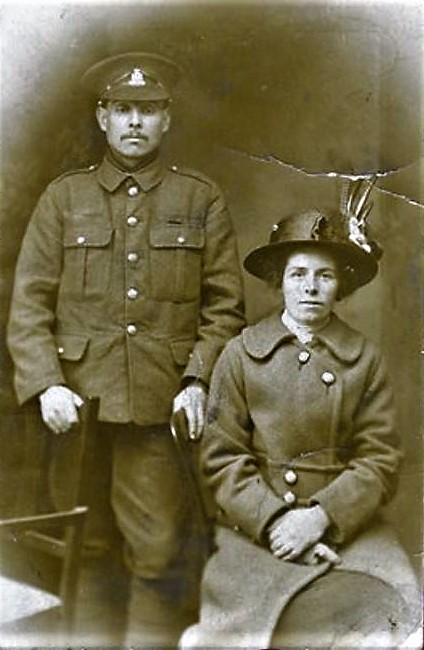
But William Pitt was different. He had already seen war at first hand. He had served in India and South Africa. A look in his eyes said he wanted no more of it.
Celia wore her best coat, the one with the big buttons, and her hat with the feathers and the bow. They both stared into the camera. After all, it would all be over by Christmas.
The facts …
When William James Pitt died in 1917 he had served his country well, but of course that didn’t mean he had a fine funeral and a headstone on his grave – not then. But a hundred years later his record of service was rediscovered and the Commonwealth War Graves Commission added him to their records and erected a headstone to commemorate his sacrifice.
William James Pitt was born in 1871 in Newport, Monmouthshire. He married Celia Sarah Davis on November 25, 1905 at the Register Office here in Swindon. William worked as a Boiler Maker and Labourer in the Loco Works and the 1911 census shows the couple living at 12 Hawkins Street, Rodbourne with their four young children. They went on to have another two children.
William enlisted in Swindon on October 20, 1914. He was a member of the National Reserve having previously served in the Royal Warwick Regiment. He had served in India for 5 years and 4 months; South Africa 1 year and 9 months and Bermuda 11 months.
He took ill while serving as a railway guard. His medical records include the following report:
‘Originated at Newton Tony April 1915 History of repeated colds during past winter, April 1915 16 days in Hosp: with so called ‘influenza’ after this kept losing flesh, cough did not leave him July 11th again reported sick, admitted to Hosp: with pleurisy, tuberculosis of lung developed caused by ordinary military service exposure whilst on duty. Has cough, pains in chest, rapid pulse, loss of weight & night sweats.‘
He was suffering from Tuberculosis (lung) & Pleuritic adhesions and was declared unfit for military service. The cause of his illness was exposure & getting constantly wet and not caused by active service or climate, but by ordinary military service (exposure whilst on duty). He was discharged in September 1915 in consequence of being no longer physically fit, having served 346 days.
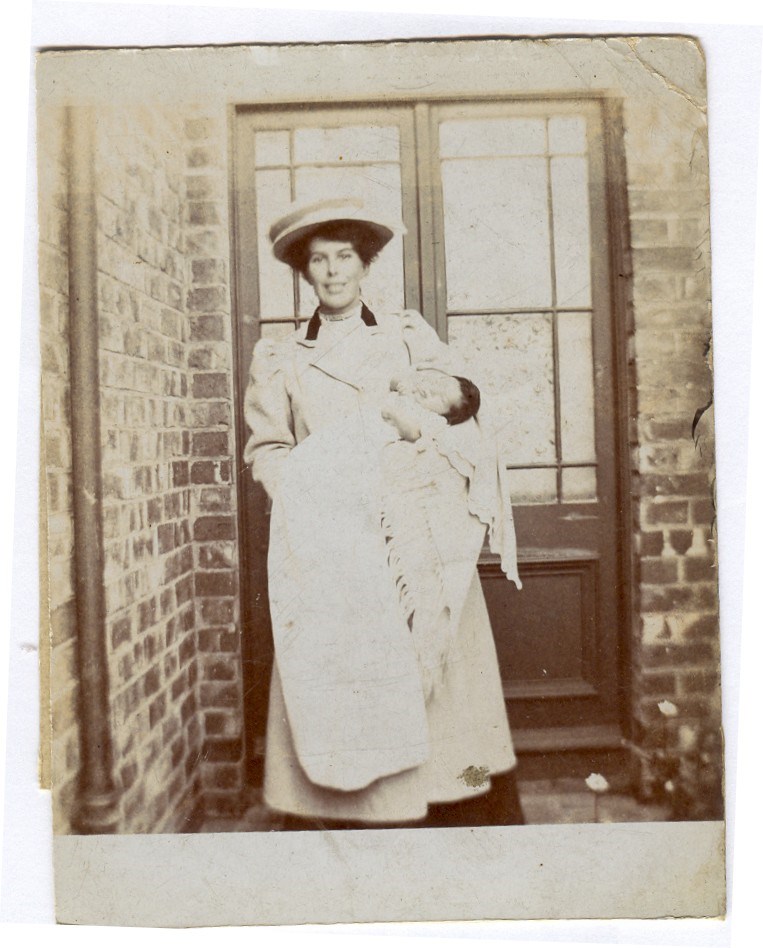
Celia and baby
The family history information on the Ancestry website tells how William’s daughter Violet remembered playing round her father’s feet in the kitchen, making dens under the blanket that covered his knees. She remembered that when he came back from the war he was ill and had to live in a special shed in the garden of 21 Hawkins Street.
William died on July 17, 1917 at 21 Hawkins Street. He was 45 years old. The cause of death was Pulmonary Tuberculosis. He was buried in Radnor Street Cemetery on July 21 in plot B1854, a public or pauper’s grave, which he shares with three other unrelated persons. Their names are inscribed at the bottom of the Commonwealth War Graves headstone.
Celia later worked as a cleaner at the Civic Offices in Euclid Street but how she managed in those early post war years with six children to raise alone has passed out of family memory. She later lived at 142 County Road, opposite the football ground. She died there in 1947 having survived yet another world war.
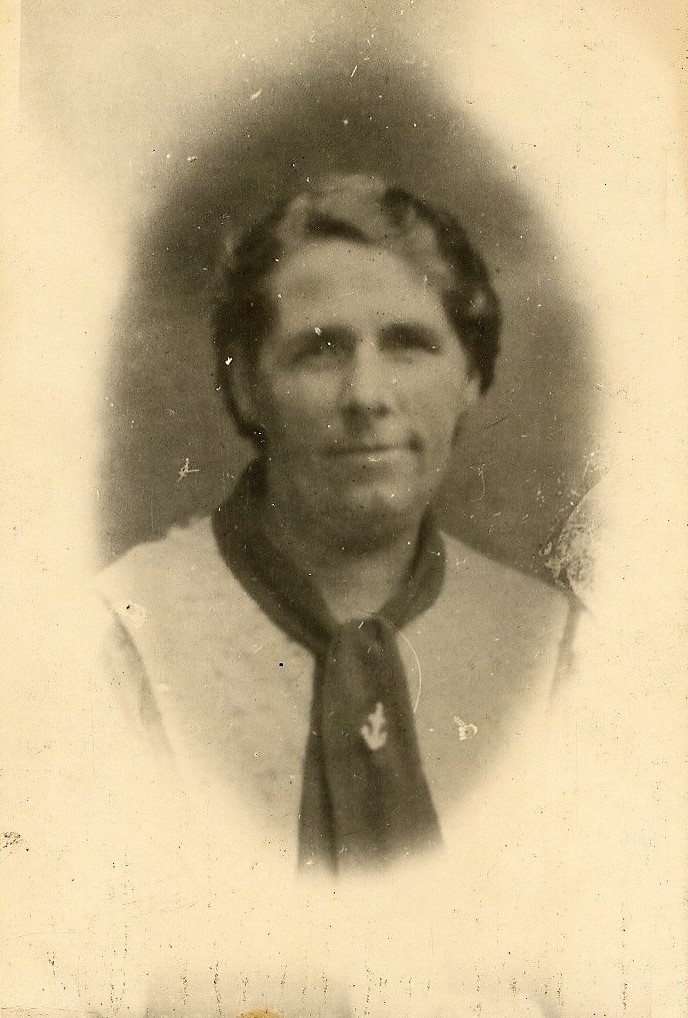
Photographs published courtesy of S. Arman

 Radnor Street Cemetery
One thought on “William James Pitt – no longer physically fit to serve”