Today it is so easy to begin your family history research. With a couple of clicks of a laptop mouse you can enter a whole world of internet possibilities. Of course, there are pitfalls one of which is mis-transcriptions with websites such as Ancestry and Find My Past littered with them. I came across some examples such as Rasticand and Reastreamy when researching the surname Restieaux.
George Francis Restieaux was just sixteen years old (the newspaper report says 18) when he died in 1881. George was born in Neath, Glamorgan but Restieaux was definitely not a Welsh name. He was the son of coachbuilder/painter Edward Alban Restieaux and Susannah Matthews. Edward was employed in the GWR Works and in 1881 the family lived at 2 Bristol Street. Edward and Susannah had married in 1854 at St Pancras Church when they both lived in that London parish. By 1861 they were living in Neath, Glamorgan where George was born in 1865. His father Edward states that his own place of birth was Norwich in Norfolk and I wondered how the Restieaux family had ended up there.
With a few clicks of that laptop mouse I was able to find Edward’s parents Joseph Restieaux and Elizabeth Tidman who married in St John de Sepulchre, Norwich in 1804. Back one more generation and I arrived at the French connection; Andre Restieaux born in Bordeaux about 1740 who married Marguerite Magdalaine Mignot on January 6, 1766 at St Anne’s, Soho.
There is, however, only so far you can get with internet research and at some point you have to look at original documents. It would be interesting to discover what Andre’s occupation was and how he and Marguerite ended up in London, but that is a task for someone else out there. But beware of the pitfalls.
The first burial service in accordance with the rites of the Roman Catholic Church in the new cemetery was performed on Saturday last by the Rev Father Eikerling and the members of the St. Cecilia Society, of which deceased was a member. The body of deceased, George Restieaux, aged 18 years, having been removed from the house of his parents to the Roman Catholic Chapel in Regent Street, the service, which throughout was choral, commenced, lasting close upon an hour, when the body was removed to the hearse and conveyed to the cemetery, accompanied by the Rev Father Eikerling and his attendant acolytes, the relatives and friends and members of the choir and society. At the cemetery chapel the service was resumed by the singing of the Requiem aeternam of Cacciolini, at the close of which the officiating priest preached a brief sermon, in course of which he reviewed the life of deceased and his connection with the St. Cecilia Society. The procession having been reformed, the corpse was borne to the grave, the choir singing the “Miserere,” concluding with the Requiem aeternam. At the grave the singing, which was particularly effective, was brought to a close by the singing of the anthem “I know that my Redeemer liveth.”

The former Roman Catholic Chapel painted by local artist George Puckey in 1890
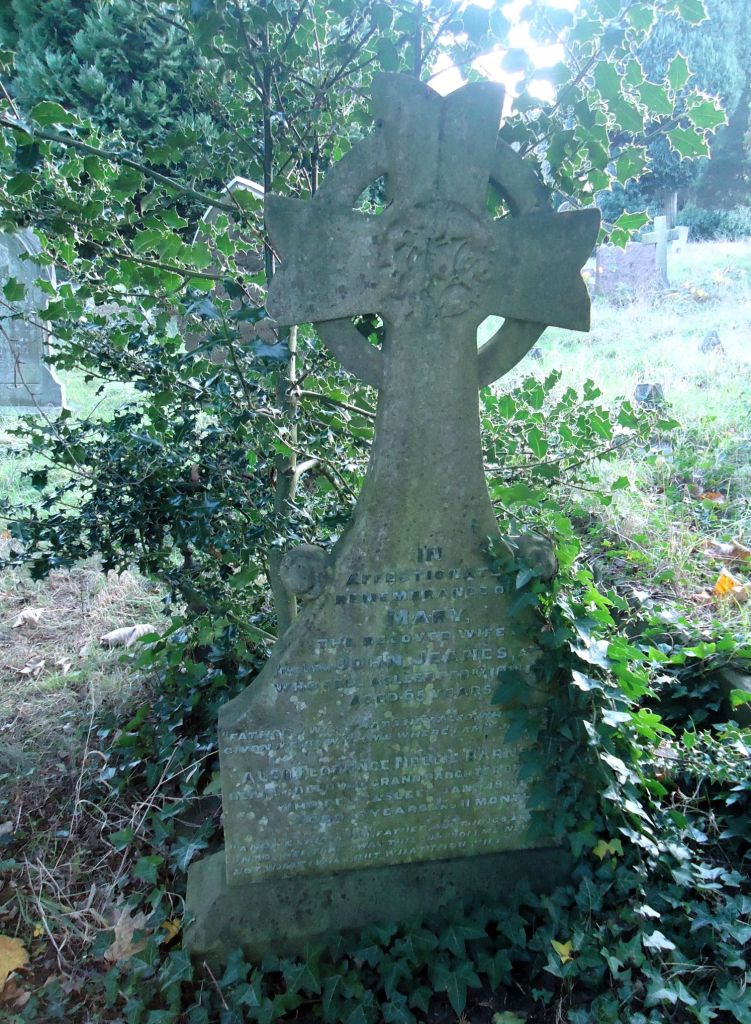
Despite a rather elaborate funeral service, young George was buried in Radnor Street Cemetery in a public grave, plot A353, where he lies alone.
His father Edward died 14 years later in 1895 and his mother Susannah in 1912. Both were buried in separate, public graves. Edward in B2434 and Susannah in B1609. George’s brother John Valentino Restieaux died in 1928 and was buried in grave plot C61, another public grave.













 Radnor Street Cemetery