When funerals were big business

The new Swindon Cemetery opened in August 1881 and by the end of that year 94 funerals had taken place.

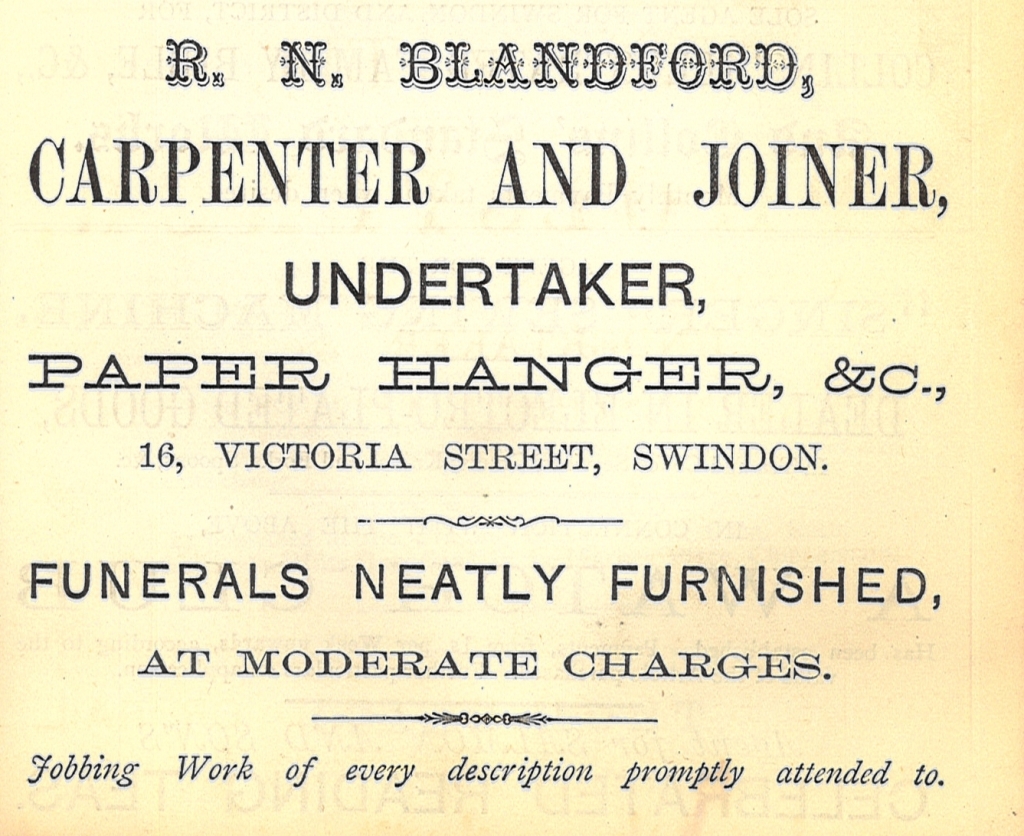
The first burial was that of Frederick Gore whose funeral was furnished by Richard Skerten. With premises at 1 Queen Street, New Swindon, Richard Skerten was a Joiner and Undertaker employing three men and one boy in 1881. His son Arthur, based at nearby 5 King Street, was also a carpenter, joiner and undertaker (these occupations frequently went hand in hand.)

Edward Hemmings at 22a Fleet Street looked set to be busy with the opening of the new cemetery until his own unfortunate demise when he became the 5th person to be buried there in August 1881. His brother Frederick took over the business in 1882 and makes a regular appearance in the registers thereafter.

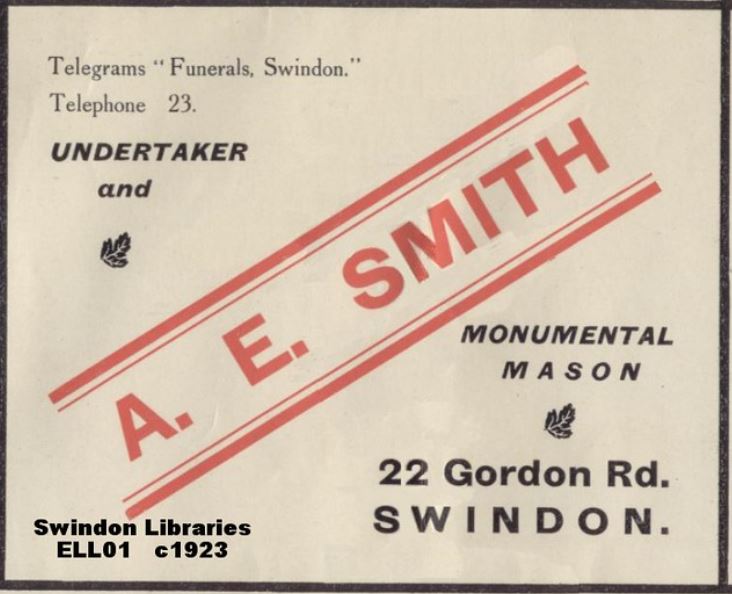
Probably the undertaker most associated with Radnor Street Cemetery is Henry Smith and the family business he established. Omnipresent in the cemetery from the 1880s and throughout the 20th century, the firm of A.E. Smith continues in business to this day with premises at Queens Drive, Swindon.

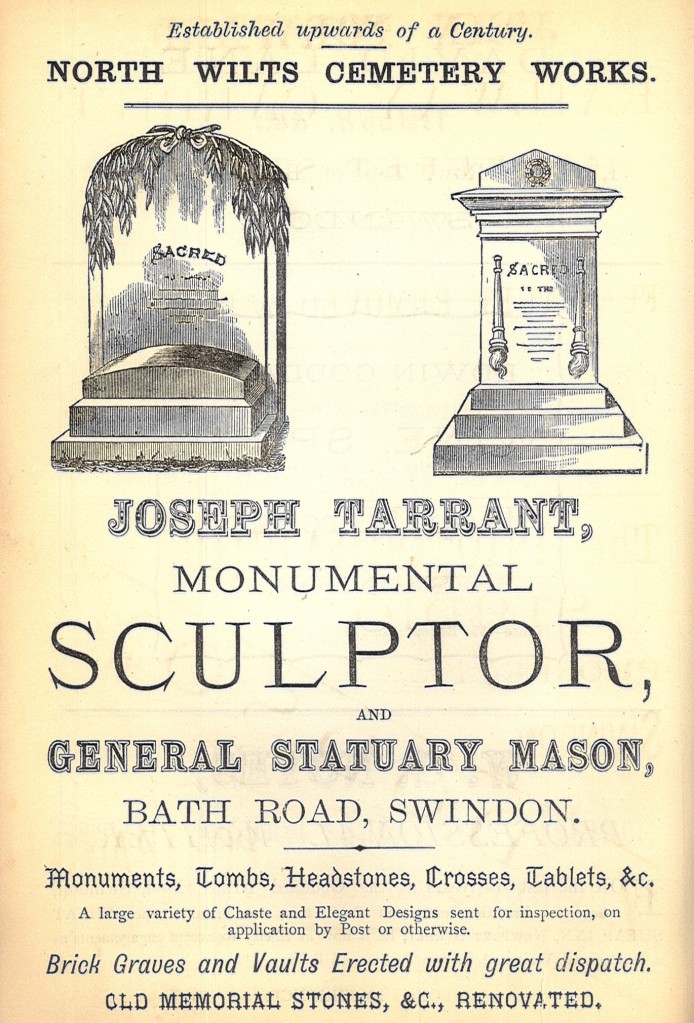
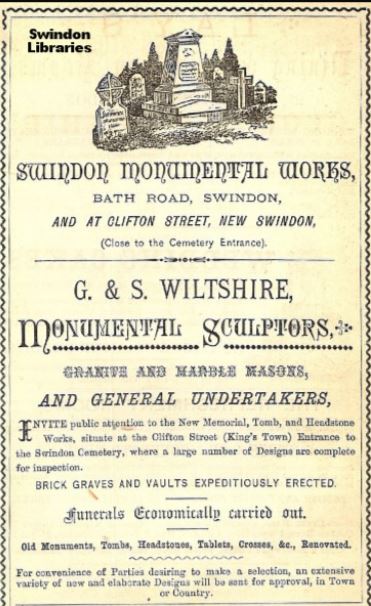
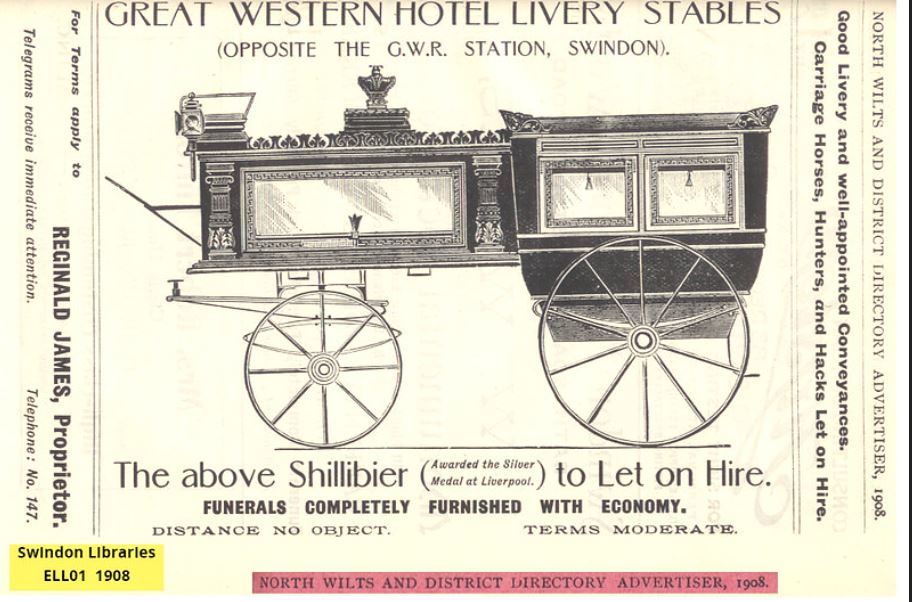
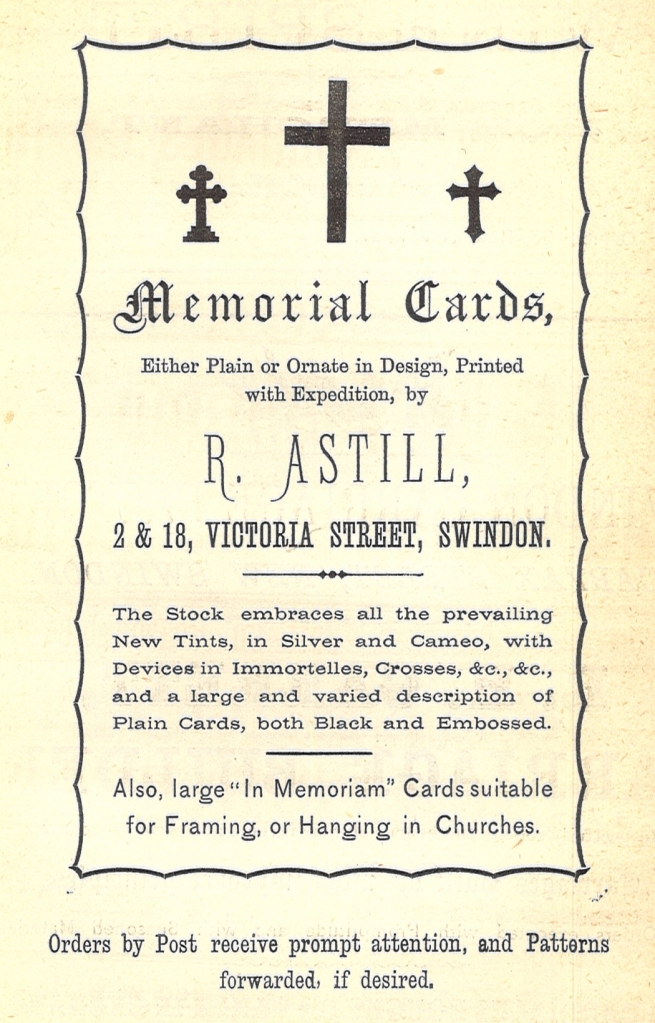
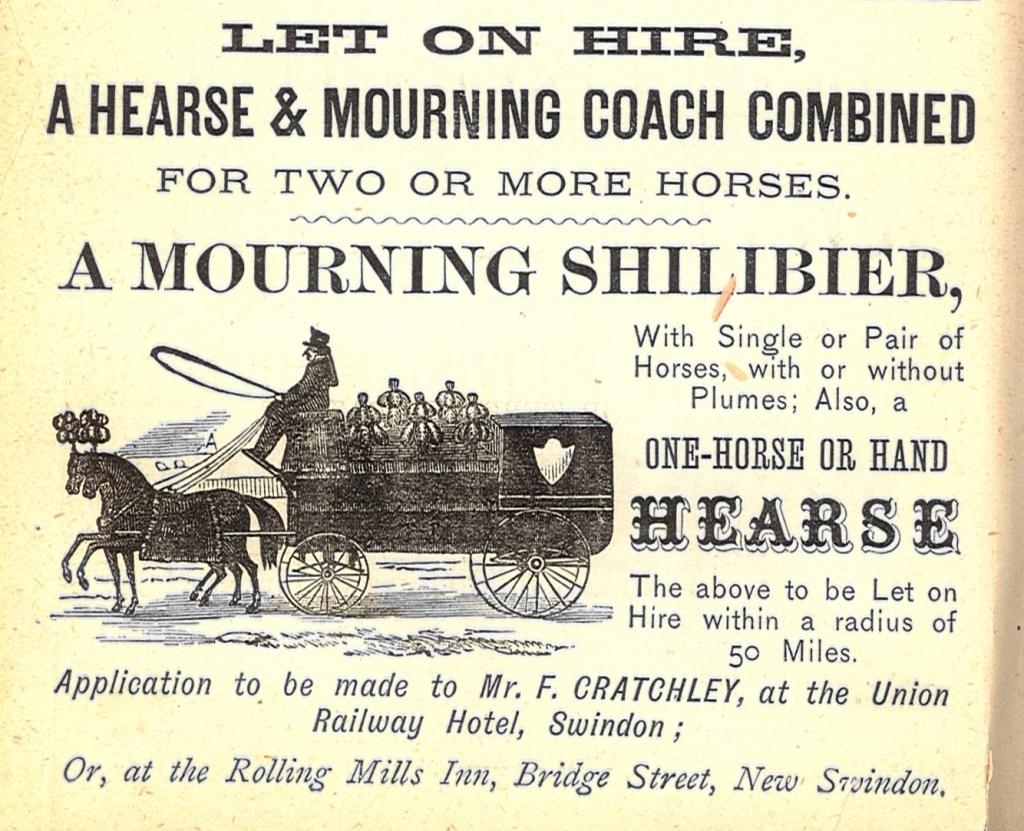
And then there were Memorial Cards and mourning attire and monuments and memorials and yes, there was a Swindon business to provide all of these services.

A different story altogether

Sometimes the story I set out to research becomes a different one altogether…

I was first drawn to the attractive and unusual design of this small headstone, which marks the grave of George and Annie Hanks and their daughter Dorothy Daisy Elsie Westwood.

Dorothy Westwood died on February 3, 1937 and was buried in grave plot B3083. George Hanks was a member of the Loyal Order of Moose, a fraternal organisation supporting worthy causes. The organisation known today as Moose International meets at the Moose Hall, Eastcott Road. He died at his home 2 Shelley Street and was buried alongside his daughter on August 22, 1938 in grave plot B3084. George’s wife Annie survived him by 25 years. She died aged 92 in Guildford but was buried here with George and their daughter on August 19, 1963 in grave plot B3084.

But these weren’t the first people to be buried in this double plot B3083/4. Like so many plots in the cemetery, this was originally a public grave – a plot for those unable to afford the purchase of their own grave.

Plot B3083 was first the grave of Ellen Little who died aged 63 at her home, 47 Cambria Bridge Road and was buried on March 25, 1909.

Plot B3084 was first the grave of Robert and Georgina Wallbridge.

Robert Wallbridge married Georgina Tryphena Eliza Woodward at Christ Church on August 5, 1903. He was 24 years old, a hairdresser who lived at The Fountain Inn, Devizes Road at the time of his wedding. Georgina was 25, the daughter of George Woodward, a joiner, and lived at 9 Newport Street.

A daughter Irene May was born the following year and another, Vera Maude in 1906. The young family lived first at 181 Rodbourne Road and later at 9 Prospect Hill. But family life was cut short when Robert died in the spring of 1909. He was 29 years old. He was buried here in plot B3084.

At the time of the 1911 census Georgina was living at 9 Prospect Hill where she worked as a Beer House Keeper. Living with her were her two daughters, Irene 6 and Vera 5 and her brother Arthur 20, a cycle maker.

Just two years later Georgina died aged 35 years old. She was buried with Robert in plot B3084 on March 5, 1913.

But what happened to the two little orphaned girls then aged 7 and 9 years old.

I discovered the two sisters on the 1939 census living at 1 Kinnoull Mansions, Rowhill Road, Hackney. Vera was working as a ‘Book Keeping Typist.’ Irene’s details have been redacted. It appears that neither sisters married but their whereabouts between 1913 and 1939 is still to be discovered. The sisters returned to the Swindon area. Irene’s death was registered in February 1985 and Vera died February 9, 1987 at 2 Foundry Rise, Chiseldon.

Sometimes the story I set out to research becomes a different one altogether…

The story of the broken headstone

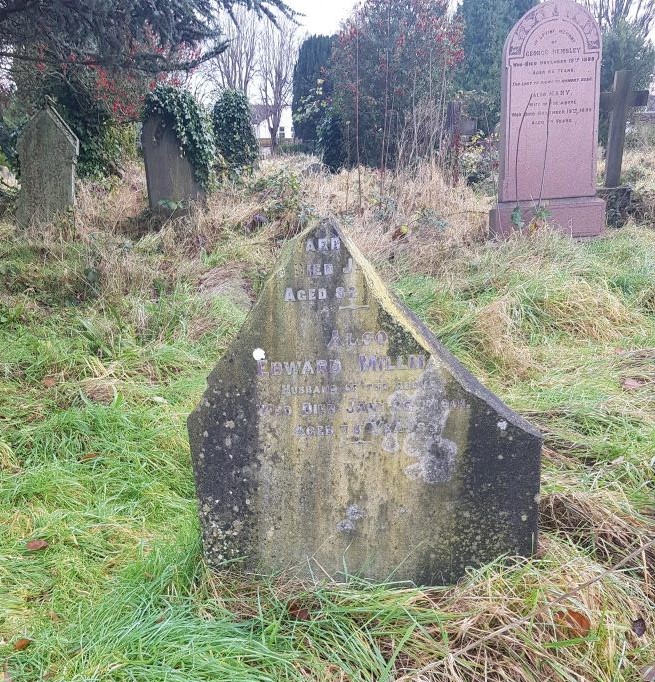
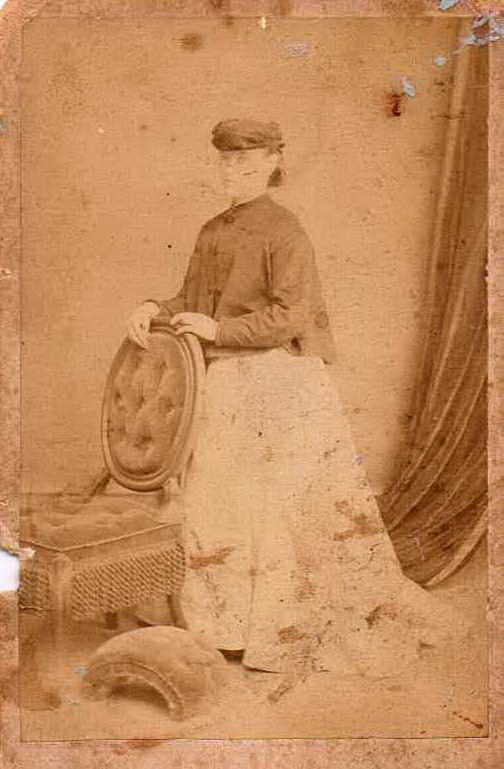
I’ve had this broken headstone on my to-do list for a very long time. I thought it might prove something of a challenge. I had long wondered who Frederick Millman’s lost wife was and once I discovered her, she pieced together a large Radnor Street Cemetery family history.

Delia Spry was born on December 25, 1805 in Ninfield, Sussex and was baptised in the parish church there on March 26, 1806. In 1829 she married Richard Veness at the Church of St Peter the Great, Chichester.

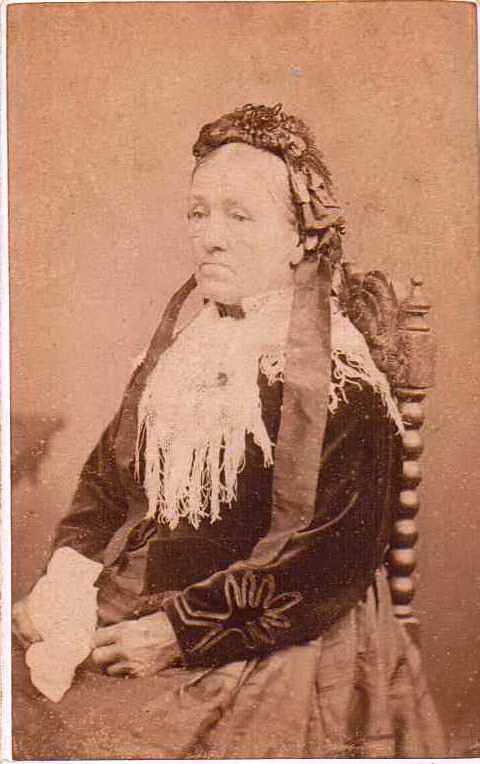
Delia Millman formerly Veness born Spry

I discovered Delia on the 1841 census returns, the first complete census available online. She is living in Hartlebury, Worcestershire, a widow with 5 young children – Maria 10, Jane 9, Thomas 7, Alfred 5 and 3 year old Louisa.

Needs must and it would not be long before she married again. Her second husband was Edward Millman, a bricklayer, and in 1851 the family were living in Wolverhampton. Delia’s two sons by her first marriage have taken their stepfather’s name and Delia has three children by her second marriage – Edward 6, Elizabeth 4 and 2 year old Mary.

Thomas Veness

By 1881 Thomas Veness, married with four children – Thomas, Alfred, Harriet and Reginald, had arrived in Swindon and the family were living at 30 Sheppard Street. You can read their story (especially that of their daughter political activist Harriet) here.

The death occurred at Worcester, on May 21st, of Mr. Thos. Veness, a retired foreman from the Locomotive Department at Swindon, at the ripe age of 87. Mr. Veness was one of the founders of the Swindon branch of the GWR Temperance Union, and as a member and chairman of the branch Committee rendered great service in the early days of the Union. He was an abstainer for over 60 years and an earnest worker. He was for many years connected with the Band of Hope movement, the Church of England Temperance Society, and the Good Templars. After the formation of a branch of the GWR Union in Swindon he gave himself whole-heartedly to forwarding the work and influence amongst the railway staff.

Great Western Railway Magazine August 1920

By 1881 Delia and Edward had returned to Bexhill but they would soon make there way to Swindon. Delia died at her home, 72 Bridge Street and was buried on January 6, 1887 in grave plot E8430 – the headstone broken and her name missing. Edward died 14 years later, at his daughter Mary’s home, 83 Victoria Road. He was buried with Delia on January 30, 1901.

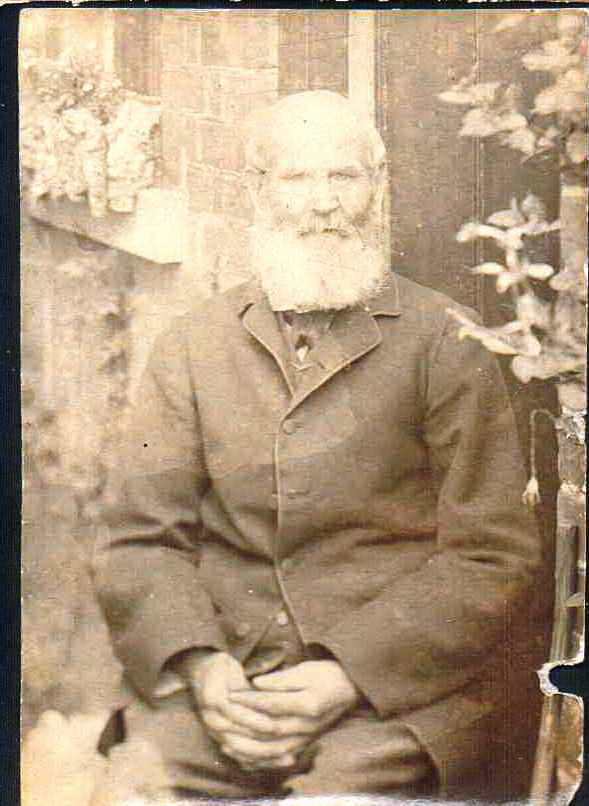
Edward Millman

Elizabeth Millman had also made her way to Swindon by 1881. She had married Frederick Benjamin Hook, another bricklayer, and in the census of that year was living in Upper Stratton with Frederick and her family of six children. You can read the sad story of Ben Lawson Hook who died in an accident in the Works here.

Elizabeth Hook nee Millman

Elizabeth died in 1892 and is buried in grave plot B1711 with her husband and her 16 year old daughter Nora who died in 1909.

And finally, (or is there more to discover) there is Mary Millman, Delia’s youngest daughter born in 1848. After working in domestic service as a nurse she married builder Henry William Bennett and by the mid-1870s they were also living in Swindon. (It was at Mary’s home that her father Edward died in 1901).

Mary Bennett nee Millman

Mary died in 1922 and is buried in grave plot C3672 with her husband Henry William, her son Aleck and daughter-in-law Sarah Annie.

My thanks go to family historians Ellen Magill and S.C. Hatt who have generously shared so much of their family history and photographs on Ancestry and Local Studies, Swindon Central Library enabling me to tell all these Swindon stories.

Francis Edward Allen – Mayor of Swindon 1940-41

Francis Edward Allen was 77 years of age when he served as Mayor of Swindon during one of the difficult years of the Second World War, 1940-1941. Among his numerous duties during that year he launched Swindon Food Week, an initiative to help housewives make better use of rations; he lent his support to a national flag day on behalf of the air raid distress fund and he welcomed evacuees to the town.

Francis Allen was born in 1863 and baptised in the parish of Widcombe, Somerset, the son of stonemason Joseph Allen and his wife Mary Ann. By the 1880s he was living in Swindon where he married Emily Brooks on December 25, 1883 at the church of St. Paul’s. The couple went on to have 9 children and lived for all of their married life in the Rushey Platt/Wootton Bassett Road area.

Ex Mayor of Swindon’s Sudden Death

Alderman Francis Edward Allen Mayor of Swindon in 1940-41, died suddenly at his home, 9, Wootton Bassett road early this morning. He was 80 years of age.

Mr. Allen was born at Bath and came to Swindon as a young man to taken up employment in the GWR Works. He rose to chargeman of the gas works and retired about 18 years ago, after 42 years service.

On his retirement Mr Allen took up public life and was returned to the Town Council as councillor for the East Ward. Later he was made an alderman and was elected Mayor in 1940-41.

Mr Allen was well-known for his work in connection with the North Wilts district of the Ancient Order of Foresters, of which he was senior trustee at the time of his death. As recently as Wednesday evening he attended a Foresters’ meeting in Swindon.

Mr Allen also made a name for himself by his interest in horticulture. In the days of the old Swindon Flower Show, then held in the Town Gardens, he was a most successful exhibitor and was also a very competent judge of flowers.

He had taken innumerable prizes in local club flower shows, and at one time was on the committee of the “Evening Advertiser” Flower Show.

He was a former treasurer of the Swindon Division Liberal Association.

Mr Allen leaves a widow, three sons (two living in Australia and one in Swindon) and six daughters. All the sons and daughters are living and married.

The Evening Advertiser, June 13, 1943.

Funeral of Ald. F.E. Allen, Former Mayor of Swindon

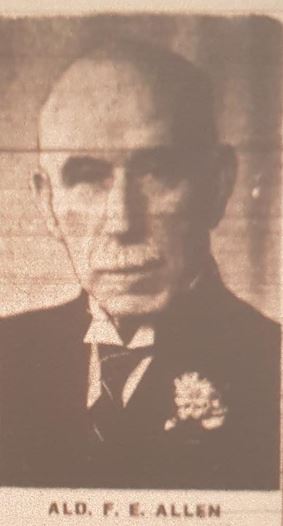
Ald. F.E. Allen

Alderman Francis Edward Allen, aged 80, Mayor of Swindon in 1940-41, of 9 Wootton Bassett road, who died last Saturday, was buried with civic and forestry honours yesterday.

The Mayor (Ald. A.J.B. Selwood), wearing his chain of office, attended the funeral service at Wesley Church, Faringdon road, and the Foresters’ burial service was read at the graveside in Radnor street cemetery by Bro. F.J. Franklin, District Trustee.

The service at Wesley Church was conducted by the Rev. A..E. Banks, who, in the course of a short address, referred to the integrity and steadfastness of purpose with which Ald. Allen had served the town, and said the qualities of character he had shown in his public work had won for him a warm place in the hearts of his fellow citizens.

Extracts from the Evening Advertiser, Thursday, June 17, 1943.

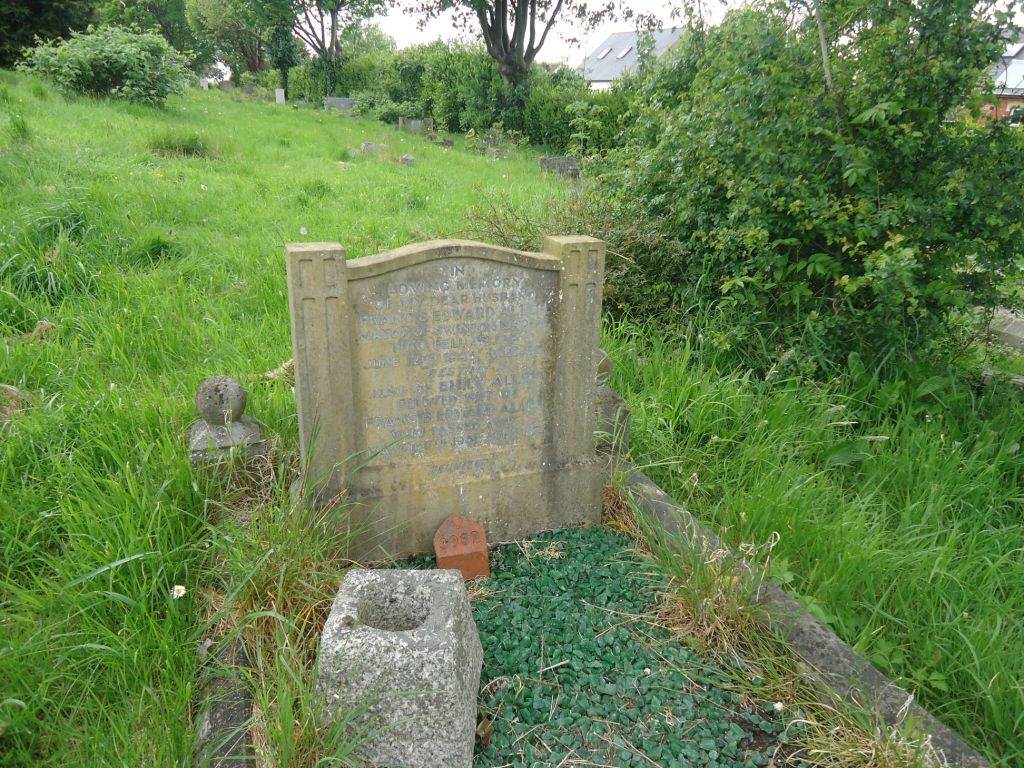
Francis Edward Allen died at his home 9, Wootton Bassett Road, aged 80. He was buried on June 16, 1943 in grave plot B3130, which he shares with his wife Emily who died in 1951. The couple are buried with Emily’s sister, Elizabeth Hannah Wilden who died in 1910.

Walter J. Spear and The Picture House

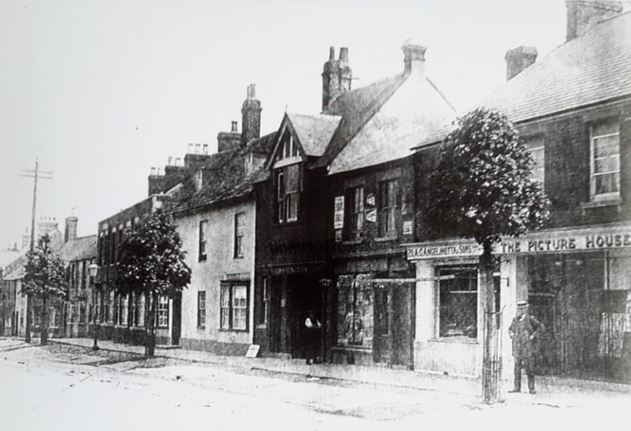
Walter J. Spear was a dairyman and then in 1913 he opened a picture house in Wootton Bassett – not an obvious career progression.

Walter Spear came from a railway family, as most people did in Swindon in the latter half of the 19th century. In 1901 the family lived at 81 Radnor Street where Walter’s father Charles and his three brothers Charles, Henry and William, all worked as Steam Engine Makers & Fitters. Even 14 year old younger brother Frederick claimed to be working as a fitter although at such a young age it was highly unlikely he had such a skilled occupation, but you can appreciate his aspirations.

However, Walter aged 17 had bucked the familial trend by becoming a milkman. In 1911 he married Edith Frances Mary Elms and the couple set up in a dairy business at 37 Commercial Road.

Walter’s involvement in The Picture House was over by 1920 and just five years later he died.

Opening of Picture House

On Monday evening the new Picture House of which Mr W. Spear is the proprietor, was successfully opened, and Mr Spear is to be congratulated on his new enterprise.

Beyond local efforts, little has been done in Wootton Bassett in the past to cater for the amusement of the public. This new venture will not only add to the amusement of the public, but may also be made an educative help to the public. The Hall, which has been fitted with all the latest improvements, will seat over 200 people, and the whole arrangements are excellent.

The cinematograph is housed in an iron room, and the light provided by a petrol dynamo. The operator is Mr W. Hicks, and the pianist Mr Lewis.

The opening ceremony was performed by Mr H. Horsell supported by most of the Parish Council. Mr Horsell said that no doubt they would appreciate the enterprise and public spirit of Mr. W. Spear in embarking on that enterprise. He sincerely hoped it would turn out a success for him. He thought this and similar agencies tended to make the people more sober, and, personally, he believed more in counter-attraction than in legislation as a means to promote sobriety. He hoped that it would be such a success that it would have to be enlarged so as to permit of other meetings being held there, which would be a boon to the town. He heartily wished Mr Spear every success.

The exhibition was then proceeded with, and was heartily appreciated by the crowded audience. The programme was as follows:- “The Cattle Ranchers,” “The Redskin Raiders,” “The Adventures of a Timid Young Man,” “The Clifton Zoo,” etc. There will be exhibitions every evening.

Extracts from The Swindon Advertiser, Friday, March 7, 1913.

Walter Spear aged 43 years died at his home 37 Commercial Road. He was buried on December 18, 1925 in grave plot E7843 where he lies alone.

James and Annie Gardner – 5 Montagu Street, Rodbourne

They say every picture tells a story and I love these photos of the Gardner family shared on the Swindon Local Studies Flickr page. Meet James Gardner and his wife Annie pictured in their garden at 5 Montagu Street, Rodbourne taken in about 1935. I’d love to know what was said just before the camera shutter clicked.

Annie was James’s second wife. They married in St. Swithins Church, Walcot, Bath on December 27, 1905. James was 52 and Annie 39. James had several children by his first wife Sarah and presumably Florence Gardner was the daughter of one of these. She appears on the 1911 census aged 3 years old living with James and Annie and Annie’s mother Margaret at 5 Montagu Street.

These two charming photos of Florence appear with those of James and Annie.

James died at his home in Montagu Street in 1939 aged 86 years old. Annie died in 1947 aged 82. Her last address was Ford Street, just a stone’s throw away from Rodbourne. Perhaps she ended her days living with Florence?

James and Annie are buried in grave plot C639, Radnor Street Cemetery.

Angelo Vitti – a colourful and romantic personality

Albert Street, built in around 1848 and named after Queen Victoria’s virtuous husband, was the red light district of mid Victorian Old Swindon.  At the centre of this maelstrom of depravity was the Rhinoceros public house, once described in court as ‘the most notorious house in town.’  The first landlady at the Rhinoceros when it opened in July 1845 was Lucy Rogers, a former dressmaker.  Frequently the scene of bad behaviour where landlords flaunted licensing laws and one was even accused of the manslaughter of his mother in law.

One person who tried to make a difference in this den of iniquity was Angelo Vitti.  Born in Settefrate, a small village in the Province of Frosinone, just south of Rome, Vitti stopped off in France before moving to England in the early 1890s.  He purchased the former Rhinoceros, by then a lodging house, and eventually bought up the adjoining cottages as well. 

Angelo Vitti married Mary/Maria Carter in 1895. In 1901 they were living with their three young children at the Lord Raglan public house, Cricklade Street where Angelo was the licensed victualler.

The 1911 census lists them as living at 22 Albert Street where Angelo worked as a lodging house keeper and grocer. He and Maria had been married for 21 years and sadly, five of their 11 children had previously died.

‘Swindon has lost a colourful and romantic personality by the death of Mr Angelo Vitti,’ the North Wilts Herald reported following Angelo’s death on Sunday April 21, 1940.  As a lodging house proprietor he became the friend, and earned the respect, of thousands of men and women, a genuine family man and a friend of poor people.

Death of Mr A. Vitti

Long Residence In Swindon

Swindon has lost a colourful and romantic personality by the death of Mr. Angelo Vitti, lodging house proprietor and provision merchant, of Albert-street, Swindon which took place on Sunday night.

Mr Vitti, who would have been 79 on 10 May next, was born at Settefrate, Italy, and as a young man left his home and his country to carve out his own career. He arrived in France, but after a short time in that country, came to England nearly 50 years ago.

He claimed many adventures before coming to settle down in Swindon in 1893.

Friend of the Poor

As lodging house proprietor he became the friend, and earned the respect, of thousands of men and women, for he had the happy knack of combining a sense of strict efficiency with a genial personality. He helped many men on their way and, had he wished, could have told many stories of the thousands of wayfarers who sought refuge under his roof. One man who claimed his hospitality was stated to have been a remarkably fine linguist, being a fluent speaker of five languages; another told how he had placed the whole of his £5,000 fortune on a horse which had finished down the course!

Angelo Vitti was a genuine family man, and it was his one desire that all his children should ever remain close by his side. All six children – two sons and four daughters – are now married, but they have respected those wishes by making their homes within a stone’s throw of their father’s premises.

Mr Vitti’s parents were both centenarians. His mother died at the age of 108 and his father in his 101st year. He leaves a widow and six children, and there are eight grandchildren.

The Funeral

Following a requiem mass, the funeral service took place on Wednesday at Holy Rood Church.

The interment was at Radnor-street cemetery, Swindon.

The funeral arrangements were carried out by Messrs. A.E. Smith and Son, 24, Gordon-road, Swindon.

Extracts from North Wilts Herald, Friday, 26 April, 1940.

Angelo Vitti was buried on April 24, 1940 in grave plot C4709 where he lies with his wife Mary/Maria who died in 1944.
Olif Young and the Unitarian Minister

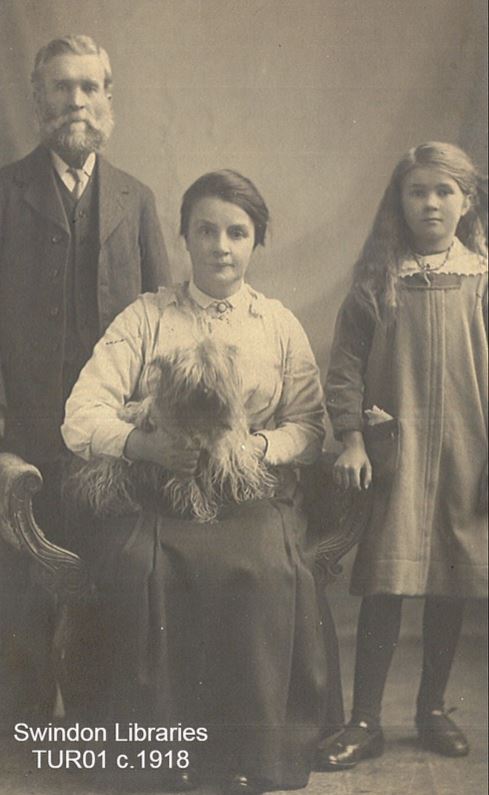
Olif Young died at her home in Hythe Road in 1907 aged 80 years of age. I wonder how she approached her own death. She had had plenty of preparation. Olif’s husband was the Rev Frederick Rowland Young, a Unitarian Baptist Minister and spiritualist about whom much has been written. But was the Rev Young a charlatan as some suggest and that his Doctor of Divinity degree may have been fraudulent.

Olif Wilson was born in Dover, Kent in 1827. By 1851 she was married to the Rev Young and living in Diss, Norfolk with her five year old daughter Juliet and her 10 year old brother Thomas Wilson. However, the Rev Young does not appear to be at home on that census night.

The Unitarian Church – image published courtesy of Local Studies, Swindon, Central Library.

During the 1860s Frederick arrived in Swindon when he quickly ingratiated himself into Swindon’s society. In 1861 he built the Unitarian (Iron Church) in Regent Street, which later proved too large for his small congregation and was removed. In 1875 he built the Free Christian Church in Regent Circus. In 1871 he lived with his family in Rose Cottage, Drove Road where he held spiritualist meetings and ‘terrifying’ seances, before moving to a house he built next to the church in Rolleston Street.

The Rev Young was a prolific writer, producing lectures and a pamphlet entitled ‘Hints How To Make Home Happy’ which included chapters on ‘Courtship Days’ and ‘Thoughts for the Honeymoon.’ He also founded and edited The Christian Spiritualist.

The Rev Young was also a faith healer – his modus operandi was to run the flat of his hands along the arms and legs of his patients. Apparently he had more success with his female patients than his male ones.

Frederick and Olif remained in Swindon for some 20 years before Frederick left the church and they moved to Finsbury Park Road, where he died in 1893.

Olif returned to Swindon and lived out her days here. Was she prepared for her own death, I wonder? Did she greet it with joyful anticipation or dread that the dodgy Rev Young might be waiting for her?

Olif was buried on September 26, 1907 in grave plot E8678 where she lies alone.

Rev Young’s Free Christian Church in Regent Circus was later taken over by the Roman Catholic congregation, pictured here by George Puckey. Upon the completion of the Holy Rood Roman Catholic Church in Groundwell Road, the Nonconformist Chapel became known as the Victoria Hall and was home to the Swindon Museum.

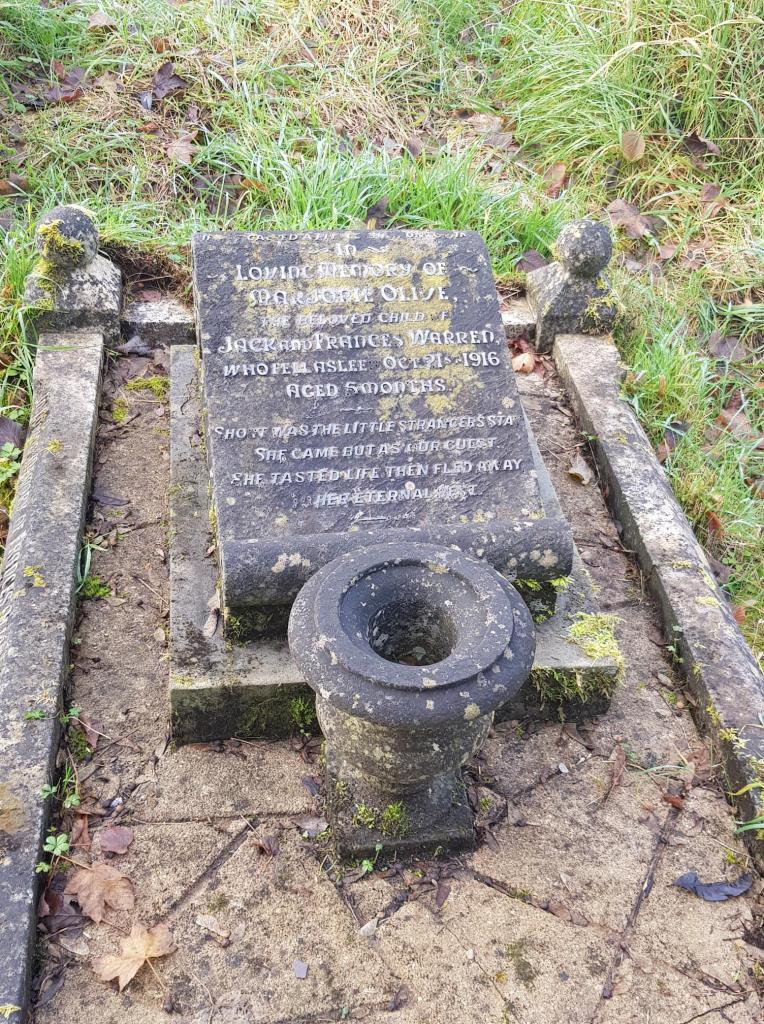
Majorie Olive – the beloved child of Jack and Frances Warren

Marjorie Olive was a precious baby, as every baby should be. The fact that she only lived 5 months did not diminish the joy and bewilderment her parents experienced at her birth and her death.

Short was the little strangers stay

She came but as our guest

She tasted life then fled away

To her eternal rest

John Oliver Warren and Frances Alice Iles were married at St. Paul’s Church, Swindon on April 10, 1915. John was working as a clerk in the GWR Loco Department Offices – but not for much longer. The First World War was raging; conscription was introduced in January 1916. Perhaps John was already serving by the time of Marjorie Olive’s birth and death.

Unfortunately, John’s Attestation Papers (the documents drawn up at the time of enlistment) have not survived. However, his discharge papers are accessible and we know he was serving as an Acting Sergeant in the Royal Army Medical Corps when he was discharged on June 11, 1919 at the end of the war.

John returned to his former life; to Frances and his home in Swindon; to his job as a clerk in the railway works. But life would never be the same again – how could it?

Frances died in 1926 and John in 1930. They are buried together with their little daughter Marjorie Olive. Their grave has recently been re-discovered and cleared by the Radnor Street Cemetery volunteers.

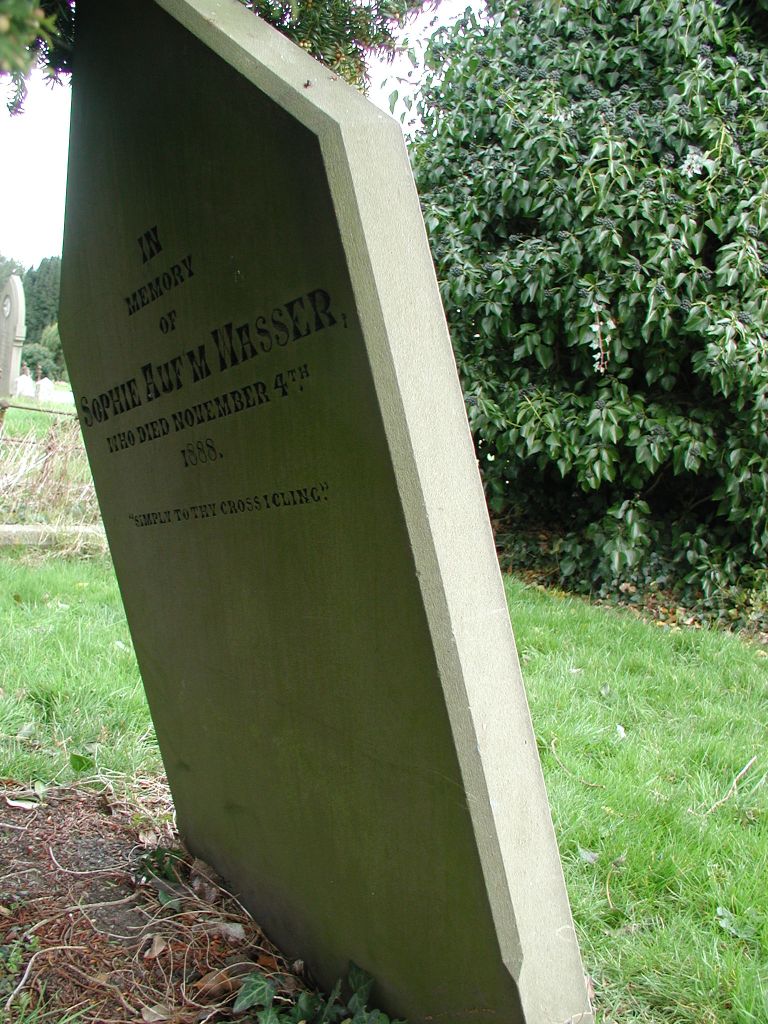
Sophie Wasser and the mysterious death of a lady at Swindon station

On Thursday November 1, 1888 a young woman was taken ill on a train travelling from Plymouth to London. She was removed from the train at Swindon and taken to the Queen’s Hotel at the station where she died the following Sunday at midnight.

A lengthy report was published in the Edinburgh Evening News and although very detailed there is no information concerning Miss Wasser other than some spurious conclusions. Some questions that in my opinion were not asked and should have been are: – What was the Hon Athol Liddell’s involvement in this case? How well did he know Miss Wasser? Having made her acquaintance in France some months previously, why couldn’t he provide more information about her circumstances? And why had he met her in Plymouth prior to her departure on the London train?

The story of Miss Wasser has recently been brought to my attention by local historian James Turner. James came across the grave of Miss Wasser and was greatly moved by the sad circumstances of her death. We both felt this was a story that needed to be told.

The Mysterious Death of a Lady at Swindon station

The Plymouth correspondent to the Bristol Times and Mirror telegraphing to that paper says, – A brief and mysteriously incomplete paragraph in a London evening paper on Friday was the first and hitherto the only information that has reached the public concerning the death of a young lady under circumstances of great mystery. The death occurred a week ago. There has been a coroner’s inquest, which did little to elucidate the real cause of death. The facts are as follows:-

Miss Dufin Wasser travelled from Plymouth on Thursday, November 1, by train due at Swindon at five minutes after four. At Swindon junction she was found to be so seriously ill that her removal from the train was imperative. By advice, Miss Wasser was taken into the hotel at the station and put to bed. All that the most watchful care and the best professional skill could suggest was done for her, but she died at Sunday mid-night. At the inquest, subsequently held, a verdict in accordance with the medical testimony was returned, the “medical testimony” being to the effect that death was due to apoplexy, arising from excessive vomiting. It was stated in evidence that amongst the effects of Miss Wasser was a bottle containing medicine, one of the ingredients of which was tincture of iron. This was contained in a bottle, on the label of which was written in French, “two or three teaspoonfuls in the day time.” The mixture could not therefore have been of a very powerful character, and it is unlikely that violent vomiting was due to it.  Dr Spackman says it is possible that some other drug might have been taken, but this theory was not verified or dissipated by a post mortem examination. Not a word was said as to what did or might have caused that vomiting. In the body of the dress of the deceased was found an unsigned letter, from which it was gathered that she was enceinte. This letter was in a gentleman’s handwriting, evidently a person of good education and epistolary facility. The writing is singularly large and of the “up and down” type. The place from which the letter was written was torn off, according to the expressed desire of the writer, who advised Miss Wasser, if she was in the condition she feared, to go to some secluded place. She was promised plenty of money, and was urgently entreated not to allow the name of the writer to transpire. In addition to the letter and medicine found was a good deal of money, about £50. Most of this was in French currency, the number of English coins being comparatively few. The deceased’s luggage comprised several articles, apparently presents, their quality and character marking them as not such as a person in the apparent position of the deceased would buy.

In the same third-class compartment in which Miss Wasser travelled from Bristol there were also another lady and gentleman, and Police Inspector Cruse, of Swindon. The lady appeared only faint at Bristol, but afterwards suffered great agony. She received with gratitude the attentions of the lady and gentleman, but hardly spoke one word. When she arrived at Swindon she appeared to be suffering from paralysis.

Inspector Cruse, before he knew the details of the case as disclosed at the inquest, formed an opinion as to the cause of the agony his fellow-passenger was suffering, and on reaching home informed his wife that something remarkable would happen before the train reached London. There was amongst her papers one which showed she had been staying at the Duke of Cornwall hotel, Plymouth under the name of Mrs Adler. A telegram elicited a reply from Mr Hellard, solicitor to the Hon. A Liddell, urging that everything possible should be done for her, and nothing that thoughtful consideration could do, or money could procure was wanting to bring about the ladies recovery.

Mr Liddell and Mr Hellard came to Swindon for the inquest. Mr Liddell stated that he made the acquaintance of Miss Wasser in France, in August last, and that he saw her at Plymouth on the day before she left for London to take up her residence for a time at the Swiss Home for Ladies, Mecklenburg Square, where she had previously stayed, and from which place she had obtained situations as governess. He also stated that she was of “Independent means.” It has since been ascertained that Miss Temple, sister of the Bishop of London, knew her in the capacity of governess with families she visited. The deceased was buried in Swindon cemetery on Wednesday. A headstone is to be erected, bearing the simple inscription. “Sophie Dufin Wasser, died November 4th, 1888.” While at the Queen’s hotel she never once spoke except in monosyllables in reply to questions. One of these replies was a sad “No” to the question, “Have you any friends?”

Edinburgh Evening News Monday 12th November, 1888.

Image published courtesy of James Turner

The entry in the burial register reads:

Wasser Sophie A.M. 25 years 7th November 1888 grave plot E8300.