Members of the 18th Scouts join us every year for our Remembrance Day Service at Radnor Street Cemetery. I wonder if they know that a very significant man in the history of the scouting movement in Swindon is buried in the cemetery.
William Rowland Bird was born on August 19, 1865 and baptised at St. Andrew’s Church, Chippenham in September 1865. His parents were Robert, at that time employed as a Switchman with the Great Western Railway, and Frances. William was the eldest of their five children and spent part of his childhood at 13 Atchley Street, Bristol, but by 1891 the family had moved to Swindon and a home at 73 Albion Street.
William started work in the railway works aged 14. He later transferred to the laboratory where in 1900 he was appointed chief chemist.
William never married. In 1901 he was living at 125 Goddard Avenue with his unmarried sister Edith. By 1911 it looks as if the rest of the Bird family had moved in as well! William shared the house with sister Amy, brother James and his wife and two children, an aunt and a servant.
William’s life was equally fully. He was appointed Scout Master of Swindon Troop 2 in 1909 and the following year hosted Baden-Powell at a scout rally in the GWR Park. He served as Scout District Commissioner for North Wilts (including Swindon) from 1910 until his retirement in 1945 when he was appointed vice president of Wiltshire County Scouts. And that wasn’t all! He was one of the founding members and secretary of the Swindon and District Football League. He was a referee and a member of St. Mark’s Young Men’s Friendly Society. He gave lectures at the Mechanics’ Institute on a variety of topics and in 1920 was a member of the Swindon Museum Committee.
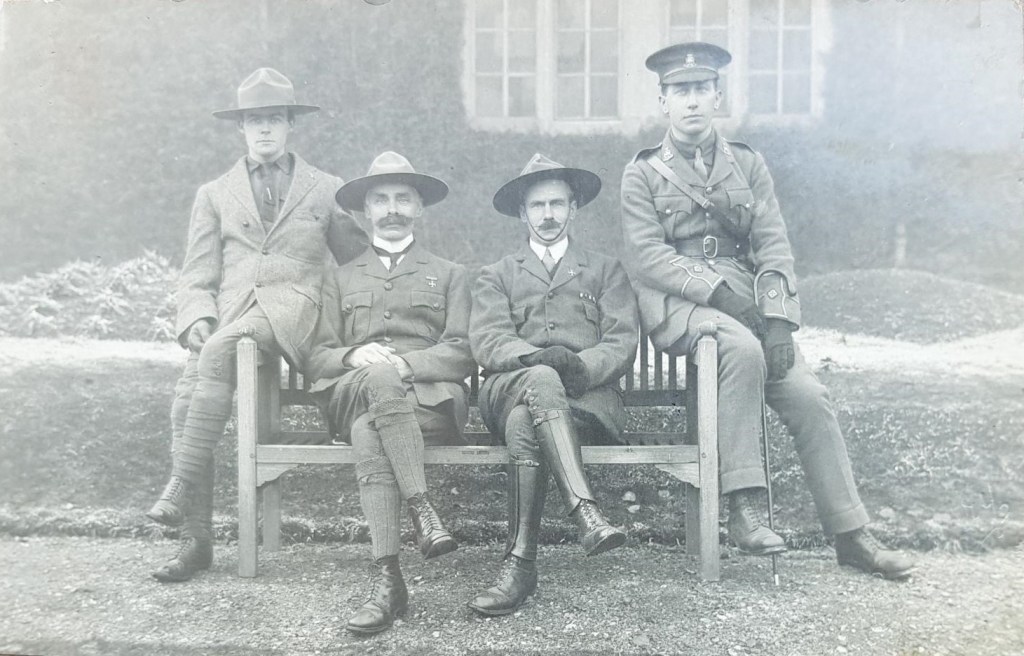
In this 1915 image District Commissioner W.R. Bird is seated 2nd on the left
Former chief chemist at GWR dies
A former chief chemist and superintendent of the GWR laboratory at Swindon, and for many years Boy Scout District Commissioner for North Wiltshire, Mr William Rowland Bird (85), of 125 Goddard Avenue, Swindon, has died.
A native of Chippenham, Mr Bird came to Swindon as a boy and entered the service of the former Great Western Railway Company when he was 14 as a fitter and turner. He attended the Mechanics’ Institute evening classes and won the Gooch prize, the premier award.
After serving his time in the shops, Mr. Bird was transferred to the laboratory, and in 1900 was appointed chief chemist. For 32 years he served on the Dangerous Goods and Chemists Committee of the Railway Clearing House. He was one of the first chemistry lecturers at the Mechanics’ Institute.
Church Interests
One of the promoters and first assistant secretary of St. Mark’s Church Young Men’s Friendly Society, he also helped found St. John’s Church Club.
The Boy Scout and Church Lads’ Brigade found a staunch supporter in Mr Bird and other deserving causes always commanded his sympathy.
He was a founder and vice-president of the North Wilts Field and Camera Club, a member of the first committee of the Swindon GWR Engineering Society, of which he became a vice president, a member of the Toc H executive and a vice-president of the GWR St. John Ambulance Association.
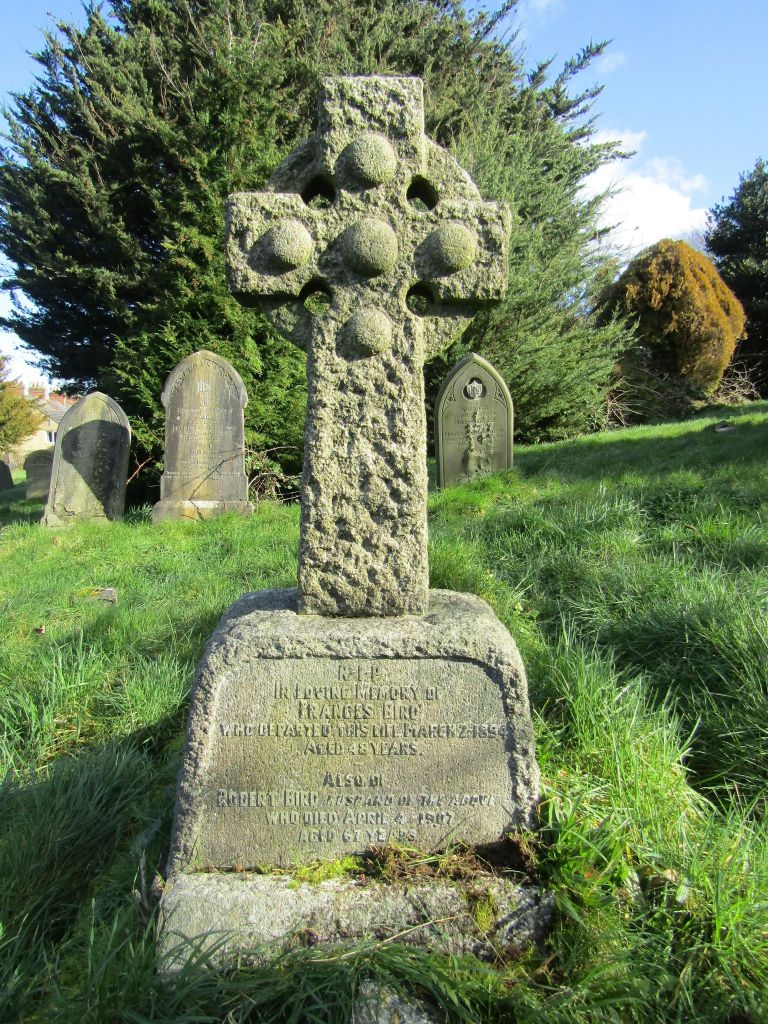

William Rowland Bird died on July 1, 1951 aged 85 years. He was buried on July 4 in grave plot A857 which he shares with his mother Frances who died in 1894 and his sister Maria May who died in 1972. His father Robert is remembered on this headstone but is buried in grave plot E7798 with other members of the Bird family.
My thanks to Steve Milner, Scout Leader at Wootton Bassett, who is presently working on an account of the life and times of William Rowland Bird and can be contacted by messaging via this blogpost.

 Radnor Street Cemetery
One thought on “William Rowland Bird – chief chemist at GWR Works and scout leader”