George Hunter was born in 1834 in South Cave, Yorkshire. At just 9 years of age he was working as an agricultural labourer to help support his widowed mother. At the age of 17 he converted to Primitive Methodism and spent the rest of his long life in God’s service.
George was described as ‘a splendid visitor, and a true friend and practical helper in cases of distress’ who ‘in the pulpit was earnest, simple, practical and good. He aimed not at display. He preached not to please the ear and tickle the fancy, but to touch the heart and reach the soul. His sole ambition was to save souls.’
He married Mary Thompson and the couple had two daughters, Rosanna born 1868 and Edith Mary born 1870.
In his retirement he made his home in Swindon with his younger daughter Edith where he continued to assist with the work of the Primitive Methodist church. He lived at 75 Morris Street, Rodbourne, where he died in 1916. A long obituary was published in the North Wilts Herald of which the following is an extract.
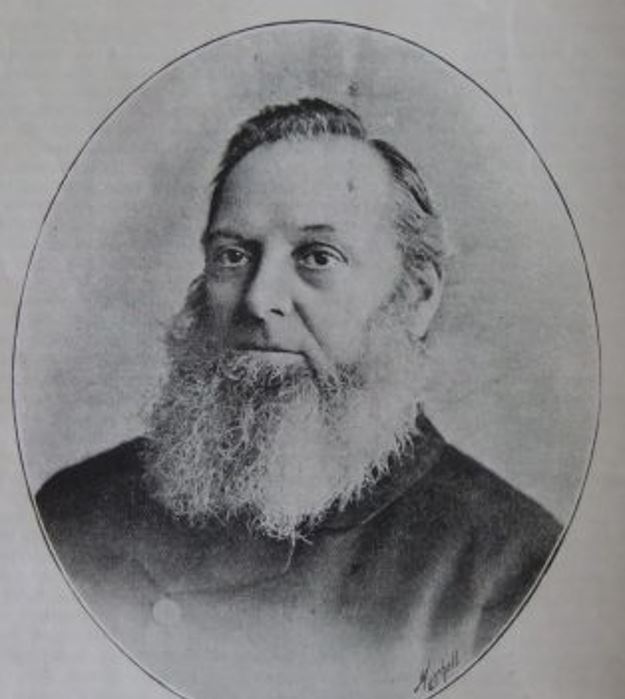
Death of the Rev G. Hunter
55 Years in the Primitive Methodist Ministry
The Rev. George Hunter, who was for 55 years a Primitive Methodist minister, died at his home, 75 Morris Street, Swindon, on Sunday. He was born in Yorkshire in 1834 and was 82 years of age. The greater part of his ministry was spent in the South of England, and when he retired from active service five years ago he came to reside at Swindon, and for some time continued to assist in Church work.
The funeral took place on Wednesday afternoon. The first portion of the service was conducted at the Primitive Methodist Church, Regent Street, by the Rev. S.A. Barron, who also committed the body to the earth at the Cemetery.
The Funeral Address was delivered by his old friend the Rev. J.H. Cotton …
As a pastor George Hunter had few equals. He knew his people, sympathised with them in their sorrows, advised them in their difficulties, comforted them in their sickness, and encouraged them as they drew near the eve of the great change. In the sick room nothing was more striking than his beautiful sympathy and tender handling of stricken souls. He could not refuse to help in a case of need, and often had made the widow’s heart dance with joy. Twenty years ago he heard friends talking about Mr Hunter’s kindness to the aged poor. In many circuits he would long be held in affectionate remembrance, though the majority of those who benefited from his ministry preceded him into the Great Beyond.
The great sorrow of Mr Hunter’s life was the passing away of the devoted wife who for over 35 years had lovingly shared his ministry. That was in 1900, during his second term at Stewkley. His elder daughter had to look after an aged aunt at Exeter; but the younger, since her mother’s death, had devoted herself to her father beyond all praise. During the coming years it would give to her deep and abiding satisfaction to know that she gave herself so lovingly to bring joy and comfort into her father’s life during his declining years. To these ladies in their intense bereavement and sorrow their sympathy went that day.
Advancing years ripened and mellowed Mr Hunter’s character, and considerably broadened his views. He was not sure that he was a man of the eventide after all. He often felt while in contact with him that he was a man of the morning. He passed away, after a brief illness, in the full confidence that death would be to him the gateway to a deeper, richer, and fuller life. To him, indeed, there was no death.
The Rev. W.L. Taylor said he knew Mr Hunter for a very long time. He often met him in the Brinkworth District and other circuits in which he laboured. He had that day seen some documents relating to his coming into this part of the country in 1861; and the people who had known Mr Hunter were thankful to the Hull Conference that day for having sent him. His work was a great success in the agricultural districts and his labours were equally successful in the industrial circuit in South Wales in which he spent a short period of his ministry. He asked the daughters of Mr Hunter to accept, in the sorrow which had overtaken them, the sympathy of the circuit he represented.
Extracts from the North Wilts Herald, Friday, June 16, 1916.

Rev George Hunter died aged 82 years at his home, 75 Morris Street. His funeral took place on June 14, 1916 when he was buried in grave plot C2016.
You can read more about the Rev Hunter and his family here:-

 Radnor Street Cemetery
Another great story about a good man
LikeLike