In recent years the hedge on the periphery of the cemetery has engulfed this headstone, so it was fortuitous that I was passing just after it had been trimmed and was able to take a photograph. A very elegant memorial, this headstone is full of funerary iconography and symbolism and tells us much about the couple’s relationship and religious faith.
The clasped hands is a symbol dating back to Greek and Roman funeral art. Interpretations of this symbol include the parting of a couple by death but also their reunion in the afterlife. In this example the hands are surrounded by ivy leaves which in turn represent friendship and immortality. The columns at either side of the inscription represent the entrance to heaven and the afterlife. So there is quite a lot going on here!
It would be fair to assume that the couple had a strong faith.
Their marriage banns were read at Christ Church but the marriage does not appear to have taken place there. Their first two children were baptised at the Faringdon Road Wesleyan Chapel where the couple worshipped and where they could possibly have been married.
By 1881 they were living at 7 Mount Pleasant, a short terrace of houses situated between Havelock Street and Brunel Street, lost beneath the 1970s development of the town centre. Originally from Birmingham, George worked as a brass finisher in the railway factory.
By 1891 George Elizabeth and their four children, Grace, John, Joseph and George were living at 92 Westcott Place. They would later live at 166 Westcott Place where Elizabeth died in 1915.
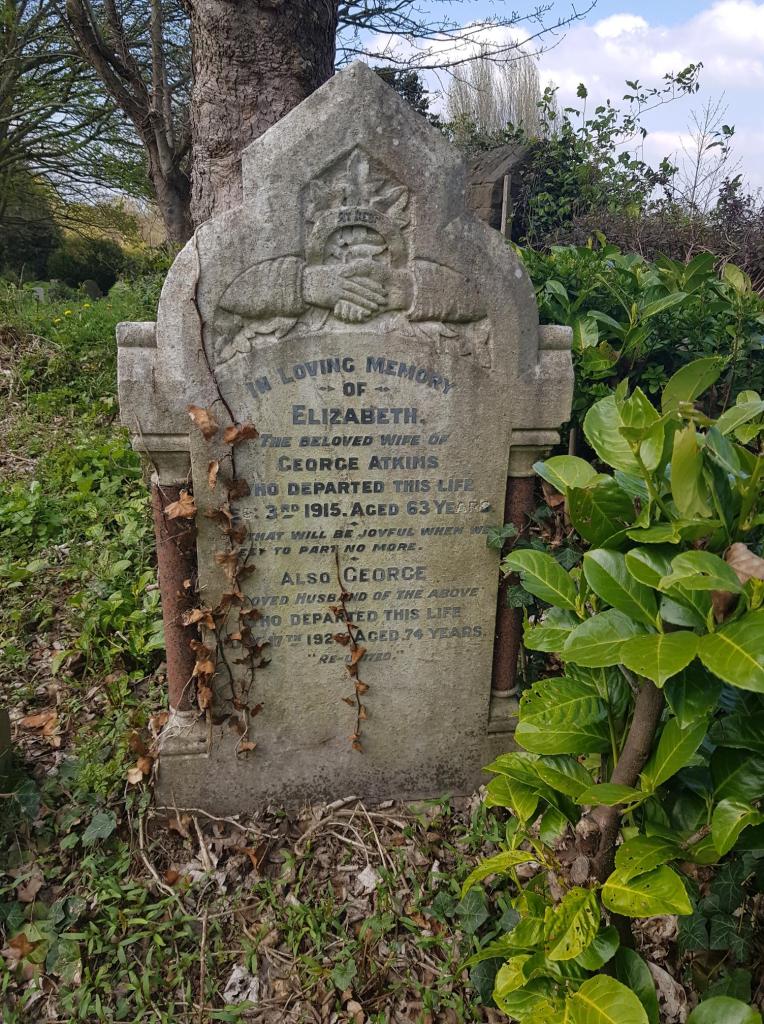
Elizabeth, aged 60 years, was buried in grave plot B3329 on December 8, 1915. George died aged 74 years at 49 Shelley Crescent (most likely Shelley Street) and was buried with Elizabeth on July 21, 1926. Elizabeth and George Atkins, reunited.

 Radnor Street Cemetery