Still in search of little Lily

Sometimes it feels as if Radnor Street Cemetery is one big family reunion.

Yesterday’s blogpost Maurice Uzzell, Louisa and little Lily proved popular with readers. Shane messaged to say he’d hit a brick wall with his Uzzell research while Duncan confirmed the Scott/Uzzell family connection.

Mary Ann Scott was the daughter of Henry and Hannah Uzzell and featured in yesterday’s blogpost, living at 67 Jennings Street in 1891 with her husband Jesse Scott and where her three brothers Charles, Maurice and Fred Uzzell were boarding.

Jesse Scott, like Mary Ann Uzzell, was born in Christian Malford. The couple married at the Wesleyan Chapel Baptist Mills, Barton Regis on October 2, 1881 when Jesse was working as a railway signalman at the Stapleton Road Station. The UK Railway Employment Records 1833-1963 state that Jesse entered the Great Western Railway employment in October 1878 shortly before his 19th birthday working as a Policeman (railway guard) at Stapleton Road. In 1881 he became a signalman, also at Stapleton Road before moving to Swindon a year later where he worked as a switchman. In 1891 he was working as a passenger guard at Swindon and in 1907 he was a platform inspector.

In 1901 the family were still living at 67 Jennings Street. At the time of the census that year Mary was there with five of her children while Jesse can be found at the Railway Mission Convalescent Home in St. Leonards on Sea, Sussex.

By 1911 the family had moved to 73 County Road where Mary states on the census returns that they had been married 29 years and had 7 children but that sadly one had died. In 1911 Jesse and Mary had three adult children living at home and two that were still at school. Mary’s widowed mother Hannah Uzzell also lived with them – oh, and they had a boarder as well!

Mary Ann Scott died the following year and was buried in grave plot D1322 on June 26, 1912. By the 1930s Jesse was living at 60 Eastcott Hill where he died on January 23, 1935. Probate of his will was granted to his brother-in-law Maurice Uzzell and his son William Scott.

The couple’s two daughters are buried with them. Violet Lillian Mary Whitworth who died in the December quarter of 1936 aged 35 and Elsie Hannah Scott who died on November 29, 1939 at 61 Clifton Street, the home of her uncle Maurice Uzzell.

I feel this could be a continuing family history story – I’m sure to find little Lily at some point.

Maurice Uzzell, Louisa and little Lily

Maurice Uzzell, who was buried in grave plot D64A, has been relatively easy to research. He has a pretty unusual surname and his branch of the family kept in close contact, which all helps the researcher.

Born in 1868 in Christian Malford, Wiltshire, Maurice was the fourth child of Henry and Hannah Uzzell. In 1871 aged 2 years old he is living in the village with his parents and two elder brothers. By 1881 the family was complete – a daughter and two more sons – and they all lived at 35 Leigh Cottages, Christian Malford. The two elder sons Charles 17 and Stephen 15 were working as agricultural labourers, Maurice 13, was still at school.

Drawn to the bright lights of Swindon, by 1891 Charles 27, Maurice 22 and Fred 19 were boarding with Jesse & Mary Scott (formerly Uzzell and their elder sister) at 67 Jennings Street, Rodbourne. Charles and Maurice worked as labourers and Fred as a blacksmith’s labourer, so probably fair to assume they were all employed in the GWR Works.

In 1896 Maurice married Louisa Worts – so let’s have a look at Louisa. Born in 1855 in Leyton, Essex by 1891 Louisa was living with her widowed mother and her sister and brother-in-law in Colebrook Road, Walthamstow where she worked as a laundrymaid.

In the 1901 census Maurice is living at 61 Clifton Street where he works as a Wood Turner in the GWR Works. Living with him are Louisa, his brother Fred and – hello – a niece – Lily Uzzell aged 10 born in Walthamstow.

An Uzzell family search found all his brothers (and Ellen) and it seemed none of them had ever lived in Walthamstow. Only Louisa (nee Worts) had lived in Walthamstow. Was young Lily her daughter, born before her marriage to Maurice?

In 1911 Maurice and Louisa lived alone at 61 Clifton Street. Louisa declared they had been married for 14 years and had no children.

But what happened to little Lily? Did she die in childhood? If so she is not buried with Louisa and Maurice. Did she marry? I can’t find a name or place that matches.

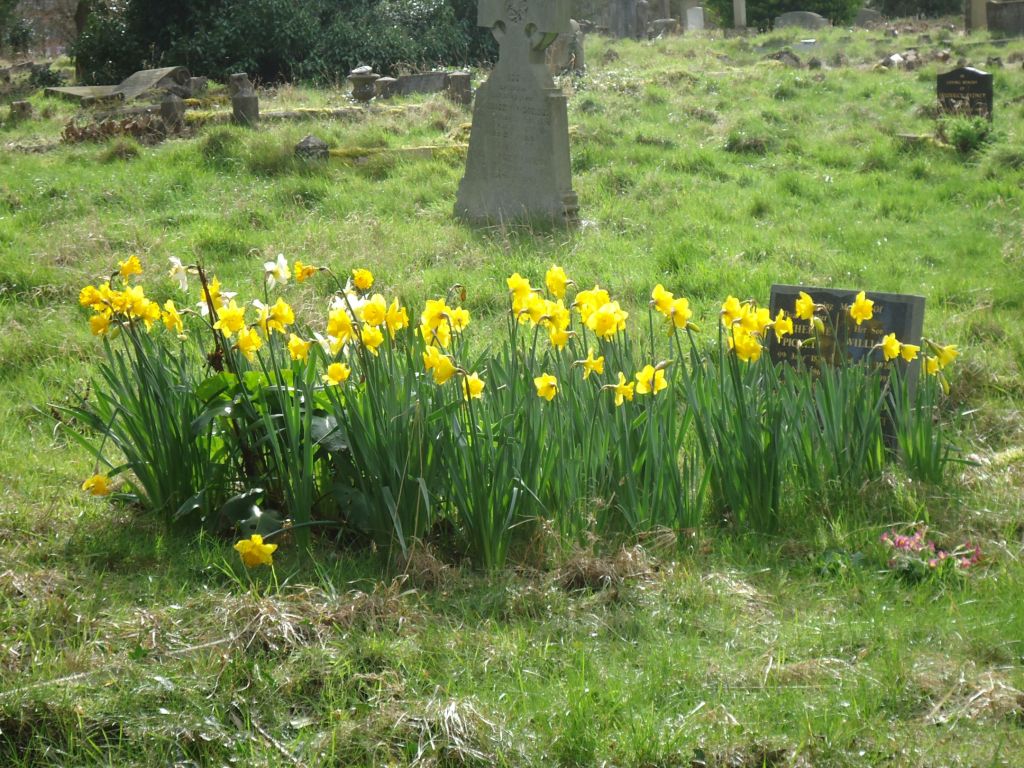
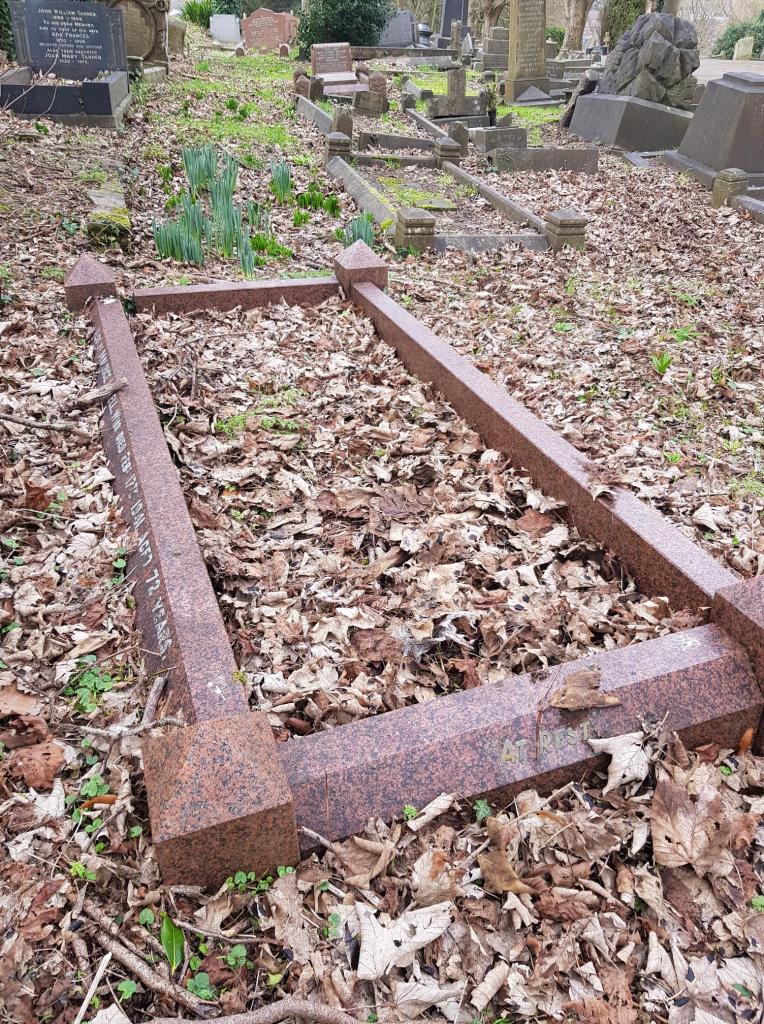
Louisa died in 1931 and is buried in the area close to the cemetery chapel with this discreet pink memorial. Maurice died in 1941. Probate of his estate was awarded to William Scott, railway clerk, most probably the son of Jesse and Mary Scott who Maurice lodged with in Jennings Street as a young man. Maurice is buried here with Louisa.

Fred Uzzell, Maurice’s younger brother who lived with him in 1901 and then moved to Kingshill Road, was buried close to him in the cemetery in grave plot D234.

This branch of the Uzzell family has been relatively straightforward to trace. But what happened to little Lily? I’d love to know.

You may also like to read:

David Uzzell – a bit of a country rogue

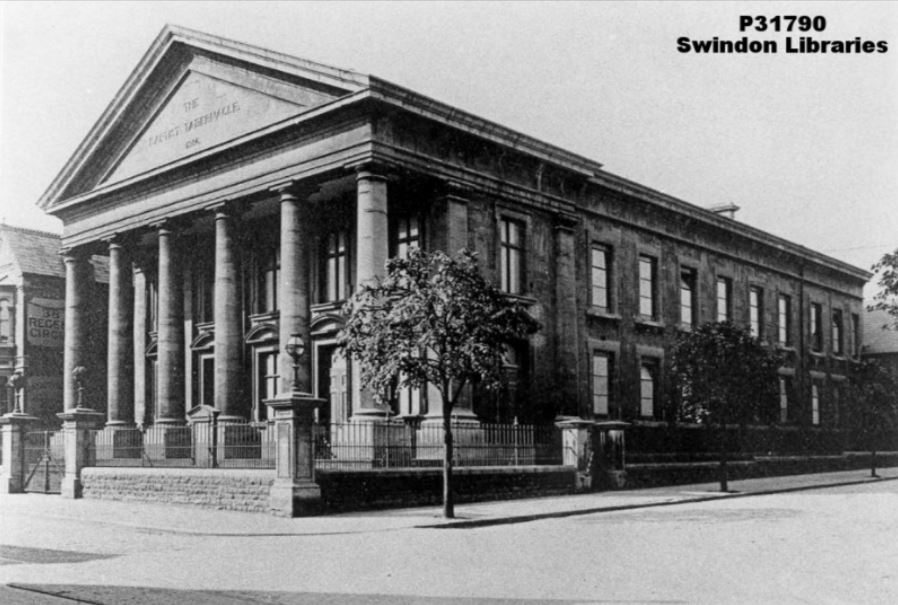
Samuel Colborne and the Baptist Tabernacle

Baptist Tabernacle published courtesy of Local Studies, Swindon Central Library

The Baptist Tabernacle lives long in the collective memory of Swindon – even by those who can’t actually remember it!

The Baptist Tabernacle was built at the top of Regent Street in 1886 and designed in a classical style of architecture by popular local architect W.H. Read. The frontage consisted of a colonnade of six massive columns, supporting a pediment of the Tuscan order.  The contract for the work went to Swindon builder Mr Thomas Barrett for the sum of £5,798.

One of the four memorial foundation stones installed on November 4, 1885 was laid by Mr. Samuel Colborne. The silver trowel and wooden mallet he used were later presented to the Church. Under this stone was placed a bottle containing a copy of the Baptist Magazine and the Baptist Year Book.

During the 1930s the Baptist Tabernacle congregation mourned the loss of several of its founder members including that of Samuel Colborne.

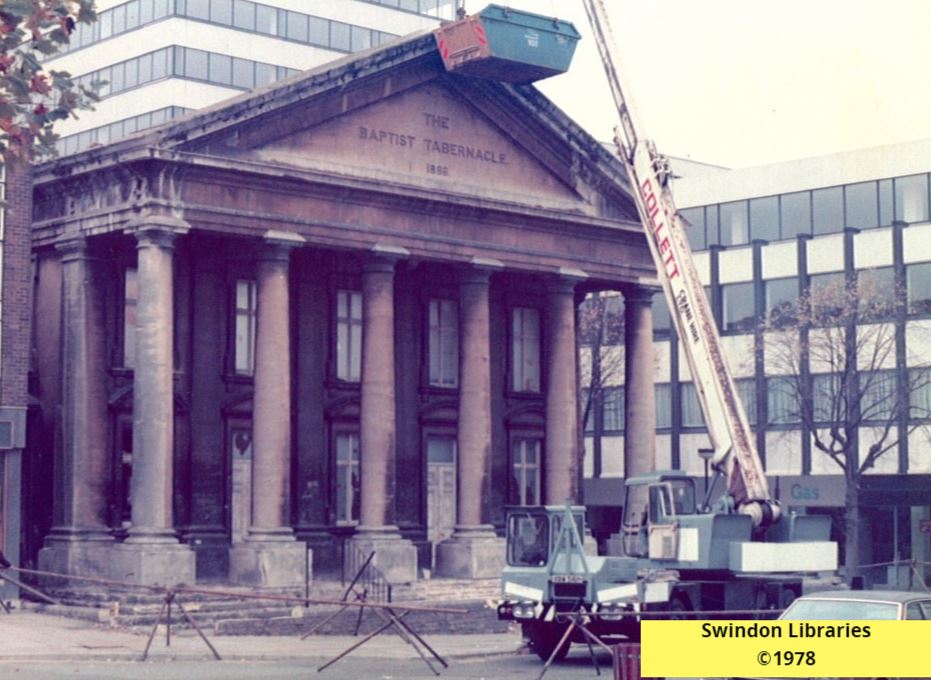
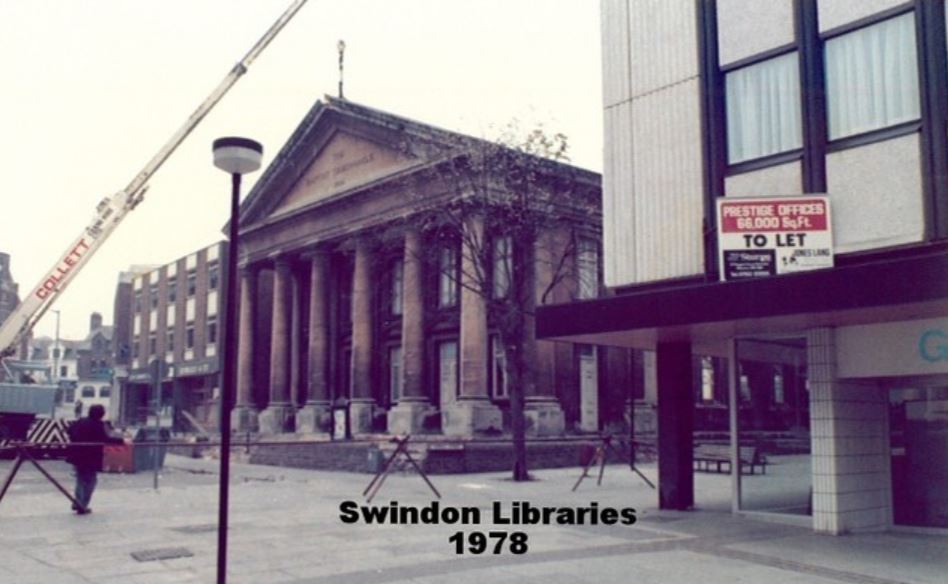
The Baptist Tabernacle was demolished in 1978, the blame for which is always heaped upon the local authority but in this instance they were not guilty. The fabric of the building was in a perilous condition and the ever diminishing Baptist congregation were unable to maintain it.

Loss to Swindon

Death of Mr Samuel Colborne.

End of a Busy Life.

By the death of Mr Samuel Colborne, which took place at his residence, Barbary, Westlecott road, Swindon, on Saturday night, there has passed away a very old and highly esteemed resident of the town and neighbourhood.

Mr Colborne, who had reached the great age of 92 years, was ill only a short time, and passed peacefully away, the cause of death being senile decay. Mr. Colborne’s wife predeceased him 15 years ago, two years after the celebration of their golden wedding. There are no children, and no surviving relatives on Mr. Colborne’s side.

Mr Colborne entered into farming pursuits when a young man, and for many years had a large farm in the parish of Stratton St. Margaret. At one period he owned the land now known as the Hurst farm estate, which the Swindon Corporation have developed as a housing estate.

The Funeral

The funeral took place on Wednesday afternoon at Radnor Street Cemetery, where the service was conducted in the chapel by the Rev. E.W. Probert, Pastor of the Baptist Tabernacle, who also officiated at the graveside. Deceased was interred in the same grave as his wife, who died 15 years ago.

Mr Probert spoke of Mr Colborne’s long association with the Baptist Church and his devotedness to all good causes. He had lived a good life, and had now been called to a higher life. He was a good Christian and a good citizen.

In religious matter he was thoughtful, consistent, and helpful. In his generous support for his church he had been in his younger days accustomed to labour and spend his time for the enlightenment and food of others, and his memory will be ever fragrant in the neighbourhood of Stratton St. Margaret.

I shall not soon forget when he laid the foundation stone of a new Sunday School at Upper Stratton when in his 91st year. He spoke with the vigour of one in the fifties, and at the close of his address, many of the rank and file of adults crowded round to shake hands with him and remind him of his having ministered to them in the Sunday school in their earlier days.

Extracts from the North Wilts Herald, Friday, March 28, 1930.

Samuel Colbourne pictured top left

Images published courtesy of Local Studies, Swindon Central Library.

Daniel Campbell McBeath Walker

Daniel Campbell McBeath Walker was born on October 5, 1834 according to his GWR employment records. The sister with whom he lived, Charlotte Hartford Walker, was born in 1825 in Edinburgh, the daughter of Duncan Walker and Elizabeth McBeath so it is probably safe to assume similar facts apply to Daniel.

He first joined the Great Western Railway as a clerk on July 19, 1870 and in 1871 he was boarding with the Brooks family at 3 Eastcott Lane. However, ten years later he was living at 7 Hill Street, Bedminster with his two sisters Charlotte Hartford Walker, an upholsteress and Sarah McIntyre Walker, a Lady’s Maid.

Returning to the GWR employment records, Daniel re-entered the company on January 2, 1882. He was 48 years old. In 1895 he was living with his sisters at 16 Eastcott Lane.

The following inquest was held to establish the events of his traumatic death on May 30, 1895, some of the details are too distressing to be published here and have been omitted.

On Thursday morning Mr W.E. Nicholson Browne, County Coroner, held two inquests at Swindon. The first was held at the “Globe” Tavern, Old Swindon, touching the death of Daniel Campbell Walker, a clerk in the GWR Works, residing in Eastcott Hill.

Charlotte Hertford Walker was the first witness called. She said deceased was her brother, and his age was 60 years. He was a clerk in the GWR Works but had not been to work since Tuesday week. He had a fall in the Quarries about ten days ago, which shook him up a great deal, and he went to Clevedon with witness, and returned on Tuesday last. He had suffered from fits some 12 years ago. About 5 years since he was confined in Dr Iles’ private lunatic asylum at Fairford for some thirteen weeks. The witness also said that his (deceased’s) second brother committed suicide in the same manner. Deceased had a religious mania. He went to bed about 10 o’clock on Wednesday night, when he was very calm and collected. She (witness) looked into his bedroom about seven o’clock Thursday morning, when he seemed to be asleep.

The jury, of whom Mr Job Day was foreman, returned a verdict of “Suicide whilst in a state of temporary insanity.”

Extracts from The Swindon Advertiser, Saturday, June 1, 1895

Daniel Campbell Walker of 16 Eastcott Lane was buried in Radnor Street Cemetery on June 1, 1895. He is buried in grave plot B2407, a public grave. His sisters remained living in Swindon until 1903 when Sarah died and was buried in grave plot B2409, another public grave and close to her brother. Charlotte returned to Bristol where she died in 1907 and was buried in Ridgeway Park Cemetery.

Alice Kate Richards – smile please!

When you have a professional photographer in the family you can be guaranteed some super snaps – and Alice Kate Stroud had one of Swindon’s best.

Alice Kate Stroud was born in Hereford on February 27, 1870 the younger of James and Ellen’s (Eleanor) two daughters. The family lived at 49 Portland Street, Hereford where James worked as a railway guard. It was probably inevitable that they would eventually end up in Swindon and in 1881 they were living at 22 Merton Street, a property they shared with Edwin and Louisa Brittain.

In 1892 Alice married railway clerk Thomas Richards and by 1901 Alice, Thomas and their two sons Leslie & Stanley were living at 15 Medgbury Road, next door to Alice’s in-laws. But by 1911 they were living at 10 London Street where they would remain for the rest of their lives.

So, who was this talented photographer of whom you speak, I hear you ask?

Well, in 1890 Alice’s elder sister Mary Jane Stroud married William Hooper.

Ah, now you understand.

Alice was photographed by Hooper as a young woman and appears frequently in many Hooper family photographs. We see her with her sister on a boat on Coate Water; with her husband and two sons; cradling her little granddaughter Mary and we watch her grow old alongside Mary Jane and William Hooper.

Alice died in 1958 at Kingsdown Nursing Home and was buried in grave plot D1030 which she shares with her in-laws Maria and Richard Nathaniel Richards. Thomas Richards died at 10 London Street and was buried with his parents and his wife on October 14, 1959.

Images are published courtesy of P.A. Williams and Local Studies, Swindon Central Library.

You may also like to read:

William and Mary Hooper rock up at Stonehenge

John Ham – 29 Reading Street

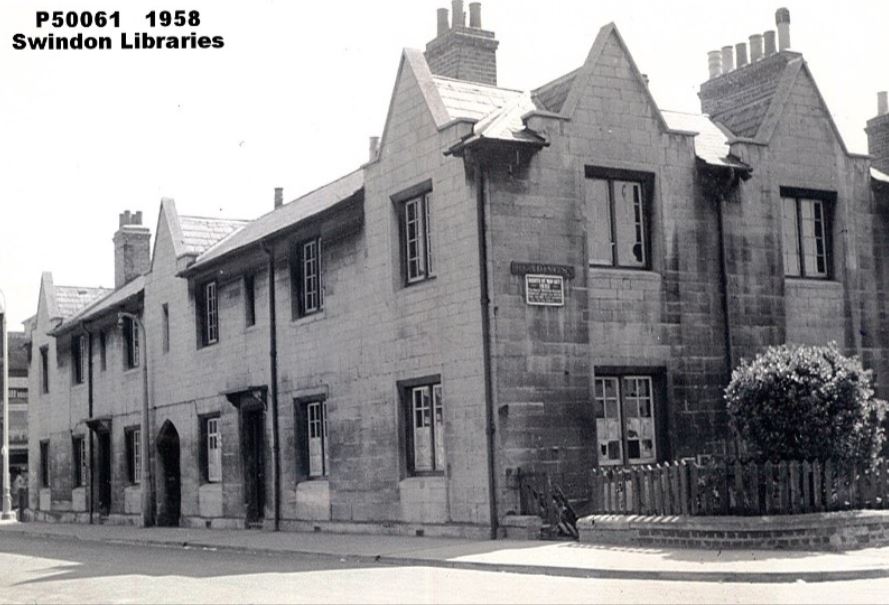
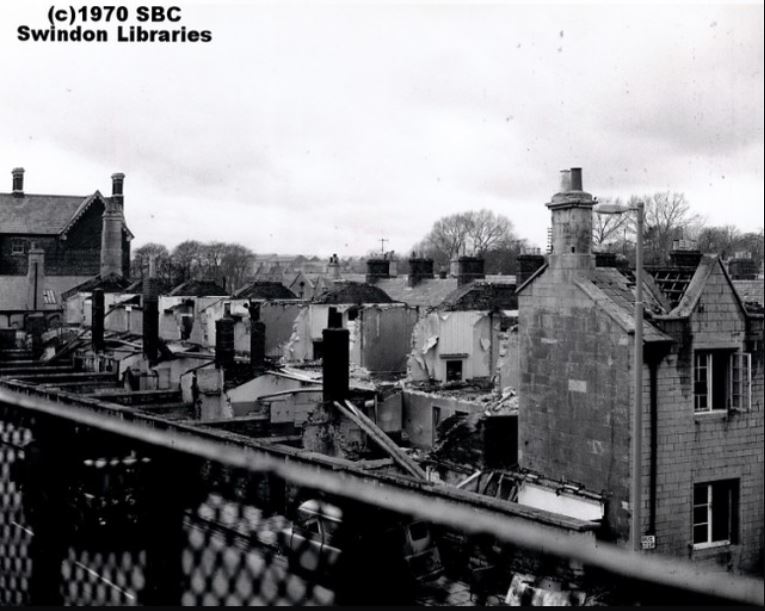
In the 1960s Swindon’s iconic railway village was under threat of demolition. Purchased by the local authority in 1966 the 19th century cottages were in a state of dilapidation and Swindon Borough Council were intent upon a project of demolition and rebuilding. However, a passionate local campaign and the vocal support of Sir John Betjeman, Poet Laureate, rescued the village and a programme of renovation began.

John Ham was born in 1860 in Pontnewyndd, Pontypool. His parents moved to Swindon soon after John’s birth and he spent the rest of his life living in the railway village. He appears on the 1871 census, a schoolboy aged 11, living at 29 Reading Street with his widowed mother Ann, his uncle and aunt, and his elder brother 13 year old William. William was already working as an office boy in the GWR Works and as soon as he was able to John joined him.

In 1881 John was head of the household at 29 Reading Street where he lived with his mother Ann and three engine fitting apprentices.

On September 10, 1885 John married near neighbour Emily Solven who lived at 21 Reading Street. John and Emily began married life at 29 Reading Street where they were living at the time of the 1891 census with their young son William, and John’s cousin George Rushton.

By 1901 the family had moved to 15 Faringdon Street where John died in May 1905 aged 44 years. Despite his premature death John had contributed considerably to life in Swindon as can be seen from the brief obituary published in the Wiltshire Times. He was buried in grave plot D80 on May 19, 1905 where he was joined by Emily following her death in 1926.

Death of Mr J. Ham – The death is announced of Mr John Ham, a well known member of the Council of the GWR Mechanics’ Institute, Swindon. Deceased, who was only 47 [44] years of age, had been a clerk in the GWR Works for the past 33 years, going there immediately on leaving school. He had been an active member of the Council of the Institute for the past 12 years. He was a prominent Oddfellow, being a member of the “Widow’s Hope” Lodge, and also a good cricketer. He leaves a widow and two little children – a son and daughter.

The Wiltshire Times, Saturday, May 20, 1905.

Corner of Reading Street

Images published courtesy of Local Studies, Swindon Central Library.

A new headstone and a soldier remembered

Private George James Smith pictured with his mother and two sisters published courtesy of an Ancestry public family tree.

Radnor Street Cemetery closed to new burials in the 1970s but the occasional interment (usually cremated remains) does still take place where there is room in a family grave. More unusual is the installation of a new headstone, although in recent weeks this has also taken place.

The new headstone commemorates Frederick Smith and his wife Elizabeth who died in 1917 and 1918 respectively and their son-in-law William “Alf” Penney who died in 1960. The inscription on the headstone also commemorates Frederick and Elizabeth’s son Private George James Smith who was killed in action in Salonika during WWI.

George James Smith was born on March 7, 1895 one of the four surviving children of Frederick and Elizabeth Smith. Frederick worked as an Iron Dresser in the GWR Works and George grew up at 87 Linslade Street, Rodbourne. He too entered the Works and as a 15 year old worked first as a cleaner, then a call boy and by 1913 he was a time and storekeeper. The UK Railway Employment Records 1833-1956 include an added comment to George’s employment record “25 Apl ’17 Reported by War office as missing.”

George was serving in the 7th Battalion of the Wiltshire Regiment in Salonika when he was declared missing presumed dead. He is remembered on the Doiran Memorial, Greece. George has no known grave but this new headstone in the cemetery will be cared for by our team of CWGC Eyes On Hands On volunteers.

Thomas Page – brickmaker

In 2013 Graham Carter, Mark Sutton and I began our great magazine publishing adventure. During five years of publication we produced twenty editions of Swindon Heritage, including one special publication to mark the 75th anniversary of the Battle of Britain.

One of the first people we interviewed was Janet Flanagan. Jan is a well known figure on the local history circuit with her legendary knowledge of the Wilts & Berks Canal but we didn’t know that she was also researching the brickmaking industry of Swindon.

Jan told us how in the 1870s the Swindon Brick and Tile Company’s yard in Spring Gardens was the largest brickworks in Wiltshire with a Hoffman kiln (beneath where the Range stands today) capable of firing 25,000 bricks a day.

Jan’s ongoing research revealed 19 brickworks in the town and district, including the well known Thomas Turner works in Drove Road, now the site of Queens Park.

And of course the brickmaking industry employed a lot of people.

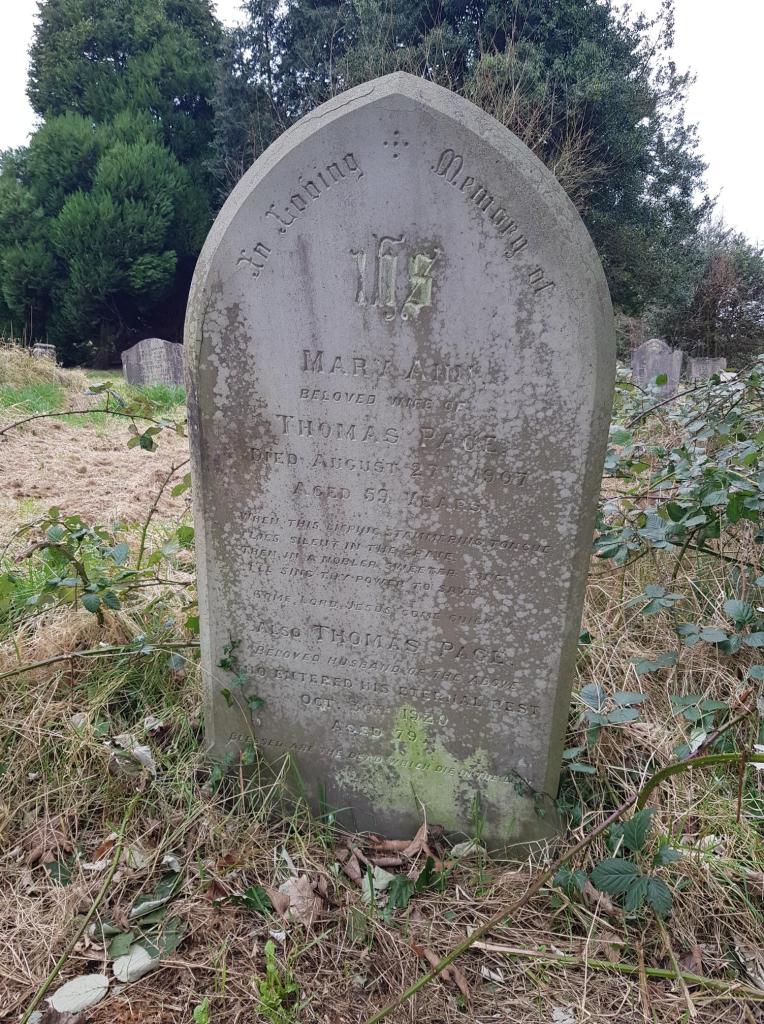
This is the last resting place of Thomas Page, born in Stratton in c1842, the son of a brickmaker, who spent a lifetime working in the industry.

In 1867 he married Mary Ann Painter, the daughter of another brickmaker, William Painter. In 1871 the couple lived at Brick Kiln Cottages in Wroughton. In 1881 they lived in Stratton Green where they also ran a General Shop & Outdoor Beerhouse. This was probably Mary Ann’s concern as Thomas was still working as a brickmaker.

They later moved to Trowbridge and in 1901 they were living and working at the Cockhill Brickyard. Their 15 year old son Moses also worked as a brickmaker and Thomas’ widowed brother-in-law William Weller, another brickmaker, lived with them.

By 1907 Thomas and Mary Ann had returned to Swindon where Mary Ann died at 80 Chapel Street, Gorse Hill on August 27. Thomas died 13 years later. The couple are buried together in grave plot B2708.

Florence Gladys Richards – accounts clerk

Female clerks photographed in 1916

You might be surprised to know that women were employed in the GWR Works from as early as 1874. It was not only Swindon’s sons who could benefit from a father employed in the Works but so could Swindon’s daughters.

By the 1870s the GWR was finding it difficult to recruit skilled men to move to Swindon. The problem was caused by a shortage of jobs for young women, the railwaymen’s daughters. The men wouldn’t move their families to Swindon if there was no work for their daughters. Joseph Armstrong, Locomotive, Carriage and Wagon Superintendent, addressed the problem by extending the Carriage Works on London Street and creating a separate upholstery department for the employment of girls only.

Women were probably most obvious in the Works during WWII when they were employed in engineering and other roles previously unavailable to them. Many were sorry to leave when servicemen returned to take up their jobs once again.

The employment of women as clerks, once traditionally a male role, began in about 1910 and by 1915 was increasing rapidly. In 1914 sixteen year old Florence Gladys Trehorne started work in the accounts department where her father Edwin also worked. Florence started work on April 6, 1914 joining others such as Winifred Sims, Grace Wright and Lilian Plaister, who went on to become supervisor.

After eight years Florence resigned from her job just two days before her wedding on July 5, 1922 (married women were then not allowed to continue working in the GWR) when she married Percival Stanley Richards at Trinity Presbyterian Church, Victoria Road. Perhaps Florence was looking forward to leaving her job and stepping off the 9-5 treadmill. Perhaps she was looking forward to being a housewife and all that cooking and cleaning!

Sadly, Florence died on July 26, 1928, aged 30 years. She was buried in grave plot D149 with her father Edwin Charles Trehorne who died in 1923. Her mother Amelia Ellen Trehorne died in 1940 and joined them both. Florence does not appear to have had any children. Percival never remarried. He moved back to Bath where he died in 1974.

You may also like to read:

Celia Morkot – the first woman employed in the Works

Phyllis Peters – Railway Clerk

Lorna Dawes – in her own words