It was a blustery Monday at the cemetery with a chill in the air and rain on the wind, but it didn’t prevent me from stopping at my favourite bench.
There are four benches (I’m honour bound to keep the 4th one secret) in the cemetery; but this is my favourite one with a view across what was previously known as New Swindon, a railway town.
Here the eye is drawn to the housing development built in the early 2000s on the site of the ‘A’ (Erecting) Shop. A Shop covered more than 11 acres (coincidentally the same size as Radnor Street Cemetery) and was one the largest covered workshops in the world. The red brick apartment blocks, clearly seen from the bench, and the surrounding houses are named in honour of George Jackson Churchward Locomotive Works Manager at the GWR Swindon Works 1902-1916 and Chief Mechanical Engineer from 1916 until his retirement in 1922.
From this bench you can see what remains of the 19th century railway works, more familiar to a younger generation as the McArthur Glen Designer Outlet Village and the railway village, the company houses once home to the early workforce. So many of those railway men and their families moved up the hill to rest in peace in this cemetery.
It was at this bench that I composed the ghostly story of Edie and her soldier son – a tribute to one Swindon family, yet typical of so many others.
This is my favourite bench. Perhaps we’ll meet here one day.
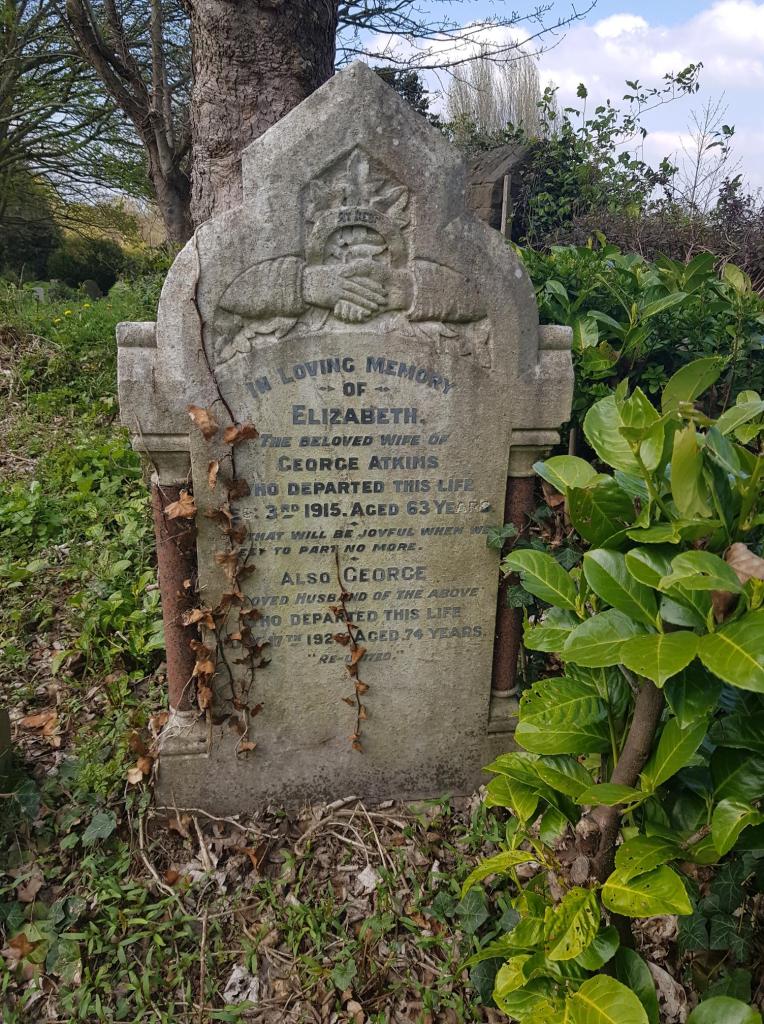
In recent years the hedge on the periphery of the cemetery has engulfed this headstone, so it was fortuitous that I was passing just after it had been trimmed and was able to take a photograph. A very elegant memorial, this headstone is full of funerary iconography and symbolism and tells us much about the couple’s relationship and religious faith.
The clasped hands is a symbol dating back to Greek and Roman funeral art. Interpretations of this symbol include the parting of a couple by death but also their reunion in the afterlife. In this example the hands are surrounded by ivy leaves which in turn represent friendship and immortality. The columns at either side of the inscription represent the entrance to heaven and the afterlife. So there is quite a lot going on here!
It would be fair to assume that the couple had a strong faith.
Their marriage banns were read at Christ Church but the marriage does not appear to have taken place there. Their first two children were baptised at the Faringdon Road Wesleyan Chapel where the couple worshipped and where they could possibly have been married.
By 1881 they were living at 7 Mount Pleasant, a short terrace of houses situated between Havelock Street and Brunel Street, lost beneath the 1970s development of the town centre. Originally from Birmingham, George worked as a brass finisher in the railway factory.
By 1891 George Elizabeth and their four children, Grace, John, Joseph and George were living at 92 Westcott Place. They would later live at 166 Westcott Place where Elizabeth died in 1915.
Elizabeth, aged 60 years, was buried in grave plot B3329 on December 8, 1915. George died aged 74 years at 49 Shelley Crescent (most likely Shelley Street) and was buried with Elizabeth on July 21, 1926. Elizabeth and George Atkins, reunited.
In December 1930 more than 200 men retired from the Great Western Railway Works, an event of such importance to warrant a detailed article in the first January edition of the North Wilts Herald published in 1931.
The names and addresses of those men forced to retire under the introduction of the 66 years age limit were recorded in appreciation of their long years employed in the Works. Men who had joined the company in the 1880s and 90s; men like Harry James Davis.
Harry James Davis was born in 1869, the eldest of Harry Edward and Louisa Elizabeth Davis’s 13 children. The family moved to Swindon when Harry was a baby and he grew up in the railway village.
Harry began a 7 year engine turning apprenticeship on his 14th birthday, October 16, 1883. Like all the apprentices at that time he started on a daily rate of 10d rising to 3/- in 1890 at the end of his apprenticeship.
He married Rose Ann Gibson at St. Mark’s Church on July 16, 1894 and the couple had two sons, Harry John and Cyril George. By the time of the 1901 census they were living at 118 Dean Street, which would remain their home until Harry’s retirement in 1931. By 1939 he was living at 94 Manchester Road and at the time of his death in 1954 he was living at 64 Beckhampton Street.
Mr Harry James Davis: Chargeman fitter of 118, Dean Street, served practically the whole of his 48 years in G Shop. He had charge of the work in connection with Didcot Provender Stores, and also hydraulic work from Swansea and Cardiff Docks.
For the last seven years he was in charge of the Central Boiler Station, and during that period he saw the whole of the loco type boilers for stationary purposes done away with and the latest mechanical chain grates and pulverised coal plants substituted.
Mr Davis belongs to a well known musical family and in his young days helped to start the Blue Band, now defunct. He began his schooling in one of the GWR cottages in Bath street. The central boiler staff presented him with a wallet of notes and a box of cigars.
Swindon Veterans of Industry – North Wilts Herald, Friday, January 2, 1931.
The grave of Harry James Davis and his wife, son and daughter-in-law.
Harry James Davis’s grave in the foreground. His parents are buried in the plot with the pink granite kerbstone surround close to the path.
Harry James Davis died in 1954 and was buried in grave plot D75A, just a stone’s throw from his parents. He is buried with his wife Rose Ann who died in 1930, his son Harry John Davis who died in 1961 and his wife Gwendoline Sarah Katherine Davis who died in 1972.
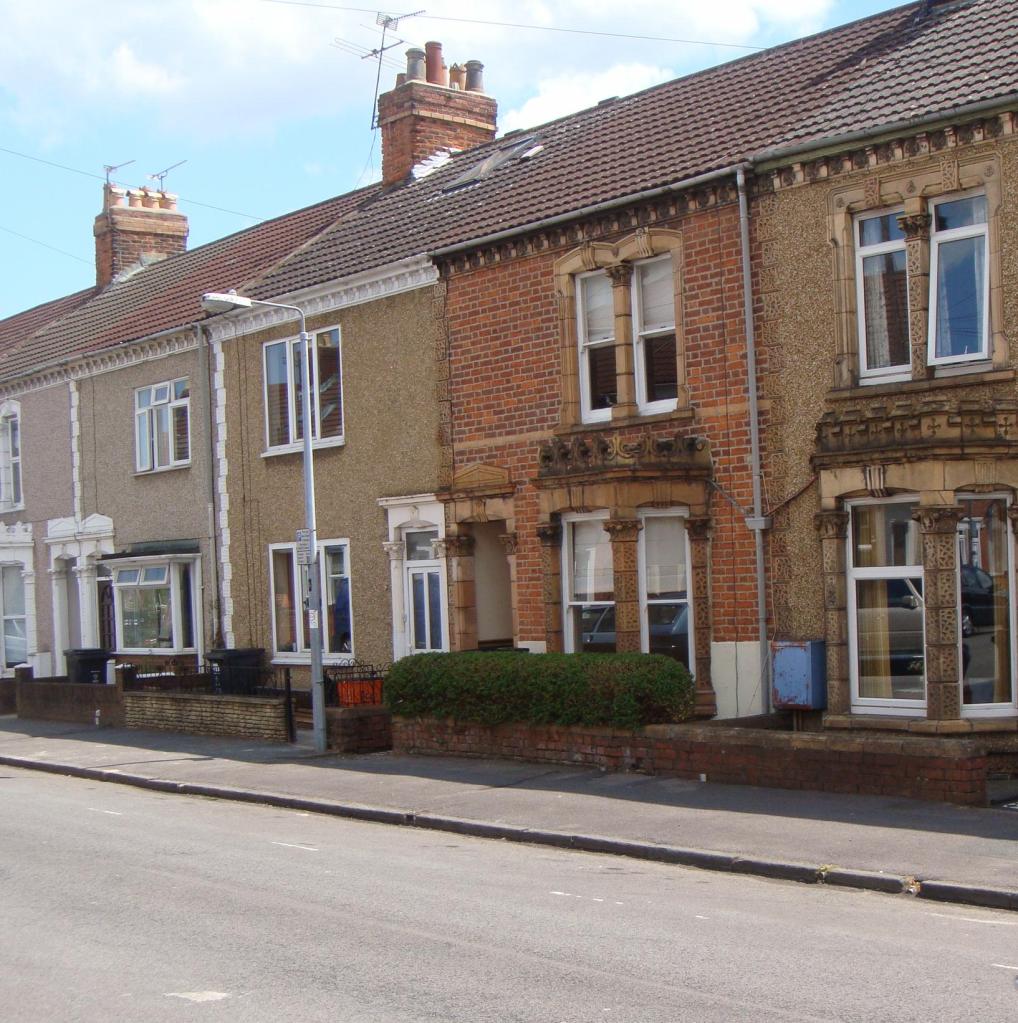
The architectural details on houses in Dean Street differ considerably even though it is basically another long road of red brick terrace houses – a familiar sight in Swindon. Building began in about 1890 with a number of Swindon builders working there, the first of them Thomas George in 1890 who was later joined by his brother John on further work in 1892 and 1894.
One Swindon family obviously enjoyed living there, within easy reach of the railway factory – and each other.
Harry Edward Davis was born in 1850 when his parents were living at New Bread Street, Bristol. He married Louisa Miller in 1868 and they soon moved to Swindon where their son Harry James Davis was born, the eldest of their 13 children. They first made their home in the railway village living in Taunton Street and Exeter Street between 1871 and 1881. In 1891 they were living at 15 Cambria Place, a small cottage built in the 1860s, with 10 of their children aged 8 months to 20 years old.
Sometime before 1901 they moved to 115 Dean Street where Harry was working as a Railway Storekeeper. They still had 6 children living at home aged between 12 and 25 years and Louisa’s widowed father James Miller – oh, and a lodger.
Three doors down their son Harry James Davis lived at No 118 with his wife Rose Ann and their two sons Harry John and Cyril George.
And when the family took up residence in Radnor Street Cemetery they were near neighbours again.
Harry Edward Davis died at his home in 1922 and was buried in grave plot D25A where he joined his daughter Louisa Maud who died in 1920. Harry’s wife Louisa Elizabeth died in 1924 and was buried with them.
Eldest son Harry James Davis died in 1954 and was buried in grave plot D75A, just a stone’s throw from his parents. He is buried with his wife Rose Ann who died in 1930, his son Harry John Davis who died in 1961 and his wife Gwendoline Sarah Katherine Davis who died in 1972.
Then just towards the back of this section alongside the chapel, Hard Edward’s son Wilfred Charles Davis lies in grave plot D45A. Wilfred died in 1964 and is buried with his wife Kathleen who died in 1968.
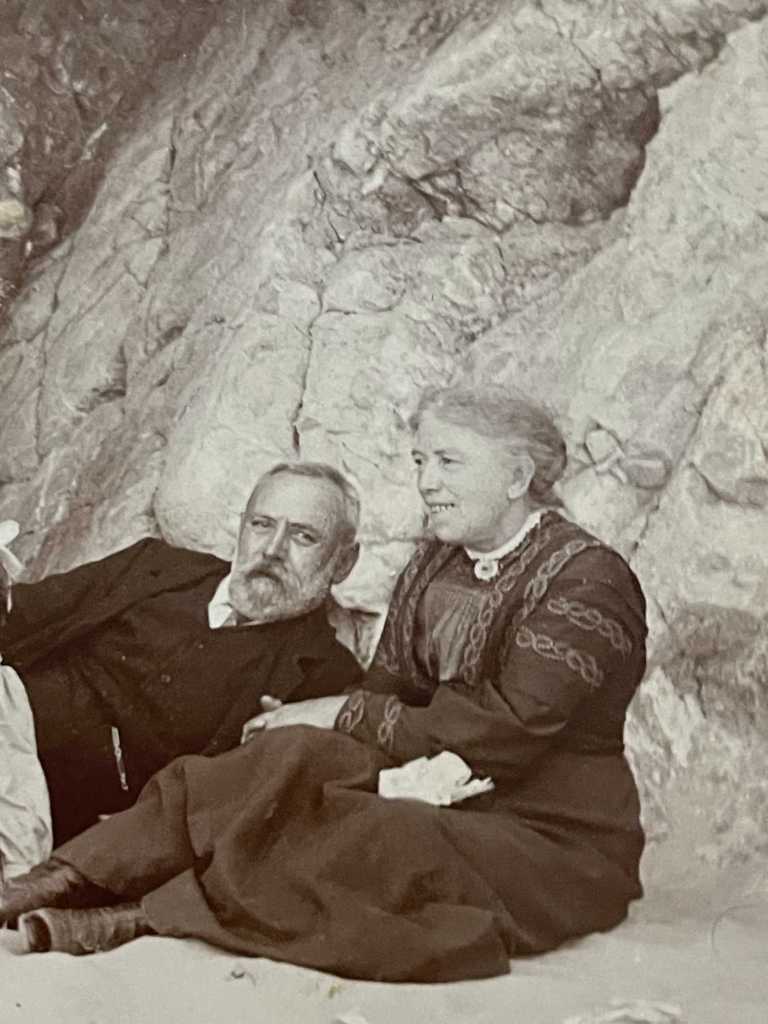
Harry Edward and Louisa Elizabeth. I rather think this family photograph was taken on TRIP – what do you think?
Two views of Dean Street named after William Dean Chief Locomotive Engineer at the GWR Swindon Works 1877-1902.
The grave of Harry Edward Davis, his wife and daughter.
Harry Edward Davis’s grave to the bottom of the photo and behind it that of his son Harry James Davis and his family.
When Joseph Horne returned from South Africa for a visit in 1931 the North Wilts Herald reported:
‘It has often been said that Swindonians can be found in almost every part of the globe.’
In 1894 Joseph Horne embarked for South Africa where he first worked as a carpenter in a goldmine and later lived in Johannesburg and the Transvaal. He was the eldest of five brothers who had at various times joined him in South Africa. At the time of his visit he was in business with his brother George in a general printing press they had established in 1914. Youngest brother William, a builder, was still living in Maritzburg in 1931. David had spent just three years in South Africa before returning to Swindon and a job in the GWR.
The adventurous Horne brothers were the sons of Herbert and Sarah Ann Horne who married at St. Martin’s Church in Birmingham on Boxing Day 1865. By 1881 they had moved to Swindon and were living at 14 Gooch Street.
How difficult must it have been to wave those sons off to South Africa? Did Herbert and Sarah Ann suspect they might never see them again? Perhaps they hoped their boys would eventually return home, and of course David did.
Herbert died in 1927 but Sarah Ann lived to see her eldest son Joseph on his return to Swindon in 1931. She died in 1934 aged 95 when the North Wilts Herald published another instalment in the Horne family history.
Believed to be Swindon’s oldest inhabitant, and certainly the oldest follower in the Borough of the Baptist faith, Mrs Sarah Ann Horne died on Friday at 26 Cheney Manor Road, the residence of her son, Mr. David Horne.
Mrs Horne, was 95 years of age, having celebrated her 95th birthday on 5 September last.
Death has given the finishing blow to her hopes of living longer thanher grandfather, who, having served in the Battle of Waterloo, lived to within five days of his 100th birthday.
Mrs Horne was active to the last and in full possession of all her faculties. In fact, she did her own mending without the aid of glasses.
Married in Birmingham
She was a native of Frome, and in December 1865, at Birmingham, she married Mr. HerbertHorne, who died at the age of 87, seven years ago. He was, in his time, the oldest railway guard in Swindon, being a link with the old days when, before the introduction of sandboxes, the guards had to be on the footplates and throw sand under the wheels of the engines.
They were married on a wage of 13s a week, and came to Swindon to live first in Gooch Street.
Mr Horne was a prominent official, and at one time the president of the Amalgamated Railway Servants’ Union, now the NUR.
On his retirement, they lived for 20 years at Lower Stratton, until nine years ago, when both cameto live with their son in Cheney Manor Road.
Mrs Horne prided herself on a wonderful memory, and used to recall an incident which occurred when she was a girl in Bath.
For a wager, a man sailed down the Avon in a tub drawn by swans. As he passed under Bath Bridge, the crowd rushed to the opposite parapet to see him. The strain was too great and the parapet gave way, resulting in several spectators being drowned in the river.
Old Age Pensioner
A recipient of the old age pension since its introduction, she saved all of it up until she had sufficient to buy the land in Radnor Street Cemetery for her grave.
She always protested that she would not “liecomfortable” at Stratton Cemetery which she claimed was damp, but that in the sand of Radnor Street Cemetery she would rest peacefully.
She was buried there, with her husband, in the grave she purchased for them both.
Therewere five children of the marriage – all sons and four of them today are in Africa. Mrs Horne also had 14 grandchildren, and 19 great grandchildren.
Her final illness lasted only a few days.
North Wilts Herald, Friday, 19 January, 1934.
Sarah is buried with Herbert in grave plot E8676 where they were later joined by their son David who died in 1954 and his wife Emily who died in 1956.
I wouldn’t wish to question the redoubtable Mrs Horne, but I don’t think the soil is ‘sandy’ in Radnor Street Cemetery.
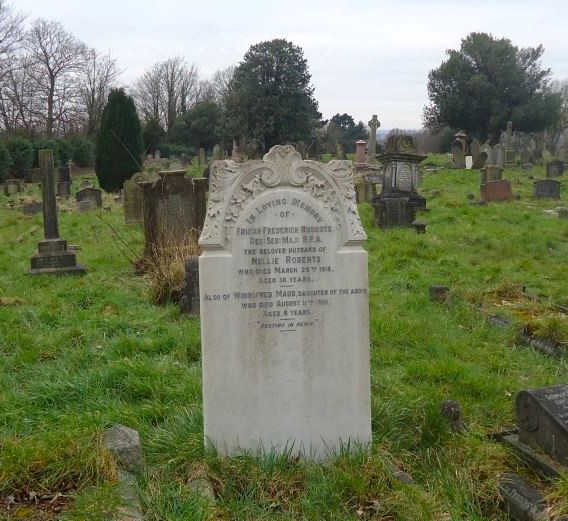
Friday Roberts joined the army in 1893. He was a little over 14 years old. His comprehensive records reveal he had a military career of almost 17 years spanning the South African war andthe Great War, the effects of which eventually killed him.
Friday enlisted with the Royal Field Artillery for a period of 12 years on December 27, 1893. He was 14 years and 4 months old and stood 5ft 2½ inches. He weighed 93lbs and had a chest measurement of 29 inches – smaller than the average modern day 14 year old. He had a fresh complexion, grey eyes, brown hair and indistinct tattoo marks on both forearms.
Friday served as a gunner before passing professional examinations and promotion to bombardier (corporal) rank. However in November 1898 he reverted back to a gunner at his own request. Promotion to Sergeant followed in 1902.
Friday was posted to South Africa in 1897 where he served more than 4 years. He received the Queen’s South Africa Medal with clasps for Talana, Laing’s Nek, Relief of Ladysmith and Transvaal. He was then posted to India where he served a further 5 years.
In 1904 Friday re-engaged to complete 21 years service. It can only be assumed he liked the military lifestyle. But then everything changed. In 1907 Friday was discharged from the army at his own request after nearly 14 years service. Perhaps he’d had enough of the army life after all, seen enough of the world to last him a lifetime. Perhaps he just wanted to settle down to civilian life with Alice, the women he married on February 23, 1907 at St. John’s Church, Woolwich. Their daughter Winifred Maud was born a year later, but sadly Alice died soon after her birth.
In 1910 he was living in Oldham, Lancashire where he married Nellie Vaughan and where their daughter Aileen Vera was born in 1912.
By 1914 Friday had a job as an Officer for the RSPCA and was living with his wife and two daughters at 81 Stafford Street. He probably hoped that his days as a soldier were over, but he was still on the reservist list and so with the outbreak of war in 1914 he re-enlisted with his old regiment and joined the BEF in France.
He was wounded within weeks of his arrival and was invalided back to England, but not for long. He soon returned to France and served two more years.
RSM Friday Frederick Wright Roberts was discharged on October 6, 1917 as physically unfit for military service, suffering from Tuberculosis of the Larynx.
The Medical Board confirmed his illness was a result of active service and exposure to infection during November 1916 while fighting near Vimy Ridge. His condition was described as permanent and requiring further treatment.
He was awarded a pension; 48 weeks at 42/6 from October 24, 1917. Five months later he was dead.
Friday is buried in plot E7368 with his little daughter Winifred who died in 1916 aged 9. His details appear on the Commonwealth War Graves website.
In 1913 the Swindon Ratepayers’ Association met to discuss how the local authority was handling some major projects, including the Swindon (Radnor Street) Cemetery.
Generally speaking things seemed fairly satisfactory. Thirty years after the opening of the cemetery they were happy to reveal it was ‘practically’ free from debt.
There was one last comment in reference to the amount originally paid for the 11 acres of land purchased on which to lay out the cemetery. In 1881 the land was owned by entrepreneurial local businessman (and Local Board Member) James Hinton who was always quick to recognise a profit making opportunity.
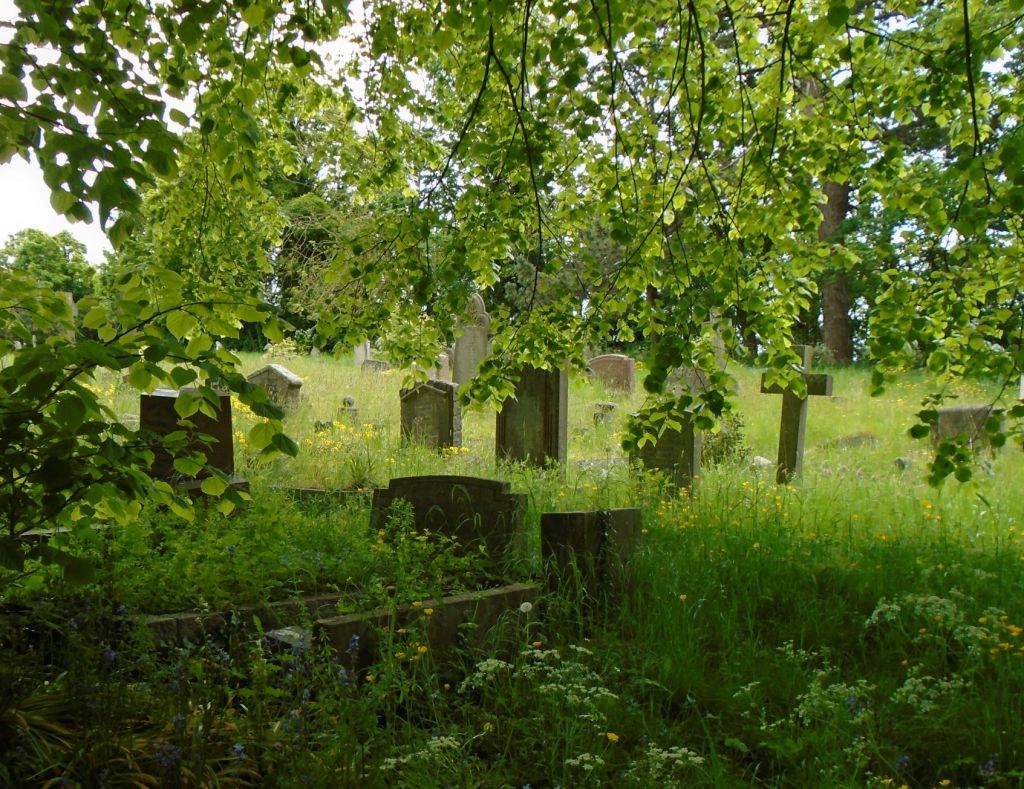
A ‘working’ cemetery is one thing, a closed one quite another. A working cemetery has expenses but it also has an income. Unfortunately, Radnor Street Cemetery, closed to new burials for some 50 years, generates no income and in these straightened financial times there is little public money left for maintenance.
There is a lot of excitement within Swindon Borough Council about the imminent opening of the ‘new’ museum in the Civic Offices, Euclid Street. In this new (and very welcome) climate of heritage appreciation perhaps Radnor Street Cemetery will soon bask in the glory too.
Municipal Matters
Meeting of the Swindon Ratepayers’ Association
A meeting of the Swindon Ratepayers’ Association, convened to discuss three questions of absorbing interest to those concerned in the government of the town – the Poor Law administration, the derelict canal, and the various undertakings of the Council – was held at the Town Hall on Wednesday evening. Major F.G. Wright presided…
As regards the Swindon Cemetery, it is now practically free from debt, the annual charges for interest and sinking fund on a small out-standing loan only amounting to about £27 per annum.
As you are aware, we have purchased land for a new cemetery at Whitworth Road, which is now being laid out, and which will be ready for use probably by next spring. Before the new cemetery was purchased, the loss on the Swindon Cemetery every year used to amount to something a ½d rate. Last year, nothwithstanding the increased charges arising out of the purchase of the new cemetery at Rodbourne, instead of being a loss, there was a slight profit after paying all working expenses and interest and sinking fund charges. This was brought about by a revision on the scale of charges in the Swindon Cemetery, etc., the income for the past year on the Swindon Cemetery being no less than £923, as against £621 in 1910, £638 in 1911 and £856 in 1912. Of course, this will not continue in future years, as there will be additional working expenses when the new cemetery is opened.
Only 10 acres of land are at present being laid out at the Whitworth Road Cemetery, but this is expected, will last at least 20 or 30 years. The total area of land purchased in 35 acres, and theremainder will be let out and will produce an income. The Swindon Cemetery will also last for a great many years yet. The purchase money paid for the 35 acres of land at Whitworth Road was £3,016, while the purchase money for the 11 acres at Swindon Cemetery was £3,970. I leave you to form your own opinion on the favourable nature of these transactions…
Extracts from the North Wilts Herald, Friday, October 31, 1913.
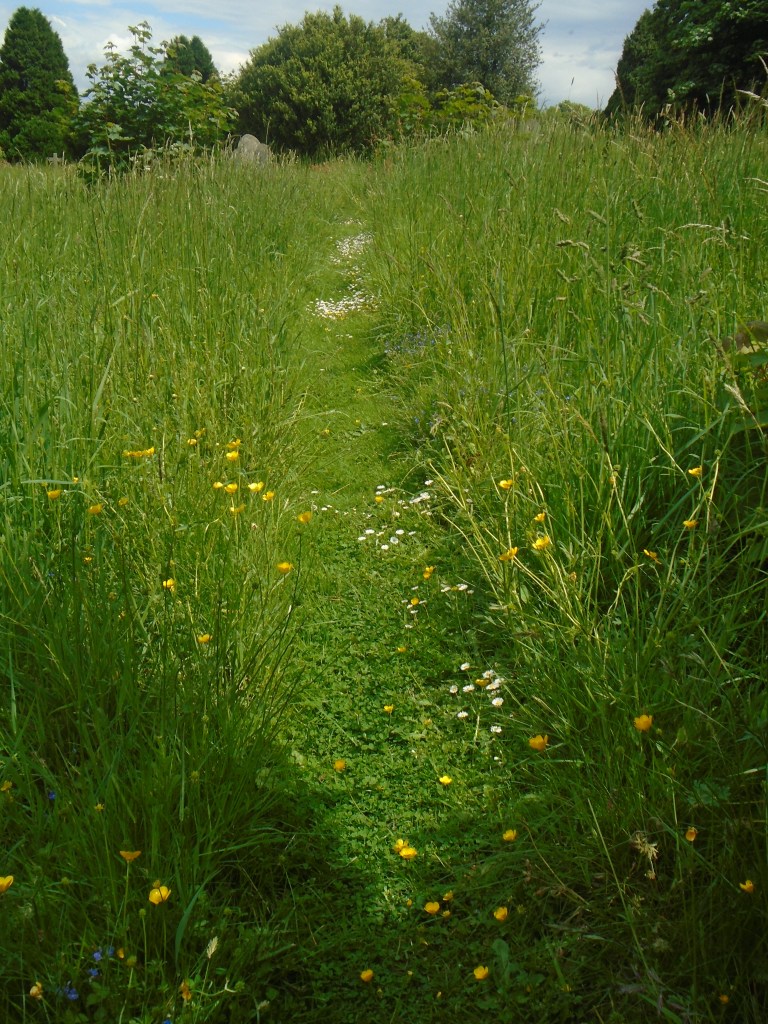
Cemetery volunteers at work clearing the paths
Cemetery volunteers maintain mown paths creating access to the Commonwealth War Graves Commission graves.










 Radnor Street Cemetery