The Order of the White Feather was founded at the outbreak of war in August 1914 by Admiral Charles Penrose Fitzgerald. The campaign encouraged women to present white feathers, a potent symbol of cowardice, to men not wearing uniform. The campaign was incredibly successful, even as the details of the death toll and casualties became widely known.
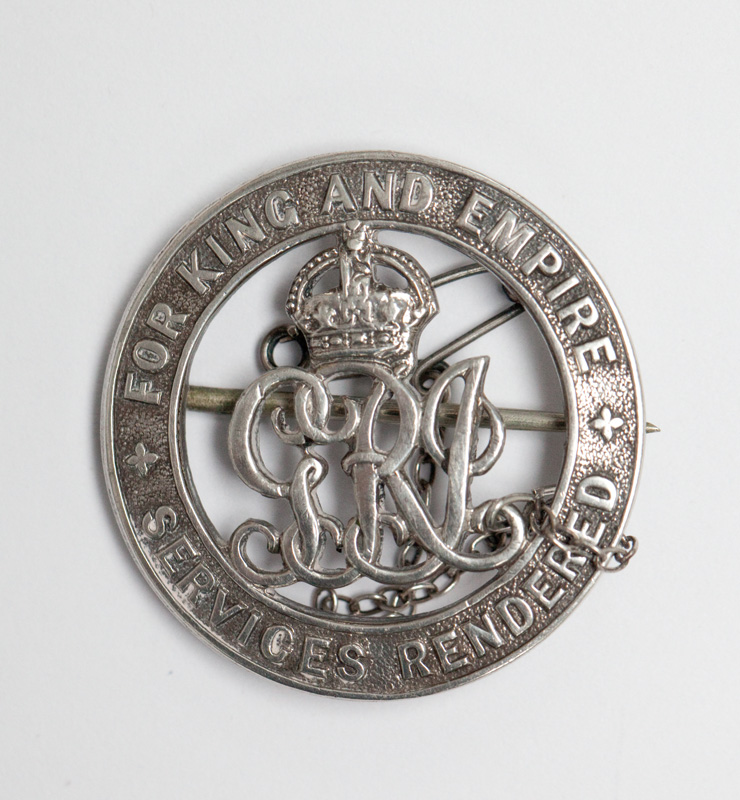
The practice seems to have carried on for the greater part of the war and in September 1916 the Silver War Badge was issued for men to wear who had been honourably discharged due to wounds or sickness.
Why did women subscribe to this propaganda? The writer Compton Mackenzie, who served with British Intelligence in the Eastern Mediterranean, said ‘idiotic young women were using white feathers to get rid of boyfriends of whom they were tired.’
For some it was no doubt misplaced patriotism. For those who had lost husbands and loved ones it might have been a reaction to their grief.
One such young woman who handed out white feathers on the streets of Swindon did so because her four brothers were all serving soldiers.
Alice Elizabeth Godwin grew up at 21 Redcliffe Street, the daughter of Charles Thomas Godwin, a furnaceman in the Works, and his wife Clara Annie. You can imagine the daily dread the family experienced with four sons in service and how a young, impressionable girl might have been coerced into joining the white feather campaign.
But it would be the experiences of one of her brothers which ultimately changed her mind.
She was at the station in Swindon seeing him off back to the front at the end of his leave, when he broke down, weeping and shaking uncontrollably. It was seeing him so terrified that made her cease her practise of handing out white feathers. Thankfully, all four brothers returned home.
Propaganda poster
Charles Thomas Godwin died on November 8, 1914 and was buried in grave plot B3265. His wife Clara Annie died in 1939 and was buried with him. Their son Albert Howell, who had served in WWI, died in 1940 and joined his parents. In 1985 Albert’s wife Clara Agnes was buried with her husband and his parents. In 1993 the ashes of their son Arnold William Godwin were interred in the family grave.
In the beginning Gorse Hill barely stretched from the railway line to St. Barnabas’s Church with the Duke of Edinburgh pub and Baptist and Methodist Chapels in between. Taking its name from Gorse Hill House which once stood on Cricklade Road, early development was called the Gorse Hill Farm Estate and began in about 1885.
It is probably fair to say that Edmund and Elizabeth Bramwell were an aspirational couple. Edmund was a fitter and turner in the Great Western Railway Works, a skilled occupation in which he had served a lengthy apprenticeship. Elizabeth had worked as a school mistress, a career she could no longer pursue after her marriage, a situation that didn’t alter within the teaching profession until 1944.
Edmund Bramwell and Elizabeth Burroughs married at Christ Church, Swindon on December 23, 1854. They both came from a railway family. Edmund’s father Joseph was a mechanic as was Elizabeth’s father Richard.
The couple made their home in Reading Street where their four daughters were born; Frances in 1856, Mary in 1859, Clara in 1866 and Maud in 1870.
Frances and Mary trained as draper’s assistants. By 1881 Mary had left Swindon and in subsequent years worked in large stores in Bath and Birmingham. Clara and Maud became teachers. Clara began her teaching career working as a 14 year old pupil teacher. By 1891 she was headmistress at one of Swindon’s local board schools. Her sister Maud also worked as an Assistant School Mistress.
Swindon Suffragette Edith New was some ten years younger than the two teaching Bramwell sisters. In 1891 she was also beginning her teaching career as a 14 year old pupil teacher in Swindon. By 1908 she had left Swindon and teaching and had joined the women’s suffrage movement as a paid organiser for the Women’s Social and Political Union. Edith fought in the Votes for Women campaign, serving several terms of imprisonment and going on hunger strike. She eventually returned to teaching and devoted her life to fighting for women’s rights within that profession.
Edith New
Perhaps the sisters followed the news of Edith’s involvement in the suffrage campaign, which featured in the Swindon Advertiser on several occasion. Perhaps they had known her when they were all setting out on their teaching careers.
Draper’s Assistant Frances married in 1885, ending any career progression she might have had. She briefly moved away to Portsmouth where her husband was a fitter in the dockyard and where her son Edmund was born, before returning to Swindon by 1890.
Maud married in 1896 and Clara married in 1901 and in so doing sacrificed their teaching careers. Clara’s status as Headmistress was not even mentioned on her marriage certificate.
Elizabeth Bramwell died in 1907 and was buried in grave plot D87 with her brother Samuel Burroughs, a boilermaker, who had died five years previously. Her husband Edmund died in 1910 and was buried with her. Mary, the daughter who spent a lifetime working in the drapery business, eventually returned to Swindon. She was buried in the family grave on January 18, 1911.
Frances died in 1915 and is buried with her husband in grave plot B3327.
Clara died in 1909 and is buried alone in grave plot E8626B
Maud died in Swansea in 1957.
After a life time teaching in London, Edith New retired to Polperro in Cornwall where she died in 1951.
On Wednesday January 14, 1925 Sampson Birkby bought half an ounce of tobacco, a box of matches and half a pint of bitter at the Carpenter’s Arms, Gorse Hill. At 2.30 pm he left the pub and was never seen alive again.
Five days later the Advertiser published an account of his disappearance. Described as 62 years of age, 5ft 6ins tall with a pale complexion and a grey moustache, Sampson Birkby was a charge hand coach body maker at the GWR Works.
On the day of his disappearance he had returned home for lunch at 76 Dean Street where he lived with his wife Alice, his married daughter, son in law and young grandson.
Sampson called in at the Baker’s Arms near the GWR factor entrance on his way back to work. Reminded that he would be late, he hurried out, but as was later revealed, he did not clock in, but instead walked to the Carpenter’s Arms at Gorse Hill.
Later that evening one of his workmates called in on Alice Birkby to tell her Sampson had not checked in for work. The worried family immediately reported him missing.
Nearly four weeks later Sampson’s body was pulled out of the river at Buscot Weir by Samuel Kemble, a lock keeper employed by the Thames Conservancy at St. John’s Lock, Lechlade.
How did Sampson Birkby, described as being of a happy disposition and without any financial worries, end up drowned in the river at Lechlade?
Sampson was born in Hunslet, Yorkshire in 1862. By 1891 he had moved to 47 Cambria Place, Swindon and a job in the railway works. Ten years later he and Alice were living at 37 George Street with their two year old daughter Edith and 14 year old May Beswick, described as ‘adopted.’
Evidence suggested that Sampson, although not especially talkative, was a social man. A member of the High Street Workingman’s Club, he was an enthusiastic amateur photographer and a keen fisherman.
Giving evidence at the inquest, his son in law, George Bridgeman told how Sampson had been suffering from giddy fits during which he staggered and fell if someone did not support him.
Mr A.P. Ross Ormiston, the Coroner for North Berkshire, supposed that finding himself late for work, Sampson had decided to catch the bus to Lechlade and plan the fishing trip he had previously discussed with his son in law.
Summing up, the Coroner suggested that Sampson had suffered one of these giddy fits whilst walking along the tow path and had fallen into the river. He returned a verdict of ‘Found drowned’ and expressed his sympathy with the relatives of the deceased.
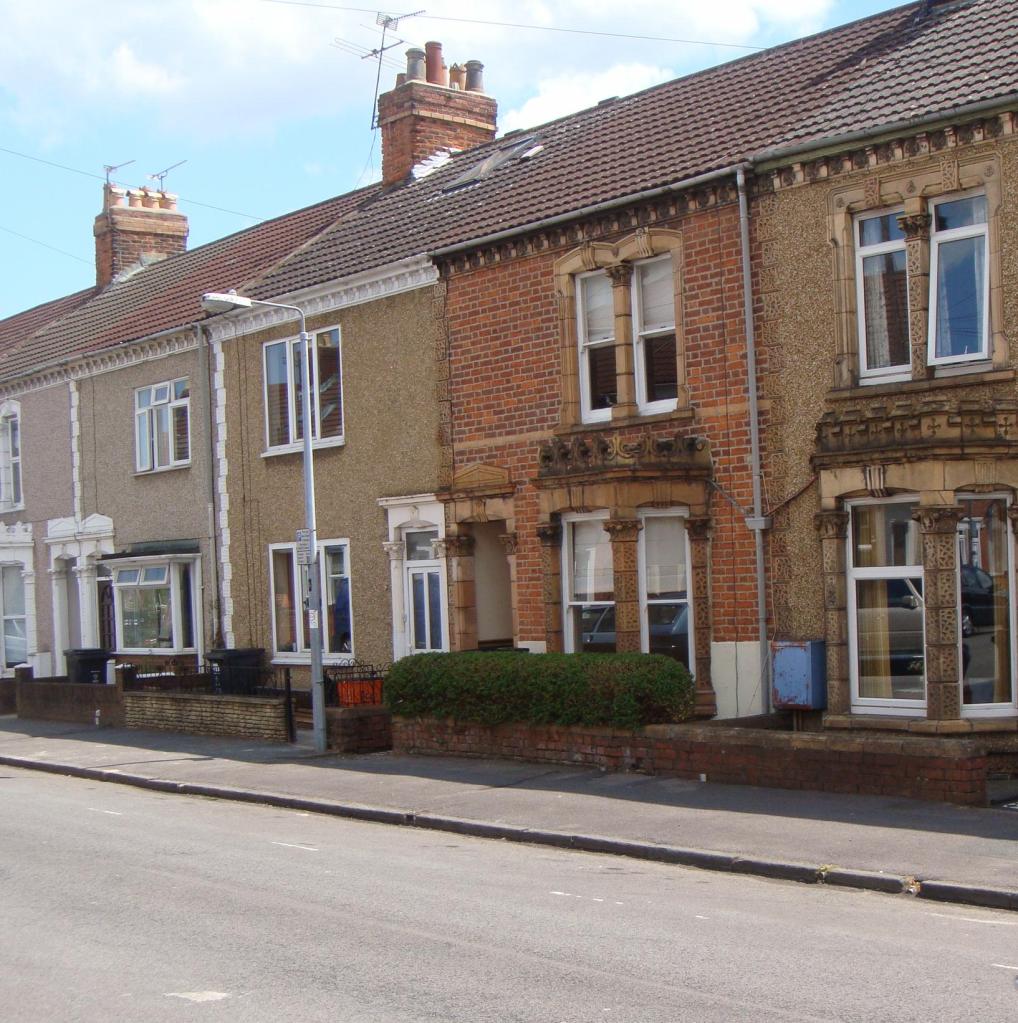
Houses on Dean Street
Sampson Birkby was buried on February 14, 1925 in grave plot D892. His wife Alice died just seven months later and was buried with him. The cremated remains of their son-in-law George were buried with them following his death in 1983 and their daughter Edith Annie when she died in 1986.
Like so many other town centres, Swindon’s has lost its way. Built on a mid-Victorian industrial new town model, its retail heyday is long past and even the big High Street chain stores that arrived a century later have also gone.
In 2006 the Rodbourne Community History Group published Walk Down the Lane, a celebration of the enduring commercial viability of their neighbourhood where business has continued to survive and thrive for more than 140 years.
Take, for example, 178 Rodbourne Road on the corner of Jennings Street, opposite the Dolphin. In 2006, at the time Walk Down the Lane was published, it was a Tool Hire Centre. By 2009 MotoShop had recently closed and the shop was boarded up, available to rent, but this premise in such a prime location wouldn’t remain closed for long. In 2012 it was operating as The Furniture Box and four years later the Second Skin Tattoo parlour. Today it is the Beauty Base – Salon and Nail Academy.
Number 178 Rodbourne Road was built in 1884 for Mr T. Phipps and by 1891 the grocer’s shop and accommodation above was occupied by Charles Baghurst and his wife and their large family of eight children. On the census returns of that year Charles states his occupation as both carpenter and grocer. His wife Annie is also credited with the job of grocer as it was probably she who did the lion’s share of the work in the shop while Charles was employed full time in the Works. By 1901 the family had moved on and John and Elsie Wise had taken over.
Charles and Annie Baghurst moved first to 1 Milton Road and later to 220 Country Road where Annie died in 1908 aged 56 years. Just five months later her 19 year old son Harold Fawlk Baghurst died. Charles later moved to Euclid Street where he died in 1919 aged 65. Annie, Charles and Harold are buried together in Radnor Street cemetery in grave plot D1466.
178 Rodbourne Road – Beauty Base – Salon & Nail Academy
published courtesy of Rodbourne Community History Group
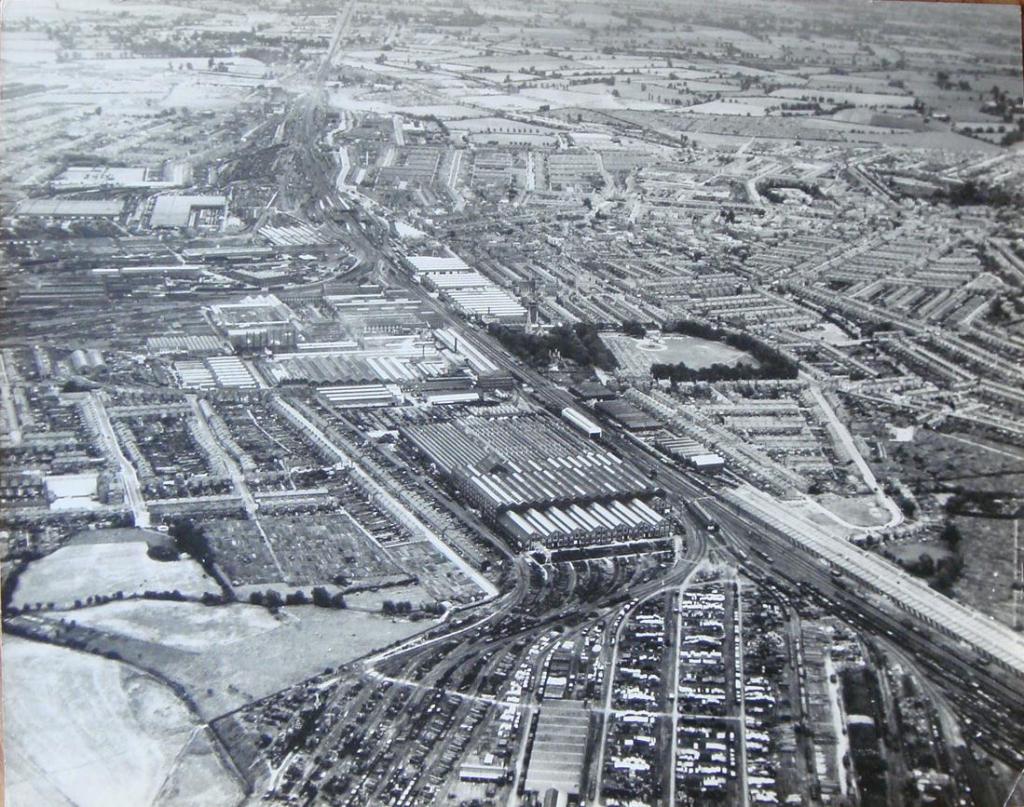
This Saturday you’ll find Rodbourne a busy place, as it is most Saturdays. The big attraction is the McArthur Glen Designer Outlet Village housed in the former railway works building. Rodbourne was a busy place back in the day as well and in this account of a fatal accident on the railway line you get a glimpse of the area as it was nearly 100 years ago.
Mr G. Brown, district organiser for the NUR, tried to establish if a shortage of manpower had contributed to the accident, but David Wirrell did not grasp this lifeline. You can’t help but wonder how the poor man coped in the aftermath of the accident.
Knocked Down By An Engine.
Swindon Man Dies From His Injuries.
Leg Severed
A verdict of accidental death was returned at the inquest on Tuesday attending the death of Stephen Amor, 63 of 101 Linslade Street, Swindon, a GWR employee, who was knocked down by an engine near the Rodbourne Road siding, and who died shortly afterwards in the Medical Fund Hospital.
The jury returned a rider that David Wirrell, who was with deceased at the time of the accident and who was acting as “look-out” man, committed an error of judgment in using his brook instead of devoting all his time to “looking out.”
Mr G. Brown, district organiser for the NUR watched the proceedings on behalf of the local branch of the Union, and Mr A.T. Tyrrell was present with Mr Hannington representing the GWR Co.
Mrs Isabella Amor widow of the deceased, said he had been in good health during the past 39 years.
Henry Harold Greenwood, chief surgeon at the GWR Medical Hospital at Swindon, said when admitted he found deceased was suffering from haemorrhage and compound fracture of the right ankle. Amor was taken to the hospital immediately after the accident.
In the course of his evidence, Mr Greenwood paid a very warm tribute to the St. John Ambulance Association for their valuable assistance in rendering first aid.
A Marvellous Escape
David Wirrell, switch cleaner, living at Devonshire Villas, Rodbourne Cheney, said that on Saturday morning he started work at 7.30 with Amor. He first got his tools and started cleaning switches.
“I was the look-out,” he continued, “and proceeded as far as the third compound, which is nearly opposite Rodbourne Road Signal Cabin. We were proceeding from one point to the other, and I looked up to see if anything was coming from the factory, from where most of the traffic comes in the morning.
“There was nothing close to us in that direction, and so I stepped over into the road and gave a few strokes with the broom looking out at the same time.
“When I looked round in the opposite direction to the factor I saw an engine was close upon us, within about four feet. I tried to give the alarm, but the engine pushed me down and ran over me, without causing injury.
“I got up, ran to my mate Amor and found him badly injured. I spoke to him, but he never answered.”
Witness said that he had been about 20 years in his occupation, and always worked towards Swindon Station.
The Coroner: Are you always the look-out man? – No. Every other day. It is my turn on Saturdays.
Don’t you look out both ways? Yes, I do.
Witness explained that Saturday’s incident occurred in a minute or so, and he was not quick enough in looking behind.
There were always two men on the job and sometimes three, but the third man had been ill for some weeks.
Heard No Whistle
Replying to the Coroner, he said that he heard no whistle.
The Coroner: Was a train passing? I believe one had previously passed along the main side.
As a general rule witness looked one way first, but the engine came from another and it all happened in a minute or two.
Mr Brown (who was representing the NUR): As a look-out man, shouldn’t you confine yourself to looking-out? – Yes.
Mr Brown: Is there a signal at that point? – Yes.
Did you observe the signal? No. I can’t say whether it was on or not.
Witness added that the points in question were worked by a lever, and the signals were not of much use to them.
Mr Brown: Did the fact that there were only two men cause you to do additional work?
Witness: No, that made not a bit of difference to looking out.
He heard no warning from the driver of the train.
Mr Brown: Had there been three men would the look out man have to do more work? No.
John Thomas Thorpe of 5, Deacon Street said that at about 8.15 he was standing on the engine line at the siding opposite the Rodbourne Road cabin when he saw an engine approaching the compound or double-switch. He then saw two men either knocked down or fall under the engine.
He ran to where Amor lay and found his leg severed. Hen then went to the AE Shop for the ambulance men.
In answer to the coroner, witness said the men had their backs to the engine.
A Slow Speed
Edward Price, 15 Beatrice Street, locomotive driver, said he was driving a crane engine from the subway to the loco yard in the factory sidings. About 8.15 he was informed that he had run over two men in the compound near Rodbourne Road signal box. There was a signal post with a loop signal, and that was off for him to proceed. He was going at two miles an hour, and at that pace he could have stopped instantly if he had seen anyone on the line.
The Coroner: When shunting, who gives you orders to proceed?
Witness said that he was given orders at the subway. He was also guided by the signal. He touched his whistle just before or as he passed the signals. He was in charge of the engine. When shunting he was given orders by the shunter, but in the present case he was not shunting.
There was a fireman and a shunter in the engine besides himself, but he went across the footplate and looked at the signal.
The Coroner: You did not see anybody on the line?
Witness: No, I saw no sign. He could see nothing from his side, he added.
The Coroner: When people are cleaning points you know that they are guarded – I know they are supposed to be guarded.
Mr. Brown. You were working round a curve? Yes.
Was there anything on the next set of rails? Yes, a number of tenders.
Heard People Shouting.
Herbert Arthur Nash, 173 Rodbourne Road, fireman to Driver Price, said that when they were approaching Rodbourne Road signal box they were keeping a sharp look-out for signals in case they were put at danger against them. Traffic was clear as far as he could see. The driver blew his whistle and went on to the compound. He saw no-one, and was not aware anyone had been knocked down until he heard someone shouting to them to stop. They stopped immediately.
The Coroner: Were you going slowly? – About 2 miles an hour – we were going at a slow walking pace.
Albert William Dew, 6 Spring Gardens, a shunter, said he was in charge of shunting on an engine and crane. He was riding on the left-hand footplate, and was looking out, but saw no-one in the road, as they came round the left-hand curve.
Summing up, the Coroner said that the man who had been killed was working with another man whom they had had as a witness. The man who was not run over was supposed to have been on the look-out for his mate, who was cleaning points. According to his own evidence he was not carrying a flag or horn as he should have done. The cleaners were supposed to be guarded by “look-outs” and the jury would have to determine whether the man was guilty of criminal negligence. His duty was to obey the rules.
Mr R.G. Hannington, manager of the locomotive department, expressed, on behalf of the GWR Company, his very deep sympathy with Mrs. Amor and relatives and his very great regret at the occurrence.
North Wilts Herald Friday April 30, 1926
Rodbourne and the Swindon railway works
Stephen Amor, aged 63 years, of 101 Linslade Street and killed on the GWR Line, was buried on April 29, 1926 in grave plot D819. Isabella Amor died 10 years later. She was buried with her husband on April 25, 1936.
Looks like we might all see some rain today. But spring is just around the corner and our guided cemetery walks will begin again at the end of this month.
The Spring walks are scheduled for:
March 31, April 28 and May 26.
Summer walks are yet to be arranged but our Autumn walks are already in the diary.
September 1 and 29 and October 27.
Our Remembrance Day Service is Sunday November 10.
Well, what can you expect from a typical guided cemetery walk?
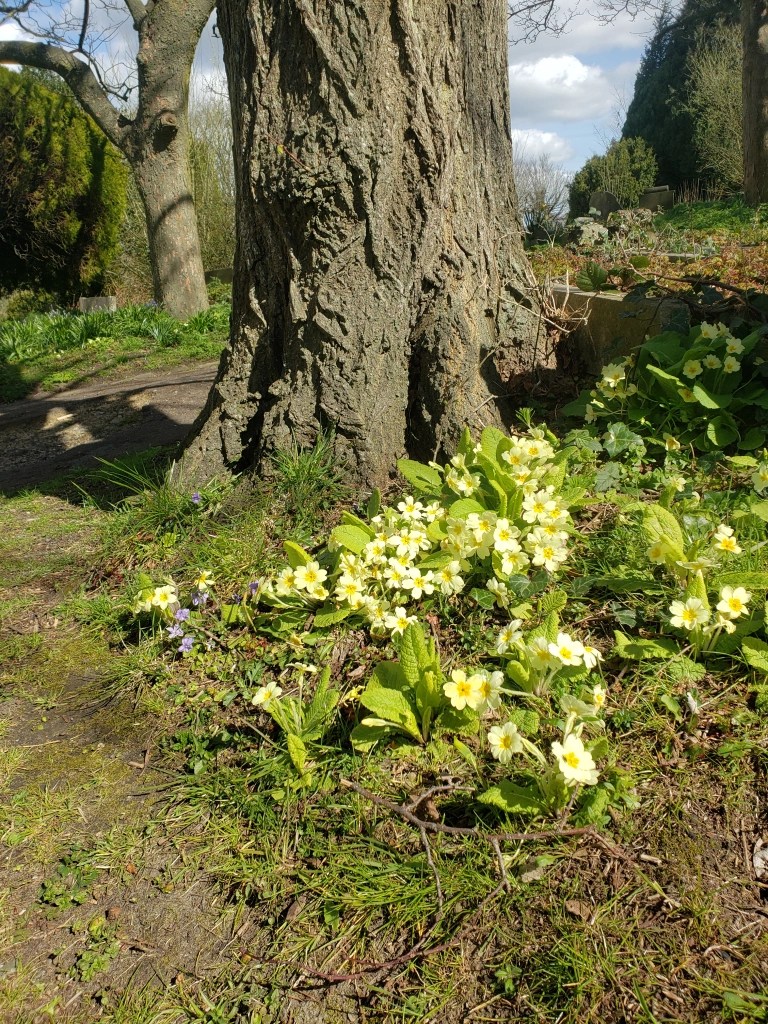
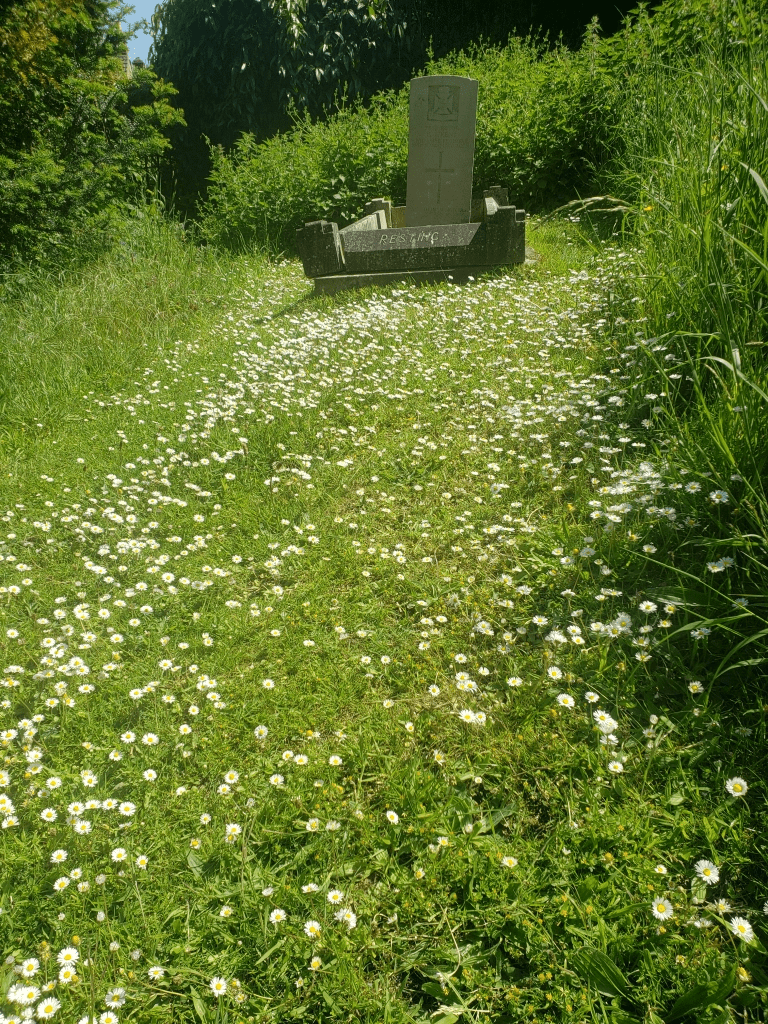
A gentle meander through 11½ acres of our picturesque Victorian cemetery. Our CWGC volunteers will tell you about their work to maintain the war graves and the incredible stories they have discovered. Learn about the people who made Swindon; from the boilermakers to the businessmen. Hear about the women who contributed to every aspect of life in Swindon from the home, the factory floor and the magistrates bench! This year we will have even more stories to tell.










 Radnor Street Cemetery