War Graves Week – Sapper Percy Harold Comley

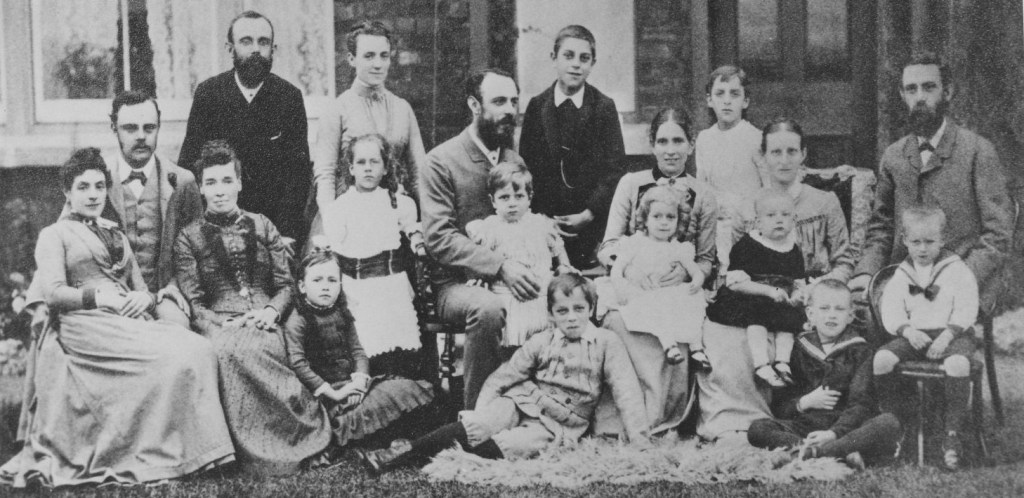
Mary Elizabeth Hutchings and Percy Harold Comley are pictured (middle row right) at a family wedding in 1914.

Saturday May 11 sees the launch of the annual CWGC War Graves Week 2024. Radnor Street Cemetery friend and colleague Mark Sutton spent a lifetime devoted to remembering those who served in WWI.

Our thoughts today go out to those parents who lost a son, and in many tragic cases, more than one. But, Albert and Mary Ann Comley were not to know their youngest son had been killed in action.

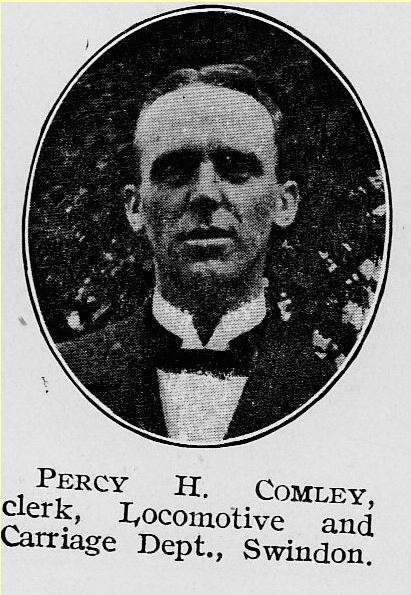
Percy Harold Comley was born on August 12, 1889 and began work as a 14 year old clerk in the GWR Works. He enlisted on November 24, 1915 and was put in the Army Reserve. He was mobilized on January 5, 1917, a Sapper in the Royal Engineers serving with the 2nd Light Railway Operating Coy.

He had married Mary Elizabeth Hutchings on October 26, 1916 at Christ Church. Less than a year later he was dead.

The charred remains of a telegram survive with his military records. It reads:

“Regret to inform you Officer Commanding 2 Canadian Casualty Clearing Station France reports 1st October 218815 PH Comley RE 1st October shell wound abdomen.”

Percy Harold Comley is buried in Lijssenthoek Military Cemetery Poperinge, Belgium. Mary Elizabeth never remarried. She died on February 4, 1947 at Weston-super-Mare.

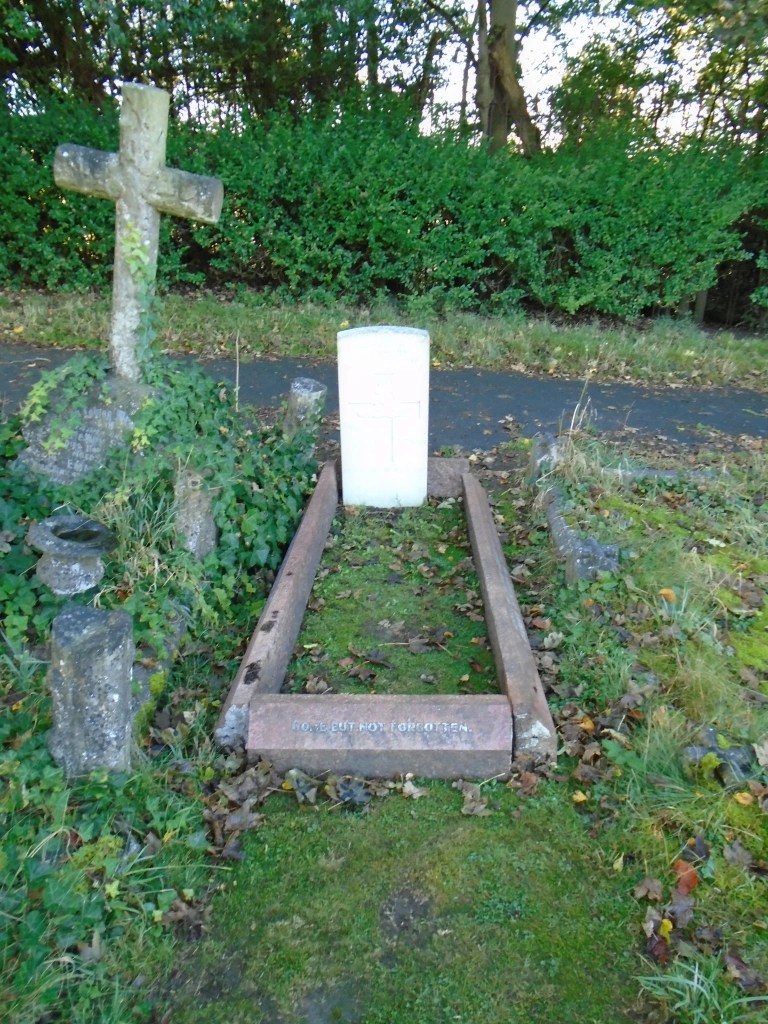
Today our volunteers continue Mark’s work, caring for the Commonwealth War Graves headstones and recognising those remembered on private, family graves. To date they have noted 50 such fallen heroes. For more information about the War Graves Week visit the Commonwealth War Graves Commission website.
Mary Ann Comley died at her home 8 Ashford Road and was buried on May 21, 1915 in grave plot E8044. Her husband, Albert Comley, a watchman, died at Guys Hospital, London and was buried with her on August 15, 1916.

James Kibblewhite – athlete

Another day, another churchyard…

Legend has it that amateur Victorian athlete James ‘Kibby’ Kibblewhite would race alongside the train from his home in Purton to the GWR Works in Swindon, an amazing feat, but just one of many achieved by the middle distance runner.

James Kibblewhite was born at Purton in 1866, one of agricultural labourer James and Caroline Kibblewhite’s seven children.  He began work as a Post Office Messenger boy but like his father and brothers later found employment in the Swindon railway works.  Following a full working week as a machinist in R shop, Kibby ran record breaking races at events across the country in a career that spanned eleven seasons.

In 1889 he won the Three Mile Open Handicap Race at the Stamford Bridge Ground, Fulham finishing in 14 minutes 29 3/5 seconds, 9 2/5 seconds faster than the record set by Calne born Victorian super star runner W.G. George in 1884.

“The running of J. Kibblewhite furnishes one of the most remarkable performances of the season,” reported The Times. “Quite recently he ran a very fast mile on the Paddington track, and his record for three miles on Saturday, at the annual sports of the Spartan Harriers, is fresh proof of his abilities as a runner.”

The following year ‘Kibby’ led the Spartan Harriers to victory in the Four Mile Inter Club Race at the Kennington Oval.  “He took the lead very early in the race and won by 200 yards in the fast time of 20 min 20 3-5 sec,” The Times reported.

Competing in Birmingham that same summer he ran the One Mile Race in 4 minutes 23 1/5 seconds in the Amateur Championships, beating W.J. Fowler of the Finchley Harriers.  Back at the Kennington Oval in 1891 Kibby came in first, 80 yards ahead of Spartan Harrier team mate W.J. Manktelow.  “J. Kibblewhite covered the distance in the excellent time of 26 min 14 4/5 sec, a most creditable achievement, especially when the nature of the turf is considered.”

Modern membership restrictions did not apply in the 19th century allowing Kibblewhite to compete for several different clubs and in 1892 he broke the record for the Four Miles Race at Stamford Bridge running for the Essex Beagles.  Towards the finish of the race the crowd broke into the enclosure to greet the runners as Kibby finished in 19 minutes 50 3/5 seconds with a three yard lead.

In 1894 James married Mary Bristow and the couple had four children.  Their three sons all ran competitively.

By 1895 James Kibblewhite’s running career had ended.  He sold some of his prizes, valued at more than £1,000 and with the proceeds built a home he named Spartan Cottages after his old club.

Image published courtesy of Duncan and Mandy Ball.

James Kibblewhite died in 1941 and is buried in the churchyard at St. Mary’s, Purton.  Today Kibblewhite Close in Purton is named in his honour.

With grateful thanks to Bob Townsend.

Honest John Arkell

Another day, another churchyard…

The Grade I listed church of St Margaret’s in Stratton St Margaret retains elements from the 13th century despite many later additions and a partial rebuild in the 19th century. The churchyard has also been extended several times, but I chose to take photographs in the oldest section around the church. Here I found the rather magnificent memorial to John Arkell, founder of the Kingsdown brewery, and his son Thomas buried with various members of their families in a large plot.

Last year the family brewery celebrated its 180th anniversary and with more than 80 pubs across Wiltshire, Gloucestershire, Berkshire and Hampshire, the Arkell name is well known. But it could have been a very different story.

Crippled by heavy taxation and an agricultural depression, John Arkell (1802-1881) gave up on farming and, with his cousin Thomas, left England in 1830 for pastures new.

The pioneering group, which included other members of the extended family, landed in New York during the winter of 1830/1, but their eventual destination was the uninhabited plains of ‘Upper Canada’.

Cousin Thomas stayed but John returned to England three years later. He established the Kingsdown brewery in 1843, and the rest, as they say, is history.

John died on October 21, 1881 aged 79 and is buried with his two wives and several of his children in the large family plot pictured below.

Lilium Lancifolium Warren – Forewoman

I’m on a roll with women who have unusual names. Meet Lilium Lancifolium Warren. And whilst census enumerators might record her name as Lilian L. she always took pains to spell it correctly and in full.

This is a Lilium Lancifolium (also known as the Tiger Lily). It is a plant native to Asia and the Russian Far East. Unscented and with distinctive orange and black flowers, the Lilium Lancifolium flowers in July. I wonder if Lilium Lancifolium’s parents were keen gardeners.

Lilium Lancifolium Warren was baptised at St. Mark’s Church on July 3, 1881, the daughter of Albert Warren, a goods guard, and his wife Marcellina.

Lilium Lancifolium began work as a French polisher in the GWR Locomotive, Carriage and Wagon Department on February 1, 1897 aged 17. During a long career in the Works she was recorded as Forewoman in 10A Shop in 1931. She never married, although her name occurs as a witness at several family weddings, spelt correctly and in full.

She appears on the 1939 List still working as a Forewoman Polisher in the GWR, living at 53 Princes Street with her niece Olive May Warren.

She died aged 85 in 1965 by which time she had moved out to the new suburb of Penhill where she lived in a bungalow in Somerford Close. Administration of her estate was left to her niece, Olive by then married, and her sister Catherine.

Lilium Lancifolium Warren was buried in grave plot C83 on January 31, 1965 where she joined her brother Herbert William who died in 1897 and her parents, Marcellina who died in 1921 and Albert who died in 1929.

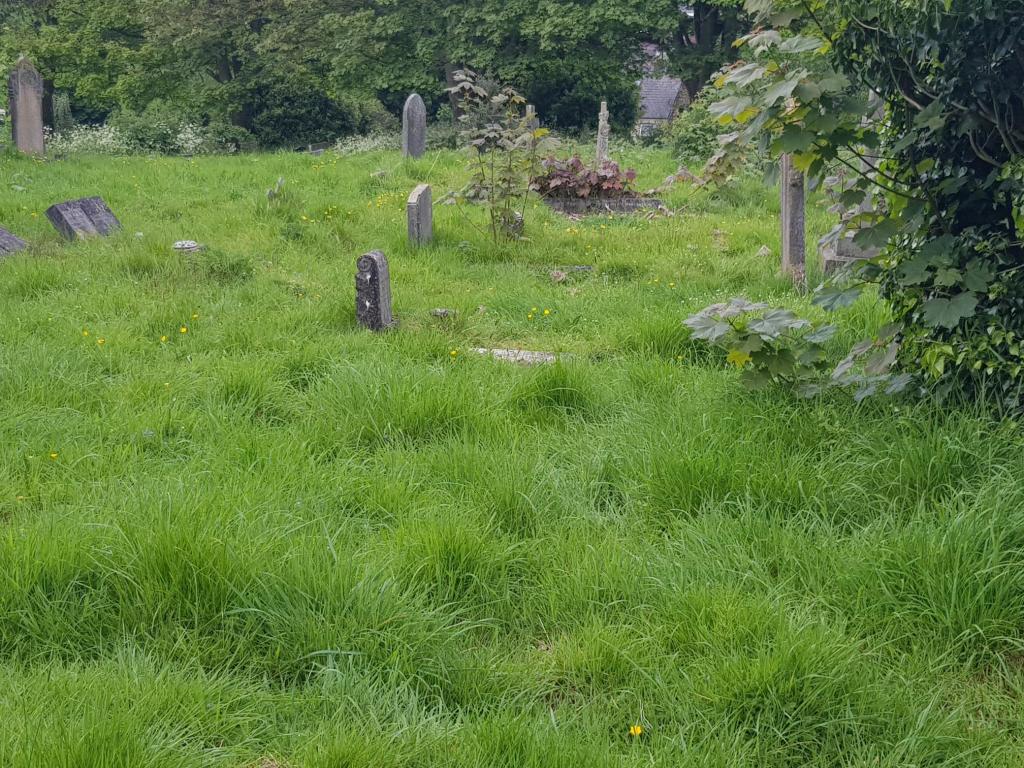
The Warren family grave is somewhere in this area. It may be an unmarked grave or it could be a kerbstone memorial that has sunk and become overgrown.

Henry Alfred Stanier – railway royalty

The Stanier family were railway royalty in Swindon.

William Henry Stanier entered the services of the Great Western Railway on November 7, 1864 in the Managers Office, Loco Works, Wolverhampton. He moved to Swindon in 1871 at the insistence of William Dean, Chief Locomotive Engineer and became Dean’s clerk and personal assistant, and became his right hand man. In 1879 he was appointed Chief Clerk Loco & Carriage Department and in June 1892 he was made Stores Superintendent. His son, William Arthur Stanier had a prestigious railway career. He became Assistant Works Manager at Swindon in 1912 and then Works Manager in 1920 before being head hunted by the London Midland and Scottish Railway where he became the Chief Mechanical Engineer. He was knighted on February 4, 1943.

But did you know that William Henry’s brother, Henry Alfred Stanier, also left Wolverhampton and moved to Swindon?

Photograph of Henry dated 1873

The third of Thomas and Ann’s four sons (they also had a daughter), Henry grew up in Wolverhampton. By 1871 the two elder sons, Thomas and William, were working as railway clerks while 18 year old Henry was a Canal Carriers clerk.

He married Caroline Annie North on January 21, 1879 and soon after moved down to Swindon. His employment records state that he re-entered the Great Western Railway employment on May 4, 1882 as a clerk in the Wagon Department, Manager’s Office. By 1901 the family were living at 12 London Street where Henry remained until his death in 1930.

Caroline Anne Stanier nee North – Henry Alfred’s wife

And I made a lucky find on Rootsweb – a photograph taken of the Stanier family outside William Henry’s home, Oakfield, Bath Road, Swindon, dated 1888. The four Stanier brothers are pictured as follows: seated left – Charles Frederick, standing – Henry Alfred, seated middle – William Henry and seated right – Thomas William.

Henry died on February 7, 1930 was buried in grave plot C1886A. His wife Caroline joined him there when she died just six months later.

The death occurred at Swindon, on February 7, at the age of 77, of Mr. H.A. Stanier, who, at the time of his retirement from the Company’s service, in May, 1917, was chief clerk in the carriage and wagon department. Mr Stanier took a keen interest in local affairs, and especially concerned himself with Poor Law administration. He will be remembered for much devoted work for the welfare of the inmates at the Stratton Institution. Mr. Stanier also took an active part in the work of the Mechanics’ Institution and the adult school movement.

Great Western Railway Magazine March 1930.

Henry and Caroline’s grave before our volunteers got to work

Rodbourne Remembers

In 2018 the Rodbourne Community History Group hosted Rodbourne Remembers, a joint project with St. Augustine’s Church, to honour the Rodbourne men who died in the First World War.

Of those who returned to Rodbourne after the war many suffered from poor health and died as a result of their military service. These are the stories of some of those men now buried in Radnor Street Cemetery, their graves attended to by our CWGC volunteers, the Eyes On Hands On team.

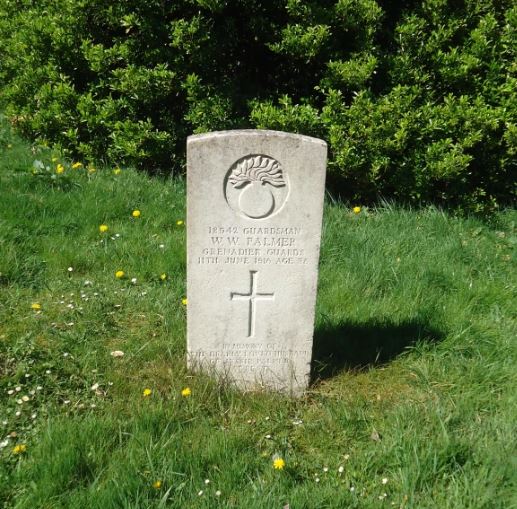
Walter William Palmer – Tell Them of Us

Charles Normandale and Walter George David Hughes

William Jasper Hall – DSM

William Jasper Hall pictured in uniform

William James Pitt – no longer physically fit to serve

The Rodbourne Community History Group meets at Even Swindon Community Centre, Jennings Street on the last Wednesday of the month. Find out more here

Another day, another churchyard – Christ Church

I am intrigued by the two spinster sisters with names that could come straight out of a Thomas Hardy novel, Tryphena and Hephzibah Evenden. 

Family historians researching the Evenden family have little information about these two unmarried sisters who left no descendants and apparently no photographs either. 

As is so often the case these women lived within a close knit family but when they died their life’s work disappeared into the ether. No doubt there were nephews and nieces who retained fond memories of their two aunts, but more than a hundred years later nothing is left of these women except a handsome headstone in Christ Church graveyard.

The two sisters were born in Wrotham, Kent the daughters of John Evenden and his first wife Naomi Frances. Hephzibah was christened on March 26, 1820 and Tryphena on July 16, 1826 in St George’s Church, Wrotham.

They first appear in Swindon on the 1881 census returns living at Ightham Villa, (a property named after their childhood home) Bath Road, but how did they end up here?

You would think that with such distinctive names it would be easy to track them through the census returns. In 1841 Hephzibah is living with her sister Ruth and brother John in Wrotham where he works as a grocer. In 1851 she is visiting the Leney family in Bow Road, Wateringbury while Tryphena is at home in Greenhithe, Swanscombe with her father, his second wife Sophia Sarah, her grandmother Elizabeth Evenden and three servants. 

I can’t discover what the women’s father did for a living as he describes himself variously as a ‘fund holder’ and a ‘gentleman’.

So, in 1881 the sisters are living in Bath Road where Tryphena died on August 1, 1889 and Hephzibah on July 21, 1905. Tryphena leaves effects valued at £5,398 2s 11d and Hephzibah £9,894 3s 1d. Both women leave their estates to the administration of Swindon bank manager William Wearing,

Tryphena is a Greek name meaning ‘delicate’.

Hephzibah is from the Hebrew ‘my delight is in her’

Beautiful names due for a revival.

The Haggard family

The first time I heard the story of Charles Edgar Haggard was more than 20 years ago on a cemetery walk with Mark Sutton. He told how Charles, a regular soldier at the outbreak of war in 1914, was captured in 1915 and spent the rest of the war in a German prisoner of war camp.

Mark told the story with such pathos that it has always remained in my memory and I too have written and spoken about Charles Haggard on many occasions since.

This is the story of his brother Edward and his three sons, Gordon, Eddie and Cyril.

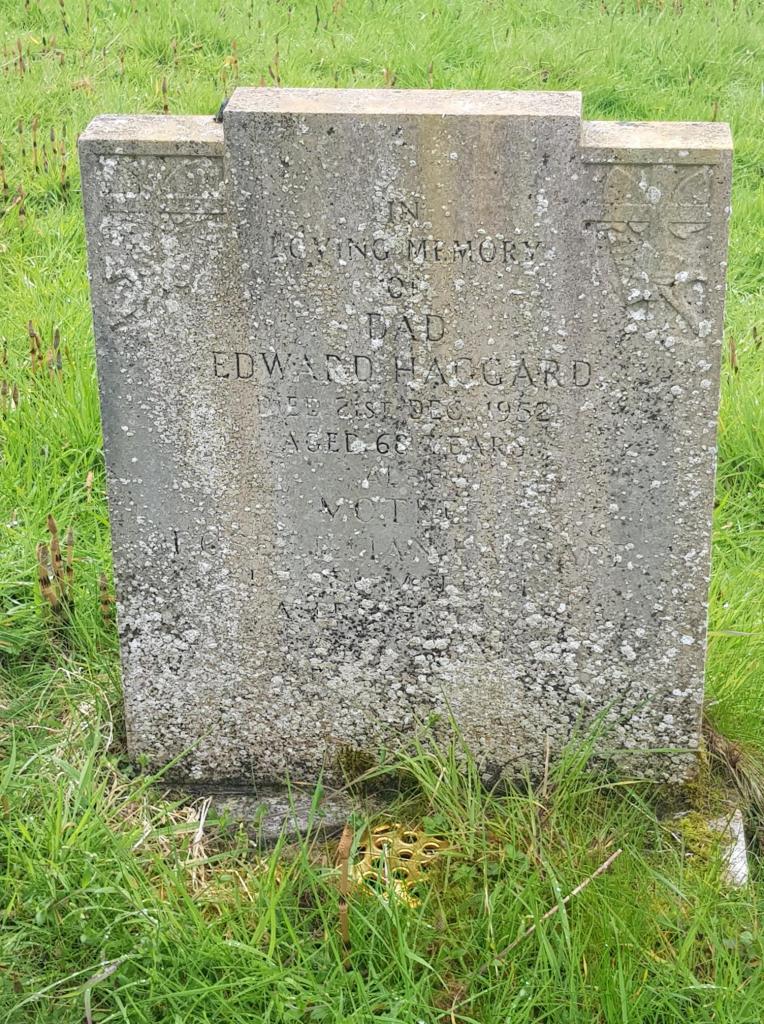
In the middle of Section C there is a cluster of Haggard family graves, the family of Charles’s brother Edward.

Edward was younger than Charles by two years. Like Charles he was born in Minety while his father was landlord at the Old Red Lion Inn. By 1891 the family were living at 60 Stafford Street, Swindon where on his 15th birthday in 1899 Edward began a 6½ year Tender & Fitting apprenticeship in the Works. He married Rose Lillie Edwards in 1913 and the couple had three sons.

Edward died in 1952 and Rose in 1969 and they are buried in grave plot C180.

They are surrounded by the graves of their three sons. Gordon died in 1933 aged just 10 years old. He is buried in grave plot C155 with his brother Eddie who died in 1992 aged 78.

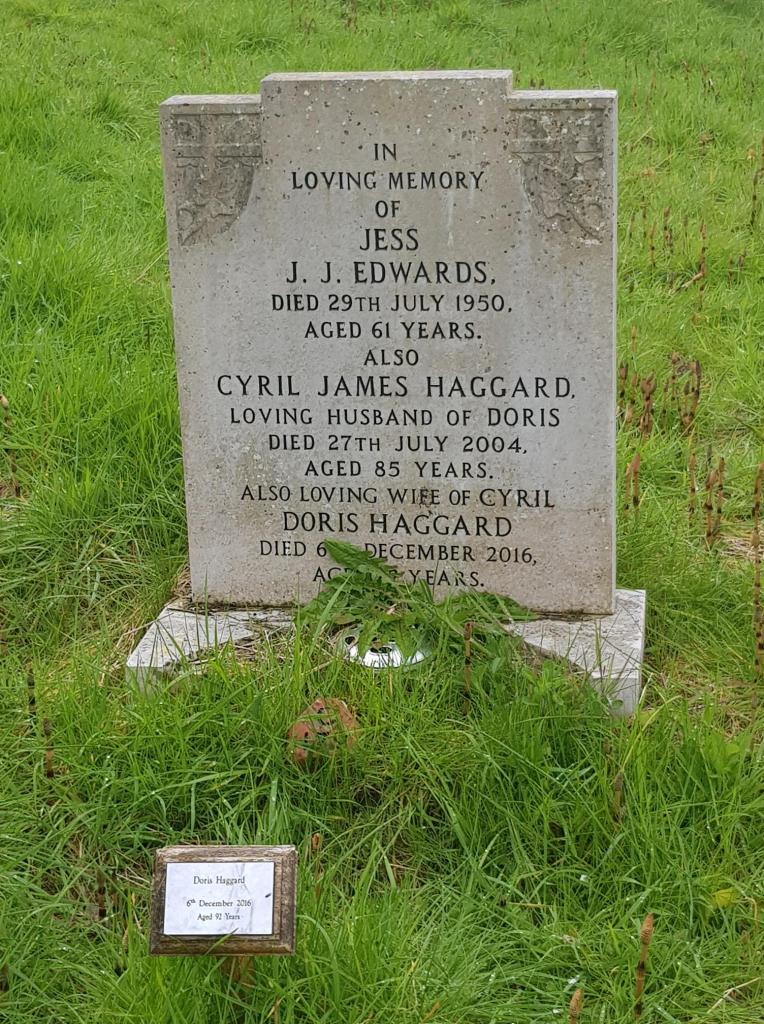
Close by in grave plot C179 is family member Jess J. Edwards who died in 1950, and is buried with the youngest Haggard son, Cyril, who died in 2004 aged 85. The last burial in this family plot was that of Cyril’s wife Doris who died in 2016 aged 92.

Walter Perkins – one of the ordinary people of Swindon

The purpose of this blog is to record the lives of the ordinary people of Swindon, and that is exactly what Walter was.

Born in 1884 Walter makes an appearance on the 1891 census when he lived at 20 Vilett Street. His father Joseph, born in Banbury, was an Iron Moulder in the Works. His mother Elizabeth, born in Stratton, was busy having babies – five by 1891. She had 9 in total with 7 surviving childhood.

By 1901 the family were living at 21 Farnsby Street. Walter 17, and his younger brother Hubert 14, had already begun their Fitting apprenticeships in the Works.

In 1911 Walter was one of 6 children still living at home with Joseph and Elizabeth at 63 Curtis Street. He was the eldest at 27, William John Perkins, his youngest brother, was 9.

Walter married Florence M. Farr in the June quarter of 1919. He died on May 18, 1933 aged just 49 years. He was buried in grave plot C88 where he was later joined by his sister-in-law Frances Annie Hardiman who died in 1959.

There are so many facts about Walter’s life that remain unknown. Did he serve in WWI? Did he and Florence have any children?

Walter Perkins, one of the ordinary people of Swindon.

In Cherished Memory of

My dear Husband

Walter Perkins

Who passed within the veil

May 18th 1933

Resting where no shadows fall

Peacefully sleeping he waits us all

The Clifton Hotel

Any old building worth its bricks and mortar should have a spectral presence and The Clifton has long boasted one of its own. Supernatural sightings have included those of a hooded figure, possibly a nun, in keeping with the tradition that the pub was built on the site of an ancient priory. However, evidence to support this legend is lacking.

The surrounding area once comprised part of the former Kingshill Estate owned by John Harding Sheppard where around 300 houses were built along Clifton, Albion, William, Redcross (renamed Radnor) and Exmouth Streets between 1877 and 1880. The Clifton Hotel, complete with a tiled mural of Brunel’s Clifton Suspension Bridge, was built around 1878.

As with so many Swindon Streets, Clifton Street grew piecemeal across a number of years. Among the 19th century builders was Job Day who constructed an unspecified number of cottages in 1882 and Edwin Harvey who built eleven houses in the same year with further properties in 1883. W.H. Read designed Clifton Street Schools in 1884-6 and the Primitive Methodist Chapel, built in 1900, was designed by R.J. Beswick.

To date no documentary evidence of a priory has made an appearance, and neither has the nun. Apparently religious ghosts have slipped out of fashion in recent years.

Ghostly goings on at The Clifton hit local news headlines during one busy Christmas Day celebrations when a poltergeist joined Christmas revellers.

Manager’s wife Mrs Blanche Chirgwin reported sherry glasses jumping from shelves behind the bar while her husband recalled an eerie presence in the beer cellar. Then there was the story of a previous landlord’s dog that went mad and a jammed attic window found open only to jam again.

One long serving landlord at The Clifton was Cardiff born Henry Jefferies and his wife Frances. Local trade directories place them at the pub in the mid 1880s and Frances was still there at the end of the 19th century.

During their occupancy of the pub, two of the couple’s sons died, Edwin in 1887 and Frank ten years later. Henry died in 1896 and was buried with his son Edwin Bernard Jefferies in Radnor Street Cemetery, grave plot A778. Frank died in 1897 and is buried in neighbouring plot A779. Frances returned to Cardiff where she married Isaac Edmunds in 1902. She died in 1920 and was buried back in Swindon with her son in plot A779.

The Paranormal Site Investigators (PSI) conducted an overnight investigation at the pub in March 2005. Despite a few bumps in the night the team failed to detect any ghostly activities. And still no sign of the nun.

Views of The Clifton Hotel in the 1950s and 60s published courtesy of Arkells and Local Studies, Swindon Central Library.