William Harvie and the amazing Multiple Cake Cutting Machine

The re-imagined story …

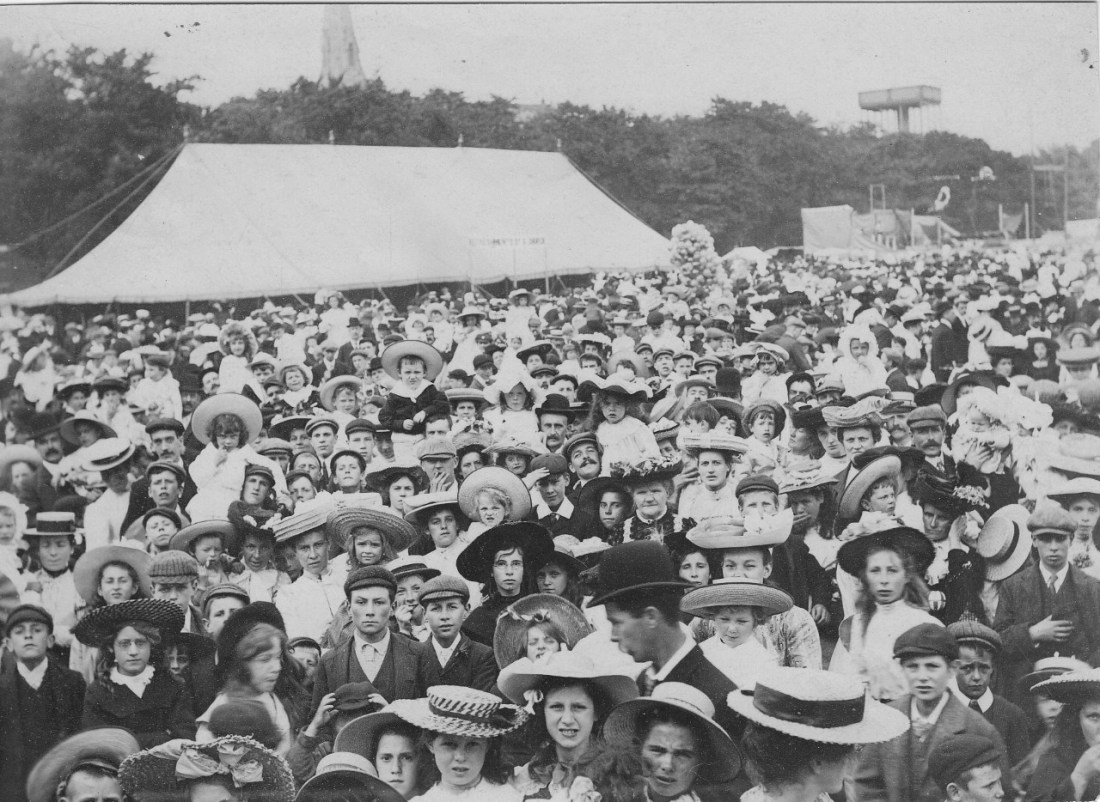
There are two highlights in the Swindon calendar for the children – Trip, when the Works shut down for the annual holiday and we go to the seaside, and the Children’s Fete, and I can never sleep the night before either of them.

Preparations for the Children’s Fete begins well in advance and I have first-hand knowledge of this as my father is on the Mechanics’ Institute Council and our whole family is involved.

The fete takes place in the GWR Park, the gates open at half past one. Tickets cost 3d for adults and 2d for children. The children receive two free rides on the steam roundabouts, a drink of either tea or oatmeal water and a piece of cake.

For weeks beforehand we save every penny, ha’penny and farthing we can; never have so many errands been run, so many jobs done about the home.

The familiar GWR Park becomes kaleidoscopic with rides and stalls and fairy lamps festooned around the Cricket Pavilion and the bandstand. Entertainments on the central stage take place throughout the afternoon; comedy acrobats and trapeze artistes and trick cyclists and one year there was even a troop of performing dogs. Mr Harvie is the chairman of the fete committee and director of amusements but this isn’t what he became best remembered for.

The event runs like a well-oiled machine, which is hardly surprising as it is organised by some of the most well qualified and experienced engineers in the railway works. And perhaps the greatest feat of organisation is the cake.

The quantity of cake required was enormous, amounting to no less than 2 tons 13 cwts. The job of baking it went to Mr E.P. Monk of Old Swindon who produces annually approximately 1,200 cakes weighing 5lbs each. Next comes the task of cutting the cakes into half pound slices, a job which had previously fallen to a handful of volunteers. It used to take 12 people approximately six hours to cut up and bag the cake. And then Mr Harvie invented the Multiple Cake Cutting Machine.

At this year’s event Mr Harvie’s new improved machine will be used for the first time. The machine, a dangerous looking contraption, is composed of crossed knives, balanced on spiral springs, which hover above each cake. The average speed of this new machine being no less than 6 cakes, or 60 half pounds per minute. The cakes are fed into the machine on 12 wooden trays by an endless band on rollers worked by the handle at the end of the machine, and here Mr Harvie has introduced another novelty in the shape of an electric bell, which is so adjusted that when the tray reaches the exact centre of the knife it strikes two levers and forms an electric communication with the bell, which commences ringing, and continues to do so until the cake is cut. The tray then passes on with the cake to make room for the next. When the tray on which the cake is cut reaches the end of the machine, it runs on an inclined board which carries it to the packers.

So exciting is the whole process that I think it should form part of the entertainments on the fete stage. Perhaps I’ll suggest that to Mr Harvie for next year.

My fete dress hangs on the back of the bedroom door. My hat, decorated with ribbons and flowers, sits on the dresser. I open the curtains a crack, it is not quite dark yet. Early tomorrow morning my father will join the others assembling the stage. I squeeze my eyes tightly shut. I must go to sleep, I must go to sleep.
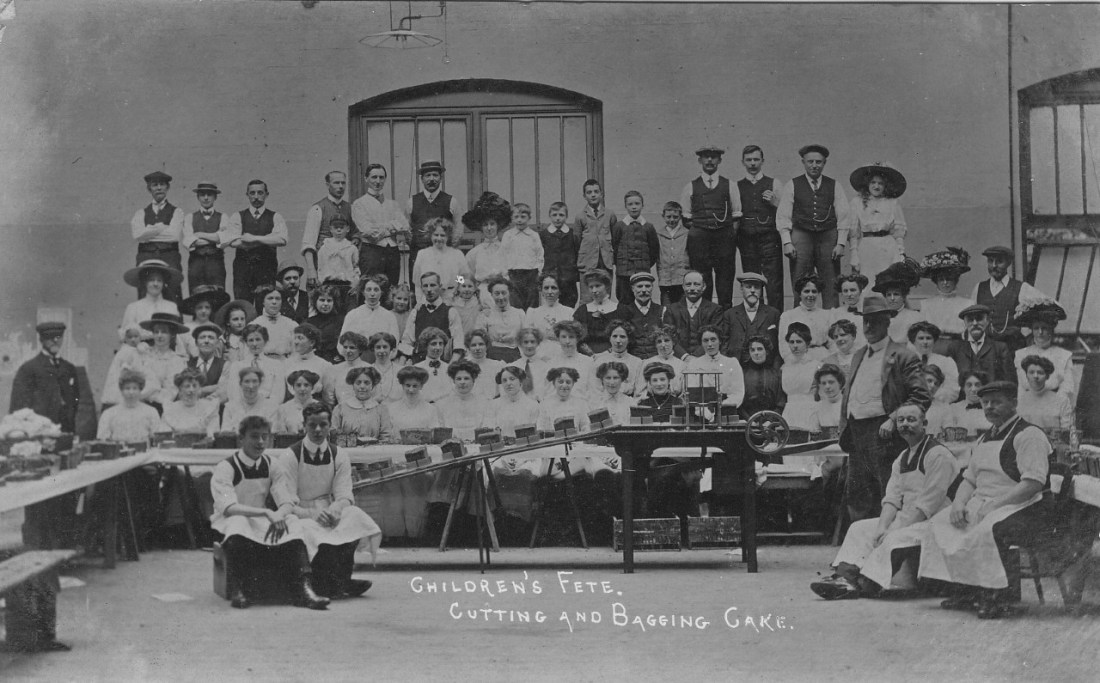
children's fete cake cutting

The facts …

William Harvie was born in Islington, London in c1849. He began his career as a coach trimmer in Birmingham where he met and married his first wife, Susan Newman, at St Peter and St Paul’s Church, Aston. Susan was a widow with a young son. By 1871 the couple were living at Rushey Platt with Susan’s son Edward and two children of their own, Henry and Louisa. They would have a third child George William. The family lived at 15 Faringdon Street for a number of years and by 1891 William had been promoted to foreman.

He served as foreman over the women in the polishing shop, and during the 1890s he was responsible for organising the entertainment for the ‘annual tea of the female staff employed in the Carriage Department.’ He even performed a couple of humorous songs, said to have contributed to the event.

By the time of Susan’s death in 1906 they were living at 6 Park Lane. Two years later William married again. His second wife was Alice Elizabeth Turner. She died in 1921 at their home 92 Bath Road but does not appear to be buried in Radnor Street Cemetery.

William died in 1930. Details of his estate were published in various newspapers, including the Daily Express.

‘A Black Country working lad who, in his spare time, played in a theatre orchestra, became a railway foreman, and dabbled in stocks and shares during fifty years’ service, has died worth nearly £44,000. The workers of this great railway centre used to dub William Harvie of Bath road, Swindon, “the wealthiest workman in England,” but even they were surprised when his estate was announced, and the sole topic of conversation in the town was the large sum he left. He was 84 when he died last October, a widower, and intestate.’

A notice in the Western Morning News reported that he was instrumental in building the first saloon railway coach for Queen Victoria but there is no mention of his famous invention, the Multiple Cake Cutting Machine.

William is buried in plot D14a with his first wife Susan. They were later joined by their elder son Henry.

Susan and William Harvie

The Death of Mrs Swinhoe

The re-imagined story …

I stood across the road from Park House, amongst a group of women, all of whom had been in receipt of an act of kindness performed by Mrs Swinhoe.

She wasn’t a demonstratively affectionate person, not a woman to place an arm around your shoulder, or take your hand in hers. She wasn’t one for displays of emotion, but Mrs Swinhoe was one of the kindest women I have ever met.

She was a stalwart of St Mark’s Church, a member of several committees, a fund raiser and a generous benefactor. She would be greatly missed in the railway community.

Everyone in the railway village had been in receipt of her kindness at some time yet she had never sought comfort from a stranger, except on one occasion.

I was employed as a housemaid in the doctor’s residence when the Swinhoe family lived in London Street. It was a busy household as the property served as the doctor’s consulting room and the Swinhoe family was quickly growing, three little daughters and another child on the way when I joined the establishment in 1864.

Mrs Swinhoe’s confinement proved difficult when on May 19 two little girls were born and quickly named Eliphalette and Etheldreda. On June 20 the babes were baptised by their grandfather at St Michael’s Church in Cornhill in London, but the event was quite subdued; all was not well with the smaller baby Etheldreda.

I was with Mrs Swinhoe the day her baby died. I’d never seen sorrow like that before. I was fifteen years old. I didn’t know what to do or what to say. What words of comfort can you offer to a woman who has just held her baby while it died? I put my arms about her as she sobbed and sat with her until her husband returned from the Works where he had been attending an accident. I left them to their grief.

Mrs Swinhoe is to be laid to rest in Swindon’s cemetery on Kingshill. Her little daughter was buried in the churchyard at St Mark’s, but that is closed to burials now.

It must have been a dreadful thing – to be a doctor and unable to save your child.

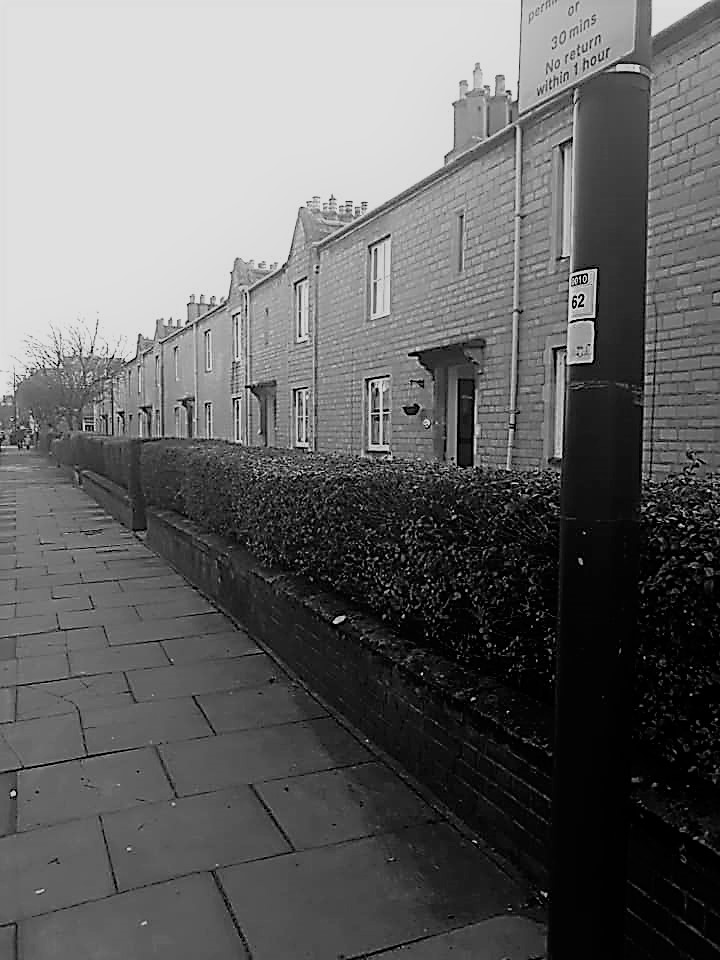
London Street 5 (2)

The facts …

Diana Maria Matilda Wrench was born on June 17 1836 at St Michael’s Rectory, Cornhill in the City of London the daughter of Rev. Thomas William Wrench and his wife Diana Maria. She married George Money Swinhoe, a Practitioner Surgeon, at the church where her father officiated on August 13, 1859 and by the time of the 1861 census, they were living at 4 London Street, Swindon.

The couple went on to have a large family, seven daughters and five sons survived to adulthood. Diana died after a short illness and was buried in Radnor Street Cemetery on April 25, 1894. She was the first of six members of the Swinhoe family to be buried in the large family plot numbered E8228/29/30.

Death of Mrs Swinhoe

We regret to announce the death of Mrs Swinhoe, wife of Dr G.M. Swinhoe, of Park House, New Swindon. The deceased lady had been ailing only a day or two, and died somewhat suddenly on Sunday morning. Her death will be a great loss in St Mark’s parish, where she has been such an excellent worker for many years past. The circumstances are rendered still more sad by the fact that deceased’s son Dr. G.R. Swinhoe, returned with his bride from his honeymoon trip only a day or two previously.

On Sunday at St Mark’s church (where Dr Swinhoe is vicar’s warden), the organist, Mr Geo. Burrows, played the “Dead March in Saul” at each service.

In consequence of the sad event, a concert and operetta which was to have been rendered on Monday evening in the Mechanics’ Institute, New Swindon, and in which the Misses Swinhoe were to have taken part, was postponed.

It would be altogether superfluous for us to enter into panegyrics respecting the deceased lady, the long period Dr Swinhoe has been the friend in need to the great majority of the inhabitants of New Swindon, and the “right hand” Mrs Swinhoe has been to him, are too well known and appreciated to make the telling necessary. Suffice it, that the sad intelligence was received with profound and genuine regret throughout the neighbourhood. The deceased leaves in addition to her stricken husband seven daughters and five sons to mourn their irreparable loss.

The Funeral

Took place on Wednesday morning and was of a quiet and private character. The funeral cortege left the late residence of the deceased lady, Park House, about 11.15 am. The first part of the most solemn service was read at St Mark’s Church, by the Hon and Rev Canon Ponsonby, and there was a crowded congregation, a large number being unable to gain admission.

At the grave side this number was still further increased. The first part of the service being over, the procession wended its way towards the cemetery where the Rev Canon Ponsonby read the remaining portion of the burial services. The remains were buried in a bricked grave, lined with moss, primroses and other flowers. The coffin, which was of oak, with very massive brass fittings and a large Latin cross on the lid, born the following inscription: – “Diana Maria Matilda Swinhoe, Died 22nd April, 1894, Aged 56 years.” It was conveyed in a hearse, and completely covered with beautiful wreaths.

Messrs Chandler Bros. were the undertakers, and discharged the funeral arrangements in a most satisfactory manner. The coffin was made by Mr. T. Barrett.

Extract from the Swindon Advertiser April 1894.

Swinhoe family (2)

Diana Maria Matilda Swindon aged 56 years was buried on April 25, 1894 in grave plot E8229. 

Moonies, Movers & Shakers

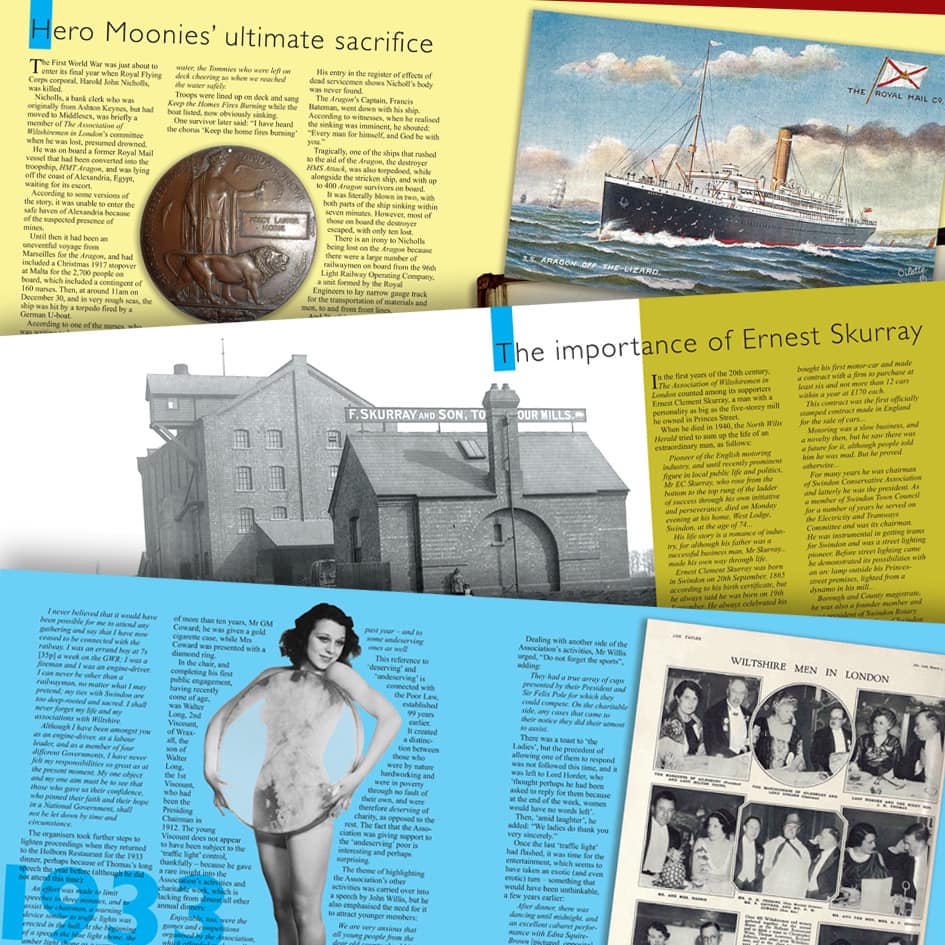
My friends and former Swindon Heritage magazine colleagues, Graham Carter and Noel Ponting, have written and produced a stunning new book.

Their third collaborative work is called Moonies, Movers & Shakers and is a history of the charitable fraternity called the Association of Wiltshiremen in London – nicknamed The Moonies in London. The inaugural dinner of this association (an event to bring together former Swindon railwaymen who found themselves in London) was held on March 13, 1886 in Plumstead.

Among the fascinating stories Noel and Graham have discovered during their research is that of the musically talented James brothers, the sons of William James and his wife Mary Ann.

William, an engine fitter born in Brecon in about 1830, married Mary Ann Hawkins at St. Mark’s Church in 1858. The young couple lived at various addresses in New Swindon where they raised a family of 7 children, 5 sons and 2 daughters. And while the 4 surviving sons initially followed their father into apprenticeships in the railway works, the future of three of them turned out quite differently.

You can read about the musical James brothers in Moonies, Movers & Shakers available from the Library Shop, Swindon Central Library; Hobnob Press and Amazon.

William James died in November 1904 and Mary Ann in 1908. They are buried together in grave plot E7581.

You may also like to read:

William David James – a well known Swindon musician

Up at the Castle

The re-imagined story …

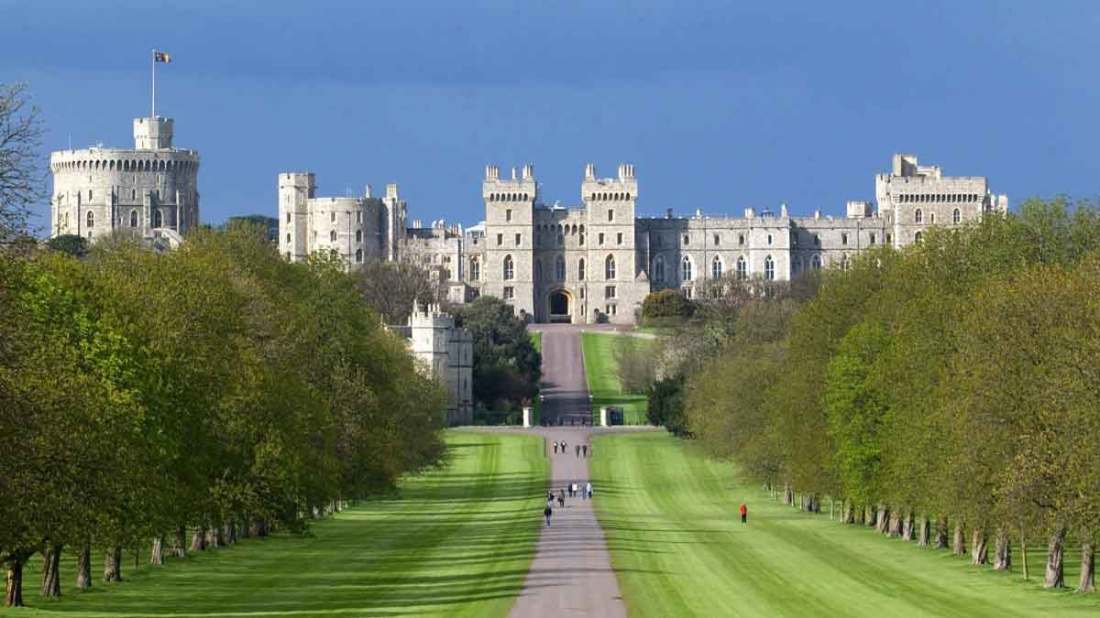
Rosa Christelow and I started work as housemaids at Windsor Castle on the same day. Rosa was older than me and had lots of experience. I had grown up in Oakley Mere, a small village on the outskirts of Windsor, and had lots to learn. Rosa also used to say I had a lot of cheek.

People couldn’t understand how we were such good friends; we were like chalk and cheese. Perhaps that’s why.

Rosa got me out of a lot of scrapes, I can tell you. And me, well I could always make her laugh. Once I demonstrated how to dance the Charleston in a corridor outside the library where some of the young royal cousins were playing a gramophone. I nearly lost my job over that, but Rosa managed to intercede for me.

It was a wonderful life working up at the Castle. The things we saw and the people we met. Well, not met exactly. Most of the guests barely noticed us, but we would peep round corridors and over the top of stairs to watch them arrive and depart. And of course, there were occasions when the household staff were presented to the King and Queen. And Christmas – oh Christmas was a wonderful time. Hard work, but wonderful.

And sometimes the staff had the place to ourselves. What we got up to then, well I couldn’t possibly tell you.

I left in 1913 when I married Robert one of the footmen up at the Castle, but I always kept in touch with Rosa. When she retired, I visited her once or twice at the house she shared with her sister in Swindon. Her home was as neat as a pin. You could tell she had been a housemaid; little touches I noticed, ways of doing things she had taught me. I didn’t envy the little girl who came in to clean for them. I bet Rosa put her through her paces.

Goddard 2
Goddard Avenue

The facts …

Rosa Harriet Christelow was born on October 25, 1879 the third child and second daughter of John Christelow, a boilermaker, and his wife Priscilla. Rosa was baptised at St Mark’s Church on November 30, 1879 and grew up at 42 Wellington Street, the family home for more than 70 years.

In 1907 she entered the Royal Household at Windsor Castle as one of the 38 Class 3 housemaids earning £25 per annum. Rosa was later promoted to a Class 2 housemaid on £30 per year. She was still employed at Windsor Castle during the First World War and records list her there in 1924, the date at which published figures close.

At the time of the 1911 census Rosa was one of 33 housemaids, a total of 51 female servants. Royals in residence in 1911 were Princess May of Teck who was five years old and her three-year-old brother Prince Rupert of Teck. These children were Queen Victoria’s great-grandchildren.

By 1939 Rosa was living at 42 Wellington Street with her sister Rhoda where she is described as a paid domestic servant. There are gaps in what is known about Rosa’s whereabout between 1891 to 1901 and 1924 to 1939 probably due to a mis-transcription of her surname.

Rosa’s parents, John and Priscilla, are buried with two of their daughters, Laura Priscilla and Rhoda Annie, in plot D1350.

Rosa eventually moved into 125 Goddard Avenue, a home she shared with her brother Samuel. After several years working in the railway factory, Samuel Christelow travelled to Zimbabwe where he was ordained. Widowed and retired he returned to Swindon where he lived with Rosa at 125 Goddard Avenue. He died in St Margaret’s Hospital in 1972 and is buried in plot D1587.

Rosa died at St Margaret’s Hospital in 1972. She was aged 92. She is buried with her grandmother in plot B1877.

Christelow - Copy
Rosa was buried with her grandmother

Samuel James Christelow
Samuel Christelow

You may also like to read:

Archdeacon Samuel Christelow – missionary

13 Wellington Street

The re-imagined story …

Number 13 Wellington Street was perfect, just perfect. I knew it would be. I had a look at the property as soon as I heard it was going on the market; only from the outside, that is.

Eric took some persuading.

“It wouldn’t hurt to ask for a viewing.”

 “We won’t be able to afford it Lil. It’s got four bedrooms. Why set yourself up for a disappointment?”

The house belonged to Mr Goudge who worked in the offices at the Works. He was a fair and honest man. I hoped the house would sell at a price we could afford with the help of a small mortgage.

We had been saving hard, well as hard as you can with two children and another on the way. Eric was earning good money as a fitter in the Works and mum didn’t take much money off us in the way of board. But now she was expecting another child and the house in Reading Street was just too small to accommodate all of us.

A clerk from Mr Kinneir’s office met us at No 13. The front garden had a neat little square of grass surrounded by rose bushes all neatly pruned back for the winter, the iron palisades freshly painted. As we were led through the gate and up to the front door, I imagined myself turning the key in the lock.

It was beautiful inside. At the front of the house a drawing room led off from the hall with a dining room at the back. The kitchen overlooked the back garden.

Mrs Goudge was there to greet us. She showed us upstairs. The boys’ bedroom was at the back of the house, her two daughters slept in the smaller one at the front. Both rooms were light and airy; the girls’ room was so pretty with pink rosebud wallpaper.

“We’ll be leaving the gas fittings and the Venetian blinds,” she told us.

We ended up renting a little house in Westcott Place. I made it home. I even papered the second bedroom; pink rosebuds for the girls. We were very happy living there, but I often used to take a walk down Wellington Street and ponder on what might have been.

Joseph Goudge
Mr Joseph Goudge

 The facts …

Joseph Goudge was born on November 8, 1842 in Westminster, the son of James, a dressing case maker, and his wife Annie Elizabeth. Joseph was baptised at St John the Evangelist, Westminster on December 11.

By 1859 16-year-old Joseph was living in Swindon where he entered the employment of the GWR as a clerk on August 1. Two years later he is recorded on the 1861 census as lodging at Belle Vue Villas with George Dicks and his wife Jane.

Joseph married Mary Hall on June 10. 1868 at Christ Church, Swindon. The couple had six children, but sadly one died in childhood.

The couple lived first at 32 Prospect before buying the Wellington Street property. By 1891 they were living at 4, Brunswick Terrace, Bath Road (later known as 94 Bath Road) which remained their home.

 Joseph progressed up the career ladder from clerk to accountant. He served as Education Secretary of the Mechanics’ Institute and also as Secretary of the New Swindon Improvement Company. He worked within the co-operative and trade union movements in the town and was also a Freemason and member of Gooch Lodge. He was a talented calligrapher and produced certificates, memorials and testimonials.

Mary died on January 1, 1916 and Joseph on Christmas Eve, 1916. They are buried together in plot A1065.

Among the staff.

Swindon. – The clerical staff of the chief Locomotive Superintendent has recently, in consequence of retirement under the age limit of Mr. Joseph Goudge, lost one of its most valued and capable members. Mr Goudge, who was born in 1842, entered the Company’s service on 1st August, 1859, and undertook increasingly important work, eventually having charge of the Chief Superintendent’s statistical office. In this capacity he rendered valuable service in the preparation of statistics affecting the Locomotive and Carriage Department in connection with legal and parliamentary business, and working arrangements with other companies. One of his many other important duties was that of examining candidates for clerkships in the department.

Mr. Goudge had the honour of taking up the Freedom of the City of London in the Haberdashers’ Company in 1863, on the same day, curiously, as a brother of the late Mr. William Dean. It is interesting to note that Mr. Goudge’s three sons gained various scholarships in connection with that Company and at public schools, finally winning open scholarships at Oxford.

Mr. Goudge joined the Volunteers on the formation of that body, and served for ten years. Always an earnest advocate of educational work he became a member of the Council of the Mechanics@ Institute in 1867, was appointed educational secretary and continued so for twenty-five years.

The deep respect and esteem in which Mr. Goudge was held by his colleagues was expressed in a tangible manner by the presentation of a cheque and illuminated address signed amongst others, by the Chief Superintendent and his assistants, the Stores Superintendent and other officials.

Great Western Railway Magazine May 1908

No 13 Wellington Street.

The House has a flower garden in front, with iron palisading, and contains an entrance hall, dining room, drawing room, 4 bedrooms, kitchen, and pantry. Outside are wash-house, with copper, closet, and coal house, and there is a Garden, with backway. The House has a frontage of about 20 feet, and is of the estimated rental value of £30 per annum, exclusive of rates. The gas fittings and Venetian blinds will be included in the sale.

The above, being situate in a favourite locality, where Houses are much in demand, forms a desirable House for investment or occupation. The same is in a good state of repair, and early possession will be given.

To view, apply to Mr Joseph Goudge the owner, and for further particulars to Messrs Kinneir and Tombs Solicitors Swindon or to The Auctioneers Faringdon Street.

Swindon Advertiser 6 December 1890

Joseph and Mary Goudge

Elderly Man Expires in the Cemetery

The re-imagined story …

I leaned back on the bench and closed my eyes, my face turned towards the sun. Bird song filled the air on this glorious summer’s day. But how could there ever be a glorious summer’s day again? All I could think about were the days so many had been robbed of, and yet here was I in my 60th year, an old woman, enjoying the bird song and the sunshine.

I often come to sit in the cemetery. There is usually someone here, tending a grave. We exchange a few words, pleasantries. Sometimes we even talk about our boys.

The guns have been silent for many months, the servicemen returned home. Even those who were prisoners of war are back, aimlessly walking the streets of Swindon. They stop and speak. Everyone knew my boy.

I wish I could have brought his body home and buried him here in the cemetery. I’ve seen photographs of the battlefield cemeteries, row upon row of crosses. My boy has no known grave.

A parent shouldn’t out live their child. Will this be a country full of old people now? Parents mourning sons.

I open my eyes, ahead of me there is an old man, walking slowly up the hill. I think I recognise him. Another old man. This world is full of old people, all the young ones are dead.

He stops and lays the flowers he holds on a grave. I watch as he appears to stumble. I stand up and begin to walk towards the Dixon Street gate. I’ve had enough now, watching other old people. I shouldn’t be here, none of us old people should be here.

DSC07141

The facts …

Elderly Man Expires in the Cemetery

The death of a well known Swindonian, Mr Donald Macdonald Andrew, a retired GWR foreman, occurred under tragic circumstances in Swindon Cemetery on Saturday last. It appears that Mr Andrew, who was 72 years of age, and resided at 142 William Street, went on Saturday morning to the Cemetery, with the intention of placing some flowers on his wife’s grave. When walking along the pathway towards the grave he was seen by Mrs Amy Haynes, wife of Ald. A.W. Haynes, ex Mayor of the Borough, to fall. She ran to his assistance, and also a gravedigger, named Sidney Iles, who was working nearby. But deceased expired in a few minutes.

The Faringdon Advertiser Saturday June 21 1919.

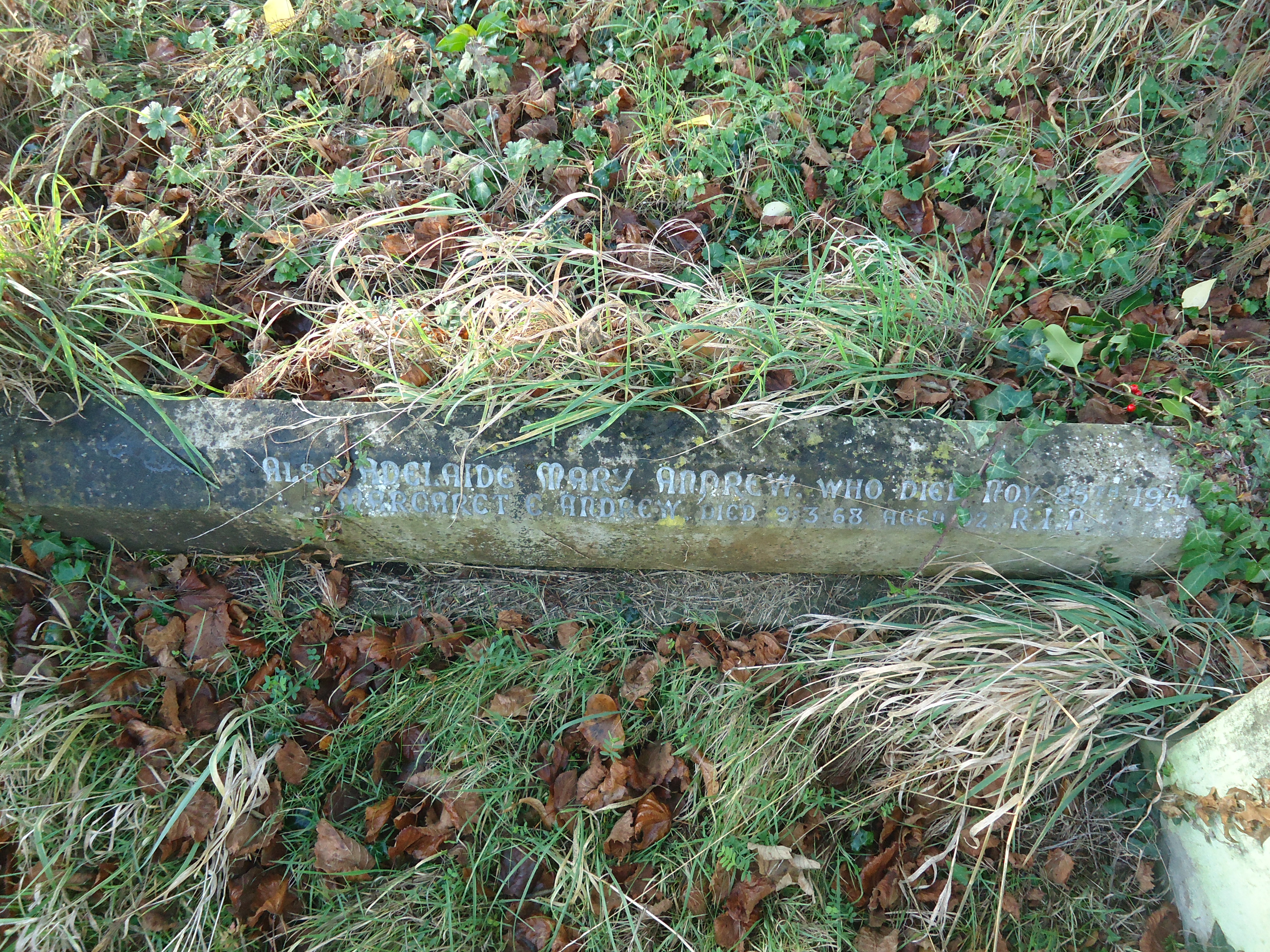
The Andrew family lived at 142 William Street for more than sixty years. Donald Macdonald Andrew, an engine fitter in the Works, and his wife Emily Jane had six children, a seventh had died before the 1911 census – Samuel Henry, George Edward, Ralph Macdonald, Florence K and twins Adelaide Mary and Margaret Elizabeth.

Donald’s funeral took place on June 17, 1919. He is buried in a double grave plot E8347/8 with his wife, son Ralph and daughters Adelaide and Margaret.

Adelaide Mary and Margaret Andrew

The Foyle and Finney families

The Radnor Street cemetery volunteers are a versatile group. Not only do they care for the CWGC graves and identify others with a military connection, but they mow and hoe, weed and clean and also locate lost graves. Bex recently helped Liz, a visitor to Swindon, to find her great grandparents grave and in doing so revealed yet another fascinating Swindon family history.

Liz helpfully had the cemetery paperwork concerning two family graves – plots D937 and D938. These proved to be the graves of two brothers, William John and James Henry Foyle with their respective wives, Margaret Ann and Mary Jane. The brothers were two of four sons born to Isaac and Rebecca Foyle. All four sons were born and raised in Swindon and all four followed their father Isaac, a labourer in the GWR iron works, into the railway factory; William as a boiler smith, James a brass finisher, George a railway clerk and Alfred an electrical fitter. William would eventually move to Wolverhampton, but following his death he was buried next to his brother James.

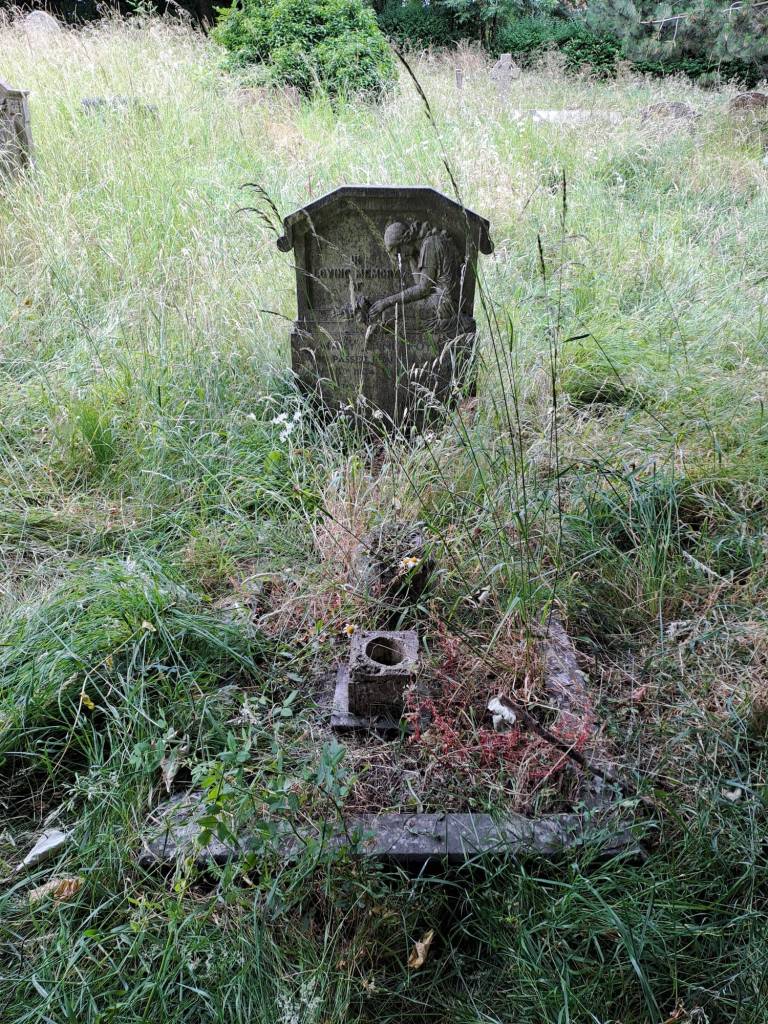
James’s grave with its elegant headstone was easy to locate. See below two before and after photographs taken by Bex.

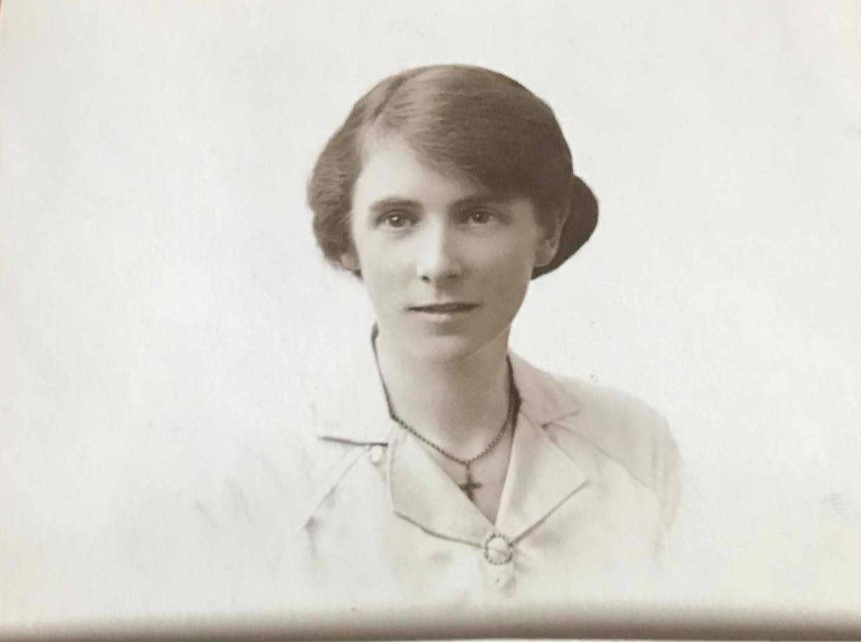
Liz was also keen to find other family graves, including those of Esther and Kate Finney. Research revealed that the two sisters were the daughters of William and Emma Finney.

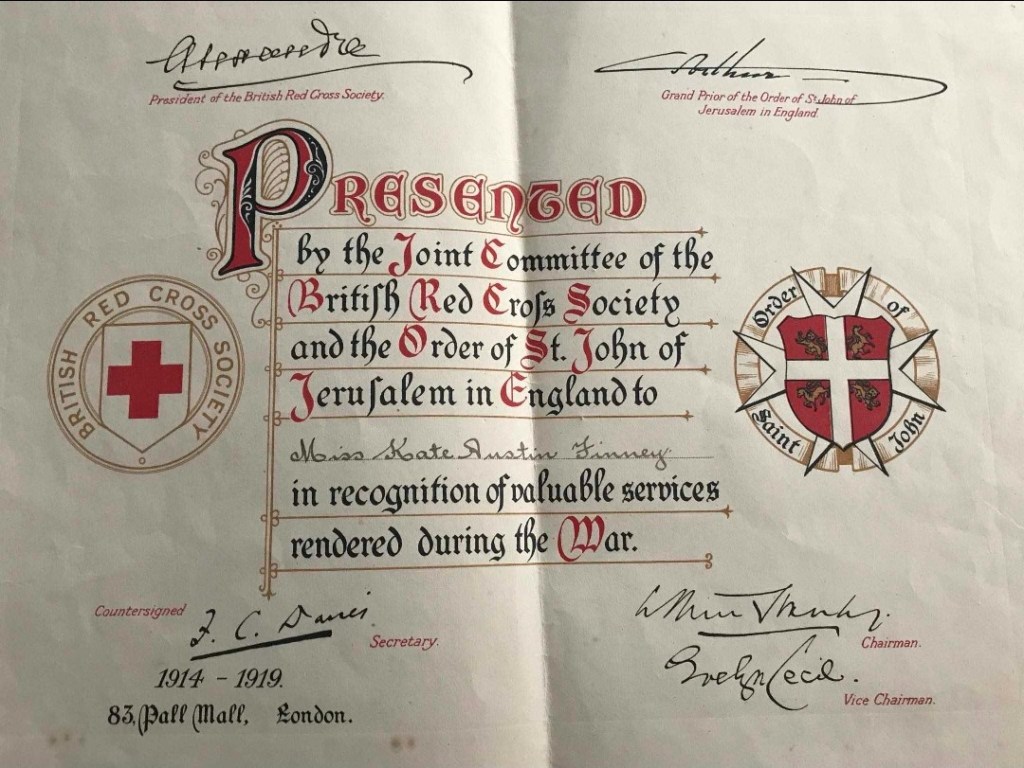
Esther and Kate both served as Red Cross nurses during WWI. Esther was a volunteer at the Red Cross Hospital In Taunton in 1917 while Kate stayed closer to home and served as a Ward Helper at the Red Cross Hospital in Stratton in 1918.

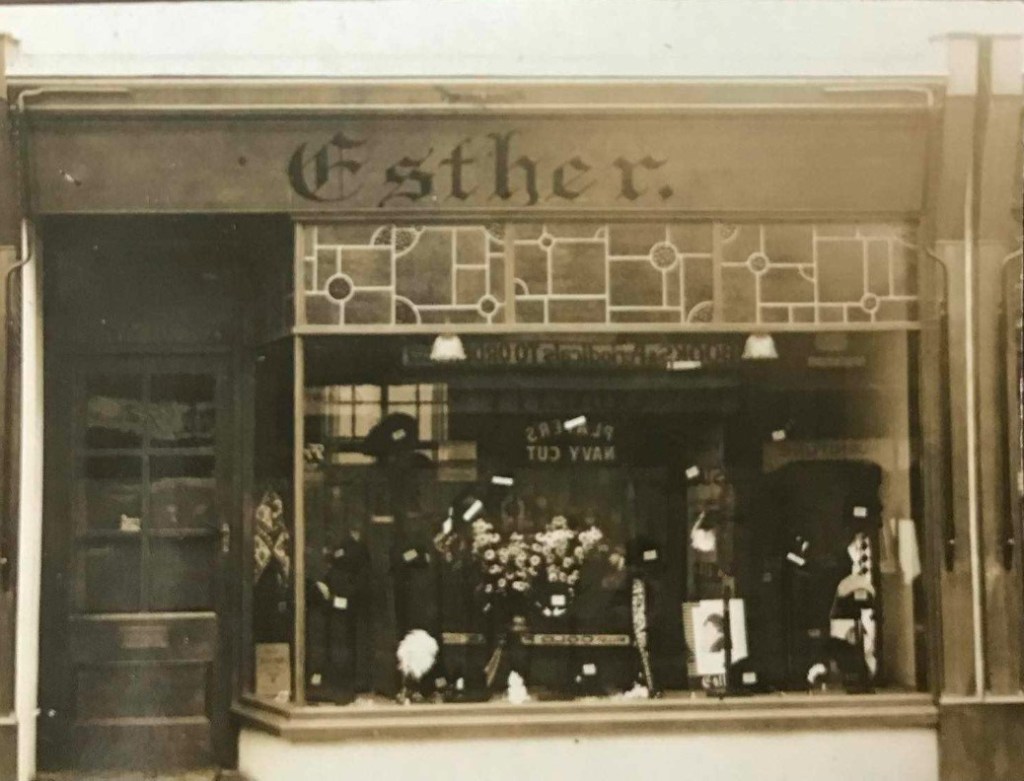
In 1939 Esther, Kate and their brother William lived with their widowed mother at 11 Clifton Street. Esther is described as a Shopkeeper (Gown and Millinery) and Liz was able to provide a photograph of the shopfront.

Esther died in 1959 and Kate in 1970 and they are buried together in grave plot E8298 with their brother William who died in 1957.

The connection between the Foyle and Finney family is that Esther and Kate’s brother John Marshall Finney, married James and Mary Jane Foyle’s daughter Elsie Gladys Foyle.

Hopefully Liz will keep in touch with Bex and even more family stories will emerge.

Luke Higgs – a first class engineman

Luke Higgs

I could see Mr Higgs next door, standing at the bottom of his garden, looking out over the old canal. He was there most mornings, just standing and staring.

I picked up my basket of laundry and opened the back door. I could spare a few minutes chatting to him while I hung out the washing.

“Morning Mr Higgs,” I called. “Bit breezy! This washing should dry quickly enough.”

He was dressed in shirt sleeves even though it was a chilly January morning. I suppose he was used to being out in all weathers. He once told me that the old locos were open to the elements; no cab over the engineman then. Life for the drivers was hard in those early days.

It was all he talked about – the old days. The journeys he had done with the Royal family, how much the job had changed over the years.

He was hungry for news from the Works, but he had few visitors. Everyone was too busy, but I tried to find a few minutes in the day to talk to him, although I couldn’t bring him the conversation he wanted.

“Fifty-two years and two months, I worked for the Company,” he proudly told me, “and an unblemished career. I’m still fit and able to work but these new rules meant I had to retire.”

I’d read the newspaper reports published when he retired at Christmas. My husband Jack told me how Mr Higgs had fought the retirement ruling, but there was nothing the Company could do.

“I think he’d have taken any job going, but it just couldn’t be.”

I wasn’t so sure about that. Mr Higgs believed he was still fit enough to drive locos and that’s what he wanted to do. I don’t think a caretaker’s job would have suited him.

He turned his back on me as I started to peg out my washing. He didn’t seem to want to chat today.

“Everything alright Mr Higgs?”

He looked across towards the railway line.

“The wind must have changed direction,” he said. “I can’t hear the trains today.” He turned around and walked slowly back up the garden path.

“I think we might have some rain. Your washing won’t dry after all.”

canal route

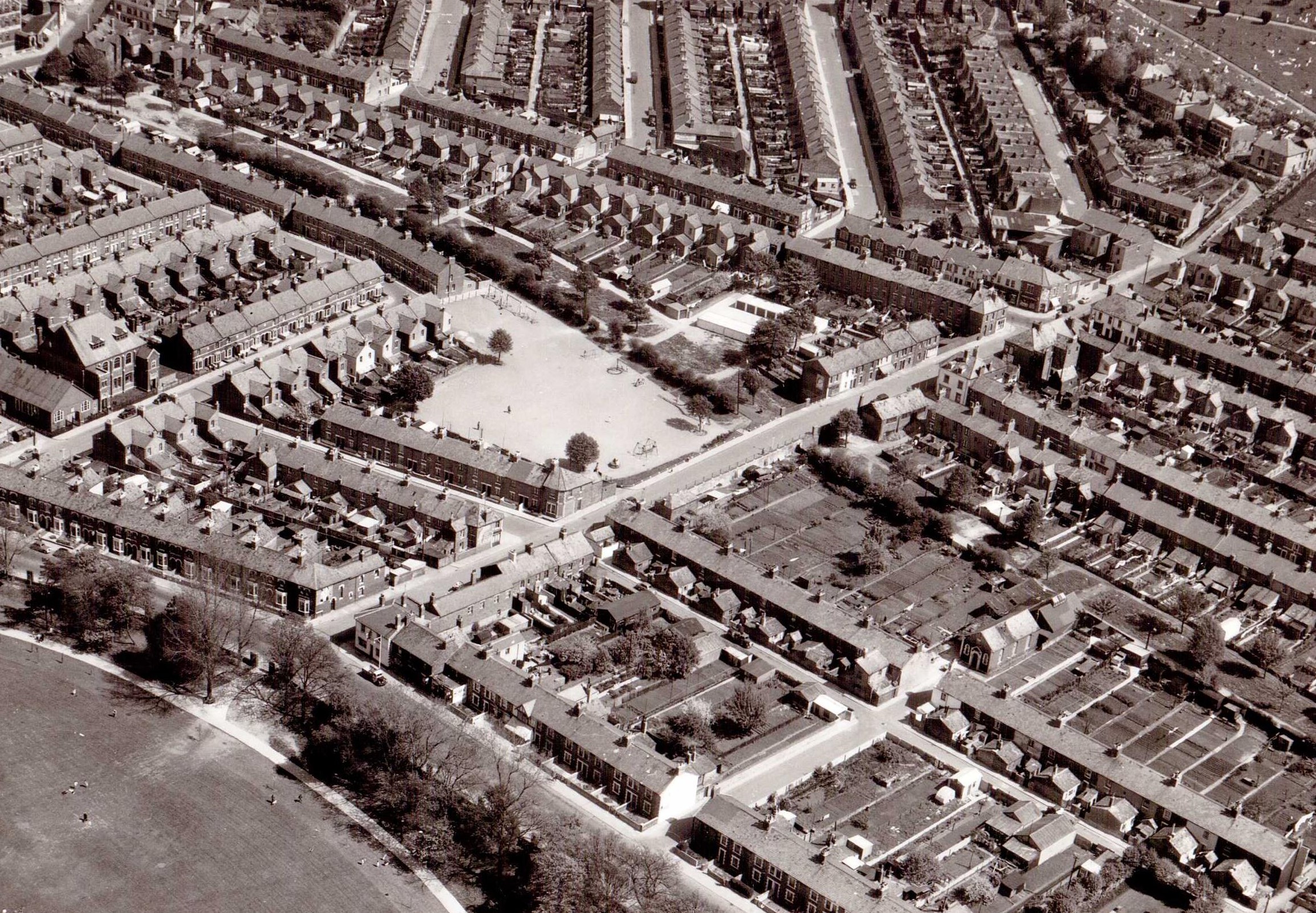
1950s photograph of Faringdon Road and the route of the old Wilts and Berks Canal

The facts …

Luke Higgs was born on December 3, 1834 and consistently gave his place of birth as London, Tower on census returns.

He married Margaret Beaupre in Bourne, Lincolnshire in October 1859. At the time of the 1861 census the couple were living at 20 Bath Street (now known as Bathampton Street) in the railway village, however their first child, a daughter Annie Agnes, was baptised at Holy Trinity Church, Paddington when they were living at 16 Waverley Road. The couple went on to have four more children and by 1871 the family was living at 19 Brunel Street. They soon moved to 8 College Street, their home for more than 40 years.

Luke entered the employment of the Great Western Railway in October 1852 just a few weeks before his 18th birthday. He worked first as an engine cleaner and lighter up before become a fireman in 1855. By 1861 he was working as an engineman and in a career that spanned more than 50 years.

Luke Higgs died at his home, 8 College Street, on March 12, 1913 aged 78. He left effects valued at £707 11s 3d (later resworn £642 11s 3d) to his wife. Margaret outlived him by a further twelve years. She died at 8 College Street on October 29, 1925 aged 90. They are buried together in plot D950 where they were later joined by their daughter Margaret Easley who died in 1953 and their grandson Elliott Tuckwell who died in 1967.


Retirement of a Railway Veteran

Over 50 Years’ Service

Mr Luke Higgs, of Swindon, who has just retired from his duties as driver on the Great Western Railway through the operation of the age limit of 70 years, has probably achieved a record of service, having been no less than 52 years and 2 months in the employ of the Company. It is remarkable that notwithstanding his great age he enjoys the best of health and looks a robust, able bodied man. He passed the eye sight and health test of the GWR doctor on 13 occasions, and when he passed last time his sight was exceptionally good.

Mr Higgs was born in London on December 3, 1834, his father being a noncommission officer in the Scots Fusilier Guards. Early in life he joined the service of the GWR and has grown in age with the railway, seeing many different systems in vogue during the half century. Improvements in the working of locomotives have of course come under his notice more particularly than any other, and he speaks of the time when there was no protection on the engines beyond the fire box, and no leg plates or cab, no steam pressure gauges, and no dry sand boxes. Those were hard times for enginemen, and great judgement was required to work the trains in safety.

He was fireman on the engine which took the late Prince Consort from Windsor to open Saltash Bridge in June 1857, and also filled a similar capacity on the train which conveyed the present King to Oxford, to open his college education, on Monday, Oct. 17, 1859. Not only that, but he has been fireman several times on the Royal train between Paddington and Windsor.

It is interesting to note that he was made a permanent engine driver the same day as the late Prince Consort died – December 14, 1861 – and ever since he has held a good reputation, so that when he retired there was not a black mark against his name. We are given to understand that he has the cleanest record on the Great Western line. In his career he has never lost an increase in wages or a premium, and has received from the Company £325 for good conduct whilst in their employ.

His varied experiences are of more than ordinary interest, and he modestly tells of incidents which would have turned but disastrously had it not been for his prompt actions. His advice in working trains has been frequently sought after by younger men, and many a good driver have been turned out of his engine. He was most economical in his work and studied the Company’s materials as though they were his own.

He is held in the highest esteem by all the officials with whom he came in contact, and all regret his retirement. The doctor who signed the last certificate said that Mr Higgs was well able to work for another five years, but of course the age limit had to be observed.

North Wilts Herald January 28th 1905

Luke and Margaret Higgs
Luke and Margaret Higgs with one of their daughters. Published courtesy of philstree18 from a public family tree on Ancestry.


The terracotta grave markers

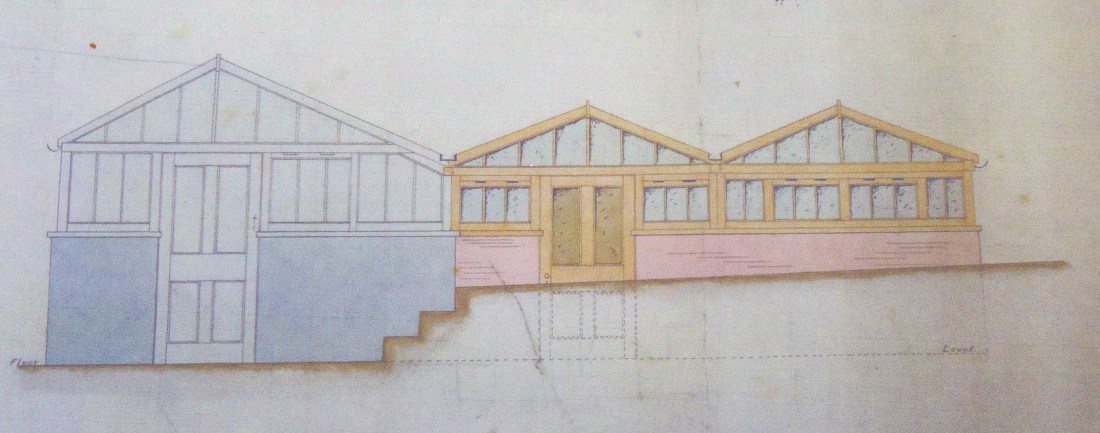
Back in the day there were flowers everywhere, right across the cemetery, displayed beneath glass domes; cultivated in the greenhouses. In 1907 the groundsmen were so busy that planning permission was sought for additional glasshouses to be built behind the caretakers lodge (see above illustration).

For those families who could not afford a headstone the flowers were a monument among the graves so densely arranged with barely a foot’s breadth between each plot.

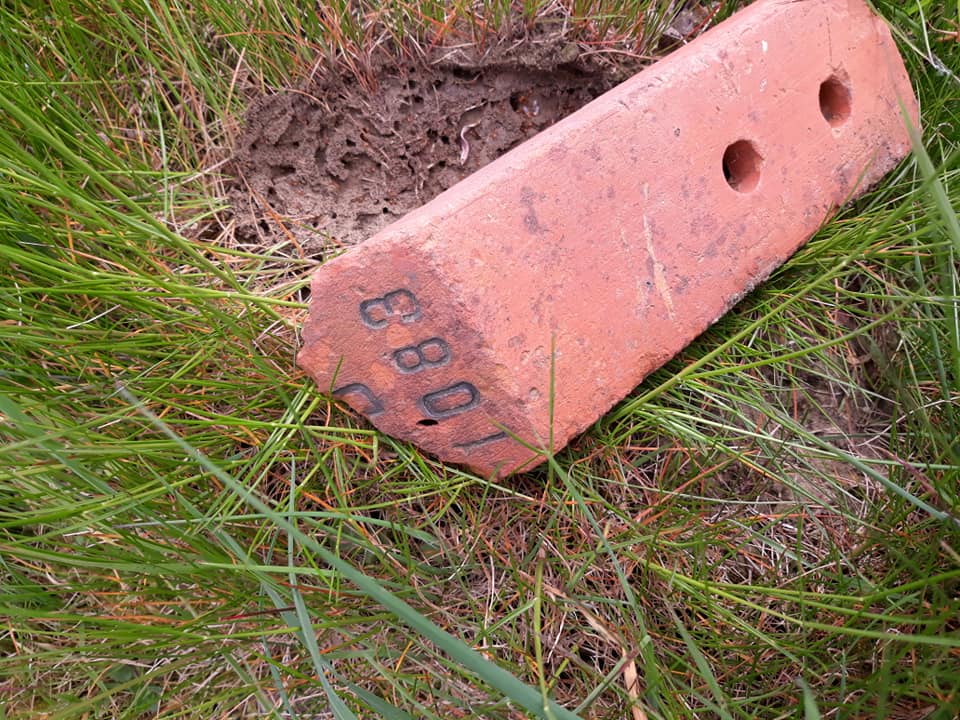
Every grave was identified by a terracotta marker, sadly an unsatisfactory method. The system had worked well when a caretaker and gravediggers were employed in the busy cemetery but today they lie broken and scattered about. Some graves sport several of the brick like markers, others have none, and when searching for a grave they should be used with caution and only as a rough guide.

Section D 3 of 3

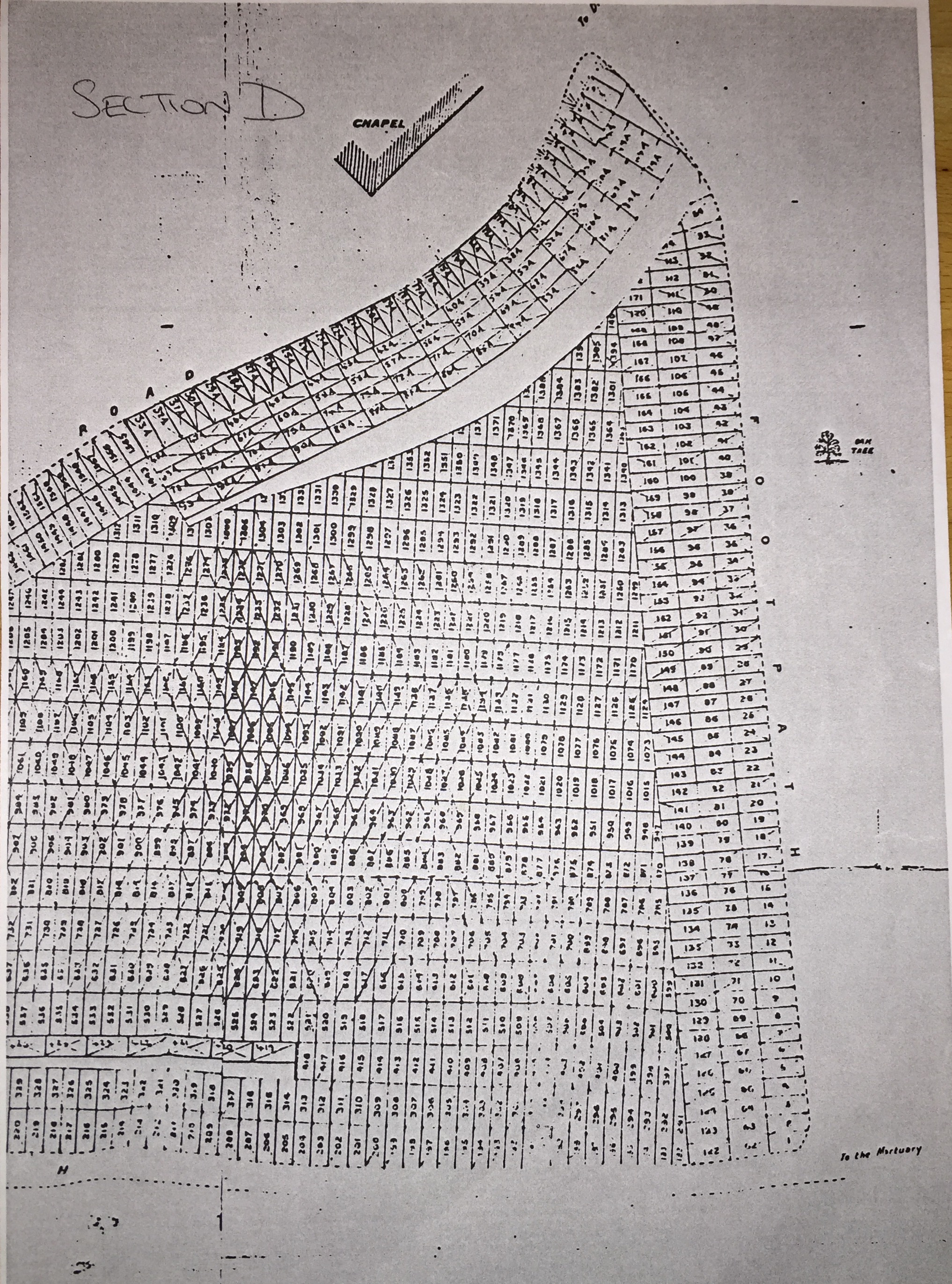
So what about the marker pictured here, found on a mound of earth. Is there a fallen headstone buried somewhere beneath? There are no clues, but it is possible to trace who was buried in plot D1083…

Molden 2

The facts …

The Radnor Street Cemetery burial registers reveal that there is only one person buried in plot D1083. His name was William John Molden, a boilermaker at the Works, who died on March 3, 1919 at his home, 145 Clifton Street. He was 44 years old and his funeral took place on March 8. Administration of William’s estate was awarded to his widow, Emily and his effects were valued at £179 5s.

Without applying for William’s death certificate we cannot ascertain his cause of death. Unfortunately we do not have a budget to pay for all the death certificates we need when researching the cemetery.

William was born on February 23, 1875 in Purton, the son of Eli and Hannah Molden. He began a six year boilermaking apprenticeship in the Works on February 23, 1890 aged 15. The 1891 census lists William as a 16 year old GWR Boiler Maker Apprentice living with his parents and older brother Sidney at Battle Well, Purton.  

William married Emily Painter in 1898 and at the time of the 1901 census they were living at 65 Redcliffe Street, Rodbourne with their four month old daughter Dorothy.

The family appears on the 1911 census living at 122 Clifton Street where William lists his occupation as Boilermaker Rivetter. The couple have three children, Dorothy Maud aged 10, Muriel Louise Hetty, 8 and Harold Sydney John 2. Another son, Raymond Edward Joseph was born in 1917.

William was a relatively young man when he died. Perhaps he died as a result of the post-war ‘flu epidemic which raged through Swindon as it did everywhere else.

SWINDON - RADNOR ST CEMETARY (3) 1905(2) - Copy

The Old Congregational Church

The re-imagined story …

Tomorrow I will hang up my check at V Shop for the last time. I’m looking forward to retirement with some trepidation. My body has had enough of the hard graft but I will miss my mates and the camaraderie. Fifty-five years I’ve been ‘inside.’

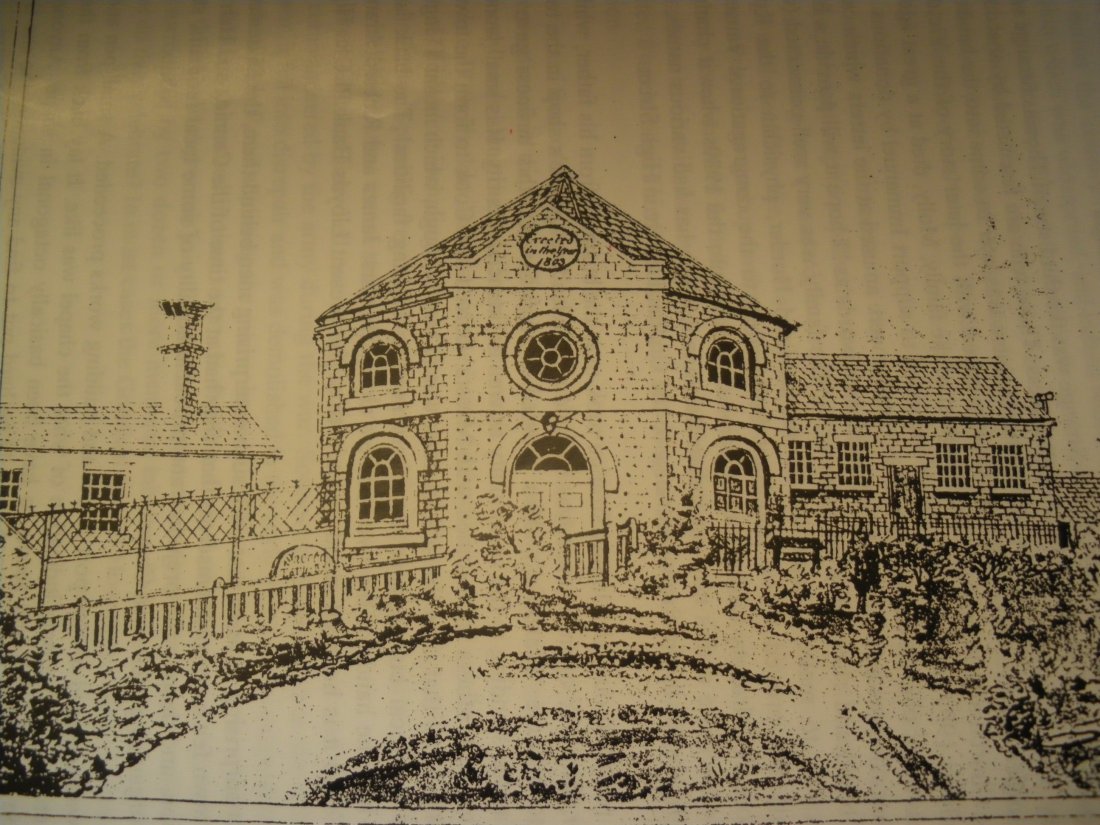
I left school at 13 and worked for a local builder until I could begin my apprenticeship in the Works. Some dates stick in your mind. On March 23, 1883 I was sent to join a group of labourers excavating the burial ground in Newport Street. The old Congregational Church had been demolished almost twenty years earlier, but the burial ground had been left intact, until now when the area was required for redevelopment. We were to locate and exhume the graves for reburial in the new Swindon Cemetery on Kingshill.

It had rained for most of the previous week and the clay soil was heavy and claggy and difficult to dig. You had to use a lot of force to shift the earth but all the time I was worried about what I might be disturbing. Some of the burials were more than 60 years old, the coffins rotting away. Every time my spade made any contact, I gave out an involuntary noise, something between a cry and a yelp. The men got angry with me and told me to have some respect for the dead. I was only a lad, I hadn’t known what to expect and I feared hitting a decomposed body, I tried not to look too closely, frightened of what I might see.

Eventually the foreman gave me a different job to do while the men transferred the exhumed remains to the mortuary in the cemetery. The new grave had already been dug by the cemetery Sexton.

A few weeks later I went to pay my respects at the graveside of the Strange family whose remains had been re interred. I stood by the large plot with the tall cross and made my apologies.

Richard Strange Mannington Farm (4)

The facts …

The extended Strange family were prosperous members of 18th and 19th century Swindon society. They were farmers and salt and coal merchants, grocers and drapers and they even opened the first bank in the town in 1807 Strange, Garrett, Strange and Cook.

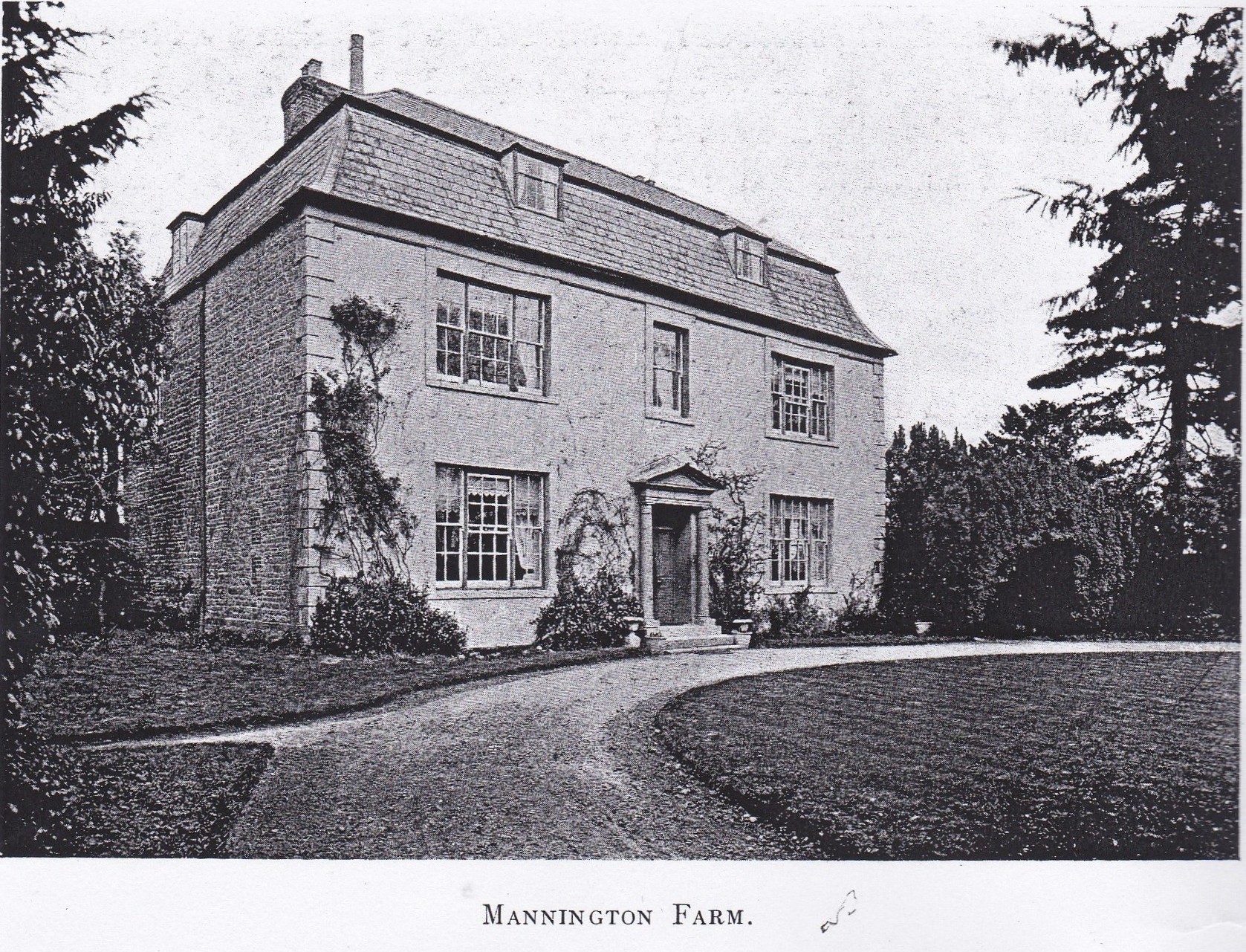
Richard Strange junior was born in 1799, the son of banker and grocer Richard senior and his wife Mary.  Richard married his cousin Martha, youngest daughter of Uncle James and Aunt Sarah Strange at Holy Rood Church on January 9, 1834.  Richard farmed at Mannington Farm from 1841 until his death in 1883 when his daughter Julia took over the tenancy of the farm.

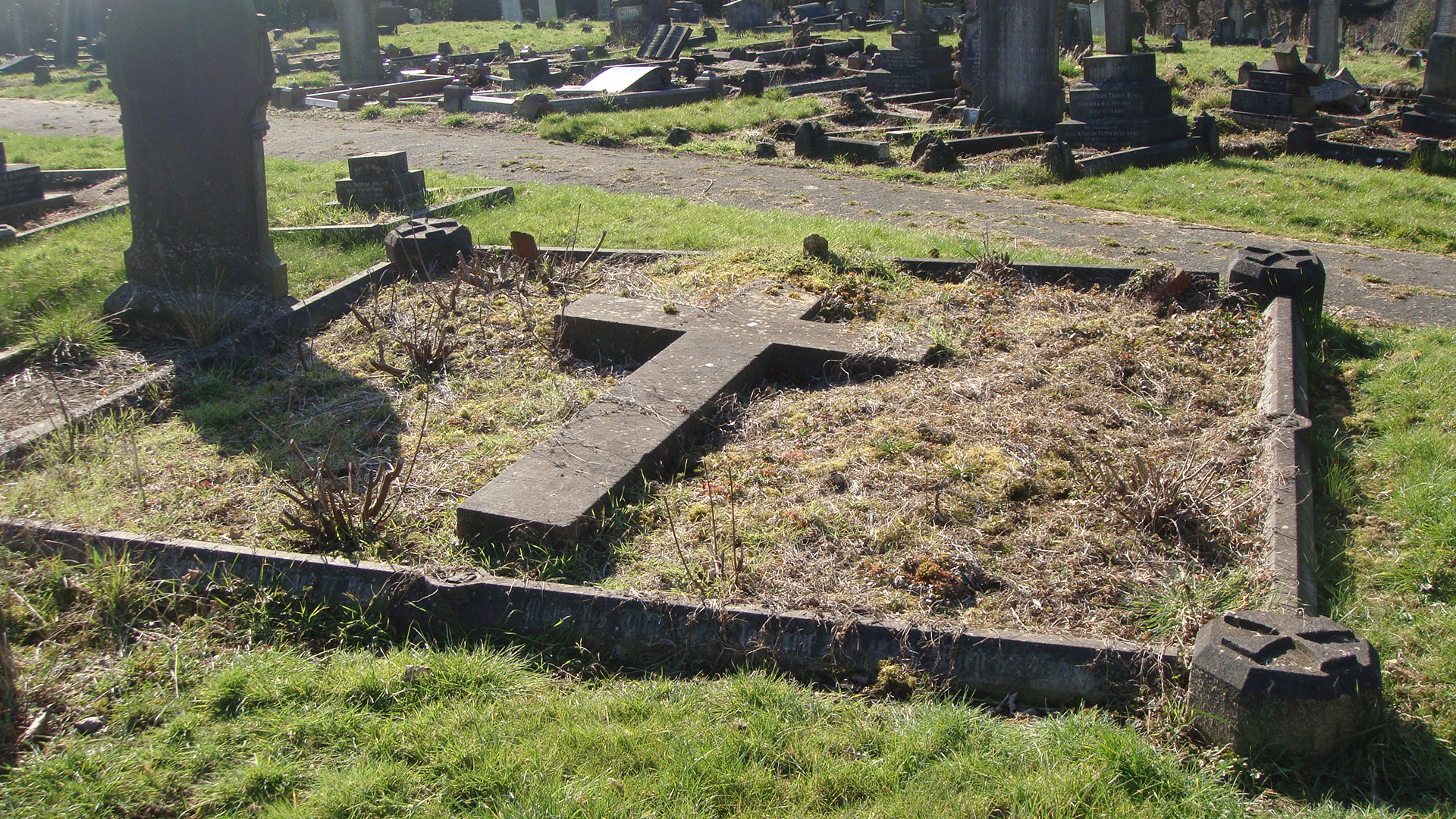
Mannington FarmThe Strange family were prominent non-conformists in the town and Martha’s father James founded the Congregational Church in Newport Street where members of the family were interred in the small burial ground. The Newport Street Church was demolished in 1866 but the burial ground remained intact for more than 15 years. However, in 1883 the graves of Richard Strange’s immediate family were exhumed for re-burial in Radnor Street Cemetery. The remains of his mother Mary who died in 1829, his father Richard who died in 1832 and his 16-year-old sister Sarah who died in 1820 along with those of Richard’s wife Martha who died in 1858 and a one-day old baby son also called Richard, were re-interred in plots E8463/4/5.
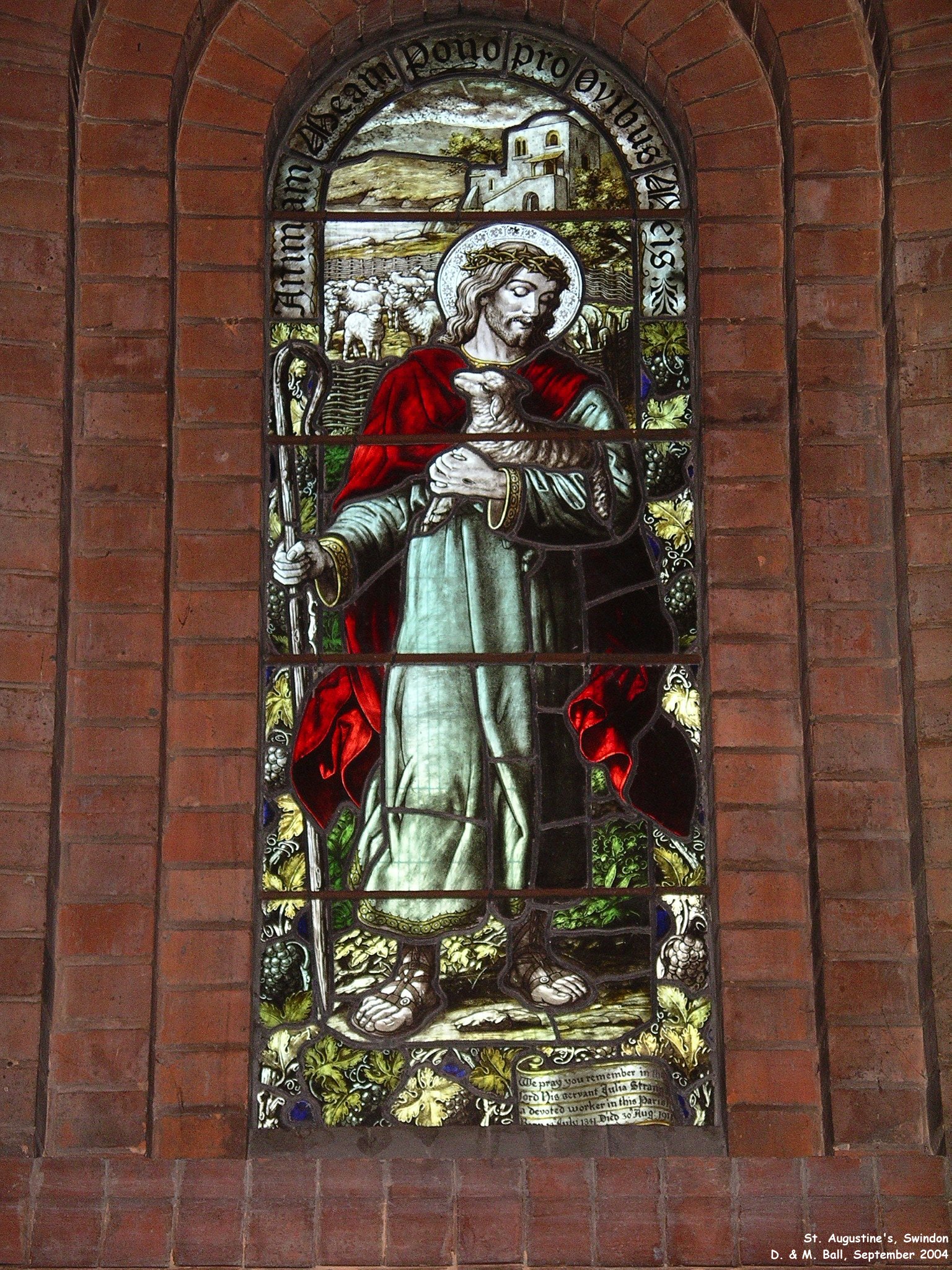
Richard Strange junior died at Mannington Farm on June 23, 1883 aged 83 and was buried in this large family plot. He left a personal estate of £4,775 1s 6d to his only daughter Julia who took over the running of the farm. Julia was buried in the family plot when she died on August 30, 1911.

A stained-glass window is dedicated to Julia in St Augustine’s Church, Rodbourne. The dedication reads ‘a devoted worker in this Parish.’

Aug-0095

Photograph published courtesy of Duncan and Mandy Ball.


You may also like to read:

The Pitt and Osman family – a life in service