Aunt Charlotte would have loved all this

The re-imagined story …

It was a bitterly cold morning but we were the best dressed passengers on the platform at Swindon Junction that Boxing Day in 1906.

Uncle Alfred had polished his top hat to a shine and Bill looked prosperous, if a bit portly, with his fob watch chain stretched across his ample stomach.

I wasn’t sure how we would keep the children neat and tidy for the duration of the journey, but so far, they have been very well behaved.

We managed to find seats all together in one carriage, although it was a bit of a squeeze and Fred almost sat on Annie’s hat.

Aunt Charlotte would have loved all this.

My mother came prepared with a picnic hamper and enough food to sustain us on an expedition across the dark continent, never mind a trip to Cardiff.

No sooner had we passed through the station at Wootton Bassett Junction than my mother was handing round the scotch eggs.

We were met at Cardiff station by Florence’s uncle who took us to the church at Canton where the wedding ceremony took place and then it was back to the Davies’s home in Conbridge Road for the wedding breakfast.

The other day I was looking through some of my old bits and pieces with Maisie, my granddaughter. I’m moving in with her and her husband, I just can’t manage living alone anymore. I have to get rid of so much. It’s difficult.

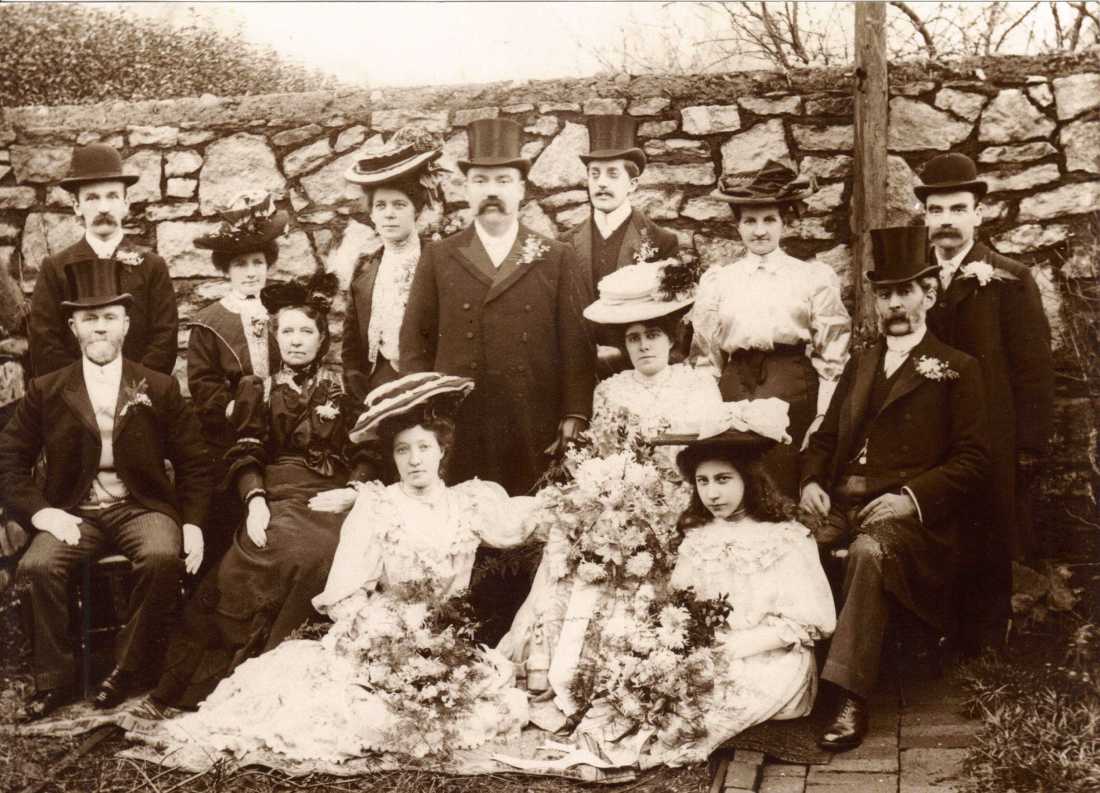
Maisie found Florence and Bill’s wedding photograph taken in the back garden in Canton on Boxing Day 1906.

“I love the ladies dresses,” said Maisie as she studied the sepia image. “Who are they all?”

I pointed out Uncle Alfred and Bill and Florence.

“I can’t remember who the others are, they are all members of the bride’s family.”

“They look a serious bunch,” she pulled a straight face. “Where are the Drinkwaters?”

“We were laughing and talking behind the photographer. I remember he asked us to be quiet as we were too much of a distraction.”

Aunt Charlotte would have loved that.

charlotte-and-alfred-drinkwater

The facts …

Alfred Drinkwater was born in Barton St Michael, Gloucestershire in 1848. He married Charlotte Dent at St Mark’s Church, Gloucester on April 12, 1869. The couple had a large family of eight sons and four daughters.

Alfred worked as an engine cleaner, a fireman and a 1st Class Engineman (Engine Driver) The family moved from Gloucester to Reading, eventually arriving in Swindon in the mid-1890s. There is a family story that he once drove Queen Victoria’s train.

Charlotte died at the family home in Theobald Street and was buried in Radnor Street Cemetery in plot D1453 on June 29, 1904.

Alfred outlived her by almost 30 years. He died at 112, Millbrook Street, Gloucester on July 26, 1932, his body returned to Swindon and the plot he shares with his wife.

Alfred and Charlotte’s nine-year-old daughter Nellie died in 1895. She is buried in Radnor Street Cemetery in plot B2398.

The couple’s eldest son Alfred James Henry served a six-year apprenticeship in the railway factory where he worked as a fitter. He married Annie Cummins in 1892 at St Mark’s, Swindon. The couple never left Swindon and their last family home together was at 27 Whitehead Street. Alfred James Henry died in 1949 and his wife Annie died the following year, 1950. They are buried together with Alfred’s parents. The cremated remains of L.C. Drinkwater, probably Alfred and Annie’s daughter Lilian Charlotte, were interred in the family plot in 1989.

William Charles John Drinkwater and his wife Florence, the couple who married in Cardiff on Boxing Day 1906, were living at 40 Montagu Street, Rodbourne at the time of the 1911 census. They later moved to Wales. William died in the Pontypool and District Hospital on July 9, 1942 and Florence died at her home, 21 Saint Matthews Road, Pontypool on June 5, 1958.
86d506fc-6c0e-40d4-8f67-92cea80dd834

Additional family history information obtained from Public Member’s Trees on http://www.ancestry.co.uk.
Rev Thomas Trafford Shipman

The re-imagined story …

We gathered outside the farmhouse where father fired the traditional shots above the rooftop to ward off evil spirits. Then the little party of ladies and gentlemen consisting of father and I, Uncle Richard, Charles and Letty, Thomas Plummer and his sister Ellen then set off down the carriageway from Hook to Lydiard House and the parish church of St Mary’s.

Although barely eight o’clock in the morning our friends and neighbours came out of their cottages, throwing showers of rice and as we made the short walk children linked hands and barred our way until Uncle Richard threw them some coins.

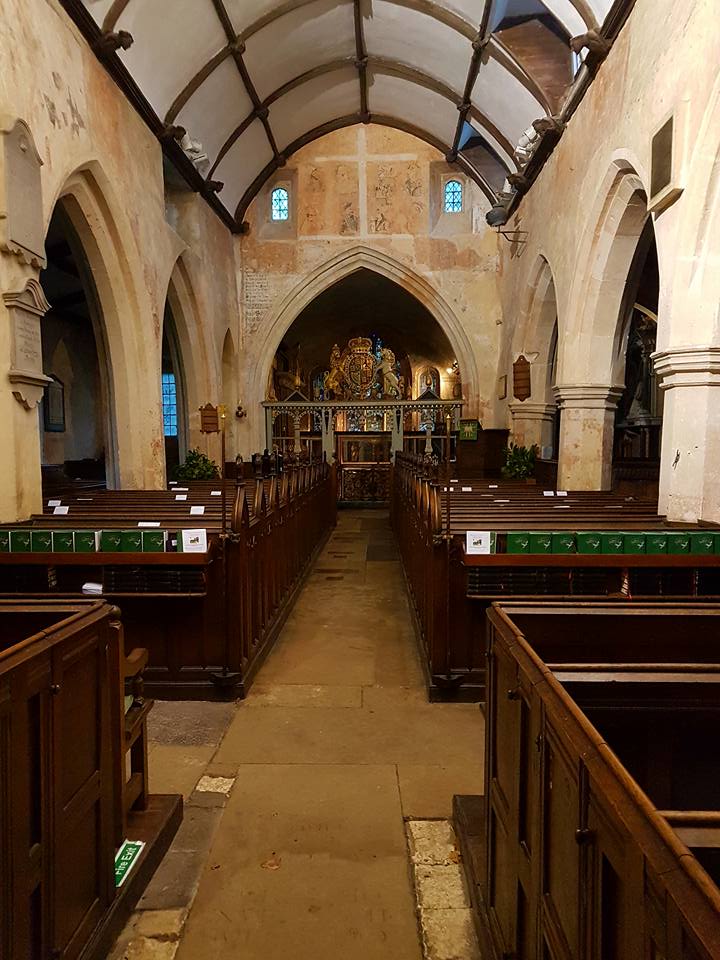
Those family and friends who had not joined our merry parade were already seated in the box pews. The beautiful little parish church with its monuments to the St John family. The ancient font where Letty and I had been baptised and where I in turn would bring the child I carried to be christened and blessed by Rev. Shipman.

Rev. Shipman knew I was expecting a baby and he knew Will was not the father, but he made no judgement.

“You’re not the first bride and you won’t be the last who walks down this aisle carrying a child who is not the grooms,” he said. “Do you love Will?”

It seemed a strange, romantic kind of thing for a clergyman to ask. I’d expected him to tell me to repent of my sins, to look to Christ for forgiveness and guidance.

Will was a good man. I’d known him all my life, we had grown up together. He was reliable and dependable and hard working and his prospects were good. But he didn’t make the breath catch in my throat or the heat surge throughout my body.

Will promised he would look after me all the days of our life. He did not promise to transport me to unprecedented levels of physical delight, as Ambrose had. He probably wouldn’t even know what that meant. He does not use flowery language, or pay me extravagant compliments.

Ambrose St John, a cousin of Lord Bolingbroke, had whispered fancy words into my receptive ear, and played my body with his expert lovemaking. And then he had left. I was not the woman I had been before he kissed me, before he touched me, but he had not reached my heart.

St Mary's pews 2

Will was aiting for me at the church door where Letty fussed with my sash and straightened my bonnet.

“I know,” he whispered. “And I love you.”

Rev. Shipman baptised our daughter on Michaelmas Eve. We brought two more babies to St Mary’s to be blessed by the kindly clergyman, but he would not be officiating at the baptism of our next child.

Rev. Shipman died recently following a short illness. Sadly, he will not rest at St Mary’s among the parishioners he served so well. The churchyard is closed and discussions are in progress as to where the people of Lydiard Tregoze shall bury their dead.

The funeral of Rev Thomas Trafford Shipman takes place tomorrow in St Mary’s Church with the interment at Radnor Street Cemetery in Swindon. I will be there, with my husband.

The facts …

Thomas Trafford Shipman was born in Sedgebrook, Lincolnshire in 1831, the younger son of William Shipman, a farmer, and his wife Harriet.

After studying at St Catherine’s, Cambridge he was made deacon at Carlisle in 1856 and ordained the following year. He served as a curate at Barbon, Westmorland 1856-58 and at Christ Church, Carlisle in 1858-59. He was Rector at Scaleby, Cumberland from 1859-1866 and at Nether Denton from 1866-1872 when he became Vicar at Aspatria, a position he exchanged for one at Lydiard Tregoze where he was instituted on April 1, 1879.

He married Margaret Sidney Roper-Curzon at St Mary’s, Cheltenham on October 13, 1859. Thomas was 28 and Margaret 24. The couple had four children, daughters Alice, Ethel and Mary and a son Francis Trafford Shipman. The 1881 census records Thomas and Margaret with their three daughters living at the Rectory, Lydiard Tregoze.

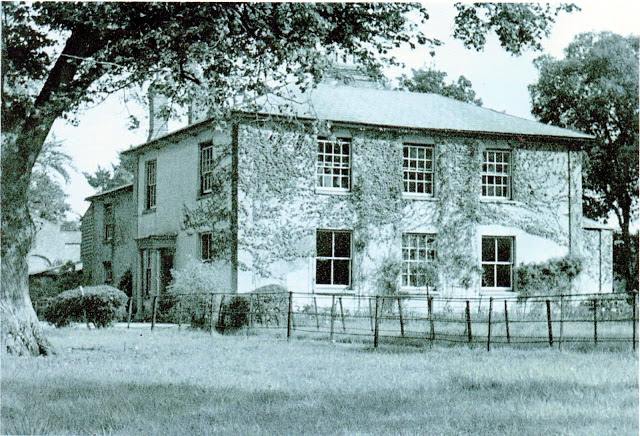
new rectory

The Rectory, Lydiard Tregoze – published courtesy of Roger Ogle

Thomas died suddenly in 1884 and is buried in Radnor Street Cemetery.

Thomas Trafford Shipman (2)

Canon Brian Carne writes in Notes on Rectors, Curates, and Patrons published in Friends of Lydiard Tregoz Report No. 38 published in 2005.

“Shipman’s death must have been sudden, because it became a legend. Right up to the 1960s it was said – at least by Mrs Large – that he appeared at the top of the rectory stairs to presage the death of the current incumbent.”