The story of Sarah Cox was revealed for all to read in the local press; to question her morality; to gossip and pass on the details of her crime. Yet who knew the facts; who knew what had happened to her? Her employer W.H. Stanier, Chief Clerk to William Dean, Chief Locomotive Engineer at Swindon Works, described her as ‘a God-fearing, steady girl.’ To his knowledge she never went out but once a week, besides going to a place of worship.
She kept the secret of her pregnancy and the identity of the child’s father, but in the end she confessed to her crime.
The inquest on Sarah’s baby was reported at great length. Then, perhaps surprisingly, the charge was commuted from ‘wilful murder’ to the lesser, second indictment of ‘concealing the birth of her child’.
But what happened to Sarah …

Rolleston Street pictured in 1957 shortly before demolition. Published courtesy of Local Studies, Swindon Central Library.
Inquest on an Infant at Swindon
Verdict of Wilful Murder
On Saturday Mr. Coroner Browne held an enquiry at the Clifton Hotel, New Swindon, into the circumstances attending the death of an infant which was found buried in a garden at the rear of No. 28, Rolleston Street, New Swindon. The case has excited considerable gossip in the town. It appears that a young girl named Sarah Cox, in service at Mr. W.H. Stanier’s, the Sands, Old Swindon, was confined on Wednesday night, April 24th, unknowing to any of the family, and that she took the child away in her box, and afterwards buried it in her brother’s garden in Rolleston-street. Mr George Wiltshire was chosen foreman of the jury, and the following evidence was taken:-
Richard Cox, brother of Sarah Cox, stated that he lived at 28 Rolleston-street. His sister came to his house on Thursday morning. He saw her at nine o’clock in the evening, after he came home from work. He went to bed that night about 11 o’clock, leaving her on the couch in the front room. She would not go to bed that night. She brought her box with her when she came to his house in the morning. He went to his work as usual the next day, and at twelve o’clock he was sent for by his wife, who told him of what had taken place, and that the body was in the back garden. He at once went into the garden, and saw where the earth had been removed, and then gave information to the relieving officer and Inspector Cruse. He saw Sarah Cox, his sister, about eight days previously, and noticed she was stouter than usual, but she had never made a decided statement that she was enceinte. His sister had been away from his house since October last, except coming occasionally since Christmas, on account of ill-health. His sister had had a child before, but it only lived a short time – some three months.
Mary Ann Heath, a laundress, living in the Quarries, Swindon, said she knew Sarah Cox as a servant at Mr. Stanier’s. She saw her there at a quarter to eight on Thursday morning. Witness had not then any suspicion as to the girl’s condition. She looked very ill; her face was as white as paper, and her lips were black. The girl never said anything as to her state of health. She left at half-past nine o’clock on Thursday morning in a cab, which Mr. Stanier had ordered;- By the Coroner; All the time witness was attending at Mr Stanier’s she never saw anything wrong with the girl, nor misjudged her in any way. The girl had told Mrs Stanier that she met with an accident a month ago. Mrs Stanier asked witness if she had any suspicion about the girl, and she replied, “Not in the least.” No complaint was made to her by the girl. Witness noticed a large bloodstain on the bed when she made it.
Inspector Cruse said that just before one o’clock on Friday morning he had his attention called to this matter by Richard Cox, and in consequence went to 28, Rolleston-street. He saw that the earth in the back garden had been disturbed. He removed it, and found about three inches below the ground the body of a newly-born male child wrapped in two newspapers, and with a piece of tape tied tightly round its neck. He saw Ellen Cox, the previous witness, who told him all that she had stated in her evidence. He had the body removed to the mortuary, and communicated with a doctor.
Mr E.C. Arnold, FRCS, MB, said he was called soon after one o’clock on Friday to the house, 28, Rolleston St. He went and saw Mr and Mrs Cox there. He went upstairs, and there saw Sarah Cox. He found she had every symptom of having been recently confined. She informed him that she had been delivered of a child on Wednesday night. He examined her in the presence of a witness. He saw the body of a child with a piece of tape tied round its neck. He afterwards made a post-mortem examination of the body and found that it had breathed. The girl said she had no recollection of anything except that she was confined on Wednesday night, and the next morning she found the child dead on the floor with the tape tied round its neck. He called in Dr. Streeten to assist him in the post-mortem examination, and they concurred in the opinion that it was fully developed, and perfectly healthy in every organ. There was a deep groove round the neck, and the signs were those of asphyxia. With the exception of the mark made by the tape, there were no signs of violence. The tape was tied with sufficient tightness to cause death. There was no proof, however, that the child had had a separate existence from its mother. The cord was divided near the placenta end, and had the appearance of having been cut, and not torn. The girl could have cut it herself.
Mr W.H. Stanier was the last witness called. He said that Sarah Cox had been servant at his house for the past six months. Within the last two months she had complained of stiffness in her hips. About four months ago she went to her brother’s in consequence of illness. During the past month she had frequently complained of her hip, and ascribed it to rheumatism. On several occasions she had gone to the GWR Surgery for advice and medicine.
On the night of Thursday, April 11, on her return from the surgery, she said that Dr. Bromley had advised her to take rest for a few weeks. Mrs Stanier asked her if she wished to go at once, or if she could remain until another servant was obtained. She replied that there was no difficulty in her staying a week or two longer.
The girl had a bedroom to herself all the time she was with the family. Mrs. Heath, the laundress, who had given evidence, had been in the habit of coming to assist in the house once or twice a week, and she would be the only woman likely to go into the girl’s room. On Thursday morning she got up and set the breakfast. Mrs. Stanier came to him shortly after eight o’clock, and remarked that the servant seemed very ill. The result of their conversation was that he ordered a cab to take her to her brothers. Mrs Stanier sent Mrs Heath to her bedroom, and she afterwards said there appeared to be nothing inconsistent with the girls’ statement.
Witness had previously consulted Dr. Bromley, and he said he did not notice that the girl was in the family way. Witness said he would like to add that he had always held the highest opinion of the girl’s character. He believed her to be a God-fearing, steady girl. To his knowledge she never went out but once a week, besides going to a place of worship. The excellent character she bore (disarmed) all suspicion.
This was the whole of the evidence and after some deliberation the jury returned a verdict of “Wilful Murder” against the mother, Sarah Cox.
The jury gave their fees to the Victoria Hospital.
Extracts from The Swindon Advertiser, Saturday, May 4, 1889.
The Alleged Wilful Murder
In the case of Sarah Cox, 27, servant, indicted for the wilful murder of her child at Swindon, the Grand Jury thew out the bill for wilful murder, returning a true bill on the second indictment of concealing the birth of her child at Lyneham. Prisoner pleaded guilt to the lesser count, and she was let out on her own recognisances and those of her brother to come up for judgment when called upon.
The Salisbury Times and South Wilts Gazette Saturday, July 6th, 1889.
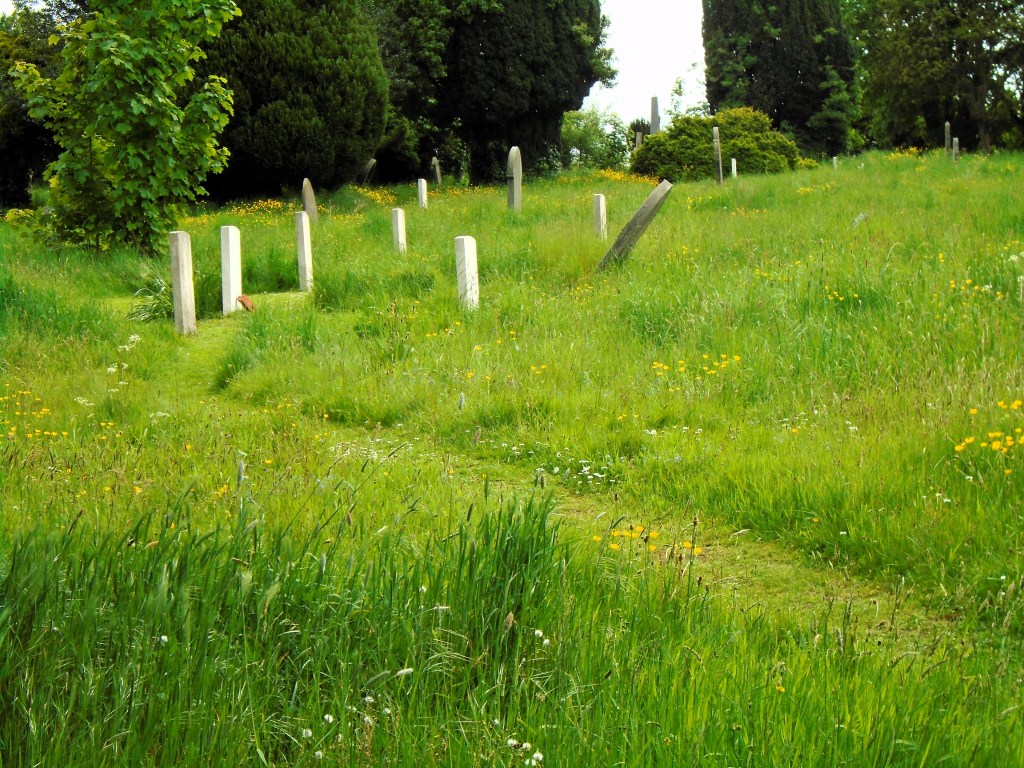
The details of the baby are recorded in the Radnor Street Cemetery burial registers as – Cox 1 day old 28 Rolleston Street buried on April 29, 1889 in plot B1178, an unmarked, public grave.

 Radnor Street Cemetery