Edward Thomas William Robins – Swindon Veterans of Industry

In December 1930 more than 200 men retired from the Great Western Railway Works, an event of such importance to warrant a detailed article in the first January edition of the North Wilts Herald published in 1931.

The names and addresses of those men forced to retire under the introduction of the 66 years age limit were recorded in appreciation of their long years employed in the Works.

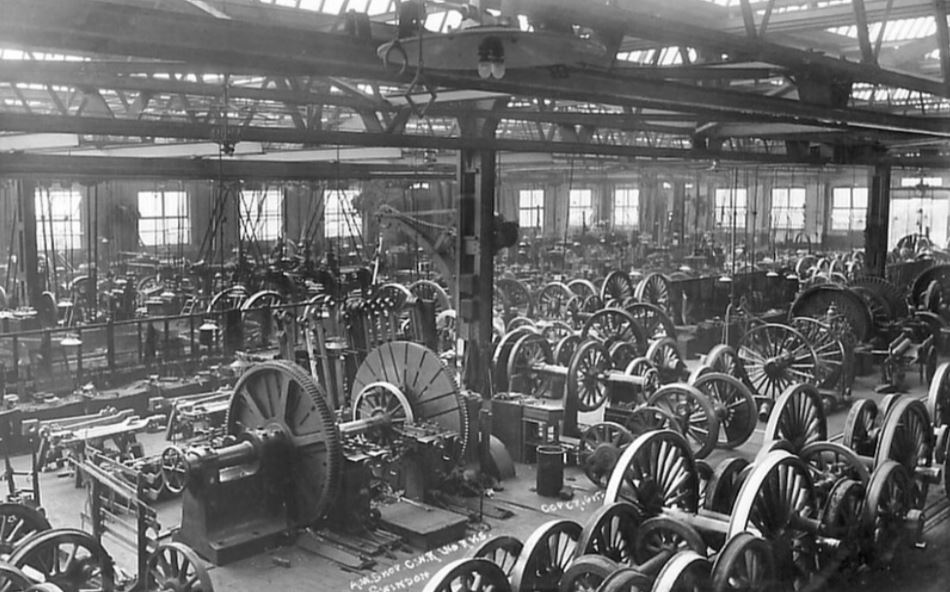
Mr E.T.W. Robins – A large number of different interest have claimed the attention of Mr. Robins. He has had 52 years’ service as a fitter with the GWR Co., and has been a chargeman for 37 years, working as a fitter in the B Erecting Shop.

He is now 66 years old. A Londoner by birth, he has lived in Swindon since he was a child.

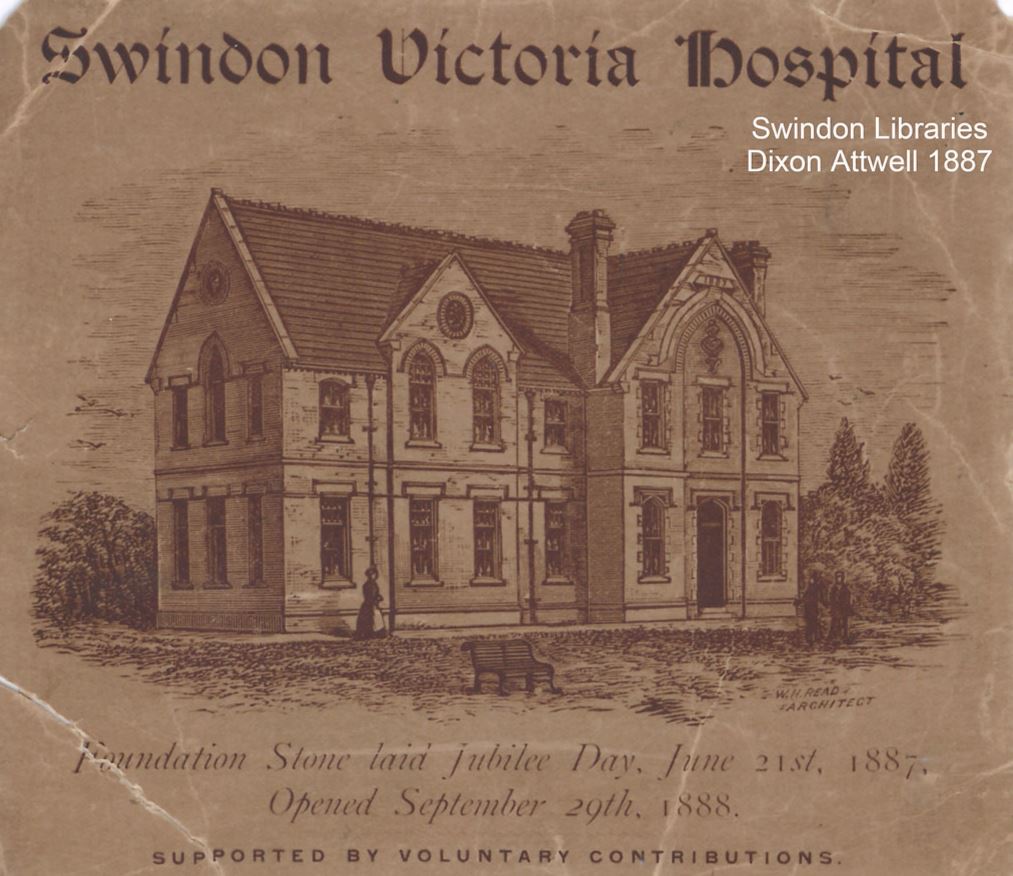
Mr Robins was one of the first secretaries of the Swindon Hospital Saturday Fund in 1894 and 1895, and has also been a member of the Hospital Management Committee.

He has done a great deal of church work at St. Mark’s, Swindon.

He is a member of the Foresters (Court Britain’s Pride). He was at one time secretary of the Swindon Chrysanthemum Society.

Swindon Veterans of Industry – North Wilts Herald, Friday, January 2, 1931.

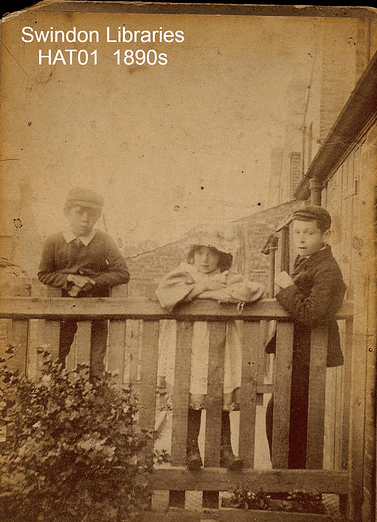
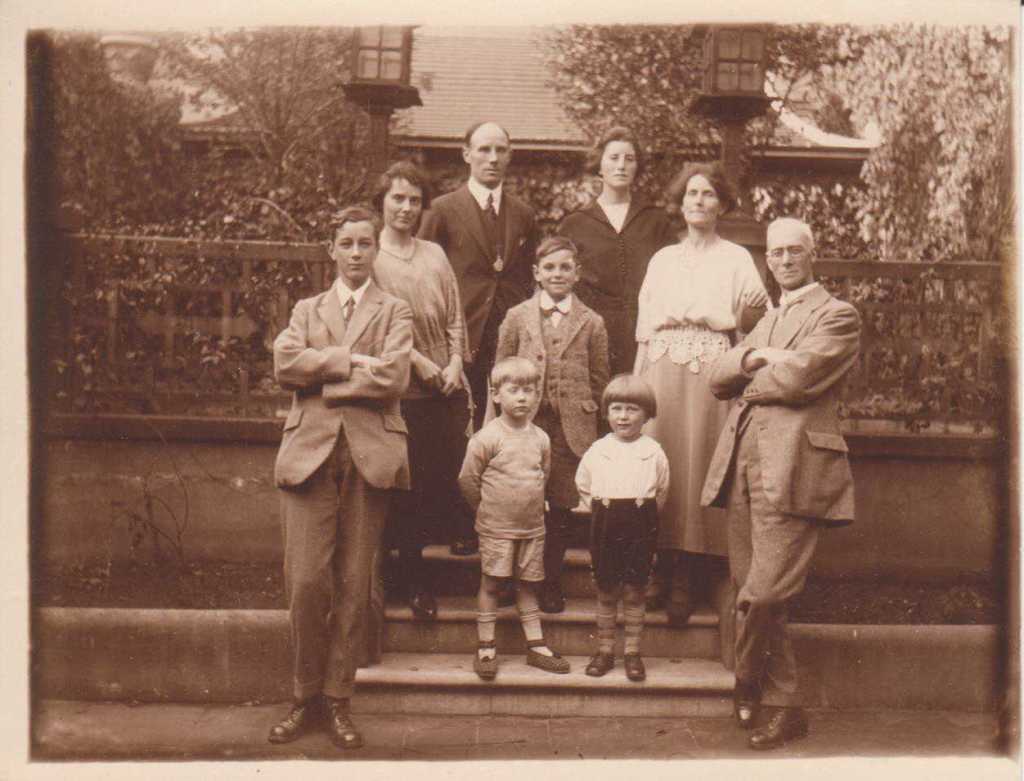
Agnes and Edward Thomas William Robins are pictured to the right of the photograph

Edward Thomas William Robins was born in March 1864 and baptised at St. Stephen’s Paddington June 26, one of Thomas and Henrietta’s 11 children. The family appears on the 1871 census as living at 16 Reading Street.

Edward married his first wife Hannah Williams on February 10, 1889 at the Independent Church, Victoria Street. Following her death he married his second wife Agnes Thomas at St. Mark’s on April 17, 1897. The couple had two sons Thomas Arthur and Cecil.

Edward Thomas Wm Robins died aged 82 years and was buried on March 25, 1947 in grave plot B3102 where Agnes joined him when she died in 1948.

Thomas Durkin – Irish haymaker

Image published courtesy of the Dixon-Atwell Donation and Swindon Local Studies

Sad death of an Irish haymaker

Mr Coroner Browne and a jury, of whom Mr George Wiltshire was foreman, held an inquiry at the Swindon Victoria Hospital on Tuesday evening into the cause of the death of Thomas Durkin, an Irishman, who died at the hospital the morning from injuries to his spine, received whilst at work the previous Thursday, under circumstances given in the evidence below.

William Durkin, deceased’s brother, said he and deceased and two other brothers came over from County Mayo, Ireland, last month to work for Mr S. Davis, of Rove’s Farm, Sevenhampton, Highworth, where deceased had worked each haymaking season during the past six years.

The accident to deceased happened last Thursday. Witness was working with him in the hayfield. Deceased was on the top of a load of hay, and, as it was leaning over somewhat, they decided to bind it before leaving it for the night. Three men, including witness, were pulling at the line on the ground to tighten in, and deceased was also pulling at it on the load, when suddenly the rope broke and deceased fell backwards from the load on to the ground. There was some knots in the rope, but he had not known it break before.

Deceased had been working as usual all day, and the accident happened late in the afternoon. Deceased must have been close to the edge of the load or he would not have fallen right off. After the accident deceased was attended by Dr Rowatt, and on Friday morning Mr. Davis had him removed to the Victoria Hospital.

A juryman expressed his opinion that the rope should have been produced for inspection by the jury.

George Fisher, farm labourer, in Mr Davis’s employ, said he tied the line on the waggon before commencing to bind the load. It was a “regular cart line,” and strong enough to have “stood a smartish weight.” Mr Davis explained to the jury that deceased was standing too near the edge of the load. Had he been in his proper place when the line broke he would have fallen on the load.

Dr J.C. Maclean said he was called to see deceased at the hospital at eleven o’clock on Friday morning. He found him suffering from spinal injury. All that could be done was done for deceased, but he did not get better and died that morning (Tuesday) about four o’clock. The immediate cause of death was injury to the spine caused by the fall.

This was all the evidence, and the Coroner briefly summed up, observing that he did not think any blame could be attached to anyone. The jury concurred, and returned a verdict to the effect that the immediate cause of death was injury to the spine caused by a fall from a waggon accidentally.

The jury expressed their sympathy with deceased’s brothers in their bereavement under such singularly sad circumstances.

The Swindon Advertiser, Saturday, July 14, 1894.

Undated postcard of Seventhampton published courtesy of Swindon Museum and Art Gallery

Thomas Durkin 38 years, who died at the Victoria Hospital, was buried on July 12, 1894 in grave plot B2269. This was probably a public grave which was later purchased by the Holmes family in 1909.

Herbert Pinnegar – killed at work aged 14

Emma Pinnegar’s five sons all followed their father into the railway works. Francis and Ernest became fitters, Nelson a blacksmith and Levi a coppersmith. Her youngest son Herbert had been employed just a few months when he was killed at work one Monday afternoon.

Herbert was working in D Shop “cutting of tyres for the wheels of railway carriages.” He was rather short sighted, according to the newspaper report, and working with heavy machinery. Do you suppose he was wearing glasses? I doubt it. Do you suppose anyone was supervising him? I doubt it.

In Swindon Works – The Legend, Dr. Rosa Matheson devotes a chapter to accidents. She writes: “The causes of accidents could be put down to a number of things – workers’ carelessness, difficult and horrendous conditions, over work, inexperience, lack of supervision, inattention, youth, old age, bad luck.”

It would seem young Herbert ticked a number of these boxes.

The railways brought employment and prosperity to Swindon; the railways brought life and they also brought death. Emma’s husband had been killed ten years previously walking home to Purton along the railway line. It appears he had been doing some shopping in Swindon that evening after work – it was the week before Christmas.

Fatality at Swindon

A terrible fatal accident occurred in the D Shop of the GWR Works on Monday afternoon. A lad named Pinnegar, aged about 14, was engaged upon a machine for the cutting of tyres for the wheels of railway carriages. Pinnegar, who was rather short sighted, was looking down to see if his work was placed in a right position, when going too near the large wheel, he was knocked down between the chisel and another part of the machine. The top of the poor boy’s head was cut completely off. Death, of course, was instantaneous. Deceased’s father, about six years ago, was killed on the railway while returning home from work.

The Bristol Mercury, Wednesday, September 16, 1891.

Herbert was buried in Radnor Street Cemetery in grave plot B1592, a public grave. He is buried with three other unrelated persons.

Fatal Railway Accidents Near Swindon – Between twelve and one o’clock on Saturday morning the stoker on a goods engine passing the Rifle Butts, between Swindon and Purton, saw what he thought to be the body of a man lying by the side of the rails. On search being made the body of a man named Frank Pinniger, a boilersmith in the Great Western Railway Works, but living at Purton, was found. He had been in Swindon shopping on the previous night, and left Rodbourn Lane about eleven o’clock to walk to his home down the line. The night was rough and windy, and it is supposed he was struck by the 11.20 mail train from Swindon. His body was removed to the mortuary at Swindon to await an inquest. Deceased was between 40 and 50 years of age, and leaves a wife and eight children.

The Stroud News and Gloucestershire Advertiser Friday, December 24, 1880.

Frank was buried on December 24, in St. Mark’s graveyard ‘by Coroner’s Order.’

A William Hooper image of A W Shop taken in 1907 and published courtesy of Local Studies, Swindon Central Library.

A master class in all things Avebury

When my much anticipated visit to Gloucester History Festival was scuppered by a total train wipeout, I was determined not to give up on my planned day out.

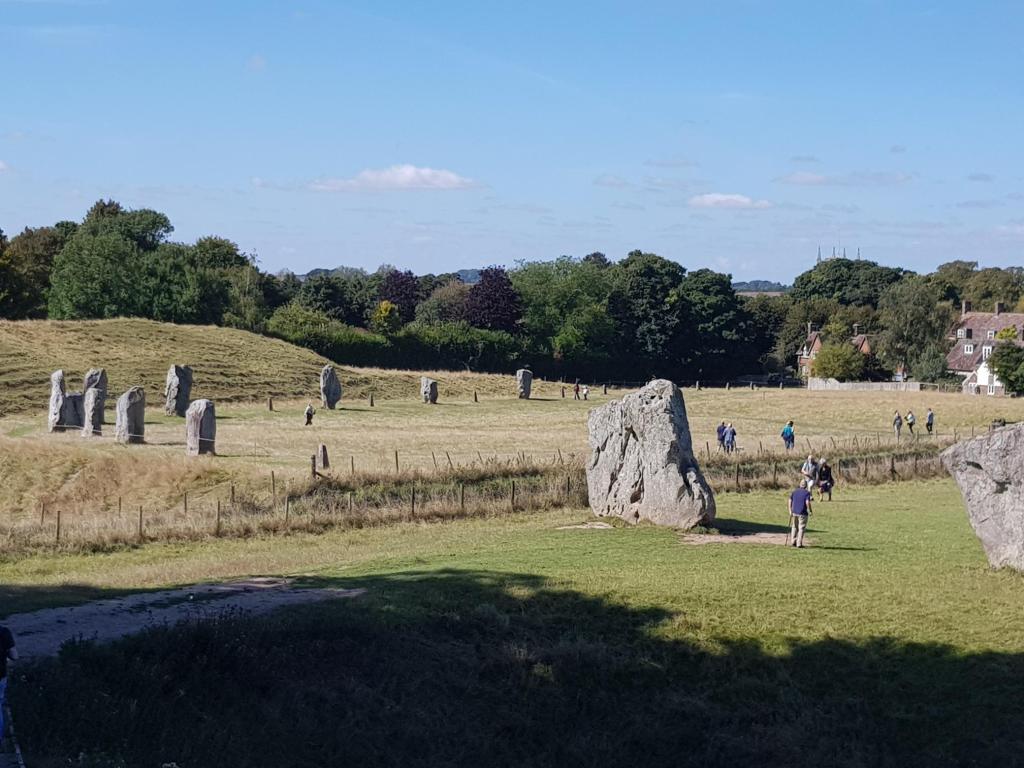
If, like me, you’ve enjoyed a visit to Avebury and a walk around the stones, take my advice and join a guided tour. National Trust volunteer guide Keith treated us to a master class. He posed (and answered) the questions we all want to ask but are too embarrassed to do so. Like, why was the henge built? No one knows! It wasn’t for defensive purposes, nor was it a place of burial (no evidence so far found). How many people did it take to move the stones? (Loads!) Experimental archaeology has suggested at least 200 were required to shift a single stone pulling it on a sledge. Now I’m not giving away any more answers – you’ll have to join one of Keith’s tours.

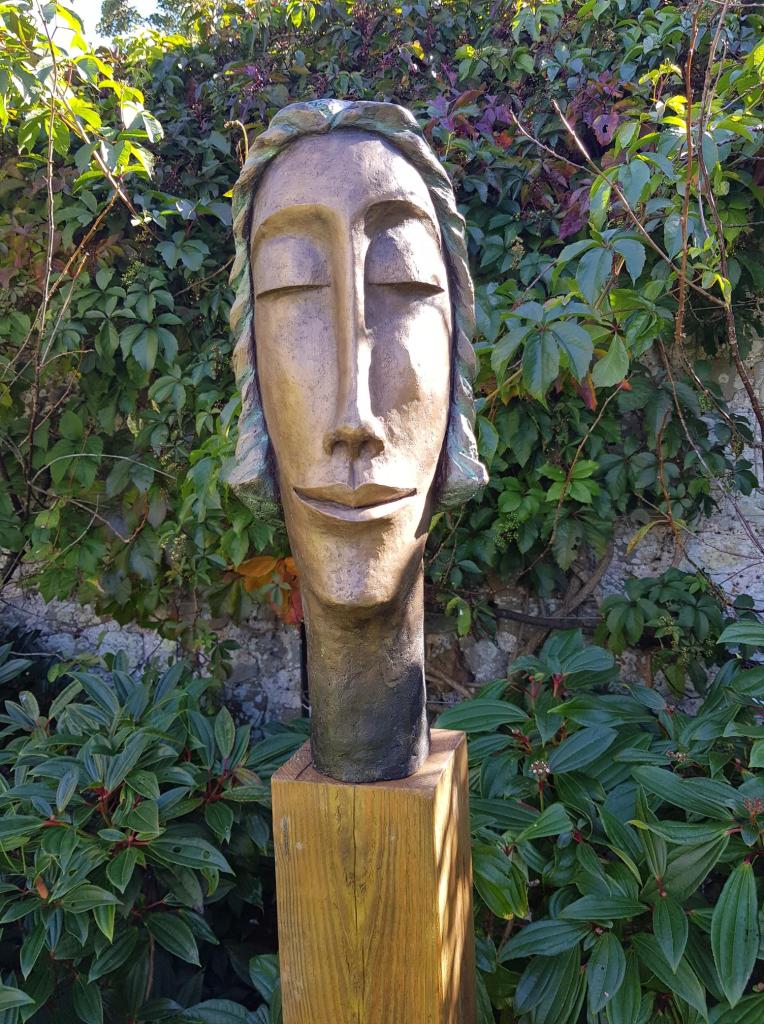
Sadly, Avebury Manor remains closed following devastating flooding in January 2024. However, the gardens are open where there is a sculpture exhibition running until October 20,10 am – 5pm.

Keith and the Swindon Stone, a portal stone, one of a pair of two at one of the entrances to the henge. The second one had disappeared by the 17th century.

The blacksmith’s stone discovered by Alexander Keiller beneath a blacksmith’s forge.

One of several Cove stones built in alignment with sun rise at the summer solstice/

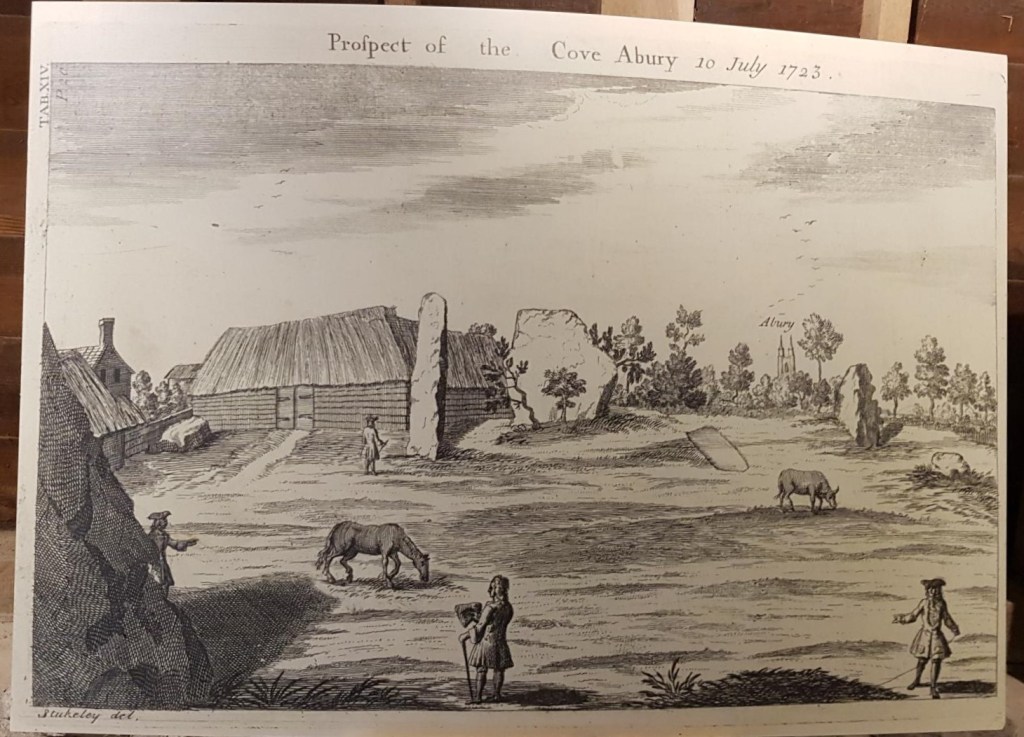
William Stukeley’s ‘Prospect of the Cove Abury 10 July 1723.’

Kay Singla

Kay Singla

Nick Marsh

Clara Ada Rumming and an unmarked grave

Distressing Accident – On Monday an inquest was held at the Castle inn, Swindon, on the body of Clara Ada, aged 15, daughter of John Rumming, 4, Dover-street, New Swindon, striker in the Great Western Railway Works. The evidence went to show that the mother left the deceased at home with other children about eleven o’clock on the 27th of October. About four o’clock the deceased must (as she stated to a neighbour) have prepared to clean up the grate, when she became giddy. On recovering she found her clothes in flames, and having unsuccessfully attempted to extinguish them under a water tap, ran out, when they were put out by some neighbours, who, with oil dressed the burns she had sustained. Dr. Howse attended the deceased, but she died on Sunday last from exhaustion, consequent upon the injuries received. All the lower parts of the body were burnt more or less. The jury returned a verdict of “Accidental death.”

Trowbridge Chronicle, Saturday, November 12, 1881.

Ada was buried on November 9, 1881 only the 56th burial in the new cemetery. She was buried in an unmarked public grave, plot A460 where she lay alone for more than 20 years. In 1902 Elizabeth Painter, a 52 year old widow from Ponting Street was buried with her in this public grave and in 1916 they were joined by Walter William Palmer.

Walter William Palmer joined the Coldstream Guards, later transfering to the Grenadier Guards and served from 1894 for 12 years. As a former soldier Walter was called up as a reservist at the outbreak of the Great War. He enlisted with his old regiment on September 12, 1914 and left for France as part of the Expeditionary Force on November 11.

In 1917 Major General Sir Fabian Ware founded the Imperial War Graves Commission (now known as the Commonwealth War Graves Commission) and a programme of installing a headstone on the graves of the war dead was begun. Walter William Palmer had died as a result of his military service and was awarded an official headstone in recognition of his sacrifice.

Unfortunately, the names of those buried with him in the public grave are not recorded on this headstone, but if you visit the grave of Walter William Palmer please spare a thought for young Clara Ada Rumming (and Elizabeth Painter) who are buried with him.

Hungry for more history?

Sunday September 15 saw the last day of the fab Heritage Open Days 2024 event. Apparently Swindon had more events on offer than historic Bristol, so we were well proud. Thank you to the fantastic Karen Phimister for all her hard work.

At Radnor Street Cemetery we welcomed more than 80 people to a guided cemetery walk. Yes, it was a bit crazy and yes, we were concerned that people couldn’t hear us, but we can’t turn people away and Andy and I both have loud voices!

I managed to attend quite a few other events (not as many as I would have liked) including an excellent talk at Swindon Central Library – Electric Wonderland? Women and the 1930s Modern Home by Sarah Yates.

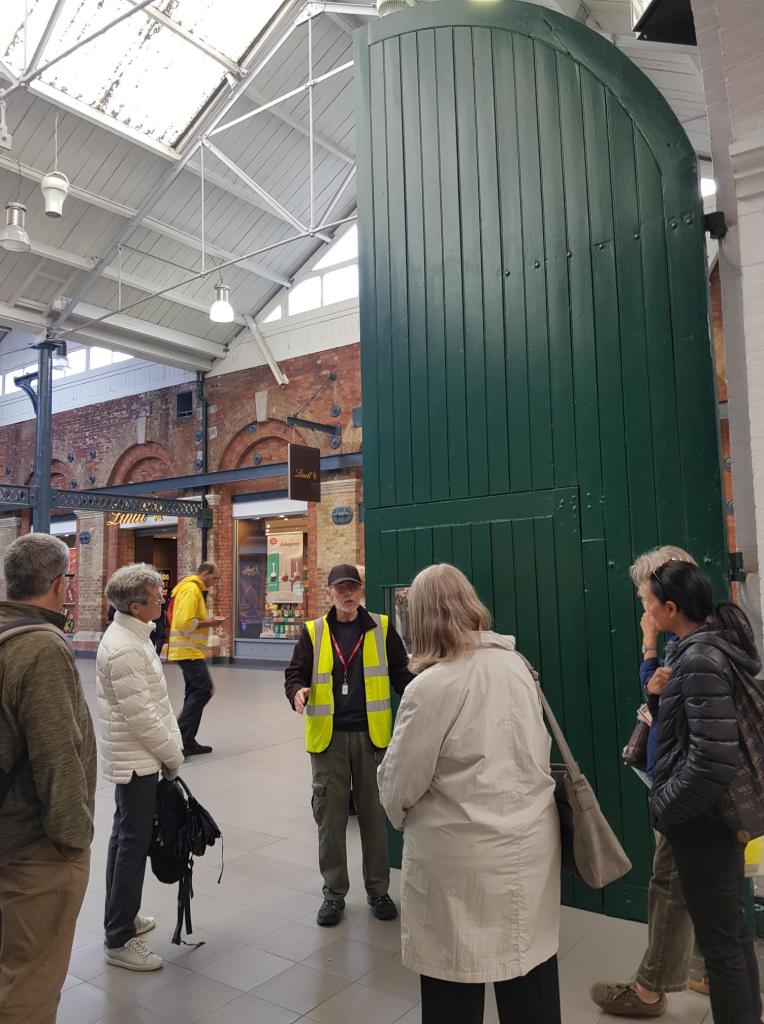
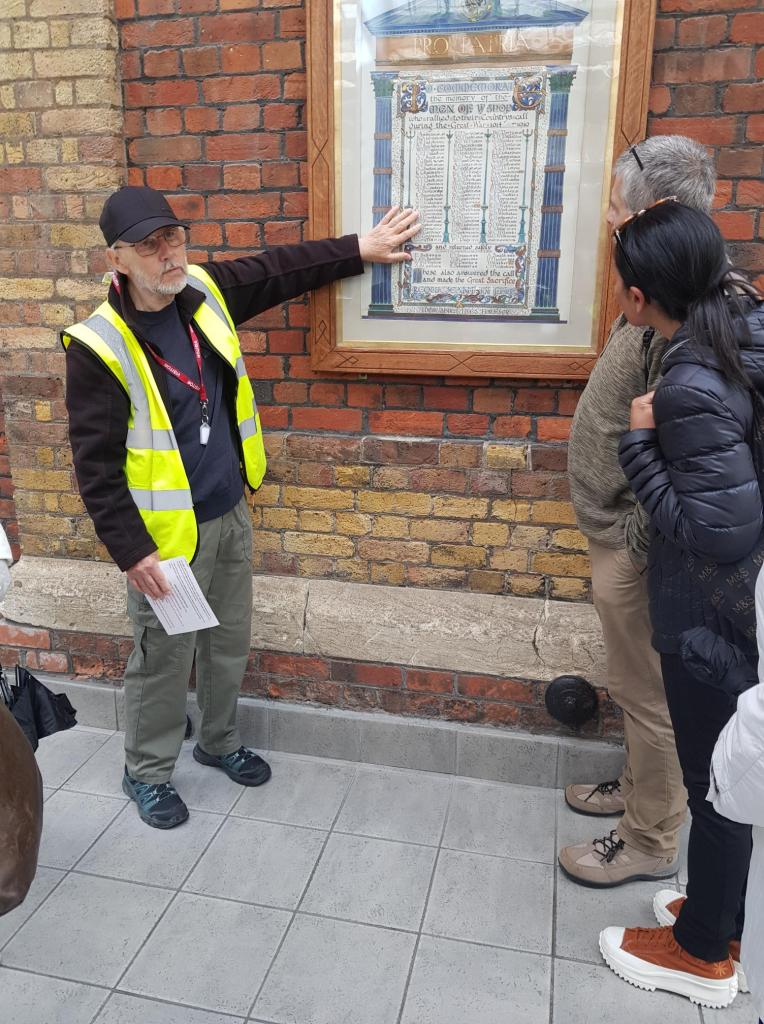
A guided tour of the Railway Village with Karen followed by a GWR Factory Tour with Gordon.

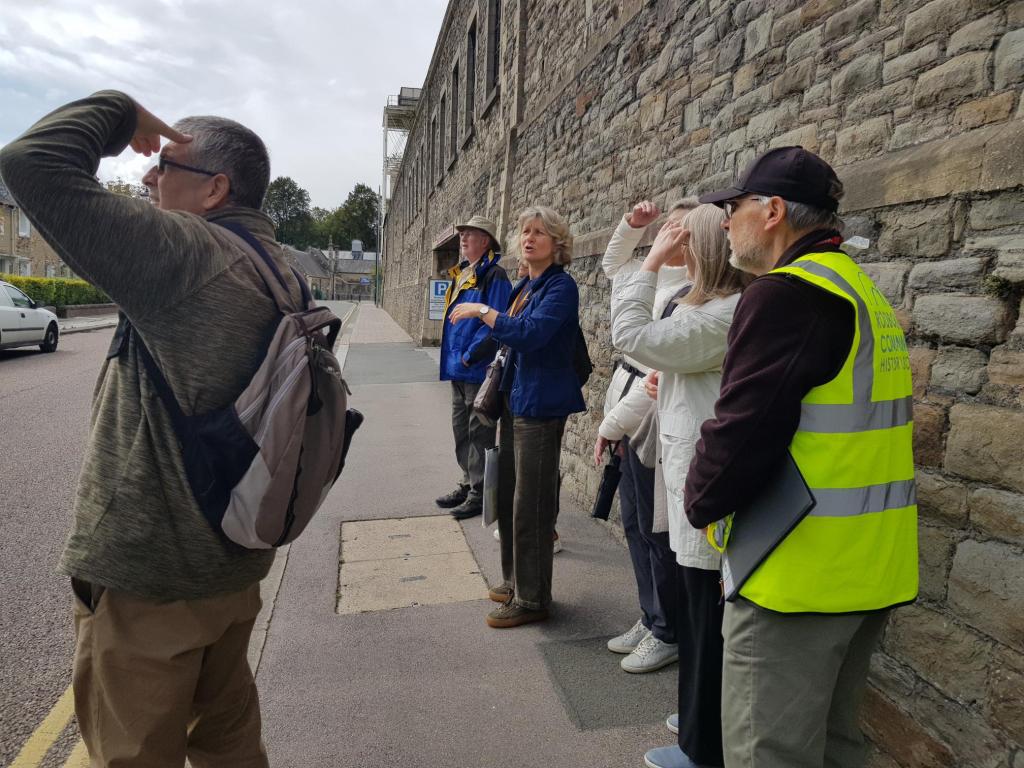
And then a guided tour of the Prospect Place Conservation Area with Michael and Geoff.

Here are a few photographs.

Radnor Street Cemetery guided walk

Guided tour of the Prospect Place Conservation Area

Railway Village with Karen

GWR Factory Tour with Gordon

And if you’re hungry for still more history join the Swindon Society for an Open Day this Saturday September 21, at the Lawn Community Centre on Guildford Avenue, running between 10.00am and 4.00pm.

Ben Lawson Hook – Fitter’s apprentice

Do you have a 15 year old son? Maybe you have a 15 year old grandson. He’s probably still in bed as you read this or perhaps, he’s playing some online computer game with his mates.

On Tuesday May 7, 1895 15 year old Ben Lawson Hook was at work in the R Shop (Loco Department) at the GWR Works. He was 18 months into a 6 and a half year Fitters apprenticeship. But that day he was mucking about, as 15 year olds are wont to do. A witness at the inquest said the boy ‘had no business to be swinging on the tyre’ (the metal wheel or tyre weighed 9cwt 15lbs and was in the yard outside the shop).

Ben Lawson Hook was born on June 8, 1879 one of Frederick and Elizabeth Hook’s large family. Frederick was from Eastbourne and the family lived in Bexhill for sometime before moving to Swindon in the late 1870s. Elizabeth died in 1892 and Frederick in 1894. By the time of the 1901 census 17 year old Sidney was recorded as head of the household, living with his sisters Millie 30, housekeeper, Caroline 28, tailoress, Katie 23, laundress and 9 year old Norah. But this was more than five years after the tragic events of that day in May, 1895.

At the inquest held in the Cricketers Arms on Thursday May 9, 1895 the jury returned a verdict of “Accidental death.” No blame being attached to anyone.- Mr J. Fordyce Stephenson was present to watch the case on behalf of the GWR authorities. The boy was buried the next day.

Image published courtesy of S.C. Hatt Local Studies, Swindon Central Library.

Fatal Accident to a Boy in the GWR Works – On Thursday afternoon, Mr W.E.N. Browne, County Coroner, held an inquest at the “Cricketers’” Arms, New Swindon, on the body of Lawson Hook, aged 15 years, of Maxwell street, New Swindon, who was killed on Tuesday last.

Deceased was employed in the R Shop (Loco Department) of the GWR Works. It appears that deceased and two other boys were amusing themselves in various ways, and deceased swung himself on to a large wheel, weighing over nine cwt., which over balanced and fell on him, inflicting such serious injuries that he died three hours later.

Mr Alfred Adams was chosen foreman of the jury, and after viewing the body, which was lying at the GWR Medical Fund Hospital, the following evidence was taken. Mr. Frank Apted produced a plan of the place where the accident occurred, and a sketch showing how it happened. – Robert Hook, brother of the deceased, identified the body.

David Turnbull was the next witness. He said he saw the boy swinging on a large wheel or tyre – one of 34 which were resting against the wall. He saw the wheel overbalancing, and shouted out, “Good gracious, that boy will be killed.” The wheel fell across deceased’s thighs, and he immediately hurried to his assistance. With assistance he removed the tyre, and deceased was at once taken to the hospital. Deceased had no business to be swinging on the tyre; it weighed 9cwt 15lbs, and was in the yard outside the shop.

Wm. H. Green, an apprentice in the GWR Works, said he saw deceased swinging on the wheels or tyres. Just after witness left him the accident happened, and witness heard deceased groaning. Witness went back and tried to lift the tyre off deceased, but could not do so, and Mr Turnbull and three or four other men came up at the time.

Dr Crowther, assistant to Dr Swinhoe, said he was called to the hospital to see deceased. He was suffering from collapse, and died three hours later from shock to the system.

The jury returned a verdict of “Accidental death.” No blame being attached to anyone.- Mr J. Fordyce Stephenson was present to watch the case on behalf of the GWR authorities.

The Swindon Advertiser, Saturday, May 11, 1895.

Lawson Hook was buried in a public grave in Radnor Street Cemetery on May 10, 1895. He shares the grave with his two sisters. Clara Hook who died in November 1897, aged 15 years old. Millie Hook, who held the family together after the truly awful 1890s, and died in March 1909 aged 38.

Frederick and Elizabeth Hook are buried in a public grave, plot B1711 with their daughter Nora who died aged 16 years of age in the Stratton Infirmary, also in March 1909.

Arthur James aged 7 – died from alcohol poisoning

This is the sad and shocking story of Arthur James who died from alcohol poisoning aged just 7 years old. We learn how 5 year old George Ockwell was called to give evidence at the inquest and how his mother, Emily Ockwell, had walked past the stricken boy who was vomitting and unable to stand or speak. And then we hear how his 14 year old sister Anne James arrived on the scene and picked up her brother. An unnamed man came to the girl’s assistance and carried her brother home where he died the following day.

More than 130 years later this story still shocks and saddens the reader.

Death from drinking spirits – An inquest was held on Monday morning, by Mr. Coroner Baker, at the Clifton Hotel, Clifton Street, New Swindon, on the body of Arthur James, aged 7, son of Simeon James, of 17 Kingshill Cottages, Swindon, who died on Friday afternoon from convulsions caused by drinking spirits which he obtained by forcibly entering a pavilion at the Ranger Cricket ground, Old Swindon.

Mr W.E. Morris was chosen foreman of the jury. Mr W.H. Kinneir and Mr E. Smith were present as representing the Ranger Cricket Club, and Mr. E.G. Lay, of Wood Street, Swindon, was also present.

George Ockwell, aged five years, son of Walter Ockwell, was called before the Coroner, and from him was elicited the information that the deceased, with the witness and another juvenile, were in the Ranger cricket field Thursday morning. The deceased entered the window of the pavilion and got out two bottles of spirits. With these the trio went down Lansdowne Road, and witness stated James drunk the contents of the bottles. After doing this he lay down, and the other boys left him, taking one of the empty bottles with them home. One of the bottles was now produced and also broken pieces of the other (found near the deceased by his father). From these it appeared that their contents were spirits.

Emily Ockwell, mother of the first witness, stated that on Thursday about two o’clock she was going to work along Lansdown Road, with her son, who had been with the deceased, when she found James in Vickery’s field. A lad was trying to hold him up, but he was insensible and could not stand or speak. Witness, understanding that deceased’s sister was coming to take him away, left him lying there. Whilst there he vomited a little, and had vomited a great deal before she arrived. He smelt strongly of spirits.

Anne James, deceased’s sister, stated that on Thursday, about 2.30 p.m., she found her brother lying in Vickery’s field, insensible. She picked him up, and he opened his eyes once. She carried him a short distance, and a man carried him the rest of the way. He told her that deceased was in a fit. He vomited after reaching home, and smelt strongly of spirits. He died on Friday afternoon, about half past three o’clock.

Dr. J.B. Fry deposed that on Thursday, about 4.30 p.m., he saw the deceased lad. He was then in a state of insensibility; his skin was cold and pale. The pupils of the eyes were very widely dilated, and insensible to light. Deceased was also in convulsions, which continued until his death. There was a bruise about the size of a pigeon’s egg on his forehead, and also a bruise on the right temple, which might have been caused by his falling. He could detect no smell of spirits either in the breath on on the clothes, and there was then no vomiting. From the history of the case it was probable that the convulsions were the result of an overdose of alcohol.

The Coroner, in summing up, said there was little doubt that the deceased got hold of the bottles of spirits, and through drinking too much of the spirit convulsion resulted, which caused death.

Before the jury gave their verdict, Mr. E.G. Lay stated that he had the management of the pavilion in the Ranger cricket ground. Two bottles, with some brandy and whisky in them, and a whole bottle of rum had been left in the pavilion, which he believed were securely fastened. The three bottles were missed on Thursday evening. An entrance had been effected into the pavilion, and then through an inner window into his compartment.

The jury returned a verdict of death from convulsions due to alcoholic poisoning.

The North Wilts Herald, Friday, September 17, 1886.

Arthur James, seven years old, of 17 Kingshill was buried on September 14, 1886 in a public grave plot A659. The following day a 5 month old baby, Ethel Maud Tilley was buried in the same plot.

Charles Edmonds – shunter

In May 2024 I attended the Friends of Swindon Railway Museum’s monthly lecture, entitled ‘Into the Jaws of Death – working and dying on Britain’s railways 1900-1939,’ delivered by Mike Esbester from the University of Portsmouth. The subject was the danger railwaymen faced on a daily basis whether working on the trackside or in railway factories such as Swindon Works.

One of the facts Mike raised was that saftey both on the line and in the factories was considered by the railway companies to be largely a matter of personal responsibility. Despite the incredibly dangerous nature of the work, employees were expected to look out for themselves.

The following account records the extreme stoicism of Charles Edmonds, a shunter, who stepped between the buffers to couple up two engines. Despite his injuries he walked to the accident hospital and then home to Princes Street, a distance of approximately a mile.

Fatal Accident at the GWR Works

Mr J.B. Baker, coroner, held an inquest at the Red Cow Princes-street, on the body of Charles Edmonds, 48, shunter, who resided at 51, Princes-street, and who died on the previous Saturday night from injuries received whilst following his usual employ, which he had been engaged in many years, at the west yard of the GWR Works, on the 11th inst. It appeared to be generally admitted that death was the result of a pure accident.

The jury, of whom Mr W.E. Morris was foreman, having viewed the body, proceeded to hear the following evidence:- Felix Hale, 52, Bath-street, engine driver, said he knew the deceased, who was employed as a shunter in the GWR. On the morning of the 12th of October, at 9-45, they were engaged together shunting some engines. The deceased got in between the buffers to hook them on. When he had done so the engines rebounded and thus caused a space between the buffers. The deceased attempted to pass through these, thinking there was time, but the chains suddenly tightening the engines rebounded and he was caught. Witness said he did not know for certain that deceased was caught, as he saw him put his hands up. He remarked to his mate on the engine “Well, if Charley was not caught then he had a narrow escape.” As deceased did not come out witness got off his engine to go and see for him, and found him leaning against the coupling. He asked him how he came to try and pass through the buffers like that, and he answered that he thought he had time. With assistance deceased walked to the hospital and home.

By the Jury: There were hooks for shunters on the line, but not for engine shunters, the couplings being different. If deceased had stopped instead of trying to go between the buffers he would have escaped. Deceased was a man of experience.

John Hunt, Brunel-street, foreman of the “A” Shop, GWR Works, said Brown, the fireman for the last witness, told him of the accident and he went and found deceased sitting in the watchman’s cabin. He asked him if he was hurt very bad, to which he replied that he did not think he was. He asked him how it happened, to which deceased replied that he got between the engines to couple them, when one touched the other and sent it the length of the chain, thus leaving room for him to pass out, but as he was doing so the engine rebounded and caught him, but only for a moment, as he was instantly released. Deceased declined the use of a chair to go to the hospital, preferring to walk.

In answer to the Foreman, witness said there was no appliance for coupling engines without going between, as there was with trucks. In the Works they had so many classes of engines and tenders that they were bound to connect them by hand. It would have been all right if deceased had stooped under the buffer.

Dr. C. Spackman (Messrs. Swinhoe, Howse, and Bromley) said he saw the deceased when he came to the hospital on the morning of the accident. He said he had been “nipped” by the buffers, but did not appear to be in much pain. There was no abrasions or broken bones. He gave him a little stimulant, and deceased said he could walk home. Dr. Bromley saw him later in the day, but could find no sign of injury. It was impossible now to say the exact cause of death; there was no doubt internal injuries, and also injuries to the spine, as paralysis of the legs followed in a few days. He, however, rallied once or twice, and it was thought he would recover. He could take all kinds of food.

The Jury at once Returned a verdict of “Accidental death.” As it was said he had left a family of eight children, the Jury made a collection for the widow.

Swindon Advertiser, Saturday, October 31, 1885.

Charles Edmonds was buried on October 30, 1885 in an unmarked, public grave plot number A151 with three other unrelated persons.

PolluxHawthorn Class 2-4-0 built in Swindon Works in 1866.

Photograph published courtesy of P.A. Williams and Local Studies, Swindon Central Library.

Mike’s lecture was both compelling and revelatory. To discover more visit www.railwayaccidents.port.ac.uk.

And if you would like to join the Friends of Swindon Railway Museum visit their website. http://www.fosrm.org.uk/
Henry Simpson – overdose of laudanum

Laudanum was the 19th century go-to drug for – well, pretty much anything really. The opium tincture was used to relieve everything from diarrhoea and the common cold to heart disease. It was a pain suppressant, induced sleep and was very, very addictive.

It was also very popular in Victorian artistic circles. One of the many victims of laudanum addiction was Elizabeth Siddal (1829-1862) a talented artist in her own right but better known as the muse, mistress and eventual wife of Pre-Raphaelite artist Dante Gabriel Rossetti. Lizzie died of a suspected overdose of laudanum following the birth of her stillborn daughter.

Laudanum was readily available, cheaper than a bottle of gin and in Swindon in 1888 could be bought over the counter by a 14-year-old girl, apparently.

This is the story of Henry Simpson who also died from an overdose of laudanum taken to relieve back pain.

Henry Simpson was born in Lechlade in about 1837, the son of plasterer John Simpson and his wife Sarah. Henry married Ellen Clifford in 1857 and throughout his life worked as a slater and plasterer, eventually adding grocer to his list of occupations, so obviously a hardworking man. The couple had two children, a daughter Lydia and a son William. In 1861 the family were living in Kempsford. By 1871 they had moved to Poulton in Wiltshire and by 1881 they had arrived in Swindon and were living at 21 Oriel Street, described on the census returns of that year as a Grocer Shop.

Death Through an Over-dose of Laudanum at New Swindon

Yesterday (Friday) Mr W.E.N. Browne (Coroner for North Wilts) held enquiry at the “Whale” Inn, Princes-street, New Swindon, touching the death of Henry Simpson, plasterer, who was found dead in bed on Thursday morning at his residence in Oriel-street. Mr. J. Maylott was chosen foreman of the jury.

After viewing the body, the first witness called was Richard James Page, who stated that he had lodged with deceased for 10 years. Deceased was at work on Wednesday last, but went home in the afternoon, complaining of pains in his back. He had been suffering all the week. On the previous Saturday someone recommended deceased to take a dose of laudanum to ease the pain. Deceased obtained a bottle, and on Sunday evening he took 30 drops in some water. Witness counted the drops. Deceased then went to bed, and got up as usual on Monday morning. He took about the same quantity of laudanum again on Monday night. Witness did not see the bottle again until Thursday. It was then empty, but was quite full when deceased bought it.

Minnie Browning, 14, a young girl residing in Oriel-street, proved going to Mr Smith, chemist, of New Swindon, and obtaining a bottle of laudanum and some opodeldoc, for which she paid 1s, and told the chemist it was for Mr. Simpson.

Hannah Browning gave evidence, stating that she was called to deceased’s house on Thursday morning about 11 o’clock, and between twelve and one she was asked to go and call deceased, as he had not got up. She did so but received no answer. She went half an hour afterwards and went into the room, and saw deceased in bed. She felt his hand and found it quite warm, but stiff. She then sent for some one, and she felt sure he was dead.

Dr Arnold, MB, FRCS, LRCP, stated that he was called to see deceased about three o’clock on Thursday afternoon. He found him dead, lying in the position of natural sleep. He examined the body of deceased, but found no marks of violence. In his opinion deceased had taken an over-dose of laudanum. The bottle produced would hold about eight drachms. Two drachms would be sufficient to kill a man who was not used to taking it.

The jury returned a verdict that deceased came by his death through taking an overdose of laudanum.

The Swindon Advertiser, Saturday, July 21, 1888.

From the evidence given at the inquest by Richard Page it was stated that Henry was suffering from back pain, causing him to take to his bed. Perhaps today the verdict arrived at by the jury might have been a more empathetic ‘accidental overdose.’

Henry was buried in grave plot B1575 on July 23, 1888. This was most probably a public grave at the time of his death but was subsequently purchased in 1948 for the burial of Edward Richard Green and his wife Emma Selina who died in 1952.

Administration of Henry’s will was granted to Ellen and his personal effects were valued at £147 6s 9d. Ellen moved to Chester after Henry’s death where she lived with her daughter Lydia and son-in-law Charles Arthur White. She died at their home on June 14, 1890 and was buried in Overleigh Old Cemetery, Chester.

For those of you interested in the story of Elizabeth Siddal you can read more here. This is one of the many portraits Rossetti painted of her.

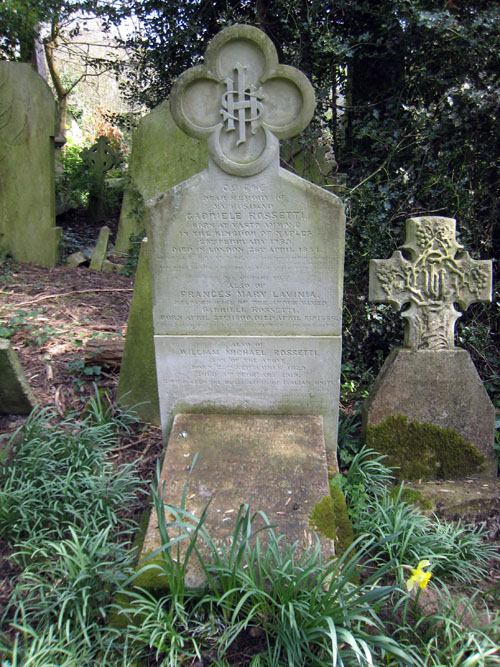
Elizabeth was buried in the Rossetti family plot in Highgate Cemetery.