I can’t help but think those in authority found this boy an irritant. It looks as if he had been in trouble since a young child, receiving the birch at the age of just 11. He was obviously such a nuisance no one could be bothered to get his name right, and when he unexpectedly died the verdict was ‘food poisoning’ – probably!
Singular Death of a Reformatory Boy – An inquest was opened by Mr. Coroner Sylvester on Saturday as to the death of a youth named William Edward Archer, aged 15, belonging to Swindon. – Deceased was at the Reformatory. He was not strong, and had been medically attended off and on. He complained of feeling unwell on Friday, and was sent to bed, and told that if he felt worse a doctor should be sent for. His temperature was taken twice, and was normal; and he was seen during the night by Mr. Crichell, one of the labour masters, who asked him if he was in pain or wanted anything. He replied that he wanted nothing. When Crichell went through the ward shortly before six next morning he found him dead. Dr. Hubert Willcox said death was due to the presence of an irritant in the intestines, the exact nature of which could not be stated till the contents had been analysed. The inquest was adjourned till the 9th inst. for an analysis to be made.
Two jurymen remarked that they had other engagements for that date, Mr. W. Papps being a delegate at a Foresters’ meeting at Devizes, and Mr. E. Foreman having an engagement as market for a Yeomanry prize meeting. The Coroner declined to alter it, and summoned all to attend on the date named.
The Wiltshire Telegraph, Saturday, October 7, 1905.
Is this the same William Archer, aged 11, who was found guilty at the Petty Sessions in 1900 along with Henry Love 8, of stealing a tin of salmon from a grocer’s shop? The younger boy was bound over to be of good behaviour, while Archer was ordered to receive three strokes with the birch rod. The same day Archer was charged with two other lads with stealing a money-box from the top of the harmonium of a blind street musician. Further strokes of the birch were added to his punishment.
Edward William Archer was 15 years old when he died in 1905 at the Wiltshire Reformatory for Boys in Warminster. The subsequent verdict of the inquest was that the County Analyst, Dr Dyer, had made an exhaustive analysis of the stomach contents and could find no trace of any poison, irritant or otherwise, suggesting the cause of death might be ptomaine poisoning (food poisoning). The Coroner questioned whether the lad had eaten some fungus in mistake for a mushroom and said that the most suitable verdict would be that death was caused by acute inflammation of the stomach and intestines. The jury accordingly returned a verdict to this effect.
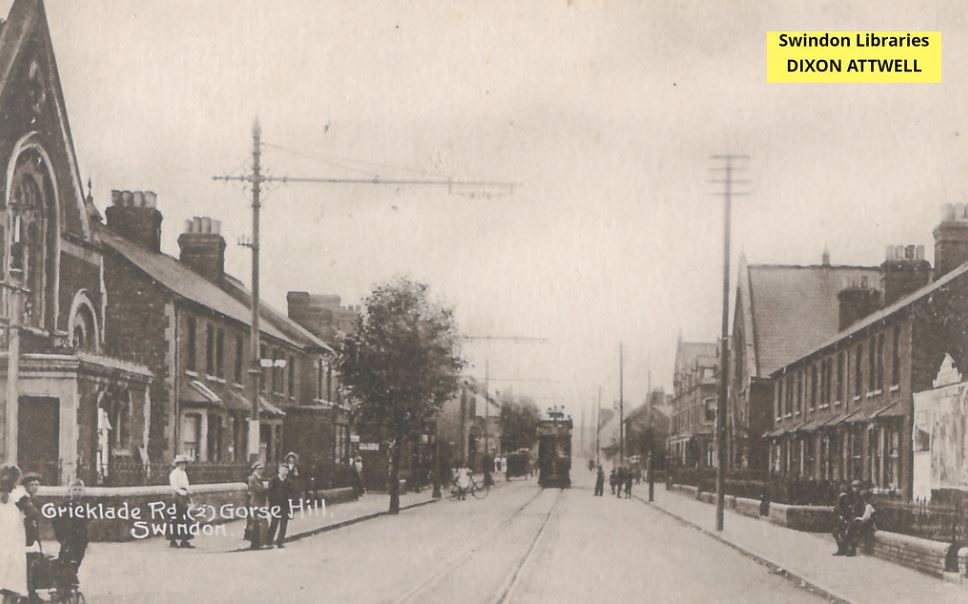
The boy who died in the reformatory is identified as Edward William Archer, the son of William James and Martha Archer. Between 1891 and 1909 the Archer family lived at various addresses in Gorse Hill. William James Snr worked as a general labourer and Martha as a laundress. At the time of the 1901 census the family lived at 21 Hinton Street. Eldest daughter Elizabeth 16 was a housemaid and Louisa 14 a tailoress. There were four younger boys William James 13, Edward William 11, Frederick George nine and five year old Arthur Walter.
Edward William Archer aged 15 is recorded as being buried on October 4, 1905 in grave plot C1646. The Radnor Street Cemetery index register records his home address as 21 Hinton Street; the chronological register includes his place of death as Warminster Reformatory. Edward William is buried with his sister Louisa who died in May 1905. She was 18 years old and her address is also given as 21 Hinton Street. Buried with them is their father William James Archer, aged 53 who died at the GWR Hospital and was buried on March 6, 1909. His home address was given as 1 Edinburgh Street, Gorse Hill. There is one other burial in this unmarked, public plot.

The Wiltshire Reformatory for Boys was inaugurated at a meeting of magistrates and other figures of authority at Devizes Town Hall in September 1855. The Reformatory in Warminster comprised 20 acres of land (later increased to 40 acres) where the boys received between 10 to 15 hours of education a week, spending the rest of the time working the land and growing produce that partly supported them. By 1902 additional phases of building had increased the accommodation capacity from 30 boys to 100. The Reformatory closed in 1925.
Gorse Hill images published courtesy of Local Studies, Swindon Central Library.

 Radnor Street Cemetery