Although the Liberal dominance nationally was on the wane in the last decades of the 19th century, Swindon remained a Liberal stronghold and a hive of political activity with women playing an active role. One such woman was Harriett Annie Veness.
We might consider the term feminist to be a modern one but the word first came into usage in 1852 and Annie Veness was an exemplary role model, demanding women’s rights throughout her lifetime.
Annie was born in Macclesfield, Cheshire in 1869, daughter of Thomas Veness, a bricklayer and mason, and his wife Harriett. The family moved to Swindon in the early 1870s and appear on the 1881 census living at 30 Sheppard Street. Annie cut her proselytizing teeth supporting her parents with their work in the Church of England Temperance Society, later becoming honorary secretary of the British Women’s Temperance Society.
Annie joined the Swindon and North Wilts Women’s Liberal Association upon its foundation in 1893, becoming the first Honorary Secretary, a role she fulfilled for more than ten years. Neither did she restrict her campaign work to the Swindon district but travelled across the country canvassing in elections in her role as organizing secretary for the Women’s National Liberal Federation. She was an enthusiastic public speaker, described as giving a “spirited address” in Ebbw Vale whilst speaking for “nearly an hour” in Chelmsford
Following her mother’s death in December 1897 Annie and Thomas continued to live at 30 Sheppard Street where they employed a 15 year old domestic servant, Janet Hinder. Her three brothers Thomas, Alfred and Reginald would all emigrate to the USA.
Annie’s political campaigning appears to have come to an end in around 1908 when she resigned from the Women’s National Liberal Federation. Annie and her widowed father moved to Worcester where Annie got a job as a clerk in the Women’s Department at the Employment Exchange. At the time of the 1911 census Thomas Veness was a patient in Birmingham’s General Hospital while Annie stayed at the Cobden Hotel to be close to her father. Following a lifetime of independence, eventually and inevitably Annie was forced to accept the traditional female role as carer for her elderly father.
Thomas died on May 21, 1920. His body was returned to Swindon where he was buried with his wife in Radnor Street cemetery. After her retirement, Annie also returned to Swindon and a home at 59 Drove Road where it was recorded that she did “quiet, good work in the town in the Liberal interest and the temperance cause.” It is sad to think of the passionate, bold speaker reduced to quiet, good work.
Annie died at the Victoria Hospital on October 31, 1936, her life and death recorded in an obituary published in the Swindon Advertiser where it was commented on that “link with the days when Swindon was a strong Liberal constituency is snapped.”
The funeral service took place on November 4 at the Baptist Tabernacle followed by interment in the cemetery. Annie was buried in plot E8097 with her parents where today a fine headstone lies flat on the family grave.


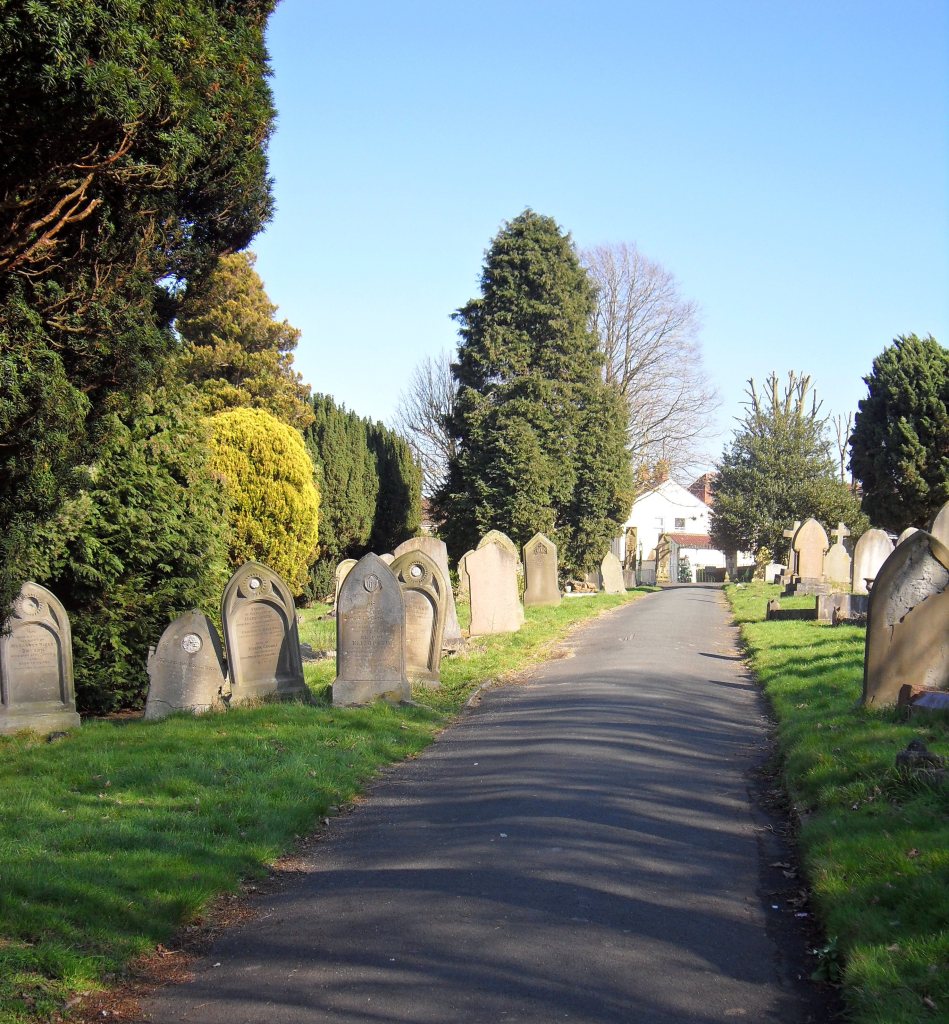
 Radnor Street Cemetery
3 thoughts on “Harriett Annie Veness – political activist”