Arthur and Sarah and the Ashfield angel

The re-imagined story …

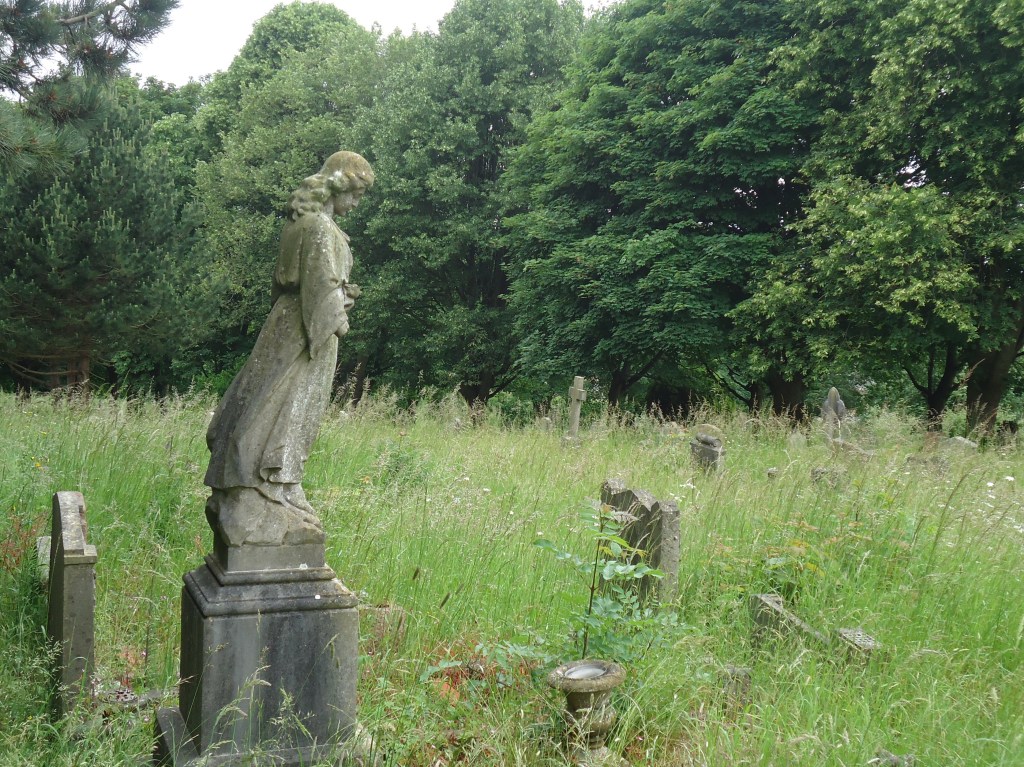
The Ashfield angel was my mum’s favourite memorial in Radnor Street Cemetery. Weird, I know, but my mum was like that.

She wanted a ‘Victorian’ funeral with a hearse drawn by black horses with plumes and mutes (whatever they are) in attendance, until she realised how much it would all cost. I thought it sounded like an East End gangster’s funeral myself.

My mum loved Radnor Street Cemetery but she always knew it could never be her final resting place. The cemetery had long since closed to new burials and we didn’t have an existing family plot.

Mind you she spent enough time up there when she was alive and as I mentioned the Ashfield angel was one of her favourites.

“She looks like she has taken them by the hand and led them away to heaven,” she used to say. I know, vaguely creepy.

Mum wasn’t even that religious and she certainly didn’t believe in a life after death and heaven. Personally, I don’t think the statue is even an angel, but there we are. It’s funny the effect Radnor Street Cemetery can have on a person. Take me for example, wandering around the graves and stopping at the Ashfield angel.

The facts …

This is the final resting place of Arthur and Sarah Ashfield.

Arthur worked as a carpenter and railway horse box builder in the GWR Works. In 1904 he married Sarah Gray, the daughter of a steam engine maker and fitter. At the time of the 1911 census Arthur and Sarah lived at 30 Alfred Street with their five year old son Charles and Arthur’s widowed mother Annie.

The youngest child of Charles and Annie Ashfield, Arthur was born in 1881, the year that Radnor Street Cemetery opened. Although his birth place is stated as Stratton, by the time he was a month old the family were living at 19 Redcross Street, the original name for Radnor Street.

In 1891 Arthur and his family were living at 71 Radnor Street in quite possibly the same house, following the renaming and renumbering of the street.

Sarah died in 1927 aged 46 and Arthur 22 years later when he was 68.

The Abandoned churchyard at Eysey

Several years ago I joined an ‘expedition’ to discover the abandoned churchyard at Eysey and of course, as invariably happens when I start researching, I found a link to the parish of Lydiard Tregoze. Not this time to the St. John family and Lydiard Park, but the Willis farming family.

The medieval settlements of Eysey and Water Eaton were transferred to the parish of Latton, Cricklade in 1896 when they were by then just a few scattered cottages and farmsteads. The population of Eysey had always been a small one, just 95 adults in 1851 and only 52 in 1901.

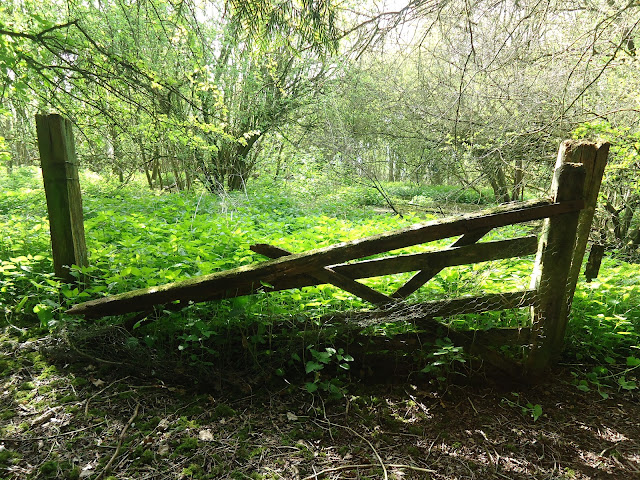
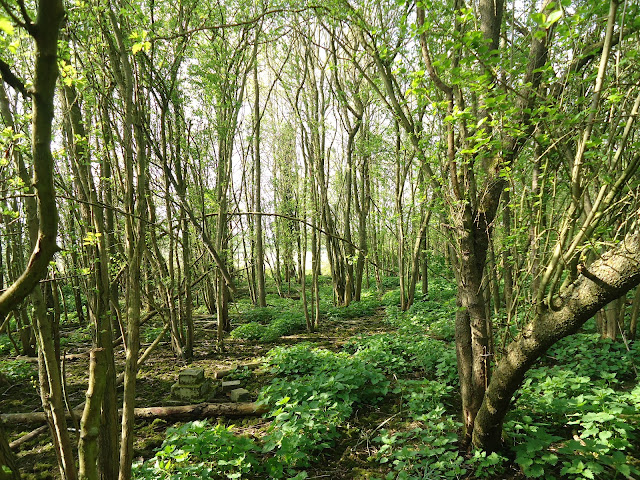
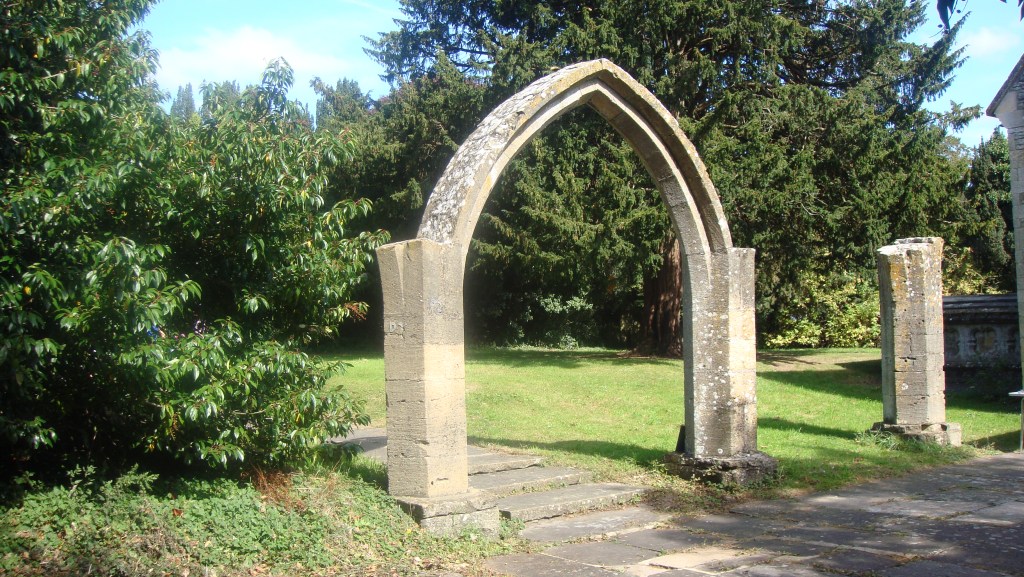
The church of St Mary’s, Eysey dated from the 14th century but was demolished and rebuilt in 1844. The Victorian church that replaced it stood empty for several years before it too was demolished in 1953. The parish registers date from 1571, and end in 1947 so as you can imagine there are a fair few burials in the churchyard. Today there is evidence of the boundary wall and some memorials but the whole area is heavily wooded and overgrown.

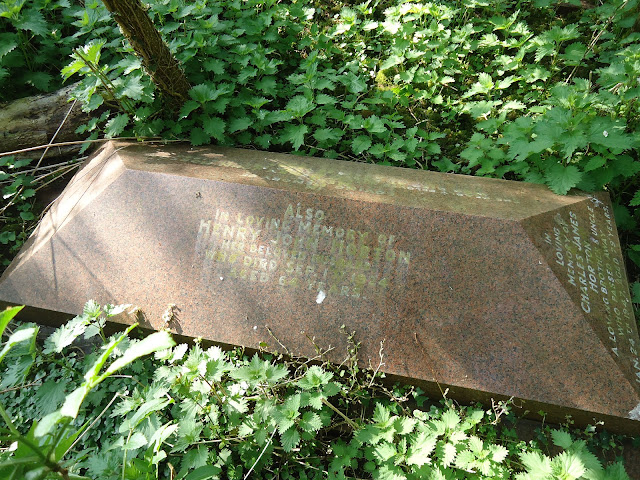
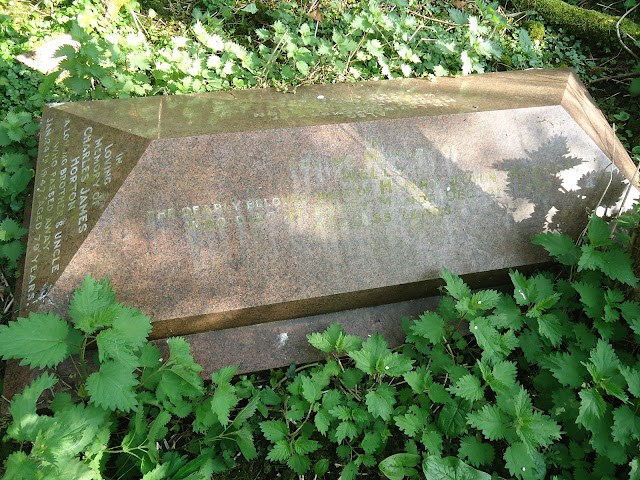
Amongst the nettles and fallen trees I found two perfectly preserved pink granite memorials both apparently dating from the 1920s and contained in a large family plot.

The inscription on one of the graves reads: In Loving Memory of Nelly, the dearly beloved wife of Henry John Horton who died at Eysey Manor Dec. 5th 1924 aged 55 years. On the other side of the memorial the inscription reads: Also In Loving Memory of Henry John Horton her beloved husband who died Sept 1st 1924 aged 64 years. The third inscription reads: In loving memory of Charles James Horton a loving brother & uncle who passed away Jan. 24th 1947, Aged 79 years.

In the neighbouring grave is a memorial to a mother and son. The inscription reads: In loving memory of Margaret the dearly beloved wife of Ernest Willis who died 24th July 1958. Aged 95 years.

On the opposite side of the memorial was the inscription that would lead me to Lydiard Tregoze.

In Loving Memory of Ernest Willis dearly beloved younger son of Ernest and Margaret Willis late of Can Court Wilts. July 5th 1891 – Feby 17th 1924 He served in the King’s Own (Royal Lancaster) Regt. & Royal Air Force throughout the Great War.

The Horton family had nipped back and forth across the Wiltshire/Gloucestershire county borders, farming at various times at the Manor Farm, Inglesham, Wiltshire and Broadway Farm at Down Ampney in Gloucestershire.

The Willis family had moved from Stanford in Berkshire to the parish of Lydiard Tregoze where John Ambrose Willis married farmer’s daughter Harriet Ellison and raised a large family at Can Court Farm, owned by The Masters, Fellows, Scholars of Pembroke College, Oxford. (For a history of Can Court Farm you might like to visit).

John Ambrose Willis died in 1886 and is buried in the churchyard at St Mary’s, Lydiard Tregoze. His son Ernest took over the tenancy of the farm and in 1889 married Margaret Fanny Horton at Down Ampney parish church where a host of Horton’s are recorded as witnesses at the wedding. That same year Ernest’s sister Ellen Willis married Margaret’s brother Henry John Horton.

On census night in 1891 Ernest and Margaret Willis are recorded at Caln Court with their one year old son Edward Ambrose and Ernest’s brother Henry L. Willis who was visiting with his two children, Sarah and Robert.

Henry John and Ellen Willis are at Costow Farm, a neighbouring property across the parish boundary in Wroughton.

By 1901 the Willis family had moved to Caversham where Ernest worked as a ‘butcher & purveyor’ at 12 Church Street. The family were still living in Caversham at the time of the 1911 census. Ernest and Margaret had been married for 22 years. Still living at home was Edward Ambrose, their eldest son, who worked at a Clerk for the GWR, and their daughter Margaret Louisa. Younger son Ernest is not recorded with the rest of the family.

Ernest senior died the following year. He may be buried in the large family plot in Eysey, perhaps mentioned on the sunken kerbstone that surrounds the two large memorials.

In 1911 Henry John and Ellen were living at Eisey [Eysey] Manor where Ellen (Nelly) died in 1920 and Henry John four years later. Henry John left £43,648 17s 9d with probate granted to his brother Charles James Horton and his three sons Robert Willis Horton, Henry Horton and Charles Horton.

Margaret, meanwhile, moved to Swindon and a house in Westlecott Road. The son with whom she is buried died at the Sanatorium, Linford, Hampshire in 1924. On the eve of the Second World War Margaret was still living at Southwood, Westlecott Road with her bachelor brother Charles J. Horton. Charles died in 1947 and Margaret in 1958 aged 95.

The trail blazing Maria Matthews

Maria

When Maria Matthews died in 1940 the local press reported that she was the first woman to serve on the Poor Law Board of Guardian but in reality, she was one of four trailblazing women so to do.

The Local Government Act of 1894 brought in reforms that allowed women to serve on parish and district councils. These reforms extended to the election of the Poor Law Board of Guardians and for the first time women were eligible to be guardians.

Elections took place in December 1894 and when the Poor Law Guardians met at the Stratton St. Margaret Workhouse on 2 January 1895 the names of four women were among their numbers.

Maria was the wife of master tailor Jesse Matthews. Together the couple ran two businesses, a tailor’s shop in Regent Street and a newsagent’s business in Fleet Street. Jesse had both a drink and gambling addiction and in 1886 was declared bankrupt. Maria headed their large family and business concerns alone after Jesse’s death in 1905.

The funeral took place on March 2, 1940 of Mrs Maria Matthews who died at her home in Kent Road aged 97 years old. The Rev Joseph Coombes conducted the service at Mrs Matthews’ former home and afterwards at Radnor Street Cemetery. 

Matthews family

And then I was contacted by Shelley Hughes, a descendant of Maria’s, who supplied some of the above information.

Shelley writes: “I found Maria living with her Mapson (Mother’s brother) aunt and uncle in Wootton Bassett when she was just eight years old in 1841. I believe she was sent to live with them after her father died in 1838. Maria’s older brother (age 10), younger sister (age 6) and their grandmother continued to live with her mother in Cirencester. I just discovered on the 1841 census that Jesse Matthews and his family lived just a few houses away from Maria and her aunt and uncle. The age difference was considerable at the time with Maria age 8 and Jesse age 17, but they must have known each other.”

And in addition to this extra information, Shelley has sent me another fantastic photograph of Maria, Jesse and their family taken in around 1893, just a year before her election onto the Poor Law Board of Guardians.

You may also like to read:

The Matthews family

Elizabeth Williams – a forceful character

The Goddard family tomb and Swindon’s first ‘modern’ burial ground

As we put our heads together to plan our cemetery walks for 2025 we hope to make a return visit to the churchyard at Holy Rood Church where burials pre-date those at Radnor Street by more than 700 years…

The Goddard family were Lords of the Manor of Swindon for more than 350 years but you won’t find any of them buried in Radnor Street Cemetery.

The Goddard family home was set in extensive parkland with spectacular views across the Wiltshire country side. Until the early 19th century the property was known as Swindon House after which it received a bit of a makeover and was renamed The Lawn. The family worshipped in the neighbouring parish church where Richard Goddard Esquire was buried on May 20, 1650 according to the wishes expressed in his Will that his body was ‘to be interred and buryed in the parish church of Swindon.’

The ancient parish church closed to general worship in 1851 after which most of it was demolished leaving only the chancel, the 14th century arches, a few chest tombs and the Goddard family tomb.

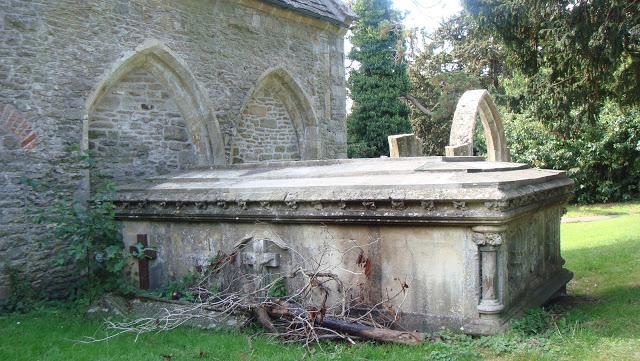
The Goddard family vault stood beneath the floor of the North Chapel. When this was demolished a mausoleum was built above it. Today the Goddard family tomb is a Grade II listed monument described as made of limestone with sandstone panels and built in the Gothic revival style. In his book The Story of Holy Rood – Old Parish Church of Swindon published in 1975, Denis Bird confirms that the Goddard tomb dates from around 1852 and was constructed on the site of the north chapel. Exposed to the elements and random acts of vandalism during its 169 year history, today the plaques on the side of the tomb are difficult to read.

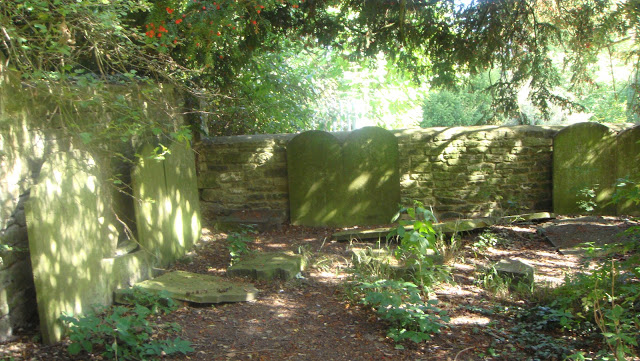
Following the construction of Christ Church the ruins of Holy Rood came under the watchful eye of the Goddard family. Although the churchyard closed to new burials, interments in existing family graves continued for some years. A drawing dated c1800 shows the churchyard contained numerous headstones. Sadly, these were all repositioned in 1949 and arranged around the churchyard wall.

The last Lord of the Manor to live at The Lawn, Fitzroy Pleydell Goddard died at the family home on Friday August 12th 1927. Major Fitzroy Pleydell Goddard’s dying request was that his funeral service be as simple as possible and that he wished to be buried in a “plain elm coffin made from timber grown on my estate.” The Major’s funeral took place on Monday August 15 at 8pm. Swindon Advertiser headlines read ‘Interred at Sunset’ and ‘Large Attendance.’ As requested the Major’s coffin was made from one of his trees, cut down in Drove Road during road widening work. Covered by a Union Jack flag the coffin was carried from The Lawn to the Parish church on a handbier where Canon C.A. Mayall and Dr. R. Talbot, the Archdeacon of Swindon conducted a simple service in Christ Church. The congregation was estimated to number in the thousands as Swindon marked the end of an era.

The last member of the family to be buried in the Goddard tomb was Charles Frederick Goddard, Rector of Doynton, Gloucestershire who died on May 11, 1942 and is buried alongside his parents Ambrose Lethbridge and Charlotte Goddard.

Bird writes: ‘To say that ten thousand people may have been buried here may be no exaggeration, for although the population of early Swindon may have numbered no more than a few hundred souls at any one time, it was here that nearly all found their last resting place, generation after generation, for perhaps more than 700 years.’

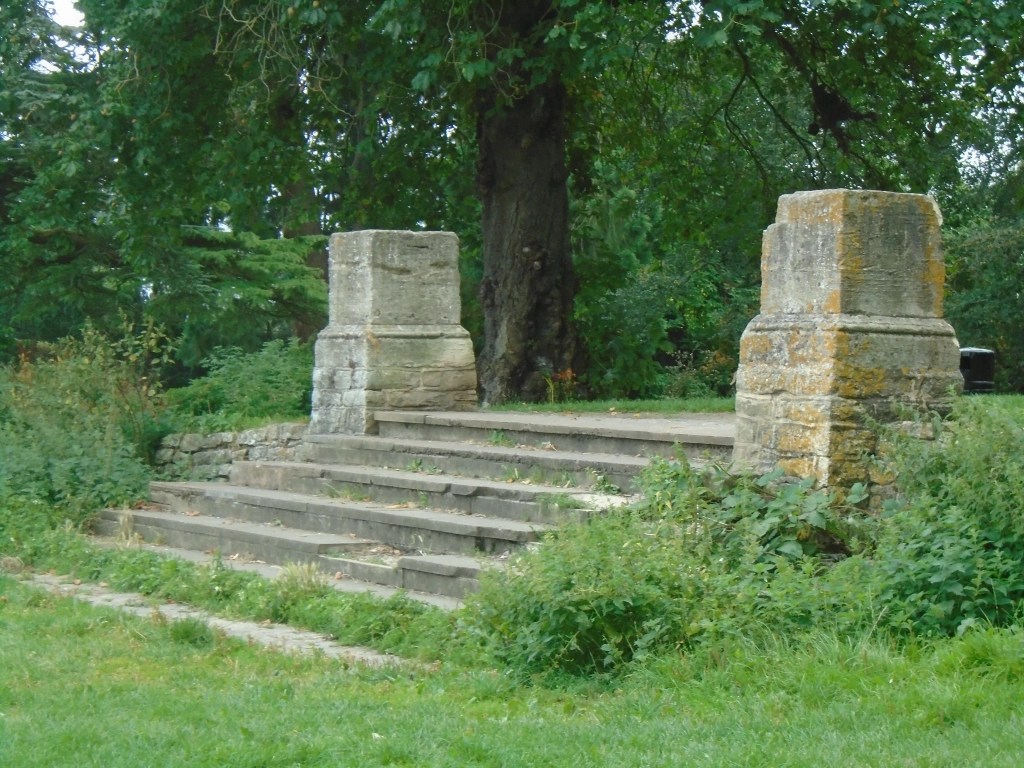
The churchyard at Holy Rood, Swindon’s first ‘modern’ burial ground.

The view from the Goddard mansion in the Lawn.

The Goddard family tomb

A corner of the churchyard and the repositioned headstones

George Stanley Morse – a life cut short

The re-imagined story …

They are bringing him home tomorrow.

The grand entrance hall at The Croft is made ready with vases of white roses and arum lilies on every polished surface. The sweet scent of jasmine drifts in through the open window. His coffin will stand here until the funeral on Saturday. Friends and family are expected to call and pay their last respects.

lilies and roses

I would like to keep a vigil throughout the night. I don’t want him to lie here alone. I would like to sit next to him, rest my hand upon the coffin, speak to him. But this would not be allowed.

I would like to bear the weight of him on my shoulders as his body is borne to the graveside. I would throw myself into the open grave and lie with him through eternity. No one knows the depth of my love for him. No one knows my sorrow, there are others who have more right to mourn than I, my loss is of little consequence.

We had no future, we had no past. I loved him in silence and in secret. There is no one I can confide in, no one I can tell how much I loved him, how much I miss him, how it will always be so.

They are bringing him home tomorrow.

jasmine

The facts …

George Stanley Morse was born in Stratton St Margaret in 1880, the third child and second son of Levi Lapper Morse and his wife Winifred. In 1891 the growing Morse family lived at Granville House, Bath Road but by 1901 they had moved to The Croft, a property set in more than four acres of land with a paddock, fountain and a tennis lawn. The grounds also contained flowerbeds and terraces with ornamental trees. The magnificent house was approached by a lengthy carriage way and opened on to a spacious, domed hall.

In 1906 George Stanley Morse MRCS LRCP was house surgeon at the Metropolitan Hospital.

Inquest

A Fatal Scratch – Young Surgeon’s Sad Fate

Dr Wynn Westcott held an inquiry this week at Hackney respecting the death of George Stanley Morse, aged twenty-six, house surgeon at the Metropolitan Hospital.

Mr Levi Morse of The Croft, Swindon, MP for the Southern Division of Wilts identified the body as that of his son. He was a healthy young man, and had been at the Metropolitan Hospital about nine months. Witness heard that he had poisoned his finger while making a post mortem examination, and while he lay ill in the hospital he told witness that the affair was purely accidental.

Dr Harry Overy, pathologist at the Metropolitan Hospital, deposed that the deceased gentleman assisted at a post mortem examination on the body of a child who had died from meningitis following ear disease. He had the misfortune to prick one of his fingers, and subsequently he had a fit of shivering, and became ill. Witness saw him on the following day, and found him with a high temperature, shivering, and with some tenderness of the finger. The glands of the shoulder were also tender.

Beyond Help

He was also seen by Dr Langdon Brown and Mr Gask, a consulting surgeon, and some small operation was performed on the finger. ‘In spite of all that could be done, the temperature kept up almost to the end. Death was due to septicaemia, resulting from the prick of the finger.’

The coroner remarked that Dr Morse was held in great respect as a rising young practitioner. The case showed the dangers to which the doctors were exposed.

A Juror: Would it not be reasonable to anticipate awkward results from pricking the finger, and to take steps to render it harmless if possible?

Dr Overy: Mr Morse washed his finger and took the ordinary precautions, immediately after the accident.

The jury returned a verdict of accidental death and expressed their sympathy with the father.

Herald Saturday June 16, 1906.

Funeral of Dr Stanley Morse

The funeral of Dr Stanley Morse, second son of Mr L.L. Morse MP for South Wiltshire, whose death under sad circumstances was reported in our last issue, took place at Swindon Cemetery on Saturday afternoon. The coffin containing the remains of the deceased was conveyed by train to Swindon on the previous Thursday and rested at The Croft until the time of the funeral. The coffin, which was of panelled oak with massive silver-plated furniture, bore the inscription:-

George Stanley Morse MRCS LRCP Died 12th June, 1906 Aged 26 years

At the foot of the coffin were engraved the words “At Rest.” The first part of the service was held at the Regent Street Primitive Methodist Church, the service being conducted by the Rev W.J.T. Scruby assisted by the Rev George Hunter. After the opening passages of the burial service had been read the hymn “Rock of Ages” was sung, and then the Rev George Hunter read the 90th Psalm. The second hymn was “Oh God, our help in ages past,” and the first part of the service closed with prayer. The congregation stood as the assistant organist, Mr Arthur Barrett, played the “Dead March” in Saul. The concluding portion of the service at the graveside was conducted by the Rev W.J.T. Scruby, in the presence of a very large number of mourners.

A large number of beautiful wreaths and crosses were sent, including tributes from the Residents of the Metropolitan Hospital and Mr Harry Overy; the Medical and Surgical Staff of the Metropolitan Hospital; the Nurses; the Committee, Metropolitan Hospital; the Matron and the Sisters, Metropolitan Hospital; and the Junior Staff and Students of St Bartholomew’s Hospital.

Extracts from The Salisbury and Winchester Journal and General Advertiser published Saturday, June 23, 1906.

George Stanley Morse is buried alone in a double plot E8181/2 in Radnor Street Cemetery. A note in the burial register states “one grave in 2 spaces.” The memorial is a broken column, symbolic of a life cut short.

George Stanley Morse (5)

George Stanley Morse (4)

You might also like to read

Mr Levi Lapper Morse – the end of an era

Winifred Morse – founder of the Women’s Missionary Federation

Regent Street Primitive Methodist Chapel
Childrens’ Christmas Tea

Continuing the story of Elliot Woolford, farmer at Hook Farm from 1899-1941. On Friday December 31, 1915, as the impact of the deprivations of the First World War tighten, Elliot writes about the Childrens’ Christmas Tree – a big event on the local Christmas calendar held at the school in Hook, usually a few days after Christmas. A particularly welcome event, especially in 1915.

Friday December 31, 1915.

I went to Swindon and sold butter 12/-                                                     12   0

Bt Groceries 2/6 Meat 2/3 papers 1/- Cigarettes,

Soap & Diary 3/3                                             9   0

Dog Biscuits 2/8 Sauceges 7d Sundries 2/6                                            5   9

Paid Carter 17/- William 14/6 Walter 14/6 Frank 8/-

Clarence 5/6                                2   19   6

                                                                                                                                                                                      3   14   3

Carter, William, & Walter, attending to Cows

Frank not at work

Clarence took the milk first time instead of Frank

Amy, & Dora Ody, & Babe, went up to the school tea. Amy was the sole means of they having a tea. She had no difficulty in Begging the money. Miss Dora & Dolly Ody Mrs Newth Mrs & Miss Hale Miss Habgood Mrs Webb Mrs Painter & Mrs W. Ody took their Children & assisted. About a 100 children attended. It was quite a success. Mr Leighton School master & his wife worked hard preparing the school etc.

Weather rough wind & stormy

God save the King

Read more about the Elliot Woolford diaries on the Friends of Lydiard Park website.

This old image of Hook Farm taken 1940-1960 is published courtesy of the Friends of Lydiard Park.

Boxing Day 1899

Continuing the story of Elliot Woolford, tenant farmer. December 1899 and Elliot spent his first Christmas at Hook Farm with his brother Rowland.

Tuesday December 26, 1899 St Stephen. Bank Holiday

Got a Gun Licence out for Rowl. 10/-                                        10.0

Gave Mother 10/- for Household Exs.                                      10.0

Sent £13. 15/- to Bank.

Went up to Mr Owen Hales. “Creeches Farm” shooting

Rowl shot two sparrows all told. Could not find a rabbit

Started 2 Blackbirds these escaped unhurt with the exception of a little fright & palpitation.

We spent the evening with them viewing photos of the family and indulging in a few games with the childrens playthings the Party broke up at 11.15 pm all perfectly sober.

Weather Dull foggy & raining all the forenoon

Very quiet Xmas Generally No doubt owing to the War

Image of Creeches Farm taken 1880-1890 is published courtesy of the Friends of Lydiard Park.

The day before Christmas

In 2025 I shall continue my research into the life and times of Elliot Woolford (farmer at Hook Farm) and the parish of Lydiard Tregoze based on his diaries. Selected volumes of the diaries can be viewed on the Friends of Lydiard Park website.

In 1899 Elliot Woolford moved to the village of Hook where he took over the tenancy of Hook Farm, part of the Lydiard Park estate. Elliot kept a meticulous diary recording daily work on the farm from 1899-1940. In this unique archive we learn about changing practices in agriculture as he continued to modernise and develop the farm. He writes about family members, friends and neighbours, social and national events and life on the declining Lydiard Estate.

Read about the day before Christmas 1902. Work carried on as usual but Elliot also records his sorrow at the sudden death of his much loved mother.

Tuesday December 23, 1902

Mother Died to Day at 2.40 o.clock P.M.

Cut 425 Sprouts 17 Bags Savoys etc

I went to Swindon & delivered vegetables received Cash  1 15 0

Bought fish 6d Butter 1/3                 1  9  

Paid Mobeys for their labour 9/- 9/- & 4/-        1  2 0

Gave Ellen 20/- to get mourning             1  0 0

                                                                 £2 13 9

                           2  3  9

Mother died this afternoon at 2.40 Rowl, Aunt Martha, Ellen, Fanny Matthews, & Father was there also Fred Woolford’s wife “Bessie” She died very happy & passed away without pain while in Rowls arms as he was trying to turn her over. We feel her loss to us we were so attached to her for she was most devoted to us all & ever studdying our well being & comfort and could never do enough for us. She asked to see Sam but he did not arrive till after she had been fallen asleep two hours. I went over in the Evening.

Weather Mild

Frances Ann and William Woolford are buried in St Mary’s churchyard, Purton. Image published courtesy of Duncan and Mandy Ball.

Pictured seated are Elliot and his wife Amy with their son Rowlie in the garden at Hook Farm.

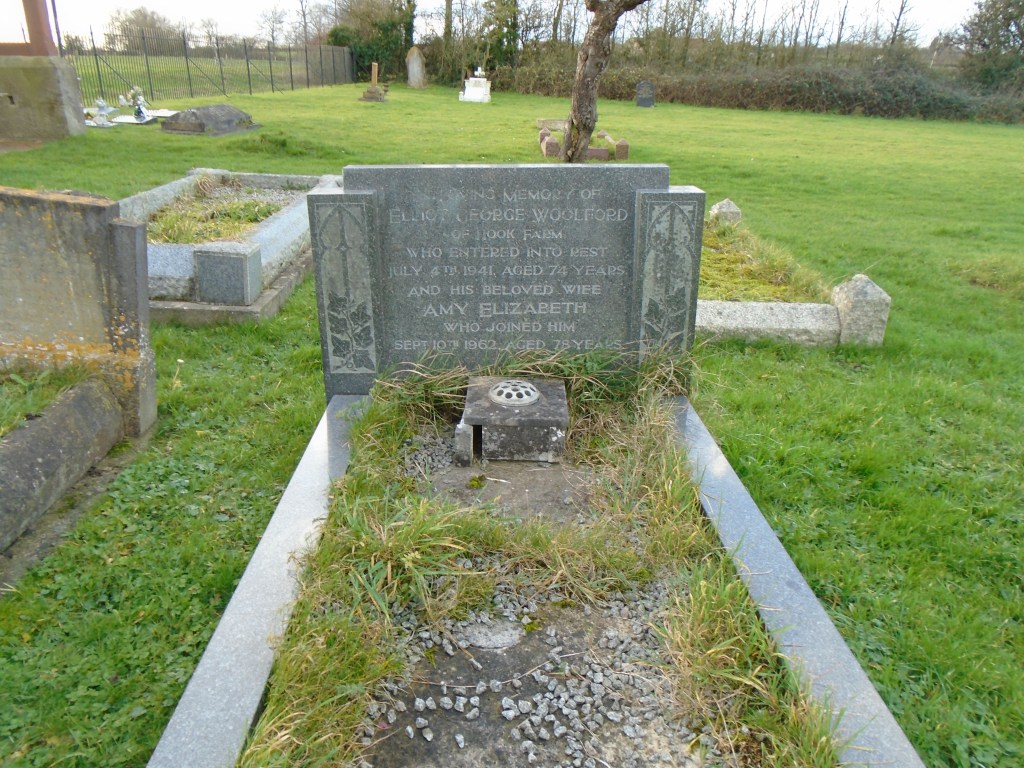
Elliot died in 1941 and is buried in Hook Cemetery with his wife Amy who died in 1962. Hook Cemetery was laid out in 1891 in a field gifted by Viscount Bolingbroke. This field, formerly called Ables, was once part of Hook Farm.

Henry Thomas Day – acrobat

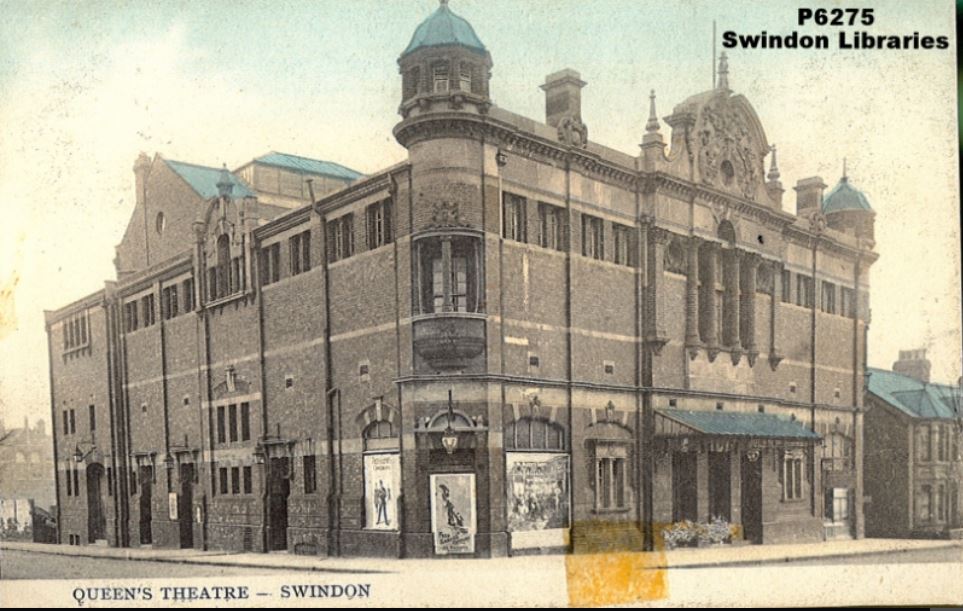
Harry Day had been an acrobat since childhood. Probably one of those little boys forever performing flips and somersaults. By 1899 he was working for John Leopold’s “Frivolity” Company. In 1900 the troupe appeared at the Queen’s Theatre, Swindon* but on Tuesday, September 25, tragedy struck.

The inquest later heard how the acrobats were throwing somersaults on to a spring table. Two or three others had done their turns, and then the deceased went on. In attempting to complete a double somersault he missed, and came down upon his head in the middle of the table.

Harry was transferred to the Victoria Hospital and Dr. Rattray was summoned. At the inquest Dr. Rattray said he found the patient to be suffering from a broken neck and paralysis. Harry died a few days later.

Image published courtesy of Local Studies, Swindon Central Library.

His wife, Christiana, was said to be greatly affected when she gave evidence at the inquest. She already had a small child and later gave birth to a daughter named Henrietta in memory of her father.

Christiana remarried in 1904 and by 1911 was living in Stirchley in the West Midlands, with her second husband Richard George Holbeche and her daughter Emily Day. Little Henrietta had died in infancy.

Henry Thomas Day was buried on October 3, 1900 in Radnor Street cemetery in grave C578, a plot later purchased by the Longman family

The Late Mr Harry Day – Last Saturday’s “Era” contained a letter from Mr John Leopold, of the “Frivolity” Company and a list of subscriptions secured on behalf of the widow and children of the late Harry Day, for some time a member of the Original Leopolds’ “Frivolity” Company, and who, on Sept. 25th last, while performing at the Queen’s Theatre, Swindon met with an accident which resulted in his death a few days later at the Victoria Hospital. From the list we gather that the total sum subscribed is £91 5s, including £31 14s subscribed by the “Frivolity” Company £25 of this being given by Mr John Leopold), and also £20 collected by Mr. Ernest Carpenter, of the Queen’s Theatre, Swindon. Mr Leopold desires to thank all who have given their help in this very deserving case.

Evening Swindon Advertiser, Thursday, January 17, 1901.

*The Queen’s Theatre stood at the junction of Clarence Street and Groundwell Road and was later renamed The Empire.

All for the Empire: the History of Swindon’s Historic Theatre, by Roger Trayhurn and Mark Child

Highgate Cemetery

What better way to spend a wet and windy Friday than to go on a cemetery walk.

I recently went with two new cemetery loving friends on a trip to Highgate Cemetery. For many taphophiles Highgate ranks high on the list of must visit cemeteries and I can confirm it did not disappoint.

Highgate is a cemetery of two halves, bisected by Swain’s Lane. We were met at the entrance to the older, West cemetery by our guide Martin who conducted us on a ‘highlights’ tour and a masterclass in all things cemetery focused.

We first stopped at the grave of James Selby, a coachman who won a £1,000 bet by driving his coach and horses from London to Brighton and back in under eight hours. We marvelled at the enormous Otway vault with its mosaic floor, once visible through a glass topped cover while at the grave of Baronness de Munck, Martin told us the significance of the Pelican engraving on the headstone, symbolic of sacrifice and a mother’s love, and something I had never heard of before.

I never expected we would be able to enter the Terrace Catacombs but Martin unlocked the door and led us into this twilight world of burials. Badly vandalised in the 1970s there was still much to see and learn as we listened to the story of surgeon Robert Liston described as ‘the fastest knife in the West End.’

Amongst the ornate headstones and tombs and massive mausoleums (the Beer Mausoleum is bigger than my house!) the most moving grave for me was that of Highgate’s lost girls. Ten young girls and women, inmates of the Highgate penitentiary, a reformatory for “fallen women” are buried in an unmarked grave and remained forgotten and unknown until historians Rowan Lennon and Sam Perrin researched their stories in 2014. The first of the girls buried in the grave at the cemetery’s furthest boundary was 12 year old Emma Jones in 1862. The last was Agnes Ellis, 29 who died in 1909. The Lost Girls are now included on the official tours where their stories have a new “life”.

We three had our own personal mission – to get to the bottom of a burial that had once taken place in the Egyptian Avenue but whose coffin was reputedly no longer there.

Ellen Medex was the long suffering mistress of Henry, 5th Viscount Bolingbroke whose country seat was at Lydiard Park. Apparently his intention to marry the young Belgian born woman had been thwarted by her sister and it looks like Henry stopped pressing his suit thereafter. The couple sojourned on the continent for awhile before returning to London and a life lived as Mr and Mrs Morgan. They had four children, of whom only one, a daughter Ellen Rose, survived to adulthood before Henry took up with a servant from Lydiard, Bessie Howard. When Ellen died in 1885 Henry was overcome by grief, apparently! He chose the fashionable Highgate Cemetery as his preferred burial place for his “wife” and paid £136.10.0 to have Ellen interred as the Viscountess Bolingbroke. There is, however, no evidence that Henry ever married Ellen and even the entry in the burial registers describes her as “wife” (in inverted commas).

So why did I think Ellen had been removed? Well, someone told me she had. However, Nick at Highgate confirmed that she is still most definitely there and he includes her on his guided walks, which was lovely to learn.

The other mausoleums in the Egyptian Avenue have inscriptions by the door, but of course Henry didn’t do this for Ellen. He probably wasn’t brave enough to declare her status as Viscountess Bolingbroke in so public a place when there were many who knew she wasn’t.

One visit to Highgate is definitely not enough and my new found friends and I want to return. And now we have an ambitious plan to visit the remaining six cemeteries on the “Magnificent Seven” list. Look out Kensal Green – here we come!

The Egyptian Avenue, Highgate Cemetery

View from the Egyptian Avenue, Highgate Cemetery

The Egyptian Avenue where Ellen Medex is buried as Viscountess Bolingbroke

Cemetery map of the Egyptian Avenue – Ellen Medex (Viscountess Bolingbroke) is buried on the second right.

Ellen Medex – published courtesy of the Friends of Lydiard Park

Henry, Viscount Bolingbroke – published courtesy of the Friends of Lydiard Park