George Brunger – the man who saved the Medical Fund

This article was written by Graham Carter, Swindon Advertiser columnist, and published in the Autumn 2016 edition of the Swindon Heritage Magazine.

Milton Road Baths published courtesy of Local Studies, Swindon Central Library.

Grandpa, the man who saved the Medical Fund

Swindon’s GWR Medical Fund was famously a blueprint for the National Health Service when it was introduced in 1948, but what is often overlooked is the crisis that seemed destined to destroy the organisation during the First World War.

And while the name of George W. Brunger isn’t often remembered as one of the visionaries of a railway town with a health service more than a century ahead of its time, as chairman for 29 years and its last, then he deserves a special place in Swindon’s history.

And George’s granddaughter, Maggie, along with her elder brother Alan, who spent hours recording ‘Grandpa’s’ oral memoirs’ before his death in 1964, have been piecing together the family history.

It tells of how George, who had previously only been an ordinary member of the Medical Fund, stumbled on a crisis meeting at Milton Road Baths – now the Health Hydro – and took control of its destiny.

“Grandpa was returning home from a union meeting in London,” said Maggie. “After disembarking from the train in Swindon, he was walking home when he heard a commotion coming from the Medical Fund building, and decided to go in.”

Formed in 1847, the Medical Fund provided a comprehensive ‘cradle to grave’ service and operated its own hospital, but exactly a century ago, in the last weeks of 1916 faced a huge dilemma because of the First World War.

Many local men were occupied with the Railway Works’ contribution to the war effort, George himself working as a fitter in AE Shop, making heaving guns. But many of the town’s men were away on active service, so subscriptions were critically low, and the crisis meeting was called to find solutions for an organisation that had exhausted its credit at the bank, so its cheques for doctors’ salaries were bouncing.

With the management committee and members arguing over a proposal to increase subscription rates, the closure of the Medical Fund altogether was a very real prospect.

“Grandpa entered the meeting, which was in uproar, and pointed out that they would stay there all night and still not get anywhere. So he suggested that a special committee be appointed to investigate their problems, and report back to members.

“His motion was passed unanimously, with seven people nominated; and Grandpa was the seventh.”

After a few weeks’ deliberation, the special committee reported in February 1917, in a hall that was packed to overflowing.

Surprisingly, it recommended only a penny-a-week increase in subscriptions, rather than the threepence suggested by the management committee, whose view was backed up by the Medical Fund’s lawyer.

When the members overwhelmingly supported the penny plan, it was effectively a vote of no confidence in the management committee, and most of them resigned.

George felt obliged to stand for election to the new committee of 15, and after the man he proposed as chairman refused the post, he put himself forward, and was elected.

Then aged 35, he would remain chairman until the Medical Fund was dissolved to make way for the introduction of the National Health in 1948, apart from when he took a year off and was vice-chairman in 1924.

In interviews with his grandson, Alan, in later years, he revealed that many of the ideas adopted by the Medical Fund during his time as chairman were his own.

Aneurin Bevan, the Minister of Health who was in charge of introducing the NHS, naturally interviewed George during visits to see how the Swindon model worked, and they must have had discussions about the handling of doctors, which was a key issue when the NHS was eventually formed.

A major cause of the Medical Fund’s financial problems were the huge salaries commanded by the three senior doctors they employed who were based at Park House in the Railway Village. George’s novel solution was actually to increase the salaries of junior doctors, while slashing those of the senior ones, including Dr Swinhoe, at the top of the pyramid.

His dealings with the Medical Fund inevitably brought George into contact – but also conflict – with management.

As a humble fitter – his union activities prevented him from progressing up the managerial ladder – he found himself in meetings with the railway company’s Swindon top-brass, but stood his ground.

He was once ordered to remove his hat when meeting FW Hawksworth, but told the Chief Mechanical Engineer: “I haven’t come here to undress!”

George had come from humble beginnings, but showed himself to be a committed and fearless young man.

Born in Maidstone in 1881, when he was 17 he lied about his age, claiming to be 18, so he could enlist in the Royal Engineers.

He quickly found himself in South Africa with the outbreak of the Boer War, the following year, and, apart from a long spell recovering from dysentery, fought much of the campaign, receiving clasps on his medals from six key battles, including the reliefs of Mafeking and Ladysmith.

After the war he stayed in South Africa to work in the diamond-mining boom, but returned to Britain in 1906, and soon married a local Maidstone girl Lillian Price.

They were married on Boxing Day 1906, but instead of honeymooning, after the ceremony they took the train to Swindon to begin a new life.

Arriving at 9.30pm, with snow on the ground, they walked from the railway station to their lodgings in Rodbourne, with a canary in a cage among the wedding presents they carried with them.

They later set up a permanent home at 40 Kingshill Road.

Always a union man, and an official for the Amalgamated Engineering Union (now the AUEW), George was also one of the founders of the Labour Party in Swindon, and served the party on the Town Council from 1919 to 1932.

As Chairman of the Housing Sub-committee in 1922 he oversaw the building of Swindon’s first (and one of the country’s first) council housing estates, at Pinehurst.

Such was the demand for houses that the queue of people outside the Brungers’ home in Kingshill, applying directly to George to move them up the list, led to the family calling the front room ‘the office’.

“He would have been mayor,” said Maggie, who lives in the United States but has been on an extended visit to her home town. “But my grandmother, who was very retiring, wouldn’t have it.”

He retired from both the Railway Works and the Medical Fund in 1947.

Maggie was 16 when he died, and missed the funeral because she was taking O Level exams on the day. Remarkably, his death occurred the day after Maggie’s brother Alan left Swindon to emigrate to Canada.

“He was a lovely old man,” said Maggie. “And of course to me he was always an old man. He was not a big talker, but he was well respected.

“I remember his black leather boots, which he kept by the fireplace, his red hair and his big hands. Every time I go up the beautiful stairs in the Health Hydro, I like to think of him grasping the rails.”

These days the committee room where George presided is often empty, while the smaller of the building’s two swimming pools is also closed, perhaps permanently.

The building was once a jewel in Swindon’s crown, and says as much about the vision and approach of Swindon’s leaders in past times – men like George Brunger – as the Mechanics’ Institute.

With its washing baths, swimming baths and even Turkish and Russian baths, it represented arguably the best leisure facilities enjoyed by any British workers at the time, as well as the medical facilities and services also available to members of the Medical Fund and their families.

But the building faces an uncertain future, just as it did, exactly a century ago, when destiny brought George Brunger, with perfect timing, to its doors.

Graham Carter

George Brunger died at St Margaret’s Hospital in June 1964 and is buried in grave plot C956, which he shares with his wife Lillian who died in 1955.

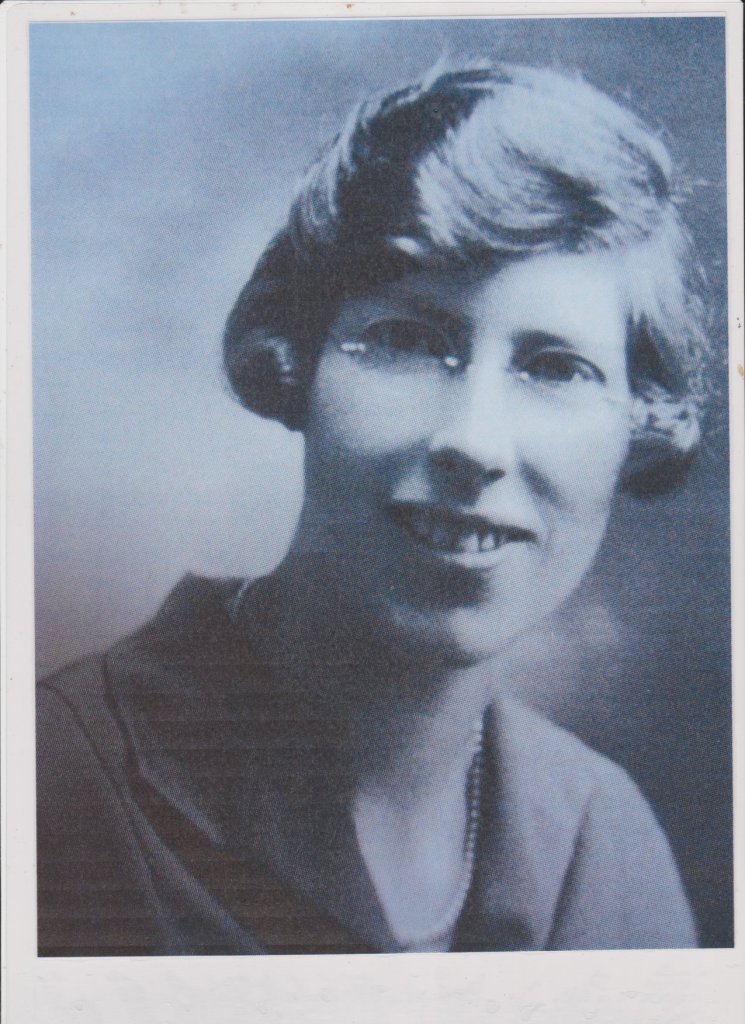
George William Brunger

Swindon Heritage was a quarterly local history magazine co-founded by Graham Carter, the late Mark Sutton and myself and was published from 2013-2017. Back copies are still available at the Swindon Library Shop, Swindon Central Library and at the cemetery chapel during our guided walks.
Wilmer Bradford Wilmer – coal merchant

The re-imagined story …

I’m not sure about central heating – not that we’re going to be able to put ours on this winter! Personally, I don’t think you can beat an open fire. I can remember sitting in my nan’s house, all of us clustered around the coal fire, our faces red hot while up in the bedrooms the temperature was sub-zero. Nan often had ice on the inside of the bedroom windows, no double-glazing in those days.

I remember the coalman delivering by horse and cart. He used to stop outside our house and put a nosebag on the old horse. I never saw him clean, the coalman not the horse – infact, I think the horse might have been cleaner.

Nan used to complain about the mess the coal fire created and I suppose we have to blame climate change on all that muck belching out into the atmosphere. She eventually invested in a two bar electric heater with a coal effect. All the warmth and none of the dirt, except she couldn’t afford to use that in the end. A bit like us with the central heating. We won’t be able to have ours on this winter.

The facts …

Death of Mr W.B. Wilmer

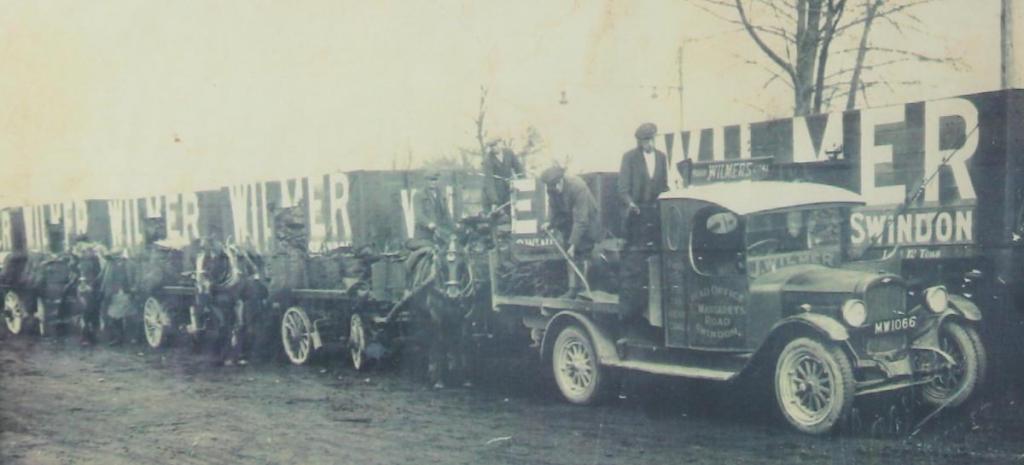
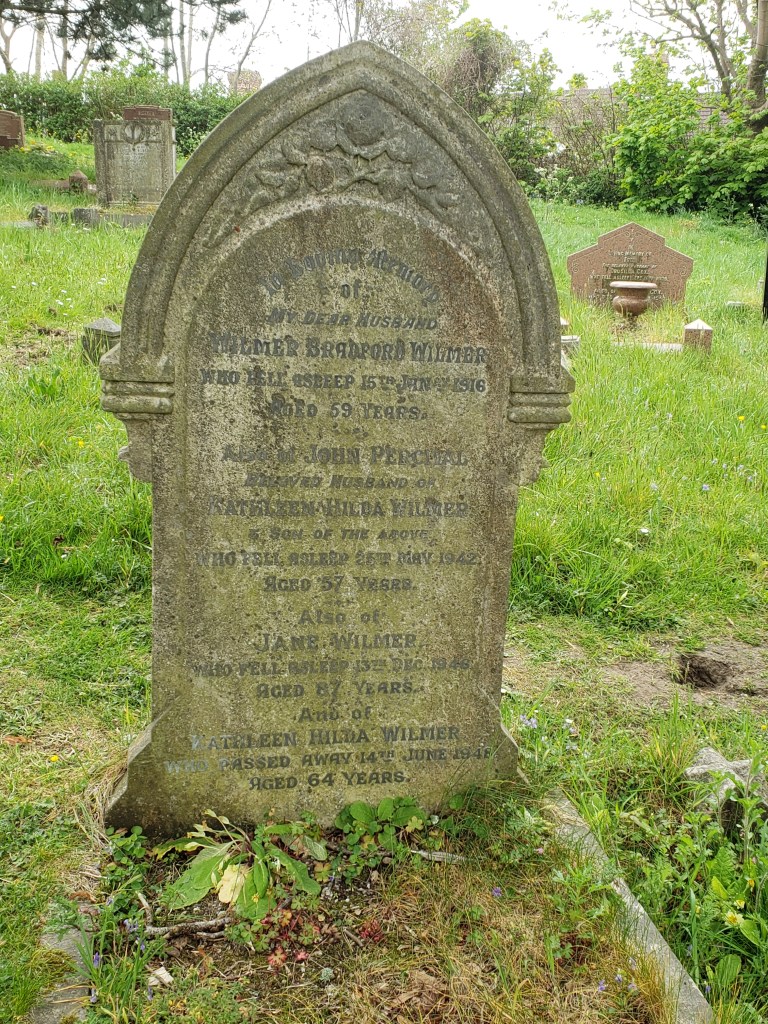
The death took place on Saturday at his residence, 96, Goddard Avenue, Swindon, of Mr. Wilmer Bradford Wilmer. The deceased, who was 59 years of age, came to Swindon from Paignton, Devon, 14 years ago, and started business as a coal merchant. For the scene of his operations Mr Wilmer chose a field at the end of St. Margaret’s Road, and commenced business in a small way. At this time Mr. Wilmer was a perfect stranger to the town, but by dint of hard work and careful trading he slowly but surely built up a sound and extensive business. It was not long before he was appointed agent for the Midland and South Western Junction Railway Company, whose lines his wharf adjoins and in this way he became one of the best known men in the town.

Mr Wilmer had been ailing for a considerable time, but his illness, due to an internal complaint, did not become serious until a month ago, and that it would have a fatal termination was not contemplated by his family until four days before his death.

The funeral took place on Wednesday at the Cemetery, where the burial service was conducted by the Rev. C.A. Mayall. The chief mourners were. Mr J.P. Wilmer (son), Mr and Mrs C. Love (sister and brother-in-law) Mr G. Ashworth, Mr. W. Beer, Mr. W.B. Armitage, and Mr E. Mackelden.

Mr Wilmer and family 96 Goddard Avenue, wish to thank all those friends who so kindly sent letters of sympathy during their sad bereavement.

Extract from North Wilts Herald, Friday, January 21, 1916.

Wilmer Bradford Wilmer was born in about 1857 the youngest son of Benjamin and Jane Wilmer. Benjamin was the publican at the Cross Keys Public House in Caxton, Cambs.

It would appear that the move to Swindon got off to a bit of a rocky start for Wilmer. In 1902 Wilmer was declared bankrupt with liabilities of over £1,000. He declared to the bankruptcy court that he was “absolutely without any estate, and admitted being a bankrupt before, in the year 1889.” – Wilts & Gloucestershire Standard Saturday 31st May 1902.

The family had arrived in Swindon sometime between 1891 and 1901 when Wilmer is recorded as a Stock Broker Agent living at 96 Goddard Avenue with his wife Jane and their two children, John P. 16 an architect’s apprentice and two year old Lilian. Their home in 1891 was in Batley, Yorks where Wilmer and Jane had married in the September quarter of 1883. He describes himself on the census of that year as “Living on own means.” They then spent some time in Paignton, Devon where daughter Lilian was born, before coming to Swindon.

Whatever had happened in Wilmer’s past, he soon managed to get his act together and established a business that would survive beyond his death and through several generations of the Wilmer family, until in 2015 when cousins Ken and John Wilmer made the difficult decision to sell the family business.

John told the Swindon Advertiser: “We were coming to the yard as toddlers but when we were teenagers we started helping out a bit more. Once we got our driving licences I think we were a bit more useful and we went all over the county delivering. Life was simpler back then,” he said.

Swindon Advertiser 20th April 2015

Herbert Henry Hole – killed in the GWR Works

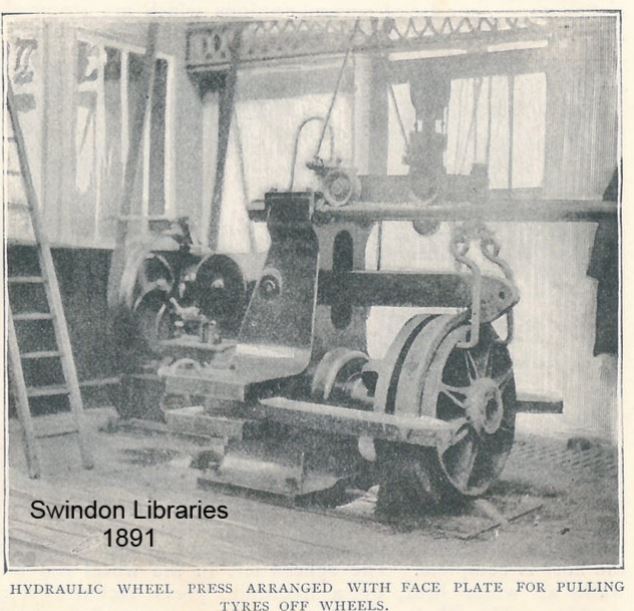
So, where did responsibility lie for the death of Herbert Hole? Described as ‘a fully qualified man and a good man’ it seems unlikely it was due to his incompetence. Investigations later that day revealed a previously unseen flaw in the hydraulic press, which had been working constantly for 19½ years. Today we bemoan the curse of ‘health and safety regulations.’ I dare say Mrs Hole and her family would tell us how fortunate we are to have such laws in place.

Fatality in the GWR Works

The circumstances attending the sad death of Herbert Henry Hole, aged 53 years, of 20, Curtis Street, Swindon, a fitter in the GWR Works, who was killed by an accident, were inquired into before M A.L. Forrester, Coroner for North Wilts, on Friday afternoon in last week at the Mechanics Institution, Swindon.

Mr O.A. Shinner, H.M. Inspector of Factories, of Bristol, was in attendance.

Arthur Herbert Hole, a fitter, who said he left home only two days ago and went to Grimsby to work, identified deceased as his father, 53 years of age, who had been in the employ of the GWR Co. a number of years, and was engaged in the stamping shop.

Dr W. Boxer Mayne said he was called to the Hospital about 4.30 p.m. on Wednesday. He found deceased suffering from a deep and extensive wound in the neighbourhood of the rectum. There was also the evidence of the fracture of the pelvis. He died in a few minutes from shock following the injuries.

Alfred Edward Mayor, of 28, Oriel Street, Swindon, hydraulic forgeman in the factory, said he and deceased were working on two hydraulic presses in the Stamping Shop. On Wednesday afternoon one of the presses was out of work, and deceased came there to put a guage on the dies of the press which was out of work. Whilst he was doing this witness was working the other press. About 3.50 p.m. witness heard a banging noise, and on looking round he saw deceased lying on the floor. Witness went to pick deceased up, but found his left foot was pinned down by a piece of iron (the crosshead of the machine). With assistance, witness raised the iron, and got deceased up and found he was seriously injured. Witness had left the machine ready for Hole to do the work. He was down on the block, and witness told him it was all right. He told deceased not to touch the lever, or the press would go up. Deceased could work the guage without touching the lever.

By Mr Skinner: The machine was not doing any work at the time of the accident. Deceased was doing some work to the guage.

Thomas Axford, of 161, Victoria Road, Swindon, GWR foreman, said he was in charge of the shop where deceased was working. Witness was 15 yards away from the scene of the accident at the time, and heard the noise. On turning round he saw deceased on the ground. Witness fetched an ambulance and also telephoned for a doctor, who quickly arrived. The same day, about 6 p.m. witness examined the machine and found an unseen flaw in the tie-rod coupling the top piston of the cylinder to the bottom one. The effect or result of the accident was that the tie-rod broke. Deceased was evidently knocked down. Someone must have touched the lever for the tie-rod to break. Deceased was standing near the lever, and in witness’s opinion the lever must have been touched or the tie-rod would not have broken. After the accident the lever showed that the machine was on the down stroke ready to press. This showed that the machine had moved on the up-stroke about an inch and then come down. The water was not shut off on the main during meal hours or for repairs. Every machine had a separate valve. Deceased was a fully qualified man and a good man.

By Mr Shinner: There was no particular pressure put on to cause the accident. There must have been pressure, and an improper pressure put on accidentally. The machine had been working constantly for 19½ years.

The jury, of whom Mr Waldon was foreman returned a verdict of “Accidental death,” and passed a vote of condolence with the widow and family of deceased in their great bereavement.

The Faringdon Advertiser, Saturday July 14, 1917.

Capture

Photograph published courtesy of Local Studies, Swindon Central Library.

Was this the type of machine at which Herbert Hole was fatally injured?

Herbert’s funeral took place on July 9, 1917. He is buried in Radnor Street Cemetery in plot D1624 with his wife Priscilla and son A.P. Hole.

Emily Read – killed in house fire

Today the frontage of number 76 Deacon Street is much altered. It is difficult to imagine the horror of that night in May, 1895 when fire broke out in one of the bedrooms.

It seems likely that the Read family had not long lived in Deacon Street. The census returns of 1891 list William and Emily as living at 38 Eastcott Hill.

Burning Fatality at New Swindon

Sad Death of a Woman

Narrow Escape of her Children

Considerable excitement prevailed in the neighbourhood of Deacon Street, New Swindon, at a late hour on Thursday night, by a fire which occurred at No. 76. It appears that the house is occupied by Mr Wm. Reed, an engine driver on the GWR, and his wife and two children.

Reed left home on Thursday morning to attend to his duties, telling his wife he should not be home again until Friday afternoon (yesterday), he having to go to South Wales with a train. Reed’s wife appears to have retired to rest with her children about the usual hour on Thursday night. By some means at present unexplained, the lamp which was used in the bedroom either burst when it was being blown out or fell over.

The room in which the mother and her children sleeping together was soon ablaze. A neighbour who had gone to bed about ten o’clock says he heard something like the fall or explosion of a lamp, but apparently the first alarm was given by a youth named Tipper, living in Curtis street, who was passing at the time. Assistance was promptly to hand, and ably rendered by Mr Dade and Mr Mercer, each of whom succeeded in rescuing a child by breaking the windows and effecting an entrance into the bedroom.

Firemen Munday and Flowers were on the spot within three minutes of the call being given, but prior to their arrival Mr Mercer had succeeded by the aid of buckets of water hand up to him, in extinguishing the fire although he was nearly choked in doing so by the dense volumes of smoke. The fire was put out in about fifteen minutes.

Mrs Reed, it appears, was in flames, and she ran downstairs with her youngest child. She went into a neighbour’s and there explained that she was in the act of turning down the lamp to blow it out, when it exploded and set the place on fire. The poor woman was burnt in a shocking manner, and though medical aid was sought and everything done for her the poor woman succumbed just before 2 o’clock yesterday (Friday) morning. One of the children was also very badly burnt.

An inquest was held on the body of the unfortunate woman yesterday (Friday) afternoon, at the Rolleston Arms hotel, before Mr Coroner Browne and a jury, of whom Mr Alfred Adams was foreman. After viewing the body and the scene of the (fire) the following evidence was taken.

George Wm Singler said deceased was his step sister and he lodged with her. The last time he saw her alive on Thursday was at seven o’clock in the evening. He was away from home when the fire occurred. He identified the bottom of the lamp produced as the one deceased always used to take upstairs with her when she went to bed.

Thomas Mercer, living next door to deceased, said that between 9.30 and 10.30 the previous evening, he was in bed when he heard a cry of “Fire”. He got out of bed and went downstairs. He got up outside the house and rescued one of the children out of the cot in the bedroom, bringing the child through the window. He could not see deceased. The room was all in flames. He called for water and put the fire out. There was one other child in the room. He heard a lamp burst just before he heard “fire” called out. The fire only lasted about a quarter of an hour. He did not know whether the lamp fell or was knocked over. The mother and youngest child had gone when he got in at the window. The fire was nearly out when the fire brigade arrived.

Sarah Beamish, living in the same street, said she was at her gate and heard something burst. She ran to the gate, and Mrs Read then ran down stairs. The door was locked, and they could not force it open. Some men broke the window and she got through. Deceased was in flames, but was burning round the neck only. Deceased walked into witness’s and said she turned the lamp down to blow it out when it exploded. She repeated this statement several times. Deceased thought the lamp was turned too low; it was not the blowing that made it explode. All her clothes were burnt off. By the foreman: It was not more than five minutes after the explosion that Mrs Reed was outside. She then sent for medical assistance, but she died at 1.50 a.m. that (Friday) morning. Both children were brought out of the bedroom window. Witness said everything was done for deceased that could be done.  Her husband (Mr Reed) left at 4 a.m. on Thursday, and would be back until that (Friday) afternoon.

The Coroner adjourned the inquest until Wednesday next, to enable an analysis of the oil to be taken and obtain the flashing point of same.

The Swindon Advertiser, Saturday, June 1, 1895.

Emily Read was buried in Radnor Street in plot B2426 on June 3, 1895. She lies in a public grave with two others, most probably, unrelated people.

William married the widowed Mary Jerome four years later. The 1901 census finds them living at 19 Gloucester Street with Mary’s 23 year old daughter, Seline Jerome and William’s two little girls who had survived the blaze, Winifred Emily, 11 and Elsie May, 9.

*Read is misspelt as Reed in some instances.

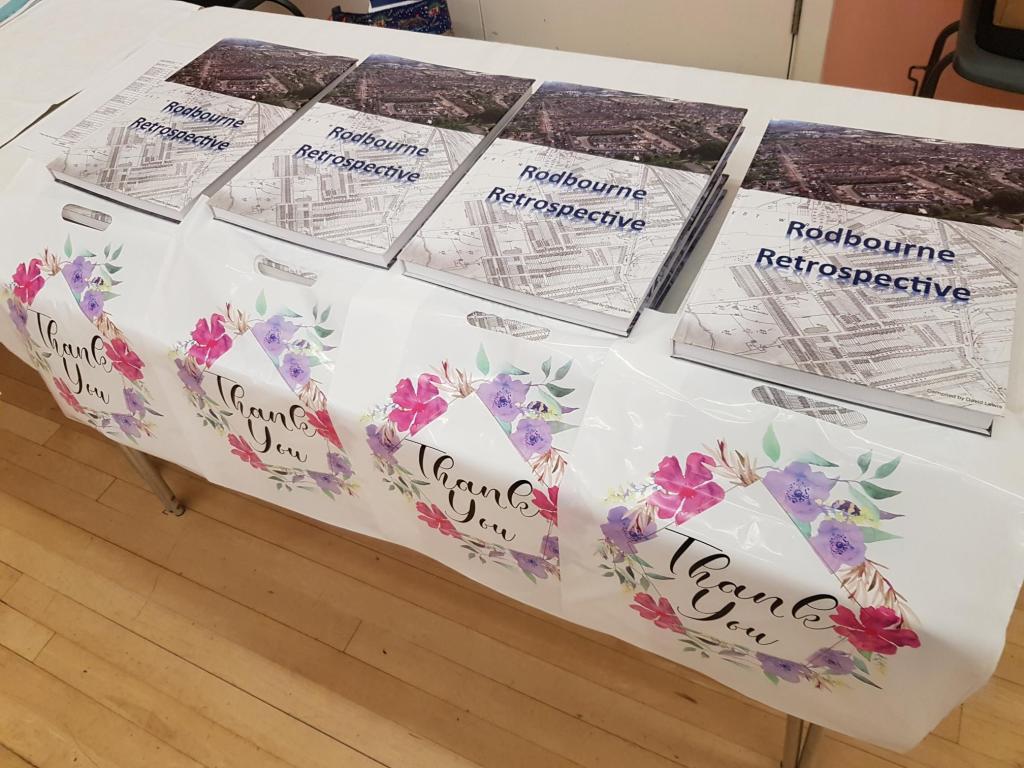
Rodbourne Community History Group

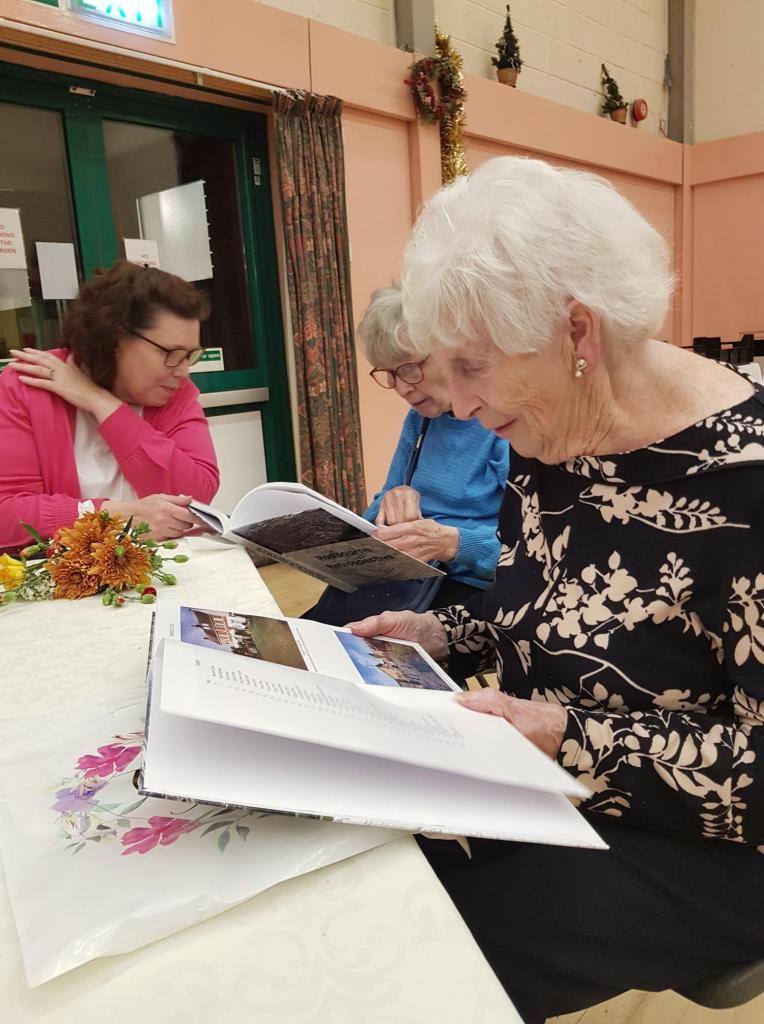
Members of the Rodbourne Community History Group gathered together last weekend to celebrate the achievements of the group across more than 20 years.

What began as the Rodbourne Living History Project in 2003, an initiative of the Outreach Department of English Heritage here in Swindon, evolved into a vibrant group giving presentations, talks and tours about their neck of the woods.

But the time had come to say a fond farewell – although the popular ‘Factory Tours’ of the Outlet Village will continue later in 2025.

The archive will in due course transfer to the Local Studies, Swindon Central Library, flickr website but until then you can still view photographs on the Rodbourne Community History Group’s website.

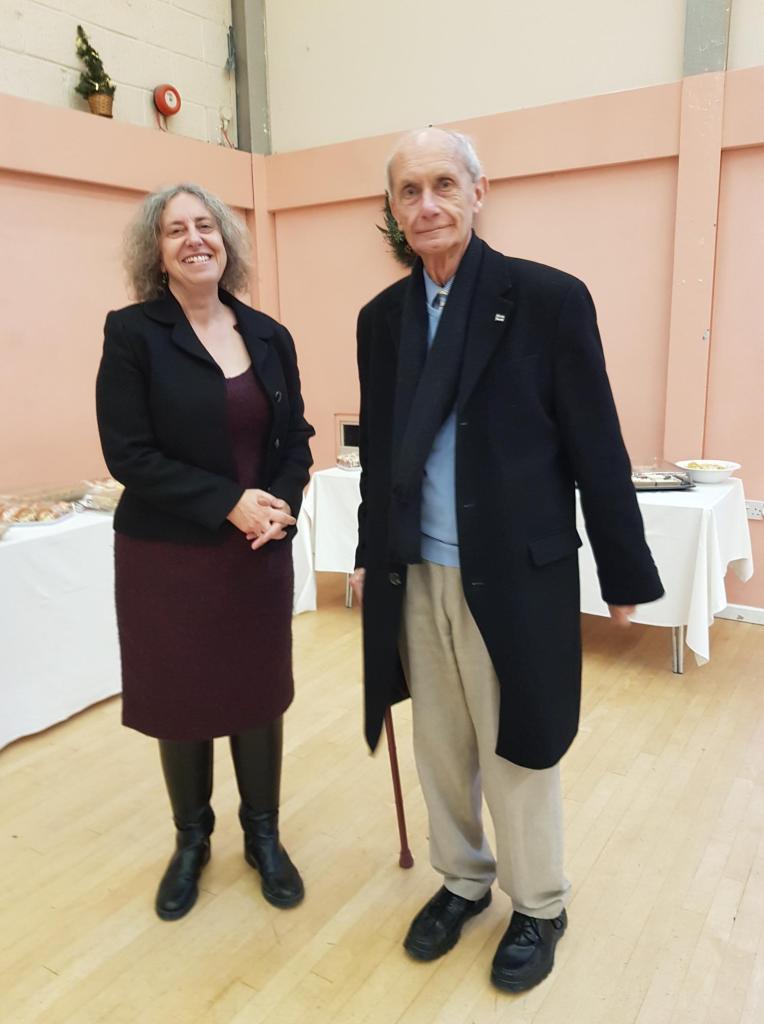
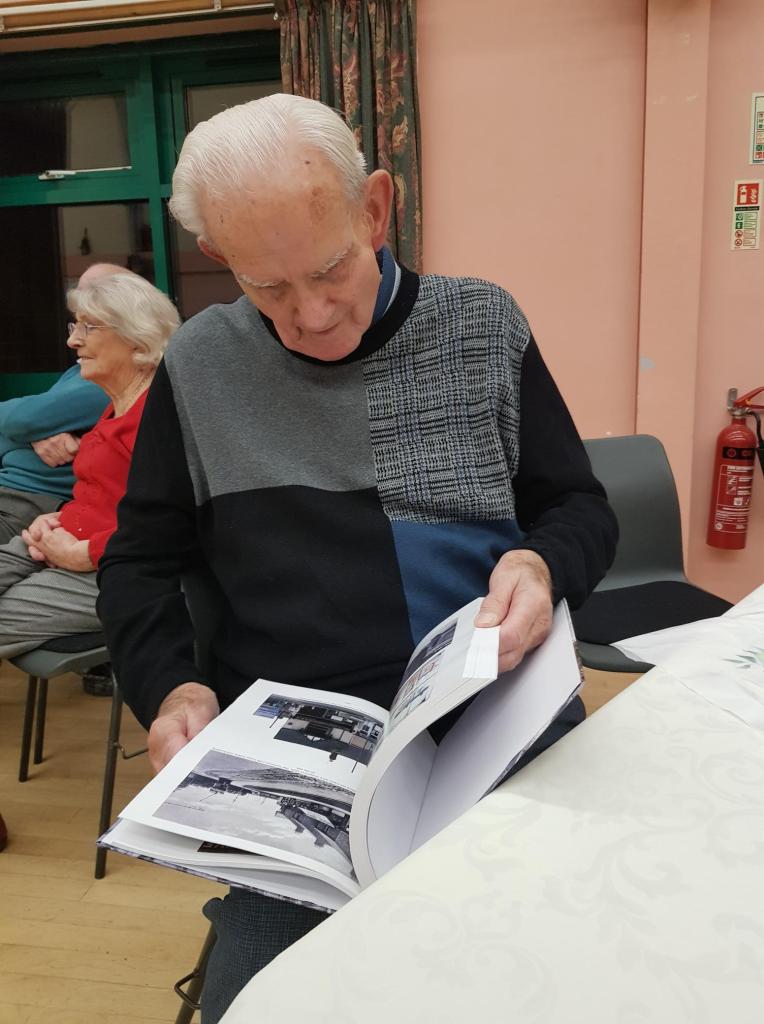
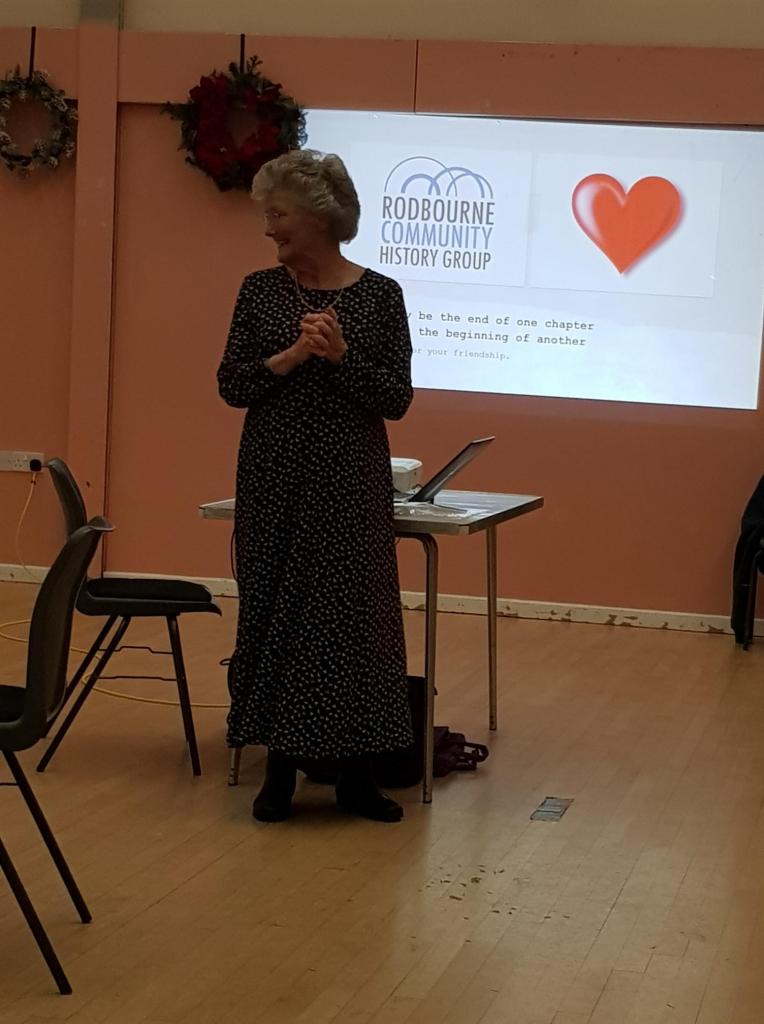
Here are some photographs from Saturday’s event.

Photographs of the cemetery

Today there is a worldwide interest in cemeteries both as an historical resource and also as a place of beauty. From pristine perfection to benign neglect, cemeteries are of interest to many.

I follow a wide selection of ‘Friends’ groups including the Friends of Brompton, Kensal Green and Highgate cemeteries. And then, of course, there is Sheldon K. Goodman of Cemetery Club fame who receives rave review on Tripadvisor.

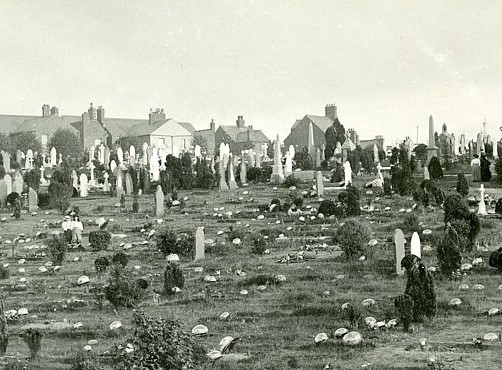
Between the Radnor Street Cemetery group of volunteers we have collected many hundreds of photographs but we seldom come across any taken at the beginning of the cemetery’s history. So it came as something of a surprise to find the following snippet of news published in the Swindon Advertiser in 1889.

Old Swindon Local Board

Cemetery Committee

A report was read from this committee, being of a formal nature. Amongst other business the committee recommended that a sum not exceeding £20 should be spent in purchasing and planting trees in the cemetery. A local photographer had applied to the committee, and was granted permission, to take photographs of and in the cemetery.- The report was adopted and this concluded the business.

The Swindon Advertiser, Saturday, November 23, 1889.

Who was that photographer and where are his photographs? Can anyone enlighten me?

These are the earliest known photographs of the cemetery – unless you know differently.

A photograph dated c1910 taken by William Hooper
A photograph taken following the funeral of Levi Lapper Morse in 1913.

William Charles Cook – died at the GWR Medical Fund Hospital

The re-imagined story …

I’ve seen some accidents in the saw mill in my time, but I’ve never seen so much blood before.

No one could fathom out how the saw had fallen from the frame. At the inquest we were asked the very same question, which no one could satisfactorily answer. Putting the saws in the frame had been Charlie’s job.

Charlie had already replaced the first saw, which had fallen from the frame when a second one fell, the blade skimming across his wrist. He was a big old boy, but we managed to lift him out of the way of the machinery until we could get him to the Medical Fund Hospital.

It wasn’t until Charlie had been transported to the hospital that I remembered Harry, the young apprentice who had started work with us that same week. I eventually found him hiding in the cloakroom curled up in a ball on the floor. I thought we were going to have to call the doctor back out again, I’ve never seen anyone look so queer. I suppose it must have been the shock of seeing all that blood.

I told him Charlie was going to be alright, but he didn’t seem to understand me and in the end we had to find his father to come and take him home. He came back to work the following day, but he soon transferred to the Stores. People said he was never the same again.

Like I said, I’ve never seen so much blood before. We spent the rest of the day scrubbing the place down.

Death at the GWR Medical Hospital

Inquest and Verdict

On Tuesday last at the Lecture Hall of the Mechanics’ Institute, Swindon, Mr A.L. Forrester, Coroner for North Wilts held the inquest on the body of W. Cook, who died at the Medical Fund Hospital, under circumstances detailed in the evidence given below.

Mr Greenaway was chosen foreman of the jury.

Mrs Annie Cook, of 15 Carr street, Swindon said that she identified the body as that of her husband, William Cook, aged 64, a sawyer, employed in the GWR Works. He died on Saturday at the Medical Fund Hospital, and witness was there at the time of his death.

George Ockwell, of Purton, sawyer, in the GWR Works, said that on last Thursday week between 11 and 12, witness was in the saw pit putting the blocks in to cut the timber to a certain size. The saws were hung in the frame but not set, and as Cook put a block in the saw fell down. As Cook went to put the saw back in its place the other saw next to it fell down and cut his wrist. Witness who was in the pit saw the blood coming down. It was Cook’s duty to fix the saw.

The machinery was not in motion of course.

Oh no sir. You had nothing to do with these blocks below? Cook had to hand me the blocks to put in, and the first saw fell down as he was handing me the first block.

You had not put this block in position? No sir.

What do you think caused the saw to fall? I don’t know.

Did the saw fall right down into the pit? Oh yes, sir, close to me.

How deep is the pit? About 14 inches.

Witness explained that he sat on a board to adjust the saw, his legs only being in the pit. The back of the saw was towards witness, and the saw fell down between his legs. The saws were not circular, but were straight “up and down” saws.

Ernest Samuel Richards, shop foreman in the saw mills, said that the mill at which Cook was working was a vertical long frame. The saws were 5ft 10in long, and the average width would be about 5½ inches. The saw had a buckle on, with a hook, and it was attached to the tiller with the hook the reverse way. They were fastened in the frame by a steel cotter. The blocks were simply packing, and did not affect the hook at all. He had never heard of saws falling down during adjustment. If these saws are hooked up and keyed how could it drop down? They cannot drop down when they are adjusted unless they come off the hooks, and that could only happen by a blow or by their being lifted in some way or other.

Dr G.R. Swinhoe said that on May 6th the deceased was received at the GWR Hospital suffering from a cut to the left side of the wrist, severing the radial artery. The bleeding was stopped and the wound was dressed, and he asked the man to stay in the Hospital, but the deceased took his discharge and went home. He come up every day to have the wound dressed until the day before he was re-admitted (May 12th). He was admitted on the 13th suffering from blood poisoning to the left arm. Hypostatic pneumonia had set in and Cook died from hypostatic pneumonia on May 15th. Witness then explained how the temperature from the blood poisoning would affect the heart, and render the heart unable to pump the blood through the lungs. The primary cause of all the trouble was the suppuration set up in the cut wrist, and the other things followed in an elderly and very stout man with a weak heart.

The jury returned a verdict that Cook died from hypostatic pneumonia following a cut on the wrist, accidentally caused by a saw in the GWR Works.

Mr H.B. Dawe was present as being in charge of the GWR Timber Department. Mr W. Ireland, Factory Inspector was also in attendance.

Funeral of Deceased

Yesterday afternoon the remains of the late Mr William Cook were laid to rest in the Swindon Cemetery. The funeral cortege left Carr Street shortly after three o’clock, and proceeded to the Cemetery where the funeral service, both in the Chapel and at the graveside, was conducted by the Rev. J.T. Evans, in the presence of a large number of relatives and sympathising friends. The remains were enclosed in a polished elm coffin with brass furnishings, and bearing a breastplate with the inscription “William Cook died May 13th, 1909, aged 64 years.”

Swindon Advertiser Friday May 21st, 1909

Capture

William Charles Cook was born in Bath in 1845, the son of John Cook. He married Eva Annie Perrin on October 22, 1874 in Aylesbury, Buckinghamshire and by 1876 they were living in Swindon where their son Lewis Ernest Samuel Cook was born. At the time of the 1891 census William and Eva, were living at 15 Carr Street with 15-year-old Lewis and 2-year-old daughter Frances.

William was buried on May 20, 1909 in plot E7378 in Radnor Street Cemetery. He lies with his son Lewis who died in 1900 aged just 24 and his wife Eva Annie who died in 1913.

There may or may not be a headstone to William Charles Cook beneath all those brambles. We fully appreciate the financial constraints upon Swindon Borough Council – that the coffers are depleted and there is only enough money for essential services. But it is such a shame that an important heritage site such as Radnor Street Cemetery receives so little maintenance. Here lies, quite literally, the history of our town – remembering the ordinary people of Swindon.

Freda and Irene Dening – winners of the Brunel Medal

The re-imagined story …

I always knew those girls would do well, especially little Irene. She was always so attentive and eager to learn.

Irene Dening

The turn of the century was an exciting time to be a woman; plenty of new opportunities to be had and women everywhere were pushing the boundaries that had constrained them for too many years.

I began my pupil teacher training at Queens Town Infants School in 1891. Among the girls who joined with me was Edith New who would go on to play a significant role in the Votes for Women campaign with Mrs Pankhurst and her daughters.

Queens Town School opened in 1880, an impressive red brick building built alongside the old canal. Perhaps not the most salubrious of settings, but the school served the Queens Town community well. By the time I began my pupil teacher training there ten years later a girls’ school had been built on the site.

However, there were still anomalies in the teaching profession. Women teachers who taught infants and girls were paid less than men who taught boys, an inequality that Miss New would later campaign to change. But the Swindon School Board was a progressive organisation that set high standards of which young Freda and Irene took best advantage.

When we gained our teaching certification Miss New moved to London, but I stayed closer to home. I followed the Dening sisters careers with great interest. So many of the girls I taught did well, but perhaps none more so than Freda and Irene Dening. I always knew those girls would do well, especially little Irene. Always so attentive and eager to learn.

Freda Dening

The facts …

Freda and Irene were born into a railway family. Their father Richard was a steam engine fitter and along with their brother Henry, the three children were all born in Swindon and grew up at 61 Hythe Road.

Freda entered the service of the GWR in 1912 when she was 15 and Irene joined the workforce in 1914 when she was about the same age.

Freda began work in the statistical section of the engineer’s office at Marlow House and was one of the first girls to be employed in the clerical department of the Swindon Works. She studied shorthand and typing at Swindon College, going on to become a shorthand typist in the Works. But her ambition didn’t stop there. She went on to study for three years covering accounting and business methods, the law of carriage by railway, the basis of railway rates and charges.

Her sister Irene was equally ambitious and worked as secretary to the Stores Superintendent. She also went on to study and both women won the prestigious Brunel Medal.

The Brunel Medal was awarded to Students in the railway department of the London School of Economics who, in not more than four years, obtained three first class passes in examinations held in connection with courses approved for the purpose.

The women’s elder brother Henry was also awarded the Brunel Medal, so they were a pretty extraordinary family.

In an interview with the Swindon Advertiser Freda said:

“I really loved my job and it opened many doors to opportunity that my sister and I would not of otherwise had. There were very few women in the railways in those days and it was a fascinating place to be.”

But there were sacrifices to be made. Neither women married nor had children. Of course, this may have been by choice. These days an ambitious woman would probably expect to be able to have it all – as an ambitious man can!

Freda retired early to care for her elderly parents while Irene had a career that spanned nearly 45 years.

Both sisters ended their days in the Cheriton Nursing Home. Irene died on February 25, 1982 aged 81 and Freda on March 18, 1994 aged 96. Their cremated remains are buried here with their parents.

My thanks go to Dr Rosa Matheson who first drew my attention to the Dening sisters in her magnificent book The Fair Sex: Women in the Great Western Railway.