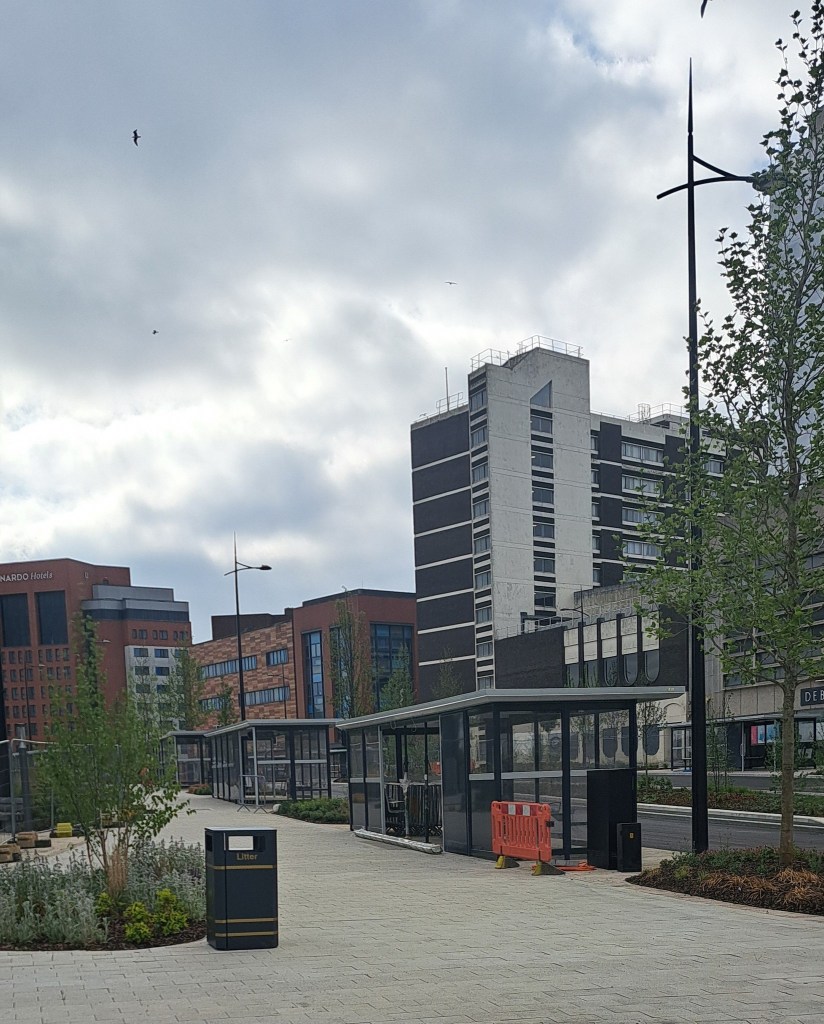
Image courtesy of Diane Everett
As Swindon’s long awaited bus boulevard nears completion, what lies in wait for the area that backs on to it?
In the 19th century this was recognised as a prime town centre location when the Oxford Building and Investment Co Ltd built 108 houses on the site. The Oxford Building Society was a relatively short-lived organisation registered in February 1866 and going into liquidation 17 years later.
When the company folded in 1883 it had an interest in 225 properties in Oxford and more than 100 Swindon.
The New Swindon properties were built on a parcel of land called Brierly Close, between the canal and Lower Eastcott Farm orchard, part of the extensive Rolleston Estate.
Named after Oxford City Centre locations, construction began on Merton Street in 1873 followed by Turl Street in 1874, Carfax Street in 1875 and Oriel Street in 1876 – an area that is unrecognisable now.
In 1881 the census enumerator who travelled from door to door collecting information seems to have struggled with the 34 households in Carfax Street. The census returns are covered in scrawled amendments and crossings out and could the details about No 21 actually be accurate? It would appear that 15 adults and four children occupied this small, terrace property, which can’t possibly be correct!
Head of the household was George Kinch aged 61. His occupation is given as Miller and he was born in Shrivenham in about 1820. At home with him in 21 Carfax Street on census night 1881 were his wife Sarah, his sister Charlotte, his stepdaughter Elizabeth, his 3 year old grandson William and his brother John. A pretty busy household – but then if the census is to be reckoned with there was also Albert Cove and his wife Lydia, John Williams and his wife Elizabeth, William Hibberd and William Watkins, his wife Ellen and their children William 4, Mary A. 3 and one year old Charles.
The terrace houses in Carfax Street were demolished in the 1970s and few photographs survive. It is, therefore, impossible to assess whether No 21 was actually a very large property or if 15 adults and four children actually squeezed into a more modest terrace house. Or perhaps the census enumerator recorded facts we cannot now unravel.
George’s wife Sarah died at No 21 shortly after the census was taken. She was buried in Radnor Street Cemetery on May 11, 1881 in a public grave plot A228. George died ten years later while still living at No. 21. He was buried with his wife on June 11, 1891. As in life so in death the couple shared their final resting place with a number of others. Hannah Scarrot who died in 1901, Frederick Boulton who died in 1918 and his wife Eliza Ann who died in 1944.
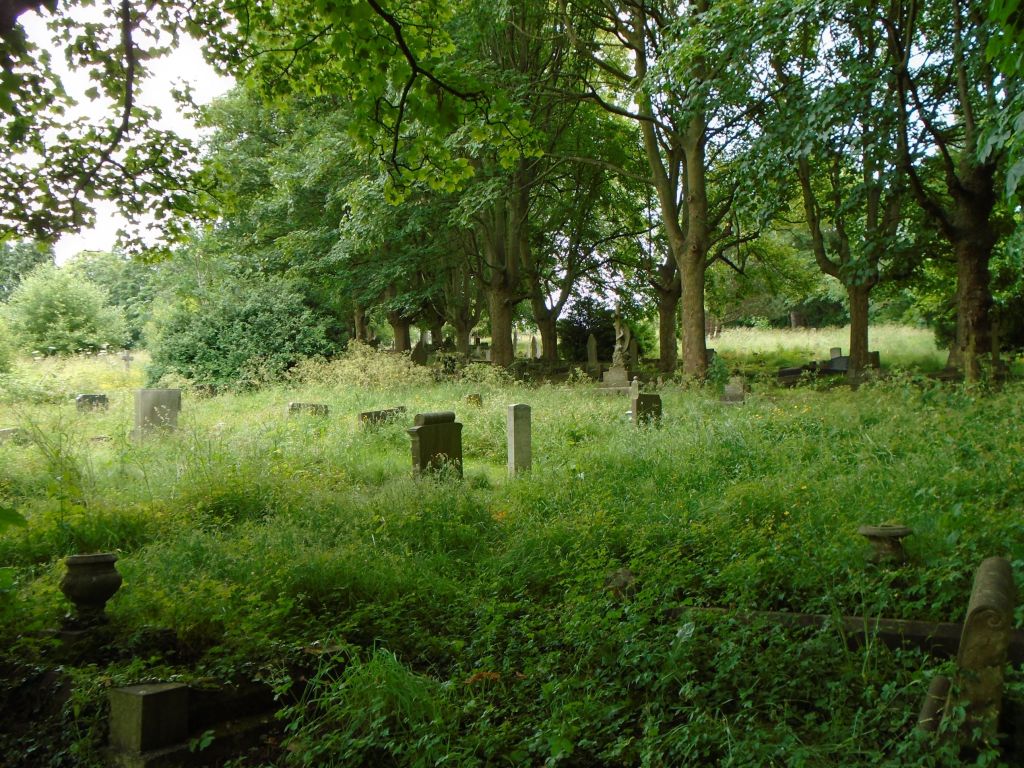

 Radnor Street Cemetery
always interesting to read
thank you
LikeLike