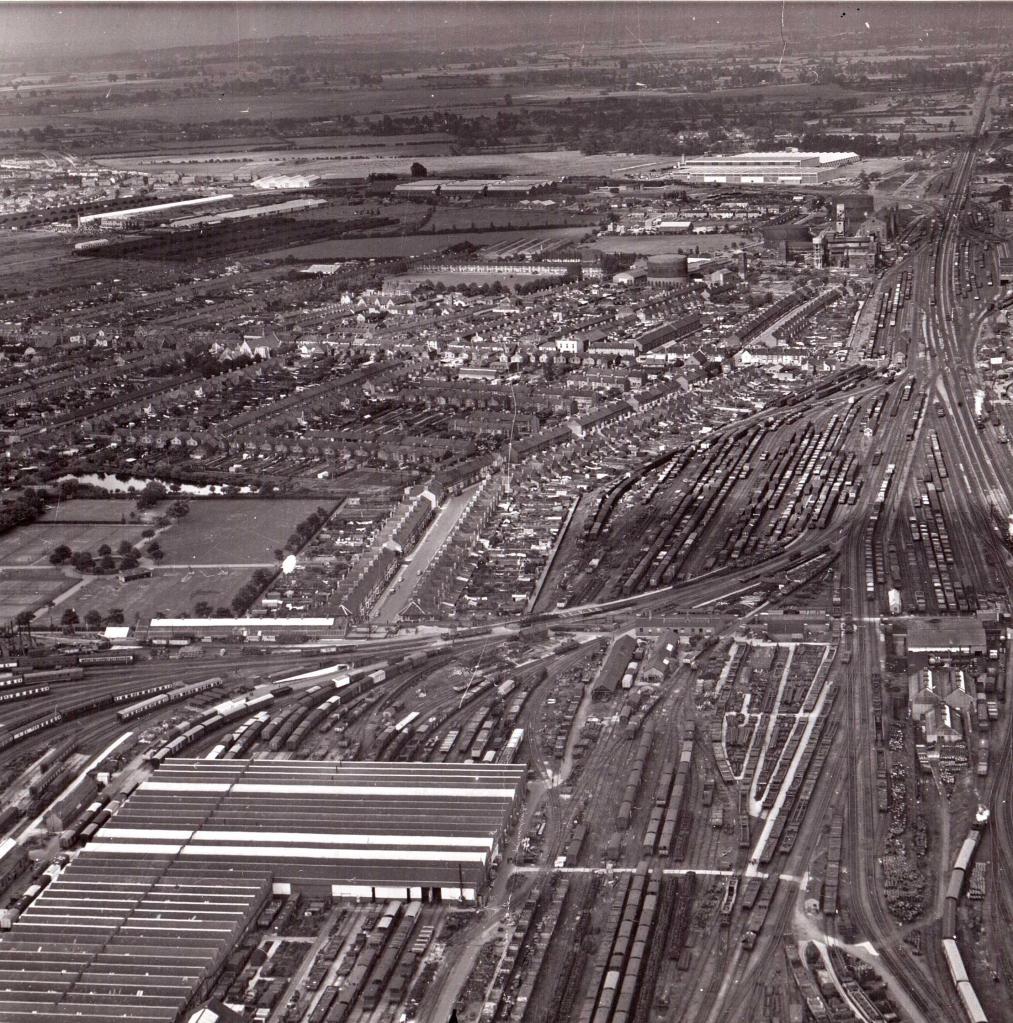
The cities of London and Bristol were heavily bombed during the Second World War yet Swindon, somewhere in between, went relatively unscathed. Despite its dominance within the railway industry it appears that Swindon was not on the Luftwaffe radar. There is a theory that Hitler was preserving the railway network for when he invaded Britain.
On the night of October 20, 1940 a lone bomber dropped three bombs (two high-explosive and an incendiary bomb) on the town, causing significant damage on Rosebery and Graham Streets in Broad Town. There were 10 confirmed fatalities, including Nellie May Page who lived at 35 Graham Street but was visiting friends in Rosebery Street that fateful night.
Workers’ Houses Wrecked
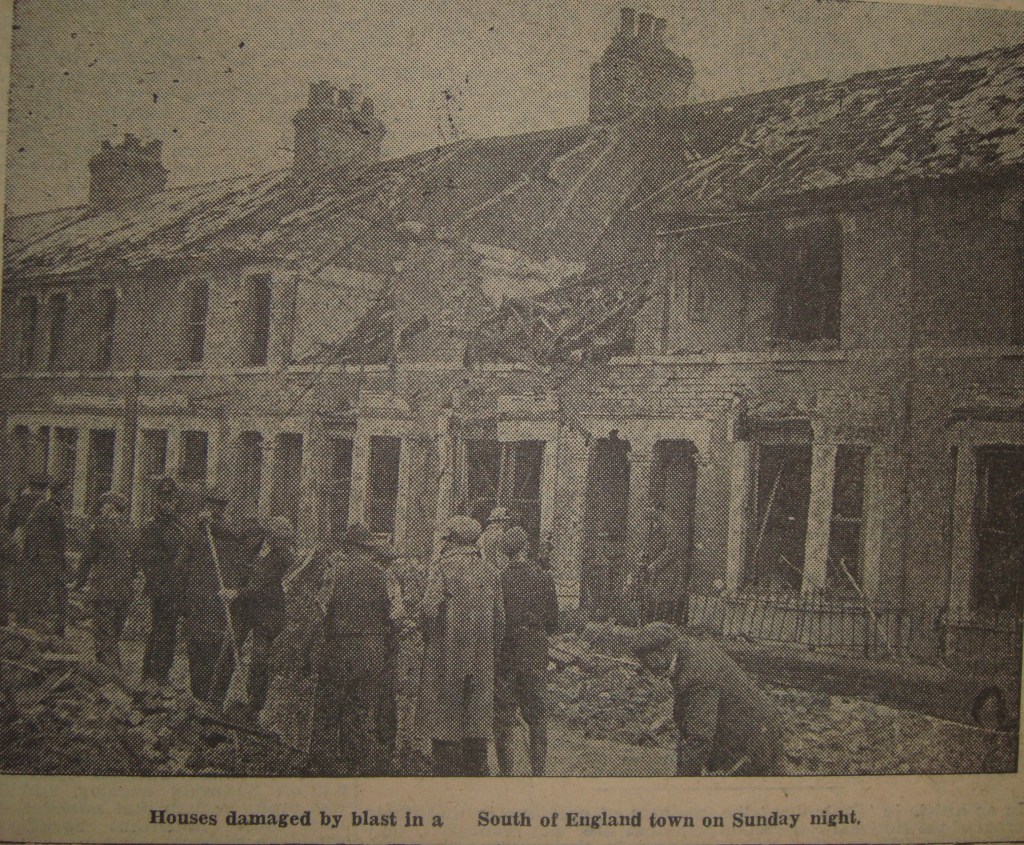
People Killed by Bombs in South of England Town
Having regard to the damage to working class houses caused by two heavy high explosive bombs that dropped on a town in the South on Sunday night, the casualties were comparatively few.
In one street six adjoining houses collapsed when a heavy bomb crashed through the roof of one. The second bomb dropped in the middle of a road in an adjoining street, leaving another huge crater and almost completely demolishing three houses.
The explosion threw the uppermost part of about a dozen houses out of the perpendicular. Pieces of masonry, rafter timber and other debris were rained down over a wide radius, holing roofs in many places and doing extensive damage.
Despite this damage fatal casualties were few. One of the persons killed was Mrs. Nellie May Page aged 47, who was visiting friends at the time. Her daughter, Miss Sylvia Joan Page, who was with her, was taken to hospital suffering from severe head injuries and shock.
Fractured Gas Main
An oil bomb which struck the rear of one house, partially wrecked the scullery and living room. A fire was started here, but it was dealt with very effectively by the fire-fighting services, and extinguished before it could get a hold. Gas from a fractured gas main also caught alight, but here again the brigade quickly had the situation in hand.
The situation provided a severe test for the various ARP services and police, but they all acquitted themselves remarkably well. Demolition and rescue squads, as well as first-aid parties and medical men, were at hand extricating residents trapped deep down in the wreckage and attending to the injured.
In Good Spirit
Gallant work was done by wardens and ambulance men, and they recount how two young girls were liberated, almost unscathed, from beneath a completely wrecked house. Falling beams had apparently prevented them from being crushed to death, and the rescuers were surprised to find that they were not only unhurt but in good spirit. One asked for a drink and when offered a flask of water observed, with a smile, “Is that the best you can do?”
Generally, the inhabitants displayed great fortitude and calmness, and seemed to be more concerned about the welfare of their neighbours than of their own interests.
Rapid headway was made in clearing away the debris. There were plenty of volunteers for the work of salving furniture and other belongs, and, in the same way, those whose homes were not so severely damaged found plenty of helpers to assist in covering up broken windows and doorways.
Extracts for the North Wilts Herald Friday 25 October 1940.

Wartime publishing restrictions prevented newspapers from identifying the town and street names.
Nellie was born on June 4, 1893, the youngest of five children. Her father William James Hopkins worked in the Carriage and Wagon Works. When Nellie was baptised at St. Saviours on July 16, 1893 William and his wife Emma and their children were living at 78 William Street.
Nellie married at St. Marks on September 25, 1915 during the First World War when her husband Francis Vernon Page was serving in the RAMC.
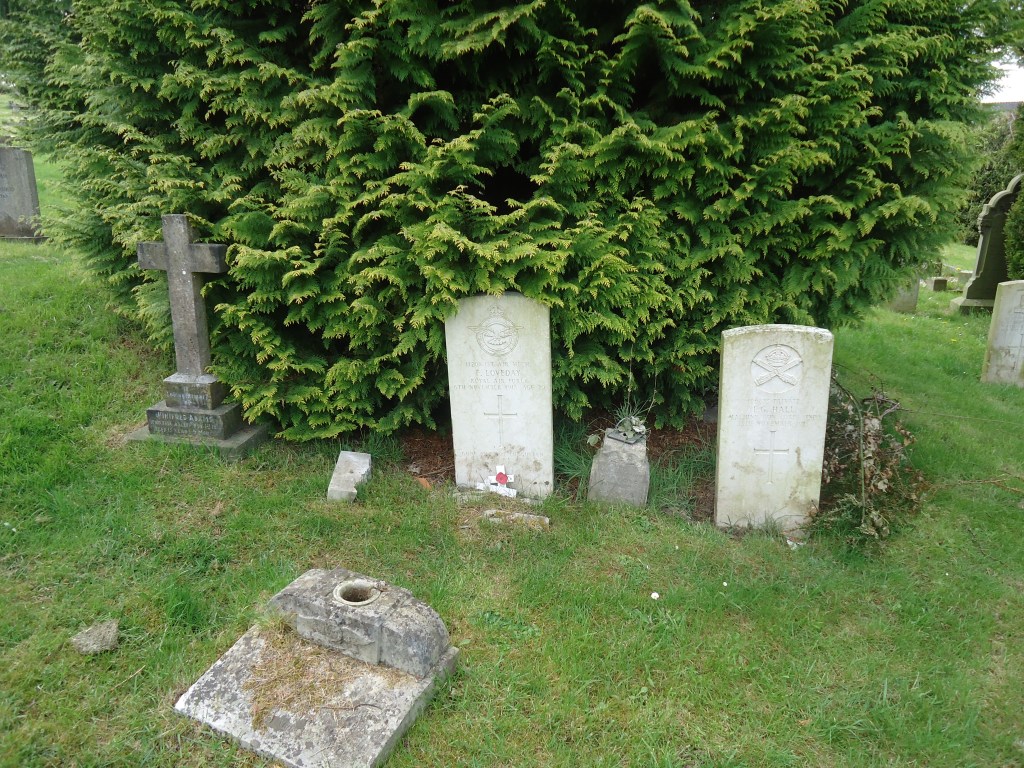
Nellie was buried in grave plot E7491 with her husband Francis who died in December 1935.


 Radnor Street Cemetery