If you have yet to discover the writer Peter Ross you are in for a real treat.
Peter Ross is an awarding winning journalist and author based in Glasgow. He has written for The Guardian, Sunday Times and The Times among others and is an Orwell journalism fellow.
Among his five books are three I’m pretty sure Radnor Street Cemetery followers would enjoy. His latest, published this year, is Upon a White Horse – Journeys in Ancient Britain and Ireland.
As you might imagine, given the historic nature of our neck of the woods, he covers Wiltshire in some detail – Stonehenge, Avebury, Wayland’s Smithy, Kennet Long Barrow and those two iconic chalk figures the Uffington White Horse and the Cerne Abbas Giant – even Swindon band XTC gets a mention.
Peter travels the length and breadth of the British Isles from Cornwall to Orkney, taking in Dublin, Pembrokeshire and Anglesey en route and paying a moving yet optimistic visit to the site of the Sycamore Gap.
The writing is lyrical, the descriptions evocative – Upon a White Horse is a joy to read. But don’t just take my word for it.
In Britain in the 1950s, 60s and 70s young, unmarried mothers were coerced into giving up their babies for adoption, an estimated 185,000 of them. That this practise continued into the late 20th century is now shocking and unforgiveable. Was this attitude a legacy of 19th century social mores – all those myths about Victorian prudery and piano legs? In fact the Victorians were far more broad minded and accepting than we give them credit for.
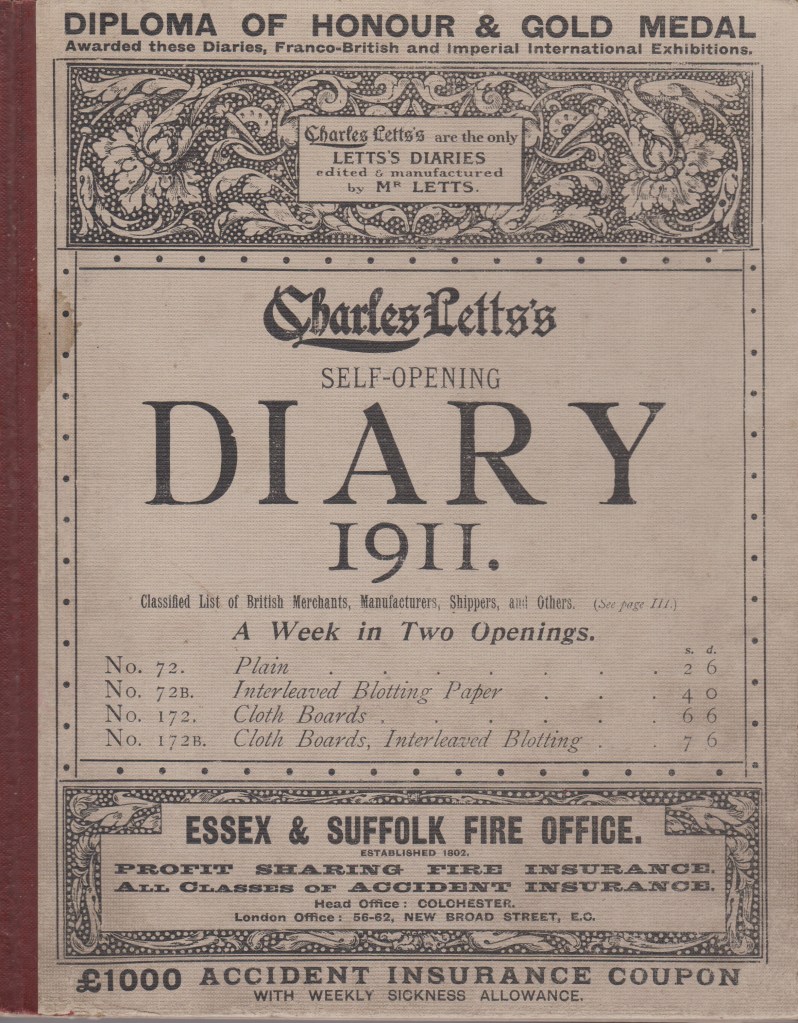
In my work transcribing the diaries of Elliot Woolford, farmer at Hook Farm between 1899 and 1940, I have come across two examples where an illegitimate birth was no big deal, the child welcomed into the extended family.
William Woolford married Frances Ann Fletcher in the parish church at Purton in May 1849. The bride and groom signed the marriage register by making their mark, suggesting they were not proficient in writing their name. Both stated they were over the age of 21.
At the time of the 1851 census the young couple and their two year old daughter lived at a property in Poor Street, Purton. William’s occupation was given as labourer at stone quarry. Their eldest child had been born several months before the couple married. Ellen Woolford Fletcher was baptised at the church of All Saints, Lydiard Millicent on December 24, 1848, the daughter of Ann Fletcher – no father’s name was given. There is little doubt that William was her father but Ellen continued to use her mother’s maiden name. She never married and died at Hook Farm in 1904 aged 56.
William and Frances went on to have six more children, diarist Elliot George Woolford was born in 1867. The 1871 census reveals their six children (their youngest, 7th child Rowland was born in 1874) and a granddaughter Fanny Ireland Fletcher, just 5 months old. It would appear that like her mother, Ellen had produced a child out of wedlock, but unlike her mother there was no husband waiting in the wings. Fanny Ireland Fletcher was baptised in the parish of Purton on December 4, 1870, daughter of Ellen Walford [Woolford] Fletcher, single woman.
Fanny grew up in the large Woolford family and by the time of the 1881 census she was described as William and Frances’s daughter, because by then that was how she was regarded. Was she ever made aware of the circumstances of her birth? Did she know that Ellen was her mother or did she believe her to be her elder sister?
And what about Elliot who in his diaries recorded the facts of his life, work and those of the community who lived in Hook. What did he know of Fanny, four years his junior, the little sister with whom he grew up? Perhaps everyone knew the facts of Fanny’s birth and it really didn’t matter, which is how things are today.
Fanny married Edward Harry Matthews, a drilling machinist in the GWR Works, in the summer of 1898 and by 1901 they were living at 54 Exeter Street. They had two sons, Leslie and Edward.
On Friday March 10, 1911 Elliot makes his usual weekly visit to Swindon, selling eggs and butter at the market and buying his weekly provisions. He writes in his diary:
‘I went to 65 Ponting St and saw Mrs H. Matthews gave her a rabbit and some rhubarb.’
Fanny Ireland Matthews died at her home in Farnsby Street in December 1925. She was buried in Radnor Street Cemetery on December 22, in grave plot D621. Her husband Edward Harry Matthews died in December 1936 and was buried with Fanny on December 22, the anniversary of her funeral eleven years previously.
There are several volumes of Elliot Woolford’s diaries transcribed and available to read on the Friends of Lydiard Park website and I am working on a book about Elliot, Hook Farm and the parish of Lydiard Tregoze.
The following article was published in Swindon Heritage Magazine in the Summer 2015 edition. Swindon Heritage was co founded by Graham Carter, Mark Sutton and myself in 2013. During a five year period we produced 20 editions of the magazine plus a Battle of Britain 75th anniversary commemorative issue in 2015.
Sadly, Mark died in 2022, but his work to remember the Swindon men who served in the First World War continues at Radnor Street Cemetery.
A memorial to 19 Swindon men who died during the First World War might also have been lost forever – but for the diligence of Gorse Hill resident Paul Jevder.
Paul, who lives in St Paul’s Road, put out an appeal for the impressive marble memorial to be given an appropriate new home after he found it under a pile of rubbish on his property.
He had been clearing the ground in preparation for some building work when he made the discovery.
Swindon Heritage co-founder Mark Sutton was the first caller to answer Paul’s appeal, and dozens of other people also phoned, some looking for more information, but many recommending that Paul get in contact with Mark.
Within hours the memorial had been loaded into a van and moved to the chapel at Radnor Street Cemetery, which is already the home of several other memorials to the town’s war dead, including another from Gorse Hill. That one commemorates members of the working men’s club, although none of the names are duplicated.
It seems Gorse Hill folk were particularly keen to remember the area’s heroes because St Barnabas Church also has its own war memorial, made of wood, inside the church.
The newly found memorial is dedicated to the memory of former members of a ‘sabbath school’ who died in the war – and this was almost certainly attached to the former Wesleyan Chapel in Cricklade Road, because that building backs on to Paul’s property.
The chapel, along with associated land, has been earmarked for development into flats, and it is thought the memorial, which is slightly chipped but otherwise in good condition, may have become displaced during work to prepare for that.
Thanks to his extensive research into Swindon’s military history, all the names listed on the memorial are familiar to Mark Sutton, who also owns medals and photographs associated with many of them including the ‘dead man’s penny’ (officially called a memorial plaque) that was issued to the family of Walter Thatcher after his death.
Walter, who lived at 4 King Edward Terrace in Gorse Hill, joined the Wiltshire Yeomanry in 1915, aged just 18, and ended up on the Western Front.
As with most of the Yeomanry, he was absorbed into the 6th Wiltshire Regiment, and was sadly killed on the Bapaume-Cambrai Road on March 23, 1918, during the big German offensives of that year.
He has no known grave, but is remembered on the Arras Memorial.
Two of Walter’s brothers also served.
Mark’s researches over the years also traced a photograph of another of those on the Gorse Hill memorial, Augustus Strange, who lived at 199 Cricklade Road, a stone’s throw from where the memorial was found.
Serving with the Royal Engineers, Augustus died two weeks before the end of the war, on October 29, 1918.
“It was nice to be able to tell Paul about some of the men listed,” said Mark, “including one, Sidney Curtis, who lived in the house opposite Paul’s.
“We’re really grateful to him for making sure it has been recovered and seeing it went to a proper home.
“It will now be safe at in Radnor Street, and anybody will be able to come and see it from time to time as the cemetery chapel is sometimes open for events, and during this summer is the meeting place for guided walks we are running on the second Sunday of every month.”
And Paul, who lived in Cyprus as a child and whose family are Turkish Cypriots, will have understood the relevance of a war memorial, having witnessed, at first hand, the bitter division of the island in 1974.
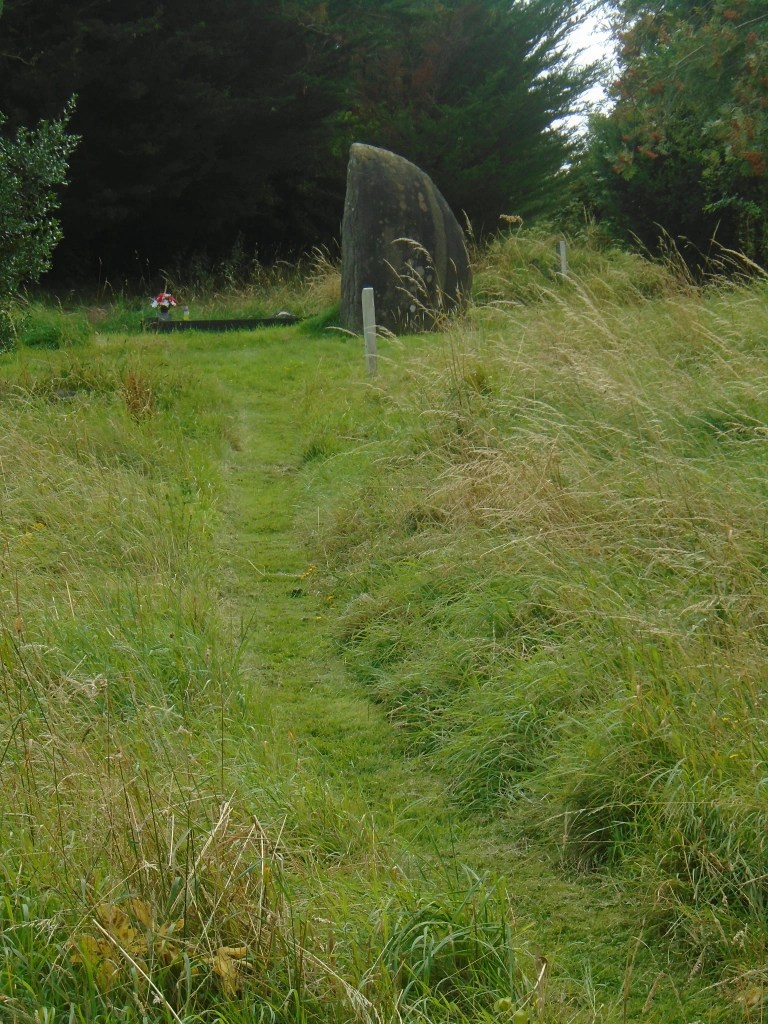
So, what is that stonking great big stone set beside the path leading from the Dixon Street gate to the cemetery chapel?
Some have suggested it could be a standing stone associated with ancient sites and early places of worship. This seems unlikely as the land was previously a coppice (an area of managed woodland). The remains of Swindon’s 13th century parish church still stand in the Lawn, the former home of the Goddard family.
Others have suggested the stone may stand on a ley line, connecting ancient sites of importance. Support for this theory lies in the fact that the cemetery stone is apparently in alignment with another in the former GWR Park in Faringdon Road, which is in an alignment with … ?
However, there maybe a much more prosaic geological explanation for the siting of this stone as the following articles suggest, published in the Swindon Advertiser during the construction of the cemetery in 1881.
The Cemetery .- On Tuesday evening last a meeting of the Joint Burial Board was held at the Board-room,Cricklade-street, when there were present, Messrs James Holden, in the chair, and W. Reynolds, W. Dawson, W.E. Morris, R.S. Edmonds, and C. Barker. – Mr W.H. Read, the architect, attended and explained that some considerable difficulty had been met with in draining and laying out the ground in consequence of the contractors meeting with a number of large boulder stones. Where these came in the way of the drains of course the contractors removed them, but there was the fact that others would be found all over the ground where graves would be dug, and he thought it his duty to bring the matter before the committee so that some arrangement could be made to get them removed before the turf was laid down. – The Chairman thought this would form a portion of the contract to lay out the ground, and also that it would pay the contractors to remove the stones for the value of the stone for road making purposes. – Mr Read said it would only pay them to remove the very large ones. The whereabouts of small ones could only be ascertained by pricking the ground over.- The committee decided to meet on the ground on Monday to consider this matter, and also the question of levelling, and the alteration of one of the approaches to the cemetery and the style of fence to be used at the back of Clifton-street.
The Swindon Advertiser, Saturday, May 21, 1881.
Swindon Cemetery
To the Editor of the Swindon Advertiser,
Sir, – The other day I was at Swindon, and went to see what the new cemetery was like. The first thing to attract my attention was a huge stone stuck up on end by the side of one of the principal paths, and on which there had already been scratched a number of letters, inscriptions, and hieroglyphics, evidently the work of those vulgar little boys who are to be found in every community. I was anxious to obtain some reason for the erection this absurd monstrosity, which appeared to be of no other possible use than that to which it had been already applied by the aforementioned vulgar little boys, and this having given me, I beg to submit the following as a suitable inscription to be engraven on a brass plate and affixed to the stone:-
Here stands exhibited
The Taste
(which was Nasty, Rude, and without Form),
of the
Swindon Cemetery Committee,
who,
for a whim,
Consented to write themselves
Je-rusalem Ponies,
I am, Sir, your obedient servant,
A Swindonian
Jerusalem pony is a slang term for a donkey
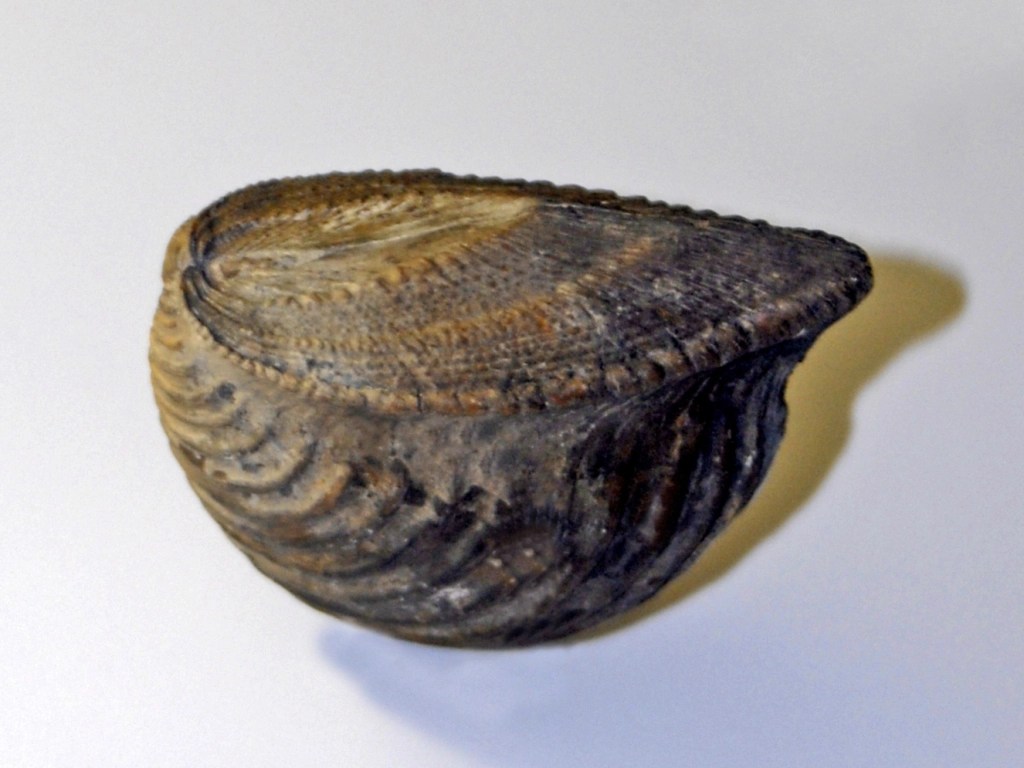
A correspondent asks for information respecting the extraordinary geological discoveries said to have been made in preparing the ground in the new cemetery, and is particularly anxious to know about the shells which are said to be found in pairs as they had never been met with before. In answer to the enquiry we would say the whole thing is nothing better than what is known as a “Mares’ nest.” The shell about which so much fuss has been made is one of the commonest found in the Swindon quarries – the trigonia, and that which has been described as shells lying side by side in pairs is simply the two halves of a ‘dead’ shell lying perfectly open and flat instead of closed as a ‘live’ shell would be at the time when it was submerged – a shell out of which some antediluvian caw had exhausted the fish in the days before Adam delved and Eve spun [span].
The Swindon Advertiser, Saturday, July 16, 1881.
A “Mares’ nest” a discovery imagined to be important but proving worthless – Collin’s Dictionary.
Trigonia, genus of mollusks that first appeared during the Jurassic period, which began about 208 million years ago. – Encyclopaedia Britannica
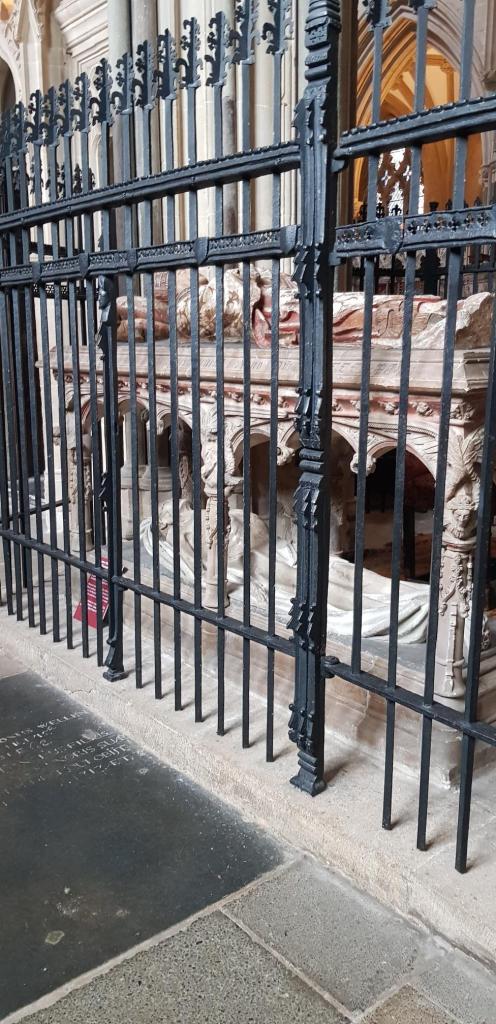
Cadaver or transi monuments first became popular in the 14th century in the wake of the Black Death, a plague that wiped out half the population of Europe.
This gruesome memento mori depicts the body’s transition from life to decomposition and often lies beneath an effigy of the deceased in life. A reminder that any wealth or status acquired in life means nothing in death. In other words, make provision for your afterlife because you can’t take your money with you when you go.
The irony of this symbolism is that only the wealthy could afford this type of memorial, take for example Thomas Bekynton c1390-1465.
Thomas Bekynton served as Bishop of Bath and Wells, the Lord Privy Seal and the King’s Secretary under Henry VI.
Bekynton’s two tier tomb stands in a chantry chapel within Wells Cathedral. The chapel founded by Bekynton was for the daily singing of mass for the repose of his soul.
I could not get a decent full length photograph so I am ‘borrowing’ Philip Newton’s image with an accreditation.
When Jack Cooke turned 33 years old he embarked upon a road trip like no other.
After a visit to a local churchyard Jack had a few big questions to which he hoped to find the answers. “Most of us live in denial of death,” he writes and wondered why as an individual (and a society) we are so divorced from death. “I had become morbidly obsessed, preoccupied with the thought of all those men and women underground.” Sound familiar, Radnor Street Cemetery followers?
I’m guessing he undertook a fair bit of research before he embarked upon his taphophile tour of the British Isles. And what mode of transport did he choose – why, a hearse, of course. At this point I wondered if the book might be an irreverent Disney-like gallop through numerous cemeteries, but nothing could be further from the truth.
During the course of his 2,000 mile, month long journey Jack visited ‘the last grave’ at All Saints graveyard Dunwich, in danger of sliding into the North Sea; crept around Highgate Cemetery in the dead of night and travelled to the Isle of Rum in the Inner Hebrides.
And now I intend to google all the places he visited and see what pictorial evidence there remains.
The End of the Road by Jack Cooke – A journey around Britain in search of the dead. First published by Mudlark 2021.
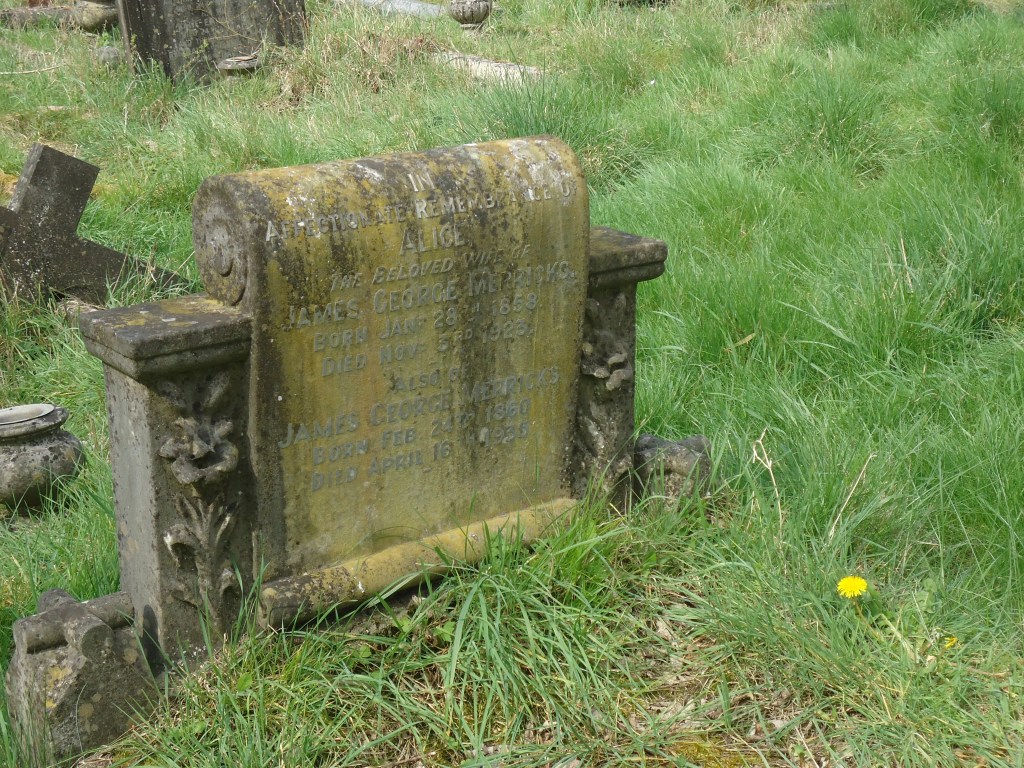
James spent some 15 years in South Africa but why had he left England and why did he eventually come back. And even more intriguing, what was the story behind his romance with Alice Healey, born in Bath in 1861, whom he married in South Africa in 1891.
I put out a general enquiry on this blog, hardly thinking anyone would reply but this week James’s great-grandson David got in touch and filled in all the blanks.
David forwarded me several family photographs including a most beautiful one of Alice Sarah Merricks nee Healey born in 1861 the daughter of Edward Healey, a wire worker, and his wife Frances who grew up at 7 Southcot Place, Bath.
David was also kind enough to send me a typed transcript of James George Merricks’ diary 1876-1896.
James Merricks was born February 24, 1860 in Chichester, Sussex. He left school in 1876 and began work as first an auctioneers clerk then later becoming apprenticed to draper Alfred Dunn of West Street, Chichester.
His apprenticeship completed in 1880 James began working for Stokes and Sons of Cheap Street, Bath which he describes as a “high class drapers etc easy berth, think I shall get on allright.”
The first mention of Alice comes in a diary entry dated June 4, 1880.
Have been impressed considerably by a young lady I met at Mr. Philpot’s and find her to be the daughter of Mr Healey, Stall Street, shall look forward to a closer acquaintance if possible.
By July 1 James writes.
Have managed to meet Miss H. several times and like her even better than I expected, suppose in my position tis foolish to look so far forward but should feel upset I am sure if I saw anyone else with her.
And after attending Mr Philpot’s New Year’s Eve party James writes: Believe Miss H. has some liking for me and I am quite sure I never knew anyone I liked as well.
However, the course of true love never did run smooth.
March 1881 and James had become disenchanted with his job in Bath. A chance meeting with Mr Burnet-Stoakes from South Africa convinced him his future lie there where he could easily earn £120 a year, a vast improvement on the £30 he was earning in Bath.
A mere three days later, his berth to Hong Kong booked, James wrote to his parents and Alice.
By this time Alice was employed as a governess working for Walter G. Cloke at Wiltshire Farm in Wokingham, Surrey where she had responsibility for his 5 school age children (and most probably the two babies in the nursery as well).
At home in Chichester for 10 days prior to his departure, James cycled across country to visit Alice before he left England.
May 9 – Slept or rather passed the night at “The Bush” and met Alice soon after sunrise for another hours talk, she was most kind and promised if I could make her a home in S. Africa she would be mine.
On May 19, 1881 James embarked for South Africa at Southampton, arriving in Cape Town on June 9.
After two low paid, short term jobs James began work for T. Copelands at £11 per month. He writes home to his parents and Alice, but she fails to reply.
James leads a busy life with work, church and an active social round. He joins the Baptist choir, the Choral Society and assists the Desalins Sisters Opera Company.
Eventually he writes on January 1, 1882 …also generally have enjoyed this Christmas and New Year day exceedingly, but althoughaccompanied by some of the jolliest and prettiest girls have not lost my heart to any of them, cannot understand the underlying motive (if any) which prompted Alice’s letter received Oct 11th last finally deciding that she could never leave England for me – well perhaps I may go home someday and then – but its no good guessing the future.
More than 18 months passes and James writes … as I have not heard directly from Alice since October 11th 1882 can now decide that I must think no more of the matter.
Although, of course, we know differently!
During the intervening years James set up his own store in the area that was soon to become Johannesburg. This was probably precipitated by the opportunities presented by the Witwatersrand Gold Rush, which really got under way with the 1886 discovery of gold at Langlaagte, where it is believed the stores were situated.
After six long years the mystery is solved… my Alice was true to me after all and that her long silence was only the result of her having misunderstood my careless conduct with regard to another in her absence for my heart was not in least affected by Miss M.P. though she (the latter) might have imagined she had fascinated me, but I always took her for an accomplished flirt, however “Alls well that ends well”…
Alice arrived in South Africa on October 15, 1890. The couple signed an ante nuptial contract the following day and were married on October 17 by Landrost Von Blommestein at his house Doornfontein with a religious service at Mrs. Jones by Rev. Ecclestone. Their first son, Eric George was born on August 9, 1891, their second Edward Alfred on November 30, 1893 and a third Lionel Marten on January 7, 1896.
In 1896 the volatile political situation, the threat of war and the Jameson Raid with the subsequent commotion probably caused James to reassess the family’s situation.
Alice and their three young boys accompanied by James’s brother Alfred sailed for England on April 24. By the end of 1896 James had joined them. There were no further entries in the diary.
By the time of the 1901 census James and Alice were living at 42 St. Margarets Road, Swindon where a fourth son, John Gordon was born on June 14, 1900.
James George Merricks died aged 75 years at his home 38 Devizes Road. He was buried on April 20, 1935 in Radnor Street Cemetery in grave plot E7574, joining his beloved wife Alice who died in November 1923.
I am sure I have told you before about my great admiration for a blog entitled Spitalfields Life. For more than 15 years the Gentle Author has been publishing a daily post about the history, past and present, of Spitalfields in the east end of London, and the people who live and have lived there.
Among the contributors to this blog has been writer and historian Gillian Tindall and it was with sorrow that the Gentle Author informed his readers of his friend’s death this week.
The first book of Gillian’s I read was The House by the Thames and I quickly became a great admirer.
I am copying here the Gentle Author’s text from Spitalfields Life – I’m sure he won’t mind! I can recommend following the blog – just have a quick browse first, I’m sure you won’t be disappointed. Read some of Gillian’s articles and perhaps pre-order the novel.
‘It is with a heart full of emotion that I write to you today. I have two announcements. The first piece of news I have to impart is that my good friend the historian Gillian Tindall died on Wednesday aged eighty-six. The second disclosure is that Gillian came to see me in February and asked me to publish her final work, Journal of a Man Unknown, which comes out on 6th November.
When Gillian and I met for a drink in the Great Eastern Hotel at Liverpool St Station on that cold night early in the year, she revealed she was terminally ill and that she had written a novel which she would like me to publish. Gillian was a talented writer, celebrated both for the quality of her writing and scrupulousness of her research. She had a distinguished record of more than sixty years publishing books and was a contributing writer to Spitalfields Life. So, of course, I said yes.
I was fascinated that, culminating her career as a historian, Gillian had chosen to write a piece of fiction as her final statement. In an astonishing feat of literary imagination, she projects herself back onto one of her forebears to conjure a compelling vision of seventeenth century England.
Journal of a Man Unknown is an eloquent first person narrative. The protagonist is a Huguenot iron worker, an occupation that leads him from the Sussex Weald to the Whitechapel Bell Foundry, and beyond to the North Country. While in London, he lives above a coffee house in Brick Lane and the book conjures a vivid evocation of Spitalfields at the time of the Huguenots.
Gillian’s novel serves as a personal manifesto expressing her belief in the true nature of history as composed of the lives of working people, those who pass through life not leaving a trace, except in the hearts of those into whose lives they have been cast. It is a sentiment with which I am fully in sympathy and makes Journal of a Man Unknown a poignant and heartfelt final statement.
All summer, as Gillian’s health declined, I worked with designer David Pearson to prepare a beautiful edition of her novel in the hope and expectation that she would be here to see it published. But it was not to be. My last contact with Gillian was when she approved David’s splendid cover design above and selected this blue and yellow version from the different options that David proposed.
It was a shock to learn of Gillian’s death this week just as her book was at the printers, but on reflection I think there is also a certain poetry in the notion of an author passing from this world knowing that her final work is to be published within weeks. In this sense, we never truly lose writers because they stay with us through their books.
We will be announcing a book launch presently, but in the meantime you can preorder a copy of Journal of a Man Unknown which we will send out at the end of this month.’









 Radnor Street Cemetery