Cadaver or transi monuments first became popular in the 14th century in the wake of the Black Death, a plague that wiped out half the population of Europe.
This gruesome memento mori depicts the body’s transition from life to decomposition and often lies beneath an effigy of the deceased in life. A reminder that any wealth or status acquired in life means nothing in death. In other words, make provision for your afterlife because you can’t take your money with you when you go.
The irony of this symbolism is that only the wealthy could afford this type of memorial, take for example Thomas Bekynton c1390-1465.
Thomas Bekynton served as Bishop of Bath and Wells, the Lord Privy Seal and the King’s Secretary under Henry VI.
Bekynton’s two tier tomb stands in a chantry chapel within Wells Cathedral. The chapel founded by Bekynton was for the daily singing of mass for the repose of his soul.
I could not get a decent full length photograph so I am ‘borrowing’ Philip Newton’s image with an accreditation.
You might also like to read the Gentle Author’s account of the Dead Man in Clerkenwell https://spitalfieldslife.com/2024/10/18/the-dead-man-in-clerkenwell-ii/
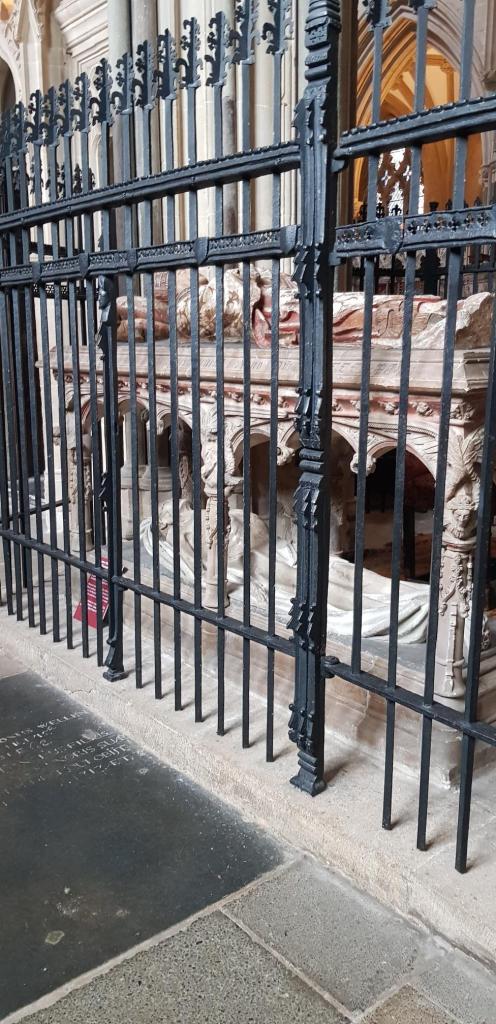


image published courtesy of https://www.philipnewton.me/thomas-bekynton-transi-tomb-wells-cathedral/

 Radnor Street Cemetery