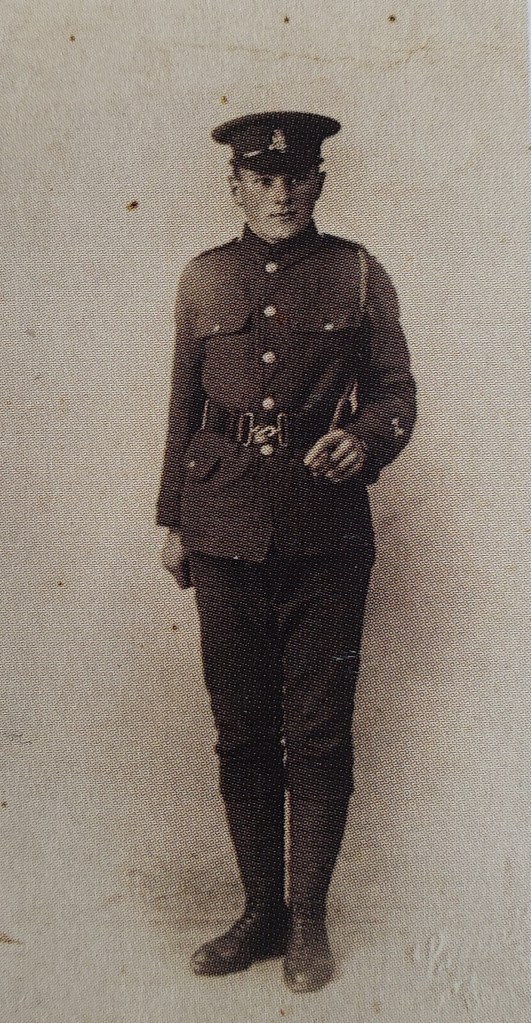
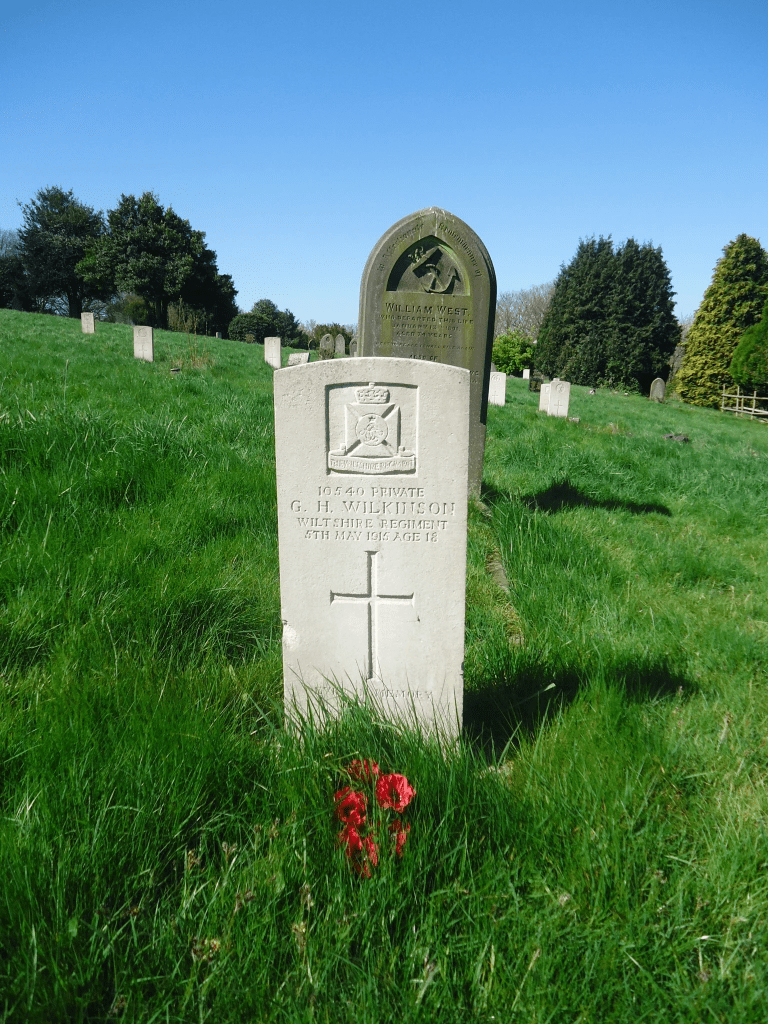
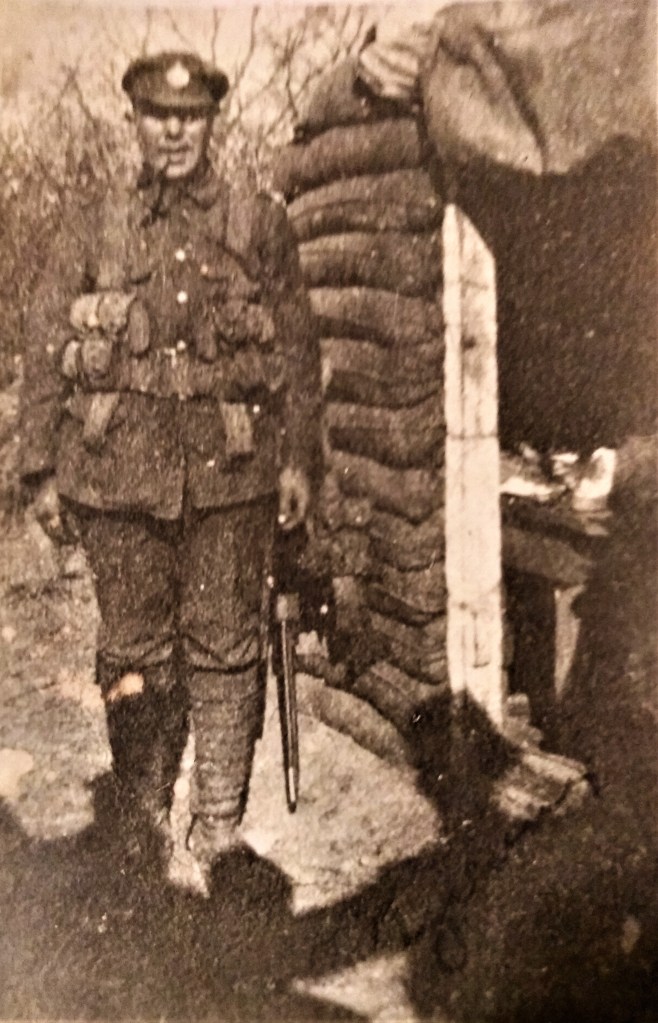
Driver L.T. Hacker

On a dank, November day we remember him.

We do not know the date that Ladas Tom Hacker enlisted. He could have served but a few months as by December 1915 he was dead. Still hardly a man, just a boy. Recruitment officers bent the rules, boys lied about their age, patriotism was high.

Ladas Tom Hacker was born during the early summer of 1899, the only son of Tom Hacker and his wife Ada. He was baptised at the Independent Church that once stood on the corner of Victoria Road and Bath Road and he lived all his short life at 16 Belle Vue Road.

All we know about Ladas Tom Hacker is that which is inscribed on his headstone, his military records were destroyed in September 1940 when a German bombing raid struck the War Office repository in Arnside Street, London where they were stored.

2730 Driver L.T. Hacker

Royal Field Artillery

24th December 1915.

We know where he died from a short entry that survives in the UK, Army Registers of Soldiers’ Effects, 1901-1929 and the Radnor Street Cemetery Burial Registers. He died on Christmas Eve 1915 at Tidworth Military Hospital. His cause of death was Cerebro Spinal Fever, contracted as a result of his military service. He was 17 years old.

Hacker, L.T.

Driver 2730 3/3 Battalion Wessex Brigade, ammunition column, Royal Field Artillery.

Died 24th December 1915.

B1815 Radnor Street Cemetery, Swindon.

Tell Them of Us by Mark Sutton

Private John James Kendall – Tell Them of Us

John James Kendall was born in Bromsgrove in about 1884, the son of John Kendall, a nail maker, and his wife Ellen.

He married Agnes Winifred Jasper in the December quarter of 1906. At the time of the 1911 census they were living at 61 Hillfield Road, Sparkhill, Birmingham. They had been married for four years and during that time three children had been born, however, sadly two had died. John’s brother Bertie lodged with the couple and he and John both worked as ‘bread deliverer’s.’

Again the loss of military records hide the full story of the tragic death of John James Kendall. What action had he already seen, if any? Was it the fear of what lie ahead that caused his mental breakdown, or was it due to the recent seizure he had suffered and a lack of treatment for his epilepsy? Perhaps the death of his two young children years previously had led to undiagnosed depression.

Soldier’s Suicide

Followed Epileptic Fit

“Death from haemorrhage through cutting his throat while insane” was the verdict of a Swindon jury on Wednesday respecting the suicide of John James Kendall (34), a private in the Worcester Regiment, billeted at 24, Winifred Street, and whose wife and children live at Sparkhill, Birmingham.

Mr G.H. Russell was foreman of the jury. Evidence of identification was given by a brother, Lance-Corporal Bertie Walter Kendall, Machine Gun Corps, who had the “wounded” stripe and leaned heavily on a stick. In reply to the Coroner he said there was no strain of insanity in the family.

Frank Arthur Jackson, another private in the same battalion as deceased in the Worcester Regt., said he was billeted at 24, Winifred Street. On Monday Kendall was going on leave, and he went from the house to catch the 4.15 p.m. train. At 9.55 he returned to the house, and surprised to see him, the landlady asked how it was that he had not gone home. He said “I don’t know: I’ve lost my mind. I’ll think in a minute.” He sat down and had supper and asked witness for a cigarette. About a quarter to eleven he went out into the garden. Ten minutes later witness went out to look for him. He called, and at the second call of “Jack, where are you?” he heard a murmur. He went down to the end of the garden and found Kendall lying on the ground, smothered in blood and with a razor by his side.

“No one could get into the yard except through the house?” asked the Coroner.

“Not so far as I know,” replied the witness.

Lieut. Francis William Hartley, RAMC said he was called to the house close on midnight and found Kendall in a precarious condition, with his throat badly cut. First aid had been rendered. He died as the ambulance from the camp hospital arrived at the door. Death was due to the haemorrhage.

“Had you attended the man?” asked the Coroner?

“Yes, frequently,” said the doctor. “He was often complaining of illness – rheumatism, pains in the head, indigestion, and other small ailments. On Saturday, after he had been on light duty, he came to me and said that he felt a lot better and would I put him on full duty. I asked him if he thought he could stand it, and he replied “Yes.”

“There was no symptom of insanity, then?” the Coroner asked.

“Not at the moment,” the doctor replied. “He had an epileptic fit on August 8th, and his brain was affected for some time afterwards.”

You saw him in the fit? – Yes.

The jury returned the verdict, as stated, that the man cut his throat while insane.

North Wilts Herald, Friday, August 24, 1917.

John was buried in a public grave, plot B1883 on August 25, 1917. The interment was conducted by an army chaplain.

Two years after this tragic event Agnes and her two daughters, Hilda May aged 9 and Winifred aged 2, born just months before her father’s death, left Britain for a new life in the USA. On October 8, 1919 they boarded the White Star Liner, the Adriatic and set sail for New York. Agnes died in Monmouth County, New Jersey in 1941.

John Henry Puzey – the hidden cost of war

John Henry Puzey was born on August 10, 1895 at Upper Stratton, the youngest of four sons. By the time of the 1911 census his parents John and Sarah with younger sons Alfred Robert and John Henry were living at 165 Redcliffe Street, Rodbourne. Three elder sons had followed their father into the GWR Works but John Henry had taken a different career path and at 15 was an apprenticed house decorator. A bit of a lad was John, so say those who remembered him.

John Henry Puzey enlisted at Swindon on October 7, 1915 with the Wilts (Fortress) R.E. (T) and was later transferred to the 3/1 Wessex Field Coy. R.E. serving in Salonika. On August 1, 1919 John Henry Puzey was examined at Tiflis prior to being demobilised. He signed the following statement: I do not claim to be suffering from a disability due to my military service. His signature reveals a shaky hand. On September 14, 1919 he was discharged from Fovant in Wiltshire, No. I Dispersal Unit. His Medical Category was described as A1. But John was clearly not in good mental health.

“His illness was not diagnosed as shell shock but merely a worsening of his mental state before WWI,” says his great niece, Mary. He was clearly suffering from what would now be called Post Traumatic Stress Disorder (PTSD). Whatever the terminology, whatever name you want to give it, John’s mind was destroyed by war.

John Henry Puzey was admitted to Roundway Hospital, the former Wiltshire County Lunatic Asylum, in Devizes, Wiltshire. His family visited him regularly, his brother Alfred taking over the responsibility after their mother’s death. Alfred would bring his little granddaughter Mary to see his brother. Mary recalls how when he was in good health he shopped in Devizes for the staff and went out with the staff football and cricket teams.

“During visits if he was well, we saw him in the canteen/visitors room. I remember one Christmas one of the inmates had painted an alpine scene around the walls. It was wonderful. In summer months we would walk around the grounds, which he helped to maintain. He always took us to the garden tool store room under the main hospital. He called this his dugout. To him it was a safe area the same as his dugout in Salonika,” said Mary.

John Henry Puzey died at Roundway Hospital on July 25, 1962. He was 66 years old. He left administration of his will to the brother who had visited him in hospital for all those years, retired boilermaker Alfred Robert Puzey. John Henry was buried in Radnor Street Cemetery on July 31, 1962. He shares plot D636 with his parents, John who died in 1928 and Sarah Ann who died in 1947.

Ernest Hayball – dairyman

One of our regular cemetery followers has a wealth of family history knowledge, a vast archive of photographs and ephemera, more than one family grave in Radnor Street Cemetery plus a photograph taken at the time of his grandmother’s funeral in 1937. How lucky are we to be given access to all this material and the story of Ernest Hayball!

Ernest Edwin Hayball was baptised on April 1, 1872 in the parish church of Donyatt, Somerset, the son of Mathias Hayball, a tailor and his wife Emma.

By 1891 he had moved to Swindon and was living in Commercial Road and working as a dairyman with his brother-in-law George Parkhouse.

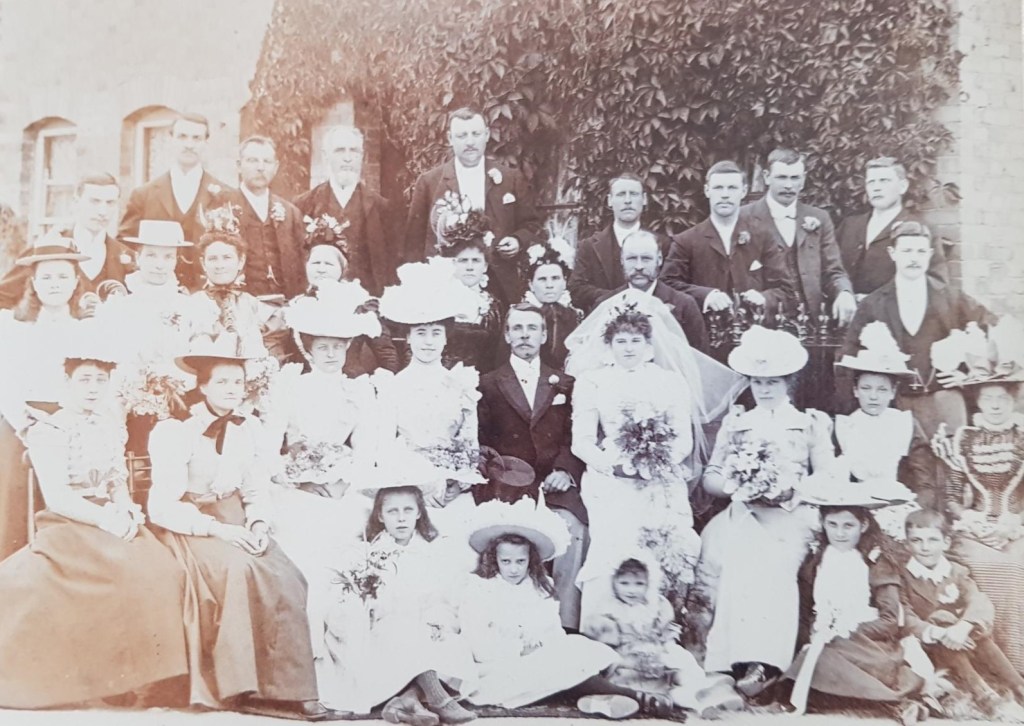
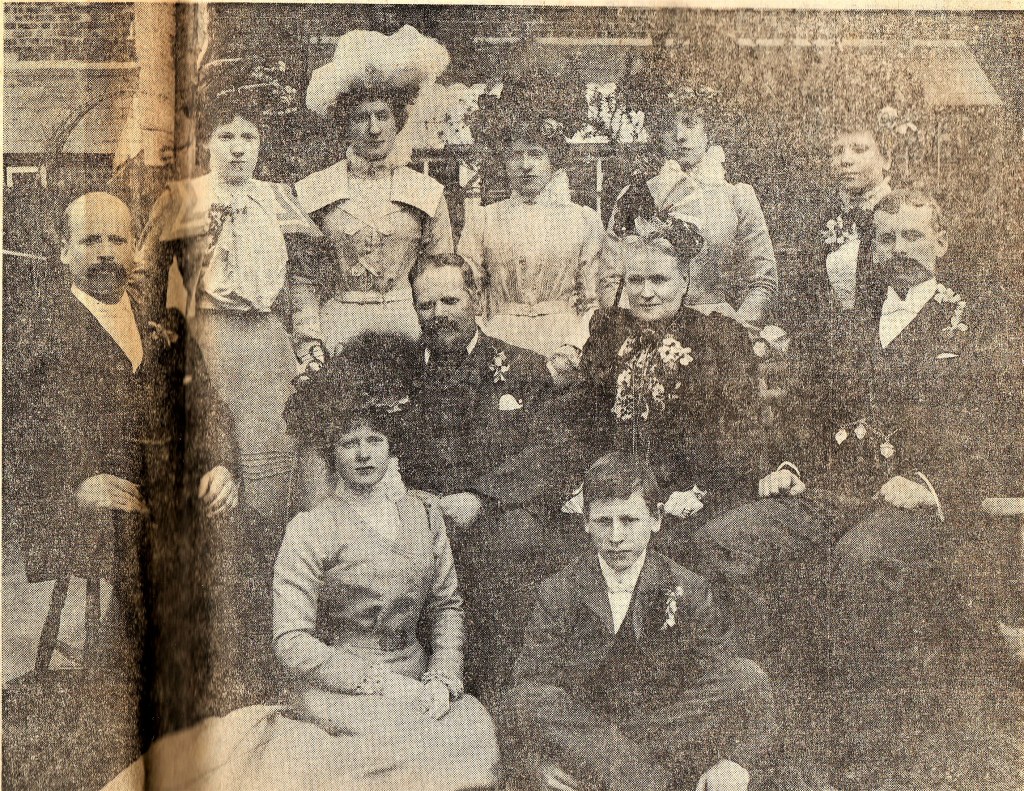
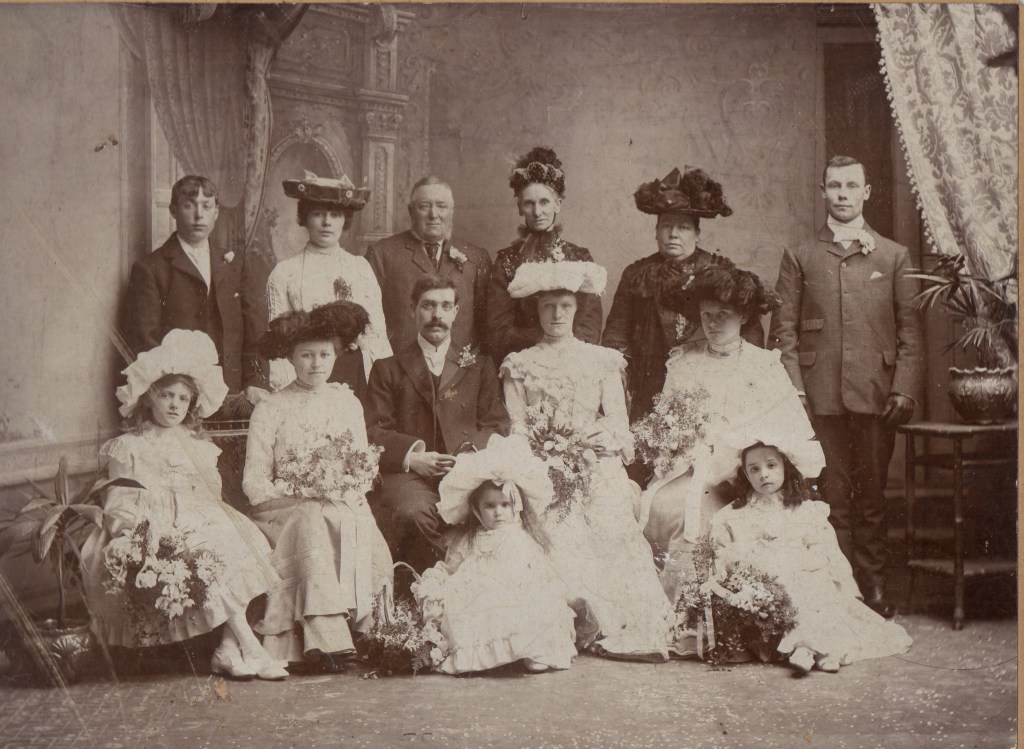
Ernest Edwin Hayball married Theresa Georgina Meads at St. Mark’s Church on July 19, 1899. Paul has a copy of the wedding photograph with an index of the pictured guests compiled by his mother (see below). The couple went on to have five children, Leonard, Ernest, George, Doris and Gladys (Paul’s mother).

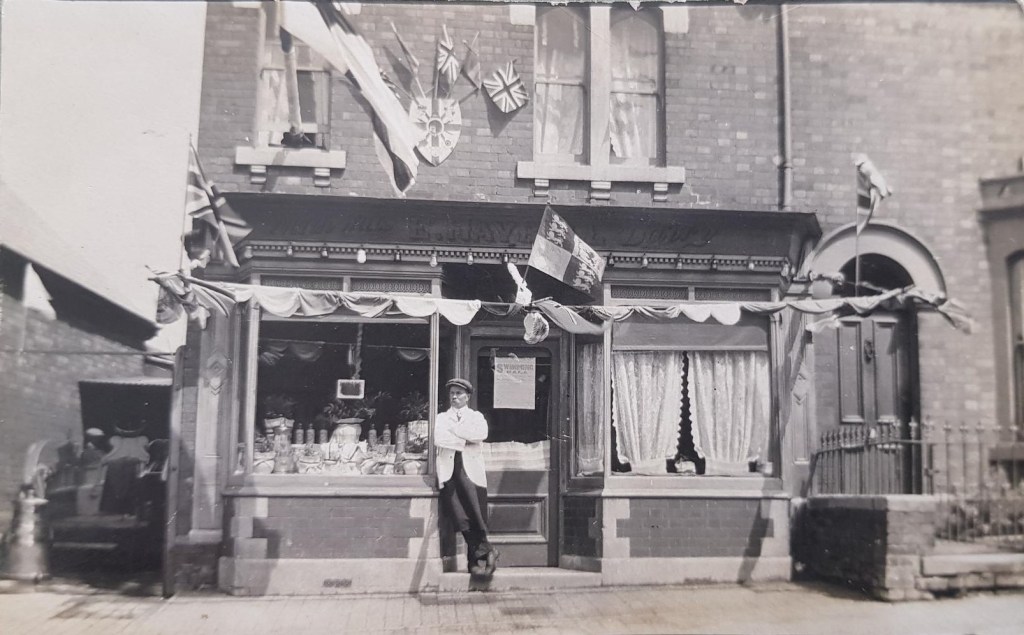
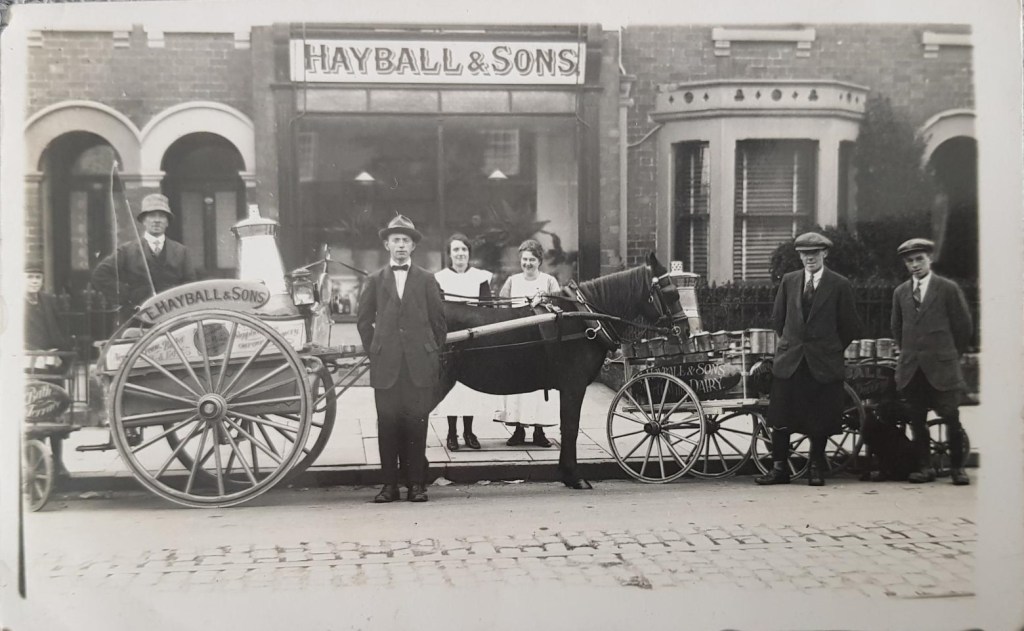
Ernest established his own dairy business in Hythe Road, later moving to 32 Bath Terrace, which became 71 Faringdon Road after renumbering and renaming in the early 1920s.

In 1932 the local press reported on yet another successful Children’s Fete where 35,000 people had celebrated in the GWR Park opposite the Hayball business. Organised by the Mechanics’ Institute, catering for the thousands of adults in attendance was undertaken by the Swindon Town F.C. Supporters’ Club with “40lbs of tea, nearly 4 cwt of sugar, and 40 gallons of milk, the latter being supplied by Messrs E. Hayball and Sons, of Faringdon road, Swindon.”

A brief obituary in the local press following Ernest’s death in 1952 encapsulated his busy life.

Was dairyman for 50 years

Swindon Death

A former member of the committee of the Swindon Town F.C. Supporters’ Club, Mr E.E. Hayball (79), 71 Faringdon Road, Swindon, has died.

He had been in business as a dairyman for 50 years. Starting at 1 Hythe Road, he bought Mr H.J. Hulme’s business, and after staying there for nine years went into partnership with the late Mr G. Parkhouse in Commercial Road.

In 1914 he started on his own account at 71 Faringdon Road, where he continued until his death.

At one time he played skittles for Ashford Road and the Central Clubs.

He leaves three sons and two daughters.

Ernest died at his home on January 13, 1952. He was buried in grave plot E7749 with his mother Emma who was living with them at 32 Bath Terrace at the time of her death in 1918; his wife Theresa who died in 1937 and his daughter Gladys and son-in-law (Paul’s parents).

Here is a selection of Hayball family photographs published courtesy of Paul.

Ernest and Theresa’s wedding photo.

Back row 4th from left is Mathias William Beazley Hayball (father of the groom).

Middle row 6th from left standing behind the bride and groom is Emma Hayball (mother of the groom).

A family photograph celebrating Ernest and Theresa’s Silver Wedding Anniversary.

Left to right standing:- Doris, Leonard, Ernest and George

Gladys stands between her seated parents Theresa and Ernest

Ernest standing outside the shop in Hythe Road.

71 Faringdon Road

Ernest and Theresa Hayball

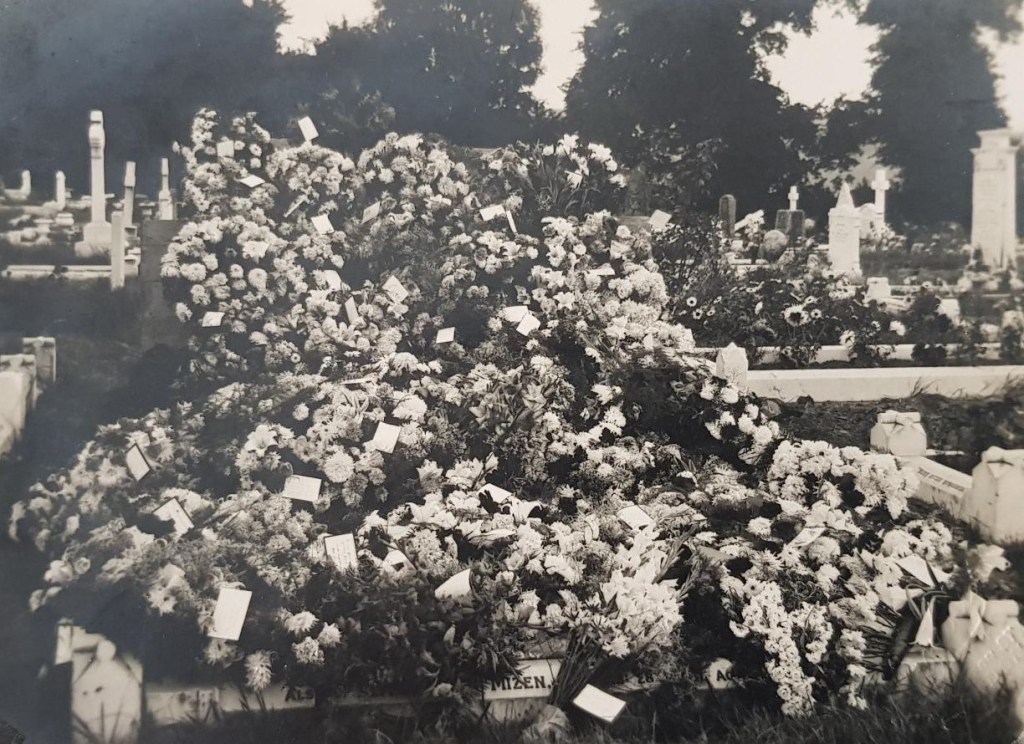
The Hayball family grave in Radnor Street Cemetery following the funeral of Theresa Georgina Hayball in 1937.

Nash family – confectioners

The re-imagined story …

I used to love to go shopping. And do you know what my favourite shop was – Nash the confectioners, and not only when I was a child either. Sometimes I would call in when I was a grown up too, a young clerk in the Works, before I married and had children of my own. You don’t see sweet shops like that anymore, you don’t see sweets like that either, jars and jars of handmade confectionery.

It was a sad day when the last of the Nash family shops closed. Perhaps they couldn’t compete with the big manufacturers, the producers of those bags of gummy, plastic tasting sweets that tempt the children at the supermarket checkouts. Soulless places, those supermarkets. My granddaughter offered to take me to Asda Walmart on a shopping trip. Bah – that’s not a shopping trip, that’s a descent into Hades, I told her.

What I would give to take a walk down Regent Street again? Not the Regent Street of today but the old one, when ladies got dressed up to go down town. My first stop would be a wander around McIlroys and then a visit to Nash’s and a quarter of – now what would I choose, aniseed balls or pear drops, or maybe a bag of toffee, although my teeth are probably not up to that now. Happy days.

Regent Street

The facts …

William Nash was born on April 23, 1840 at Badbury the son of William and Jane Nash. His father died two months before William’s birth, leaving Jane to raise four young boys alone until she remarried in 1844. At the time of the 1851 census 11 year old William is living in Badbury with his mother, step-father William Jordan, his two brothers Thomas and George Nash and three half sisters Sarah, Ann and Emma Jordan.

William married at St. Mark’s Church on December 25, 1863. He was 23 and working as a labourer, his bride was 21 year old Elizabeth Hunt. The couple began their married life in London where their first child, Edmund William Nash was born. It seems likely that this is also where William saw the prospects of a career in the confectionery trade. Elizabeth’s brother and sister had both married into the Leach family, headed by Thomas Leach who had a confectionery business in Southwark.

On his return to Swindon William worked as a labourer in the railway works and Elizabeth as a mangler. In 1871 the couple lived at 2 Havelock Street with their growing family – Edmund 5, Clara 4, Thomas E. 2 and 8 month old Elizabeth M. It appears that the Nash couple were both prudent and focused, both working and saving to fulfil their ambition to open their confectionery business.

By the time of the 1881 census William had achieved this ambition. The family lived over their first shop at 32 Bridge Street. By then there were seven children, the youngest 4 month old Lily. Elizabeth’s sister Martha Hunt lived with the family working as an assistant in the shop.

And so the Nash empire expanded with shops at 64 and 65 Regent Street and 17 Regent Street as well as the original premises at 32 Bridge Street. Other family run shops opened at 104 Cricklade Road, 10 Wood Street, 32 Regent Circus and 167 Rodbourne Road, the last of the shops which eventually closed in the 1970s. The Nash family were famous for their award winning ice cream and also their bargain pack of assorted sweets – Penny Big Lots.

Death of Mr W. Nash – Mr W. Nash of Lypeatt House, Goddard Avenue, Swindon, died on October 29th after a long and painful illness. He will be remembered by many, having been formerly in business as a sweet manufacturer. He married a daughter of the late Mr Thomas Hunt, of Broad Town, who was well known in Primitive Methodist circles. He leaves a widow, six daughters and two sons. The funeral took place on Monday November 4th the cortege leaving Goddard Avenue at 3 o’clock for the Primitive Methodist Chapel, Prospect Place. The Rev. H. Pope Officiated at the chapel and also at the Cemetery.

Extracts from the North Wilts Herald, Friday, November 15, 1918.

William and Elizabeth Nash are buried together in plot E7604

Grateful thanks to Katie Brammer for sharing her family history research. Katie has been discovering the graves of her Nash family ancestors with the help of Radnor Street Cemetery volunteer Jon. This is the grave of William and Elizabeth Nash.

WANTED, a respectable GENERAL SERVANT, about 18, able to do plain cooking; sleeping out preferred; good character – Apply, Nash, Confectioner, Bridge Street, Swindon.

The Swindon Advertiser, Friday, September 2, 1904.

Samuel Gray – Lardy cakes

Samuel Gray was born in the village of Shaw and baptised on October 19, 1879 at All Saints Church, Lydiard Millicent. Samuel was the eldest son of Samuel Gray, a labourer in the GWR Works, and his wife Harriet. The family lived in the Elms, Shaw at the time of the 1881 census.

Samuel married Harriet Ellen Pile in the March quarter of 1903. By the time of the 1911 census the family were living in Shanklin on the Isle of Wight where Samuel worked as a Baker. In 1916 the family returned to Swindon.

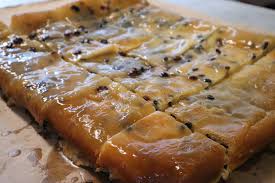
Three years later Samuel bought a small property at 9 Bridge Street for £500 where he established his bakery and the legendary lardy cakes (see Miss Lorna Dawes and a life ‘inside.’) In the 1940s Grays had seven shops employing 120 staff.

Harriett died at the Cheriton Nursing Home, Westlecot Road on December 4, 1947 and was buried in Radnor Street Cemetery in plot C4898. Samuel died on April 19, 1963 aged 83 and was buried with his wife.

Deaths

Gray. – April 19, 1963, at 9 Downs View Road, Swindon, Samuel Gray aged 83 years. Funeral Wednesday, April 24: service at Immanuel Congregational Church, Upham Road, at 3.15 p.m.; interment Radnor Street Cemetery. Flowers to Smith’s Funeral Chapels, Gordon Road. (Tel. 22023).

Freemason founder of Swindon bakery concern is buried

The funeral of a prominent Swindon baker, Mr. Samuel Gray (83), took place at Immanuel Congregational Church, Upham Road, Swindon, yesterday.

Mr. Gray, managing director of Grays (Swindon) Ltd., of Bridge Street, and the Downland Bakery Ltd., died at his home 9 Downs View Road, Swindon.

For many years a member of Westlecott Bowling Club and a former president of Swindon Master Bakers’ Federation, Mr Gray founded the bakery firm 44 years ago. Since then it has grown into a large family concern.

He was a Freemason and was Past Master of Pleydell Lodge, Past Master of the Swindon Keystone Lodge of Mark Master Masons, a member of Wiltshire Chapter and Preceptor of Chiseldon Freemasonry Class.

The service was conducted by the Minister at Immanuel Church, the Rev. F. Ross Brown and was followed by interment at Radnor Street cemetery, Swindon.

Extract taken from The Swindon Advertiser, April, 1963.

Samuel’s son Cyril worked in his father’s bakery from the age of 13 and in the 1980s he was recorded as being the oldest working baker in Britain by the National Association of Master Bakers. In 2013 he gave his recipe for Gray’s famous lardy cake to Mark Child for publication in The Swindon Book where you can find it on page 145. As Cyril instructed – lardy cake is best eaten on the day it is made.

The recipe for the lardy cake is said to originate from Wiltshire although neighbouring West Country counties also lay claim. References to the lardy date back to the mid 19th century and as the name suggests is a lard based cake.

I have recently been contacted by Robert Gray, Samuel’s grandson, who has kindly sent me the following photographs of Samuel and (Harriett) Ellen.

Doreen Ind and the cemetery vandals

The re-imagined story …

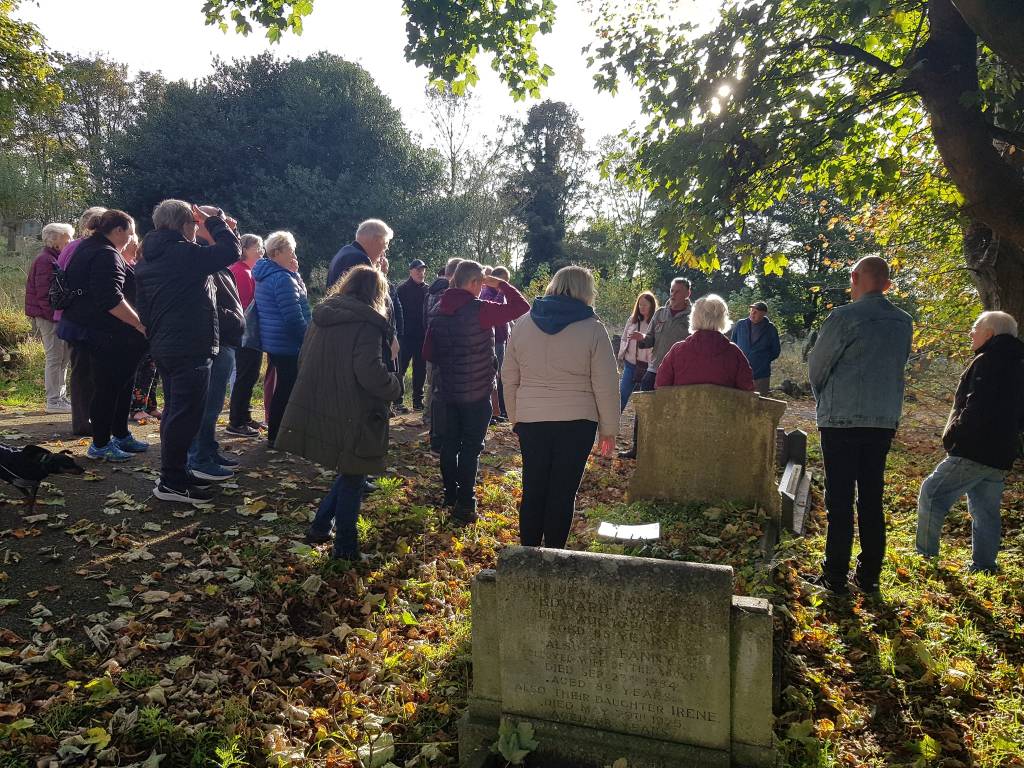
I decided I’d join the guided walk around the cemetery on Sunday. I’d seen people on the walks before and to be honest I was surprised just how many turned out each time.

This image has an empty alt attribute; its file name is radnor-street-walk.jpg

I lived in Clifton Street and had grown up on the cemetery doorstep, so to speak. As a kid I’d learned to ride my bike there and made snowmen on the rare occasions we had a fall of snow. It was my route to school and a short cut to town and as a teenager I’d walk through it most days to meet my mate Josh. It was as familiar to me as my own back garden. The cemetery held little fear for me, now, after all these years.

It had closed in the 1970s, long before I was born. Years ago, the council used to keep it nice and tidy. The wardens held various events here and I remember coming to a nature day and helping to put up bat boxes. These days it is very overgrown and neglected.

People began arriving at the chapel just before 2pm and as usual there was quite a crowd.  The walk was led by a couple of older people. The woman gave us a short, potted history of the cemetery and the man told us a few do’s and don’ts. They were both quite funny actually, and made a good double act.

Then they led us around the cemetery, taking it in turns to talk about half a dozen graves and the people who were buried there. I was surprised at just how interesting it all was. I don’t know what I expected; something ghoulish and creepy, maybe a bit weird.

One of the old ladies started talking to me and took my arm as we were led away from the footpath and across the graves to where the two guides had stopped. I didn’t notice where we were heading.

“Do you think we could take the arm off?” asked Josh as he looked around for something to wield. “Wait up.”

He lived just a few doors from the cemetery gates and was gone just minutes, returning with a hammer.

“Go on. Have a go.”

I swung the heavy hammer but lost my grip and let it fall to the ground.

“Not like that, you idiot.” He began to swivel on the balls of his feet, like the athletes do when they throw the hammer. On the third revolution he let the hammer go. He was surprisingly accurate and the arm of the stone girl flew off.

“What the … Josh!”

We’d hung about in the cemetery loads of times, but we’d never done any damage before.

“Go on – have another go.”

“No.”

“Scared? Chicken?”

“It don’t seem right.”

“Well no one’s gonna complain. They’re all dead.”

I picked up the hammer. Perhaps if I just swung it around a bit maybe Josh would be satisfied. I raised it to elbow height and just as I swung it, a woman shouted out. I lost my balance and lurched at the memorial. The hammer flew out of my hands and knocked the head off the stone girl.

The woman continued to shout.  As we turned round I could see she was keying a number into her mobile phone.  No prizes for guessing who she was calling.

We legged it all the way down to the Radnor Street cemetery gate. I could hardly breath and my heart was beating furiously in my chest. We ran down the steep steps by the school and on to William Street, cutting through to Albion Street and the old canal walk, but Josh was laughing; laughing and laughing and laughing.

I’d have never done it – if I’d known the story of the girl and her dog – I’d never have done it.

This image has an empty alt attribute; its file name is doreen-ind.jpg

The facts …

Doreen was tragically killed when the wheel of a timber wagon trailer ran over her body after she fell from her bicycle. The fourteen-year-old sustained multiple injuries and died at the scene of the accident in Stone Lane, Lydiard Millicent on August 23, 1938.

Doreen was the younger of George and Catherine Ind’s two daughters and with her sister Iris was cycling to their Aunt’s house in Upper Stratton when the accident occurred.

Iris gave evidence at the inquest held the day after her sister’s death. She told how the two girls were cycling round a bend in the road on Stone Lane, keeping as near as possible to the near side. Doreen was in the front and Iris behind her.

Iris described how a lorry with a timber wagon trailer approached them on the road. The wheel of the trailer knocked her sister’s wheel causing her to wobble on her bicycle. She tried to pedal, but there was no room. Doreen fell into the road and the back, nearside wheel of the trailer went over her.

“Before the wheel went over her I called twice to the man to stop.”

The funeral took place at St Paul’s Church on August 27 followed by the burial at Radnor Street Cemetery.

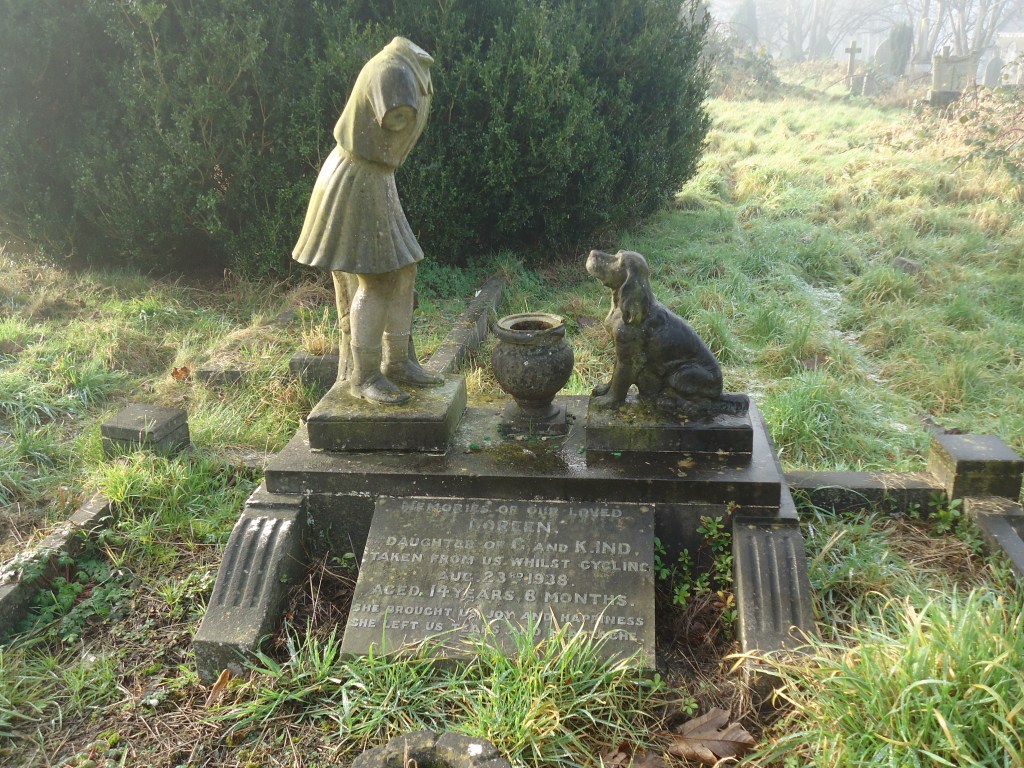
Doreen’s parents erected an unusual and poignant memorial to their daughter, depicting a girl holding out a ball to her pet dog. George died in 1947 and his wife Catherine in 1964 and they are buried with Doreen in a large double plot.

In 2009 a local resident walking through the cemetery disturbed a couple of boys attacking with a sledgehammer this unusual memorial of a girl holding out a ball to her dog. As you can see Doreen’s memorial is badly damaged, one of the last serious acts of vandalism to have occurred in the cemetery in recent years.

Doreen 4

Photograph of Doreen’s intact memorial was taken in 2000 and is published courtesy of D & M Ball.

Frances Priscilla Hunter – murdered by her sweetheart

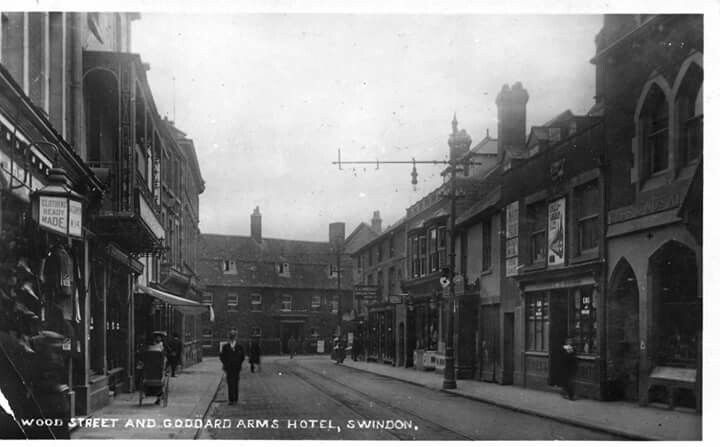
Goddard Arms Hotel published courtesy of Local Studies, Swindon Central Library

Two young women each murdered by a sweetheart ten years apart have some striking similarities but a very different response from people in the town where they lived.

Swindonians were shocked by the murder of 19 year old Esther Swinford in 1903 but when Frances Hunter was shot by her sweetheart in one of the outbuildings at the Goddard Arms Hotel they were shocked but for quite different reasons.

Walter James White was told that Frances had previously been in a relationship with a married man. He went to her workplace at the Goddard Arms Hotel and challenged her.

In his statement he said that Frances had confessed she had disgraced him and she hoped that God would forgive her. “I told her she would never deceive anybody else as I was going to kill her.”

White was found standing over the young woman’s body, a revolver in his hand. He coolly advised the manager of the hotel to send for the police.

White’s defence counsel pleaded that White was in “such a perturbed state he was not responsible.” A petition signed by 4,000 Swindonians, including that of the mayor and deputy mayor, was sent to the home secretary pleading for mercy, but White was found guilty and executed at Winchester prison on June 15, 1914.

Frances lies buried in an unmarked, pauper’s grave in Radnor Street Cemetery. There was no funeral fund for Frances, no impressive memorial on her grave site.

Esther Swinford’s story is well known here in Swindon. Frances’s story seldom gets a mention.

This image has an empty alt attribute; its file name is 0965f1168f9dc149004eeffb543a6210.jpg

Photographs from our recent cemetery walk.

Martha Scriven – in a desperate situation

The re-imagined story …

I knew what went on at No. 11; all of us girls did. And despite what our mothers believed we all knew what went on between a man and a woman as well; what we didn’t know was how to prevent the consequences. This was what led so many girls to come knocking on Mrs Stretch’s lodging house door, and not just girls either, women young and not so young, single and married.

But the case of Martha Scriven proved to be different. For one thing she didn’t live locally and she was a widow. It was only when the case came to court that the full details came out.

Martha Scriven was 27 years old and recently widowed when she came to Swindon in November 1895. With a three-year-old son and believing herself to be pregnant Martha was in a desperate situation. She travelled down from London shortly after the death of her husband to visit his family who lived at Can Court, a farm on the outskirts of Swindon.

You had to ask yourself why she didn’t stay with the Scriven family and not with Mrs Stretch but that was only one of many questions we asked each other.

She walked past our house a couple of times, usually in the company of a man, but it wasn’t what we all thought at the time. It turned out he was her late husband’s brother and he had put her in touch with Mrs Stretch who in turn knew Mrs Lazenby. We all knew Mrs Lazenby as well.

“There’s many a woman very grateful to Mrs Lazenby,” some said.

Not Martha Scriven, I can tell you.

Queen Street

                      Image published courtesy of Local Studies, Swindon Central Library

The facts …

Martha died on December 5, 1895. The cause of death was ‘exhaustion from peritonitis set up by punctured wound in the uterus and intestines.’ At the inquest the attending doctor thought it was unlikely Martha had been pregnant at the time the procedure was undertaken.

During the investigations a piece of slippery elm bark was found at 11 Queen Street. This was believed to be the instrument used to induce the abortion and which perforated Martha’s uterus.

Emily Lazenby was charged with the wilful murder of Martha Scriven and with ‘feloniously using a certain instrument.’ She was sentenced to seven years’ imprisonment in Aylesbury prison but apparently she did not serve her entire sentence. She was released on 13th September, 1900 to an address in New Swindon and a job as a French Polisher.

Mary Jane Stretch was sentenced to five years and sent to Aylesbury Prison. She was released on 18th May, 1899 to 29 Regent Street. Edwin Scriven, Martha’s brother in law who had made the arrangements, was also sentenced to five years imprisonment and sent to Parkhurst Prison. He was released early to take up a position as a groom. 

Martha was buried in plot E7201 in Radnor Street Cemetery, a pauper’s grave. In 1902 Mary Jane Stretch was back in Swindon and living at 36 Catherine Street. She died in that same year and in a cruel ironic twist is buried in plot E7072 just a few rows away from Martha’s grave.

To Autumn

It is the season of mists and mellow fruitfulness and time for a virtual walk among the memorials at Radnor Street Cemetery.  

Branches creak and the leaves are swept off the trees across the cemetery on the hill today.  Doesn’t the cemetery look beautiful in its Autumn finery? But then it always looks beautiful to me. I shall don my raincoat and carry an umbrella as the weather forecast is not good, but you can put on the kettle, make a cup of tea and join me from the comfort of your sitting room. The sun is shining and I’m wrapped up warmly, so off we go.

These photographs have been taken across a 20 year period. There have been some changes. Remembering Mark Sutton.

To Autumn by John Keats

Season of mists and mellow fruitfulness,
  Close bosom-friend of the maturing sun;
Conspiring with him how to load and bless
  With fruit the vines that round the thatch-eves run;
To bend with apples the moss’d cottage-trees,
  And fill all fruit with ripeness to the core;
    To swell the gourd, and plump the hazel shells
  With a sweet kernel; to set budding more,
And still more, later flowers for the bees,
Until they think warm days will never cease,
    For summer has o’er-brimm’d their clammy cells.

Who hath not seen thee oft amid thy store?
  Sometimes whoever seeks abroad may find
Thee sitting careless on a granary floor,
  Thy hair soft-lifted by the winnowing wind;
Or on a half-reap’d furrow sound asleep,
  Drowsed with the fume of poppies, while thy hook
    Spares the next swath and all its twined flowers:
And sometimes like a gleaner thou dost keep
  Steady thy laden head across a brook;
  Or by a cider-press, with patient look,
    Thou watchest the last oozings, hours by hours.

Where are the songs of Spring? Ay, where are they?
  Think not of them, thou hast thy music too,—
While barred clouds bloom the soft-dying day,
  And touch the stubble-plains with rosy hue;
Then in a wailful choir the small gnats mourn
  Among the river sallows, borne aloft
    Or sinking as the light wind lives or dies;
And full-grown lambs loud bleat from hilly bourn;
  Hedge-crickets sing; and now with treble soft
  The redbreast whistles from a garden-croft,
    And gathering swallows twitter in the skies.

Written September 19, 1819 and first published in 1820.

Or you may like to join us on our last guided cemetery walk of 2024 today, Sunday 27. Meet at the cemetery chapel 1.45 for a 2pm start.