Season of mists Pt IV

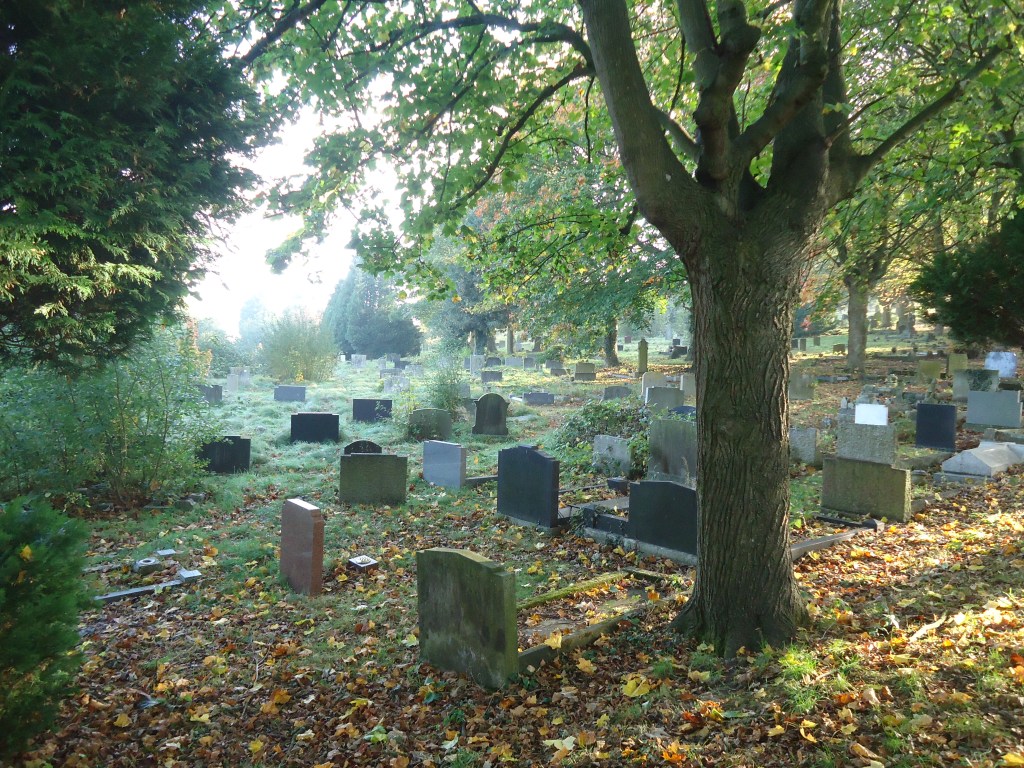
The sun is shining brightly this morning, but will the weather hold? I’ll make an early start, just in case, but you can relax at the kitchen table and take your breakfast at leisure. Join me on a virtual walk around the cemetery.

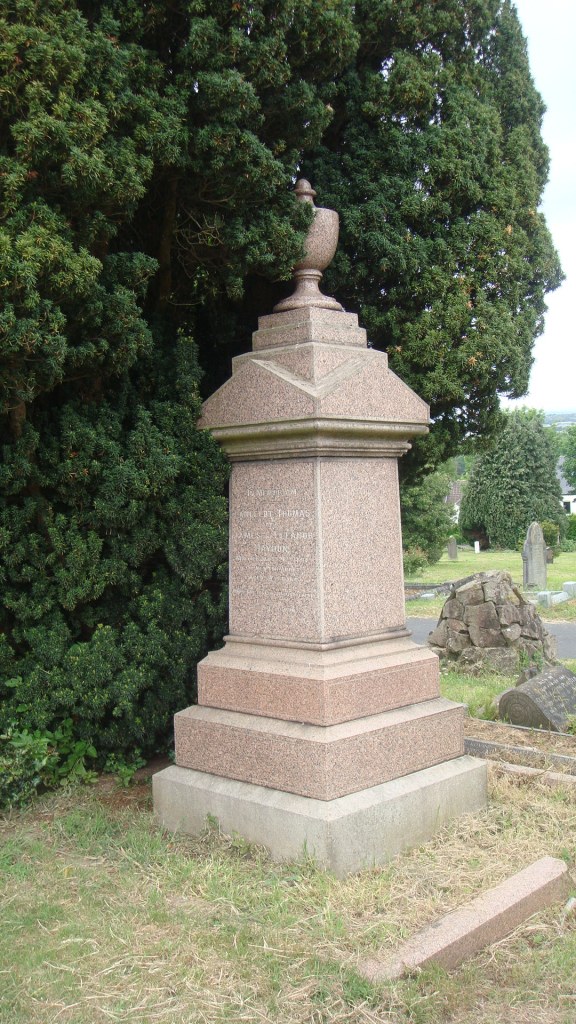
It’s easy to almost miss this magnificent pink granite monument to another railway father and son, encompassed by this large yew tree.  Like the Carlton obelisk opposite that we visited on our summer walk, this memorial was also paid for by employees at the GWR Works. 

James Haydon was born in Bristol in 1826.  The Railway Employment Records available on the Ancestry website, indicate that James entered the railway employment in March 1851 when he was about 25 years old.

By 1861 he was working as an engine fitter in the Swindon Works.  He lived with his wife Ellen, their young son Lancelot and his wife’s nephew Henry Wardle at 9 London Road.  Sharing number 9 were Thomas Watson and his wife Ann along with Ellen’s parents, Lancelot Young (who at 64 was still working as a boilersmith) Eleanor Young and several other Wardle children. Things must have been very cosy at number 9.

By 1871 James Haydon was Deputy Manager at the Works and was living in a house in what was then still known as Sheppard Fields.  This later became Sheppard Street, named after the former owner of this area, John Harding Sheppard.

James died on July 5, 1888.  He had been Assistant Manager in the Loco Works for 22 years. The inscription reads ‘this monument has been erected as a token of affection and esteem by his fellow officers and employes.’

Also remembered on this memorial is James’s son, Lancelot who died in 1894 aged just 38. Lancelot followed his father into the works and his career can be charted through the same railway records. He began work as a pattern maker apprentice in 1871.  In 1877 after he had finished his apprenticeship, he transferred to the Drawing Office. In 1881, by then a mechanical draughtsman, Lancelot left the GWR for an appointment on the Swindon, Marlborough and Andover Railway, but by 1888 he was back at the GWR firstly as Assistant Draughtsman and later as Chief Draughtsman.

At the time of the 1891 census he was living at his old family home, 21 Sheppard Street, with his wife Isabella and their young daughter. The following year Lancelot was on the move again, this time to Newton Abbott as Assistant District Superintendent Loco Carriage Dept.  He died less than two years later.

Tomorrow we meet another man who has left his mark on Swindon but now I will take a brisk walk down the hill as I’m sure I just felt some spots of rain.

Season of mists Pt III

Where are the songs of Spring? Ay, where are they?
Think not of them, thou hast thy music too –
While barred clouds bloom the soft-dying day,
And touch the stubble-plains with rosy hue;
Then in a wailful choir the small gnats mourn
Among the river sallows, borne aloft
Or sinking as the light wind lives or dies;

To Autumn by John Keats

Join me on another virtual cemetery walk from the comfort of your home.

There has been heavy rainfall over night and underfoot is very damp and slippy.  But I have come prepared as today I am taking you to a crowded corner of the cemetery where there are some magnificent monuments with some classic funeral iconography. 

The IHS on this cross is the Greek representation of Jesus Christ’s name.  The garland of flowers around the cross represents victory in death. This is the last resting place of Edward Henry Sammes.  It’s interesting that his family should make a point of adding ‘of Swindon’ to the inscription because Edward was not originally from Swindon but was born in Lambeth in January 1842, the son of William and Sarah Sammes.

The first reference to Edward in Swindon is in the 1871 census when he is 29 years old and living a 1 Belle Vue Road where he describes himself as a grocer.  That same year he married Sarah Anne Spackman from Wootton Bassett. The couple had two children William and Millicent who are both buried here as well.

At the time of the 1881 census Edward described himself as a retired grocer.  By 1889 he was a member of the Old Swindon Local Board, so well placed to know plans for development in the town.  The family were then living at Wycliffe House in Devizes Road.

In 1892 Edward submitted a planning application to build eight houses on the corner of Kent Road and Maidstone Road. The land had orginally come on the market in the 1870s but development was slow to take off. However, by the 1890s the area was pretty much one huge building site. 

A map of Edward’s project shows an empty site next door on the corner of Kent Road and Ashford Road with another empty site opposite.  The building specifications for Edward’s houses describe three bedrooms, a parlor, sitting room, kitchen, conservatory, scullery, WC, coals and pantry. At the other end of the road rival builder William Chambers had a yard opposite his own development at Ashford Terrace.  

Edward died in 1897 aged 55. He left £5,814 18s 6d to his widow Sarah and son William, worth today somewhere in the region of £2.7 million.

I’m not sure if his son William ever worked or whether he spent his whole life living off his inheritance.  In the 1911 census the family are living at 31 Devizes Road where William, then aged 35, and his sister Millicent 27 are both living on private means.

We have been fortunate with the weather today. And doesn’t the cemetery look beautiful in its Autumn finery. But then it always looks beautiful to me. I look forward to keeping your company tomorrow.

Season of mists Pt II

And still more, later flowers for the bees,
Until they think warm days will never cease,
For Summer has o’er-brimm’d their clammy cells.

To Autumn by John Keats

Hope you can join me from the warmth of your sitting room where the logs crackle in the hearth and the wind moans down the chimney. You might have expected the cemetery to be inaccessible after the deluge yesterday, but I shall pull on my wellington boots and my raincoat and venture forth.

This is the final resting place of members of the Wall family, husband and wife William and Mary Ann, and their son Arthur Henry.

Arthur was born in 1899, one of William and Mary Ann’s six children of whom sadly only three sons survived childhood.  He grew up in Rodbourne living at addresses in Redcliffe Street, Drew Street, Linslade Street, Montague Street and Jennings Street.  William worked as a Boiler Maker in the railway factory and when young Arthur left school he followed him into the GWR Works and the same trade.

Following the outbreak of war in 1914 Arthur was keen to join up and enlisted in the 2nd Wiltshire Battalion on January 12, 1915.  He gave his age as 19.  He was in fact not yet 16, but recruiting officers were apt to turn a blind eye to a fresh faced, eager young volunteer.  He was posted to France on June 1 where his age was quickly detected and on July 7, 1915 he was sent back to England as being ‘under age and physically unfit for service at the front.’  He spent the following year in service on the home front before returning to France in June 1916, this time in the 1st Hertfordshires.

His service records reveal that on May 12, 1918 he was gassed. His medical records state that his capacity was lessened by 40% and he was left with defective vision and suffering from headaches.  He was discharged on November 23, 1918 as being no longer physically fit for war service.  He received a pension of 11s and returned to Swindon where he married Mabel Pinnegar in 1919.  

Whether Arthur was able to return to work as a boiler maker remains unknown.  In 1920 he wrote to the Infantry Record Office asking if he was entitled to anything under Army Order 325/19 concerning the Territorial extra allowances.  He received this reply:

‘I regret to inform you that you are not entitled to any extra pay or allowances under Army Order 325 of 1919 as you were discharged on 23rd November, 1918. The increase of pay authorised under the Army Order in question was only granted from 1st July, 1919 to soldiers who were actually serving on the date of the order, viz 13th September 1919.

Arthur died on May 22, 1922 aged just 23 years old. Have you noticed the date of death of Arthur and his father William? You can read more about the sad event here.

But for now I think I shall quicken my step and head off home as the rain clouds are gathering again. See you tomorrow to continue our virtual tour of Radnor Street Cemetery.

Season of mists in Radnor Street Cemetery

Season of mists and mellow fruitfulness,
Close bosom-friend of the maturing sun;
Conspiring with him how to load and bless
With fruit the vines that round the thatch-eves run;

To Autumn by John Keats

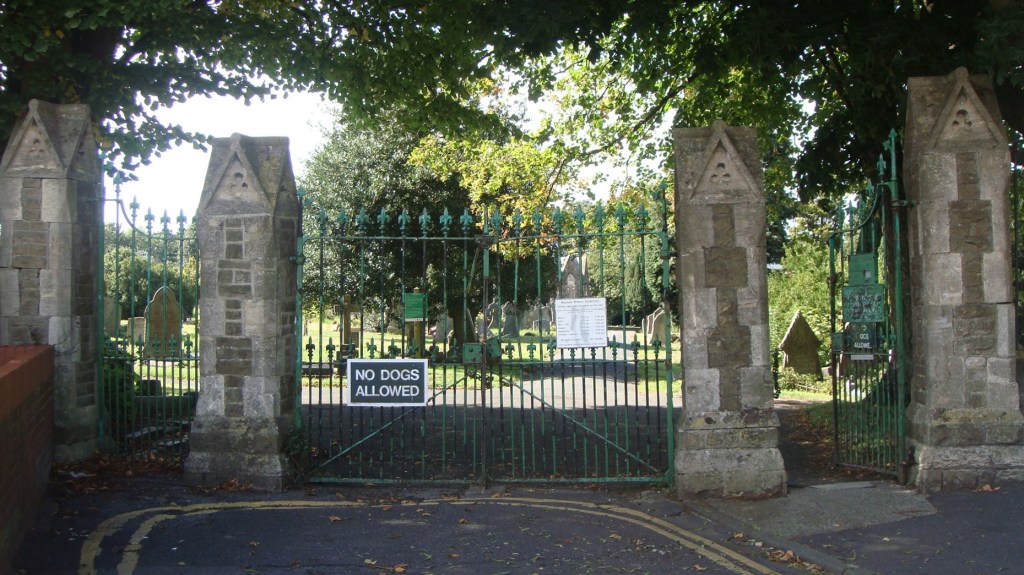
It is the season of mists and mellow fruitfulness and time for a virtual walk among the memorials at Radnor Street Cemetery. I shall don my raincoat and carry an umbrella as the weather forecast is not good, but you can put on the kettle, make a cup of tea and join me from the comfort of your electronic device. Meet me at the Kent Road gate.

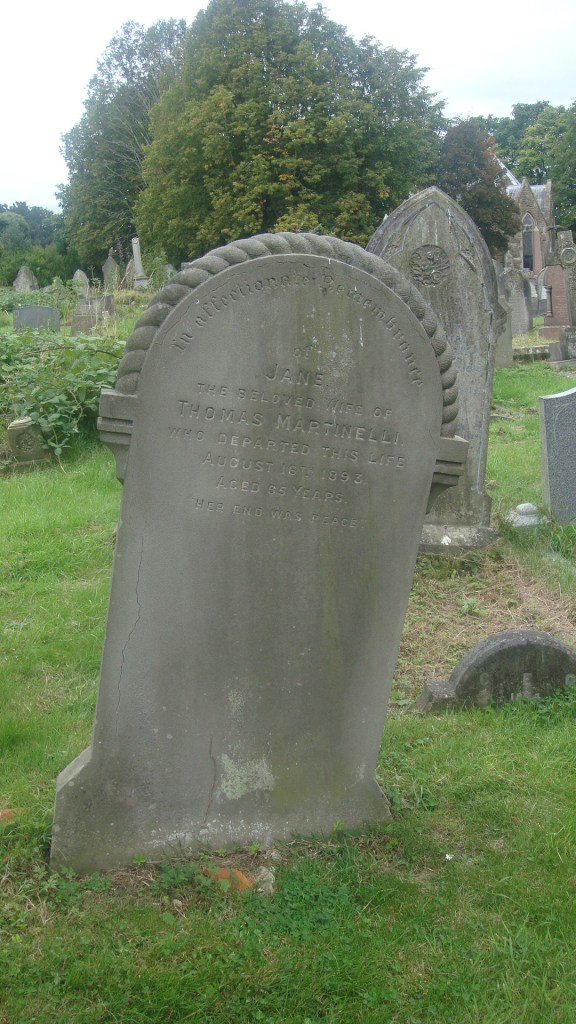
We begin with an incomer to Swindon and a gravestone in a precarious condition. As you can see there is a crack beginning to creep around the edge. Invariably, when this happens the whole surface of the stone shears off when all record of that person is lost. Sadly, there are a number that have so suffered when you look around the cemetery.

This is the last resting place of Jane Martinelli who died in 1893 aged 65. From the brief details on the gravestone I wondered if Jane and Thomas might be Italian however, further research has revealed that Jane was born in Worcester, and this is about all that can be discovered about her. The Martinelli story, on the other hand, is one of fluctuating fortunes. 

In the 1891 census Jane is living with husband Thomas at 13 John Street, Swindon. Thomas worked as a Railway Coach Builder and states his place of birth as St. Pancras, London. He was baptised at Trinity Church on December 26, 1831, the son of Louis Martinelli, also a coach maker.

Thomas was descended from an Italian family famous for making barometers and thermometers and was the grandson of Aloysious Louis Martinelli born in Como, Italy sometime between 1761-1771.  By 1799 he was living in London where he married Abigail Marshall at St. Anne’s Church, Soho. He died in the Lambeth Workhouse in 1845 aged 84.

Returning to Swindon and Jane’s story.  The Martinelli’s didn’t have any surviving children and  tracking them through the Victorian census returns reveal they lived in Manchester and Birmingham before arriving in Swindon.

Thomas married again in 1894, the year after Jane’s death. When he died in 1905 he was buried here with Jane. Regrettably, his name was not added to the headstone.

Well, the predicted downpour has ensued and I feel a chill in my bones. Time to be heading home, I think. Join me again tomorrow. Same time, same place?

Call yourself a Swindonian?

Can you call yourself a Swindonian? Many an argument has ensued about how long you have to live in Swindon before you’re considered a local; 20 years, 30 years, 2 generations – or more?

Walter Rumble was born in Chieveley, Berkshire in 1864 and began his working life as a Carter Boy (a farm servant). In 1890 he married Annie Caines and by the time of the 1891 census the couple were living at 128 Stafford Street. Walter worked as a general labourer, most probably in the GWR Works where he remained for the rest of his working life.

Yesterday I met Walter’s great-grandson at the Swindon Society Open Day held at the Lawn Community Centre, Guildford Avenue. There were displays from the Society’s extensive photographic collection (including the many albums of Beaney photos) talks about Alfred Williams and Radnor Street Cemetery and more local historians on call than you could shake a stick at!

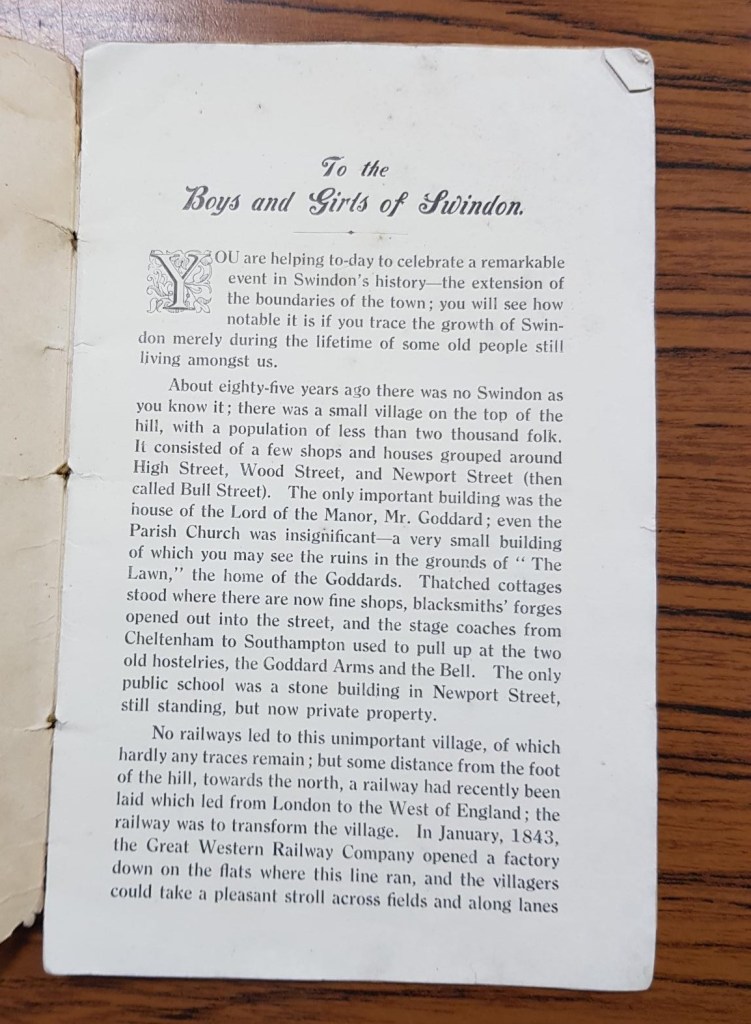
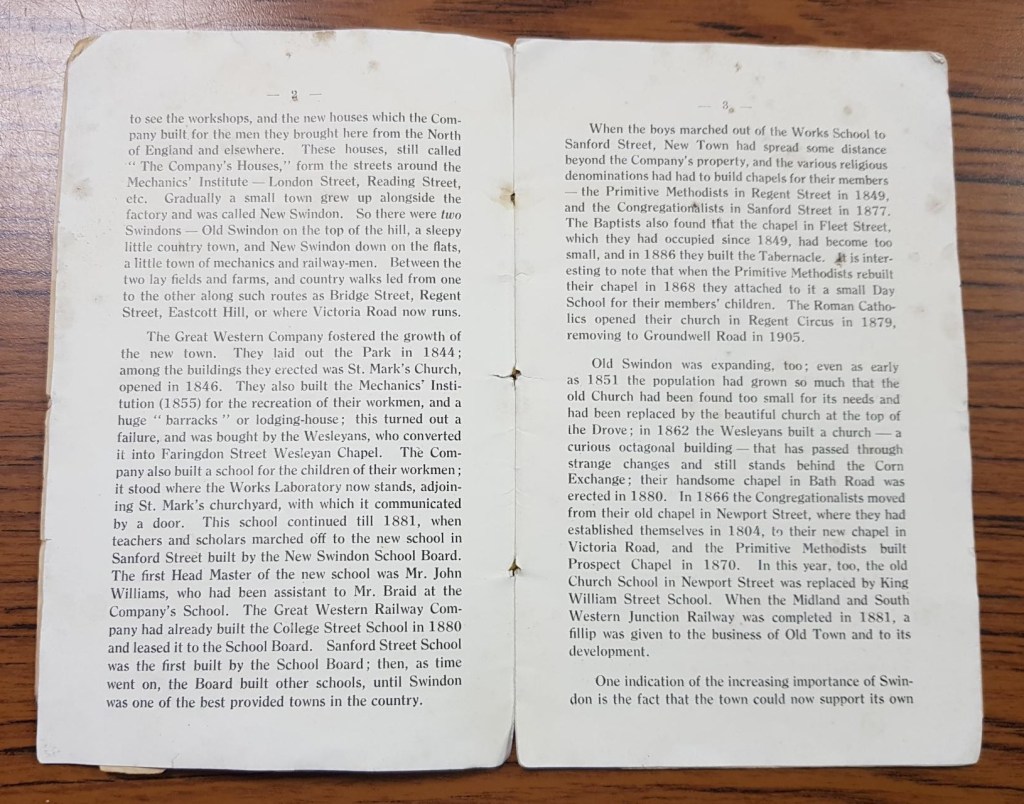
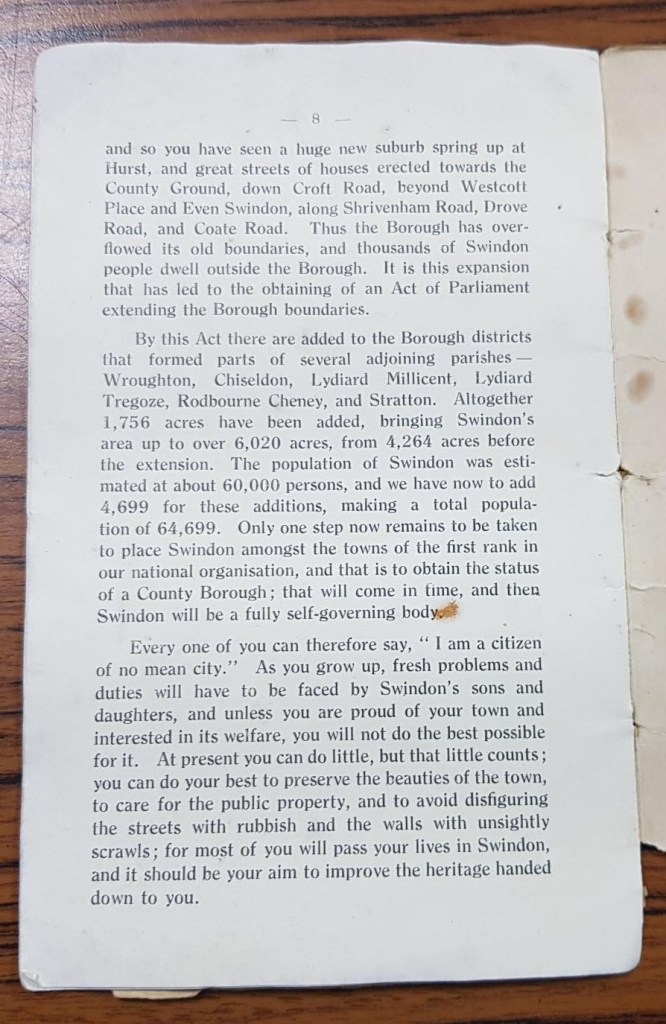
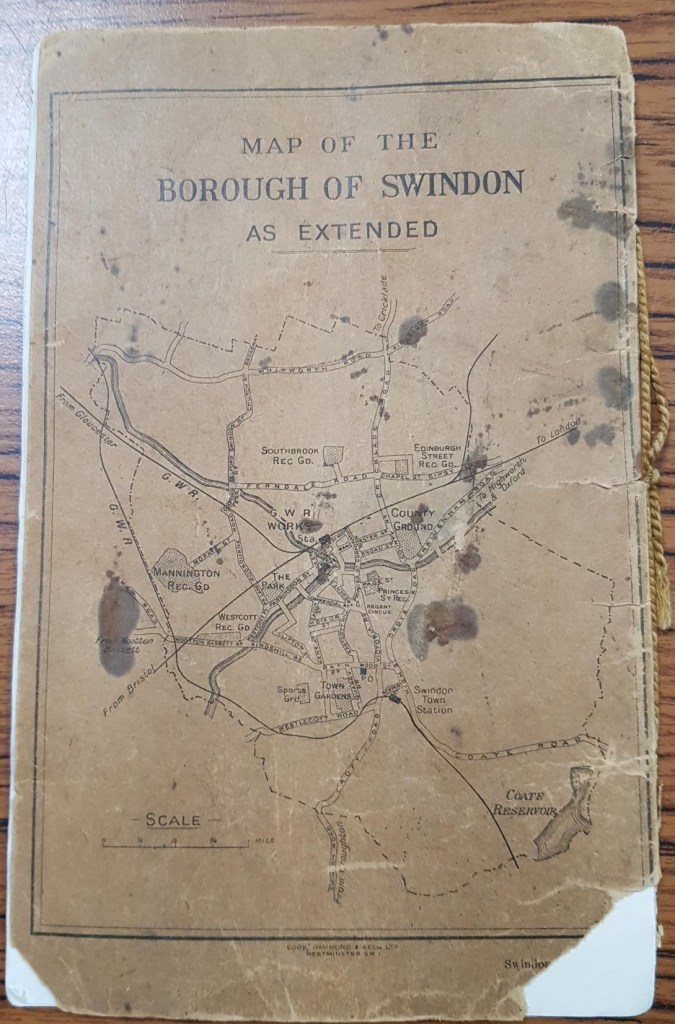
And then Mr Rumble showed me a booklet his father was presented with as a schoolboy in 1928 – Borough of Swindon – Extension of the Borough 1st October 1928.

Walter and Annie lived at various addresses in Stafford Street where Annie died at No. 105 in 1926. She was buried in Radnor Street Cemetery in grave plot D826.

Walter later lived with his son Frank and daughter-in-law Violet at 134 Ferndale Road where he died aged 80 and was buried with his wife in 1944.

I think members of the Rumble family can consider themselves Swindonians – but what about you?

Edward Thomas William Robins – Swindon Veterans of Industry

In December 1930 more than 200 men retired from the Great Western Railway Works, an event of such importance to warrant a detailed article in the first January edition of the North Wilts Herald published in 1931.

The names and addresses of those men forced to retire under the introduction of the 66 years age limit were recorded in appreciation of their long years employed in the Works.

Mr E.T.W. Robins – A large number of different interest have claimed the attention of Mr. Robins. He has had 52 years’ service as a fitter with the GWR Co., and has been a chargeman for 37 years, working as a fitter in the B Erecting Shop.

He is now 66 years old. A Londoner by birth, he has lived in Swindon since he was a child.

Mr Robins was one of the first secretaries of the Swindon Hospital Saturday Fund in 1894 and 1895, and has also been a member of the Hospital Management Committee.

He has done a great deal of church work at St. Mark’s, Swindon.

He is a member of the Foresters (Court Britain’s Pride). He was at one time secretary of the Swindon Chrysanthemum Society.

Swindon Veterans of Industry – North Wilts Herald, Friday, January 2, 1931.

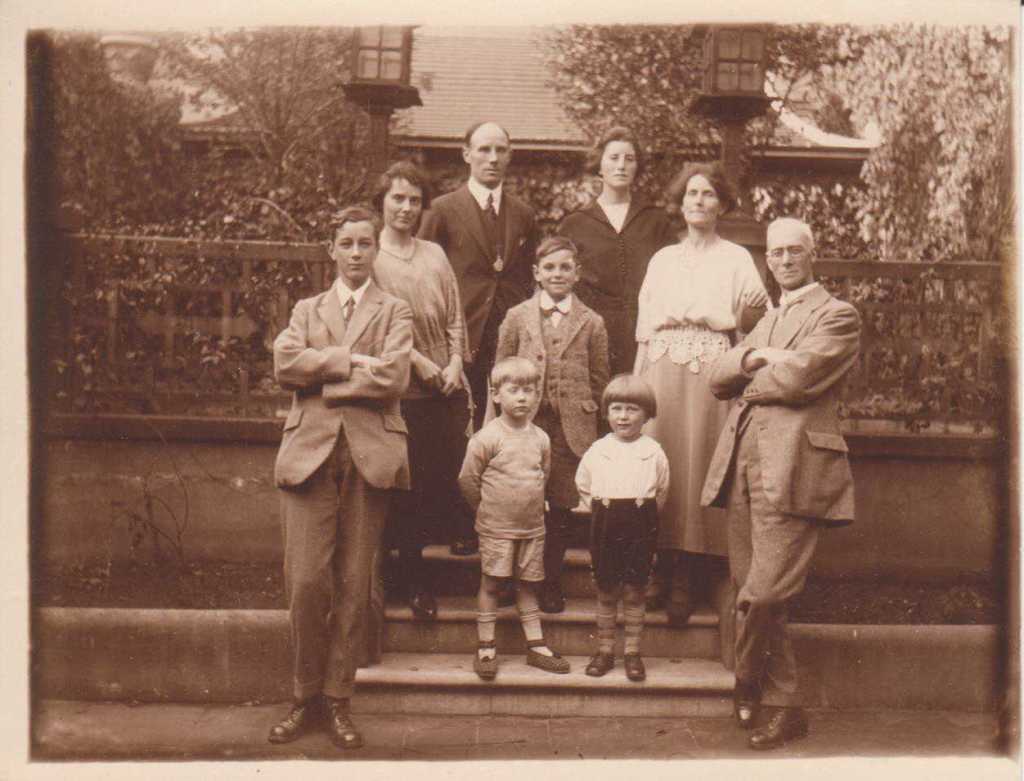
Agnes and Edward Thomas William Robins are pictured to the right of the photograph

Edward Thomas William Robins was born in March 1864 and baptised at St. Stephen’s Paddington June 26, one of Thomas and Henrietta’s 11 children. The family appears on the 1871 census as living at 16 Reading Street.

Edward married his first wife Hannah Williams on February 10, 1889 at the Independent Church, Victoria Street. Following her death he married his second wife Agnes Thomas at St. Mark’s on April 17, 1897. The couple had two sons Thomas Arthur and Cecil.

Edward Thomas Wm Robins died aged 82 years and was buried on March 25, 1947 in grave plot B3102 where Agnes joined him when she died in 1948.

Thomas Durkin – Irish haymaker

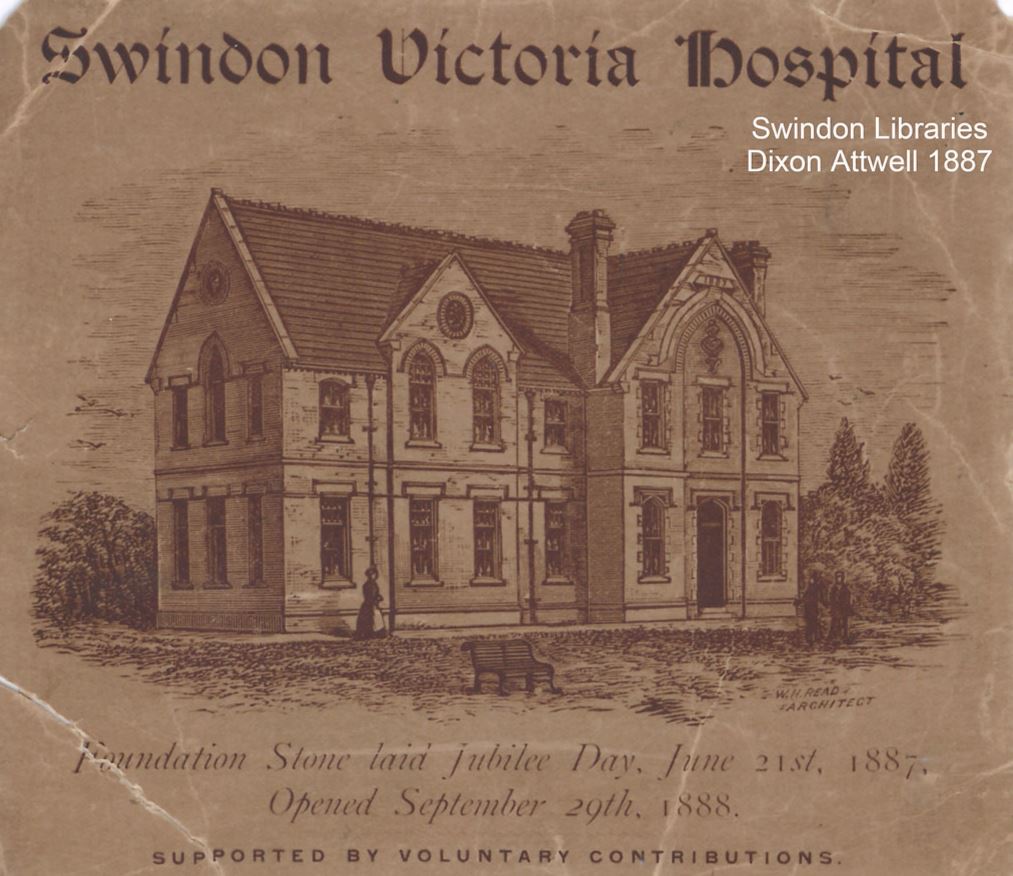
Image published courtesy of the Dixon-Atwell Donation and Swindon Local Studies

Sad death of an Irish haymaker

Mr Coroner Browne and a jury, of whom Mr George Wiltshire was foreman, held an inquiry at the Swindon Victoria Hospital on Tuesday evening into the cause of the death of Thomas Durkin, an Irishman, who died at the hospital the morning from injuries to his spine, received whilst at work the previous Thursday, under circumstances given in the evidence below.

William Durkin, deceased’s brother, said he and deceased and two other brothers came over from County Mayo, Ireland, last month to work for Mr S. Davis, of Rove’s Farm, Sevenhampton, Highworth, where deceased had worked each haymaking season during the past six years.

The accident to deceased happened last Thursday. Witness was working with him in the hayfield. Deceased was on the top of a load of hay, and, as it was leaning over somewhat, they decided to bind it before leaving it for the night. Three men, including witness, were pulling at the line on the ground to tighten in, and deceased was also pulling at it on the load, when suddenly the rope broke and deceased fell backwards from the load on to the ground. There was some knots in the rope, but he had not known it break before.

Deceased had been working as usual all day, and the accident happened late in the afternoon. Deceased must have been close to the edge of the load or he would not have fallen right off. After the accident deceased was attended by Dr Rowatt, and on Friday morning Mr. Davis had him removed to the Victoria Hospital.

A juryman expressed his opinion that the rope should have been produced for inspection by the jury.

George Fisher, farm labourer, in Mr Davis’s employ, said he tied the line on the waggon before commencing to bind the load. It was a “regular cart line,” and strong enough to have “stood a smartish weight.” Mr Davis explained to the jury that deceased was standing too near the edge of the load. Had he been in his proper place when the line broke he would have fallen on the load.

Dr J.C. Maclean said he was called to see deceased at the hospital at eleven o’clock on Friday morning. He found him suffering from spinal injury. All that could be done was done for deceased, but he did not get better and died that morning (Tuesday) about four o’clock. The immediate cause of death was injury to the spine caused by the fall.

This was all the evidence, and the Coroner briefly summed up, observing that he did not think any blame could be attached to anyone. The jury concurred, and returned a verdict to the effect that the immediate cause of death was injury to the spine caused by a fall from a waggon accidentally.

The jury expressed their sympathy with deceased’s brothers in their bereavement under such singularly sad circumstances.

The Swindon Advertiser, Saturday, July 14, 1894.

Undated postcard of Seventhampton published courtesy of Swindon Museum and Art Gallery

Thomas Durkin 38 years, who died at the Victoria Hospital, was buried on July 12, 1894 in grave plot B2269. This was probably a public grave which was later purchased by the Holmes family in 1909.

Herbert Pinnegar – killed at work aged 14

Emma Pinnegar’s five sons all followed their father into the railway works. Francis and Ernest became fitters, Nelson a blacksmith and Levi a coppersmith. Her youngest son Herbert had been employed just a few months when he was killed at work one Monday afternoon.

Herbert was working in D Shop “cutting of tyres for the wheels of railway carriages.” He was rather short sighted, according to the newspaper report, and working with heavy machinery. Do you suppose he was wearing glasses? I doubt it. Do you suppose anyone was supervising him? I doubt it.

In Swindon Works – The Legend, Dr. Rosa Matheson devotes a chapter to accidents. She writes: “The causes of accidents could be put down to a number of things – workers’ carelessness, difficult and horrendous conditions, over work, inexperience, lack of supervision, inattention, youth, old age, bad luck.”

It would seem young Herbert ticked a number of these boxes.

The railways brought employment and prosperity to Swindon; the railways brought life and they also brought death. Emma’s husband had been killed ten years previously walking home to Purton along the railway line. It appears he had been doing some shopping in Swindon that evening after work – it was the week before Christmas.

Fatality at Swindon

A terrible fatal accident occurred in the D Shop of the GWR Works on Monday afternoon. A lad named Pinnegar, aged about 14, was engaged upon a machine for the cutting of tyres for the wheels of railway carriages. Pinnegar, who was rather short sighted, was looking down to see if his work was placed in a right position, when going too near the large wheel, he was knocked down between the chisel and another part of the machine. The top of the poor boy’s head was cut completely off. Death, of course, was instantaneous. Deceased’s father, about six years ago, was killed on the railway while returning home from work.

The Bristol Mercury, Wednesday, September 16, 1891.

Herbert was buried in Radnor Street Cemetery in grave plot B1592, a public grave. He is buried with three other unrelated persons.

Fatal Railway Accidents Near Swindon – Between twelve and one o’clock on Saturday morning the stoker on a goods engine passing the Rifle Butts, between Swindon and Purton, saw what he thought to be the body of a man lying by the side of the rails. On search being made the body of a man named Frank Pinniger, a boilersmith in the Great Western Railway Works, but living at Purton, was found. He had been in Swindon shopping on the previous night, and left Rodbourn Lane about eleven o’clock to walk to his home down the line. The night was rough and windy, and it is supposed he was struck by the 11.20 mail train from Swindon. His body was removed to the mortuary at Swindon to await an inquest. Deceased was between 40 and 50 years of age, and leaves a wife and eight children.

The Stroud News and Gloucestershire Advertiser Friday, December 24, 1880.

Frank was buried on December 24, in St. Mark’s graveyard ‘by Coroner’s Order.’

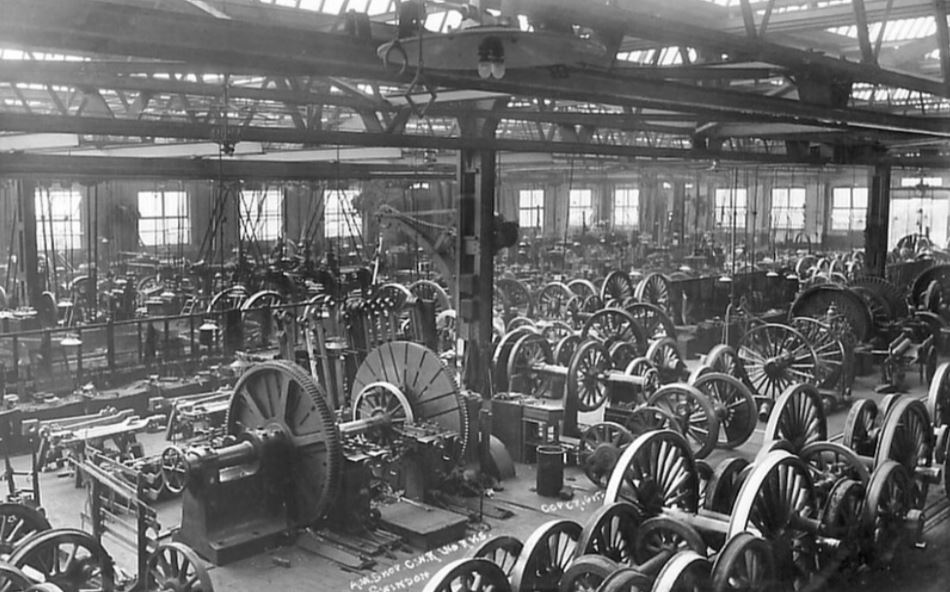
A William Hooper image of A W Shop taken in 1907 and published courtesy of Local Studies, Swindon Central Library.

A master class in all things Avebury

When my much anticipated visit to Gloucester History Festival was scuppered by a total train wipeout, I was determined not to give up on my planned day out.

If, like me, you’ve enjoyed a visit to Avebury and a walk around the stones, take my advice and join a guided tour. National Trust volunteer guide Keith treated us to a master class. He posed (and answered) the questions we all want to ask but are too embarrassed to do so. Like, why was the henge built? No one knows! It wasn’t for defensive purposes, nor was it a place of burial (no evidence so far found). How many people did it take to move the stones? (Loads!) Experimental archaeology has suggested at least 200 were required to shift a single stone pulling it on a sledge. Now I’m not giving away any more answers – you’ll have to join one of Keith’s tours.

Sadly, Avebury Manor remains closed following devastating flooding in January 2024. However, the gardens are open where there is a sculpture exhibition running until October 20,10 am – 5pm.

Keith and the Swindon Stone, a portal stone, one of a pair of two at one of the entrances to the henge. The second one had disappeared by the 17th century.

The blacksmith’s stone discovered by Alexander Keiller beneath a blacksmith’s forge.

One of several Cove stones built in alignment with sun rise at the summer solstice/

William Stukeley’s ‘Prospect of the Cove Abury 10 July 1723.’

Kay Singla

Kay Singla

Nick Marsh

Clara Ada Rumming and an unmarked grave

Distressing Accident – On Monday an inquest was held at the Castle inn, Swindon, on the body of Clara Ada, aged 15, daughter of John Rumming, 4, Dover-street, New Swindon, striker in the Great Western Railway Works. The evidence went to show that the mother left the deceased at home with other children about eleven o’clock on the 27th of October. About four o’clock the deceased must (as she stated to a neighbour) have prepared to clean up the grate, when she became giddy. On recovering she found her clothes in flames, and having unsuccessfully attempted to extinguish them under a water tap, ran out, when they were put out by some neighbours, who, with oil dressed the burns she had sustained. Dr. Howse attended the deceased, but she died on Sunday last from exhaustion, consequent upon the injuries received. All the lower parts of the body were burnt more or less. The jury returned a verdict of “Accidental death.”

Trowbridge Chronicle, Saturday, November 12, 1881.

Ada was buried on November 9, 1881 only the 56th burial in the new cemetery. She was buried in an unmarked public grave, plot A460 where she lay alone for more than 20 years. In 1902 Elizabeth Painter, a 52 year old widow from Ponting Street was buried with her in this public grave and in 1916 they were joined by Walter William Palmer.

Walter William Palmer joined the Coldstream Guards, later transfering to the Grenadier Guards and served from 1894 for 12 years. As a former soldier Walter was called up as a reservist at the outbreak of the Great War. He enlisted with his old regiment on September 12, 1914 and left for France as part of the Expeditionary Force on November 11.

In 1917 Major General Sir Fabian Ware founded the Imperial War Graves Commission (now known as the Commonwealth War Graves Commission) and a programme of installing a headstone on the graves of the war dead was begun. Walter William Palmer had died as a result of his military service and was awarded an official headstone in recognition of his sacrifice.

Unfortunately, the names of those buried with him in the public grave are not recorded on this headstone, but if you visit the grave of Walter William Palmer please spare a thought for young Clara Ada Rumming (and Elizabeth Painter) who are buried with him.