Hungry for more history?

Sunday September 15 saw the last day of the fab Heritage Open Days 2024 event. Apparently Swindon had more events on offer than historic Bristol, so we were well proud. Thank you to the fantastic Karen Phimister for all her hard work.

At Radnor Street Cemetery we welcomed more than 80 people to a guided cemetery walk. Yes, it was a bit crazy and yes, we were concerned that people couldn’t hear us, but we can’t turn people away and Andy and I both have loud voices!

I managed to attend quite a few other events (not as many as I would have liked) including an excellent talk at Swindon Central Library – Electric Wonderland? Women and the 1930s Modern Home by Sarah Yates.

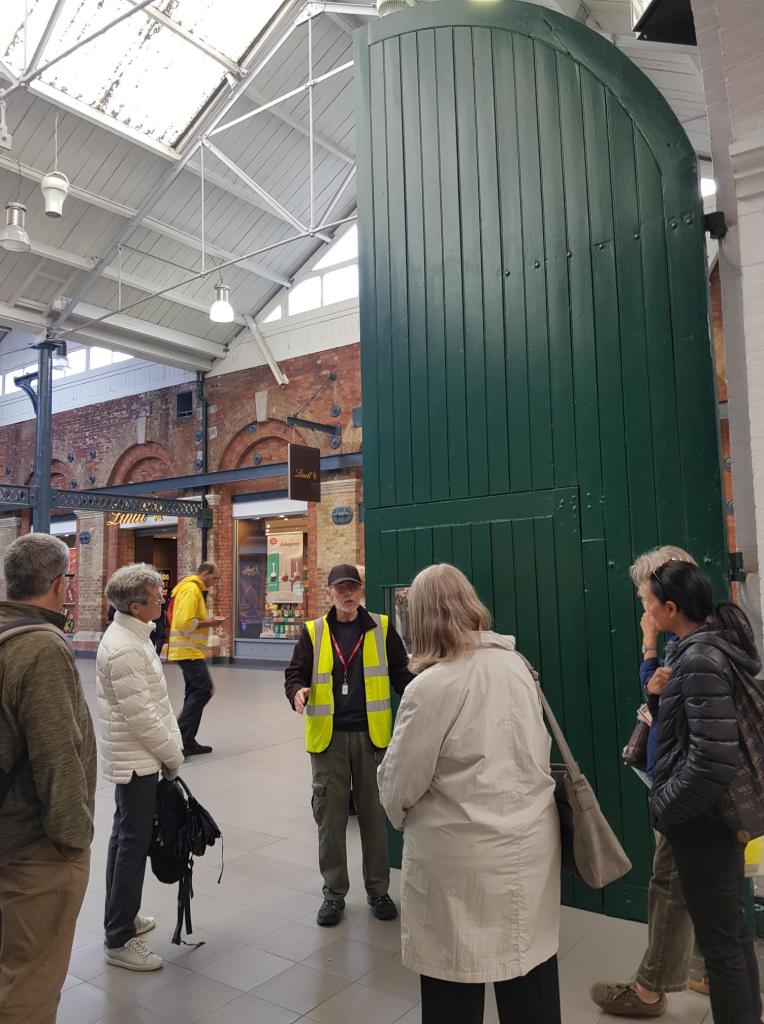
A guided tour of the Railway Village with Karen followed by a GWR Factory Tour with Gordon.

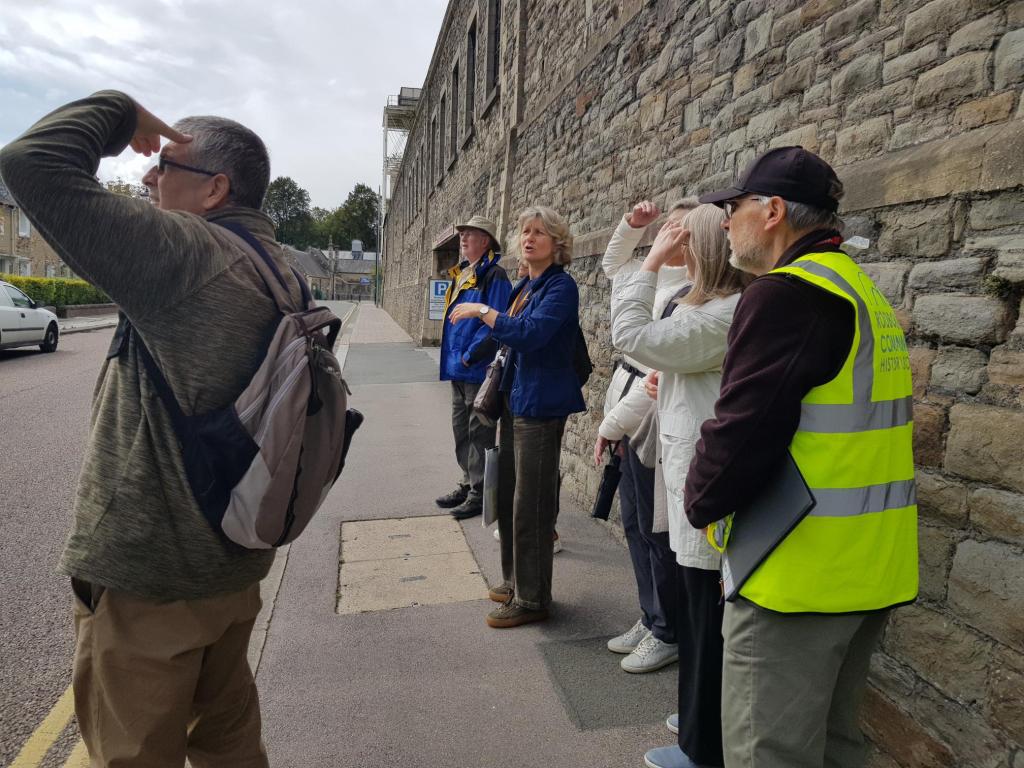
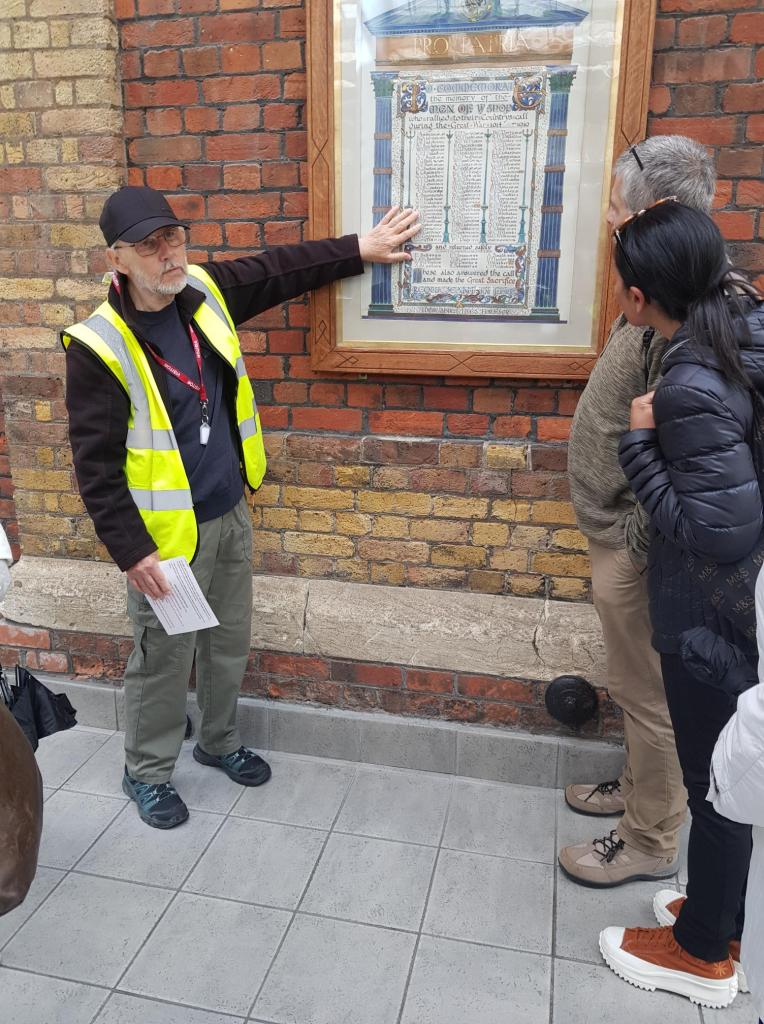
And then a guided tour of the Prospect Place Conservation Area with Michael and Geoff.

Here are a few photographs.

Radnor Street Cemetery guided walk

Guided tour of the Prospect Place Conservation Area

Railway Village with Karen

GWR Factory Tour with Gordon

And if you’re hungry for still more history join the Swindon Society for an Open Day this Saturday September 21, at the Lawn Community Centre on Guildford Avenue, running between 10.00am and 4.00pm.

Ben Lawson Hook – Fitter’s apprentice

Do you have a 15 year old son? Maybe you have a 15 year old grandson. He’s probably still in bed as you read this or perhaps, he’s playing some online computer game with his mates.

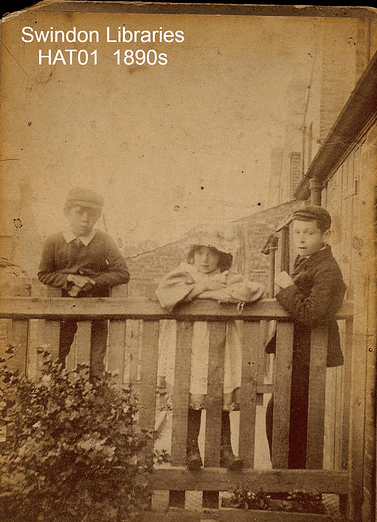
On Tuesday May 7, 1895 15 year old Ben Lawson Hook was at work in the R Shop (Loco Department) at the GWR Works. He was 18 months into a 6 and a half year Fitters apprenticeship. But that day he was mucking about, as 15 year olds are wont to do. A witness at the inquest said the boy ‘had no business to be swinging on the tyre’ (the metal wheel or tyre weighed 9cwt 15lbs and was in the yard outside the shop).

Ben Lawson Hook was born on June 8, 1879 one of Frederick and Elizabeth Hook’s large family. Frederick was from Eastbourne and the family lived in Bexhill for sometime before moving to Swindon in the late 1870s. Elizabeth died in 1892 and Frederick in 1894. By the time of the 1901 census 17 year old Sidney was recorded as head of the household, living with his sisters Millie 30, housekeeper, Caroline 28, tailoress, Katie 23, laundress and 9 year old Norah. But this was more than five years after the tragic events of that day in May, 1895.

At the inquest held in the Cricketers Arms on Thursday May 9, 1895 the jury returned a verdict of “Accidental death.” No blame being attached to anyone.- Mr J. Fordyce Stephenson was present to watch the case on behalf of the GWR authorities. The boy was buried the next day.

Image published courtesy of S.C. Hatt Local Studies, Swindon Central Library.

Fatal Accident to a Boy in the GWR Works – On Thursday afternoon, Mr W.E.N. Browne, County Coroner, held an inquest at the “Cricketers’” Arms, New Swindon, on the body of Lawson Hook, aged 15 years, of Maxwell street, New Swindon, who was killed on Tuesday last.

Deceased was employed in the R Shop (Loco Department) of the GWR Works. It appears that deceased and two other boys were amusing themselves in various ways, and deceased swung himself on to a large wheel, weighing over nine cwt., which over balanced and fell on him, inflicting such serious injuries that he died three hours later.

Mr Alfred Adams was chosen foreman of the jury, and after viewing the body, which was lying at the GWR Medical Fund Hospital, the following evidence was taken. Mr. Frank Apted produced a plan of the place where the accident occurred, and a sketch showing how it happened. – Robert Hook, brother of the deceased, identified the body.

David Turnbull was the next witness. He said he saw the boy swinging on a large wheel or tyre – one of 34 which were resting against the wall. He saw the wheel overbalancing, and shouted out, “Good gracious, that boy will be killed.” The wheel fell across deceased’s thighs, and he immediately hurried to his assistance. With assistance he removed the tyre, and deceased was at once taken to the hospital. Deceased had no business to be swinging on the tyre; it weighed 9cwt 15lbs, and was in the yard outside the shop.

Wm. H. Green, an apprentice in the GWR Works, said he saw deceased swinging on the wheels or tyres. Just after witness left him the accident happened, and witness heard deceased groaning. Witness went back and tried to lift the tyre off deceased, but could not do so, and Mr Turnbull and three or four other men came up at the time.

Dr Crowther, assistant to Dr Swinhoe, said he was called to the hospital to see deceased. He was suffering from collapse, and died three hours later from shock to the system.

The jury returned a verdict of “Accidental death.” No blame being attached to anyone.- Mr J. Fordyce Stephenson was present to watch the case on behalf of the GWR authorities.

The Swindon Advertiser, Saturday, May 11, 1895.

Lawson Hook was buried in a public grave in Radnor Street Cemetery on May 10, 1895. He shares the grave with his two sisters. Clara Hook who died in November 1897, aged 15 years old. Millie Hook, who held the family together after the truly awful 1890s, and died in March 1909 aged 38.

Frederick and Elizabeth Hook are buried in a public grave, plot B1711 with their daughter Nora who died aged 16 years of age in the Stratton Infirmary, also in March 1909.

Arthur James aged 7 – died from alcohol poisoning

This is the sad and shocking story of Arthur James who died from alcohol poisoning aged just 7 years old. We learn how 5 year old George Ockwell was called to give evidence at the inquest and how his mother, Emily Ockwell, had walked past the stricken boy who was vomitting and unable to stand or speak. And then we hear how his 14 year old sister Anne James arrived on the scene and picked up her brother. An unnamed man came to the girl’s assistance and carried her brother home where he died the following day.

More than 130 years later this story still shocks and saddens the reader.

Death from drinking spirits – An inquest was held on Monday morning, by Mr. Coroner Baker, at the Clifton Hotel, Clifton Street, New Swindon, on the body of Arthur James, aged 7, son of Simeon James, of 17 Kingshill Cottages, Swindon, who died on Friday afternoon from convulsions caused by drinking spirits which he obtained by forcibly entering a pavilion at the Ranger Cricket ground, Old Swindon.

Mr W.E. Morris was chosen foreman of the jury. Mr W.H. Kinneir and Mr E. Smith were present as representing the Ranger Cricket Club, and Mr. E.G. Lay, of Wood Street, Swindon, was also present.

George Ockwell, aged five years, son of Walter Ockwell, was called before the Coroner, and from him was elicited the information that the deceased, with the witness and another juvenile, were in the Ranger cricket field Thursday morning. The deceased entered the window of the pavilion and got out two bottles of spirits. With these the trio went down Lansdowne Road, and witness stated James drunk the contents of the bottles. After doing this he lay down, and the other boys left him, taking one of the empty bottles with them home. One of the bottles was now produced and also broken pieces of the other (found near the deceased by his father). From these it appeared that their contents were spirits.

Emily Ockwell, mother of the first witness, stated that on Thursday about two o’clock she was going to work along Lansdown Road, with her son, who had been with the deceased, when she found James in Vickery’s field. A lad was trying to hold him up, but he was insensible and could not stand or speak. Witness, understanding that deceased’s sister was coming to take him away, left him lying there. Whilst there he vomited a little, and had vomited a great deal before she arrived. He smelt strongly of spirits.

Anne James, deceased’s sister, stated that on Thursday, about 2.30 p.m., she found her brother lying in Vickery’s field, insensible. She picked him up, and he opened his eyes once. She carried him a short distance, and a man carried him the rest of the way. He told her that deceased was in a fit. He vomited after reaching home, and smelt strongly of spirits. He died on Friday afternoon, about half past three o’clock.

Dr. J.B. Fry deposed that on Thursday, about 4.30 p.m., he saw the deceased lad. He was then in a state of insensibility; his skin was cold and pale. The pupils of the eyes were very widely dilated, and insensible to light. Deceased was also in convulsions, which continued until his death. There was a bruise about the size of a pigeon’s egg on his forehead, and also a bruise on the right temple, which might have been caused by his falling. He could detect no smell of spirits either in the breath on on the clothes, and there was then no vomiting. From the history of the case it was probable that the convulsions were the result of an overdose of alcohol.

The Coroner, in summing up, said there was little doubt that the deceased got hold of the bottles of spirits, and through drinking too much of the spirit convulsion resulted, which caused death.

Before the jury gave their verdict, Mr. E.G. Lay stated that he had the management of the pavilion in the Ranger cricket ground. Two bottles, with some brandy and whisky in them, and a whole bottle of rum had been left in the pavilion, which he believed were securely fastened. The three bottles were missed on Thursday evening. An entrance had been effected into the pavilion, and then through an inner window into his compartment.

The jury returned a verdict of death from convulsions due to alcoholic poisoning.

The North Wilts Herald, Friday, September 17, 1886.

Arthur James, seven years old, of 17 Kingshill was buried on September 14, 1886 in a public grave plot A659. The following day a 5 month old baby, Ethel Maud Tilley was buried in the same plot.

Charles Edmonds – shunter

In May 2024 I attended the Friends of Swindon Railway Museum’s monthly lecture, entitled ‘Into the Jaws of Death – working and dying on Britain’s railways 1900-1939,’ delivered by Mike Esbester from the University of Portsmouth. The subject was the danger railwaymen faced on a daily basis whether working on the trackside or in railway factories such as Swindon Works.

One of the facts Mike raised was that saftey both on the line and in the factories was considered by the railway companies to be largely a matter of personal responsibility. Despite the incredibly dangerous nature of the work, employees were expected to look out for themselves.

The following account records the extreme stoicism of Charles Edmonds, a shunter, who stepped between the buffers to couple up two engines. Despite his injuries he walked to the accident hospital and then home to Princes Street, a distance of approximately a mile.

Fatal Accident at the GWR Works

Mr J.B. Baker, coroner, held an inquest at the Red Cow Princes-street, on the body of Charles Edmonds, 48, shunter, who resided at 51, Princes-street, and who died on the previous Saturday night from injuries received whilst following his usual employ, which he had been engaged in many years, at the west yard of the GWR Works, on the 11th inst. It appeared to be generally admitted that death was the result of a pure accident.

The jury, of whom Mr W.E. Morris was foreman, having viewed the body, proceeded to hear the following evidence:- Felix Hale, 52, Bath-street, engine driver, said he knew the deceased, who was employed as a shunter in the GWR. On the morning of the 12th of October, at 9-45, they were engaged together shunting some engines. The deceased got in between the buffers to hook them on. When he had done so the engines rebounded and thus caused a space between the buffers. The deceased attempted to pass through these, thinking there was time, but the chains suddenly tightening the engines rebounded and he was caught. Witness said he did not know for certain that deceased was caught, as he saw him put his hands up. He remarked to his mate on the engine “Well, if Charley was not caught then he had a narrow escape.” As deceased did not come out witness got off his engine to go and see for him, and found him leaning against the coupling. He asked him how he came to try and pass through the buffers like that, and he answered that he thought he had time. With assistance deceased walked to the hospital and home.

By the Jury: There were hooks for shunters on the line, but not for engine shunters, the couplings being different. If deceased had stopped instead of trying to go between the buffers he would have escaped. Deceased was a man of experience.

John Hunt, Brunel-street, foreman of the “A” Shop, GWR Works, said Brown, the fireman for the last witness, told him of the accident and he went and found deceased sitting in the watchman’s cabin. He asked him if he was hurt very bad, to which he replied that he did not think he was. He asked him how it happened, to which deceased replied that he got between the engines to couple them, when one touched the other and sent it the length of the chain, thus leaving room for him to pass out, but as he was doing so the engine rebounded and caught him, but only for a moment, as he was instantly released. Deceased declined the use of a chair to go to the hospital, preferring to walk.

In answer to the Foreman, witness said there was no appliance for coupling engines without going between, as there was with trucks. In the Works they had so many classes of engines and tenders that they were bound to connect them by hand. It would have been all right if deceased had stooped under the buffer.

Dr. C. Spackman (Messrs. Swinhoe, Howse, and Bromley) said he saw the deceased when he came to the hospital on the morning of the accident. He said he had been “nipped” by the buffers, but did not appear to be in much pain. There was no abrasions or broken bones. He gave him a little stimulant, and deceased said he could walk home. Dr. Bromley saw him later in the day, but could find no sign of injury. It was impossible now to say the exact cause of death; there was no doubt internal injuries, and also injuries to the spine, as paralysis of the legs followed in a few days. He, however, rallied once or twice, and it was thought he would recover. He could take all kinds of food.

The Jury at once Returned a verdict of “Accidental death.” As it was said he had left a family of eight children, the Jury made a collection for the widow.

Swindon Advertiser, Saturday, October 31, 1885.

Charles Edmonds was buried on October 30, 1885 in an unmarked, public grave plot number A151 with three other unrelated persons.

PolluxHawthorn Class 2-4-0 built in Swindon Works in 1866.

Photograph published courtesy of P.A. Williams and Local Studies, Swindon Central Library.

Mike’s lecture was both compelling and revelatory. To discover more visit www.railwayaccidents.port.ac.uk.

And if you would like to join the Friends of Swindon Railway Museum visit their website. http://www.fosrm.org.uk/

Henry Simpson – overdose of laudanum

Laudanum was the 19th century go-to drug for – well, pretty much anything really. The opium tincture was used to relieve everything from diarrhoea and the common cold to heart disease. It was a pain suppressant, induced sleep and was very, very addictive.

It was also very popular in Victorian artistic circles. One of the many victims of laudanum addiction was Elizabeth Siddal (1829-1862) a talented artist in her own right but better known as the muse, mistress and eventual wife of Pre-Raphaelite artist Dante Gabriel Rossetti. Lizzie died of a suspected overdose of laudanum following the birth of her stillborn daughter.

Laudanum was readily available, cheaper than a bottle of gin and in Swindon in 1888 could be bought over the counter by a 14-year-old girl, apparently.

This is the story of Henry Simpson who also died from an overdose of laudanum taken to relieve back pain.

Henry Simpson was born in Lechlade in about 1837, the son of plasterer John Simpson and his wife Sarah. Henry married Ellen Clifford in 1857 and throughout his life worked as a slater and plasterer, eventually adding grocer to his list of occupations, so obviously a hardworking man. The couple had two children, a daughter Lydia and a son William. In 1861 the family were living in Kempsford. By 1871 they had moved to Poulton in Wiltshire and by 1881 they had arrived in Swindon and were living at 21 Oriel Street, described on the census returns of that year as a Grocer Shop.

Death Through an Over-dose of Laudanum at New Swindon

Yesterday (Friday) Mr W.E.N. Browne (Coroner for North Wilts) held enquiry at the “Whale” Inn, Princes-street, New Swindon, touching the death of Henry Simpson, plasterer, who was found dead in bed on Thursday morning at his residence in Oriel-street. Mr. J. Maylott was chosen foreman of the jury.

After viewing the body, the first witness called was Richard James Page, who stated that he had lodged with deceased for 10 years. Deceased was at work on Wednesday last, but went home in the afternoon, complaining of pains in his back. He had been suffering all the week. On the previous Saturday someone recommended deceased to take a dose of laudanum to ease the pain. Deceased obtained a bottle, and on Sunday evening he took 30 drops in some water. Witness counted the drops. Deceased then went to bed, and got up as usual on Monday morning. He took about the same quantity of laudanum again on Monday night. Witness did not see the bottle again until Thursday. It was then empty, but was quite full when deceased bought it.

Minnie Browning, 14, a young girl residing in Oriel-street, proved going to Mr Smith, chemist, of New Swindon, and obtaining a bottle of laudanum and some opodeldoc, for which she paid 1s, and told the chemist it was for Mr. Simpson.

Hannah Browning gave evidence, stating that she was called to deceased’s house on Thursday morning about 11 o’clock, and between twelve and one she was asked to go and call deceased, as he had not got up. She did so but received no answer. She went half an hour afterwards and went into the room, and saw deceased in bed. She felt his hand and found it quite warm, but stiff. She then sent for some one, and she felt sure he was dead.

Dr Arnold, MB, FRCS, LRCP, stated that he was called to see deceased about three o’clock on Thursday afternoon. He found him dead, lying in the position of natural sleep. He examined the body of deceased, but found no marks of violence. In his opinion deceased had taken an over-dose of laudanum. The bottle produced would hold about eight drachms. Two drachms would be sufficient to kill a man who was not used to taking it.

The jury returned a verdict that deceased came by his death through taking an overdose of laudanum.

The Swindon Advertiser, Saturday, July 21, 1888.

From the evidence given at the inquest by Richard Page it was stated that Henry was suffering from back pain, causing him to take to his bed. Perhaps today the verdict arrived at by the jury might have been a more empathetic ‘accidental overdose.’

Henry was buried in grave plot B1575 on July 23, 1888. This was most probably a public grave at the time of his death but was subsequently purchased in 1948 for the burial of Edward Richard Green and his wife Emma Selina who died in 1952.

Administration of Henry’s will was granted to Ellen and his personal effects were valued at £147 6s 9d. Ellen moved to Chester after Henry’s death where she lived with her daughter Lydia and son-in-law Charles Arthur White. She died at their home on June 14, 1890 and was buried in Overleigh Old Cemetery, Chester.

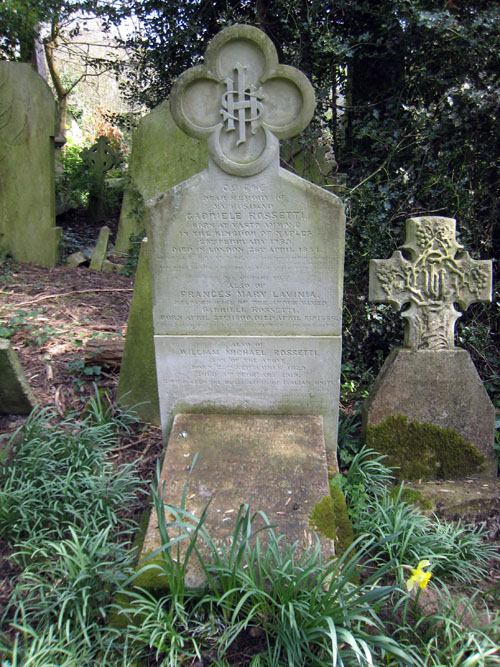
For those of you interested in the story of Elizabeth Siddal you can read more here. This is one of the many portraits Rossetti painted of her.

Elizabeth was buried in the Rossetti family plot in Highgate Cemetery.

Rose Morse

Sometimes the details are too scant to piece together the before and after stories.

This is the tragic story of a little girl who died in a wash tub in a back garden at 8 Thomas Street, Rodbourne. Sadly, even her name is incorrectly reported – she is Rose Morris, not Morse.

Her father, Charles James Morris, a 36 year old Engine Fitter, died three years later.

What happened to the bereaved wife and mother Hannah Morris?

Even Swindon

Death of a Child. – A little girl named Rose Morse, aged two years, daughter of Charles Morse, fitter in the GWR Works, New Swindon, and residing at 189 Rodbourne Road, met with a sad death on Easter Monday. She was playing with other children in a back garden at 8 Thomas Street, Even Swindon, when she was all at once lost sight of. One of the other children went into the house and asked a lad named Clifford where the lost girl was. He went out and searched for her, and noticing that a piece of sacking was removed from off the top of a wash tub which was “let into” the ground. The tub contained a small quantity of liquid and some grains. Clifford on looking into the tub, saw the poor little child, suspended from the top of the tub, head downwards, quite dead. He at once raised the alarm, and medical aid was sought. Dr. Bromley (Messrs Swinhoe, Howse and Bromley) quickly attended, but pronounced life to be extinct. – On Wednesday, an inquest was held on the body at the Dolphin Inn, by Coroner Browne. After hearing the evidence, the jury, of whom Mr Jonah Hawkins was foreman, returned a “death from suffocation,” and recommended that a proper covering should be placed firm on such tubs as deceased fell into when placed on the ground.

Swindon Advertiser, Saturday, April 27, 1889.

Rose Ethel Morris was buried in plot B1207, an unmarked public grave, on April 27, 1889. She is buried with three other children; two month old George Mills who was buried the previous day and 4 year old Phyllis Holmes and 2 year old Flora Maude Barnes who both died in 1922.

Charles James Morris died in February 1892 and was buried in plot A875, another unmarked public grave, with three other unrelated persons.

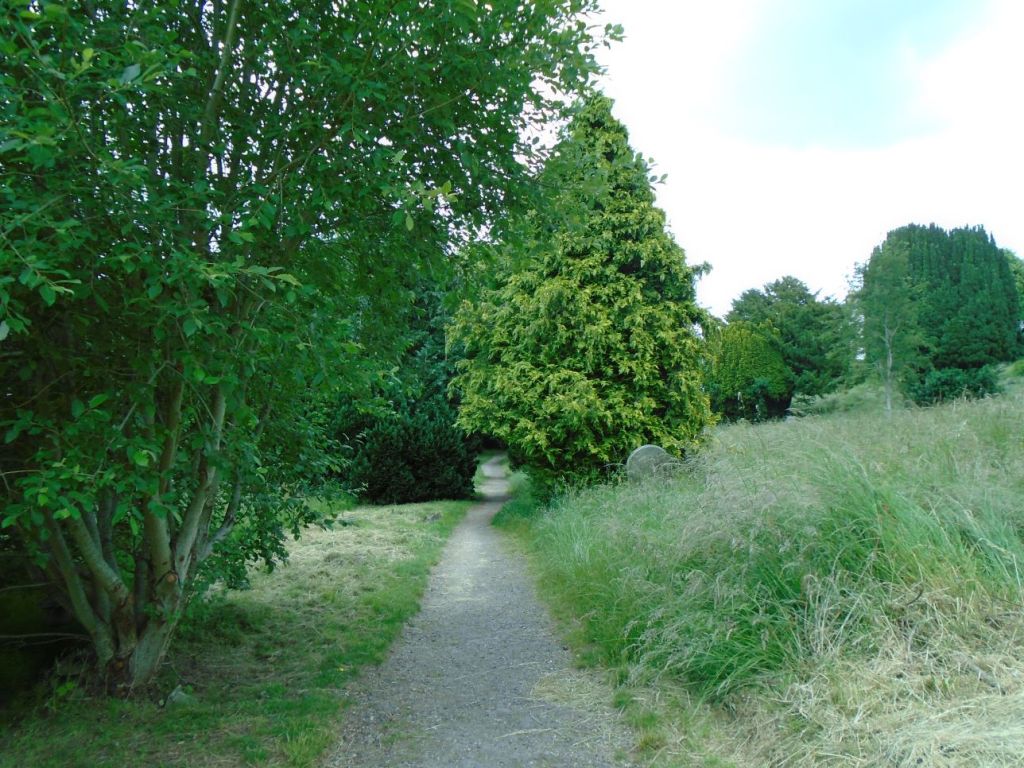
Looking towards the Kent Road gate – Section A to the left and Section E to the right.

Rivet boy killed in horrific accident

Working in the GWR factory was a dangerous affair. Serious injuries were commonplace and even fatal accidents occurred such as the one that highlighted poor safety practise in the works in 1896.

Fifteen-year-old Matthew William Fox Burton had been working as a rivet boy for just seven weeks when he was involved in an horrific accident early one Tuesday morning. Matthew – known as William – was the second son of Matthew and Mahalah Maud Burton. He was baptised at St. Mark’s Church on August 9, 1880 when his father’s occupation was given as Engine Fitter. And like just about every other boy living in New Swindon at that time, William followed his father into a job in the railway works.

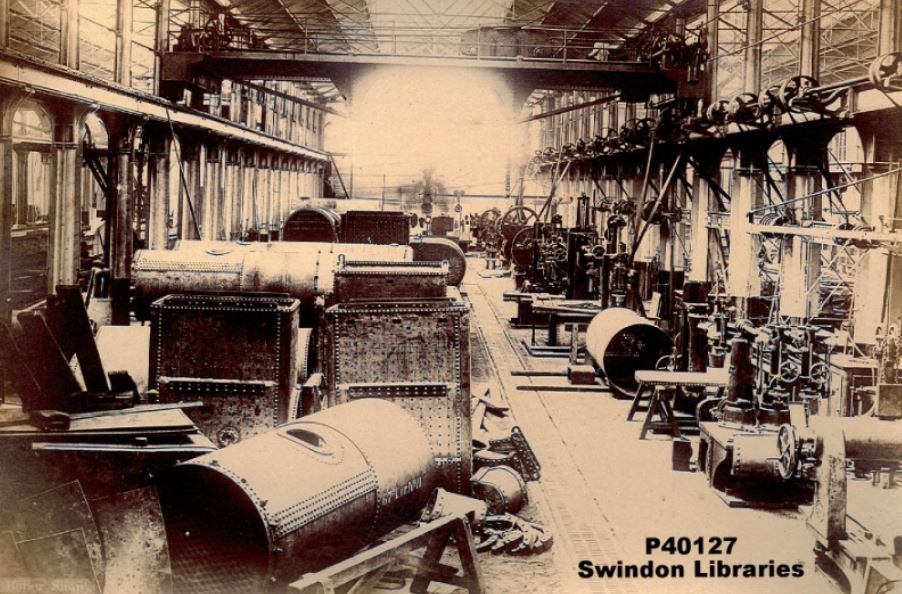
His duties as a rivet boy included cleaning out the rivet forge when on that morning an hydraulic pressure riveter weighing 35 cwt, suspended by chains from an overhead crane capsized.

published courtesy of Local Studies, Swindon Central Library.

Men working nearby carried William to the Medical Fund Hospital.

“But it is feared that he has sustained very serious internal injuries and that he will not recover,” reported the Advertiser.

William died in the hospital five days later; the cause of death was shock following the injuries he had sustained.

An inquest attended by Works Manager G.J. Churchward held at the Cricketer’s Arms on Monday March 2, 1896 heard how the accident in V1 (Boiler) Shop happened just after the men returned to work at 9 a.m.

Mr R.L. Dyer, the foreman of the shop, suggested that a very slight leak in the valves could have caused the machine to drop to the ground when the water was turned off while the men were at breakfast. The subsequent slackness in the chain may have caused it to slip from one of the two hooks that supported it.

The coroner adjourned the proceedings in order to inform the Inspector of Factories.

When the inquest reconvened on Wednesday afternoon the jury heard how as the machine was lifted off the boy it slipped again, landing on him for a second time.

Dr Simms, the assistant to GWR medical officer Dr Swinhoe, said the boy had a fracture of the upper jaw and left arm and extensive bruising of the chest and back.

The jury asked to examine the machine and the inquest was adjourned for a second time, much to the consternation of Mr Churchward.

When asked when the machine had last been officially inspected, Churchward replied that Mr Dyer and himself “would see it each time they passed it.” It became apparent that inspections were done on an ad hoc basis. Mr Maitland, the Inspector of Factories, said there was no definite period for examination or visits to factories.

The jury returned a verdict of accidental death but recommended greater precautions should be taken to prevent accidents with machines of this kind.

William’s funeral service was held on March 5 at St Mark’s, the church where he had been baptised. He was buried in grave plot C771, an unmarked public grave, with four other unrelated people.

My thanks to Debra and Peter Melsom who first brought this story to my attention. The story of Matthew Burton was originally published in the Swindon Advertiser on April 1, 2011.

A name to grow into

The re-imagined story …

William John Josiah Fellowes Thomas. What a long name for such a small person. It was a name to grow into. Sadly, he never had that opportunity.

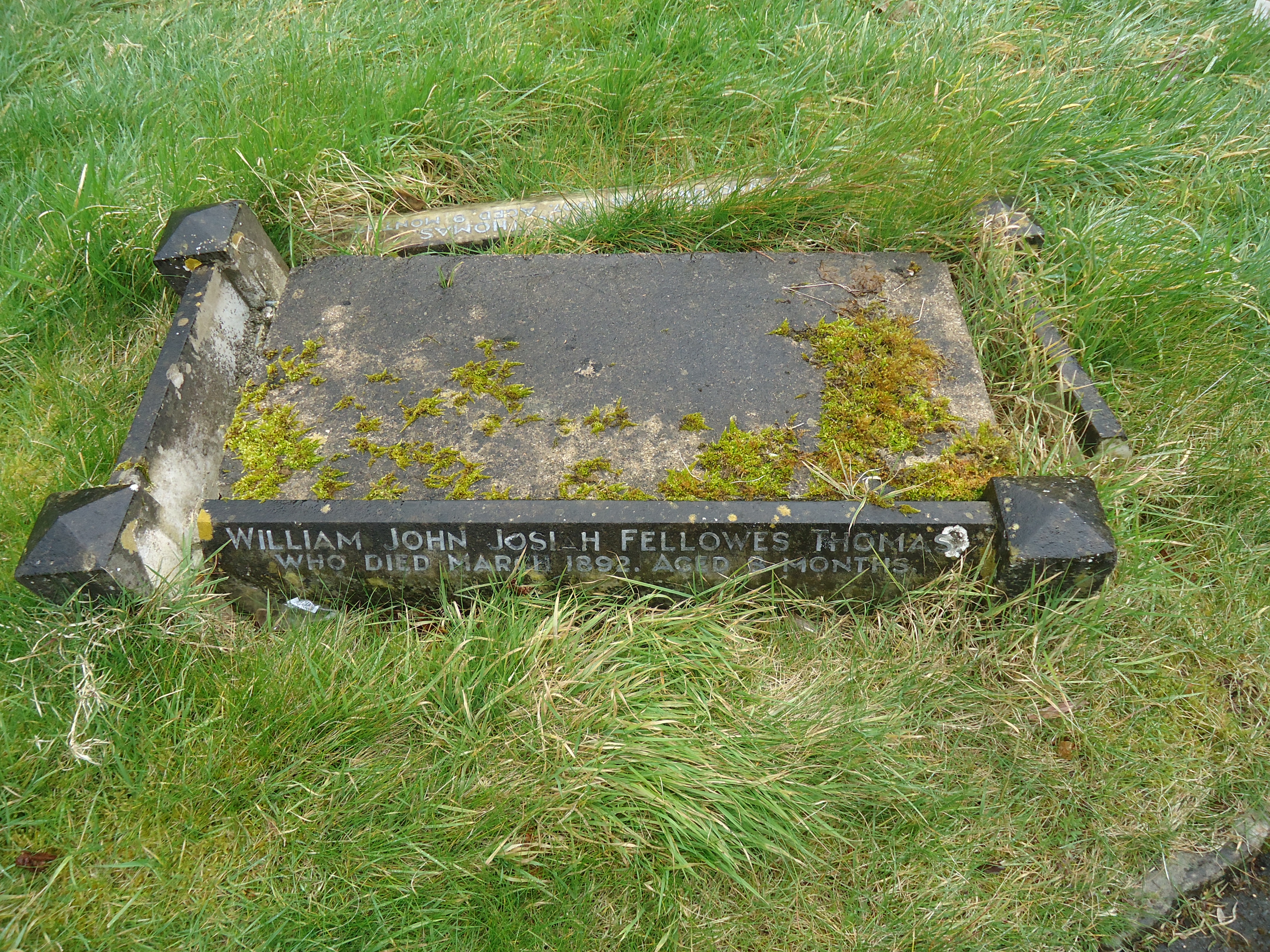
The inscription stretched the length of the small kerbstone memorial. ‘William John Josiah Fellowes Thomas who died March 1892 Aged 8 months.’ They had lived at No 4 Albion Street then, their first home together. Such a happy time, waiting for the birth of their first child.

She had prayed she would never have to bury another child in the cold earth and for several years it seemed as if God had heard her; spared her. Two daughters survived and thrived and then another son; a small, sickly baby.

‘Also of Cyril Thomas who died Feb 1907 aged 9 months.’

Why had they named him Cyril; she couldn’t remember now. Why hadn’t they given him a more impressive name. Cyril; not much of a name. She didn’t even care for it now. Cyril.

The little grave was the size of a cot. She wished John hadn’t chosen this plot in the lower half of the cemetery. She wished they had buried the babies up on the higher ground, near the other family graves, where the early morning sun peeped through the trees. The boys always woke early. She remembered that, watching the sunrise at the bedroom window, rocking them, trying to soothe them.

She looked across the cemetery. Some of the mourners were still standing at the graveside. This was where she would be laid to rest when the time came, buried with John, next to her parents, close to her brothers. She wished she could have her sons with her.

She left a spray of flowers on the small grave. Two daughters survived and thrived, two sons died.

William John Josiah Fellowes Thomas 1892

The facts …

During the 1870s William Fellowes, an iron moulder, brought his family down to Swindon from Wolverhampton. By the time of the 1881 census William and his wife were living at 22 Albion Street. His sons William and Josiah had followed their father into the railway works while their sister Adelaide is working as a dressmaker.

On July 9, 1890 Adelaide married John Thomas, a widower with two young daughters. Her first child, a son named William John Josiah Fellowes Thomas, named after her father and three brothers, was born in 1891 and baptised on November 3. A daughter named Adelaide Fellowes Thomas was born in 1896; Gwendoline was born in 1900 a second son Cyril  in 1906.

By the end of the 19th century William and Sarah were running a grocer’s shop at 35 Commercial Road, a property that would remain in the Fellowes/Thomas family for more than forty years.

William died at his home in Commercial Road in May 1905 and was buried in plot E7812. The burial registers include the following information – ‘Exhumed 14th March 1906 Re-interred in 7741E.’ His wife Sarah died nine years later and was buried in the same plot on October 22, 1914.

Adelaide and John were buried next to William and Sarah in plot E7740 and brother William and his wife Mary were buried in plot E7742.

Josiah died in 1902 aged just 37. He is buried in plot E7955 with his brother John who died in 1910 aged 50. Their grave is just two plots away from their sister Adelaide. 

The Fellowes family remained close in life and death, except for the two little babies buried together on the other side of the cemetery.

DSC08999

Section E 1 of 3

Alfred and Amy Haynes

Alfred William Haynes served as Mayor of Swindon 1917-18. It must have been a particularly difficult time to be a local politician as the Great War drew to a slow and painful conclusion.

Alfred William Haynes was born on October 13, 1862 and was baptised on December 7 at St. Leonard’s Church, Eynsham. Eynsham is an ancient village about 5 miles north west of Oxford. He spent his early childhood at Crown Crescent, (the site of a serious outbreak of typhoid in 1875) Acre End Street, with his parents John, a sawyer, his mother Ann (d 1874) and his four younger siblings, George, Florence, Arthur (d. 1874) and Frederick.

In 1880 Alfred married Rosa Major at St. Mark’s, Old Street, Shoreditch where he stated his age as 21 when in fact he was only 18. The newly married couple returned to Wantage where they lived with Rosa’s parents Frederick and Amy Major. Sadly, Rosa died on January 30, 1885 and was buried in Chain Hill Cemetery, Wantage.

At the time of the 1891 census Alfred was boarding with James White at 20 Regent Street and was employed in the Works as an Engine Fitter.

Alfred married for a second time on April 18, 1892 at St. Friedswide, New Osney, Oxford. His bride was Amy Whiting who worked as a domestic servant at the time of their marriage.

Alfred served as a councillor for the Kings Ward from around 1911 and was appointed an Alderman in 1915. He was appointed Mayor in 1917. In 1924 he was awarded the OBE in King George V’s Birthday Honours list for his work as Chairman of the Swindon, Chippenham & District War Pensions Committee.

He died on July 31, 1935 and was buried in grave plot C1820 where Amy joined him 10 years later.

The area in Section C where Alfred and Amy are buried.

Cemetery conveniences

Having read my story about John and Florence Sterry, Elaine Maloney was prompted to write to me about her recollections of the cemetery conveniences. Elaine grew up in Clifton Street and writes of her childhood memories, extracts of which I share here with you.

I remember the gent’s urinal very well. I used to live in nearby Clifton Street, just across from the pub. My Mum, Joan Maloney, used to run the Clifton Street Playgroup in the Methodist Church Hall opposite the Post Office and next to the Clifton Street entrance to the cemetery. I was often hanging about in that area waiting for my Mum to lock the Playgroup hall up and come home. During these times my Clifton Street pals and I would often climb up the quite steep path to the chapel and we would dare each other to quickly dash in and out of the urinals. Hardly surprising I suppose but the urinal always smelled strongly of stale urine, which added to the fun of the dare.

With your back to the chapel and facing the urinal straight ahead you entered from an opening in the bottom right area and went down a couple of broad steps in keeping will the slope it was built into. At the bottom of the steps you turned left into the one room toilet. A long trough was situated on the southern wall and ran all along that wall only stopping at the edge the steps began at so from your starting point you would have turned 180 degrees to use the urinal so would now be facing south or thereabouts. It wasn’t very interesting architecture just utility concrete probably covering brick. At the bottom of the walls there was moss or lichen growing up the wall. If I remember correctly I believe the floor was tiled but with quite a few of them broken. Also I believe the roof was like corrugated iron but with possibly a layer of what looked like a layer of asbestos on top of the iron.

From outside the urinal at times you could have blinked and missed it as it was often overgrown with some kind of vegetation which would cover the whole roof and hang down the side walls. Just before it was due to be trimmed back it always covered the whole building so from other areas of the cemetery you could easily miss it and I can never recall any signs about the cemetery announcing it was even there.

Of course there were also a gents and a ladies toilet located to the left of the Radnor Street entrance if you were heading out of the gates there. I cannot remember inspecting the gents but you could cram maybe six people into the ladies. It contained one of those sanitary towel burners where you would pull the handle and a wedge shaped box section, hinged at the bottom, would come into view revealing a hollow section where you could place what needed burning, supposed to be sanitary towels ONLY and when you closed this part again you could hear the furnace flash up and whatever you had placed inside would be turned to ash.

Nobody could tell you were in there and if you ran down the path back onto the pavement quickly enough you lessened the chances of a parent driving by and seeing you come out. I can never remember anybody asking us to vacate the toilet for them to use so when we decided to spend time in there we were pretty much left alone.

It’s a shame but as I take an interest in public toilets when browsing online as often they have been built in a multitude of styles depending on the era they were commissioned and I find them fascinating. Many toilet blocks were sold off and later transformed into magical looking homes. I even saw some right on a seafront which an enterprising couple turned into a neat little home with the best views you could ever hope for.

I noticed a while back after looking through some old Victorian maps of Swindon that we used to have lots of urinals dotted around Swindon with them marked clearly on the corner of every third or fourth street. This must have been fantastic for the men as they were well catered for. I have noticed though that this is far from the case for women who had to trek much further to find a lavatory suitable for them to use, which seemed to be few and far between.

Today I have found the situation is no better in fact it is several times worse and even if you can find a public toilet marked on a map you would be extremely lucky to find it is still open and serviceable which is a crying shame as once you begin to age you may find you have need of them more often than previously yet you will find yourself disappointed and will be unlikely to find any toilets today.

From Swindonian Elaine Maloney

Florence Skerry pictured at her husband’s grave (with the urinals in the background).

Cemetery map with the site of the urnials