I am a local historian and writer researching the history of Radnor Street Cemetery in Swindon. I have written three books - Struggle and Suffrage in Swindon: Women's Lives and the Fight for Equality published by Pen and Sword and The Ladies of Lydiard and West Swindon - What the eye doesn't see written in collaboration with Angela Atkinson and Roger Ogle both published by Hobnob Press.
Alfred William Haynes served as Mayor of Swindon 1917-18. It must have been a particularly difficult time to be a local politician as the Great War drew to a slow and painful conclusion.
Alfred William Haynes was born on October 13, 1862 and was baptised on December 7 at St. Leonard’s Church, Eynsham. Eynsham is an ancient village about 5 miles north west of Oxford. He spent his early childhood at Crown Crescent, (the site of a serious outbreak of typhoid in 1875) Acre End Street, with his parents John, a sawyer, his mother Ann (d 1874) and his four younger siblings, George, Florence, Arthur (d. 1874) and Frederick.
In 1880 Alfred married Rosa Major at St. Mark’s, Old Street, Shoreditch where he stated his age as 21 when in fact he was only 18. The newly married couple returned to Wantage where they lived with Rosa’s parents Frederick and Amy Major. Sadly, Rosa died on January 30, 1885 and was buried in Chain Hill Cemetery, Wantage.
At the time of the 1891 census Alfred was boarding with James White at 20 Regent Street and was employed in the Works as an Engine Fitter.
Alfred married for a second time on April 18, 1892 at St. Friedswide, New Osney, Oxford. His bride was Amy Whiting who worked as a domestic servant at the time of their marriage.
Alfred served as a councillor for the Kings Ward from around 1911 and was appointed an Alderman in 1915. He was appointed Mayor in 1917. In 1924 he was awarded the OBE in King George V’s Birthday Honours list for his work as Chairman of the Swindon, Chippenham & District War Pensions Committee.
He died on July 31, 1935 and was buried in grave plot C1820 where Amy joined him 10 years later.
The area in Section C where Alfred and Amy are buried.
Having read my story about John and Florence Sterry, Elaine Maloney was prompted to write to me about her recollections of the cemetery conveniences. Elaine grew up in Clifton Street and writes of her childhood memories, extracts of which I share here with you.
I remember the gent’s urinal very well. I used to live in nearby Clifton Street, just across from the pub. My Mum, Joan Maloney, used to run the Clifton Street Playgroup in the Methodist Church Hall opposite the Post Office and next to the Clifton Street entrance to the cemetery. I was often hanging about in that area waiting for my Mum to lock the Playgroup hall up and come home. During these times my Clifton Street pals and I would often climb up the quite steep path to the chapel and we would dare each other to quickly dash in and out of the urinals. Hardly surprising I suppose but the urinal always smelled strongly of stale urine, which added to the fun of the dare.
With your back to the chapel and facing the urinal straight ahead you entered from an opening in the bottom right area and went down a couple of broad steps in keeping will the slope it was built into. At the bottom of the steps you turned left into the one room toilet. A long trough was situated on the southern wall and ran all along that wall only stopping at the edge the steps began at so from your starting point you would have turned 180 degrees to use the urinal so would now be facing south or thereabouts. It wasn’t very interesting architecture just utility concrete probably covering brick. At the bottom of the walls there was moss or lichen growing up the wall. If I remember correctly I believe the floor was tiled but with quite a few of them broken. Also I believe the roof was like corrugated iron but with possibly a layer of what looked like a layer of asbestos on top of the iron.
From outside the urinal at times you could have blinked and missed it as it was often overgrown with some kind of vegetation which would cover the whole roof and hang down the side walls. Just before it was due to be trimmed back it always covered the whole building so from other areas of the cemetery you could easily miss it and I can never recall any signs about the cemetery announcing it was even there.
Of course there were also a gents and a ladies toilet located to the left of the Radnor Street entrance if you were heading out of the gates there. I cannot remember inspecting the gents but you could cram maybe six people into the ladies. It contained one of those sanitary towel burners where you would pull the handle and a wedge shaped box section, hinged at the bottom, would come into view revealing a hollow section where you could place what needed burning, supposed to be sanitary towels ONLY and when you closed this part again you could hear the furnace flash up and whatever you had placed inside would be turned to ash.
Nobody could tell you were in there and if you ran down the path back onto the pavement quickly enough you lessened the chances of a parent driving by and seeing you come out. I can never remember anybody asking us to vacate the toilet for them to use so when we decided to spend time in there we were pretty much left alone.
It’s a shame but as I take an interest in public toilets when browsing online as often they have been built in a multitude of styles depending on the era they were commissioned and I find them fascinating. Many toilet blocks were sold off and later transformed into magical looking homes. I even saw some right on a seafront which an enterprising couple turned into a neat little home with the best views you could ever hope for.
I noticed a while back after looking through some old Victorian maps of Swindon that we used to have lots of urinals dotted around Swindon with them marked clearly on the corner of every third or fourth street. This must have been fantastic for the men as they were well catered for. I have noticed though that this is far from the case for women who had to trek much further to find a lavatory suitable for them to use, which seemed to be few and far between.
Today I have found the situation is no better in fact it is several times worse and even if you can find a public toilet marked on a map you would be extremely lucky to find it is still open and serviceable which is a crying shame as once you begin to age you may find you have need of them more often than previously yet you will find yourself disappointed and will be unlikely to find any toilets today.
From Swindonian Elaine Maloney
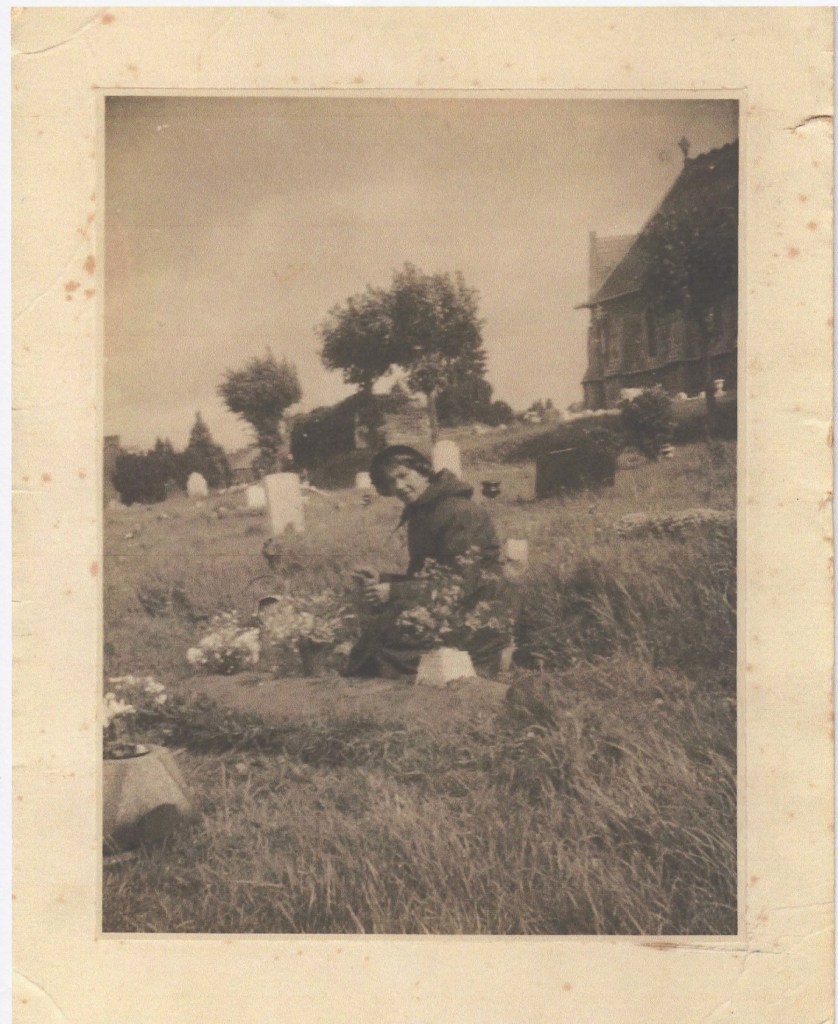
Florence Skerry pictured at her husband’s grave (with the urinals in the background).
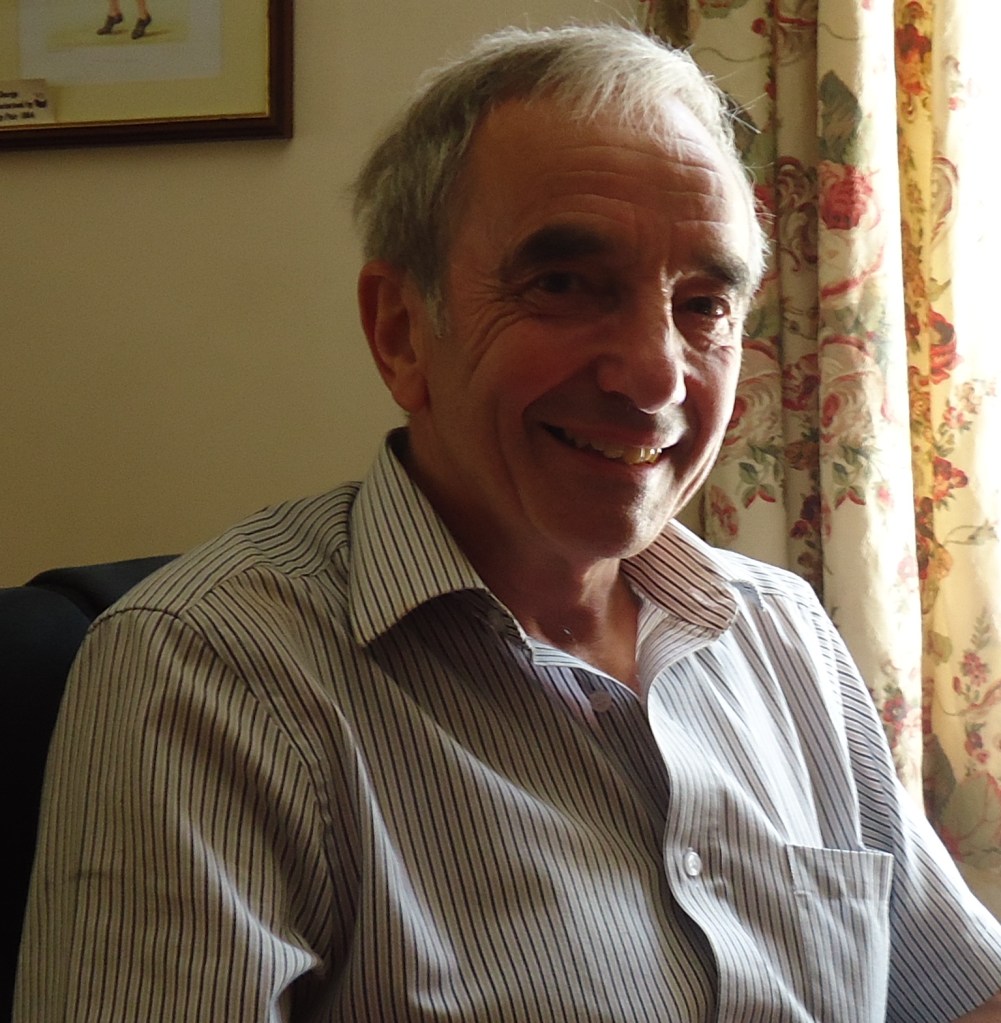
In the summer of 2013 I had the privilege of interviewing Bob Townsend at his home in Wroughton. I knew him as a member of the Swindon Society, but he had many more strings to his bow! Here is the article published in the Swindon Heritage Magazine in the 2013 Autumn edition.
On March 19, 1921, a crowd gathered at the County Ground to see history being made – but this time they weren’t there for the football.
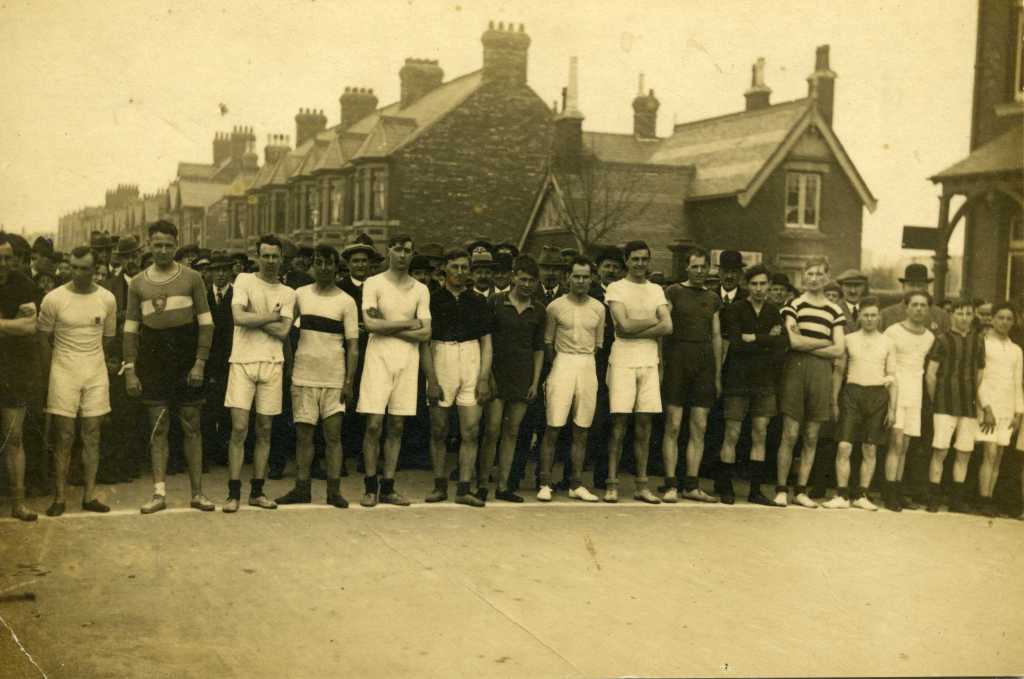
They had come to see the first road race organised by the newly founded Swindon Athletic Club, over three miles.
Swindon historian Bob Townsend’s father William, a 17-year-old novice, not only ran in that historic race, but won it.
And so began a long family association with the club that would last for more than 60 years.
“Some of the lads joked that it might as well have been called the Townsend Athletic Club,” said Bob, who joined the committee in his teens and was chairman for more than 20 years, following in his father’s footsteps as President.
Bob got the running bug when his father organised the Swindon School Championships, held at Ferndale Road School in the mid 1950s. “I was in my last year at school and dad asked if I fancied comming down and having a run,” said Bob, so he and his older brother John joined the Townsend training camp and were soon making headlines on the sports pages of the Evening Advertiser.
In May 1961, at the RAOC Depot Hawthorne, the Adver reported: “Leading all the way, and taking turns to set the pace, the brothers shook of Brooksby (Salisbury Athletic Club) at the halfway mark and increased their lead, eventually to lap two of the competitors.” Both achieved a personal best over three miles, with John finishing first and Bob close behind.
Bob has competed in events all over the country, running in cross country and road races of varying distances.
He set the Wiltshire record for the 3,000m senior steeplechase championship when the Wiltshire Athletic Association held the event at Marlborough College in the 1960s, and twice won the Wiltshire Cross Country Championship.
In 1965 he ran the course in 33.07 minutes, coming in 200 yards ahead of the rest of the field – just one of the many occasions when he “finished before anyone else did” as he modestly puts it.
Bob was selected three times for the British Rail Staff Association (BRSA) team to compete in the prestigious Railwaymen’s International Cross Country Championship. At Leipzig in 1962 the British team came second in both the men’s and women’s overall championship.
In 1981 the club celebrated its 60th anniversary with a jubilee run. Bob is picture wearing number 502 and one of the original 1921 vests.
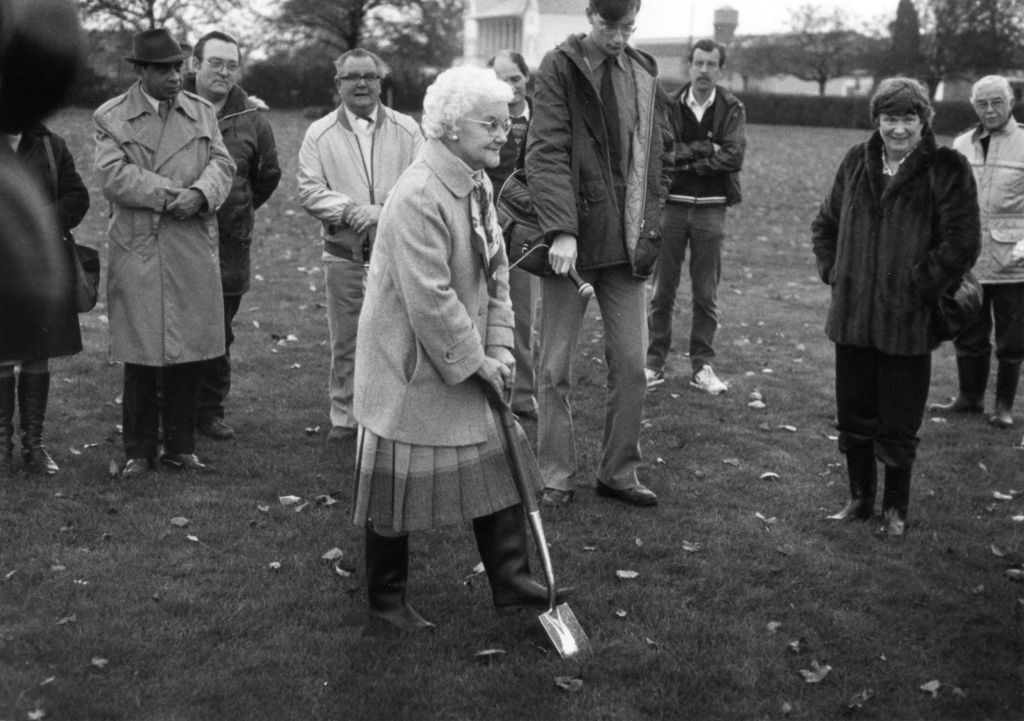
In the early days the club had no running track and their headquarters were on the County Ground car park, so when Swindon finally did get a track, in 1984, it was fitting that Bob’s mother Emily was asked to cut the ceremonial first sod.
Although Bob’s competitive running career began to tail off in the 1980s, his involvement with the sport continued.
He served on the Wiltshire Athletic Association, where he was secretary and team manager of the Cross Country Championships for 27 years. He did everything from finding a course to typing up the race schedule and ordering the medals.
Today he helps organise the Lions Disabled Games, hed every August at the County Ground track – a meeting that attracts teams from all over the country.
“It’s a wonderful afternoon,” he said.
The Swindon AC name has now gone, but the club lives on because it amalgamated with Swindon Road Runners in 1996 to become Swindon Harriers.
And, driven by the ‘marathon mania’ of the 1980s and no doubt the legacy of London 2012, athletics in Swindon goes from strength to strength.
Bob reflects on his early days with Swindon AC when the average entry for a County Champtionship numbered 40-50.
“My dad wouldn’t believe it today to see 500 entries in a Swindon half marathon,” he says.
The Townsend family are at the heart of Swindon athletics history, and although Bob is reluctant to talk about his own achievements, both on and off the track, he does recall when the story came full circle at Babbacombe in Devon in the 1960s.
“I won the mile handicap and an old man came out of the crowd waving his programme at me.
“‘I’ve been coming to his meeting for more than 30 years,’ he said, ‘and about 30 years ago another boke called Townsend from Swindon won this race.’
“That was my dad,” said Bob, proudly.
Bob died in August following a long battle with Alzheimer’s. His funeral took place yesterday at Immanual Church, Upham Road, Swindon where a large congregation of family and friends celebrated his life and said goodbye.
Swindon AC’s first race, in March 1921, with Bob Townsend’s father William, aged 17, second from the right.
Swindon wins South of the Thames Cross Country Championships, Sevenoaks, Kent 1961.
The British Rail Sports Association athletics team bound for Leipzig, East Germany, in 1962 – Bob is pictured seventh from the left.
The club’s 60th anniversary race in 1981. Bob is pictured wearing number 502 and one of the original 1921 vests.
Bob’s mother Emily cutting the first sod at the County Ground athletics track in 1984.
Stories still circulate that in the 19th and early 20th century babies who died within days of their birth were buried with unrelated adults awaiting a funeral, usually an elderly woman – a comfort to the bereaved mother. So far I have not found any examples in Radnor Street Cemetery, but then how would such an incident be discovered?
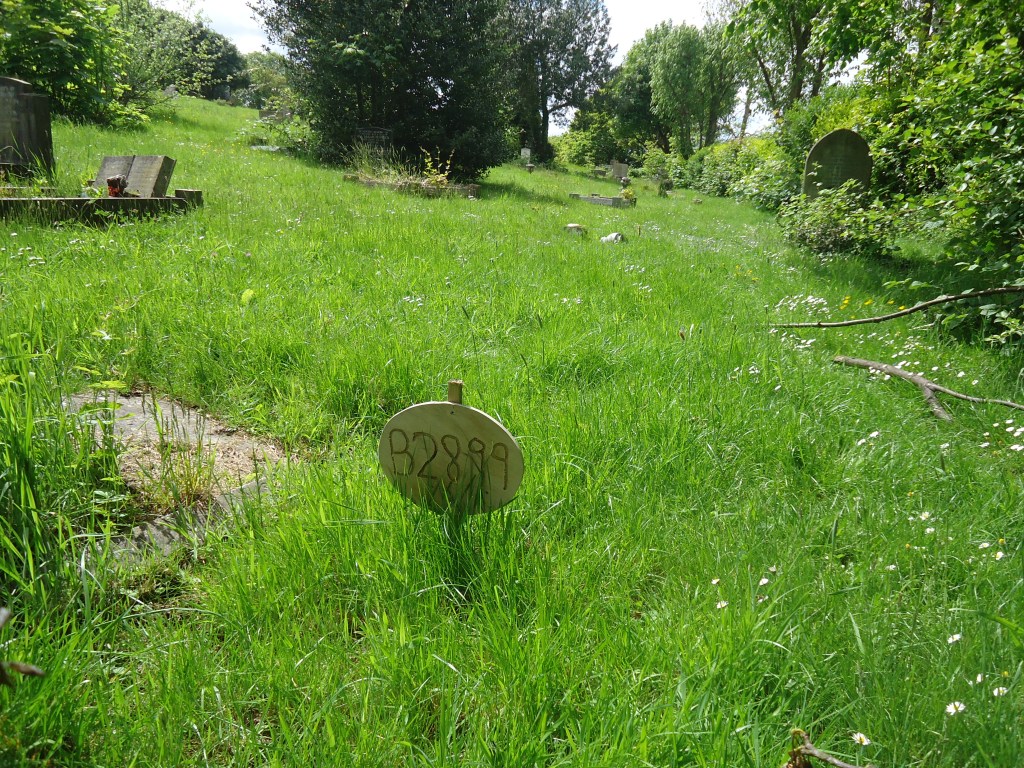
Mostly the babies were buried in large, communal plots. In section Lower B there are a number of these plots reserved for the burial of infants under a year old. Several babies lived for just five minutes. Some entries contain the barest details while others include the parents’ names; one sad entry records ‘male child found in Wilts & Berks Canal.’ Burials often took place daily, sometimes with more than one burial a day.
Here is a list of the names of those babies buried in grave plot B2899 between 1903-1905.
1903
7771 Margaretta Hobbs 10 days 23 Poulton Street 3rd March
7796 Ethel Blake 24 hours 39 Summers Street 25th March
7804 Edward John Gibbs 16 days 107 Salisbury Street 28th March
7811 Florence May Alder 13 days 6 Avening Street 1st April 1903
7812 George Jackson 5 min 14 Ripley Road 1st April
7814 Alfred George Gibbs 3 weeks 107 Salisbury Street 4th April (twin of Edward John Gibbs)
7830 child of John and Lily Selwood 13 days 50 Suffolk Street 16th April
7846 George Edmund Jackson 6 hours 28 Whiteman Street 24th April
7851 Turner (male) 1 hour 25 Vilett Street 28th April
7853 Edith Thesbe Ashton 1 month 22 Regent Place 29th April
7882 Albert Edward King 1 day 24 Byron Street 28th May
7855 David William Williams 14 days 14 Regent Place 6th June
7893 Ernest Speake 8 days 162 Westcott Place 11th June
7947 Frederick Hudd 1 hour 28 Avening Street 27th July
7961 Charles Blake 7 hours 64 Bridge Street 7th August
7971 Stanley (female) 10 minutes 65 Ponting Street 12th August
7975 Alice Irene Beard 17 hours 59 Eastcott Hill 18th August
7982 Gladys Eliza Smith 25 days 3 Gloucester Street 23th August
7986 Percival James Lawrence 12 days 2 Dowling Street 28th August
7991 Edward Ockwell 4 hours 10 Hythe Road 1st September
7996 Annie & Jessie Smith (twins) 1 day 41 Avening Street 10th September
8015 George Ricks 1 day 224 Ferndale Road 24th September
8016 John Baker 25 days 14 Whitehead Street 25th September
8017 Lily Barington 4 days 22 Rosebery Street 28th September
8022 Minnie Broadbear 22 hours 76 Crombey Street 2nd October
8048 Herbert George Mitchell 1 day 19 Dowling Street 25th October
8062 William Alfred Farrer 2 days 1 Holbrook Street 5th November
8068 William Thomas Payne 1 day 5 Carr Street 10th November
8070 Violet Harding 1 day 7 Morley Street 11th November
8074 Violet Law 21 days 122 Morrison Street 14th November
8081 Ethel May Payne 12 days 5 Carr Street 20th November (twin of William Thomas)
8089 Elizabeth May Peters 11 days 89 Medgbury Road 27th November
8095 George Morris 7 hours 95 Ponting Street 30th November
8097 James Rawlinson 25 days 3 Medgbury Place 1st December
8110 Dolly Rendell Illegitimate child of Charlotte Rendell 1 month 22 Swindon Road 9th December
8114 Albert Edward Ponting 16 days 26 Hinton Street 10th December
8135 Hall (male child) 13 hours 146 Beatrice Street 19th December
8138 John Chandler 2 days 9 Whitney Street 23rd December 1903
1904
8156 Elizabeth Chappell 12 days 6 Morris Cottages 1st January
8162 Charles Frederick Lander 15 days 6 Kitchener Street 5th January
8170 Stephen John Warren 3 weeks 12 Bradford Road 7th January
8181 Grace Wright 7 days 12 Granville Terrace 11th January
8189 William Arthur Franklin 1 month 155 Redcliffe Street 15th January
8196 Frederick James Webb 1 month 11 Bright Street 18th January
8197 Pope Francis Pope 21 hours 71 Curtis Street 19th January
8210 Fred Jefferies 1 day View Point House, North Street 28th January 1904
8216 Gladys Carter 13 days 4 Salisbury Street 30th January
8217 Alfred Edward Lord 27 days 46 Prospect Hill 30th January
8230 James Woolford 36 hours 134 Morrison Street 5th February 1904
8235 Speck (male) 10 months 13 Chester Street 8th February
8238 Mabel Boucher 1 month 25 Oriel Street 10th February
8247 Edith Beer 2 days 26 Prospect Place 19th February
8253 Bertie Green 3 days 101 Westcott Place 20th February
8262 (a) Albert Edward Button 1 month 14 Commercial Road 27th February
8263 Harold Edwards 5 days 69 Caulfield Road 29th February 1904
8264 Percival (male) 5 minutes 4 Bruce Street 29th February 1904
8271 Henry William Turner 5 days 7 Cambria Bridge Road 3rd March
8301 Elizabeth Ann Mayell 1 month 17 Florence Street 26th March 1904
8317 Lily Griffiths 2 days 18 Avening Street 11th April
8323 Sidney Alfred Leach 13 hours 25 Avening Street 19th April
8326 Stanley (male) 3 days 85 Dixon Street 19th April
8328 Gladys Kent 14 days 36 Cricklade Street 20th April
8330 Sarah Osborne minor 20 mins 20 Belgrave Street 22nd April
8353 Florence May Wright 1 month 23 Dean Street 7th May
8356 Charles Brown 6 hours 151 Morrison Street 13th May
8363 Emma Lecomte 12 hours 87 Eastcott Hill 18th May
8372 Elizabeth Ellen Adams 13 days 12 Exeter Street 24th May
8382 Harry Loxton 12 hours 1 Sonning Villa 30th May
8405 Hector Cecil Ashfield 2 days 34 Prospect Place 21st June
8409 Cox (Male) minor ¾ hour 151 Manchester Road 25th June
8415 Viscount Heath 2 weeks 2 Western Street 1st July
8423 Amelia Ann Hewer 14 days 118 Chapel Street 8th July
8436 Godfrey Smart 3 days 48 Albion Street 18th July
8467 Dobson (Female) 2 days 3 Stanier Street 11th August
8476 Ivy Price ½ hour 4 Argyle Street 17th August
8487 Leslie Gordon Ralph 7 days 58 Manchester Road 29th August
8511 Sandling (Female) 7 hours 201 Rodbourne Road 15th September
8536 (female) Leach 1½ 19 Cricklade Road 11th October
8545 Emily Florence Morris 3 days 49 Kingshill Road 18th October
8549 George John Spencer 1 month 50 Newport Street 19th October
8551 Edith Ellen Wait 1 day 128 Ferndale Road 19th October
8552 Leslie Slatter 18 hours 42 Goddard Avenue 19th October
8564 Nellie Fagan 7 hours 121 Beatrice Street 26th October
8572 Leonard Pitman 2 days 16 Kitchener Street 29th October
8591 Nellie Tarrant 4 hours 23 Jennings Street 5th November
8597 John Romans 3 days 18 Edmund Street 11th November
8602 (male) Dowse 5 min 70 Edinburgh Street 14th November
8632 Philip Arthur Nash 19 days 3 Sanford Street 28th November
8657 Albert Scutts 3 weeks 10 Albion Terrace 7th December
8660 Gladys Marcia Dowers 19 days 28 Hughes Street 7th December
These are difficult times for old cemeteries, long closed and with no dedicated caretaker and groundsmen. When interments take place only occasionally and few people attend their family graves, cemeteries today are quiet places.
Some complain about the lack of care and maintenance provided by local authorities whose budgets are sorely stretched. So, what is the answer for our cemeteries?
Highgate Cemetery in London has long led the way in cemetery conservation and guided cemetery walks. Opened in 1839 by a private company (as most Victorian cemeteries were) by the 1970s the cemetery was no longer a profitable concern and became neglected and vandalised. Today it is run by volunteers of the Friends of Highgate Cemetery Trust supported by some members of paid staff. Highgate remains a working cemetery although space for new burials is running out, which presents more problems.
Abney Park Cemetery in Stoke Newington is another of the ‘Magnificent Seven’ garden cemeteries of London. The cemetery was opened in 1840, again by a private company. In the 1970s the company went into administration and the cemetery was abandoned and fell into disrepair. Today it is thriving as a woodland memorial park and Local Nature Reserve maintained by the Abney Park Trust, a small volunteer led charity, and the London Borough of Hackney.
Our closed Victorian cemeteries pose a problem nationwide. In 1999 the Friends of Lister Lane Cemetery came to the rescue of the Halifax General Cemetery, again after a long period of neglect. This cemetery opened in 1841 and was designed according to the ethos of the period to be not only a burial ground but to provide a public space for walks and outdoor relaxation. The Friends group now cares for the cemetery with support from Calderdale Bereavement Services when funds permit.
Here in Radnor Street Cemetery we have a small team of volunteers who attend to not only the Commonwealth War Graves, but other graves where a fallen serviceman is remembered. Occasionally the Community Payback Team are allocated to the cemetery and always perform valuable work. Sadly, the local authority can only perform the most basic of maintenance and mowing now takes place just once a year.
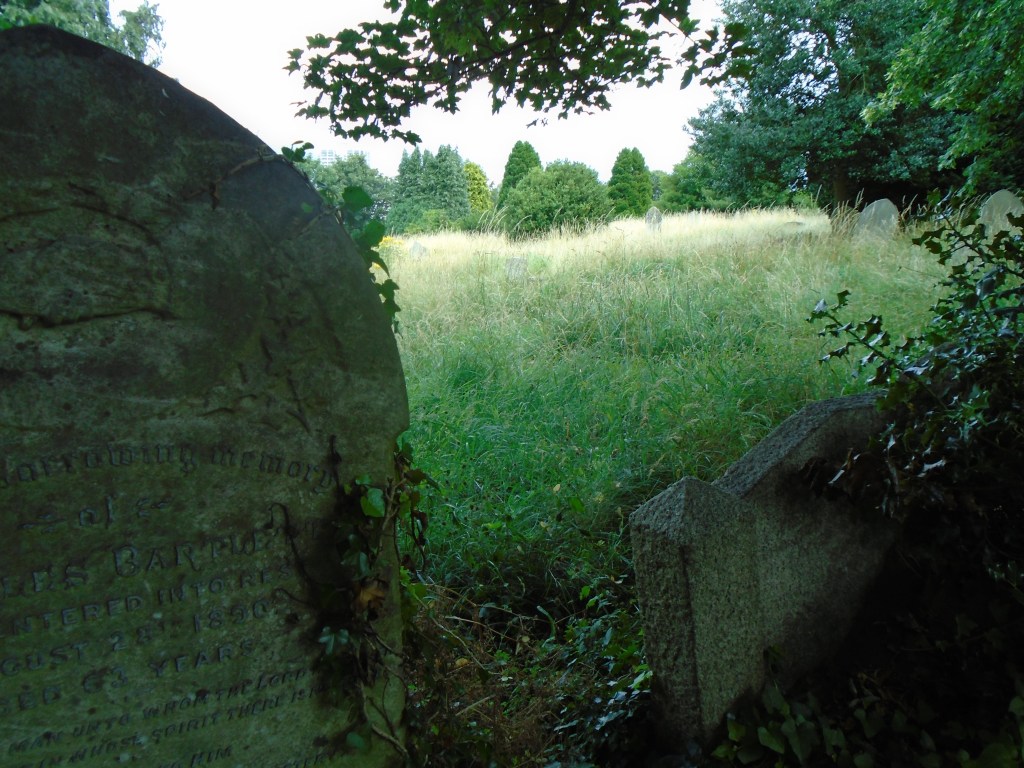
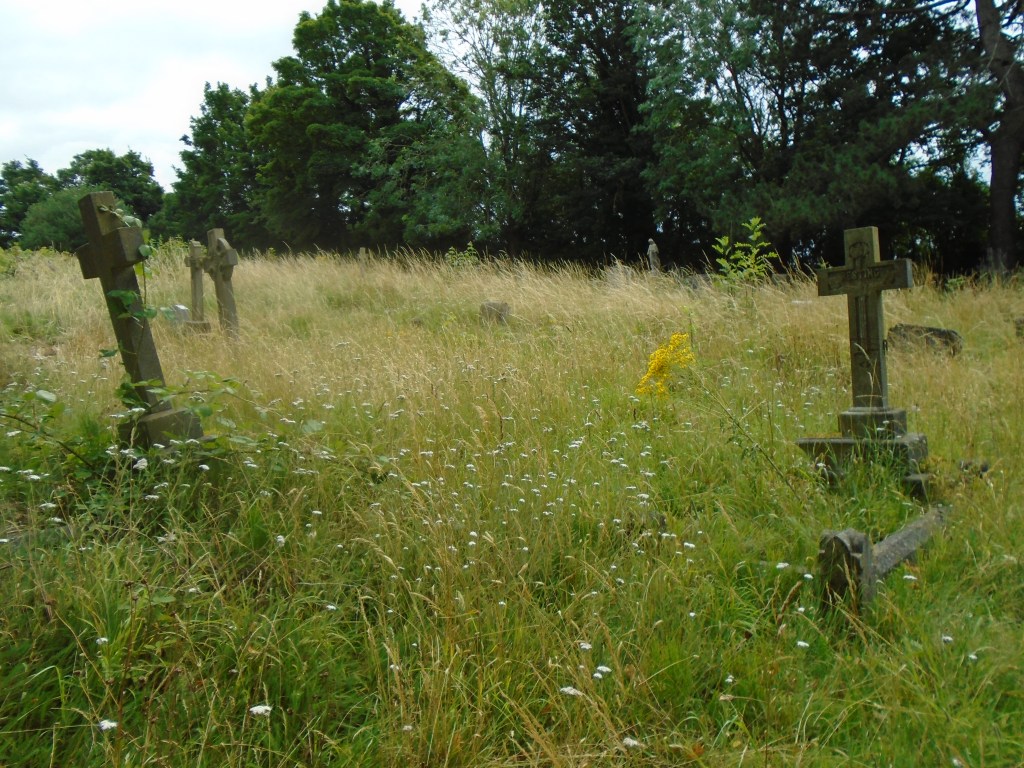
The summer of 2024 has served up a combination of heavy rain and long, hot sunny days. Today the cemetery is a vision of wild abandonment. A place of serene beauty and perfect for the proliferation of wildlife and biodiversity in this densley populated urban area. For the time being we must try to be patient and rest awhile, as the cemetery residents are so well practised at doing.
You may like to join us for a guided cemetery walk during the Heritage Open Days next month. Meet us at the cemetery chapel Sunday September 15 at 1.45 pm for a 2 pm start.
Sometimes a family leaves a very small footprint in this world and the Bentley family seems to be just such a one. But there is a lot to say about their stylish headstone full of symbolism. The fluted columns represent the entrance to heaven while the furled scroll indicates a life that had more to be lived. The bouquet of flowers express condolences and grief.
This is the last resting place of Pelham Bentley who is buried with his parents. It is likely their names are mentioned on the kerbstone edging.
William Charles Bentley married Sarah Wynn Malley at St. George’s Church, Wolverton in 1877. Like Swindon, Wolverton was established as a locomotive repair shop for a railway line under construction, situated at the midpoint of the London & Birmingham Railway in 1838.
William and Sarah both hailed from Lancashire, William from Bury and Sarah from Lancaster. In 1878 Sarah gave birth to twins, a boy Pelham and a girl Lily. By 1881 they had moved to Swindon where William worked as a Coach Trimmer and the family lived at 11 Harding Street.
By 1901 Pelham was lodging in North Manchester where he was was also working as a Coach Trimmer but by 1911 he was back in Swindon. Aged 32 he was living at 129 Broad Street with his parents and his sister Lily who was an Elementary School Teacher.
Lily married John Wells in Swindon during the December quarter of 1912 but at the moment I can find nothing more about him or them. William died in 1937 and by 1939 both Lily and her mother Sarah are widowed and living at 21 York Road.
The Bentley family were obviously a small, close knit family, the type of ordinary people who worked hard and contributed to the building of Swindon. They do not seem to have left us much to remember them by, except this rather beautiful headstone.
The Matthews family is another story I keep returning to although a recent attempt to track them all down has proved frustrating.
Maria Smith and Jesse Matthews married in 1867 and during 38 years of marriage produced 16 children, 13 of whom survived to adulthood.
Unfortunately, there is no key to this magnificent family portrait taken in around 1893, but it has been possible to identify some of the siblings by later photographs.
Ada Maria Matthews
Ethel Sarah Matthews
George Stephens Matthews
Walter W.J. Matthews
Edward Thomas Matthews
Emmeline Dorcas Matthews
Mary Catherine Bramble Matthews
Gertrude Amelia Matthews
Frances Josephine Matthews
Winifred Dorothy Matthews
All of the 10 sisters were apprenticed to trades and at least two became teachers. Eldest daughters Ada and Ethel both emigrated to Canada with possibly a third, Emmeline, joining them.
In 1901 daughter Jessie Ellen Matthews (born in 1876) worked alongside her brother Walter in a Stationer’s shop they ran together at 14 Victoria Street. In 1905, the year her father died in tragic circumstances, Jessie married Stephen William Filtness at the Wesley Chapel, Faringdon Road where the family worshipped. Sadly, Jessie was admitted to the Wiltshire County Lunatic Asylum in Devizes on June 10, 1911 where she died on August 9. She is buried in grave plot E7455 where she was later joined by her mother-in-law Mary Elizabeth Filtness who died in 1912; her husband Stephen William who died in 1931 and his sister Mary Sophia Boxall who died in 1932.
Jesse Matthews died in 1905 and Maria in 1940. They are buried in grave plot E7389 with their baby granddaughter Rosemary Gay who died aged 4 days old in 1929.
My research into the Matthews family continues. Many thanks go to Shelley Hughes who has provided so much information and so many photographs and to Prof John Gregory for his gift of Memories of Another Age – Frances Josephine Gay 1886-1974. Frances was a writer, teacher and founder member of the Richard Jefferies Society. Copies of this book are available in Local Studies, Swindon Central Library. Frances was Jesse and Maria’s second youngest daughter.
In the Summer 2016 edition of Swindon Heritage Noel Beauchamp told the story of the man who drove the GWR’s first train and was a personal friend of no fewer than three railway pioneers, and lived and died in the Railway Village. Here is an extract from that article – Colourful career of the man they couldn’t sack.
He was a personal friend of Sir Daniel Gooch, but there is no getting away from the fact that Jim Hurst was a difficult character.
Official GWR reports reveal a catalogue of arguments, rows, conflicts, accidents and even fights throughout the career of the man who became the company’s first driver.
His first accident occurred in 1836 while he was still working for the Liverpool & Manchester Railway.
Sacked, he was almost immediately hired by Daniel Gooch, then Locomotive Superintendent of the GWR – although when recounting the story to the company magazine, many years later, he gave an entirely different explanation of the circumstances.
He also told the GWR magazines that he had had “some very narrow escapes”, including in 1855 when the engine he was driving exploded and “I was blown up through the air and my mate was killed.”
The first blot on his GWR career came in 1840 when he was reported for driving his engine in a careless manner and colliding with the engine Wildfire, which was severely damaged, along with the tender of the engine he was driving.
The following year he was reported for refusing to work a train with a particular guard he had taken a dislike to: a policeman called Burton.
Jim was fined £2.
In 1842 he was accused of taking passengers for a joyride, and charging them for the privilege.
‘Sundry policemen’ reported him for the offence, one claiming Jim was “in the habit of taking people on the engine to and from Kemble and Cirencester, as many as three at a time … but stopped the engine about three-quarters of a mile from Cirencester and set them down.”
Not for the last time, his friend Gooch stepped in, and Jim was able to produce a leter from one of the ‘passengers’, denying that any payment was made.
So he was off the hook.
The same year he was involved in a serious accident at Kemble in which an engine called Meteor overturned, and the passenger train that Jim was driving ended up in a siding. He later claimed it was caused by a switchman.
In 1854 he was in trouble again.
This time he threatened to take a policeman into a nearby field for a fight and after the matter came before the GWR Board, they fined the hapless driver ten shillings (50p).
Two years later it looked like Jim’s employment with the GWR was over when the Board sacked him for fighting with a porter at Newnham.
However, Gooch had been away at the time, and 10 days after his friend’s sacking he intervened and Jim was reinstated.
At the hearing it was noted by one GWR man that “You can do nothing with Hurst. He follows Gooch’s order.”
Then, in 1858, Jim found himself fined another £3 for damaging a horse box after running past a danger signal at Farringdon Road, London.
Another bad year in Jim’s career was 1859, when he ran into two engines in two separate incidents.
First he hit the tender of Dart, a Firefly Class loco, for which he was fined 14s 3d (71p), then he wrecked the buffers of Alma, an Iron Duke Class engine.
This time he was ordered to pay the cost of repairs, which would have been carried out at Swindon and amounted to £3 6s 10d (£3.34).
Then, in August 1862, there was another incident, the details of which are not recorded. But it was serious enough for him to be removed, at last, from the footplate, and permanently transferred to Swindon Works. Even Gooch seemed unable to save Jim’s driving career this time, but he still had a job – and would eventually receive a generous pension.
Although drivers were often moved around the GWR, in Jim’s case it seems successive managers at Paddington, Taplow, the Forest of Dean, Cirencester, Totnes, Swansea and Leamington all found that if they couldn’t dismiss him, there was always the option of transferring him to another part of the vast network.
For the last 30 years of his life Jim was a Swindonian, living in the Railway Village and earning, through his pension, more than most of the general workers ‘inside.’
Time ran out for him in August 1892 when he died in his 81st year, and he was buried with his wife in Radnor Street Cemetery.
Strangely, considering he and his family would have been able to afford a memorial, the grave is unmarked, and was only recently rediscovered by the Swindon Heritage team. (Summer 2016).
The burial took place on August 15, 1892 of James Hurst, 80 years old, of 30 Taunton Street. He was buried in grave plot B1641.
How good are you at dating photographs? This one is thought to have been taken around 1920. I have been unable to discover any details about this photograph taken outside W.J. Knee’s shop in Emlyn Square. What clues are there in the fashions? The girl at the centre of the group is holding a photograph – is this someone who has recently died or someone who has left Swindon to work abroad? And finally, is this a gathering of the Knee family?
The following two stories may help us date this photograph.
Postcard reproduction
William James Knee was the eldest of Arthur and Eliza Knee’s large family of 10 children. William was born in Melksham but by the time of the 1891 census the family had moved to Medgbury Road, Swindon where Arthur was employed as a Rivetter in the Works.
William also entered the GWR and in 1911 he was working as a labourer in Newport, Monmouthshire where he was lodging with a relative by the name of John Knee. That same year he left Newport to return to Swindon where he subsequently opened a newsagents shop on the corner of London Street and Emlyn Square.
Death of Mr W.J. Knee -The death has taken place at the Old Manor House, Salisbury, of Mr William James Knee, son of Mr and Mrs Arthur Knee, of 78 Medgbury Road, Swindon. Mr Knee, who was in his 46th year, carried on business as a newsagent in Emlyn square for a number of years. He had a breakdown in health and went to Salisbury for treatment of an internal complaint. He was well known in Swindon and was popular with many GWR employees. A telegram announcing his death was received this morning.
North Wilts Herald Friday January 10, 1930.
William was buried on January 13, 1930 in grave plot D494. His mother Eliza died in 1937 and his father Arthur in 1940 and both were buried with him.
The second story is that of William’s younger brother Dennis Arthur Knee.
Dennis was born in 1895 after the family arrived in Swindon, and at the age of 16 he was working as a Rivetter Carrier in the Works. But like so many men of his generation, Dennis would leave the Works to serve in the First World War. Unfortunately, Dennis’s attestation papers do not survive but we do know that in 1917 he was serving as a gunner with the Royal Marine Artillery on board HMS Vanguard. Dennis died on July 9, 1917 when the Vanguard sunk following a series of internal explosions while on a routine patrol in Scapa Flow. He was 22 years old and one of 843 out of 845 men who died that night.
Acting Bombardier Dennis Knee is remembered on the Portsmouth Naval Memorial.
Please get in touch if you have any further information about this photograph and/or the Knee family.
It took local residents living in the Kingshill area a little while to get to grips with the rules and regulations concerning the new cemetery. And the ever vigilent caretaker Charles Brown was always keen to enforce them.
Joseph Deacon found himself in trouble with the Burial Board barely four months after the opening of the Swindon Cemetery after finding himself locked in the burial ground. But the full story may have been left untold.
Damaging the Cemetery Fence – Joseph Deacon, 36, carpenter, 6, Albion Street, was charged with committing wilful damage to the rails enclosing the Swindon Cemetery. Mr J.C. Townsend appeared to prosecute on behalf of the Burial Board. On Monday, the 5th inst. The defendant was in the cemetery and went to the Clifton street gates to leave. He was told by John Bastin, a man working there, that the gates were locked, and that he would have to go to the lodge entrance. The gate had been locked by order of the board. Defendant replied to Bastin that he should not go any further round, but should get over the rails. He was told not to do so, but he went up to near the mortuary, and climbed over the rails, scratching off the paint, and telling witness that he could go and tell Brown (the keeper) if he liked. The damage was estimated at 1s – Defendant said he did what he did in a passion. He never heard that the lodge gate was open or he should have gone out by it, that being his nearest road. He should like to know if a person could go through the cemetery? – The Chairman said certainly not; the cemetery was a sacred place and must not be trespassed on. If he was to send defendant to gaol for two months, or fine him £2 and costs, as he could do, every man in Swindon would know that it was a private place. – The defendant said he did not know this. – The Chairman fined defendant and costs, in all £1 8s.
Swindon Advertiser Monday December 19, 1881.
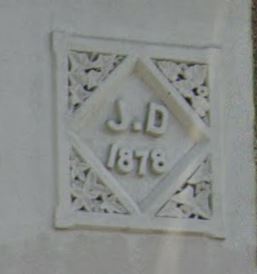
Plaque above No. 9 Albion Street
So how had Joseph come to find himself locked in the cemetery on Monday December 5, and why had he acted “in a passion” as he told prosector Mr J.C. Townsend.
Joseph Deacon married Eliza Wakefield in 1875 at the parish church in Dauntsey. Their daughter Sarah Jane was baptised at Christ Church, Swindon on July 25, 1877 and by the time of the 1881 census Joseph and Eliza with Sarah 3, Harry 2 and one month old William were living in Albion Street.
At the time of the 1891 census Joseph and Eliza’s family had increased with the birth of Julia, then aged 8 years old – but what had happened to little Harry, not mentioned on the census returns of that year.
On October 11, 1881, just weeks before Joseph’s cemetery crime, he had buried his 2 year old son in a pauper’s grave in the new cemetery. Could it be that Joseph was visiting the child’s grave that day when he discovered he had inadvertantly been locked in? Was this why he had acted “in a passion” still mourning the death of his little boy? We’ll never know, but it is worth a consideration.
Numbers 9 and 10 Albion Street
Eliza Deacon died in February 1917 aged 74 years and was buried in grave plot C3416 where Joseph joined her upon his death in 1925. Their daughter Julia was buried with her parents when she died in 1956.
















 Radnor Street Cemetery