I am a local historian and writer researching the history of Radnor Street Cemetery in Swindon. I have written three books - Struggle and Suffrage in Swindon: Women's Lives and the Fight for Equality published by Pen and Sword and The Ladies of Lydiard and West Swindon - What the eye doesn't see written in collaboration with Angela Atkinson and Roger Ogle both published by Hobnob Press.
Love is the sweetest thing
What else on earth could ever bring
Such happiness to ev’rything
As Love’s old story.
How wonderful it must be to find love twice in a lifetime. In my mind’s eye I can see mother’s sardonic expression. She didn’t believe in love, or luck – she’d never had much of either in her life, but I was the eternal romantic.
Mother and I would go into town every Friday. We’d do some shopping and then we’d have afternoon tea in McIlroys. We used to meet Mrs Sessford, as she was then, at the bus stop on Kingshill Road.
Mother and Mrs Sessford were about the same age, but you would never have guessed it. Mother was, how can I put this kindly? Well let’s say she wasn’t a bundle of laughs. Mrs Sessford, on the other hand, was joyful, yes, that is the correct word to describe her. She was joyful.
Love is the strangest thing
No song of birds upon the wing
Shall in our hearts more sweetly sing
Than Love’s old story.
Mother always complained about the weather; it was either too cold or too hot. But for Mrs Sessford, the sun always shone.
Mrs Sessford lived with her father at 155 Kingshill Road where he died on August 30, 1943. Within weeks Mrs Sessford married Henry Harold Musto.
Whatever heart may desire
Whatever life may send
This is the tale that never will tire.
This is the song without end.
“They must be almost 60,” Mother tutted. “There’s something fishy about it all, you mark my words. I bet he’s after her money.”
Mother thought it ridiculous. I thought it was rather lovely, and how lucky Mrs Sessford had been, to find love twice in her lifetime. Sadly, it passed me by completely.
Love is the strongest thing
The oldest yet, the latest thing
I only hope that fate may bring
Love’s story to you.
Love is the sweetest thing written by Ray Noble and performed by Al Bowlly 1932
The facts …
Edith Maud Steel was born on February 9, 1886, the eldest of Thomas and Letitia Steel’s three children. She grew up in Devonport where in 1908 she marred James Henry Sessford. Lieut Sessford died on September 15, 1927 at the Royal Naval Hospital in Chatham from Broncho Pneumonia and Cardiac Failure.
By 1939 Edith was living with her father Thomas, Chief E.R.A. Royal Navy (Retired) at 155 Kingshill Road. Thomas was 77 years old and Edith was 53.
Thomas died at his home on August 30, 1943. His funeral took place in Radnor Street Cemetery on September 2 where he was buried in plot C4911.
Edith married Henry Harold Musto in the December quarter of 1943. She died in St Margaret’s Hospital, Stratton St Margaret on June 3, 1951. Her funeral took place on June 7 when she was buried with her father. They are the only two interments in plot C4911.
Henry Harold Musto died in the December Quarter of 1971. His death was registered in the Plymouth district.
Henry Harold Musto was the only child of Joseph Henry Musto and his wife Margaret. He was a railway clerk in the Works and had grown up at 146 Clifton Street.
At the time of her marriage to Thomas Steel, Edith’s mother was living at 21 Regent Street; Letitia Fanny was one of William and Jane Musto’s five children, along with brother Joseph Henry.
Gran loved a good funeral. She especially liked the ones held at St Mark’s where Canon Ponsonby officiated as he had such a lovely voice, she said. But she wasn’t adverse to attending services at one of the many non conformist churches or chapels across town, or even the little cemetery chapel itself.
And afterwards she would come round to our house and over a cup of tea she would recount the events.
Mr Brittain’s funeral ranked as one of the best she had attended, she told us. The list of mourners read like a Who’s Who of Swindon railway royalty, she said.
As a child I accepted Gran’s funeral fascination as just one of the funny things old people did. Most things about the elderly were pretty incomprehensible to the young. It wasn’t until Gran died that I began to understand.
Gran had been born at a time when death was very much a part of life. Before she was ten years old she had lost her own mother and several siblings. Today we tend to think people must have become used to all that death and dying. One child died and the next one born received their name. Perhaps people didn’t invest so much love in their children then as we do now. Of course once I had my own family I realised what a ridiculous notion that was and I came to understand the loss Gran continued to mourn throughout her life.
Mr Brittain’s funeral was one of the best she’d ever seen, Gran told us.
The facts …
The Late Mr E.T. Brittain – We gave a brief account in our last Saturday’s issue of the sudden death of Mr E.T. Brittain of Wellington-street, New Swindon, the esteemed foreman of the R. Shop (Loco. Dept.) of the GWR Works.
Mr Brittain, who was 65 years of age, was well-known in New Swindon. For many years he occupied a seat on the Council of the Mechanics’ Institute, and for 17 years he was a director of the New Swindon Industrial Society, and during the last 12 years he ably filled the office of chairman. Deceased also took a great interest in political matters; he was a staunch Conservative, and at the time of his death was treasurer of the North Wilts Conservative Association.
His position in the GWR Works was unique, as he was the oldest foreman in the Works. He commenced as assistant foreman in the R. Shop, the principal fitting and machine shop, under the late Mr James Haydon. Upon that gentleman being appointed as Assistant Works Manager, Mr Brittain continued in the same capacity under Mr E.J. Davies. When some 20 years ago, Mr Davies obtained the appointment of the managership of the Engine Department of Messrs Ransomes, Sims and Jefferies, Limited, Ipswich, Mr Brittain was appointed to the chief foremanship, a position which he held and worthily filled to the day of his death.
We understand that for many years nearly all the fitter, turner and erector apprentices received their early training under Mr Brittains’s management and we are sure that his lamented death will come as a great shock to engineers who have been trained under him, and who are to be found at most centres in the world where engineers are employed.
The funeral of deceased took place on Monday last, and was the occasion of a striking demonstration of respect on the part of the officials and workmen of the GWR and the various bodies with which deceased was connected, as well as the general public.
The funeral cortege left deceased’s late residence in Wellington-street at half-past four, and proceeded to St Mark’s Church, where the first portion of the service was conducted by the Vicar, the Hon. and Rev. Canon Ponsonby, who also read the concluding service at the graveside in the Cemetery.
There were five mourning carriages, and the chief mourners included deceased’s three sons and brother-in-law. Deceased being an old Volunteer, eight members of the New Swindon Companies attended as bearers. Nearly 400 persons followed the remains from the church to the graveside, and the route was lined with spectators, besides which a vast crowd assembled in the Cemetery. Some idea of the extent of the procession may be gathered when we state that it extended from the Cemetery entrance throughout the whole length of Radnor-street.
The coffin was covered with an immense number of beautiful wreaths and crosses and other floral offerings. Amongst the mourners, besides deceased’s relatives, we noticed Mr. D.E. Marsh (Loco. Dept.), Mr J. Fordyce Stevenson (district engineer), Mr F.C. Kent (district estate agent), Mr Webb (representing Mr Carlton), Messrs. T.B. Watson, A. Adams, W.H. Ludgate, E.L. Pugh, Theo Wright, R.B. Pattison, W. Mole, W. Hunt, T. Veness, W.H. Lawson, J. Ireland, T. Stone, T. Money, H. Green, G.M. Butterworth, R. Baker, A. Nash, W. Booth, W. Harvie, R. Affleck, H.J. Southwell, F. Tegg, W. Sewell, D. White, J.D.R. Phillips, T. Spencer, H. Morris, R. Chirgwin, H. Wright, L. Dyer, H. Andrews, J. Christelow, E.Y. Westlake, E. Harvie, R. Hogarth, W. Morrison, R.N. Sutcliffe, E. Burns, W. Clark, J.S. Protheroe, W.J. Greenwood, C. Fox, T.C. Morgan etc. etc. The funeral arrangements were satisfactorily carried out by Mr H. Smith. Mrs Brittain and family desire to thank the many kind friends for the expressions of condolence and sympathy in their recent bereavement.
The Swindon Advertiser, Saturday, July 6, 1895.
Edwin Thomas Brittain pictured centre – published courtesy of Rosa Matheson – Railway Voices ‘Inside’ Swindon Works
Edwin Thomas Brittain was born in the parish of St Pancras on November 21, 1829, the eldest son of Henry James Brittain, an undertaker, and his wife Charlotte.
He married Louisa Elizabeth Hooker at Trinity Church, St Marylebone on January 11, 1852 and the couple soon moved to Wolverton in Buckinghamshire where Edwin was employed at the London & North Western engine works. Their son Thomas is born in Wolverton but by 1853 the family have moved to Swindon.
Edwin Thomas Brittain entered the GWR Service on July 26, 1853 working as a Fitter in the Loco factory. He was made Assistant Foreman on October 7,1865 and Foreman on January 12, 1867.
At the time of the 1861 census he was living at No 6 King Street with Louisa and their five children. The couple had nine children in total, moving to Wellington Street where they lived at No 18 and No. 39 at various times over the next twenty year period.
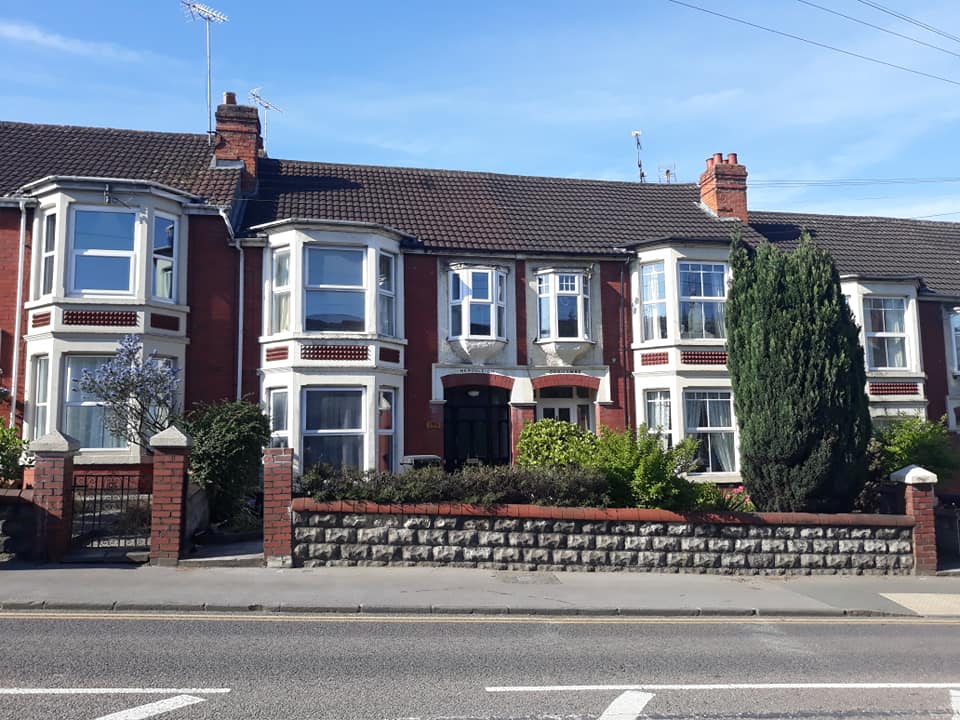
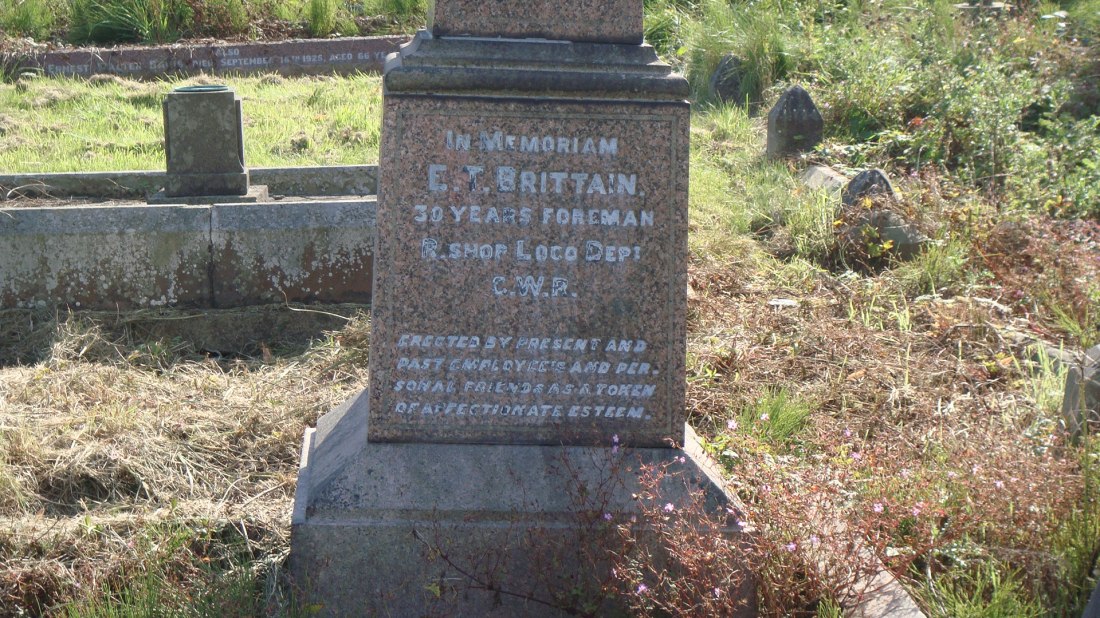
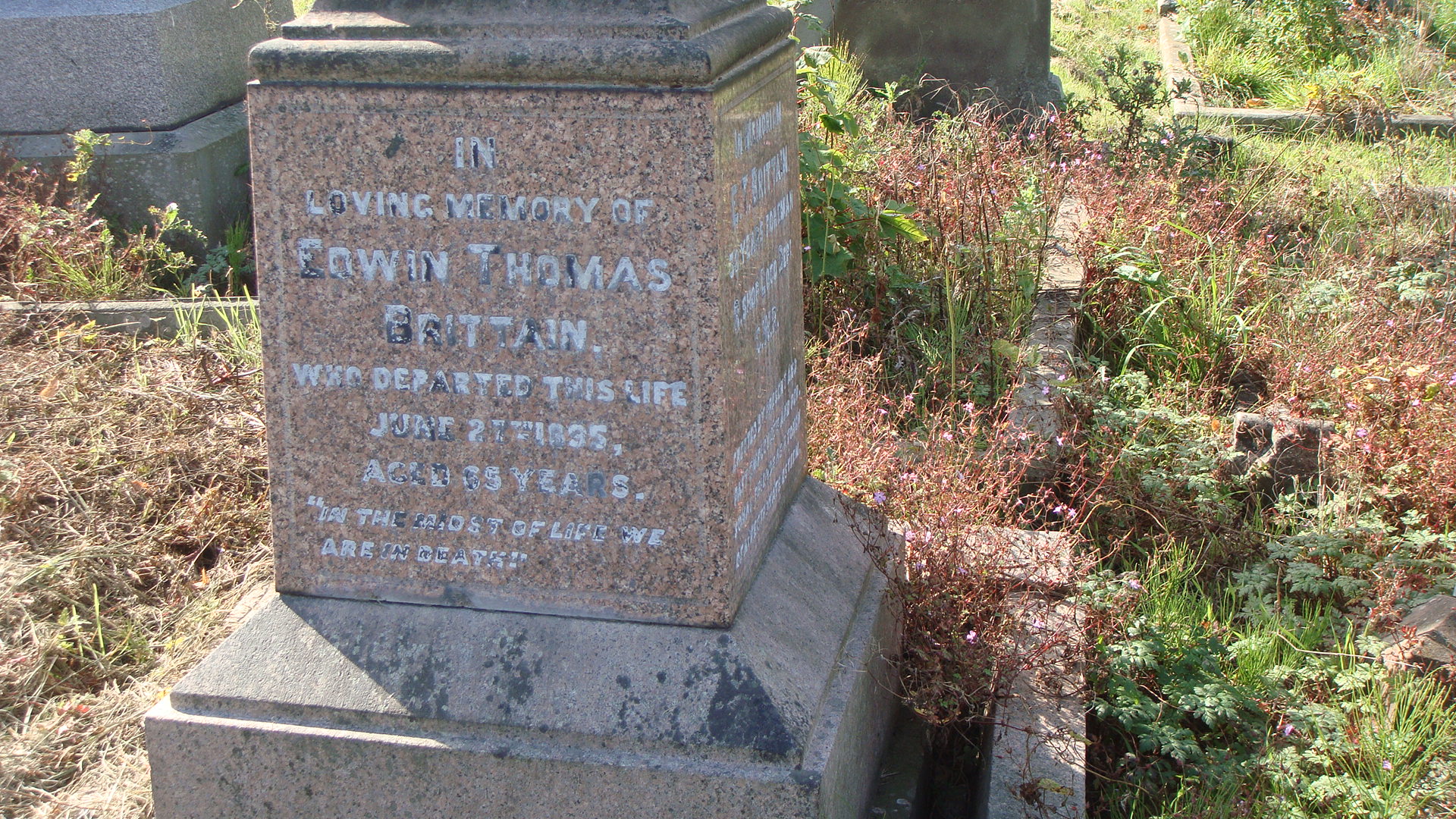
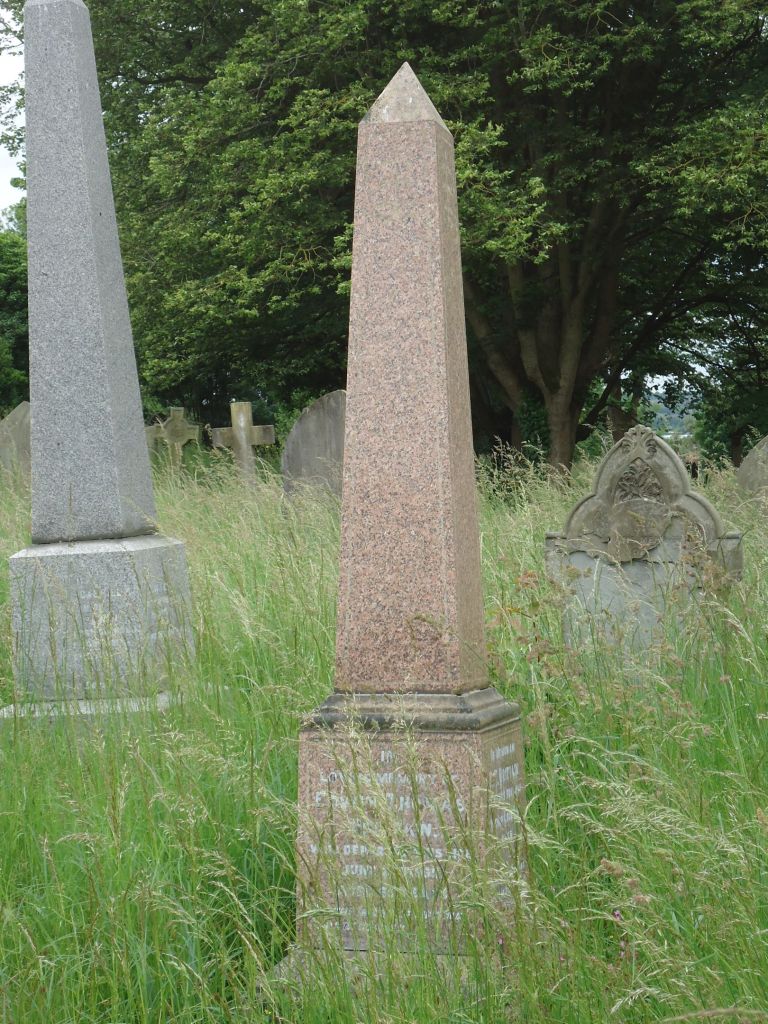
Edwin died at his home at 39 Wellington Street on June 27, 1895. He left effects to the value of £181 5s 2d. Louisa survived him by eighteen years and is buried here with him.
My mother wasn’t an emotional type of woman, but when John and Hannah Bates moved away she was inconsolable. I don’t think I’d ever seen her cry before, so it came as quite a shock.
The Bates boys Bill and Tom had already gone and with the selfishness of youth all I could think was how lucky they were to escape. There was nothing in Snap anymore, but to be honest the village probably never had a thriving social life; not like Swindon where there were theatres and clubs and pubs.
But what there had been in Snap was a sense of community, and now even that had gone. I think that’s probably what upset mother as much as the departure of John and Hannah Bates. The families she had lived alongside had all left – the babies born at the same time she had hers, the children raised, the hardships shared, the good times celebrated, all in the past.
I hoped we might follow the Bates family but my parents were loathe to leave. We stuck it out a while longer, but things were never going to improve. There would be no new jobs, no one moving into the empty cottages; no one even came back to visit those of us still here.
I never made it to the bright lights of Swindon. My parents moved up the road to Aldbourne, and now I find, like mother, I don’t like change much either.
The facts …
The first recorded mention of Snap, or Snape as it was sometimes called, is in a medieval document dated 1268. In the 14th century Snap was the smallest settlement in the parish of Aldbourne and one of the poorest in Wiltshire.
During the last decades of the 18th century the village consisted of five cottages built on the southern side of the valley and by 1851 there were just 41 inhabitants. For more than one hundred years Snap village was the home of the Bates family.
Three generations of the Bates family made their home in Snap. They worshipped at the Wesleyan Methodist Chapel at Woodsend where John Bates was a trustee, and worked as agricultural labourers on the two farms that supported the village.
In 1861 John Waldron owned Snap Farm where he employed 8 men, 7 boys and a groom on his 411 acre holding. Thomas Bates was employed as a carter, living in one of the larger properties in the village which had an extension to accommodate the cart and stable the horses. His son Joseph boarded at Snap Farm where he worked as under carter. Thomas’ father Joseph lived in the village and at the age of 76 he was still working as an agricultural labourer.
The difficult years 1871-1880 saw the onset of an agricultural depression. A series of cold, wet summers resulted in a succession of poor harvests and the residents of Snap began to move away.
At the time of the 1881 census there were just seven occupied cottages and a property described as a hut where the young shepherd William Marten lived.
John Bates lived at Snap Cottage with his wife Hannah and their three youngest children, William 14, Emily 10 and Thomas 7. For William, already working as an agricultural labourer, and his younger brother Thomas, there was no future for them in Snap.
William moved to Swindon where there were jobs aplenty in the railway factory. He married Ada Florence Gerrard at St Mark’s Church on September 30, 1893 and at the time of the 1901 census the couple and their three young children Dorothy 6; Hubert 4 and 8 month old Frances, were living at 13 Curtis Street. William’s brother Thomas was boarding with them and the brothers both worked as Machinemen in the GWR Works.
Back home in Snap a series of events would sound the death knell for the village. William’s parents had already left the cottage that had been their home for more than thirty years and moved to East Garston near Lambourn. Then in 1905 Henry Wilson, a butcher and sheep dealer from Ramsbury, bought both Snap and Leigh Farms. He quickly turned the land to grass and shipped in a more profitable crop – sheep.
Snap was all but deserted with just two remaining residents, James and Rachel Fisher. Following the death of her husband, Rachel was persuaded to move into Aldbourne, which she found too quiet, missing the birdsong and the barking of foxes in her cottage garden at Snap.
Following the outbreak of war in 1914 the village was used by the War Office for military training. The cottages fell into ruin, the stones robbed for new building in neighbouring Woodsend during the 1940s.
William Bates died on September 26, 1925 at his home in Curtis Street. His funeral at Radnor Street Cemetery took place on September 30th when he was buried in plot D907 where he was later joined by his son Hubert who died in 1932 and [Ada] Florence, his wife, who died in 1943.
Above photograph pictures theruins of Snap farmhouse in the 1930s.
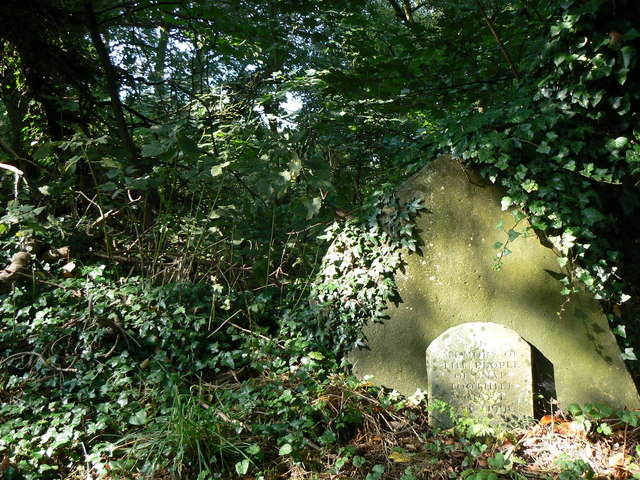
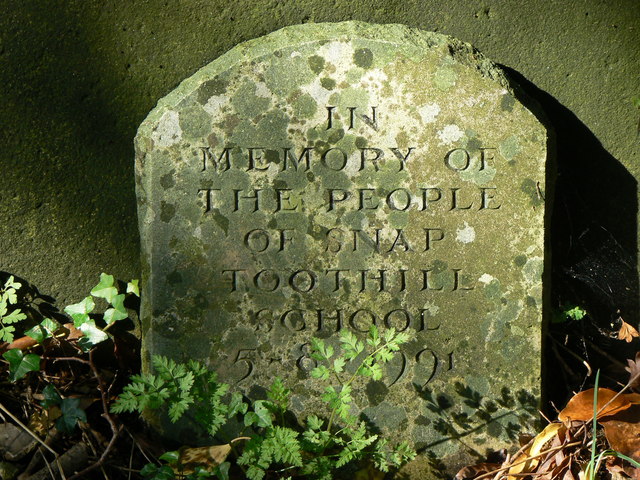
In 1991 the pupils of Toothill School, Swindon placed a stone in memory of the people of Snap. Photograph is published courtesy of Brian Robert Marshall.
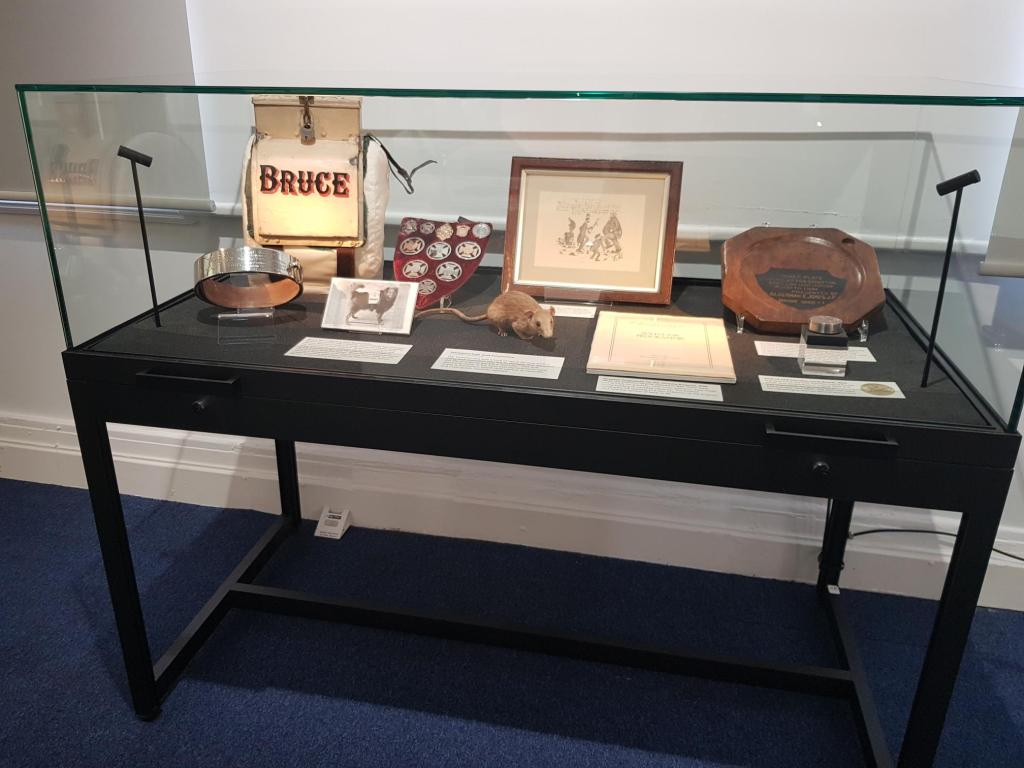
Such a novelty is it to have our museum back in Swindon that I’ve already visited twice.
The Swindon Museum and Art Gallery at Apsley House closed with the advent of Covid in 2020 and never re-opened. Apparently there was (and possibly still is) a plan in the pipeline to build an all singing, all dancing building in Swindon’s ‘Cultural Quarter.’ But it was a very long pipeline; a ten year long pipeline.
But, to cut a long story short, we now have a new museum on the first floor of the Civic Offices in Euclid Street, and what a cracker it is!
And, of course, I went round with my notebook collecting names of those people who might be buried in Radnor Street Cemetery. I already knew that Charles Herbert Henry Gore, the first curator in post in 1928 was buried in grave plot B3248.
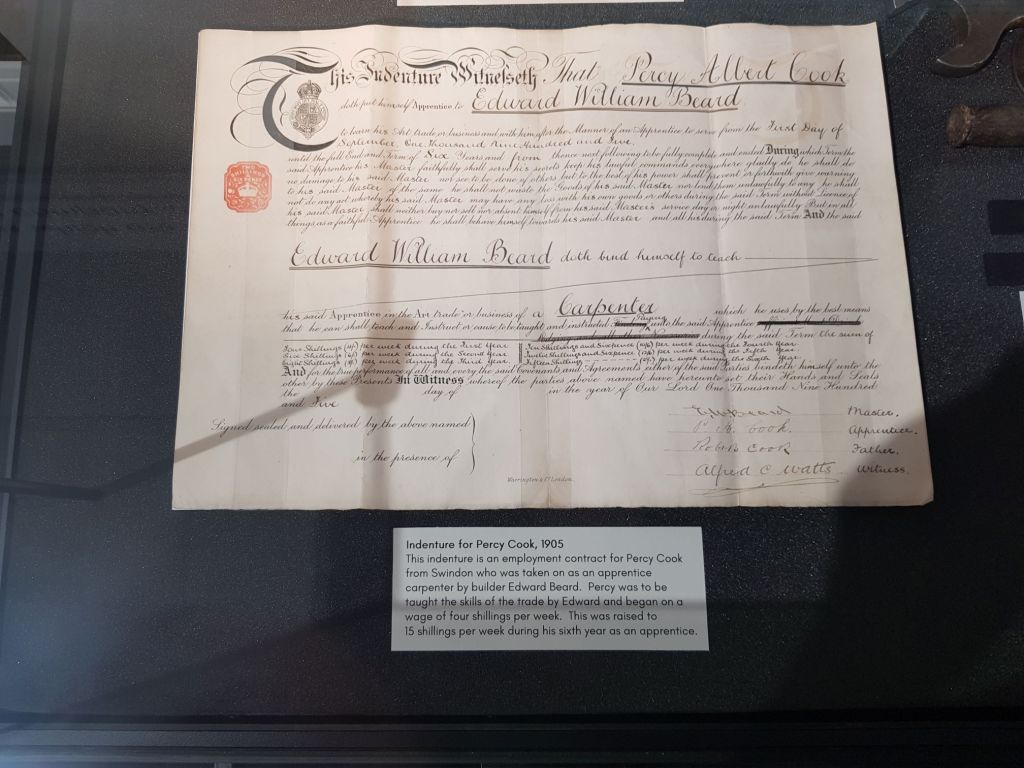
Then I came across an indenture between *Edward William Beard, builder, and 14 year old Percy Albert Cook.
Born in Fareham, Hampshire in 1891, Percy was the son of Robert Bray Cook (whose signature is on the bottom of the document) and Elizabeth Mary Cook nee Cable. The family first appear in Swindon on the 1901 census when they lived at 114 Commercial Road. Young Percy successively completed his apprenticeship and in 1920 he married Gertrude Hawkins. In 1939 the couple and their two sons were living at 13 Commercial Road where Percy describes his occupation as ‘Carpenter, Decorator and Jobbing Builder (Master).’
Gertrude died in 1963 and Percy in 1976 but unfortunately neither of them are buried in Radnor Street Cemetery.
Percy’s father Robert had worked at a variety of jobs. Perhaps this is why he wanted Percy to have a trade and a secure future. By 1911 the family were living at 13 Commercial Road, the property where Percy was living in 1939.
Robert died that same year. He is buried in an unmarked public grave, plot B2332 which he shares with his son Barlett Alfred Cable Cook who died aged 24 in 1909.
* The firm founded by Edward William Beard is still in operation and is presently working on the Health Hydro building in Milton Road.
We always bought our shoes and boots from Mr Chappell’s shop in Bridge Street. I say ‘always’ as if it were a weekly event. Buying shoes and boots in our family was a big occasion and only done after much forethought and deliberation.
Father patched up our footwear until it was beyond repair and the new purchase was only embarked upon at the moment of absolute need, never on a whim or a fancy.
My sister always chose a dainty pair of shoes with buckles and bows. Of course these were never the ones she ended up with. I was just happy to have a pair of boots that kept my feet dry and didn’t scrunch up my toes.
My sister told me that Mr Chappell was born in America; New York, she said, but I knew that couldn’t be true. He didn’t look American and he certainly didn’t sound American. And why on earth would you leave New York and move to Swindon?
She also said he was a Minister of the Gospel and I didn’t believe that either. Why would he sell boots and shoes if he was a man of God?
Girls have some funny notions.
The facts …
This is the final resting place of Samuel Chappell, master shoemaker, boot and leather seller and as inscribed on the headstone, 40 years a Minister of the Gospel.
Samuel was the eldest son of Eli and Ann Chappell. His father was born in Castle Combe where he worked for many years as a tailor.
Samuel, however, was born in New York in 1847. By the time of the 1851 census the Chappell family were back in Wiltshire and living in Hullavington where Eli was working as a Master Tailor. Living with him were his wife Ann, 8 year old daughter Ann who was born in Castle Combe, obviously before the family’s big American adventure, and a baby son John, born in Hullavington on their return.
Samuel appears to have been raised in Castle Combe by his aunt and uncle, Susanna and William Chappell. William was a master shoemaker and in 1861 Samuel was working ashis apprentice.
The 1871 census has two entries for Samuel, one living in Stratton St Margaret with his parents and two brothers. The other entry shows him lodging with the Keylock family at 5 Albert Street in Old Swindon.
Samuel opened his own boot and leather shop at 26 Bridge Street in 1872. In 1874 he married Sarah Ann Sainsbury. On the 1911 census Samuel and Sarah Ann are living at 68 Eastcott Hill and state that they had six children, four of whom were still living.
This photograph shows Samuel and his eldest son William outside the shop in the early 1900s. According to a family member who kindly sent me this photograph, the shop remained open until the 1950s.
Samuel died at his home in Eastcott Hill and was buried in plot A2560 in Radnor Street Cemetery on January 19, 1926. He shares the grave with his wife Sarah who died in 1916 and their youngest son Samuel, who died aged 24 in 1909 following a leg injury sustained whilst playing football.
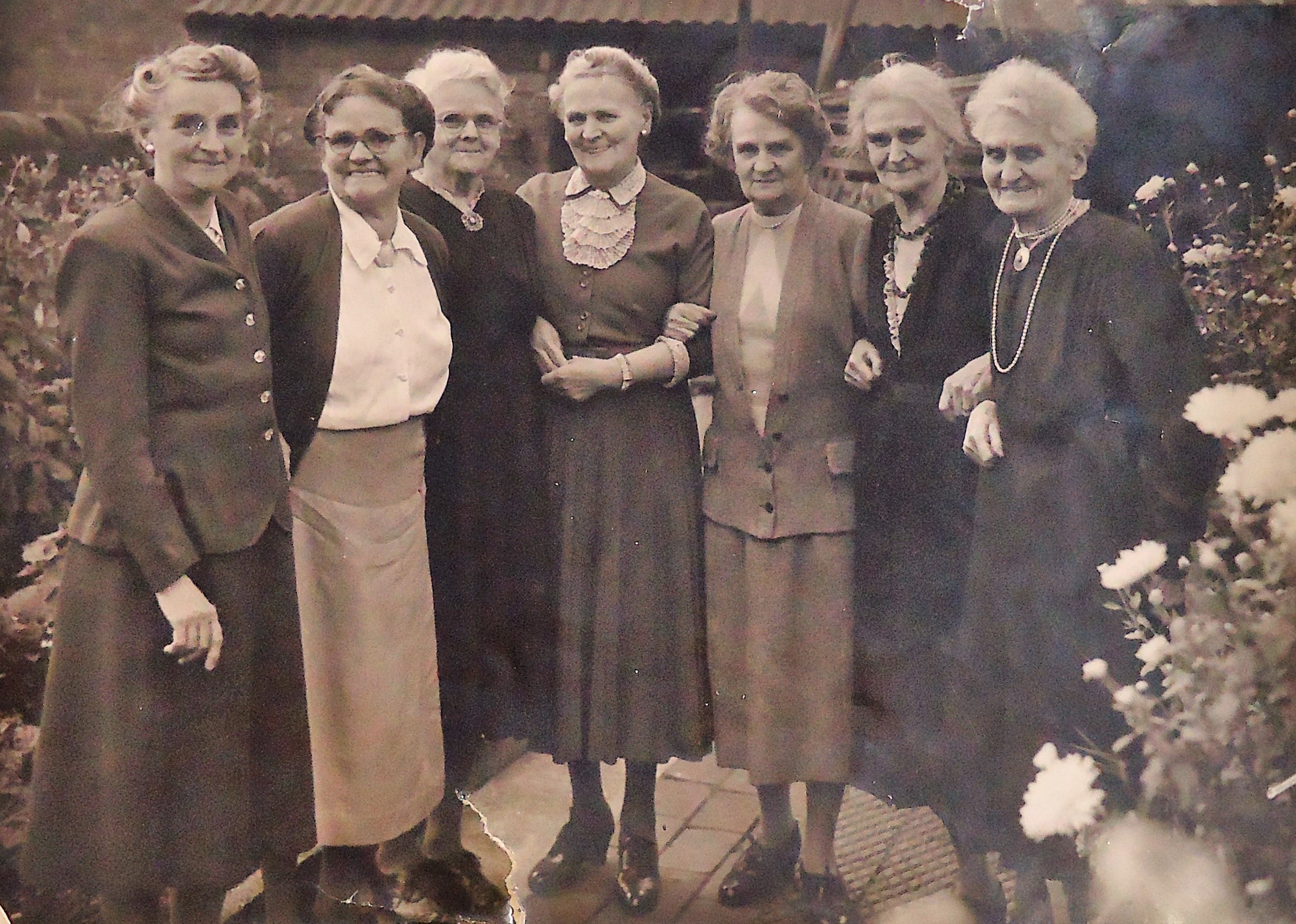
I was shown into the neat front parlour at 131 Faringdon Road where the ladies were enjoying a celebratory tea party. A trill of voices punctuated by laughter and cries of “Do you remember when …” greeted me.
The occasion was the return to Swindon of eldest sister Louisa after more than 50 years of living in Bournemouth. Today the seven sisters were enjoying tea together and had invited the Evening Advertiser to join them.
This was just the kind of human-interest story my editor liked and I had been sent to take the ladies’ photograph.
“Do you know young man we have a combined age of 517 years?”
“Oh Min, you’re exaggerating.”
“No, she’s quite right. If Louisa is 85 next month that would make Maud … “ Mabel proceeded to quote everyone’s age.
“My goodness Mabel, you’re not reckoning up in the Post Office now.”
“Where do you want us to pose, young man?” asked Ethel with a twinkle in her eye, obviously the cheekiest of the seven sisters.
The parlour was rather dark and I had caught a glimpse through the window of the pretty little back garden.
“Shall we move out into the garden?” I suggested.
“That would be perfect, let me grab my cardigan,” said Ethel.
“I hope my hair won’t be spoilt,” Eva tucked the hair grips more securely into her coiffure.
Standing at the bottom of the garden there was more chattering and giggles.
“Tallest in the middle,” former teacher Flora organised her sisters.
“Surely as the eldest Louisa should be in the middle? Would you like a chair darling? I’ll get you one from the dining room.”
I decided it was time to assert some order.
“Ladies, why don’t we form a semi-circle with the eldest at one end, down to the youngest at the other end?”
“You are a clever young man,” said Flora. “What a perfect idea. Right, Louisa you stand there, then we’ll have Maud and Mabel next. Stand next to me Min, there and Ethel and Eva on the end.”
“Lovely. Ladies, are we ready then?”
“Mummy and daddy would just love this. All of us back together again.”
The women linked arms and just as I clicked the shutter on the camera Min said something to make her sisters laugh. Ethel peeped out of place and Louisa closed her eyes.
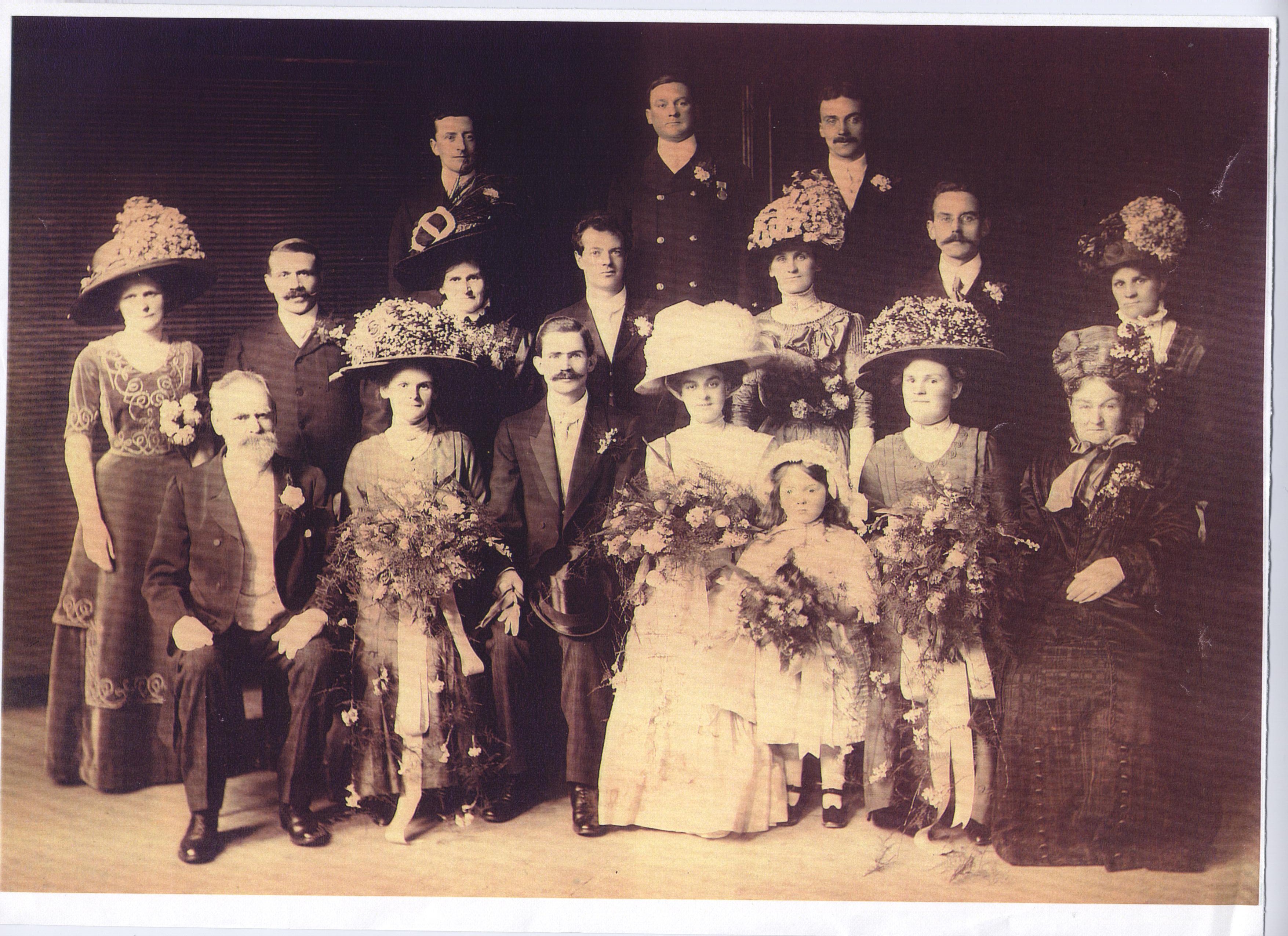
Youngest sister Eva’s wedding to George Babington in 1911. Photograph courtesy of the Alley family.
You can read more about the amazing Alley sisters in my book Struggle and Suffrage in Swindon available from Amazon
The facts …
By 1881 George Richman Alley and his wife Emma had moved to Swindon. George worked as a body maker and later a wheelwright’s foreman in the GWR Works. The couple lived first at 3 Carfax Street and then at 8 Merton Street where George died in 1925. Emma survived him by seven years. The couple are buried together in a grave in Radnor Street Cemetery, close to the Chapel.
As ever my thanks go to Wendy Burrows, Kay Prosser, Di Edelman and Christine Price.
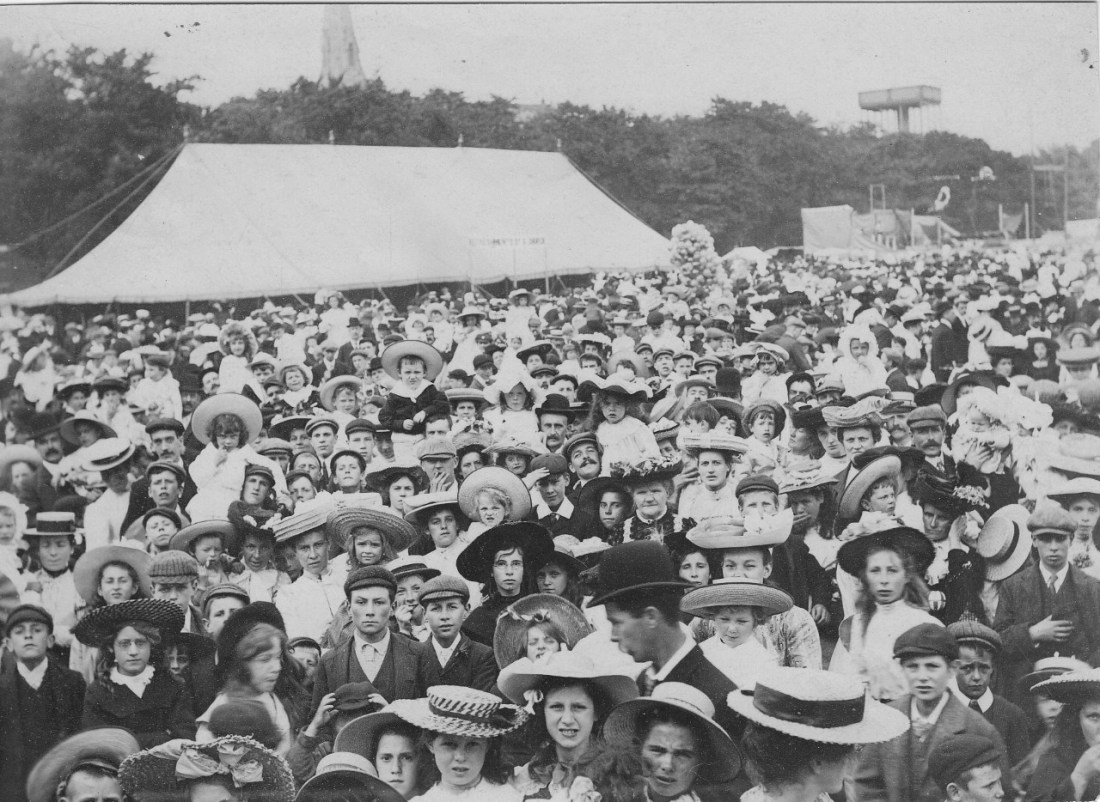
There are two highlights in the Swindon calendar for the children – Trip, when the Works shut down for the annual holiday and we go to the seaside, and the Children’s Fete, and I can never sleep the night before either of them.
Preparations for the Children’s Fete begins well in advance and I have first-hand knowledge of this as my father is on the Mechanics’ Institute Council and our whole family is involved.
The fete takes place in the GWR Park, the gates open at half past one. Tickets cost 3d for adults and 2d for children. The children receive two free rides on the steam roundabouts, a drink of either tea or oatmeal water and a piece of cake.
For weeks beforehand we save every penny, ha’penny and farthing we can; never have so many errands been run, so many jobs done about the home.
The familiar GWR Park becomes kaleidoscopic with rides and stalls and fairy lamps festooned around the Cricket Pavilion and the bandstand. Entertainments on the central stage take place throughout the afternoon; comedy acrobats and trapeze artistes and trick cyclists and one year there was even a troop of performing dogs. Mr Harvie is the chairman of the fete committee and director of amusements but this isn’t what he became best remembered for.
The event runs like a well-oiled machine, which is hardly surprising as it is organised by some of the most well qualified and experienced engineers in the railway works. And perhaps the greatest feat of organisation is the cake.
The quantity of cake required was enormous, amounting to no less than 2 tons 13 cwts. The job of baking it went to Mr E.P. Monk of Old Swindon who produces annually approximately 1,200 cakes weighing 5lbs each. Next comes the task of cutting the cakes into half pound slices, a job which had previously fallen to a handful of volunteers. It used to take 12 people approximately six hours to cut up and bag the cake. And then Mr Harvie invented the Multiple Cake Cutting Machine.
At this year’s event Mr Harvie’s new improved machine will be used for the first time. The machine, a dangerous looking contraption, is composed of crossed knives, balanced on spiral springs, which hover above each cake. The average speed of this new machine being no less than 6 cakes, or 60 half pounds per minute. The cakes are fed into the machine on 12 wooden trays by an endless band on rollers worked by the handle at the end of the machine, and here Mr Harvie has introduced another novelty in the shape of an electric bell, which is so adjusted that when the tray reaches the exact centre of the knife it strikes two levers and forms an electric communication with the bell, which commences ringing, and continues to do so until the cake is cut. The tray then passes on with the cake to make room for the next. When the tray on which the cake is cut reaches the end of the machine, it runs on an inclined board which carries it to the packers.
So exciting is the whole process that I think it should form part of the entertainments on the fete stage. Perhaps I’ll suggest that to Mr Harvie for next year.
My fete dress hangs on the back of the bedroom door. My hat, decorated with ribbons and flowers, sits on the dresser. I open the curtains a crack, it is not quite dark yet. Early tomorrow morning my father will join the others assembling the stage. I squeeze my eyes tightly shut. I must go to sleep, I must go to sleep.
The facts …
William Harvie was born in Islington, London in c1849. He began his career as a coach trimmer in Birmingham where he met and married his first wife, Susan Newman, at St Peter and St Paul’s Church, Aston. Susan was a widow with a young son. By 1871 the couple were living at Rushey Platt with Susan’s son Edward and two children of their own, Henry and Louisa. They would have a third child George William. The family lived at 15 Faringdon Street for a number of years and by 1891 William had been promoted to foreman.
He served as foreman over the women in the polishing shop, and during the 1890s he was responsible for organising the entertainment for the ‘annual tea of the female staff employed in the Carriage Department.’ He even performed a couple of humorous songs, said to have contributed to the event.
By the time of Susan’s death in 1906 they were living at 6 Park Lane. Two years later William married again. His second wife was Alice Elizabeth Turner. She died in 1921 at their home 92 Bath Road but does not appear to be buried in Radnor Street Cemetery.
William died in 1930. Details of his estate were published in various newspapers, including the Daily Express.
‘A Black Country working lad who, in his spare time, played in a theatre orchestra, became a railway foreman, and dabbled in stocks and shares during fifty years’ service, has died worth nearly £44,000. The workers of this great railway centre used to dub William Harvie of Bath road, Swindon, “the wealthiest workman in England,” but even they were surprised when his estate was announced, and the sole topic of conversation in the town was the large sum he left. He was 84 when he died last October, a widower, and intestate.’
A notice in the Western Morning News reported that he was instrumental in building the first saloon railway coach for Queen Victoria but there is no mention of his famous invention, the Multiple Cake Cutting Machine.
William is buried in plot D14a with his first wife Susan. They were later joined by their elder son Henry.
I stood across the road from Park House, amongst a group of women, all of whom had been in receipt of an act of kindness performed by Mrs Swinhoe.
She wasn’t a demonstratively affectionate person, not a woman to place an arm around your shoulder, or take your hand in hers. She wasn’t one for displays of emotion, but Mrs Swinhoe was one of the kindest women I have ever met.
She was a stalwart of St Mark’s Church, a member of several committees, a fund raiser and a generous benefactor. She would be greatly missed in the railway community.
Everyone in the railway village had been in receipt of her kindness at some time yet she had never sought comfort from a stranger, except on one occasion.
I was employed as a housemaid in the doctor’s residence when the Swinhoe family lived in London Street. It was a busy household as the property served as the doctor’s consulting room and the Swinhoe family was quickly growing, three little daughters and another child on the way when I joined the establishment in 1864.
Mrs Swinhoe’s confinement proved difficult when on May 19 two little girls were born and quickly named Eliphalette and Etheldreda. On June 20 the babes were baptised by their grandfather at St Michael’s Church in Cornhill in London, but the event was quite subdued; all was not well with the smaller baby Etheldreda.
I was with Mrs Swinhoe the day her baby died. I’d never seen sorrow like that before. I was fifteen years old. I didn’t know what to do or what to say. What words of comfort can you offer to a woman who has just held her baby while it died? I put my arms about her as she sobbed and sat with her until her husband returned from the Works where he had been attending an accident. I left them to their grief.
Mrs Swinhoe is to be laid to rest in Swindon’s cemetery on Kingshill. Her little daughter was buried in the churchyard at St Mark’s, but that is closed to burials now.
It must have been a dreadful thing – to be a doctor and unable to save your child.
The facts …
Diana Maria Matilda Wrench was born on June 17 1836 at St Michael’s Rectory, Cornhill in the City of London the daughter of Rev. Thomas William Wrench and his wife Diana Maria. She married George Money Swinhoe, a Practitioner Surgeon, at the church where her father officiated on August 13, 1859 and by the time of the 1861 census, they were living at 4 London Street, Swindon.
The couple went on to have a large family, seven daughters and five sons survived to adulthood. Diana died after a short illness and was buried in Radnor Street Cemetery on April 25, 1894. She was the first of six members of the Swinhoe family to be buried in the large family plot numbered E8228/29/30.
Death of Mrs Swinhoe
We regret to announce the death of Mrs Swinhoe, wife of Dr G.M. Swinhoe, of Park House, New Swindon. The deceased lady had been ailing only a day or two, and died somewhat suddenly on Sunday morning. Her death will be a great loss in St Mark’s parish, where she has been such an excellent worker for many years past. The circumstances are rendered still more sad by the fact that deceased’s son Dr. G.R.Swinhoe, returned with his bride from his honeymoon trip only a day or two previously.
On Sunday at St Mark’s church (where Dr Swinhoe is vicar’s warden), the organist, Mr Geo. Burrows, played the “Dead March in Saul” at each service.
In consequence of the sad event, a concert and operetta which was to have been rendered on Monday evening in the Mechanics’ Institute, New Swindon, and in which the Misses Swinhoe were to have taken part, was postponed.
It would be altogether superfluous for us to enter into panegyrics respecting the deceased lady, the long period Dr Swinhoe has been the friend in need to the great majority of the inhabitants of New Swindon, and the “right hand” Mrs Swinhoe has been to him, are too well known and appreciated to make the telling necessary. Suffice it, that the sad intelligence was received with profound and genuine regret throughout the neighbourhood. The deceased leaves in addition to her stricken husband seven daughters and five sons to mourn their irreparable loss.
The Funeral
Took place on Wednesday morning and was of a quiet and private character. The funeral cortege left the late residence of the deceased lady, Park House, about 11.15 am. The first part of the most solemn service was read at St Mark’s Church, by the Hon and Rev Canon Ponsonby, and there was a crowded congregation, a large number being unable to gain admission.
At the grave side this number was still further increased. The first part of the service being over, the procession wended its way towards the cemetery where the Rev Canon Ponsonby read the remaining portion of the burial services. The remains were buried in a bricked grave, lined with moss, primroses and other flowers. The coffin, which was of oak, with very massive brass fittings and a large Latin cross on the lid, born the following inscription: – “Diana Maria Matilda Swinhoe, Died 22nd April, 1894, Aged 56 years.” It was conveyed in a hearse, and completely covered with beautiful wreaths.
Messrs Chandler Bros. were the undertakers, and discharged the funeral arrangements in a most satisfactory manner. The coffin was made by Mr. T. Barrett.
Extract from the Swindon Advertiser April 1894.
Diana Maria Matilda Swindon aged 56 years was buried on April 25, 1894 in grave plot E8229.
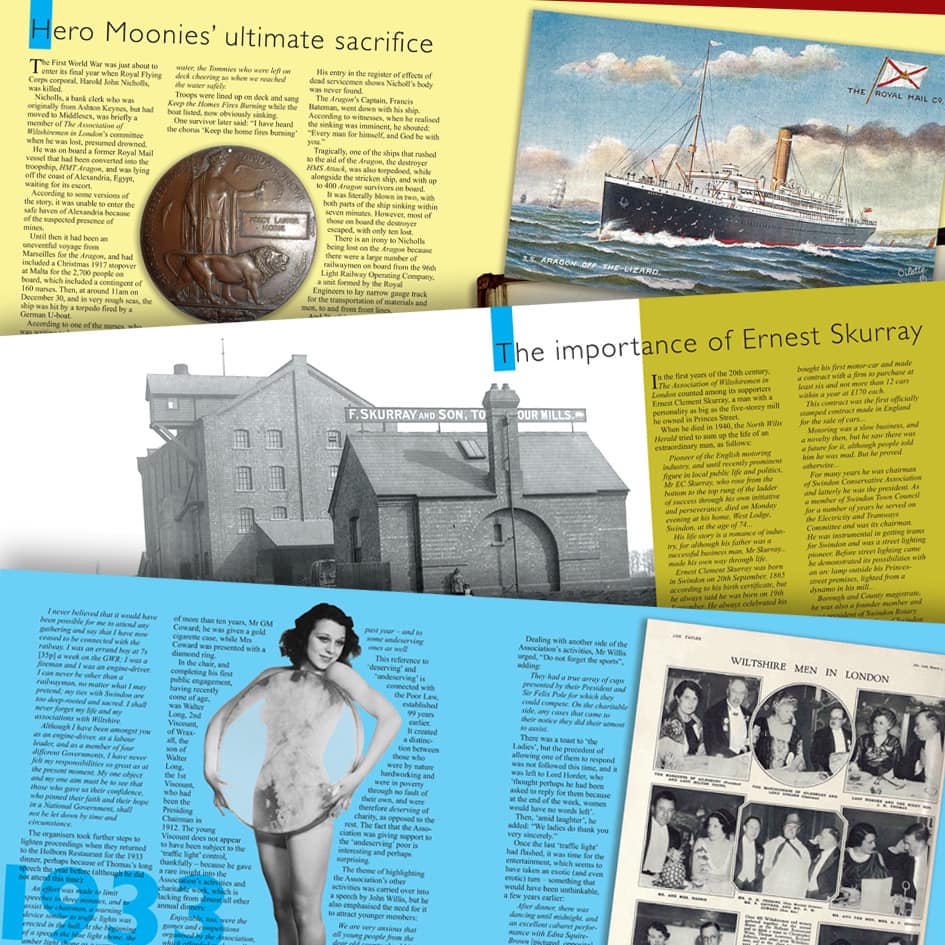
My friends and former Swindon Heritage magazine colleagues, Graham Carter and Noel Ponting, have written and produced a stunning new book.
Their third collaborative work is called Moonies, Movers & Shakers and is a history of the charitable fraternity called the Association of Wiltshiremen in London – nicknamed The Moonies in London. The inaugural dinner of this association (an event to bring together former Swindon railwaymen who found themselves in London) was held on March 13, 1886 in Plumstead.
Among the fascinating stories Noel and Graham have discovered during their research is that of the musically talented James brothers, the sons of William James and his wife Mary Ann.
William, an engine fitter born in Brecon in about 1830, married Mary Ann Hawkins at St. Mark’s Church in 1858. The young couple lived at various addresses in New Swindon where they raised a family of 7 children, 5 sons and 2 daughters. And while the 4 surviving sons initially followed their father into apprenticeships in the railway works, the future of three of them turned out quite differently.
You can read about the musical James brothers in Moonies, Movers & Shakers available from the Library Shop, Swindon Central Library; Hobnob Press and Amazon.
William James died in November 1904 and Mary Ann in 1908. They are buried together in grave plot E7581.
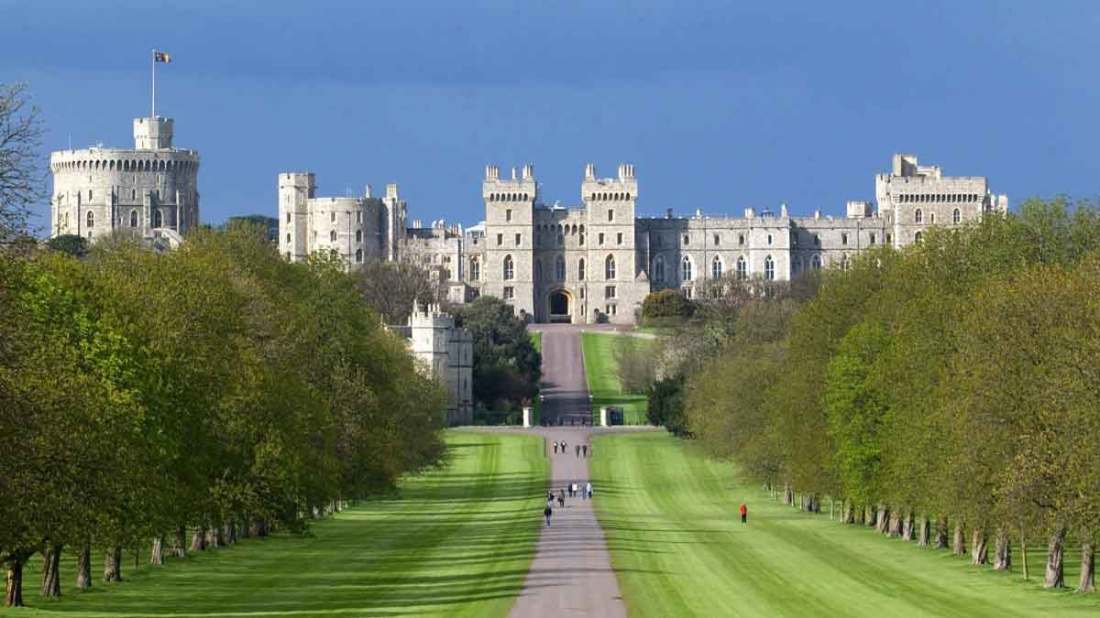
Rosa Christelow and I started work as housemaids at Windsor Castle on the same day. Rosa was older than me and had lots of experience. I had grown up in Oakley Mere, a small village on the outskirts of Windsor, and had lots to learn. Rosa also used to say I had a lot of cheek.
People couldn’t understand how we were such good friends; we were like chalk and cheese. Perhaps that’s why.
Rosa got me out of a lot of scrapes, I can tell you. And me, well I could always make her laugh. Once I demonstrated how to dance the Charleston in a corridor outside the library where some of the young royal cousins were playing a gramophone. I nearly lost my job over that, but Rosa managed to intercede for me.
It was a wonderful life working up at the Castle. The things we saw and the people we met. Well, not met exactly. Most of the guests barely noticed us, but we would peep round corridors and over the top of stairs to watch them arrive and depart. And of course, there were occasions when the household staff were presented to the King and Queen. And Christmas – oh Christmas was a wonderful time. Hard work, but wonderful.
And sometimes the staff had the place to ourselves. What we got up to then, well I couldn’t possibly tell you.
I left in 1913 when I married Robert one of the footmen up at the Castle, but I always kept in touch with Rosa. When she retired, I visited her once or twice at the house she shared with her sister in Swindon. Her home was as neat as a pin. You could tell she had been a housemaid; little touches I noticed, ways of doing things she had taught me. I didn’t envy the little girl who came in to clean for them. I bet Rosa put her through her paces.
Goddard Avenue
The facts …
Rosa Harriet Christelow was born on October 25, 1879 the third child and second daughter of John Christelow, a boilermaker, and his wife Priscilla. Rosa was baptised at St Mark’s Church on November 30, 1879 and grew up at 42 Wellington Street, the family home for more than 70 years.
In 1907 she entered the Royal Household at Windsor Castle as one of the 38 Class 3 housemaids earning £25 per annum. Rosa was later promoted to a Class 2 housemaid on £30 per year. She was still employed at Windsor Castle during the First World War and records list her there in 1924, the date at which published figures close.
At the time of the 1911 census Rosa was one of 33 housemaids, a total of 51 female servants. Royals in residence in 1911 were Princess May of Teck who was five years old and her three-year-old brother Prince Rupert of Teck. These children were Queen Victoria’s great-grandchildren.
By 1939 Rosa was living at 42 Wellington Street with her sister Rhoda where she is described as a paid domestic servant. There are gaps in what is known about Rosa’s whereabout between 1891 to 1901 and 1924 to 1939 probably due to a mis-transcription of her surname.
Rosa’s parents, John and Priscilla, are buried with two of their daughters, Laura Priscilla and Rhoda Annie, in plot D1350.
Rosa eventually moved into 125 Goddard Avenue, a home she shared with her brother Samuel. After several years working in the railway factory, Samuel Christelow travelled to Zimbabwe where he was ordained. Widowed and retired he returned to Swindon where he lived with Rosa at 125 Goddard Avenue. He died in St Margaret’s Hospital in 1972 and is buried in plot D1587.
Rosa died at St Margaret’s Hospital in 1972. She was aged 92. She is buried with her grandmother in plot B1877.
Rosa was buried with her grandmother Samuel Christelow

![20240807_143421[4011]](https://radnorstreetcemetery.blog/wp-content/uploads/2024/07/20240807_1434214011.jpg)













 Radnor Street Cemetery