I am a local historian and writer researching the history of Radnor Street Cemetery in Swindon. I have written three books - Struggle and Suffrage in Swindon: Women's Lives and the Fight for Equality published by Pen and Sword and The Ladies of Lydiard and West Swindon - What the eye doesn't see written in collaboration with Angela Atkinson and Roger Ogle both published by Hobnob Press.
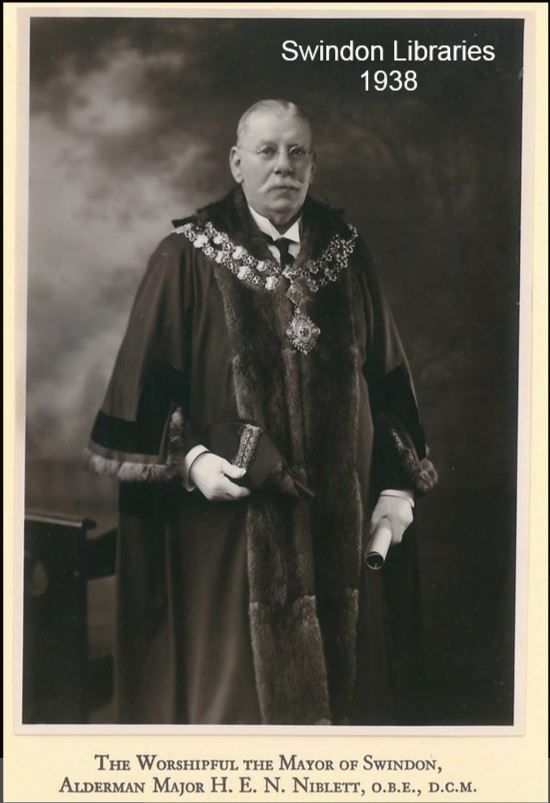
Sometimes I come across such a detailed obituary there seems little I could add to the subject’s life history. Not wishing to rewrite this fulsome account, here is the story of Major Henry Edward Newton Niblett – Mayor of Swindon 1937-38.
Death of Major H.E.N. Niblett
A Fine Record of Public and Military Service
Major H.E.N. Niblett, gallant soldier, an ex-Mayor of Swindon, friend of the poor and the blind, and lover of children, died early on Saturday at the age of 78. He had been ill for just about a month.
Though prominent in many spheres of public and social life in Swindon – and he proved his ability as a local administrator on the Town Council – he was first and last a soldier.
He disliked fuss and show, although he was a stickler for conformity to established rules and proper observance of traditional ceremonial.
He never wanted praise. He disliked it. In fact, it was his last wish that there should be no flowers, no mourning, and no paeans of praise – he knew well that they so often lack sincerity.
He leaves a widow, two sons and two daughters. The sons are Mr A.H. Niblett, who was disabled in the Great War, and Mr R.N. Niblett who lives at Stratton. The daughters are Mrs B.H. Brewer, of Stratton, and Mrs D. Tasker of Andover.
26 Years in India
Born in September, 1861, Major Niblett entered the Army when 22 years of age and remained in the service until April, 1912. During this time he spent 26 years in India and was recalled at the outbreak of war in 1914. It was on 29 May, `920, that he retired with the rank of Major.
His military life was a varied and distinctive one. He served in the Nile Expedition 1884-85 with a Camel Corps and was present at the relief of Gordon.
From 1895 to 1898 inclusive, he was on the Indian frontier and served throughout the Great War.
His honours and medals make a formidable list. They comprise the OBE (military) awarded at the end of the Great War, Distinguished Conduct Medal awarded in 1885; Egyptian medal with bars for Nile, 1884-85, Abou Klea; Indian frontier with bars for Chitral, 1895, Punjab frontier 1897-98, and Tirah.
In the Great War he saw a deal of service in Mesopotamia, where he remained from 1916-1920. His distinctions in this connection comprise two medals with Palms. He also had the Indian Coronation medal 1912, the Good Conduct Medal, Meritorious Service Medal and the Khedive’s Star 1884-85. On four occasions he was mentioned in despatches – once from Egypt in 1885, again from the Indian frontier in 1898, and twice during the Great War.
Masonic Honours
Equally imposing were his honours in Freemasonry and which were: P.M. Lodge, “St. John 486 E.C.,” Calcutta, 1896; D.G.S.B. Bengal, 1896, Royal Arch; P.Z. Holy Zion, Calcutta, 1898, D.G.D.C., Bengal, 1898, also member of Mark Masters and Ark Lodges; founder of first lodge in Baghdad, Iraq.
His early days were spent at Minchinhampton Common and in London. He was in Ireland on eviction and protection duty during the boycott trouble in 1882.
He was a member of the Swindon Town Council for nearly 14 years. Mayor of Swindon 1937-1938, it was during his term of office that the Duke of Gloucester opened the new Civic offices.
One of the oldest and most popular members of Ashford-road club, Major Niblett did work of immense value among the poor, the blind, and the children of the town. He took a keen interest in the hospital, the carnival, and ex-Servicemen, and was an active worked for “The Swindon Advertiser” Poor Kiddies’ Outing.
Major Niblett will be sadly missed and widespread sympathy goes out to Mrs. Niblett, who does much good work in the town, and to her family.
The Funeral
Friends, neighbours, and representatives of various local organisations, attended the funeral on Wednesday.
He was buried with military honours. His coffin, carried on a gun carriage drawn by an Army tractor, was enshrouded with the Union Jack, and bore only one floral tribute – that of a cross shaped wreath of lilies. Six Army Warrant Officers acted as bearers. The service was held at St. Saviour’s Church, Ashford-road, Swindon, and the interment was at Radnor-street Cemetery. The Rev. J.F. Tickner officiated. At the graveside, a bugler played the Last Post and Reveille.
Family mourners were: Mrs. S.J. Niblett (widow); Mr A.H. Niblett (elder son); Mr R.N. Niblett (younger son); Mrs. D. Tasker (elder daughter); Mrs. B.H. Brewer (younger daughter); Mrs N. Boulton (sister-in-law); Mr B.H. Brewer (son-in-law); Mrs R.N. Niblett (daughter-in-law); Miss J. Niblett (grandchild); Miss D. Boulton (niece).
Public Mourners
Representing the Swindon Town Council were: The Mayor (Counc. H.R. Hustings); Messrs. T.C. Newman, J. Belcher, H.H. Wheeler, F.E. Allen, T. Manning, F.E. Drinkwater, A.J. Gray, A. Snow, C. Macpherson. G.H. Hunt, L. Dodson, Mrs May George, D. Murray John (Town Clerk).
The Swindon Conservative Association were represented by: Sir Noel Arkell, and Mr. P. Smith. Representing the Swindon branch of the British Legion were: Lieut.-Col. B.L. Birley, DSO. Messrs R.W. Rice, W.H. Marshall, H.C. Preater, and Corporal Smith.
The Swindon branch of the South African War Veterans’ Association: Messrs. H. Warman, J. Stanton, G. Payton, F. Little, and P. Scott. The Old Contemptibles’ Association: Mr JA. Cresswell and E.M. Ockwell. The local Blind Association by R.L. Robins (president) and Petty Officer J. Walters, of the Royal Navy; Mr K.N. Knapp (Swindon and North Wilts Victoria Hospital); Mrs McGregor Johnson (Women’s branch of the Swindon Conservation Association).
Representing the Junior Imperial League of the Constitutional Association were Messrs. Coun. C.W.J. Streetly, W. Gregory, Mr and Mrs James, and Mr Fred Bishop. Ashford Club: Messrs G. Cottrell and A. Collins. Representing the Gloucestershire Regiment Association was Mr T. Twitchell.
The Mayoress, Mrs H.R. Hustings, and Mrs D. Murray John represented the local branch of the NSPCC.
Among numerous other mourners were: Mr C.A. Plaister, Mr H. Watkins, Mr T.J. Gay, Mr W.H. Masters, Mr H. Baker, Mr W. Clark, Mr G. Hays, Mr W.J. Mantell, Mr D.W. Jones, W. Seaward, C. Parkhouse, W.O. Lavington, F. Pointer, Sergeant-Major T.F. Culley, Mrs. A.C. Booth and Major A. Wingfield.
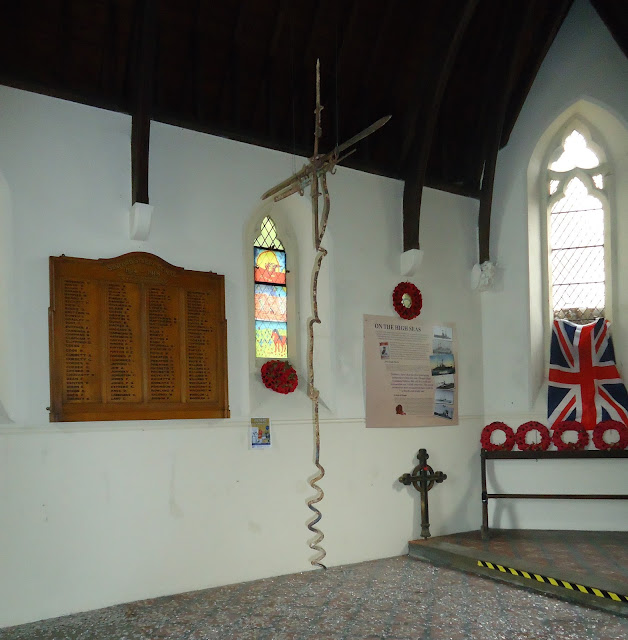
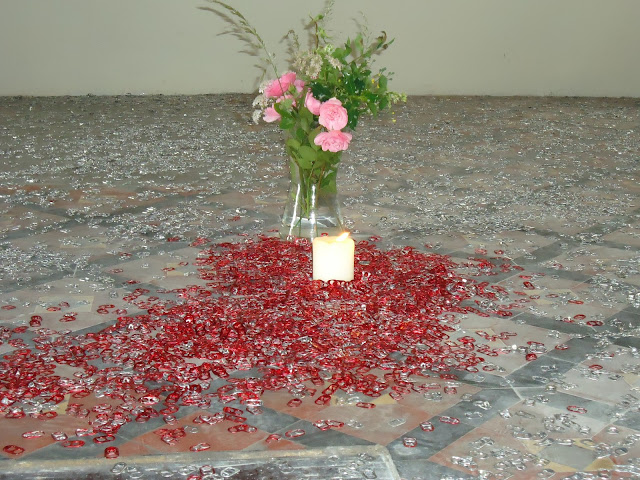
At the centenary of the First World War a number of commemorative events were held at Radnor Street Cemetery. On July 1, 2016 Dr Mike Pringle kept a vigil in the cemetery chapel with an art installation he had created called The Sword of Damocles. The can ring pulls scattered on the chapel floor represent the lives lost that day in 1916.
Many words have been written about July 1, 1916, the first day of what would later be called the Battle of the Somme. As we continue to remember the fallen of that battle, I am going to let the photographs of one man’s memorial speak for itself.
Amy Edna Riddick was a member of Primitive Methodism royalty. Born in 1852 in Stratton St Margaret, Amy was the second daughter of Charles Morse and his second wife Rebecca Lapper.
Charles Morse was a legendary figure and pioneer of Primitive Methodism in not only North Wiltshire but neighbouring Berkshire and Hampshire. He was born in Purton in 1811 and converted to Primitive Methodism as a young man. He was soon engaged in preaching at open air meetings where he was frequently arrested and escorted away in handcuffs. He became a Sunday School teacher and conducted a Bible class. He was also an organist and became both a superintendent and Circuit Steward. A local business man who ran a grocer’s and draper’s shop in the village, Charles devoted his life to the cause of Primitive Methodism, as did his family.
Amy too spent a lifetime worshipping and working for the Primitive Methodist Church, associated with the first Regent Street Church in Swindon built in 1848 (rebuilt a further two times) and then as a married woman where she worshipped at the Prospect Place Church.
As a young woman still living at home in Stratton St Margaret Amy worked as an assistant in her father’s shop, alongside her brother Levi Lapper Morse. In 1875 she married Henry Raggett, tailor and grocer and Primitive Methodist. The newly married couple lived above the family business at 29 Eastcott Hill, as Amy’s own parents had done in Stratton St. Margaret. By 1891 they were living at 35 Rolleston Street with their four children, Milinda, Beatrice, Henry and Wilfred. Living next door at No. 36 was Primitive Methodist Minister Thomas Whitehead and his family.
Sadly, the beginning of the 20th century saw three deaths in Amy’s immediate family. In 1903 her son Henry Charles Edgar died at the age of 21. The following year her husband Henry died and then in 1905 her eldest child, Milinda died aged 28.
Amy, however, continued to work at a myriad of activities within the church and was appointed the first Treasurer of the Women’s Missionary Federation formed at a meeting convened by her sister-in-law, Winifred wife of Levi Lapper Morse, on October 22, 1910. The census taken the following year records her living alone at 77 Goddard Avenue, a 58 year old widow living on ‘Private Means’.
In the March quarter 1912 Amy married again. Her second husband, Silas Riddick, was also a stalwart Primitive Methodist.
Amy died at her home on August 14, 1931. Her funeral took place at Radnor Street Cemetery on August 18 where she was buried in grave plot D158 with her first husband Henry Raggett and their two children, Henry and Milinda.
The Primitive Methodist records include numerous references to the Morse, Raggett and Riddick families. And Amy was a member of all three.
For more information about the history of Primitive Methodism visit the excellent website My Primitive Methodists.
Mrs S. Riddick
Death of a Well Known Swindon Methodist
Mrs Amy E. Riddick, of 77, Goddard Avenue, Swindon, passed away at the residence on Friday, after a long and trying illness, at the age of 79.
Mrs Riddick was the daughter of the late Mr Charles Morse, of Stratton, one of the pioneers of the Primitive Methodist Church in the district, and was the sister of the late Mr L.L. Morse, of The Croft, and of Mr E. Morse, of Blunsdon. She was twice married, her first husband being Mr. H. Raggett, who was well known in Primitive Methodist circles. He was an ardent worker in the Liberal cause, and at the time of his death was a member of the Swindon Town Council, the Wilts County Council and the Swindon and Highworth Board of Guardians. Her second husband was Mr S. Riddick, who had, previous to his second marriage, lived at Wootton Bassett. Mrs Riddick had four children by her first husband, two of whom had predeceased her. The remaining children are Mr W.L. Raggett of Bristol, and Mrs R.G. Cripps, of Swindon.
The funeral took place on Tuesday, and a service at the Prospect Place Primitive Methodist Church was conducted by the Revs. W.C. Russell and T. Sutcliffe. A large number of friends were present, Mr Arthur Button was at the organ. The Rev. W.C. Russell performed the last rites at the cemetery.
The chief mourners were Mr W.L. Raggett (son), Mrs R.G. Cripps (daughter), Mr R.G. Cripps (son-in-law), Mr Cyril Cripps (grandson), Mr W.E. Morse (nephew) Mrs W.A. Stanier and Mrs Le Sueur (nieces), Mr S. Payne (brother-in-law), Mr J. Riddick, Mr. W. Riddick, Mr F. Riddick, Mrs N. Riddick, Mrs T. Riddick, Mrs G.H. Matthews, Nurse L. Davis, and Mr W. Davis.
When I was a little girl I could never understand why we had so many grandmothers in our family. The lady my cousin Joyce called Nan wasn’t my Nan and neither was the lady Mollie called Nan.
I once asked Elsie why we all had different Nans but she just smiled at me in the way adults do when children ask tiresome questions.
But we all called the same woman Granny and one thing I could understand was that she was by far the oldest lady in the whole family.
I once tried to work out how many dozens of children she must have had, not understanding that the aunts, uncles and numerous cousins who all called her Granny were sons and daughters, sons-in-law and daughters-in-law, grandchildren and even great grandchildren. It was all too complicated for me to grasp.
And then suddenly, one day, she was gone. You look back and wish you’d paid more attention, listened to her stories, asked a few, sensible questions.
The facts …
Sarah Ralphs was born in Rodbourne Cheney in 1838, the daughter of agricultural labourer William Ralphs and his wife Mary Ann. At the time of the 1851 census, she was living with her parents and four siblings, Elizabeth 15, Richard 8, Rhoda 5 and two-year-old Rosanna in Haydon Wick.
Sarah married John Peaple in the church at Rodbourne Cheney in November 1862. They were both described as being of full age with John stating he was an ‘Artisan’ [a skilled manual worker or craftsman.]
Their first child, a daughter named Rosanna, was baptised on November 8, 1863. The couple were then living in Moredon and John described his occupation as Factory Operative. By the time of the 1871 census the family were living in a house close to the Independent Chapel in Rodbourne Cheney with their four young children – Rosannah 7, Esrom 5, Mary J. 3 and one-year old William.
Ten years later and the family had moved to 3 Linslade Street in Rodbourne, closer to John’s place of work in the GWR Works. The family lived here for more 20 years and it was here that they sadly lost two of their sons. William died in December 1883 aged 14 years and Charles in May 1889 aged 13.
By 1911 John and Sarah were living at 174 Redcliffe Street. John was 72 and Sarah 73 and they declared they were both Old Age Pensioners. The couple had been married for 48 years and had had 9 children, six of whom were still living. Living with them was their long-term lodger, Sidney Stapleford.
John died in 1915 when he was living at 5 Hawkins Street. His funeral took place on March 20 and he was buried in Radnor Street Cemetery in grave plot A532 with the couples two young sons who had died more than 25 years earlier.
Sarah died in 1933 at 131 Kingshill Road. Her funeral took place on February 22 and she is buried with four others in Radnor Street Cemetery in grave plot C1193, an unmarked public grave.
Death announcement
The oldest member of the Salvation Army in Swindon has died in the person of Mrs Sarah Peaple of 131 Kingshill Road, Swindon, at the age of 94.
Wiltshire Times and Trowbridge Advertiser, Saturday February 25, 1933.
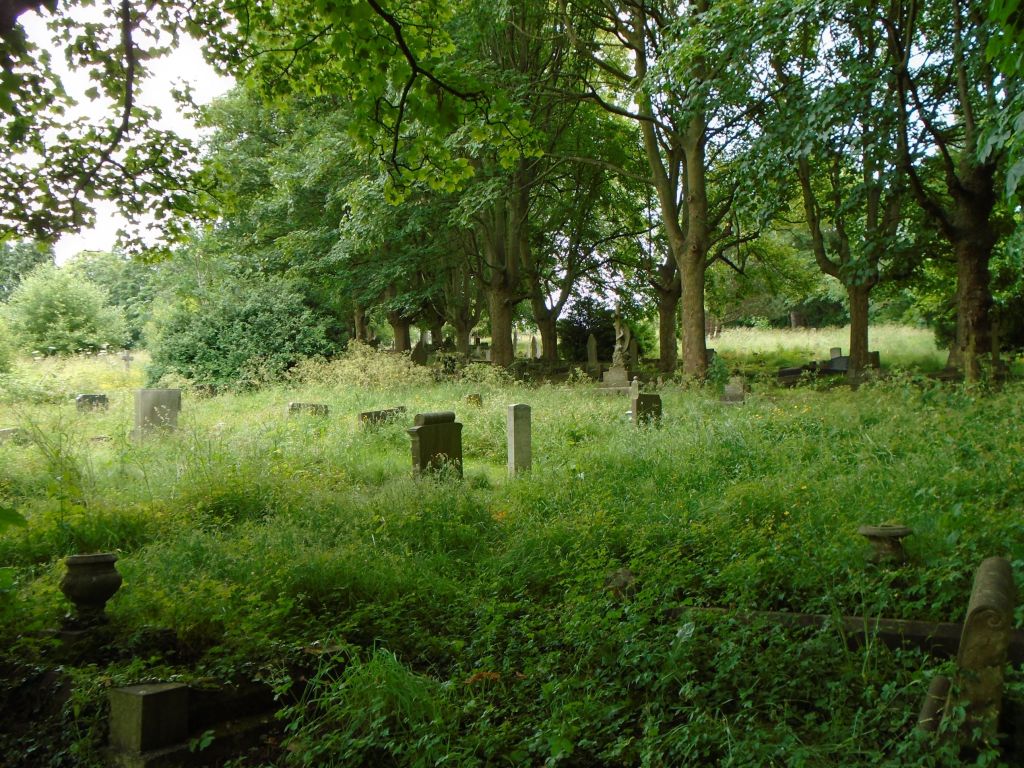
Welcome to Radnor Street Cemetery – a celebration of the working-class history of our town.
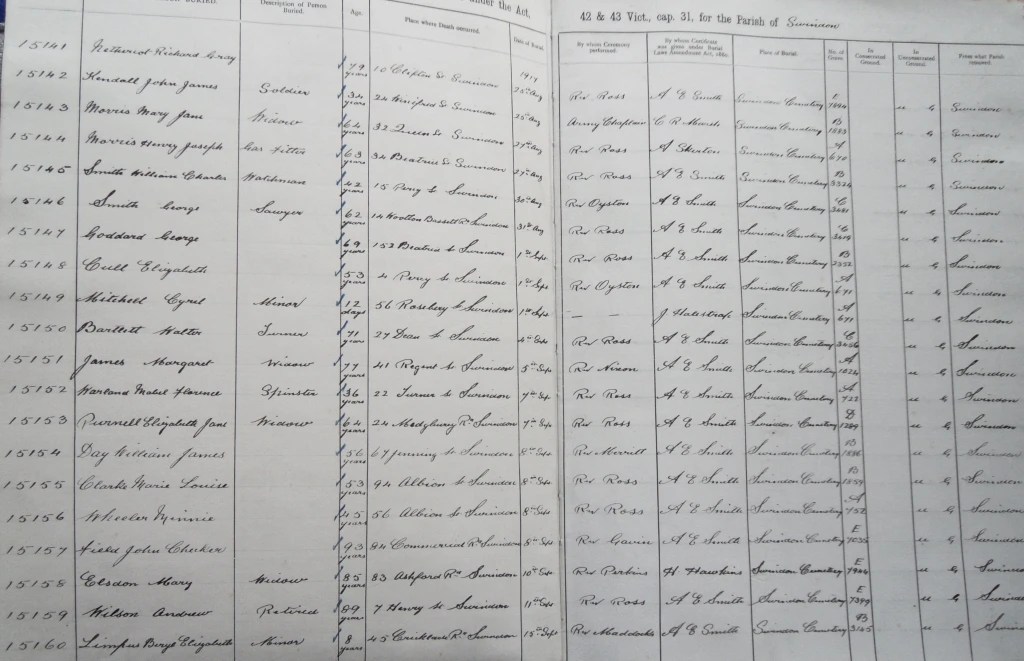
The Radnor Street Cemetery burial registers along with those relating to other Swindon cemeteries, are held at the Kingsdown Crematorium and are available for consultation by appointment. The Radnor Street Cemetery burial registers are in remarkably good condition, especially considering the different places they have been stored over the years. Rumour has it that they were once left in the cemetery chapel. Thankfully they didn’t suffer the same fate as the stonemason’s records, which were used to ignite a fire some years ago.
One set of registers are compiled chronologically, the other alphabetically and you need to have the full and correct name of the person for whom you are searching and the date of their death. There is also a set of grave plot registers with details of those buried in each grave.
The style of handwriting changes over the years and can take some getting used to, although it has to be said that the earlier volumes written in copperplate are often the easiest to read.
So, whose task was it to enter the details in these large tomes? The first caretaker appointed when the cemetery opened in 1881 was Charles Brown so perhaps it was his job to fill in the paperwork. Or could it have been the job of the Clerk to the Burial Board, Mr J.C. Townsend? Unlikely, as James Copleston Townsend was a solicitor and headed a busy legal practice based at 42 Cricklade Street.
The details in the registers reveal the various funeral directors at work in Swindon and the numerous ministers who attended at the committal. And fascinating facts about long forgotten terraces of houses, the name subsequently abandoned when construction on the street was completed. So many of these town centre streets now lie beneath modern developments – for example Canal Side, Brunel Street and Cromwell Street.
Younger residents might not know the significance of some of the Swindon street names. If you live in Tydeman Street, Gorse Hill you might be interested in this story about the Tydeman family.
The son of a Police Sergeant, William Henry Tydeman married Sarah Anne Barnes in the parish church at Aldbourne on May 14, 1892. The couple moved to Swindon shortly afterwards and appear on the 1901 census living at 1 Edgware Road with their five young children, Elsie 7, Dorothy 6, Hilda 4, Henry 2 and 8 month old Lilian.
It was around this time that William went into partnership with his younger brother Walter and they began work on an ambitious building project in Rodbourne – nine houses in Linslade Street and eight in Jennings Street.
In 1904 the brothers advertised their business as ‘Contractors, Decorators and Undertakers at Sanford St. Swindon.’ In 1907 they built the Wesleyan Methodist Hall in Clarence Street, an iconic Swindon building, which was sadly destroyed by fire in 1977.
The business and the workforce grew following the First World War, eventually becoming Tydeman Bros. and Sons when the brothers two sons Henry and Nelson joined the firm. During the 1920s among their projects were 22 houses in Southampton Street, 19 houses in York Road and 16 houses in Iffley Road and more than 100 houses in the street that would bear their name, Tydeman Street.
In 1927 they were encouraging Swindonians to ‘Employ Your Own Townsmen – Tydeman Bros., Shopfitters, Builders & Undertakers Edgeware Rd. & Sanford St., Swindon. Inspect the Shopfront Alterations recently carried out by us at Messrs. Freeth & Son, Centre, Swindon, and the John Farmer Shoe Co., Regent Street, etc., Then send us your enquiries. Telephone 166.’
Sarah died in 1935 and was buried at Radnor Street Cemetery in grave plot D1310 with her daughter Hilda who had died in 1921, aged 25 years.
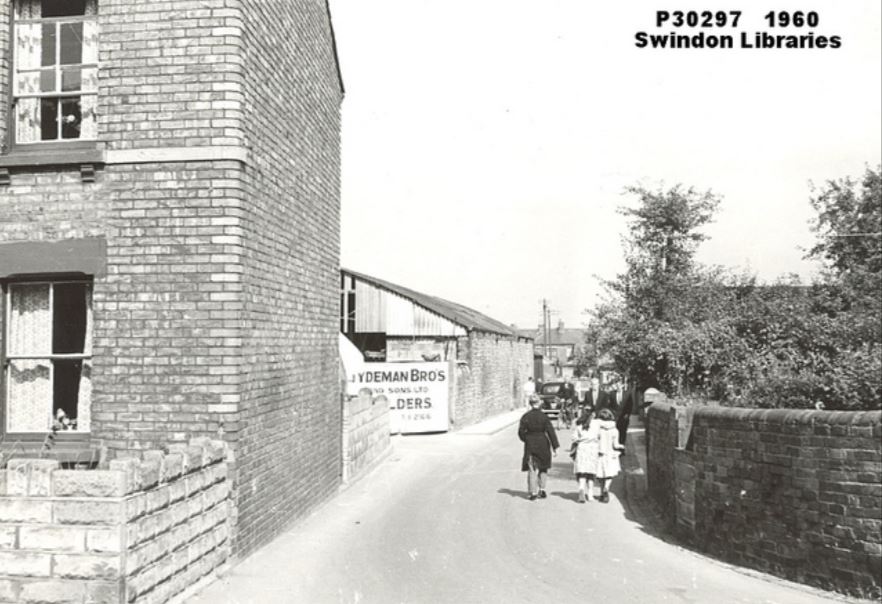
1960 image published courtesy of Local Studies, Swindon Central Library. Tydeman Bros off Cow Lane
Tributes to Mrs W.H. Tydeman
Funeral of Swindon Builder’s Wife
Mission Stalwart
The funeral of Mrs Tydeman, wife of Mr. W.H. Tydeman, of “Wanbourne,” 5 Downs View Road, Swindon, a member of the firm of Messrs. Tydeman Bros. and Sons Ltd., builders and contractors, took place last Thursday.
Mrs Tydeman had not been in good health for some months, but was taken seriously ill a week before her death on the previous Sunday. She was 73 years of age.
Although a native of Aldbourne, Mrs Tydeman had resided in Swindon for more than 40 years, during which time she made a host of friends, particularly in her connections with the Wesleyan Church.
Foundation Member
A foundation member of the Central Mission, which she had regularly attended since its inception, she gave endless time and energy to the furthering of the several activities with which she associated herself, and the many tributes received from the worshippers at the Mission bore evidence of her great work.
In his address during the service at the Central Mission Pastor J.W. Spargo, late of Swindon, and now residing at Reading, who assisted the Rev. R.A. Rogers in the service, spoke in feeling terms of Mrs Tydeman’s faith under adversity.
Mr F. Street was at the organ, and the hymns, “Jesu, the very thought of Thee” and “For all the Saints,” were sung. The lesson was taken from Psalm xxiii and a passage from Revelations.
The interment was at Radnor Street Cemetery, the committal sentences being pronounced by Pastor Spargo.
Mrs Tydeman is survived by a widower, one son, three daughters and one adopted son. Her mother also survives her at the age of 95 years.
Extracts from the funeral report published in the North Wilts Herald, Friday, 7 June, 1935.
A Prominent Methodist
Death of Mr W.H. Tydeman
A prominent Methodist, and a founder member of the well known Swindon firm of Messrs. Tydeman Bros and Sons, Ltd. Mr William Henry Tydeman, died at his home, 5 Downs View road, Swindon, on Saturday night two days before his 72nd birthday.
Mr Tydeman was a native of Donhead, South Wilts, his father being a sergeant in the Wilts Constabulary. He went to live at Upper Wanborough when he was about 13 years of age and was apprenticed to Mr Payne, builder of that village. On completion of his time he went to work in London. Later he spent a short period in the GWR Works and then, before branching out in business on his own account, was foreman for Mr George Whitehead, builder, of Swindon.
He and his brother, the late Mr Walter Edward Tydeman, founded the firm of Tydeman Bros. Some 40 years ago.
Built Central Mission
The firm of Tydeman Bros. built the Central Mission Hall, Clarence Street, Swindon, where Mr Tydeman was a prominent worshipper. He was a trustee of that church, and for a period of 25 years was superintendent of the Sunday school and church treasurer.
He was a keen sportsman and at one time belonged to the County Ground Bowling Club. He was also a life-long follower of Swindon Town Football Club.
Mr Tydeman, whose wife died five years ago, leaves three daughters – Mrs Ball, of 6 Cumberland Road, Mrs Austin, Bouverie Avenue, and Mrs Barrett, 48 Burford Avenue – one son, Mr W.H.T. Tydeman, who lives at 1, Edgware Road, Swindon, and an adopted son Mr Fred Vizor.
The funeral took place yesterday.
North Wilts Herald, Friday, 9 February, 1940
William Henry Tydeman was buried with his wife and daughter on February 8, 1940 in grave plot D1310.
Examples of the work of different builders on Dixon Street today.
Two Welsh brothers arrived in Swindon during the 1880s and left their mark on the town.
Thomas and John George were born in the village of Boverton, Llantwit Major, Glamorganshire. Thomas was born in 1853 the elder son of Thomas and Margaret George; his younger brother John was born in 1866. Their father worked throughout his life as an agricultural labourer and in 1881 John was also working as a farm labourer. Thomas became a stonemason, a trade which would help the brothers establish themselves in Swindon’s late Victorian building boom.
Thomas arrived in Swindon in the 1880s where he quickly got to work, building a property in Rodbourne Road in 1887. By 1891 Thomas was living at 26 Dean Street with his wife Emma and their two young children Minnie 2, and 1 year old Thomas when his brother John joined him. This is the year in which Thomas and John would begin work on a street that would bear the brothers’ name – George Street.
The two brothers worked together throughout the 1890s building properties in Butterworth Street, Dean Street, Dixon and Deacon Streets. During the final year of the century they were engaged in projects in Wells Street, Gladstone Street, Ponting Street, Manchester Road and Groundwell Road.
At the time of the 1901 census the brothers were living at 69 and 71 Eastcott Hill. John was also married by then and had three sons Alfred 8, Bernard 7 and Albert 4 all born in Swindon. But ten years later and everything had changed. Then living at 169 Victoria Road John, aged 44 describes himself as a retired builder. Thomas would carry on the business alone building houses in Wells Street, Lincoln Street and Portsmouth Street in 1914/5.
By 1918 John and his family had moved to London. At the time of the compilation of the 1939 list John and Emma were living in Addison Gardens, Kensington with their son Alfred George, a wholesale wine merchant’s clerk.
Thomas remained in Swindon and a home at 1 Okus Road where he died in August 1915, aged 62. He is buried in plot E7669, a grave he shares with his wife Emma who died four years later.
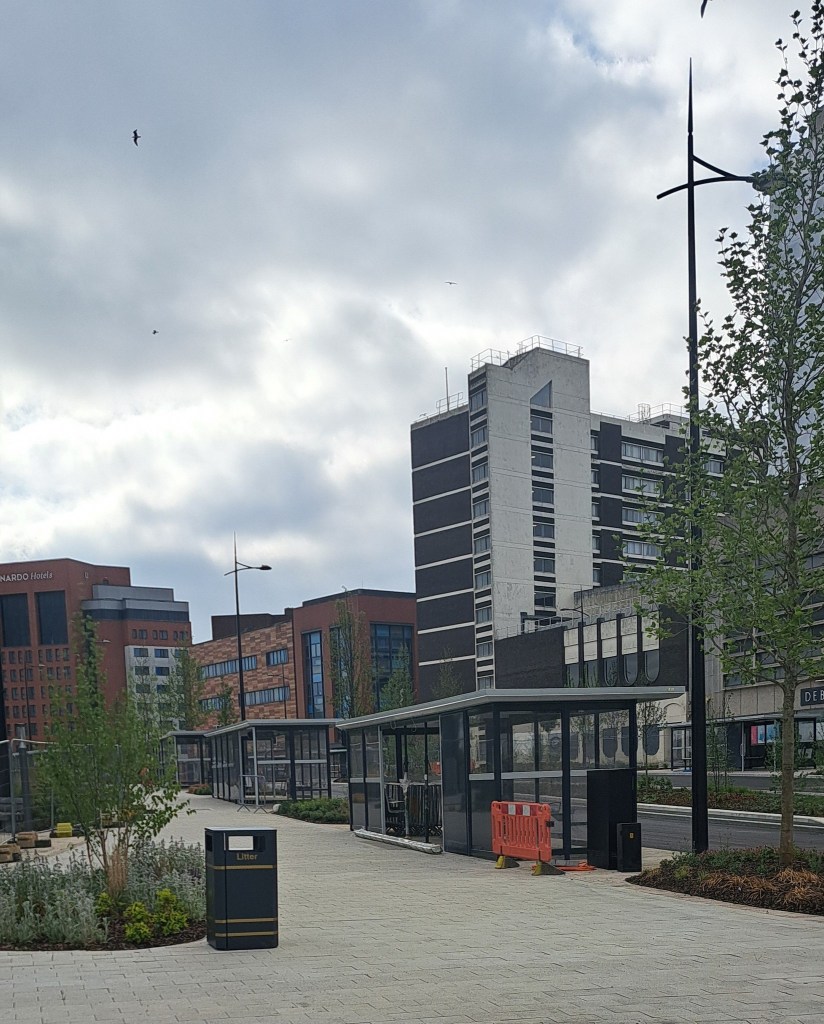
As Swindon’s long awaited bus boulevard nears completion, what lies in wait for the area that backs on to it?
In the 19th century this was recognised as a prime town centre location when the Oxford Building and Investment Co Ltd built 108 houses on the site. The Oxford Building Society was a relatively short-lived organisation registered in February 1866 and going into liquidation 17 years later.
When the company folded in 1883 it had an interest in 225 properties in Oxford and more than 100 Swindon.
The New Swindon properties were built on a parcel of land called Brierly Close, between the canal and Lower Eastcott Farm orchard, part of the extensive Rolleston Estate.
Named after Oxford City Centre locations, construction began on Merton Street in 1873 followed by Turl Street in 1874, Carfax Street in 1875 and Oriel Street in 1876 – an area that is unrecognisable now.
In 1881 the census enumerator who travelled from door to door collecting information seems to have struggled with the 34 households in Carfax Street. The census returns are covered in scrawled amendments and crossings out and could the details about No 21 actually be accurate? It would appear that 15 adults and four children occupied this small, terrace property, which can’t possibly be correct!
Head of the household was George Kinch aged 61. His occupation is given as Miller and he was born in Shrivenham in about 1820. At home with him in 21 Carfax Street on census night 1881 were his wife Sarah, his sister Charlotte, his stepdaughter Elizabeth, his 3 year old grandson William and his brother John. A pretty busy household – but then if the census is to be reckoned with there was also Albert Cove and his wife Lydia, John Williams and his wife Elizabeth, William Hibberd and William Watkins, his wife Ellen and their children William 4, Mary A. 3 and one year old Charles.
The terrace houses in Carfax Street were demolished in the 1970s and few photographs survive. It is, therefore, impossible to assess whether No 21 was actually a very large property or if 15 adults and four children actually squeezed into a more modest terrace house. Or perhaps the census enumerator recorded facts we cannot now unravel.
George’s wife Sarah died at No 21 shortly after the census was taken. She was buried in Radnor Street Cemetery on May 11, 1881 in a public grave plot A228. George died ten years later while still living at No. 21. He was buried with his wife on June 11, 1891. As in life so in death the couple shared their final resting place with a number of others. Hannah Scarrot who died in 1901, Frederick Boulton who died in 1918 and his wife Eliza Ann who died in 1944.
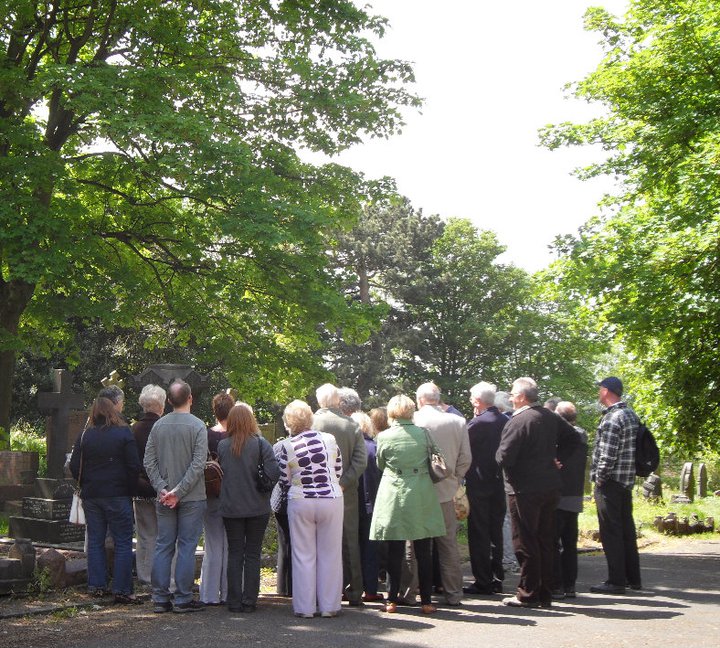
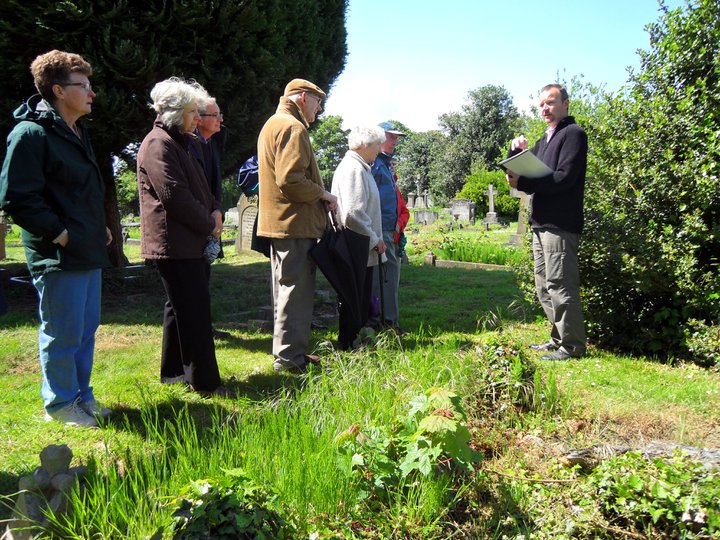
I have spent this week scrolling through the Radnor Street Cemetery archives in search of stories to tell on our next guided cemetery walk. And then up popped a memory on Facebook from May 2011.
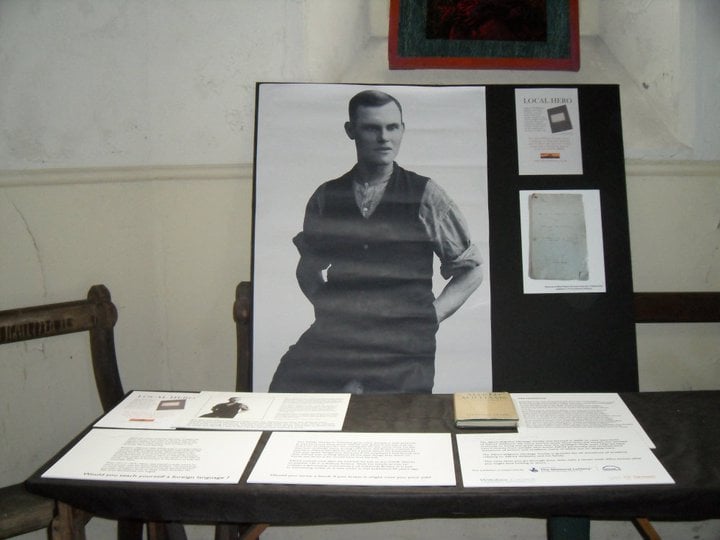
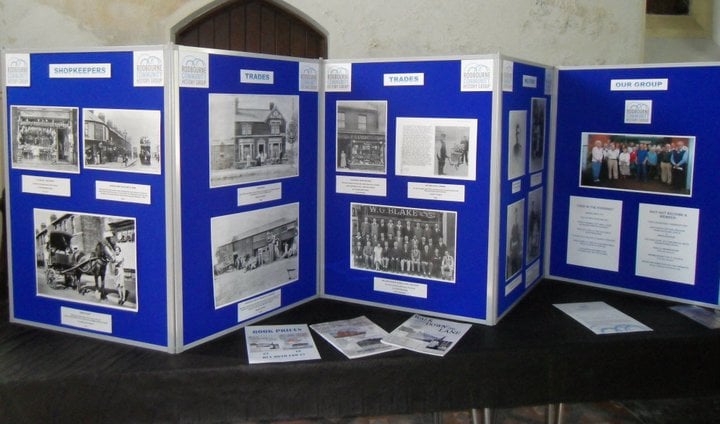
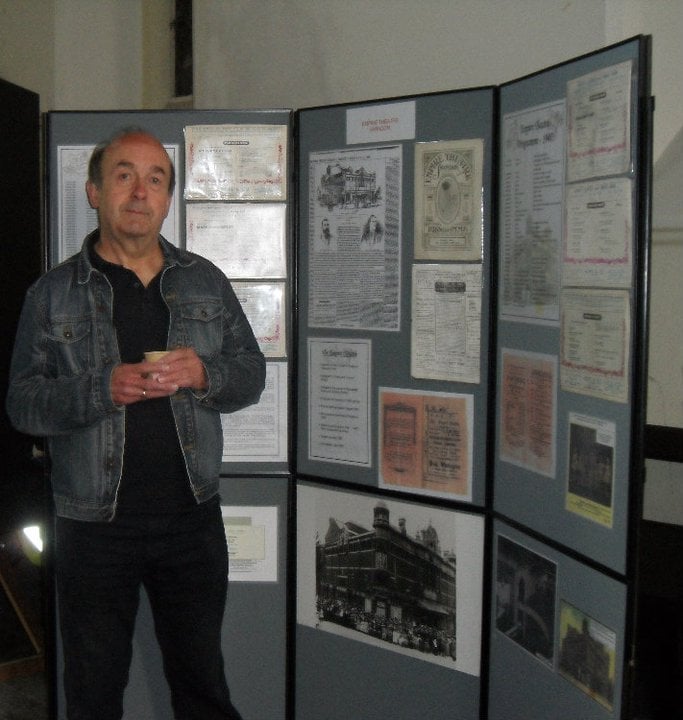
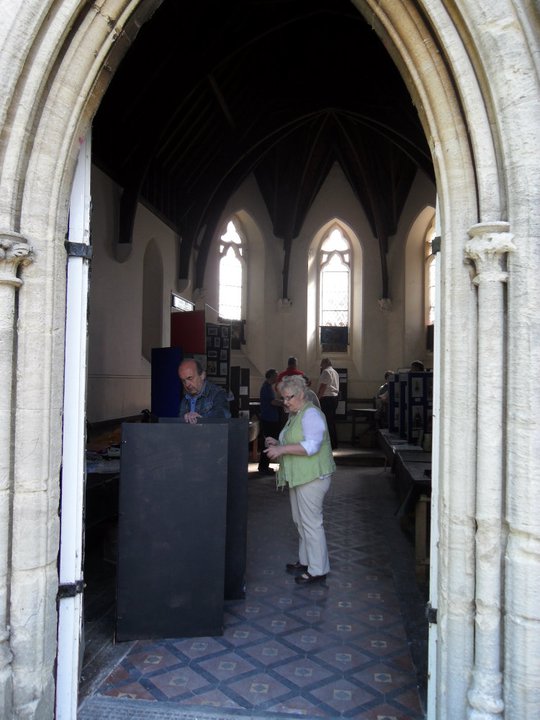
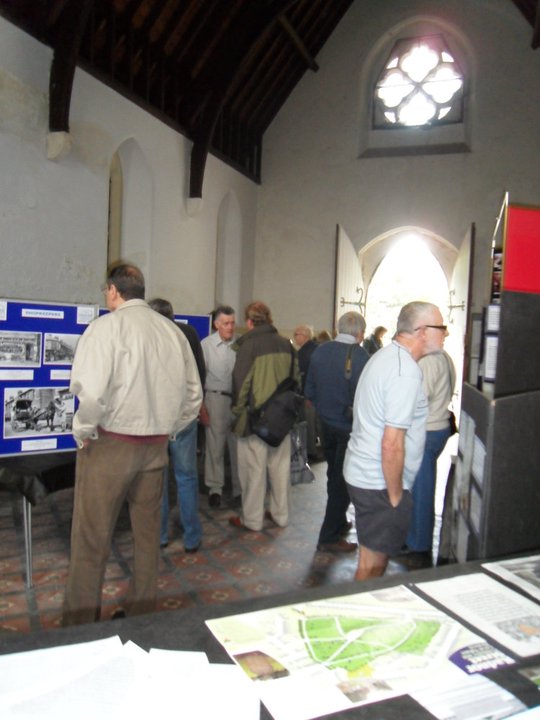
Mark and I had long established a programme of cemetery walks when I suggested holding a local history exhibition in the cemetery chapel. We fixed a date, May 21 and 22, and invited the local history groups who supported our cemetery walks to bring along a display.
I look back now and I’m amazed at how supportive and enthusiastic everyone was and how hard they worked across the two days.
Members of the Swindon Society, the Rodbourne Community History Group, staff from Swindon Central Library Local Studies and Graham and Julie from the Alfred Williams Heritage Society all lugged their display boards, books and pamphlets up the steep cemetery incline to the chapel. Roger brought his Empire Theatre display and artist Andy Preston brought his ethereal artworks of the Radnor Street Cemetery angels. Mark and I conducted two guided walks across the two days.
Together we all shared our love of the cemetery and the fascinating history of Swindon and the people who made it a town of which to be proud. That weekend we met old friends and made new ones. We heard familiar stories retold and learned new ones. And we laughed – a lot!
As I look at the photos of that amazing weekend I am sad to see the faces of those we have lost in recent years. Bob, slight of stature but bold and brave, who we tried (unsuccessfully) to persuade to climb the old bell tower on a recce; and Mark, who told the stories of his First World War heroes, something those who heard him will never forget.
Join Andy and myself on Sunday June 1, 2025 for another guided cemetery walk. Meet at the chapel 1.45 pm for a 2 pm start.
Sometimes the story behind a comprehensive headstone inscription can still take a bit of unravelling. Take the one on Arabella Dunbar’s grave.
In loving memory of
Arabella
Widow of the late
David Dunbar
Sculptor
(of London)
Who died December 27th 1885
At New Swindon
Aged 77 years
Thine eyes shall see the King in His beauty;
They shall behold the land that is very far off.
Isaiah 33
So, how did it happen that the widow of a celebrated Scottish born sculptor end up buried in Radnor Street Cemetery?
Arabella Riddiford was born in Uley, Gloucestershire, the daughter of Daniel and Susanna Riddiford and was baptised at the parish church on January 8, 1809. Little is know about her life before she married David Dunbar and even this evidence is confusing.
David Dunbar was born in 1793 in Scotland but when he married Arabella (his second wife) the details on their marriage entry are at variance with the other known facts. The couple were married at All Souls Church, St. Marylebone (where they are both described as living in the district) on July 15, 1844. David Dunbar describes himself as a widower and sculptor aged 28, the son of Stewart Dunbar a [stone] mason. Arabella Riddiford was also aged 28 a spinster the daughter of Daniel Riddiford Tea Grocer (deceased). Now by my reckoning David was at least 51 years old and Arabella 35.
At the time of the 1851 census the couple were living at David’s home, 9 Ranelagh Place and again the ages recorded are incompatible with other records.
The couple are difficult to locate on the 1861 census. They may have been living in Scotland at the time, where David died in Dumfries in 1866.
A lengthy obituary was published in national newspapers in both England and Scotland. (See examples below). His life’s work was obviously more important than his private life as there is no mention of a widow or any surviving children, however there appears to have been at least one son, David Dunbar Jnr who turns up in Swindon.
On June 25, 1849 David Dunbar a bachelor of full age (that is over 21) occupation Draper, address Ranelagh Place, father David Dunbar Sculptor, married Eleanor Cogdon at St. Peter’s Church, Eaton Square, Pimlico. The two witnesses to the marriage were John Cogdon (presumably Eleanor’s father) and Arabella Dunbar (presumably David’s mother).
Later that year there is a Notice of Indenture of Assignment published in The Wilts and Gloucestershire Standard, Tuesday, January 3, 1850 (see below) which names David Dunbar, Linen and Woollen Draper of Swindon and David Dunbar, Sculptor. All this adds weight to why Arabella ended up in Swindon where she died. Or does it?
The clue to this mystery is Charles Thomas, a 5 year old boy who is visiting Arabella at the time of the 1871 census when she lived in Stonehouse, Gloucestershire.
Charles Riddiford Thomas was the son of William Thomas, a beerhouse keeper, and his wife Arabella, who lived in Swindon. The couple had married at Christ Church on September 30, 1854 where we discover that Arabella’s maiden name was Riddiford and that she was the daughter of Charles Riddiford. Charles Riddiford was born in Uley, Gloucestershire the son of Daniel & Susanna Riddiford and was therefore Arabella Dunbar’s brother.
At last the connection is made between Arabella Dunbar, widow of a famous sculptor, and why she ended up buried in Radnor Street Cemetery. She was living in Swindon with her niece Arabella at the time of her death.
The entry in the burial registers record that Arabella was living at 6 High Street, New Swindon in 1885, (before it was renamed Emlyn Square). Her funeral took place on December 30, 1885 and she lies in plot A1039. The inscription on her headstone says it all, well nearly!
The facts …
The Late Mr David Dunbar, Sculptor
It is with deep regret we record the death of this genial and talented gentleman, which sad event took place here on Sabbath morning last, after a very short illness. We cannot allow so eminent a fellow-townsman to pass away without some tribute to his memory, and record of his active life.
While serving his apprenticeship as a stone-mason with his father, he shewed symptoms of that taste for sculpture which ultimately led to the adoption of that art as his profession. So great was his reputation as an ornamental carver among the building trade that he obtained an engagement in his seventeenth year to execute the capitals and other decorative parts of Lowther Castle, then in course of erection, at a wage of 7s per day. After following for a few years this, the lightest and most elegant part of the masons’ trade, he had his early aspirations of seeing Rome and studying in Italy realised through the kindness of some friends who had long watched with sympathetic interest the budding genius of the embryo sculptor.
During his sojourn in the “land of poetry and song,” he diligently pursued his studies in the fine arts, and on the eve of his return to England the Royal Academy of Cararra elected him a member of their body in recognition of his artistic genius – his “diploma study” being the “Sleeping Child,” a charming work, which long adorned the vestibule of St Michael’s, calling forth the admiration of countless visitors.
On his return to this country, he entered the studio of Sir Francis Chantry, where, during a number of years, his services were of great importance to that distinguished sculptor. Upon leaving London, he began business on his own account in Newcastle on Tyne, and during a lengthened residence there executed many works of great excellence. It was at this period he carried out a series of “Fine Art Exhibitions,” two of which were held at Dumfries, and contributed to the development of a taste for the plastic arts that was then arising among the people. Carlisle, too, was much indebted to Mr Dunbar for a healthy stimulus it received in favour of popular education; and so marked were his services in connection with the foundation of a Mechanics’ Institute in that city, that the principal inhabitants presented him with a substantial token of their gratitude and esteem.
During the last few years of his career he found employment for his chisel in various parts of the country, and it was while engaged upon some classic work in Edinburgh, that he took a journey to his native town for change of air and relaxation, of which he stood in much need: it was his last visit – he returned only to die – and his latest breath was drawn among the kindred he loved so well.
His best works are busts from the life; and some copies in marble, from the antique, one of which we lately saw in Carlisle (which was executed nearly half a century ago), and was to our enamoured sense truly a thing of beauty. He was honoured with sittings from Earl Grey, Lord Brougham, Lord Durham, and other eminent statesmen; and he executed a much admired bust of Grace Darling, which was several times reproduced in marble for the Bishop of Durham and other admirers of the heroine. The statue of Sir Pulteney Malcolm at Langholm, also by the deceased artist, is a fine memento of his genius and skill.
Mr Dunbar was full of emotional warmth, generous, and benevolent. He had a rich fund of anecdote and humour, and great stores of general information, from which he could draw at pleasure to delight the social circle. On all these accounts the announcement of his demise will be received with deep regret by numerous friends in Dumfries and other parts of the kingdom.
Dumfries and Galloway Standard and Advertiser, August 15, 1866.
Dunbar’s bust of Elizabeth Stephens, better known as Mrs Gaskell, author of Cranford, Mary Barton & North and South.
Notice is hereby given, that by Indenture of Assignment bearing date the 24th day of December, 1849 David Dunbar, of Swindon, in the Country of Wilts, ‘Linen and Woollen Draper, (trading under the firm of Dunbar and Company) assigned all his Estate and Effects unto William Ford, of No. 282, High Holborn, in the County of Middlesex, Line Draper, and David Dunbar of No 9, Ranelagh Place, Pimlico, in the County of Middlesex, Sculptor, upon trust for the benefit of all the creditors of the said David Dunbar, of Swindon aforesaid, who should Execute the said Deed, as therein mentioned. And that the said Deed of Assignment was duly executed by the said David Dunbar, of Swindon aforesaid, on the said 24th day of December, 1849 by the said William Ford, on the 27th day of December, 1849, and by the said David Dunbar, of No. 9, Ranelagh Place aforesaid, on the 1st day of January, 1850, in the presence of and attested by Richard Marriott Freeman, of No. 4, Great James Street, Bedford Row, in the County of Middlesex, Attorney at Law, at whose office the said Deed of Assignment now lies for execution by the Creditors. – Dated this 2nd day of January, 1850
R.M. Freeman, Solicitor to the Trustees,
4 Great James Street, Bedford Row.
The Wilts and Gloucestershire Standard, Tuesday, January 3, 1850.
The Katherine Losh mausoleum in the church at Wreay, Cumbria. Katherine was the sister of Sarah Losh, architect and designer.
David Dunbar, sculptor 1797-1866
When the opportunity arose in February, 1845, for carving the most prestigious statue in Victorian Cumberland, David Dunbar was staying at Woodside. He wrote to the committee offering to execute the statue of the Earl of Lonsdale in either bronze or marble. On discovering that his one-time pupil, Musgrave Lewthwaite Watson, was competing for the memorial, he wrote again offering ‘to resign any pretensions of mine in favour of that gentleman’. At Woodside he was probably engaged in sculpting the statue of Katharine Losh which was to be placed inside the mausoleum at Wreay. His hand would be guiding the chisel, but it would have been Sarah Losh’s imagination which was creating the image. He had once been an artist of rare ambition and considerable energy. David Dunbar had been born in Dumfries in 1793, the son of a stonemason. His father had taught him his craft, but he displayed an exceptional aptitude. At the age of seventeen he went to work on the building of Lowther Castle, one of the greatest building projects of the age. Paul Nixson, from Carlisle, employed him in carving the capitals which graced the inner court of this extravagant Gothic fantasy. Dunbar’s ambition took him to London where he married and became one of several assistants in the Pimlico workshop of Francis Chantrey, the most successful and accomplished sculptor of his day. There he acquired exceptional skills and began to exhibit at the Royal Academy. He left this promising situation to return to work for Paul Nixson in Carlisle in 1820. Nixson had a monumental workshop in Finkle Street, but offered little demanding work for the young sculptor beyond the carving of funeral monuments and marble fireplaces. However, Dunbar, Nixson and a young painter, Matthew Nutter, began The Carlisle Academy of the Arts. Their aspirations were embodied in the sculpture of the Genius of Carlisle which stood above the workshop entrance. Dunbar busied himself with carving the busts of local professionals and industrialists and occupied himself in educating the working men in the city and promoting a remarkable series of eight annual art exhibitions. In the small provincial city of Carlisle, Dunbar was showing works by the great masters from Titian to Rubens and Rembrandt and displaying plaster casts of sculptures from the antique and after Renaissance masters. He was also attracting exhibits from leading contemporaries throughout the country, including Edwin Landseer, John Varley, Frederick Watts, James Ward and members of the Norwich School, and from a school of proficient local artists. In 1826, he went on an extended tour of Italy, visiting the workshops of Thorwaldsen and Joseph Gott, among others, in Rome and being deeply impressed by the work of the late Canova in Possagno. On his return, he sought to extend his reputation. When he was refused entry to the Newcastle Exhibition because his statue of Musidora was considered indecent, he took the unprecedented step of staging a one-man exhibition in the city and then a second one in Durham. He found work among the liberal and radical community in the North-east. He sculpted the young Elizabeth Stephens, who in later years became the novelist Mrs Gaskell. He was also commissioned to make busts of Earl Grey and of James Losh, but the leading commissions did not come his way. His work lacked the individuality and imagination of Lewthwaite Watson. It was probably at this time, in 1832, that he carved busts of Sarah and Katharine Losh. Dunbar’s bust of James Losh was placed in the library of the Literary and Philosophical Society in Newcastle, but it was also used as a model for John Graham Lough, then working in Rome, to create a full-length statue of Losh in a Roman toga. It was Lough’s work which took pride of place on the staircase of the society. In 1839, he sought money and reputation by making the first bust of Grace Darling and selling plaster casts of the popular heroine of the Islands. His work and his income declined. In his last years he was a peripatetic stonemason and carver, repairing the stonework on colleges and churches. He died visiting his home town in 1866. His most popular and admired work was an image of his infant daughter, Elizabeth, which he made shortly after her death in 1822. There is a copy in Carlisle Cathedral, but he was prepared to sell the original even after he had donated it to his home church in Dumfries. His statue of Katharine Losh was recreated from the image of the bust he had already created from the life, from Sarah’s drawing and from Sarah’s memories and imagining. He rendered in marble that sense of gentleness, of sweet compliance, that sense of love between two sisters so embracing and so essential to each that they never thought of being apart. In carving the statue of Katharine, David Dunbar was touched by an art more profound than he had known before.
David Dunbar was born in 1793. He was the son of Thomas Dunbar, Stonemason and his wife Janet Johnstone. David Dunbar married first Ann Stokes and second Arabella Riddiford. He died at Academy Street Dumfries on the 12 of August 1866. His nephew George Dunbar registered his death
Grace Darling, the daughter of a lighthouse keeper who rescued the survivors of the shipwrecked Forfarshire in 1838 and gained national fame.


















 Radnor Street Cemetery