Shall Swindon have a Cemetery?

The history of Radnor Street Cemetery began long before James Hinton sold the 11½ acre plot of land on Kingshill; long before popular local architect W.H. Read was commissioned to design the cemetery and Messrs. Phillips and Powell and George Wiltshire won the contract to lay out the ground and construct the requiste buildings.

Read here about the campaign that began in earnest in 1869 – more than ten years before the cemetery was built.

A CEMETERY FOR SWINDON. The question, shall Swindon have a cemetery, and in this matter be put on a par with other towns and villages? has again cropped up.

There no single question where the principles of right and good taste are more clear than they are in this question of a public cemetery. There is no call made by the religious liberty we as a nation enjoy more emphatic than is the call that each religious denomination should enjoy the right to consign its dead to the earth after its own fashion. Yet there are to found those who can stand in the way of this right being granted, and who can prate loudly about increased burdens on the shoulders of the poor, and such like prattle, without the real interests the poor  being for one moment seriously thought of, and we are therefore to see a pretty squabble before this question, ” Shall Swindon have a Cemetery” is settled.

A short time since a proposition was before the nonconformist bodies of our town for providing a purely unsectarian cemetery, open to all parties, influenced by none. This plan it was perfectly within the power of those whom it would have served to have adopted, and have made successful. Had it been adopted it would have carried with it this recommendation—it would have been in strict conformity with the very principles of nonconformity: it would been established on purely independent grounds, and no man against his will would been compelled to pay a single farthing.

But no sooner was this independent course suggested to those who profess to love and live by independency, than there were found those who could cry out most lustily, “We don’t want to be independent; let tax others for that which we are asking.” The scheme was in consequence knocked in the head, and now we have the question, “Shall a cemetery be provided by a rate on all property within the parish claiming the attention of ratepayers.”

There is this to be said in favour of the proposition as it now stands before ratepayers: a public burying place is a public necessity, and should, therefore, be provided for out the most broadly collected public fund we have. The public weal demands that the dead body should be at once consigned to the earth this being so it surely can be no act of injustice if we call upon the public purse for funds to accomplish that which the public weal demands.

There is another aspect to this question to which we need not refer beyond this: In a town like Swindon, with its two churches, established as by law, and its twelve chapels, established in conformity with the consciences of men, that religious liberty upon which we so much pride ourselves, and which has been fought for, through many generations, cannot said truly to exist among us long as we are deprived of the opportunity of burying our dead after our own fashion; so long as it remains the power of one man to harrow and distress the feelings, by an arbitrary act. Of those who dare to hold independent views on some mere matter of detail in the great scheme of God’s religion. But, as we have said, we are to have a fight over this cemetery business, and Saturday next is appointed for the first great marshalling of the forces.

There was a skirmish on Saturday last, but it was mere babbling piece of business; the fight has yet to come.

Extracts taken from a report written by William Morris and published in The Swindon Advertiser Monday February 1, 1869.

Timothy Job Mills – a highly respected citizen

The family story is that Timothy Job Mills bought the Astill printing works that once stood at the corner of Victoria Street and Bath Road. His son Arthur Stanley Mills had married Amy, one of the Astill daughters and family historian Rhonda sent me the follow anecdote.

Image published courtesy of Local Studies, Swindon Central Library.

Arthur’s father Timothy Job Mills eventually purchased the Astill Printing Works and kept all the existing employees on.  He also bought tea in complete chests and the family used to spend ‘happy’ evenings bagging it up for sale to friends and neighbours.  It was his proud boast that he made one farthing profit on every bag… 

The enterprising Timothy Job Mills was born in Marston Maisey in 1845, the son of William and Helen Mills. By 1861 14 year old Timothy had moved to Swindon where he lodged with a family in Broome and worked as an agricultural labourer. In 1871, newly married to Ellen, he lived at Bradwick in Buckinghamshire where he worked as a painter’s labourer. By 1881 he was living in Upper Stratton and working as a commercial traveller. In 1891 he was living at 35 Bath Terrace, one of several terraces in the Farringdon Road area, where he continued to work as a commercial traveller. By 1901 he was living at 15 Devizes Road where he worked as a house furniture dealer, an enterprise his son Arthur Stanley Mills continued. In 1911 he was again working a a commercial traveller, this time dealing in cattle food. His acquisition of the Astill printing works followed but when his tea dealing enterprise took place remains unknown.

Timothy married twice – first to Ellen Reynolds by whom he had at least 7 children. Ellen died in 1893 and is buried in grave plot A965. Her details are recorded incorrectly in the Radnor Street Cemetery registers where it is stated she was 64 years old when she was actually 43.

Timothy married again in 1895. By then aged 50 his second wife was 23 year old Ada Kate Rosier. This marriage was a short one as Ada died the following year. She was buried with Timothy’s first wife in plot A965.

The Late Mr T.J. Mills

Funeral in Swindon

The funeral of the late Mr Timothy Job Mills, which took place on Friday, was marked by unusual demonstrations of sorrow and sympathy. The first part of the service was conducted at the Regent Street Primitive Methodist Church, where deceased had for so many years been a regular worshipper. He had filled many offices, including that of choirmaster, and he was also a circuit steward and a member of the Brinkworth District Committee, and had represented the church at District meetings and the district at annual conferences.

Appropriate music was rendered by the organist, and two of deceased’s favourite hymns were sung, “Give me the wings of faith” and “There is a land of pure delight.” The Revs. A.R. Wightman and C.H. Shawe officiated at the graveside in the Cemetery.

An Appreciation

In the course of the service at the church the Rev. F.W. Harper gave an address. He said Mr. Mills had lived a long life and had been a highly respected citizen of the town and a member of that church. He was a Free Churchman from principle and a regular worshipper at Regent Street church, and he had attended many important conferences as their esteemed representative. His very presence in the sanctuary, with his ever radiant smile and his jocose manner, brought to bear upon them the brightness of a spring-time morning. It was hard to think of Regent Street church without Mr. Mills. His cordiality was genuine, and he was ever out to do good for his fellow creatures. He always prayed simply, but persuasively and with great fervency, and he always joined heartily in the singing and loved the old Methodist hymns. Mr Mills’ child-like faith in the goodness of his Heavenly Father was one of the most beautiful traits in his character. He served his Lord and Master from a sense of duty as well as gladness. He was no weakling, and the church and denomination mourned the loss of a good man. Mr Mill had been an inspiration to preachers, to laymen as well as ministers.

Extracts from North Wilts Herald, Friday, March 2, 1923.

A Communion table & chairs were presented to the church by the family of T.J. Mills

Timothy Job Mills of 11 Devizes Road died on February 19, 1923. Probate was awarded to his two sons John Edwards and Arthur Stanley Mills when his effects were valued at £11,145 10s. He was buried on February 23 in grave plot A965 with his two wives, Ellen and Ada.

You may also like to read:-

The Astill Dynasty

The Astill Dynasty continued

Continuing the Astill family story

Continuing the Astill family story

In recent weeks I have been telling the story of the Astill family with the help of Rhonda and the recollections of the late Eric and at our recent cemetery walk I stopped at the Astill grave.

I have now discovered the grave of Amy Maud Astill born on June 27, 1871 one of Robert and Margaret’s elder daughters and one of the 8 children baptised at Christ Church on February 1880.

She married Arthur Stanley Mills on April 18, 1902, a house furnisher, at Christ Church and the couple went on to have four sons. By 1911 they were living at 15 Kent Road with their sons Edward 8, Wilfred 6, Arthur 4 and 8 month old Leslie.

Rhonda kindly provided the following family anecdote – Arthur was assistant to Mr Merricks of Gilbert’s Furniture shop in Newport Street, Swindon in 1900.  Became a partner in the business in 1923 and moved the shop to Bridge Street, Swindon and renamed it Mills and Merricks.  (Perhaps Arthur and James Merricks became partners in an independent venture.) After retiring to Sandbanks Road, Poole, made the business over to sons Edward and Arthur.  Arthur’s father Timothy Job Mills eventually purchased the Astill Printing Works and kept all the existing employees on.  He also bought tea in complete chests and the family used to spend ‘happy’ evenings bagging it up for sale to friends and neighbours.  It was his proud boast that he made one farthing profit on every bag.  Wilfred’s son Michael Mills, a pharmacist for many years at 123 Commercial Road, wrote to me 20+ years ago from his retirement in Poole, providing me with this information and sending me my copy of ‘Swindon In Old Photographs’.  

Rhonda has also supplied this photograph from the family archives labelled ‘Mills family’

Sadly, Amy died in 1919 and lies alone in grave plot E7466 where she was buried on March 6.

Arthur married Gertrude Hedges in 1920 and the couple had a son Leonard John and lived at 13 Croft Road. Arthur eventually moved to Poole where he died in 1975.

You may also like to read:

The Astill dynasty

The Astill dynasty continued

The Timms family

This is the story of Thomas and Rhoda Timms. It’s the story of an ordinary family, like so many of the others we discover here in Radnor Street Cemetery.

Thomas was born in 1868 in Steventon, Berkshire. His father Joseph was an agricultural labourer and his mother was called Esther. Rhoda was born in 1873 in Yatesbury, Wiltshire. Her father Joseph Shergold was also an agricultural labourer. Her mother was called Sarah.

By 1897 Thomas had moved to Swindon and was living at 14 Westcott Place. Rhoda was living at 2 Brunswick Terrace. Thomas worked as a labourer in the Railway Works and Rhoda as a domestic servant when the couple married at St. Mark’s Church on October 23, 1897. Their first child, a son whom they named Harold Joseph, was born in about 1898. By 1900 the family were living at 24 Stafford Street where three daughters were born, Kathleen Rose in 1900, Winifred Evelyn in 1901 and Gladys Esther in 1909. All three girls were baptised at St. Paul’s Church. In 1913 another son, Albert Thomas, was born.

By then Thomas was working as a bricklayer in the GWR Waggon Works. The couple lived at 24 Stafford Street until Thomas died in 1952 and Rhoda in 1965. They are buried here in grave plot D390 with their daughter Winifred Evelyn Timms who died at St Margaret’s Hospital in 1994. She was 92 years old and although she died in hospital, her home address was given as 24 Stafford Street.

I’ve chosen to write about this family because they are typical of the average working class Swindon family and because the memory of Winifred lives on for one of our cemetery followers. Paul grew up in Stafford Street and remembers Winifred as a little old lady who always had a smile and a wave for her neighbours.

It was my privilege to try and find out a little bit about the lady he knew as Winnie and to be able to tell him where she is buried.

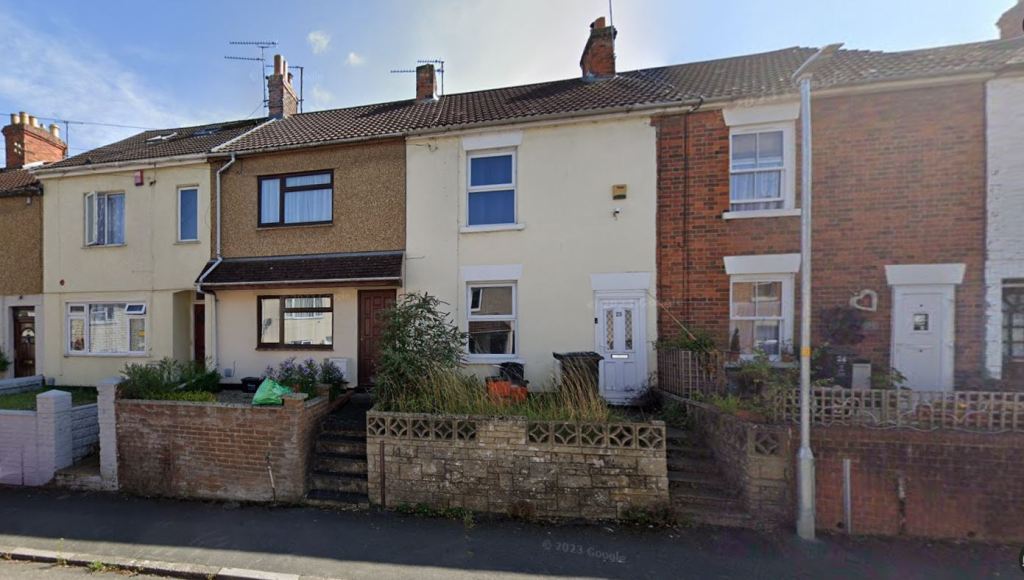
Stafford Street and the Timms family home

Frank Apted

The following account of Frank Apted’s life was published in the Great Western Railway Magazine at the time of his retirement in 1908. It records only the details of his career, which is probably all you should expect to find in a work place publication, but Frank’s life was so much more than this.

Born in Peckham in about 1842, Frank was the son of schoolmaster Henry Apted and his wife Ruth, a schoolmistress. By 1861 Frank had begun his career with the Great Western Railway and was lodging with Thomas Jones and his family at 16 Faringdon Street. Frank would go on to marry Thomas Jones’s daughter Sarah but sadly this was to be a brief marriage as Sarah died in 1867 aged 25. She was buried in the churchyard at St. Mark’s.

Frank married for a second time in 1869. His second wife was Mary Jane Stone and this marriage would prove a long one but not without great sadness as well. At the time of the 1911 census Frank and Mary were living at 23 Park Lane. They had been married for 41 years during which time they had had 7 children. Sadly, only three survived to adulthood – daughters Alice, Louisa and Edith.

Later that same year their daughter Louisa died aged 30 in the Devizes Asylum. She was buried on August 24, 1911 in Radnor Street Cemetery, grave plot D125. Frank died on October 7, 1920 aged 78 and was buried with his daughter.

Mary Jane continued to live at 23 Park Lane where she died in 1930 aged 82. She was buried with Frank and their daughter on May 14.

When lives are reduced to facts and figures it can detract from the experience of these ordinary people. Perhaps Frank’s demanding and successful career with the GWR focused him, giving him strength amidst so much loss and sorrow. Perhaps he had a strong, religious faith which sustained him. Maybe I will find a reference to this in my future research. And what about Mary Jane …

Mr Frank Apted entered the service in 1856 as an apprentice to engine fitting, etc. He was subsequently transferred to the Running Department at Gloucester, returning to Swindon as an inspector in the works. Subsequently, Mr. Apted was placed in charge of the Works Drawing and Cost Office and in 1880 was given charge of the plant for testing chains, etc.

In his younger days Mr. Apted, realising the value of technical knowledge, studied assiduously, and obtained certificates qualifying him as a science teacher, which vocation he followed with conspicuous success for a number of years at the evening classes connected with the Mechanics’ Institute. In the pursuit of his various callings, Mr. Apted exhibited marked ability, and was one of the most capable of the technical staff at Swindon.

Great Western Railway Magazine 1908

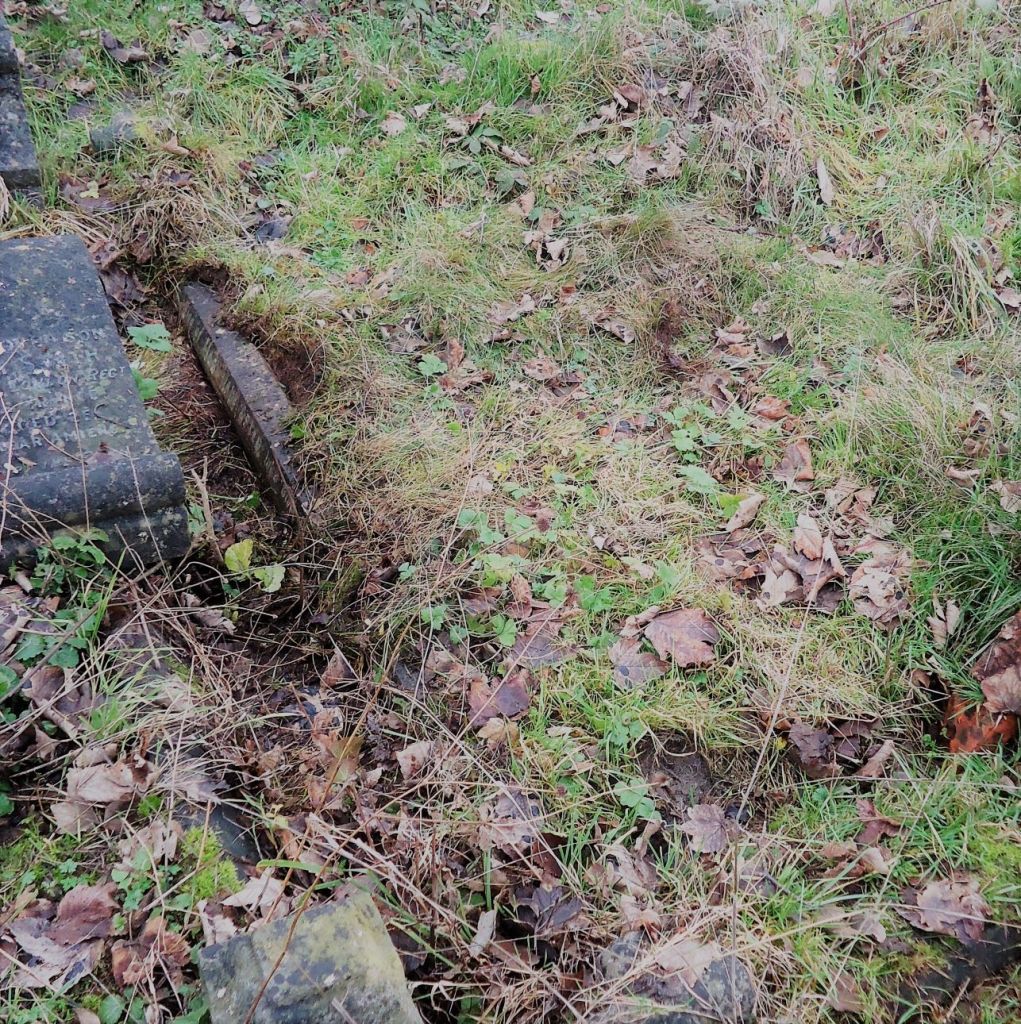
Frank was buried in grave plot D125. Today his grave and modest kerbstone memorial is very overgrown and almost lost.

Martha Hall – Richard Jefferies’ auntie

As part of our Swindon Suffragette festival in 2018 I conducted a ‘women only’ walk at Christ Church.

The magnificent Celtic Cross (see below) marks the grave of Martha and William Hall. The Celtic Cross is an ancient Christian symbol dating back to the 9th century and is particularly associated with Ireland. Martha’s husband William Hall was born in Longford, Ireland in 1815 and named his property on The Sands, Longford Villa after his birthplace.

Martha and William Hall

Martha’s father John Luckett Jefferies had left Swindon as a young man and moved to London where he worked as a printer. He married Frances Ridger in 1809 and they had five children born in London. But in 1816 John was forced to the leave job, the home and the life he loved in London to return to Swindon where the family farm at Coate was failing.

Today the farm at Coate is better known as the birthplace of naturalist, journalist and poet Richard Jefferies, the son of James Luckett Jefferies, Martha’s brother.

Martha was born on July 12, 1818, the first of the couple’s children to be born back home in Wiltshire. She was baptised at the old parish church of Holy Rood and married William there on June 30, 1849.

William Hall died on August 30, 1898 and Martha on January 22, 1902.

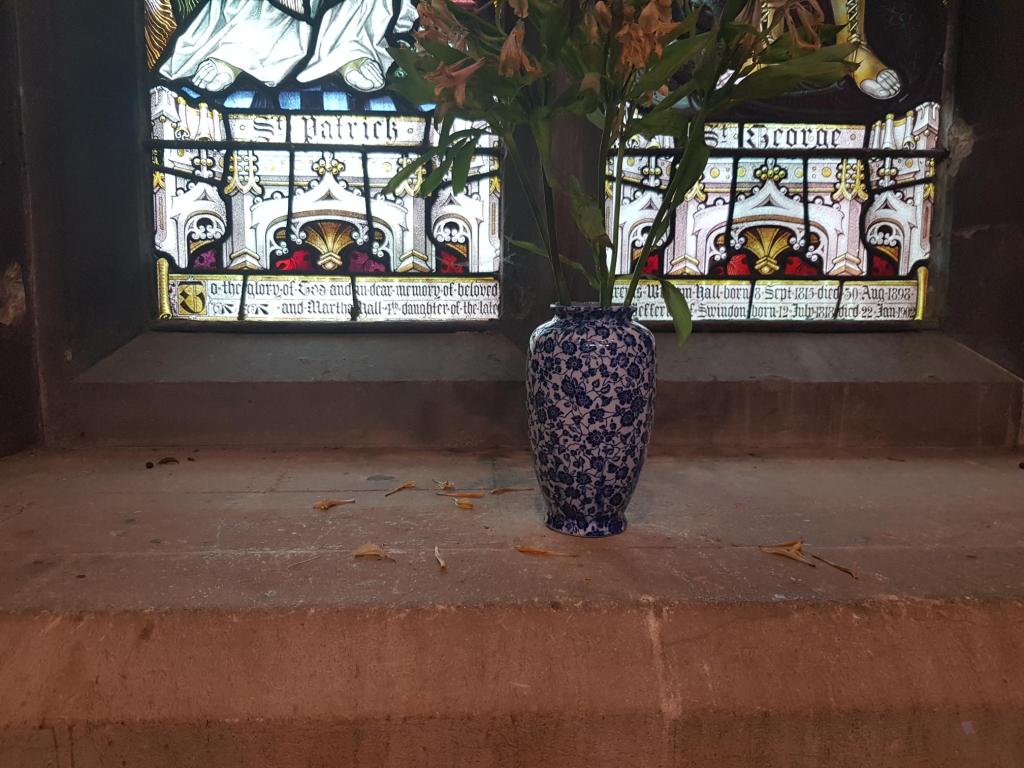
William and Martha Hall also have a stained glass window dedicated to them in Christ Church.

Martha Morris – for 41 years the faithful and devoted wife of William Morris

During our Swindon Suffragette festival in 2018 I led a guided walk around Christ Church churchyard, visiting some of the notable women buried there.

There is a lot known about William Morris, founder of the Swindon Advertiser. He was outspoken and challenging in the columns of his newspaper. He was a member of the Local Board of Health (the local authority of his day). He travelled widely and wrote several books.

But it is less easy to find out what his wife did. Maybe she belonged to clubs and served on committees, in keeping with her husband’s status in Swindon, but it is difficult to find out how she spent her time. That is, if she had any to spare.

Martha was baptised in Wroughton on July 14, 1823, the daughter of shopkeeper James Howe and his wife Mary. At the time of the 1841 census Martha worked as a servant at Salthrop.

Martha and William married in the parish church at Walcot, Somerset on September 8, 1845. William described his occupation as Printer. He was under the age of 21 and Martha was two years older.

At the time of the 1851 census the couple lived in Victoria Street. William described himself as a Letter Press printer employing two men. He was 25 and Martha 27. They had been married less than six years and Martha already had three children. Jessie 4, William 3 and Frederick 1. (Jessie died in 1853 and was buried in Wroughton, most probably in a Howe family grave). Also living with them was William’s brother and sister. Henry Morris was 14 and described as a letter press printer and 12 year old Elizabeth was described as a servant. Obviously family members had to pull their weight.

By 1861 Martha had had another five children – Walter 9, Samuel 7, Valentine 5, Jessy 3 (named after the daughter who had died) and 7 month old Edwin. And that wasn’t the end – by 1871 Martha had had another three children – Kate 9, Septimus 7 and Mark 4 – 11 children in all.

Martha died on December 14, 1886 aged 64. I was hoping to find an obituary in William’s paper. There is a death notice, but again it’s all about William rather than Martha.

It reads:

For 41 years the faithful and devoted wife of William Morris (Editor and Proprietor of the ‘Swindon Advertiser’).

He also publishes a rather flowery poem by G.J. Davis, but the last few lines are rather nice.

Oft to the worthless, men memorial raise,

To keep their memories fresh. Beneath the sun

Our love will never die, thou gentle one!

Administration of Martha’s will was left in the hands of her son William Edwin Thomas Morris and her effects were valued at £151 8s 3d.

She was buried in Christ Church churchyard on December 18 and is remembered on the Morris family memorial there.

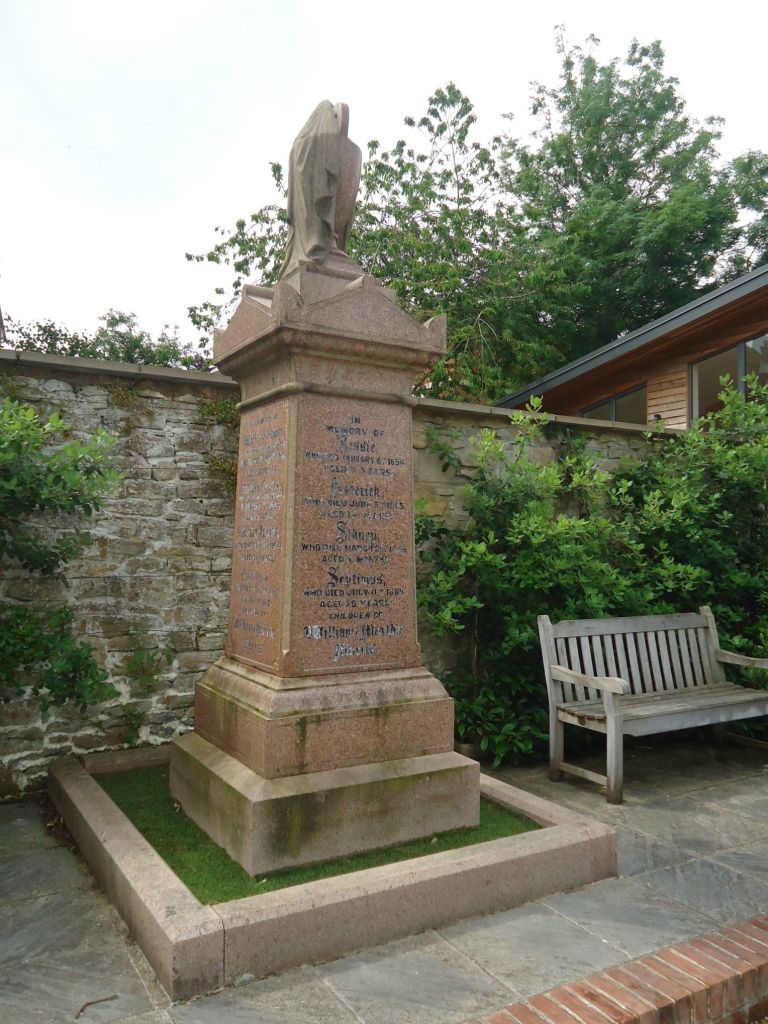
The Morris family memorial in Christ Church

Henry Fox Townsend

Another story from Christ Church churchyard.

Swindon solicitor Henry Fox Townsend was feeling as fit as a fiddle when he boarded the 3 pm train for Paddington on Thursday December 13, 1894.

The purpose of his London visit was to bid farewell to his brother Charles, a tea planter, who was returning to India the following day.

The brothers had a table booked at the Holborn Restaurant on the Friday but Charles was to report that Henry failed to turn up.

Upon the arrival of the train at Paddington it was noticed by one of the railway officials that Mr. Townsend was in an insensible condition, apparently suffering from a fit, reported the Swindon Advertiser. He was at once removed and conveyed to St. Mary’s Hospital, where he died shortly afterwards without regaining consciousness.

His death at the early age of 34 shocked all who knew him. His friends told how he had recently purchased a property called the Firs in Wroughton where he intended settling down and enjoying what appeared to be, in all probability, a long and prosperous career.

The following week the Advertiser reported on the verdict of the inquest where coroner Dr. Danford Thomas heard how railway porter William Lovesey found Townsend lying on his face on the floor of one of the compartments. Dr. Poynton told how Townsend was unconscious and breathing stertorously upon arrival at St. Mary’s Hospital. Both pupils had become dilated and the unfortunate gentleman remained insensible till his death, which took place at a quarter past nine the same evening.

A post mortem examination showed that the cause of death was compression of the brain, the result of an apoplectic seizure, continued the report.

The funeral took place the following Tuesday with the coffin covered in wreaths, and carried on a hand bier the short distance from Townsend’s offices at 42 Cricklade Street to the parish church.

Chief mourners were the deceased’s sister Annie Louise and brothers Southcote and Charles. Others present included Ambrose Goddard and his son Capt. Fitzroy Pleydell Goddard, Henry’s partner Edward Tudor Jones and rival solicitors Henry Kinneir and his son Walter.

Among the many wreaths was one with the sad message From his mother with tender love and unutterable sorrow.

Unbelievably Annie Townsend had lost her husband James Copleston Townsend in identical circumstances when returning from London on the evening of March 26, 1885, he was noticed to totter and fall as he alighted from the train.

He was carried to the Refreshment Rooms and then to one of the bedrooms, where he momentarily regained consciousness but died at around 10 pm.

Image published courtesy of Duncan and Mandy Ball.

James George Merricks

James George Merricks has already appeared on our radar, thanks to Rhonda and her Astill family history research.

She tells us that Amy Maud Astill’s husband Arthur Mills was assistant to Mr Merricks of Gilbert’s Furniture shop in Newport Street, Swindon in 1900, becoming a partner in the business in 1923 and moved the shop to Bridge Street, Swindon and renamed it Mills and Merricks – of course Gilberts is still trading in Newport Street to this day, perhaps Arthur and James became partners in an independent venture.

Now I need someone to fill in a few more gaps, such as how did James end up in South Africa in 1891 and what was Alice doing there?

In 1881 Alice was working as a governess for farmer Walter G. Cloke at Wiltshire Farm in Wokingham. Meanwhile James was working as a draper’s assistant in Bath. But by 1891 they were getting married in South Africa where three of their four sons were born, Eric George in 1892, Edward Alfred in 1893 and Lionel Marten in 1896. A fourth son, John Gordon was born in Swindon on June 14, 1900.

James George Merricks

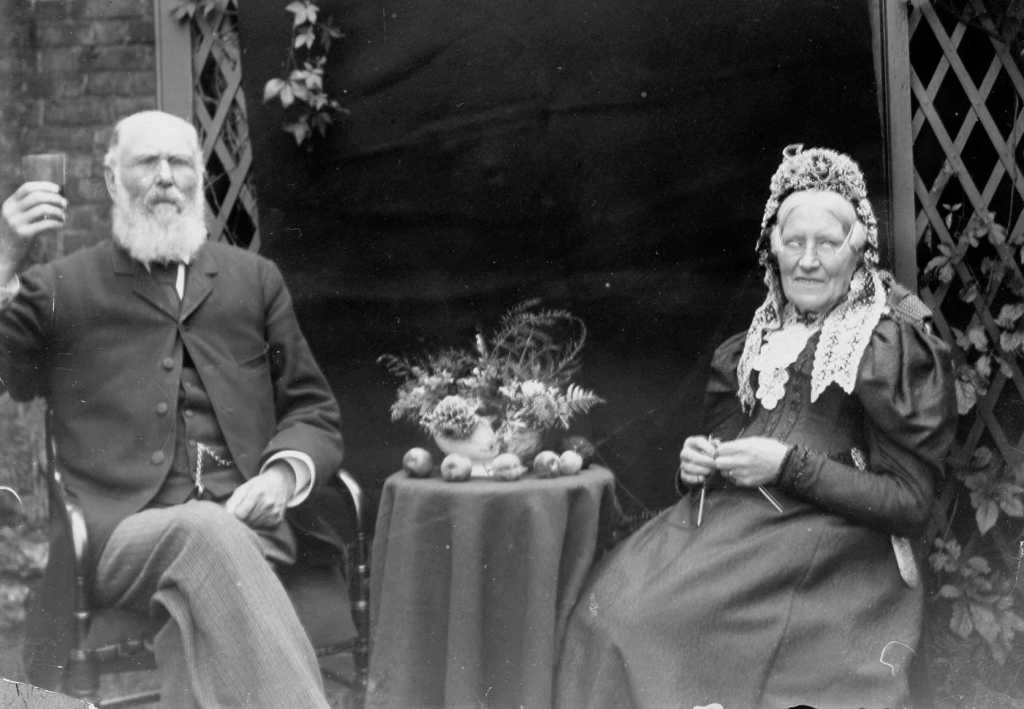
By the time of the 1901 census James and Alice were living at 42 St. Margarets Road, possibly where this photograph was taken in the back garden.

James George Merricks was a member of the Baptist Tabernacle, acting as Treasurer for 21 years. In 1934 shortly before his death, Mr J.G. Merricks presented a complete set of individual Communion bread plates to fit the cups previously given by his great friend and associate Mr. E.J. Lay. The two men are pictured together here.

There is still more to be learnt about this man. Especially how he came to spend such a lengthy spell in South Africa. Could this have been to do with the Baptist Tabernacle, I wonder?

James George Merricks died aged 75 years at his home 38 Devizes Road. He was buried on April 20, 1935 in grave plot E7574, joining his wife Alice who died in November 1923.

William and Jane Frampton

Continuing the story of Swindon Suffragette Edith New and her family.

Round the other side of Christ Church churchyard we met Edith’s four great aunts, the Frampton sisters. Here we meet her grandparents, William and Jane Frampton.

Jane was born in Cricklade in 1816, the daughter of John and Ann Akers and William was born in Swindon in 1813, the son of James and Ann Frampton. However, when the couple married it was at St. Mary’s Church, Whitechapel in the East End of London on May 24, 1837. The entry in the parish registers states they were married by banns, which had to be called over a three-week period, and that they were both said to be ‘of this parish.’

By the time of the 1841 census they were back in Swindon living in a house in Prospect Place and their eight children were all born and baptised in Swindon, the older ones in Holy Rood and the three younger ones at Christ Church.

William owned several properties in Old Town and you might have expected the family led a settled, prosperous life, but they were not without their problems.

In 1851 William declared himself bankrupt. The bankruptcy notice declared that he owned two houses and shops in Wood Street, two houses in Prospect Place, the Victoria Inn and an adjoining house in Victoria Street and four dwellings in Union Row.

Five years later he was back in business working as a carpenter, builder, appraiser and undertaker and by 1861 he was working as a builder and living in Wood Street.

Quite how he dealt with this set back in the 1850s remains unknown but it must have been a huge worry to Jane. Again, we know so little of her life. And again, I’m left wondering if all this made an impact on the way Jane raised her daughters, especially Isabella, Edith’s mother who was widowed young with small children. Was there always a sense of insecurity in the family with the women picking up the pieces? It would be so interesting to read first hand accounts of these women’s lives.

Perhaps we should all commit to writing down our own histories, not as a great work of literature but just to inform those that come after.

Jane died in May 1873 aged 57 and William died in December 1875 aged 62.