I am a local historian and writer researching the history of Radnor Street Cemetery in Swindon. I have written three books - Struggle and Suffrage in Swindon: Women's Lives and the Fight for Equality published by Pen and Sword and The Ladies of Lydiard and West Swindon - What the eye doesn't see written in collaboration with Angela Atkinson and Roger Ogle both published by Hobnob Press.
On International Women’s Day we remember some of the remarkable women who have contributed to Swindon’s history and now lie buried in Radnor Street Cemetery.
I’ve lived in New Swindon all my life. I was born in my gran’s bedroom in Bristol Street and I’ve never known anywhere else. But I’m tired of the close-knit railway community where everyone knows everyone else’s business, and a life confined to the Works and the railway village. I’m weary of seeing the same faces day in, day out, I don’t want to marry a boilermaker or a fitter and live the same life my mum and my Gran have.
“But that’s the strength of this place,” said Gran. “It’s knowing Mrs so and so’s baby is poorly or that Mr whatsit needs help with his shopping.” Gran was settling in for a long session, I could sense it. I offered her a piece of cake.
“When me and your Gramps moved here, I thought we had made the biggest mistake of our lives. All that was here was the Works and the company houses and that was it. No market, no shops, no church even, nothing.”
She took a sip of her tea.
“Is there any sugar in this?”
“Two spoons, Gran.”
“Your Gramps wanted to move out of London. He thought the kids would have a better future here. He thought living in the country would be healthy.” She shook her head sadly.
“The company houses looked nice enough from the outside but the railway village was worse than any East End slum. That first winter we lived here there was an outbreak of typhus. Six children died in Bristol Street. We were fortunate.”
She twisted the wedding ring on her gnarled finger, worn thin by hard toil.
“Did you ever consider moving back to London?”
“It wasn’t that easy and your Gramps had a good job in the Works here. He kept telling me we’d stick it out a bit longer, give it a chance, he’d say.”
“So, what persuaded you to stick it out?”
“Your grandfather and the men he worked with, they made the difference. Men like George Barefoot, elected on to the Mechanics’ Institute Council. Those men were investors; investors in people, they weren’t interested in share prices and profit. They wanted to protect their families and improve their standard of living. They wanted health care in a time when people didn’t call out the doctor because they couldn’t afford to. They were good men and they made the difference.”
“I’m glad your Gramps and George Barefoot gave New Swindon a chance.”
Gran spooned out the sugar from the bottom of her cup.
“Is there anymore tea in that pot? And make sure you put some sugar in this time.”
The facts …
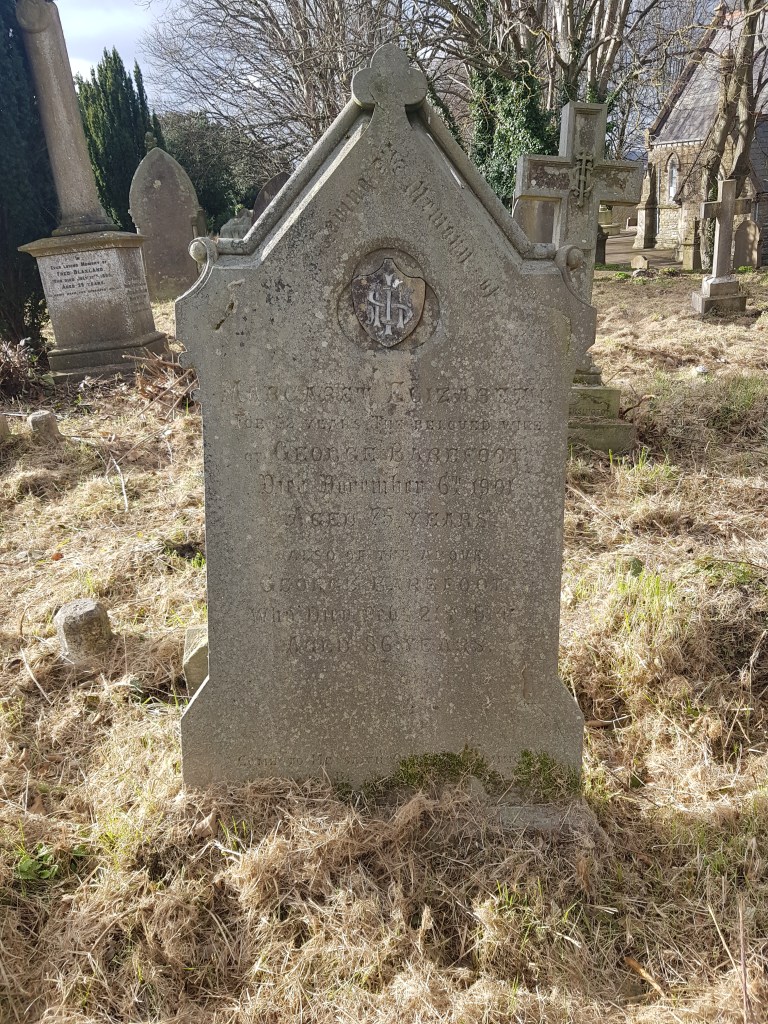
George Barefoot was born in Maidenhead in 1828. He married Margaret Elizabeth Williams, a dressmaker, at Holy Rood on December 23, 1848. George was transferred to Gloucester where on November 12, 1865 three of the couple’s children, John James, William Alfred and Mary Ellen, were christened at St James’s Church, Gloucester. The family’s address is given as Front Terrace. By 1869 the family had returned to Swindon.
That same year George Barefoot was elected on to the Mechanics’ Institute Council with 166 votes. The following year he was re-elected with an increased number of votes, topping the poll with 281. Election results continue to show his presence on the Council and in 1873 he is recorded as ‘George Barefoot Locomotive Department K shop 296 votes.‘
George Barefoot died at the age of 86 years. He was buried on February 26, 1914 in Radnor Street Cemetery in plot E7936
Death of Mr George Barefoot
The death took place on Saturday, at the residence of his son-in-law, Mr F. Edge, “Inglewood,” Deacon Street, Swindon, of Mr George Barefoot. The deceased gentleman who was very well known in Swindon, was born at Maidenhead in 1828, and commenced his working career as an office boy at Paddington Station. In 1847 he came to Swindon, being then at the age of 19, and was transferred for a few years to Gloucester, and finally returned to Swindon.
It is interesting to note that he was married at the old Parish Church by the then Vicar (the Rev. H.G. Baily), and he has, therefore, watched Swindon grow from what were practically two large villages into the large and enterprising town it is to-day.
He was a chargeman in the GWR Works for over 30 years, and he won the esteem and respect of all who knew him. In recognition of his faithful services the company granted him a pension on his retirement, and he went to live with his son-in-law and daughter.
He was always a prominent Conservative, and the late Sir Daniel Gooch used to speak of George Barefoot as his staunchest supporter in the Works. He had been a regular attendant at St. Mark’s Church.
A few weeks ago Mr. Barefoot had a stroke, and took to his bed, the end coming peacefully on Saturday. He leaves five children to mourn his death.
Swindon certainly pushed the boat out when King George V and Queen Mary came to town. The streets were all decorated and the people turned out in their thousands, cheering and waving their handkerchiefs as the royal car travelled down Regent Street.
The King’s first port of call on that April day in 1924 was to lay a wreath at the cenotaph, a gesture that gained him the respect of even the most anti royalist for the King was not that popular in some quarters so soon after the Great War. But not in our family – we were Royalists through and through – and after that visit in 1924 people used to call my Pops ‘Your Majesty.’
The Royal couple visited the Victoria Hospital and the Medical Fund building, but the highlight of the day for us was their tour of the Railway Works. I was working in the Carriage and Wagon Works, making luggage rack netting and we knew the Queen was going to be brought around. I don’t think I have ever been so nervous in all my life. She stood right behind me, watching me work. She smelt lovely, lilies of the valley. I didn’t dare look round, even when I heard her say ‘what nimble fingers you have young lady.’
But the star of our family show was my Pops, George Bayliss. Some 75 old railwaymen who had worked for the GWR for more than 50 years were introduced to the King and Queen that day and the King actually spoke to my Pops. It was all there, published in the Adver. He asked him how old he was – “I am 69, your Majesty, and I have had 58 years’ service,” to which the King replied “I hope to be as good a man as you are when I am your age.”
Afterwards a photograph was taken to commemorate the occasion. You can’t miss my Pops, sitting in the front row in his spotless white ducks, the white jacket and trousers worn by railwaymen in the old days. Pops took it all in his stride, but for me it was the proudest day of my life. The Queen admired my work and my Pops got to talk to the King. I wish I had a copy of that photograph.
The facts …
George was born in 1855 in Newark on Trent, Nottinghamshire the son of John Bayliss, a boiler maker and his wife Hannah. By 1881 he was living in Swindon and lodging at 17 Harding Street with Samuel Shallcroft and his wife and two daughters. He was 25 years old and working as an engine fitter.
George married Henrietta Kirby in 1882 and at the time of the census in 1891 they were living at 14 Charles Street, Rodbourne with their children William, Frederick, Walter, Lilian, Mabel and Edith. A seventh child, Beatrice May was born in 1893.
By 1901 the family had moved to 189 Rodbourne Lane, George’s home until his death in December 1926 aged 71 years old. George Bayliss was buried on December 11, 1926 in plot D760.
The home of George Bayliss in Rodbourne Road
The couple were non conformists and had children baptised on the Highworth Primitive Methodist Circuit and the Regent Primitive Methodist Circuit. George would no doubt have been happy to be buried in Radnor Street Cemetery where the burial ground was unconsecrated and the cemetery chapel non denominational.
Swindon Advertiser.
“He (Bayliss) is one of the old brigade and was conspicuous by the fact that he wore the old time white jacket and trousers. Though not worn nowadays, Mr Bayliss will not discard the old style and has a clean suit every week. His Majesty chatted with him for a few minutes and said to him “I hope to be as good a man as you are when I am your age.”
The photograph titled Swindon Works Veterans Inspected by Their Majesties the King and Queen on April 28th 1924 is published courtesy of Local Studies, Swindon Central Library, although the general consensus is that this is probably not the original. Carefully examination has revealed a couple of super imposed images, presumably those of men unable to attend on the day.
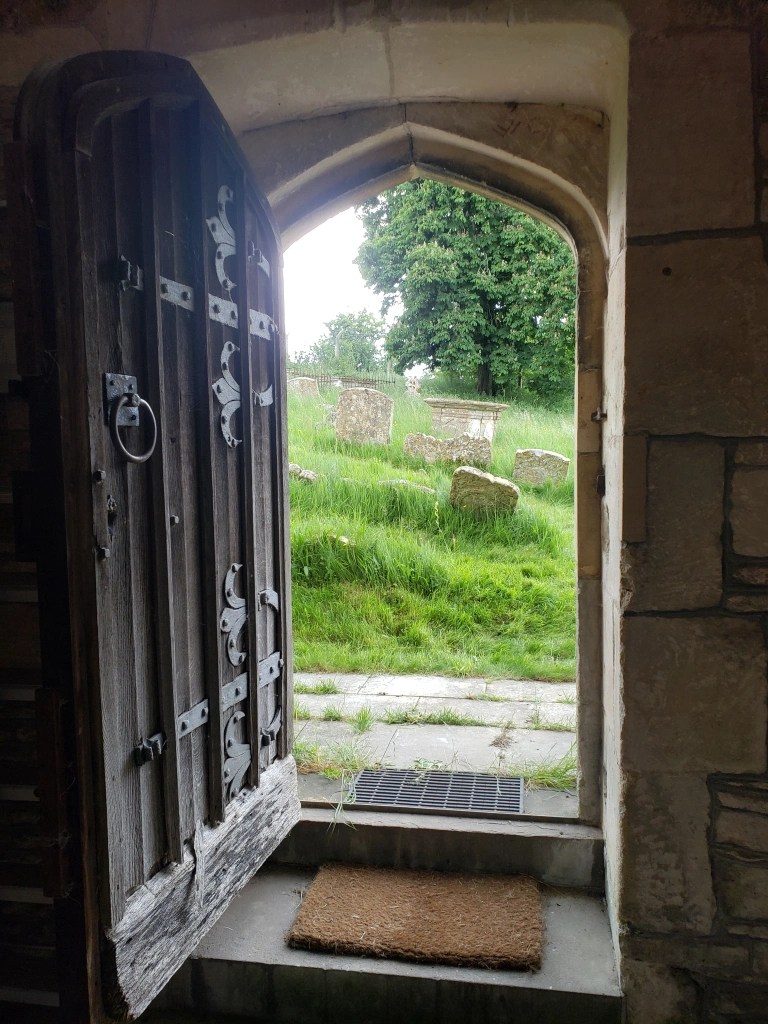
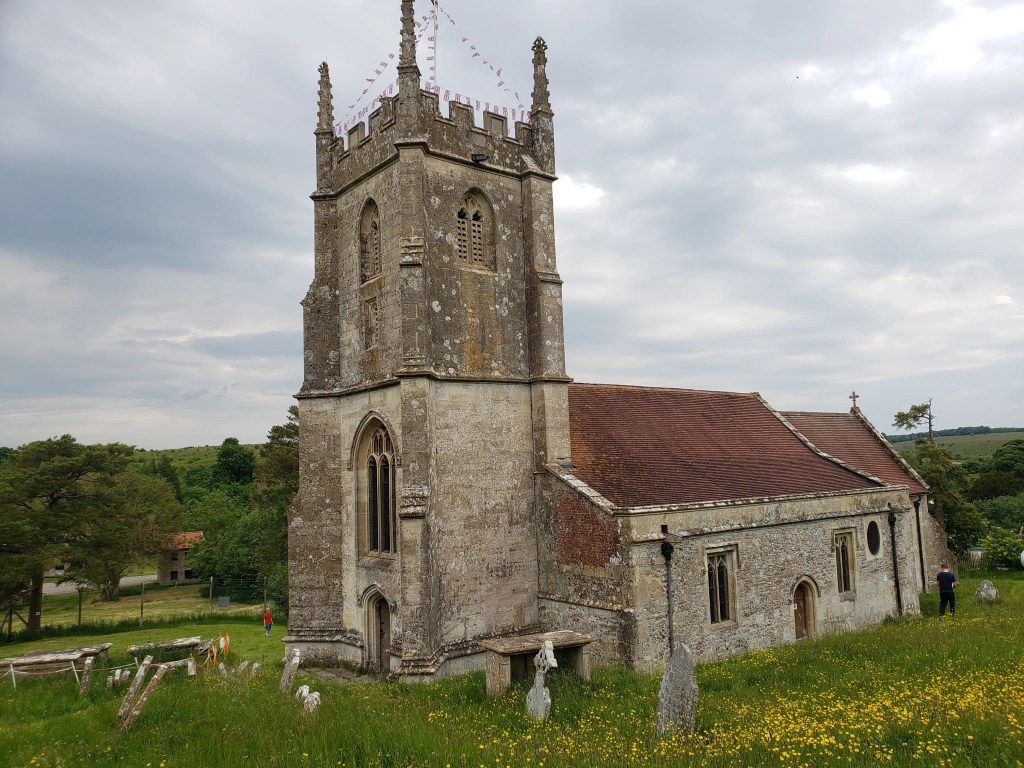
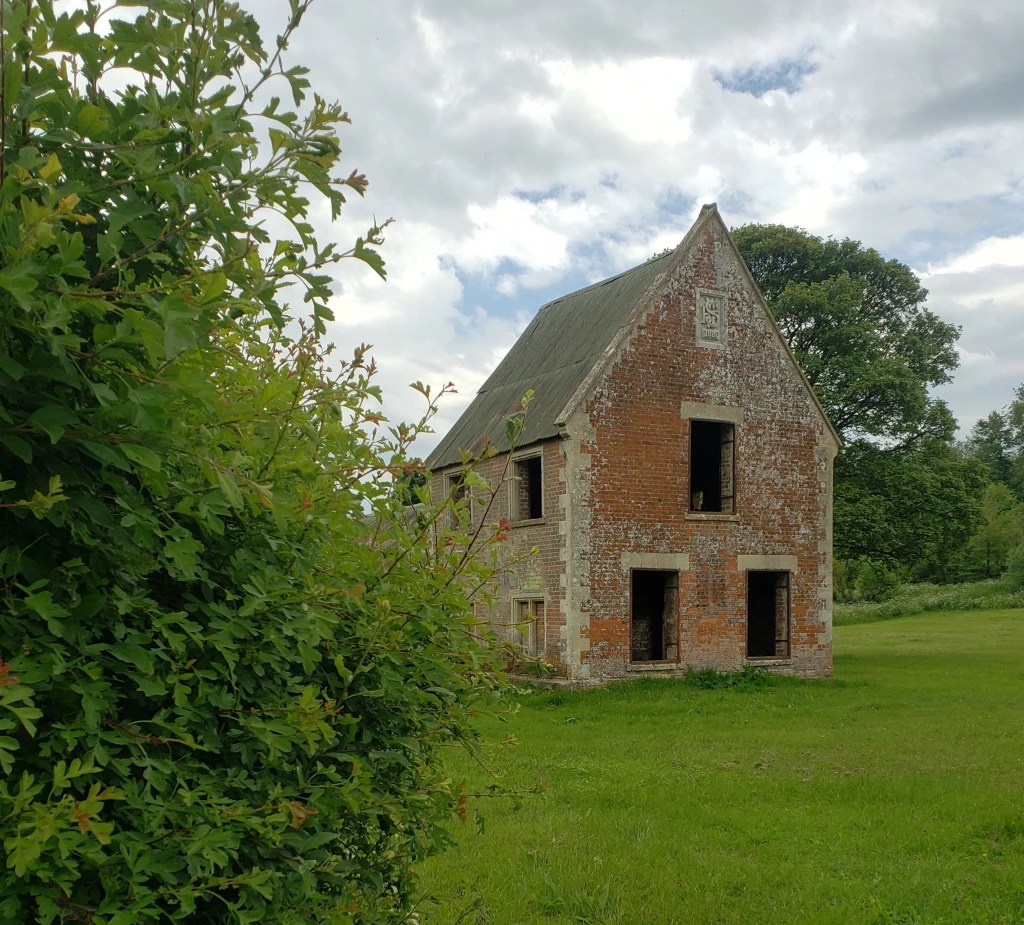
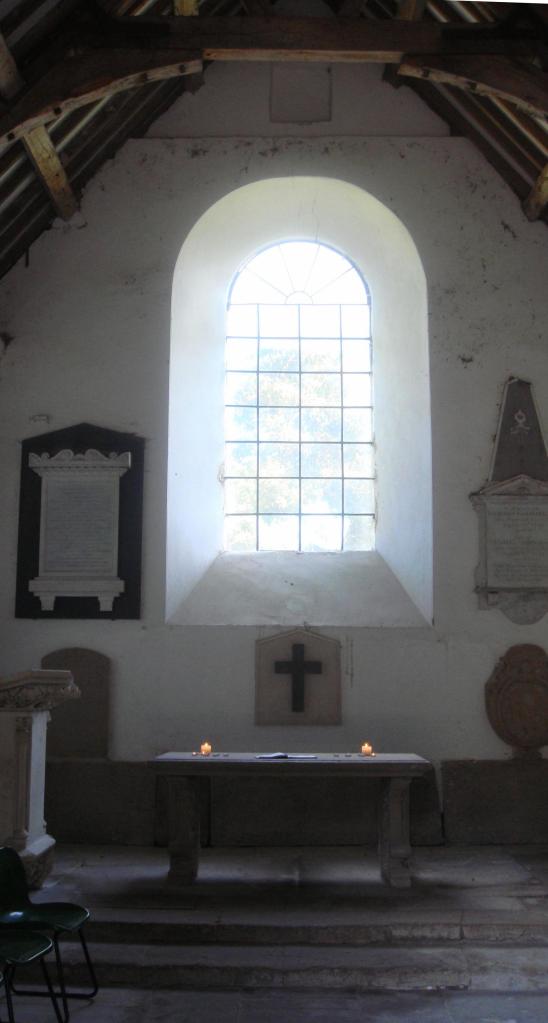
A spur of the moment decision saw me and my two ‘grave’ friends Jo and Tania set off for a trip to the village of Imber. Deep in the heart of the Salisbury Plain MOD training area the village of Imber is inaccessible except on a few, rare occasions during the year and in 2022 volunteers were able to open the church of St. Giles during the late Queen’s Platinum Jubilee weekend.
In 1943 the village was occupied by the War Department for training purposes ahead of the D-Day landings. Already owned by the MOD, the village had long been under siege with villagers well used to a military presence all around them. But when the official order came to give up their homes, the patriotic Imber villagers complied with a heavy heart under the assurance that it would be for the duration of the war alone.
However, when the villagers prepared to return, they quickly discovered this was not, and never would be, possible.
For the story of the campaign to reclaim the village visit the Imber Village Facebook page and watch the video.
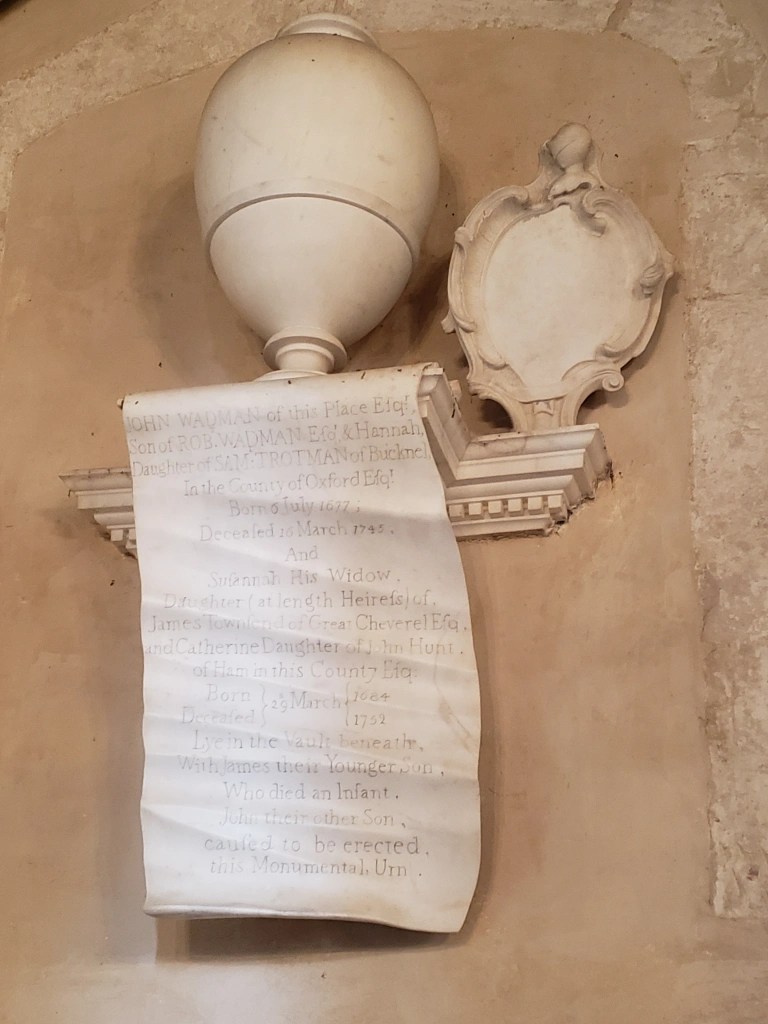
This stylish plaque inside the church is to the Wadman family of Imber Court, Lords of the Manor during the 17th and 18th centuries.
The text of Susannah’s last Will and Testament appears to have been a few informal words, which later required endorsement by two independent witnesses familiar with Mrs Wadman’s writing and signature.
My Son
I desire you will give to the poor of Road, five pounds and to the poor of Imber five pounds, and to the poor of Amesbury ten pounds each to be paid and distributed in a Nook after my Funeral. S:Wadman
My Son
I likewise give ye Servant ye is living with me at my death one years wages and as much of my Wearing Apparel of every kind as my daughter will not accept of
If Mrs Tayler will accept of such part of my Apparel as my daughter shall think proper to part with
(indorsed) This to my Dear Son
Visit the website for the opening dates in 2025 and do allow plenty of time – it maybe awhile before you can make a return visit.
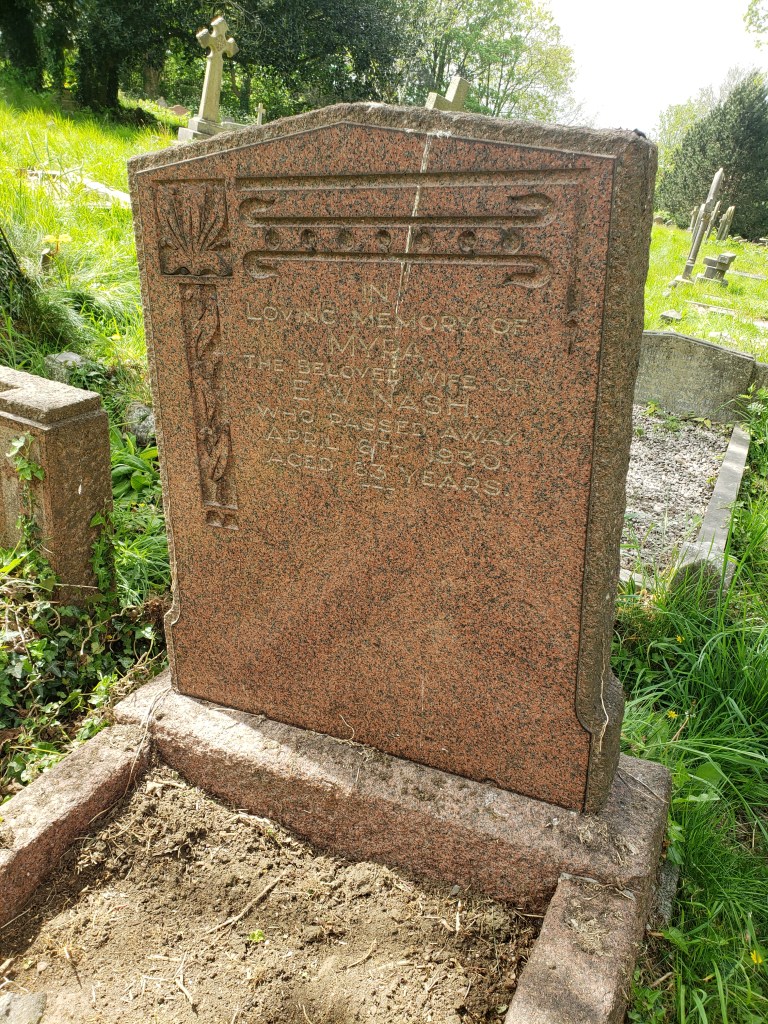
Throughout history women are invariably identified by their father’s occupation and status, then their husband’s and eventually their children’s and such was the case of Myra Nash.
Born in 1867 Myra was one of Matthew Beasant’s large family of children. Myra was baptised at All Saints Church, Lydiard Millicent on October 6, 1867 and grew up at The Green, Lydiard Millicent. Matthew was a labourer in the GWR Works, making the four mile journey from his home in Lydiard Millicent to the railway factory in Swindon every day.
At the age of 13 Myra was already out at work, employed as a domestic servant for George Seward Prentice and his wife Eliza at Grove House, Lydiard Millicent. However, sometime after 1881 she moved into Swindon and a job as a domestic servant for the Nash family at their new confectionery business premises at 32 Bridge Street. It was obviously while working here that she fell in love with the eldest son Edmund William Nash whom she married at St. Mark’s Church on January 9, 1887.
By 1891, with the confectionery business doing well, Edmund had left his job in the Works to concentrate on the family business, and in the census of that year describes himself as a ‘sugar boiler.’ The couple have one child, Rose. By 1901 they had left 32 Regent Street and were living at 243 Cricklade Road where Edmund describes himself as a ‘confectioner.’ By now the couple have a second daughter, Winnifred, and despite having two children and a family business, the census enumerator does not see fit to record any occupation for Myra. At the time of the 1911 census the family are now living at 104 Cricklade Road, their long time home. Edmund describes himself once again as a ‘sugar boiler,’ the couple’s 19 year old daughter Winifred is employed as a Shop Assistant in the family’s confectionery business and now the couple have a young son, born in 1902 – Edward Montague Nash.
Edward Montague Nash (Teddy) went on to be a talented sportsman, playing county cricket for Wiltshire, but he is probably best remembered as Swindon Town F.C. goalkeeper. As a young footballer he played for Gorse Hill Boys and North End Albion before signing a youth contract with Swindon Town in 1916. He signed a professional contract in 1920, playing in the 1919/20 season until the 1929/30 season when he transferred to Brentford.
Teddy Nash pictured in his last season with Swindon Town F.C.
He even gets first mention when Myra’s death is reported in the North Wilts Herald, April 11, 1930.
Myra died aged 63, but despite a reasonably well documented life, we really know little about her.
When Myra died in 1930 there is a reference that she had seldom watched her son play of late ‘owing to nerves’ and I am left wondering what Myra’s story really was.
Death of Mrs Nash
Mother of Swindon Town’s Goalkeeper
“Teddy” Nash, the well known Swindon Town goalkeeper, has sustained a sad loss through the death on Sunday night, of his mother, Mrs Myra Nash.
Both the late Mrs Nash, and her husband, Mr Edmund William Nash, are well known in Swindon as tradespeople, and for the last 30 years have carried on a confectionery’s business at 104, Cricklade Street, Gorse Hill, Swindon. Mrs Nash was 63 years of age, and early last night appeared in the best of health.
She very seldom saw her son play for the Town of late owing to nerves.
North Wilts Herald, Friday, April 11, 1930.
Mental Health Awareness Week 2025 will take place from May 12-18 as we continue to try to remove the stigma and encourage people to talk about their mental health.
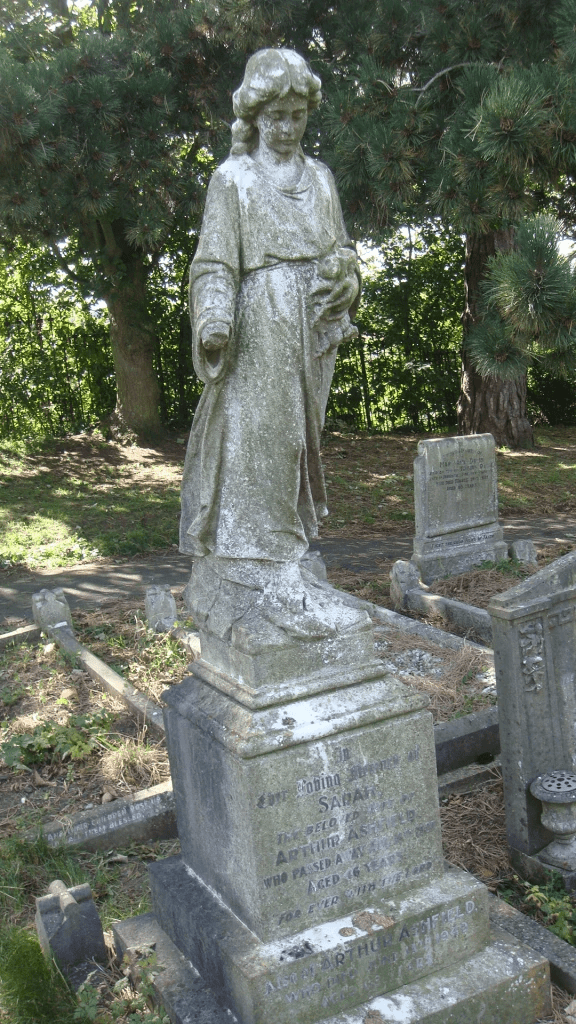
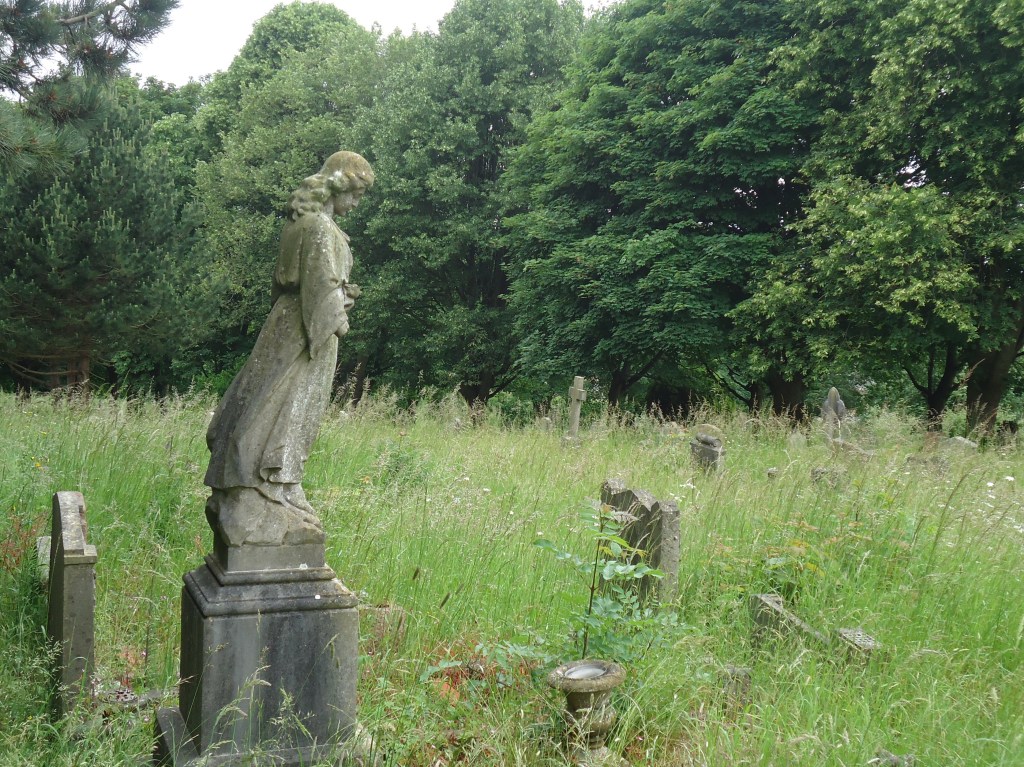
The Ashfield angel was my mum’s favourite memorial in Radnor Street Cemetery. Weird, I know, but my mum was like that.
She wanted a ‘Victorian’ funeral with a hearse drawn by black horses with plumes and mutes (whatever they are) in attendance, until she realised how much it would all cost. I thought it sounded like an East End gangster’s funeral myself.
My mum loved Radnor Street Cemetery but she always knew it could never be her final resting place. The cemetery had long since closed to new burials and we didn’t have an existing family plot.
Mind you she spent enough time up there when she was alive and as I mentioned the Ashfield angel was one of her favourites.
“She looks like she has taken them by the hand and led them away to heaven,” she used to say. I know, vaguely creepy.
Mum wasn’t even that religious and she certainly didn’t believe in a life after death and heaven. Personally, I don’t think the statue is even an angel, but there we are. It’s funny the effect Radnor Street Cemetery can have on a person. Take me for example, wandering around the graves and stopping at the Ashfield angel.
The facts …
This is the final resting place of Arthur and Sarah Ashfield.
Arthur worked as a carpenter and railway horse box builder in the GWR Works. In 1904 he married Sarah Gray, the daughter of a steam engine maker and fitter. At the time of the 1911 census Arthur and Sarah lived at 30 Alfred Street with their five year old son Charles and Arthur’s widowed mother Annie.
The youngest child of Charles and Annie Ashfield, Arthur was born in 1881, the year that Radnor Street Cemetery opened. Although his birth place is stated as Stratton, by the time he was a month old the family were living at 19 Redcross Street, the original name for Radnor Street.
In 1891 Arthur and his family were living at 71 Radnor Street in quite possibly the same house, following the renaming and renumbering of the street.
Sarah died in 1927 aged 46 and Arthur 22 years later when he was 68.
Several years ago I joined an ‘expedition’ to discover the abandoned churchyard at Eysey and of course, as invariably happens when I start researching, I found a link to the parish of Lydiard Tregoze. Not this time to the St. John family and Lydiard Park, but the Willis farming family.
The medieval settlements of Eysey and Water Eaton were transferred to the parish of Latton, Cricklade in 1896 when they were by then just a few scattered cottages and farmsteads. The population of Eysey had always been a small one, just 95 adults in 1851 and only 52 in 1901.
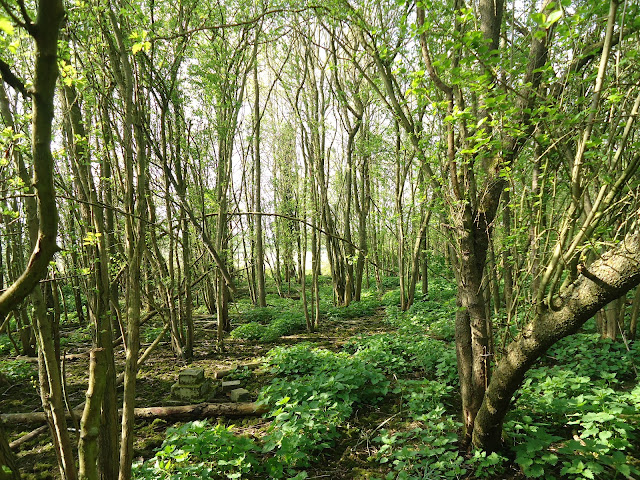
The church of St Mary’s, Eysey dated from the 14th century but was demolished and rebuilt in 1844. The Victorian church that replaced it stood empty for several years before it too was demolished in 1953. The parish registers date from 1571, and end in 1947 so as you can imagine there are a fair few burials in the churchyard. Today there is evidence of the boundary wall and some memorials but the whole area is heavily wooded and overgrown.
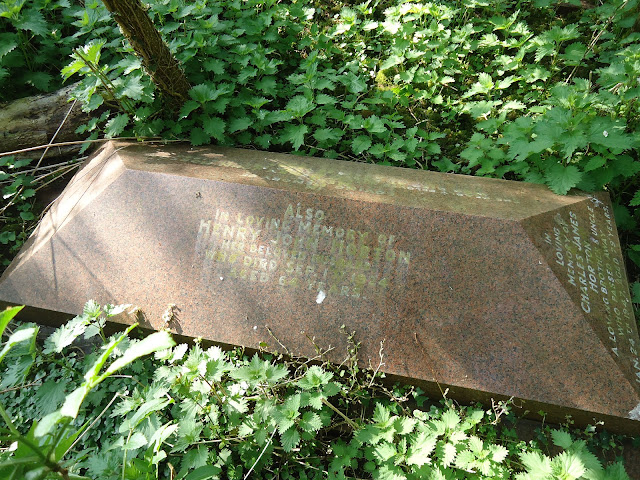
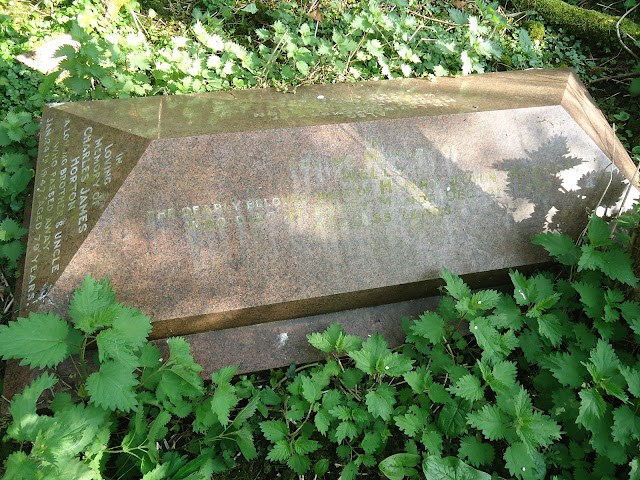
Amongst the nettles and fallen trees I found two perfectly preserved pink granite memorials both apparently dating from the 1920s and contained in a large family plot.
The inscription on one of the graves reads: In Loving Memory of Nelly, the dearly beloved wife of Henry John Horton who died at Eysey Manor Dec. 5th 1924 aged 55 years. On the other side of the memorial the inscription reads: Also In Loving Memory of Henry John Horton her beloved husband who died Sept 1st 1924 aged 64 years. The third inscription reads: In loving memory of Charles James Horton a loving brother & uncle who passed away Jan. 24th 1947, Aged 79 years.
In the neighbouring grave is a memorial to a mother and son. The inscription reads: In loving memory of Margaret the dearly beloved wife of Ernest Willis who died 24th July 1958. Aged 95 years.
On the opposite side of the memorial was the inscription that would lead me to Lydiard Tregoze.
In Loving Memory of Ernest Willis dearly beloved younger son of Ernest and Margaret Willis late of Can Court Wilts. July 5th 1891 – Feby 17th 1924 He served in the King’s Own (Royal Lancaster) Regt. & Royal Air Force throughout the Great War.
The Horton family had nipped back and forth across the Wiltshire/Gloucestershire county borders, farming at various times at the Manor Farm, Inglesham, Wiltshire and Broadway Farm at Down Ampney in Gloucestershire.
The Willis family had moved from Stanford in Berkshire to the parish of Lydiard Tregoze where John Ambrose Willis married farmer’s daughter Harriet Ellison and raised a large family at Can Court Farm, owned by The Masters, Fellows, Scholars of Pembroke College, Oxford. (For a history of Can Court Farm you might like to visit).
John Ambrose Willis died in 1886 and is buried in the churchyard at St Mary’s, Lydiard Tregoze. His son Ernest took over the tenancy of the farm and in 1889 married Margaret Fanny Horton at Down Ampney parish church where a host of Horton’s are recorded as witnesses at the wedding. That same year Ernest’s sister Ellen Willis married Margaret’s brother Henry John Horton.
On census night in 1891 Ernest and Margaret Willis are recorded at Caln Court with their one year old son Edward Ambrose and Ernest’s brother Henry L. Willis who was visiting with his two children, Sarah and Robert.
Henry John and Ellen Willis are at Costow Farm, a neighbouring property across the parish boundary in Wroughton.
By 1901 the Willis family had moved to Caversham where Ernest worked as a ‘butcher & purveyor’ at 12 Church Street. The family were still living in Caversham at the time of the 1911 census. Ernest and Margaret had been married for 22 years. Still living at home was Edward Ambrose, their eldest son, who worked at a Clerk for the GWR, and their daughter Margaret Louisa. Younger son Ernest is not recorded with the rest of the family.
Ernest senior died the following year. He may be buried in the large family plot in Eysey, perhaps mentioned on the sunken kerbstone that surrounds the two large memorials.
In 1911 Henry John and Ellen were living at Eisey [Eysey] Manor where Ellen (Nelly) died in 1920 and Henry John four years later. Henry John left £43,648 17s 9d with probate granted to his brother Charles James Horton and his three sons Robert Willis Horton, Henry Horton and Charles Horton.
Margaret, meanwhile, moved to Swindon and a house in Westlecott Road. The son with whom she is buried died at the Sanatorium, Linford, Hampshire in 1924. On the eve of the Second World War Margaret was still living at Southwood, Westlecott Road with her bachelor brother Charles J. Horton. Charles died in 1947 and Margaret in 1958 aged 95.
When Maria Matthews died in 1940 the local press reported that she was the first woman to serve on the Poor Law Board of Guardian but in reality, she was one of four trailblazing women so to do.
The Local Government Act of 1894 brought in reforms that allowed women to serve on parish and district councils. These reforms extended to the election of the Poor Law Board of Guardians and for the first time women were eligible to be guardians.
Elections took place in December 1894 and when the Poor Law Guardians met at the Stratton St. Margaret Workhouse on 2 January 1895 the names of four women were among their numbers.
Maria was the wife of master tailor Jesse Matthews. Together the couple ran two businesses, a tailor’s shop in Regent Street and a newsagent’s business in Fleet Street. Jesse had both a drink and gambling addiction and in 1886 was declared bankrupt. Maria headed their large family and business concerns alone after Jesse’s death in 1905.
The funeral took place on March 2, 1940 of Mrs Maria Matthews who died at her home in Kent Road aged 97 years old. The Rev Joseph Coombes conducted the service at Mrs Matthews’ former home and afterwards at Radnor Street Cemetery.
And then I was contacted by Shelley Hughes, a descendant of Maria’s, who supplied some of the above information.
Shelley writes: “I found Maria living with her Mapson (Mother’s brother) aunt and uncle in Wootton Bassett when she was just eight years old in 1841. I believe she was sent to live with them after her father died in 1838. Maria’s older brother (age 10), younger sister (age 6) and their grandmother continued to live with her mother in Cirencester. I just discovered on the 1841 census that Jesse Matthews and his family lived just a few houses away from Maria and her aunt and uncle. The age difference was considerable at the time with Maria age 8 and Jesse age 17, but they must have known each other.”
And in addition to this extra information, Shelley has sent me another fantastic photograph of Maria, Jesse and their family taken in around 1893, just a year before her election onto the Poor Law Board of Guardians.
As we put our heads together to plan our cemetery walks for 2025 we hope to make a return visit to the churchyard at Holy Rood Church where burials pre-date those at Radnor Street by more than 700 years…
The Goddard family were Lords of the Manor of Swindon for more than 350 years but you won’t find any of them buried in Radnor Street Cemetery.
The Goddard family home was set in extensive parkland with spectacular views across the Wiltshire country side. Until the early 19th century the property was known as Swindon House after which it received a bit of a makeover and was renamed The Lawn. The family worshipped in the neighbouring parish church where Richard Goddard Esquire was buried on May 20, 1650 according to the wishes expressed in his Will that his body was ‘to be interred and buryed in the parish church of Swindon.’
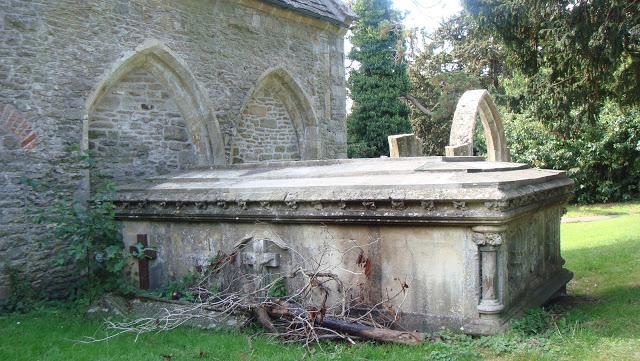
The ancient parish church closed to general worship in 1851 after which most of it was demolished leaving only the chancel, the 14th century arches, a few chest tombs and the Goddard family tomb.
The Goddard family vault stood beneath the floor of the North Chapel. When this was demolished a mausoleum was built above it. Today the Goddard family tomb is a Grade II listed monument described as made of limestone with sandstone panels and built in the Gothic revival style. In his book The Story of Holy Rood – Old Parish Church of Swindon published in 1975, Denis Bird confirms that the Goddard tomb dates from around 1852 and was constructed on the site of the north chapel. Exposed to the elements and random acts of vandalism during its 169 year history, today the plaques on the side of the tomb are difficult to read.
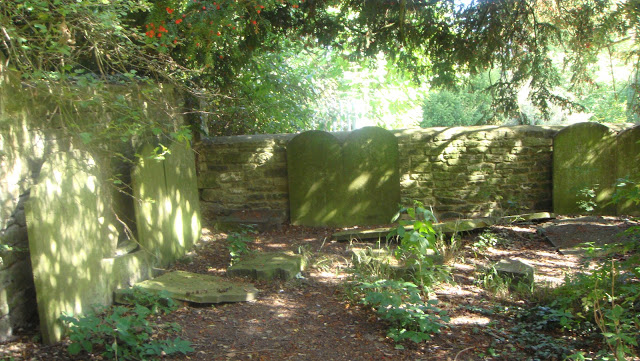
Following the construction of Christ Church the ruins of Holy Rood came under the watchful eye of the Goddard family. Although the churchyard closed to new burials, interments in existing family graves continued for some years. A drawing dated c1800 shows the churchyard contained numerous headstones. Sadly, these were all repositioned in 1949 and arranged around the churchyard wall.
The last Lord of the Manor to live at The Lawn, Fitzroy Pleydell Goddard died at the family home on Friday August 12th 1927. Major Fitzroy Pleydell Goddard’s dying request was that his funeral service be as simple as possible and that he wished to be buried in a “plain elm coffin made from timber grown on my estate.” The Major’s funeral took place on Monday August 15 at 8pm. Swindon Advertiser headlines read ‘Interred at Sunset’ and ‘Large Attendance.’ As requested the Major’s coffin was made from one of his trees, cut down in Drove Road during road widening work. Covered by a Union Jack flag the coffin was carried from The Lawn to the Parish church on a handbier where Canon C.A. Mayall and Dr. R. Talbot, the Archdeacon of Swindon conducted a simple service in Christ Church. The congregation was estimated to number in the thousands as Swindon marked the end of an era.
The last member of the family to be buried in the Goddard tomb was Charles Frederick Goddard, Rector of Doynton, Gloucestershire who died on May 11, 1942 and is buried alongside his parents Ambrose Lethbridge and Charlotte Goddard.
Bird writes: ‘To say that ten thousand people may have been buried here may be no exaggeration, for although the population of early Swindon may have numbered no more than a few hundred souls at any one time, it was here that nearly all found their last resting place, generation after generation, for perhaps more than 700 years.’
The churchyard at Holy Rood, Swindon’s first ‘modern’ burial ground.
The view from the Goddard mansion in the Lawn.
The Goddard family tomb
Acorner of the churchyard and the repositioned headstones