It was usually the wind that caused the horses to be skittish but that early morning in June there was not so much as a breath of air. Brayhead, a handsome chestnut stallion, was looking agitated as Tom led him out of the stable into the yard. Most of the horses were already on their way to the gallops on Russley Downs, but I held back.
Tom was an experienced stable lad and perfectly capable of handling the horse, but I was just a little concerned. Brayhead was edgy, stepping backwards in circles each time Tom tried to get into the saddle. Eventually he was up and slipping his feet into the stirrups.
“A bit frisky today,” he laughed as he pulled on the reins to guide the animal’s head in the right direction. I followed behind as we joined the string of racehorses heading out across the Wiltshire countryside. Once on the open downs Brayhead took off in an explosion of speed. I wondered if Mr Robinson had noticed.
On our way back to the yard I noticed the horse was sweating profusely, yet the exertion had failed to exhaust him. In fact, quite the opposite and Tom continued to have difficulty keeping him under control.
Again, I was at the rear of the string of horses returning to Foxhill House. It was normal practice to take them to their stable and rub them down after their exercise, but when I arrived back at the yard the other horses and riders were being led into the paddock.
I could hear Brayhead snorting and stamping in his stable, but otherwise it was eerily quiet in the yard, despite the number of people gathered around the figure on the ground.
Tom died from his injuries three days later. Afterwards, I wished I had voiced my concerns that morning, approached Mr Robinson, done something.
views across Liddington Castle, Wiltshire.
The facts …
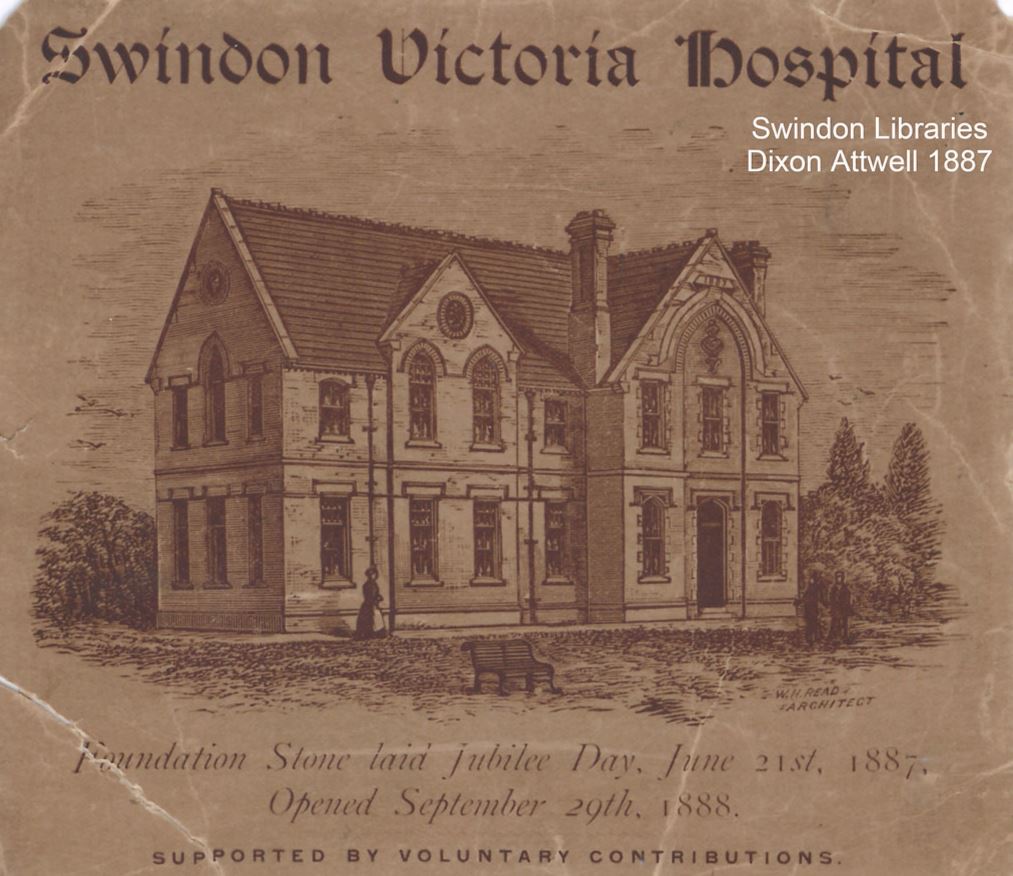
Serious Accident at a Racing Stable – On Monday morning an accident which proved to be of a serious nature occurred at the well known Foxhill Stables at Lydington, near Swindon. It appears that while the horses were out for their morning exercise Mrs Langtry’s Brayhead started rearing, and fell back on a lad named Tom Whiteman. Assistance was soon at hand, but it was easily visible that a serious accident had happened. Dr J. Campbell Maclean, from Swindon, was sent for, and his assistant (Dr. C. Carew Webb) was soon at the stables, and made an examination, which proved that the lad was suffering from a fractured pelvis, and was badly injured in the abdomen. He ordered his removal to the Swindon Victoria Hospital. The patient lies in a very dangerous condition, and his recovery is not expected.
The Warminster and Westbury Journal Saturday June 17, 1899
Brayhead was a chestnut stallion owned by the actress Lillie Langtry. Mrs Langtry is remembered for her numerous affairs, most famously with Albert, Prince of Wales (later Edward VII) and Prince Louis of Battenberg.
Mrs Langtry owned a number of racehorses, purchased under the name of Mr Jersey. In 1899 the five-year-old Brayhead was one of several horses in training with William ‘Jack’ Robinson at Foxhill. Wiltshire.
Tom Whiteman 39, died in the Victoria Hospital on June 15. He was buried two days later in Radnor Street Cemetery in plot C1237, a public or pauper’s grave, with five other unrelated people.
Mr W.J. Robinson and the Foxhill stables – published courtesy of the Illustrated Sporting and Dramatic News, March 11, 1899.
Julia Ann Barnes and Dawn Rose were best friends and next door neighbours. That day in March 1963 the two girls were excited – they had a birthday party to go to. The school bus stopped at the junction of Wolsesly Avenue and Thornbridge Avenue where the girls jumped off and ran behind the bus to cross the road. They were struck by a school bus travelling in the opposite direction.
The news of their deaths reverberated through the Park South community and 60 years later is still remembered by one of the families who lived on that road.
In 1962 a series of articles in the Evening Advertiser featured families who had made their homes here in Swindon during the town’s expansion programme. George and Violet Phillips, who had moved from Bermondsey, South London, were interviewed. They spoke about how much they enjoyed living in Swindon, however, Violet said: “My only grievance is the schooling.”
Park South was built during the 1950s but by 1962 the area was still without a designated school and children were bussed to schools outside the area. The Phillips’ young daughter Cheryl aged 7 was one of those children ‘bussed’ to King William Street School in Old Town and George was concerned for her safety. As a member of the Park South Tenants Association George campaigned for building work to begin on a school in the area – and he took his concerns higher – first to the Mayor of Swindon and the Education Committee and then to Francis Noel-Baker, Swindon MP and eventually to the Minister of Education when members of the Park South Residents Association delivered a petition to the House of Commons.
It was anticipated that Park South Infants School would be ready for use by August 1963 and the Junior School a year later – but tragedy struck before then.
In June 1963, following the deaths of Julia Ann and Dawn, George made an official request that his daughter be transferred from King William Street School to Lawn Junior. He then withdrew his daughter from school in protest. George faced a hearing held by the Child Care Sub-Committee with the threat of a possible prison sentence if he did not return his daughter to school. But the campaign waged by George Phillips and the Park South Tenants Association did see changes implemented on the schools transport service. Children were accompanied and supervised on the buses; bus stops were relocated and a warning notice ‘Caution Children Alighting’ was displayed on the back of the vehicles.
Angie Phillips writes: “Ironically, even when the Park South Infant and Junior Schools were completed, our house, being in Thornbridge Avenue was not in the catchment area and all the children in our house subsequently attended Lawn Junior School … but not by bus!”
Julia Ann aged 6 and Dawn 5 and 1/2 were buried on March 20, 1963 in a joint funeral service; their graves side by side with identical memorials.
Unfortunately, the graves had become overgrown in recent years but in the autumn of 2023 cemetery volunteers Kevin and Jonathan cleared and tidied them up. It is the wish of the Phillips’ sisters Cheryl, Gina and Angie that the story of the two young friends is remembered and today they regularly attend the graves.
The body of an elderly woman was pulled out of Park Pond in November 1899. Discovered by Joseph Pinnegar she was later identified as Sarah Richens, aged 74, the wife of Joseph Richens of Tuck’s Cottages, Devizes Road,* Swindon.
At the subsequent inquest her financial sitation was examined in great detail to ascertain whether her death was an accident or something more sinister. It was revealed that Sarah and her husband survived on approximately 7s a week and that Sarah was known to beg for pennies in the street.
The jury returned a verdict of “Suicide from drowning, while temporarily insane.”
The Drowning Fatality at Old Swindon
Inquest and Verdict
As has already been announced in our columns, the woman whose dead body was taken out of the Park Pond, Swindon, last Friday, was afterwards identified as being that of Sarah Richens, wife of Joseph Richens, of Tuck’s Cottages, Devizes Road, Swindon. She was 74 years of age.
The inquest on the body was held at the Frome Hotel, Hythe Road, on Saturday, at 4.30 p.m., and a jury of whom Mr. T.P. Goodman was chosen foreman. The jury had some distance to walk to view the body – to the mortuary in the cemetery.
Returning to the Frome Hotel, the following evidence was taken:-
Joseph Richens, son of deceased, said he resided at home with his mother and father. Witness was employed at the VWH Repository, and helped to maintain his mother. Asked if he had ever heard her express a wish to destroy herself, witness said she had done so twice to his knowledge. There was nothing unusual about her behaviour when he left home to go to his work on Friday morning at half past eight. She was not at home when he returned to dinner, but he did not take any notice of it, because she often went round to her brother’s, Mr Thomas Wheeler’s, in Prospect.
The Coroner: Was she in receipt of parish relief?
Witness: Yes, sir, 3s. per week, and I had to pay 1s. a week.
The Coroner: What wages do you receive?
Witness: I get 15s. a week, sir.
The Coroner: And you help to maintain your mother out of that?
Witness: Yes.
The Coroner: Her brother is Mr. Thomas Wheeler, of this town, is he not? – Yes.
The Coroner: Has he assisted her?
Witness: No, not that I know of.
A Juryman: Does your father receive anything from the Hearts of Oak Benefit Society?
Witness: No, from the Foresters. He receives 3s. one week and 2s. another – 5s. a fortnight. Witness added that his father was almost an invalid. He had had rheumatic fever. He did not receive parish relief.
A Juryman said he must contradict the witness when he said that deceased’s brother never gave her any financial assistance, because he (the juryman) had seen Mr. Wheeler give her money.
Another Juryman asked the witness if he was aware that deceased begged coppers from persons passing her in the street. – The witness replied in the negative.
Joseph Pinniger, working foreman, in the employ of Mr. T.H. Deacon, at Park Farm, spoke of seeing the body in the water, and with assistance he got the woman out, but she was quite dead. This was before twelve o’clock on Friday. The woman could not have fallen into the water, as there was a rail fence around it, and she must have crept under the rail to get near the water. The pond was a rather deep one.
Dr. Carew Webb, assistant to Dr. J.C. Maclean, said he examined the body at the mortuary. There were no marks of violence, and death was evidently due to asphyxia, caused by drowning. Death had taken place within six hours previous to the time he saw her.
The jury returned a verdict of “Suicide from drowning, while temporarily insane.”
Extracts from The Swindon Advertiser, Friday, November 17, 1899.
Sarah Richens 65 years old of Tucks Cottages, Devizes Road was buried on November 14, 1899 in grave plot C691, a public grave, with four others.
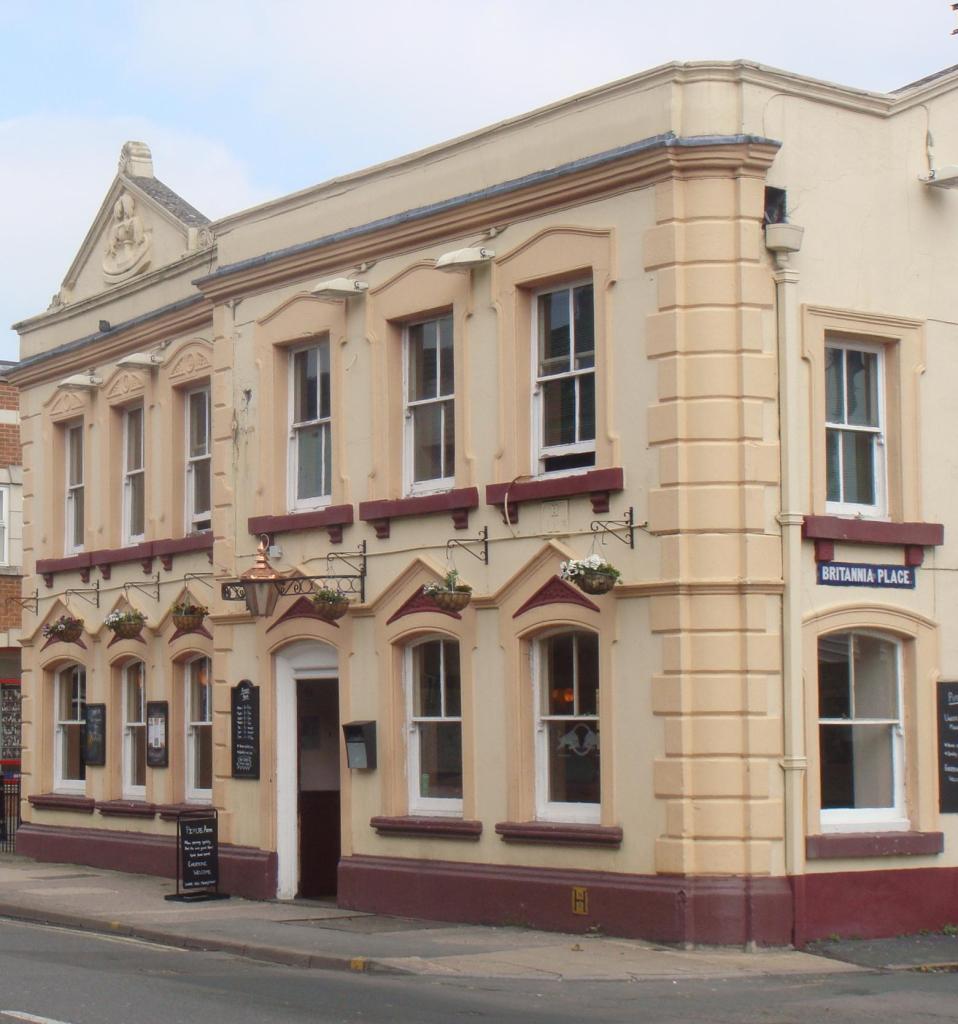
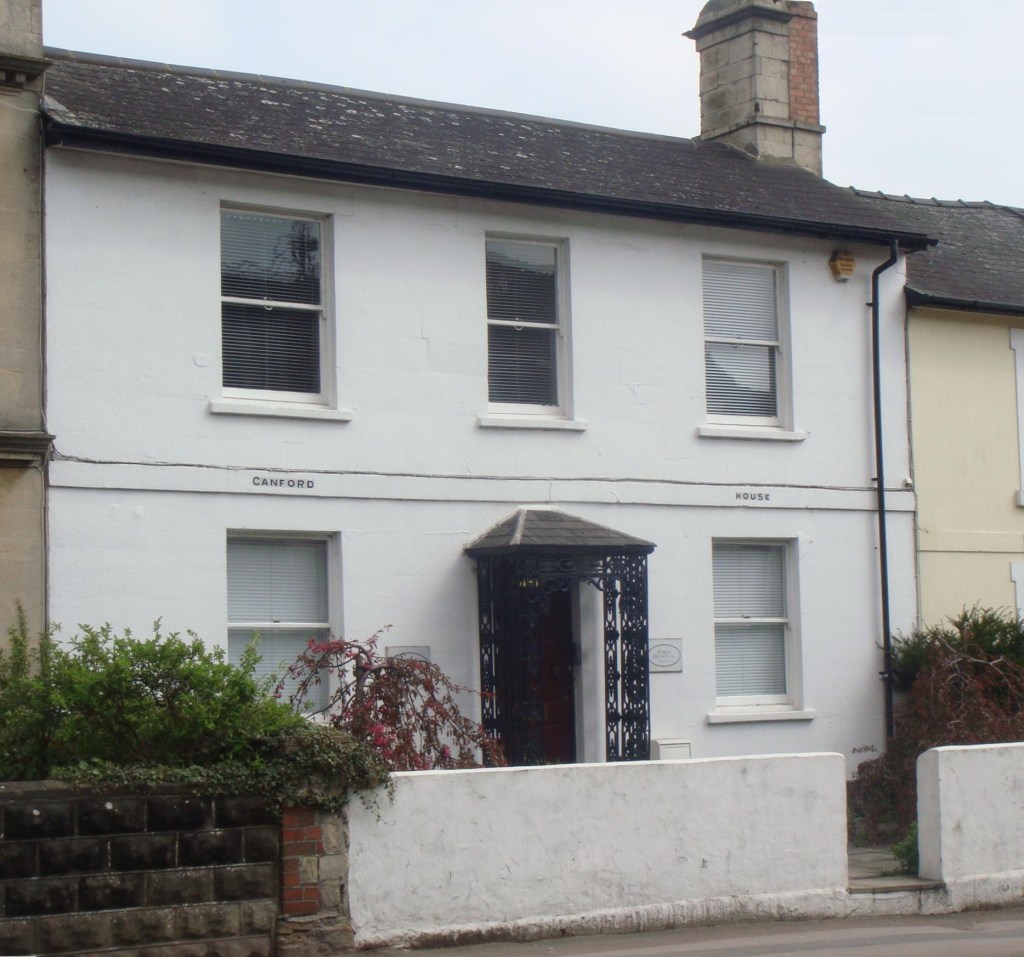
Properties on Devizes Road pictured more recently. My thanks to local historian David Lewis who responded to my email.
‘I found “Tuck’s Cottages” in Devizes Road on the 1901 census – 16,15,14,13 – William Morris’s house, then The Fountain, Lewisdale, then Tuck’s Cottages. You will have to make up your own mind where exactly they are.’
William Morris’s house
The pub formerly known as The Fountain (see motif in the pediment)
Frank Nutbeem was born in Wroughton in 1895 the youngest son of Robert William and Mary Nutbeem. By the time of the 1911 census Frank and his two brothers were living with their widowed mother at 24 Shelley Street. All three young men were employed in the Works, Frederick 20 as a Coach Finisher; Claude 17 as a Brass Finisher and Frank 16 as a Screwing Machine boy.
Frank had begun work as a 15 year old machine boy on August 8, 1910 at a daily rate of one shilling and two pennies. He would remain working in the Machine Shop (No 15) his entire working life, except for his service in the RAMC during the First World War.
Mr G. Culling, chairman of the GWR Swindon Division of the St. John Ambulance Association stated that the tragedy of this accident was one with which, ‘had it been required of him, he could have so efficiently dealt.’
Fatal Accident in Swindon GWR Works
Death of Mr F. Nutbeem: Ambulance Stalwart
A verdict of “Accidental death” was returned by Mr. Harold Dale, the Wilts Coroner, at the inquest at Gorse Hill Police Station, Swindon, on Tuesday, on Mr Frank Nutbeem (45), of 61 Grosvenor-road, Swindon, who was killed instantly when he was drawn into a machine while at work in the Swindon GWR works on Saturday morning.
Evidence of identification was given by his brother, Claude Nutbeem, who said his brother had been in good mental and physical health before the accident.
Fractured Skull
Dr. Frumin, GWR Medical Fund, said that he was called to No 15 Shop in the GWR works about 11.10 a.m. when he found Nutbeem lying entangled in a machine. His head and face was crushed and his body was acutely bent. He was dead.
His injuries were a severely crushed dome, and fractured skull in front and behind.
Samuel John Owen, Highworth-road, Stratton St. Margaret, a machine foreman in No. 15 Shop, said that Nutbeem, who was a chargeman machinist, had been working a Holroyd four spindle axle-box boring machine for the past 18 months. He had complete charge of the machine.
Owen said that about 10.55 on Saturday morning he was told that Nutbeem was caught in his machine, so he telephoned from his office for ambulance men. A doctor was called, and soon arrived.
At the scene of the accident he saw Nutbeem had been carried into his machine.
He was on his back, and his head was underneath the “bar.” He appeared then to be dead.
Nutbeem was wearing a warehouse jacket of a grey coarse canvas material. These coats were long, and were worn by all the machinists, though it was not compulsory. The costs were bought from a private concern by the men themselves.
Nutbeem’s coat was found round the “bar,” which had a protruding cutter.
Heard a Shout
Stephen John Hunt, a machinist, of 15, Alfred-street, Swindon, said that he worked by Nutbeem.
On Saturday morning he heard a shout, looked up, and saw Nutbeem was in the machine. He rushed round, and stopped the machine, when he found that Mr. Nutbeem had become entangled.
Regret and sympathy was extended to the relations by Mr. Ray Hobbs, representing the NUR (Swindon branch). Mr Hobbs paid high tribute to Mr. Nutbeem for his work in connection with the GWR No. 3 Division of the St. John Ambulance Brigade.
Mr Dale said that it was an unfortunate case in which a very good worker who was thoroughly used to his machine, had been accidentally caught in it.
Mr. Nutbeem, who was married with a family, was a prominent St. John Ambulance Brigade worker. During the last war he was a sergeant in the RAMC and was attached to the Swindon Unit of the Field Ambulance.
An Appreciation
Mr G. Culling, chairman of the GWR Swindon Division of the St. John Ambulance Association writes:
By the death of Mr Frank Nutbeem, the GWR Swindon Division of the St. John Ambulance Association has suffered a great loss.
Qualifying for his first ambulance certificate in 1912, he served during the last war with the Swindon unit of the Field Ambulance of the RAMC, attaining the rank of sergeant. Upon the formation of the Old Comrades Association he became a popular member and retained his membership until his death.
Upon returning to civil life he became closely associated with those who at the time were organising the local division of the St. John Ambulance Brigade and was quickly promoted to the ranks of Sergeant, Ambulance Officer and Brigade Superintendent – a position he held until his retirement from that body a few years ago.
Frank held a remarkable record in competitions and for some years captained teams which were successful both in local contests and those organised by the GWR Company, and his Swindon team has on two occasions been one of the representative teams of the Company in the inter-railway annual competitions in London. He was leader in 1928 of the local Great Western team, who succeeded at Paddington for the first time in winning the Directors’ Shield, and they won the same trophy again in 1936.
During the years 1932-1936 he served on the Swindon Divisional Ambulance Committee, and shewed great ability in organising classes and instructing pupils in first aid, and was instructor to the Great Western Ladies’ Class when this was formed. These abilities were recognised by the local authorities, who since 1938 had utilised him as instructor at classes organised under the ARP scheme. He was also a keen worker in similar services organised by the GWR Company.
“Nutty,” as he was familiarly known to a wide circle of friends, has passed over – the victim of an incident of rare tragic intensity – in circumstances with which, had it been required of him, he could have so efficiently dealt. The esteem and regard in which he was held was shewn on Sunday morning, when over 150 ambulance men at the Bridge-street Institute joined with Dr. Hick and the Ambulance Committee in paying a silent tribute to his memory and as an expression of their deep sympathy for Mrs. Nutbeem and her two daughters in their loss.
He held gold awards for prolonged efficiency in first aid to the injured. Of him it can truly be said that his life was dedicated to the service of others, thus upholding the motto of the Order of St. John: “For the benefit of humanity.”
North Wilts Herald, Friday, 25 October, 1940.
Frank Nutbeem 45 years old, of 61 Grosvenor Road, died at the Great Western Works. The funeral took place on October 24, 1940 when he was buried in grave plot C1682.
You may be interested in reading about another St John Ambulance stalwart, Jack Dixon. It is more than likely that Jack and Frank Nutbeem served alongside each other, taking part in the various competitions at which both were so successful.
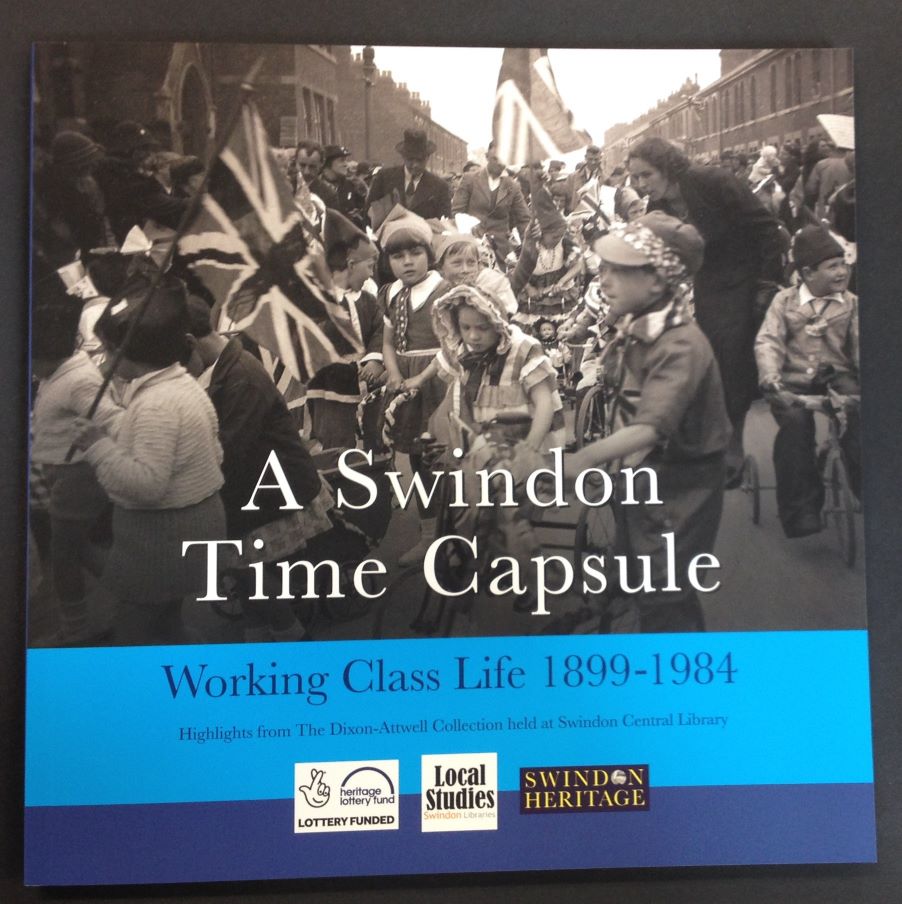
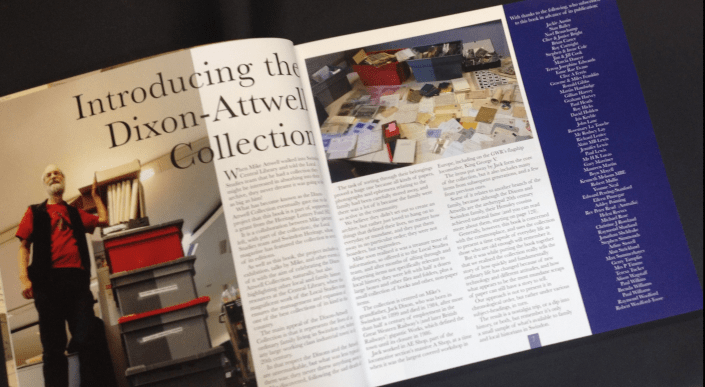
You can read about the life and times of Jack Dixon and the Dixon/Atwell family in the award winning book A Swindon Time Capsule – Working Class Life 1899-1984 by Graham Carter available from the Library Shop.
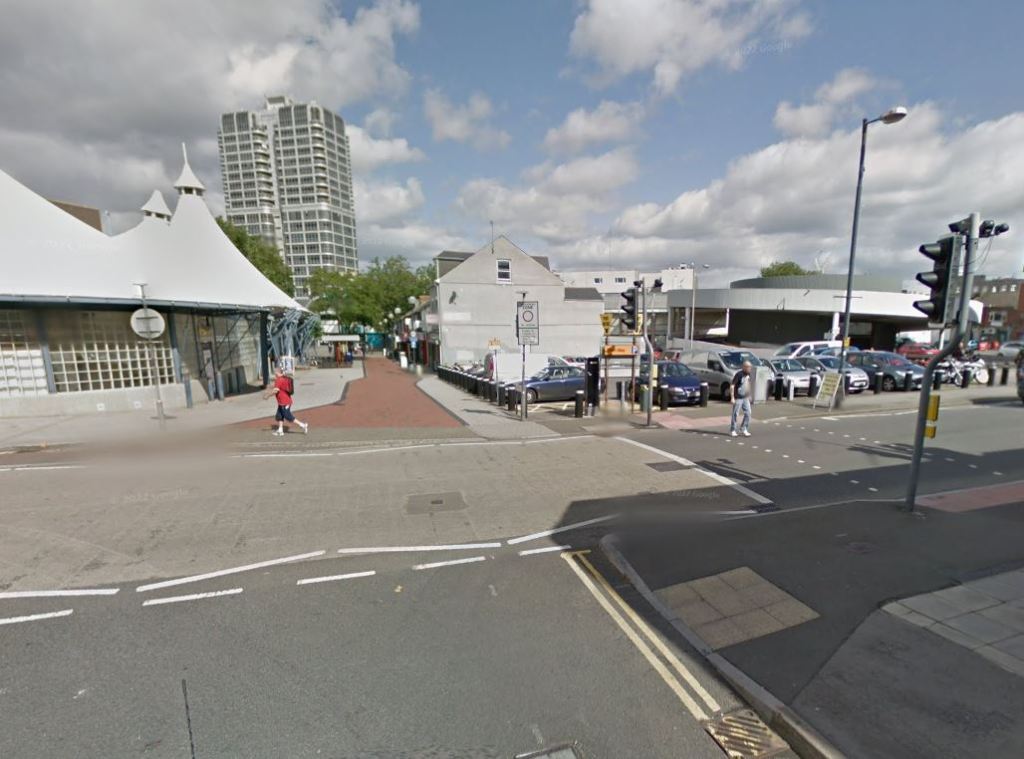
Sometimes the layout of the streets of Swindon has changed so little you can easily visualise a description in the newspaper. I regularly walk down Deacon Street from the cemetery, crossing at the traffic lights on Commercial Road close to the derelict Tented Market building. It does not take a lot of imagination to recreate this location as it was in 1905. Today the busy flow of traffic is one way coming up Farnsby Street and along Commercial Road. And more than 100 years ago it appears it was equally busy on one Saturday in 1905.
Image of Deacon Street published courtesy of Local Studies, Swindon Central Library.
Fatal Accident in Swindon
A Boy Killed
On Saturday about noon a shocking accident happened in Commercial Road, Swindon. A boy named Eyles, whose parents live in Dixon Street, was passing down Deacon Street. When at the corner near the Market Hall, a heavy vehicle drove down Commercial Road. The boy, who is slightly deaf, did not hear the approach of the vehicle, and was knocked down. The wheel went over his chest, and the injuries were so severe that he died shortly afterwards. He received treatment at the GWR Medical Fund Hospital. An inquest was held on Monday at the Mechanics’ Institute, before Mr J.W. Pridham, Deputy Coroner.
The following evidence was taken:
Arthur James Eyles, clerk in the GWR Works, father of the deceased, was the first witness called. He stated that he last saw his son alive at about nine o’clock on Saturday evening.
Benjamin Robert Dixon, 72, Deacon Street, Swindon, a fitter, said he was in Commercial Road when the accident occurred on Saturday about 12 o’clock. He first saw the child running across the road in front of a horse and dray. The horse was going at a jog-trot, and the driver appeared to be driving carefully. The dray was a brewer’s four-wheeled dray, and there were some empty barrels in it. It was going towards Faringdon Street, and was almost in the centre of the road. The child ran off the kerb just as the dray was passing and went under the horse’s head, and was knocked down, the wheels passing over the child’s chest. In witness’s opinion, it would have been impossible to have pulled up the horse in time to save the boy.
Albert Whitbread Fox, labourer in the GWR Works, said he was also in Commercial Road at the time of the accident, and saw the child run in front of the horse. The driver appeared to have control over his horse. Witness ran and picked the child up after the dray went over him, and helped to take deceased to the Medical Fund Hospital. He did not think the child had any reason to run in front of the horse.
Thomas Hunt, carter, in the employ of Messrs Horsell and Marson, of Wootton Bassett, said that on Saturday last about noon he was driving a dray down Commercial Road. The accident occurred at the corner of Deacon Street. The street was rather crowded at the time. The boy rushed across from the kerb and got knocked down by the horse. It was impossible for him to pull up the horse in time.
Dr. G. Rodway Swinhoe stated that he had a telephone message from hospital at about 12.8. He went to the hospital as soon as possible and found the child was dying. Another doctor was present a few minutes before him. On examining the body, he found that wheels had passed over the lower part of the chest, and death was due to shock caused by the accident. No limbs were broken.
A verdict of accidental death was returned.
The Evening Swindon Advertiser, Tuesday, February 14, 1905.
Deacon Street/Commercial Road pictured in 2009.
Seven year old Sydney Albert Eyles, Dixon Street was buried on February 17,1905 in grave plot E7318. Sydney is buried with his parents in a privately purchased grave plot. His mother Margaret Louisa died in January 1913 and his father Arthur James in 1951.
I’ve seen them all arrive at Swindon Junction, the King and Queen in 1924, the young Princess Elizabeth in 1950, politicians, film stars, you name them, I’ve seen them. But I’ve never seen a sight like the day they brought back the body of James Shopland.
I was just a youngster then and recently employed as a station lad. My duties mostly consisted of carrying things around, everything from luggage to parcels. I wasn’t allowed too close to the passengers as they alighted from the trains; I was considered too cheeking and disrespectful. I had a lot to learn and looking back I reckon my education began that day in July 1900.
Early that morning I was told to clear out a small, seldom used room along the platform. I was to get rid of any rubbish and sweep the floor. I was to place a small table there and a couple of chairs and to make sure everything was polished.
“Who are we expecting?” I asked Fred, the head porter, “the bloomin’ Queen herself.”
I soon learned not to give him any cheek. He boxed me round the ear and gave me a good telling off. I was lucky not to lose my newly acquired job that day and for a good few weeks after that I tried to keep out of his way.
The room was to be made ready to receive the floral tributes for a funeral due to arrive that afternoon. So many wreaths and crosses, I had never seen so many. That day on July 11, 1900 I witnessed the homecoming of an unsung hero, James Shopland who died as he tried to rescue three men in an accident at the Southampton Sewage Works at Chapel.
The funeral cortege left Mr Shopland’s home in Woolston, proceeding by way of the floating bridge to the Dock station. A special carriage was attached to the 2 pm train to Swindon where Mr Shopland was to be interred at the Swindon Cemetery on Kingshill.
The coffin was carried from the train, through the station and placed in a glass-panelled car. I watched the pallbearers return to collect the flowers and counted more than 60 wreaths and crosses. Some were placed in the car, others were carried by those that followed.
I watched the long line of carriages with many more people walking behind. The procession continued along Wellington Street where blinds and curtains were drawn at the windows and people stood with bowed heads to pay their respects.
The story of James Shopland’s death had already appeared in the Swindon Advertiser, but I was just a silly, cheeky young lad. I had paid no attention. That evening, when I told my Pa about the funeral, he told me how James Shopland had died.
The facts …
James Shopland, a civil engineer, was born in Purton in 1873, the son of James Rew Shopland, also an engineer.
By 1900 James had moved to the Southampton area and on July 6, 1900 he was at the Southampton Sewage Works, although it was pointed out at the inquest that he had nothing to do with the works, but was assisting in the rescue.
Three labourers working in the press house at the Sewage Works had attempted to free a blockage in a lime vat, firstly by ramming a rod down from the top, which was the usual way of clearing it. However, when this didn’t work, one of them went down into the ejector chamber and tried to free the pipe by undoing it. They tried to remove the cap but this wouldn’t move either, so they proceeded to remove a flange from the bottom and then the upright pipe. This immediately set off a fast flow of sludge and released a smell that rendered the men semi-conscious.
Passing workmen attempted to rescue the three men who were all lying unconscious in the sludge. As a call went out for volunteers, James Shopland arrived on the scene. A witness at the inquest described how as Mr Shopland descended the ladder he saw him put his hand to his head.
At one point someone tried to stop any more men going into the chamber, declaring that at this rate there would soon be fifty dead at the bottom.
James was brought to the surface where artificial respiration was attempted, but he was already dead. At the subsequent post mortem the cause of death was found to be due to congestion of the lungs brought about by carbolic acid gas poising.
The jury at the inquest recorded a verdict of accidental death and commended the noble endeavour made by James Shopland and four others who had attempted to rescue the men.
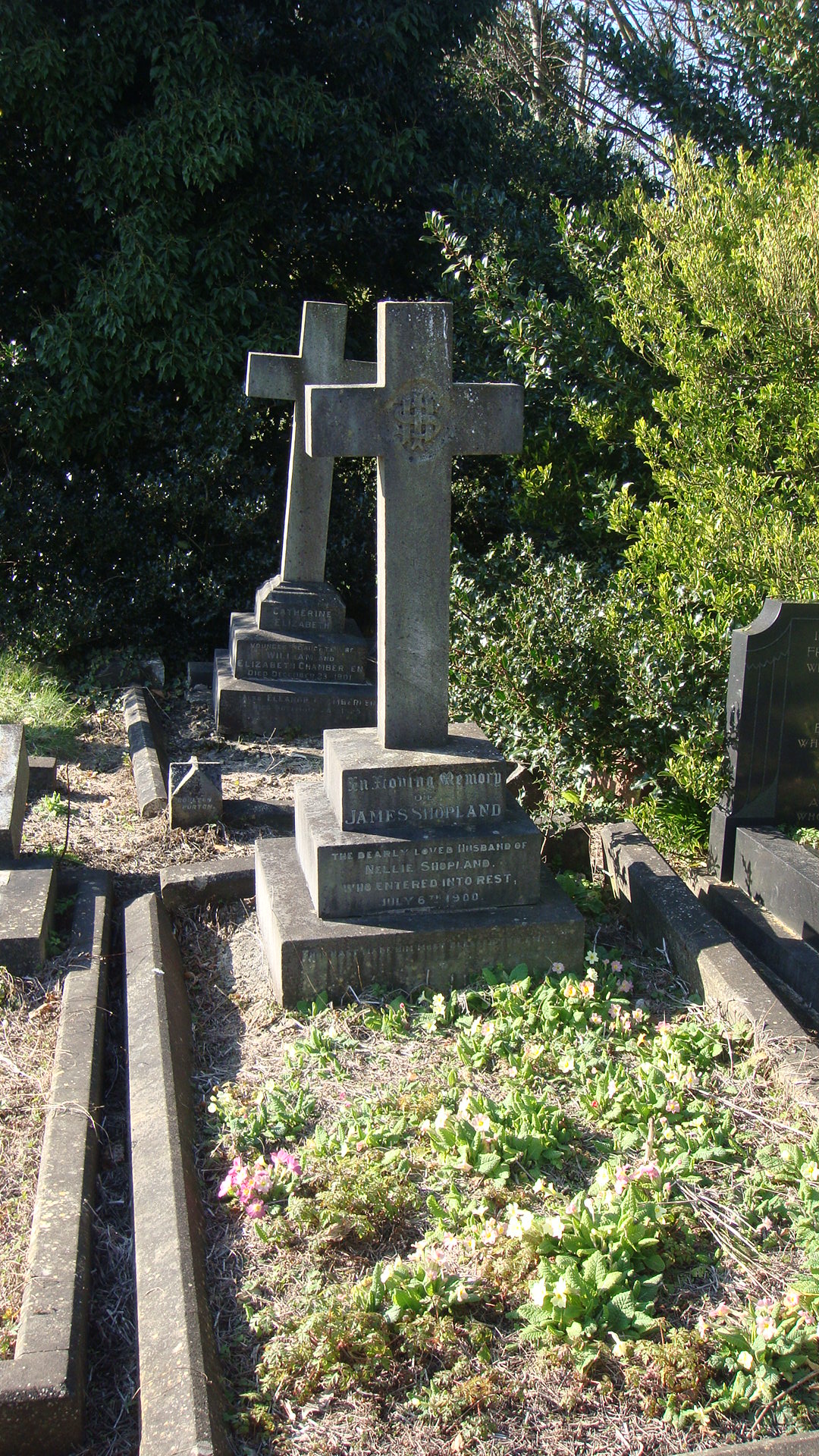
James was 26 years old and had been married for just a year. He is buried in plot D100 with his wife Helena (Nellie) Elizabeth Shopland. Helena moved to Bournemouth where she lived with her widowed mother-in-law, but she eventually came back to Swindon. At the time of the 1911 census she was living at 159 Goddard Avenue with her sister Violet Blanche Brown. She died just a few weeks later, on June 16, 1911. Her funeral took place on June 20 and she is buried with her husband.
We have long become accustomed to sensationalist tabloid journalism, but the heading in a Victorian issue of the Swindon Advertiser seems particularly insensitive. When a young cricketer collapsed and died on the pitch the heading read ‘His Last Innings.’
George Palmer was born in Northampton in about 1861 and we learn from the inquest report that he had served in the army in India before arriving in Swindon. At the time of the 1891 census he was lodging with William and Lucy Taylor at 20 Percy Street, Rodbourne where he worked as a Blacksmith’s Striker in the Works. He married Charlotte Annie Varney at the parish church in Fairford just seven months before his death.
His Last Innings
Sudden Death in the Cricket Field at New Swindon
A Cricketer Falls Down Dead
A shocking case of sudden death happened in the Recreation Ground, New Swindon, on Saturday afternoon. A young man named George Palmer aged about 34 years, and living at 15, Percy-street, Even Swindon, was playing for the Even Swindon Cricket Club against another New Swindon team. He was batting and had just hit a ball for five runs. Afterwards he made one run, and had just got to the wicket when he fell down dead. As he fell he uttered the words “Cover up my head,” and never spoke again. A doctor was sent for, who pronounced life extinct. The body was removed to deceased’s home, and Mr Coroner Browne communicated with. Deceased had only been married a few months.
The Inquest
An inquest was held on the body of deceased on Monday afternoon at the Dolphin Inn, Even Swindon, before Mr W.E.N. Browne, County Coroner, and a jury of whom Mr H.G. Hughes was foreman.
The first witness called was Henry Brooks, a GWR employe of 4, East-street, New Swindon, who said he knew deceased well. He had never heard him complain. Witness was umpire in the cricket match in which deceased was playing on Saturday. He was quite cheerful when he commenced playing in the match on Saturday. He had made eight runs, and had run six of them, when he fell down by the wicket. Witness thought deceased was in a fit. He was taken underneath a tree, and as he lay there he said, “put something over my head.” Deceased did not speak again, and died immediately. Witness had heard that deceased received a blow from a cricket ball whilst playing a match a few weeks ago.
Mr Hayward, a juryman, said he heard that deceased said as he was going to the match that he hoped he should not have a fit again.
Wm. Palmer, brother of deceased, said he saw him on Saturday morning, and he was quite well then. Deceased was struck with a ball on the temple about a month ago. On Saturday witness was playing with deceased in the match. He saw deceased fall, and went and fetched some water, but deceased did not speak again.
Dr. Howse, partner with Dr. Swinhoe, said he was called to deceased in the Recreation Ground, and found him quite dead. He had since ascertained that deceased had serves in the Army in India, and had a sunstroke. The circumstance tended to produce a weak heart and the excitement of violent exercise and the heat of the day would cause sudden stoppage of the heart’s action. In his opinion death was due to syncope or sudden failure of the heart’s action.
The jury returned a verdict accordingly.
George was buried not in Radnor Street Cemetery but in the churchyard at St. Mary’s, Rodbourne Cheney on June 19, 1895.
The Funeral
of deceased took place on Wednesday. Mr. Palmer had been a member of the Even Swindon United C.C. since its formation, and was always held in very high esteem by his own clubmates and local cricketers generally. Consequently a very large following from the various clubs in the district attended to pay their last respects, besides a good muster of his old shopmates and friends, numbering altogether upwards of 170. The houses en route to the church at Rodbourne had with few exceptions the blinds drawn and the route was lined with a large concourse of sympathising onlookers. The funeral service was conducted by Rev. C.T. Campbell, who delivered a very touching address at the graveside. The wreaths and flowers sent by various clubs and friends formed quite a floral display. The corpse was borne by eight members of the Even Swindon United C.C.
At 13 years and 8 months of age William was working as a ‘slipper.’ A ‘slipper’ was a young lad who assisted with the movement of wagons by horses. He would place the chocks to ensure that the wagon did not move when parked. They were called slippers because the chock looked like a slipper.* As one of the jurymen remarked during the inquest – ‘he thought it a great shame that the Co. should employ lads at such work. It was very dangerous for the lads so employed.’
William Hall had a short life. You could easily miss him on the 1881 census returns where he is recorded as James William Hall aged 4 years old. He was then living in Llanelly, Carmarthenshire with his parents John and Ellen, and two brothers. William was born in Swindon in 1877 but by 1881 the family had lived in Wales for a few years. His younger brother Thomas was born in 1879 in Llantrisant while Frederick was born in Llanelly in 1883. By 1890 the family were back in Swindon living at 166 Rodbourne Road, handy for the Works where John worked as a Stationery Engine man and where William would soon join him.
The Fatal Accident at the GWR Station
On Saturday, Mr W.E.N. Browne, coroner, held an inquest at the Cricketers’ Arms, New Swindon, on the body of the lad William Hall who received fatal injuries at the GWR Station, New Swindon, on the previous Thursday. Mr T. Wheeler was chosen foreman of the jury, who then proceeded to view the body, which was lying at the GWR Medical Fund Society Hospital. Inspector Wheeler was present to watch the proceedings on behalf of the GWR Co. The following evidence was taken:-
John Hall sworn, said: I am father of deceased, whose age was 13 years and 8 months. He had been only two days in the employ of the GWR Co., but he was at the same work for three days a fortnight ago, but left and did nothing till he was taken on again during the past week.
Henry Roach, shunter, in the Loco. Dept., said he was standing near the E Box in the afternoon. He heard someone call out, and on looking round he saw the second wheel of the van go over the deceased. Witness went to the lad’s assistance and picked him up. He asked deceased how he got under the van, and he replied, “My foot caught in the points, and it threw me down.” Deceased was quite sensible when picked up. The driver was at the horse’s head.
By a juryman: – It was a general practice for boys to be employed in “slipping coaches.”
(A juryman here interposed with the remark that he thought it a great shame that the Co. should employ lads at such work. It was very dangerous for the lads so employed).
Albert James Ford, said he was a driver in the employ of the Great Western Railway Company. Deceased was working with him as a “slipper.” On the day of the accident he was at work with the deceased, as usual. The first he heard of the accident was when the boy, being caught under the wheel, cried out. He went to the lad, and found the wheel had passed over him, and his shoe was left in the points. It was a horse box that was being drawn, but the boy was not riding on it at all. Witness had that same morning cautioned the deceased against walking on the rails, and he was not doing so when the accident happened. If the lad’s foot had not caught in the points the accident would not have occurred.
Mr Cailey, assistant to Messrs Swinhoe, Bromley, & Howse, said deceased was admitted to the hospital about 2.30 p.m. on Thursday. He was suffering from severe injury to the thigh and one arm. Deceased had his boots on when brought to the hospital. He lingered till six o’clock, when he died from exhaustion.
The Coroner having briefly summed up, the jury returned a verdict of “Accidental death.”
The Swindon Advertiser, Saturday, Feb. 15, 1890.
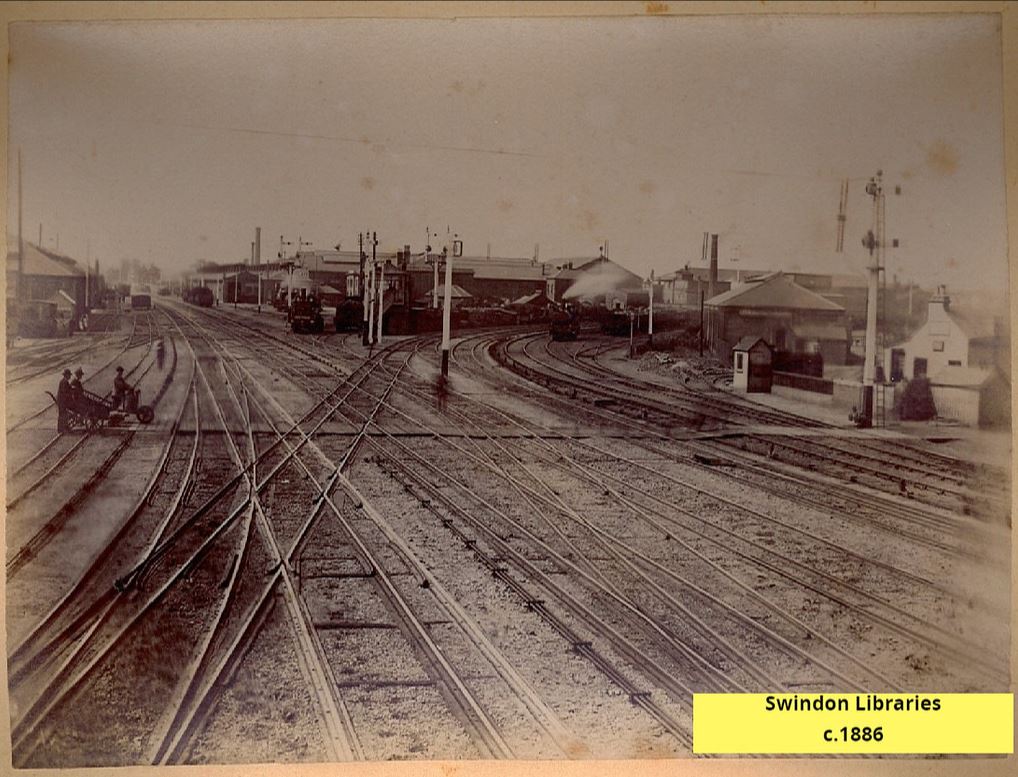
c1886 View of Swindon GWR Works from railway line published courtesy of Local Studies, Swindon Central Library.
Today there is no one left to remember the young boy who was doing the work of a man. No one to remember that William Hall was 13 years and eight months old when he was killed at work.
William was buried on February 18, 1890 in grave plot B1778 – a public grave that he shares with two others.
*Many thanks to David Robert for correcting a previous error.
This is the unbearably tragic story of three year old Albert Cook who hitched a ride home from school on the axle of a brewer’s cart. It is the story of two young boys who witnessed the accident but were too frightened to alert the carter, and were later called to give their evidence at the inquest. A story of unbelievable horror, which anyone at the scene would surely never be able to forget.
A Little Boy Crushed to Death
On Tuesday evening a most sad and painful accident happened to a little fellow named Albert George Stephen Cook, living with his parents at 10, Swindon Road, New Swindon.
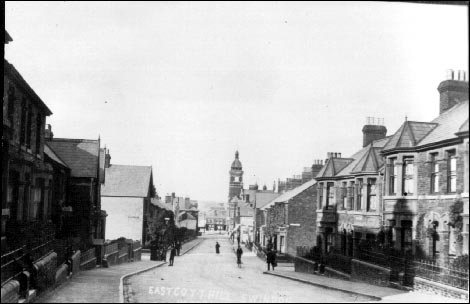
It seems that a light covered wagon belonging to Col. Luce, brewer, of Malmesbury, was proceeding down Eastcott Hill on Tuesday evening, when a Mrs. Tyler living at 114, heard a scream, and running to the door saw a child entangled in the wheel. She immediately apprized the driver of the fact, and he stopped his horse, and with the help of P.S. Peplar, who was soon on the spot, started to extricate the poor little child from its awful position.
The body was so tightly fixed between the wheel and the axle that a “jack” had to be obtained from Messrs. Affleck, Bros., Prospect Works, and the wheel taken off before the child could be removed. This taking about one hour. Dr. Fox assistant to Drs. Rattray and Lavery, was sent for, but life was extinct.
It is evident that the child was doing what hundreds of them do every day, viz., swinging or riding on the backs of wagons, one of the most dangerous practices for a child, and after this frightful accident, we should think mothers would warn their children against it.
The Coroner was communicated with, and an inquest was held on Wednesday evening, at the “Globe” Inn, Eastcott Hill, before Mr Amos Barns, deputy coroner, and a jury of whom Mr Charles Fox was chosen foreman.
William Cook, living at 10, Swindon Road, said he was father of the boy, whose age was three years and two months, and his name was Albert George Stephen Cook. Harold Matthews, a boy of six summers, said he with others, including the deceased, were returning from school. When they got to Eastcott Hill, they saw a wagon, and they ran behind to get a ride. Deceased sat on the axle, and he (witness) thought he was looking out between the bed of the cart and the wheel to see if the carter was coming after them, when he caught his head in the wheel and springs. Witness was frightened, and did not call to the driver, but went away.
Jesse Goldsmith, aged nine years, said he saw deceased sitting on what appeared to him to be the drag chain, and he went to rise himself up, and in doing so, fell into the spokes of the wheel, which drew deceased up to the top, and then deceased body stopped the wheel. The driver of the wagon stopped at the top of the hill and the children were round the wagon then, and the driver drove them away, but they waited until he got up into the wagon again, when they ran to the back of the wagon as before.
Emma Tyler said she lived at 114 Eastcott Hill, and on the day in question, about 4.15 p.m., she heard a scream and ran to her front door and there saw deceased in between the wheel and the wagon, his head being drawn nearly up top of the wheel, whilst his body was twisted under the bed of the wagon. She called to the driver, who stopped the horse immediately, and got down.
Charles Warner, of Malmesbury, said he was a drayman in the employ of Col. Luce, of the Malmesbury Brewery, and he was the driver of the wagon on which the little child met its death. He said when he got to the top of Eastcott Hill he stopped, and put the drag and safety chain on. The vehicle was empty, but he thought it would be easier for the horse. There were several children waiting to get a ride, he supposed, when he got back into the wagon. He ran after them and told them to run away. When he started he had no children on the back, and he was not aware any came there until the woman called out to him. He found the child in between the off hind wheel and the bed of the wagon, with its body twisted round through the springs. He helped take the wheel off and the pins out of the springs before they could get the child out. From the position it was in, it must have been sitting on the axles or day-chain, and fallen into the wheel.
Dr William Monds Fox said he examined deceased and found very few external marks of injury, but the neck was dislocated, which caused death.
The deputy coroner said the main point the jury had to decide, was whether or not the driver of the wagon had shown any negligence or was to blame in any way in the matter. The foreman said the jury returned a verdict of “Accidental death,” and wished to exonerate the driver Warner from all blame.
The Swindon Advertiser, Saturday, August 24, 1895.
Albert G. Cook 3 years old of 10 Swindon Road was buried on August 23, 1895 in grave B2339 an unmarked, public plot, with three babies – 14 days old Henry Trappel who was buried on August 19, 1895; Stanley William Herbert Hayes, 8 months old, who was buried on September 22, 1921 and Leonard George Scott, 11 months old, who was buried on September 24, 1921.
Mr Coroner Browne and a jury, of whom Mr George Wiltshire was foreman, held an inquiry at the Swindon Victoria Hospital on Tuesday evening into the cause of the death of Thomas Durkin, an Irishman, who died at the hospital the morning from injuries to his spine, received whilst at work the previous Thursday, under circumstances given in the evidence below.
William Durkin, deceased’s brother, said he and deceased and two other brothers came over from County Mayo, Ireland, last month to work for Mr S. Davis, of Rove’s Farm, Sevenhampton, Highworth, where deceased had worked each haymaking season during the past six years.
The accident to deceased happened last Thursday. Witness was working with him in the hayfield. Deceased was on the top of a load of hay, and, as it was leaning over somewhat, they decided to bind it before leaving it for the night. Three men, including witness, were pulling at the line on the ground to tighten in, and deceased was also pulling at it on the load, when suddenly the rope broke and deceased fell backwards from the load on to the ground. There was some knots in the rope, but he had not known it break before.
Deceased had been working as usual all day, and the accident happened late in the afternoon. Deceased must have been close to the edge of the load or he would not have fallen right off. After the accident deceased was attended by Dr Rowatt, and on Friday morning Mr. Davis had him removed to the Victoria Hospital.
A juryman expressed his opinion that the rope should have been produced for inspection by the jury.
George Fisher, farm labourer, in Mr Davis’s employ, said he tied the line on the waggon before commencing to bind the load. It was a “regular cart line,” and strong enough to have “stood a smartish weight.” Mr Davis explained to the jury that deceased was standing too near the edge of the load. Had he been in his proper place when the line broke he would have fallen on the load.
Dr J.C. Maclean said he was called to see deceased at the hospital at eleven o’clock on Friday morning. He found him suffering from spinal injury. All that could be done was done for deceased, but he did not get better and died that morning (Tuesday) about four o’clock. The immediate cause of death was injury to the spine caused by the fall.
This was all the evidence, and the Coroner briefly summed up, observing that he did not think any blame could be attached to anyone. The jury concurred, and returned a verdict to the effect that the immediate cause of death was injury to the spine caused by a fall from a waggon accidentally.
The jury expressed their sympathy with deceased’s brothers in their bereavement under such singularly sad circumstances.
Thomas Durkin 38 years, who died at the Victoria Hospital, was buried on July 12, 1894 in grave plot B2269. This was probably a public grave which was later purchased by the Holmes family in 1909.









 Radnor Street Cemetery