Emma Pinnegar’s five sons all followed their father into the railway works. Francis and Ernest became fitters, Nelson a blacksmith and Levi a coppersmith. Her youngest son Herbert had been employed just a few months when he was killed at work one Monday afternoon.
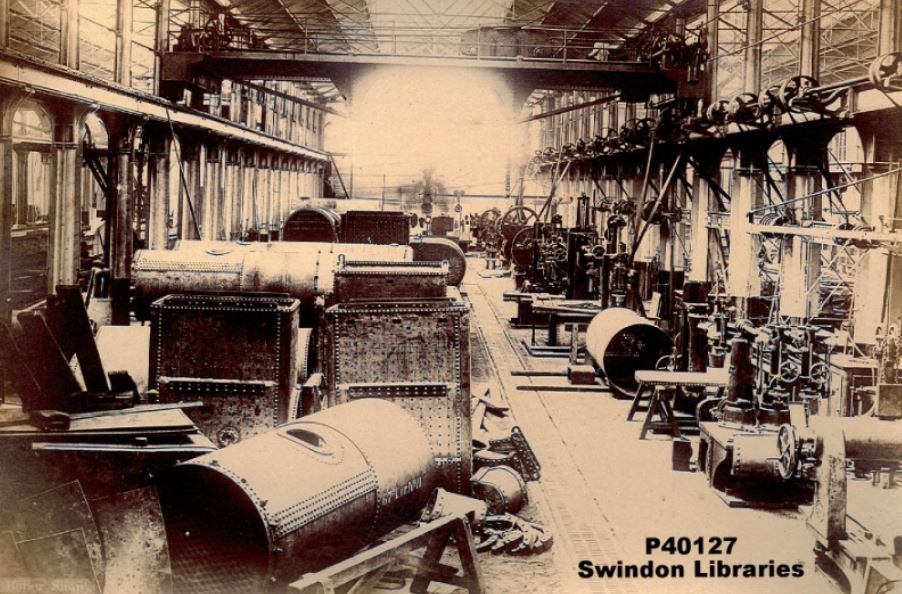
Herbert was working in D Shop “cutting of tyres for the wheels of railway carriages.” He was rather short sighted, according to the newspaper report, and working with heavy machinery. Do you suppose he was wearing glasses? I doubt it. Do you suppose anyone was supervising him? I doubt it.
In Swindon Works – The Legend, Dr. Rosa Matheson devotes a chapter to accidents. She writes: “The causes of accidents could be put down to a number of things – workers’ carelessness, difficult and horrendous conditions, over work, inexperience, lack of supervision, inattention, youth, old age, bad luck.”
It would seem young Herbert ticked a number of these boxes.
The railways brought employment and prosperity to Swindon; the railways brought life and they also brought death. Emma’s husband had been killed ten years previously walking home to Purton along the railway line. It appears he had been doing some shopping in Swindon that evening after work – it was the week before Christmas.
Fatality at Swindon
A terrible fatal accident occurred in the D Shop of the GWR Works on Monday afternoon. A lad named Pinnegar, aged about 14, was engaged upon a machine for the cutting of tyres for the wheels of railway carriages. Pinnegar, who was rather short sighted, was looking down to see if his work was placed in a right position, when going too near the large wheel, he was knocked down between the chisel and another part of the machine. The top of the poor boy’s head was cut completely off. Death, of course, was instantaneous. Deceased’s father, about six years ago, was killed on the railway while returning home from work.
The Bristol Mercury, Wednesday, September 16, 1891.
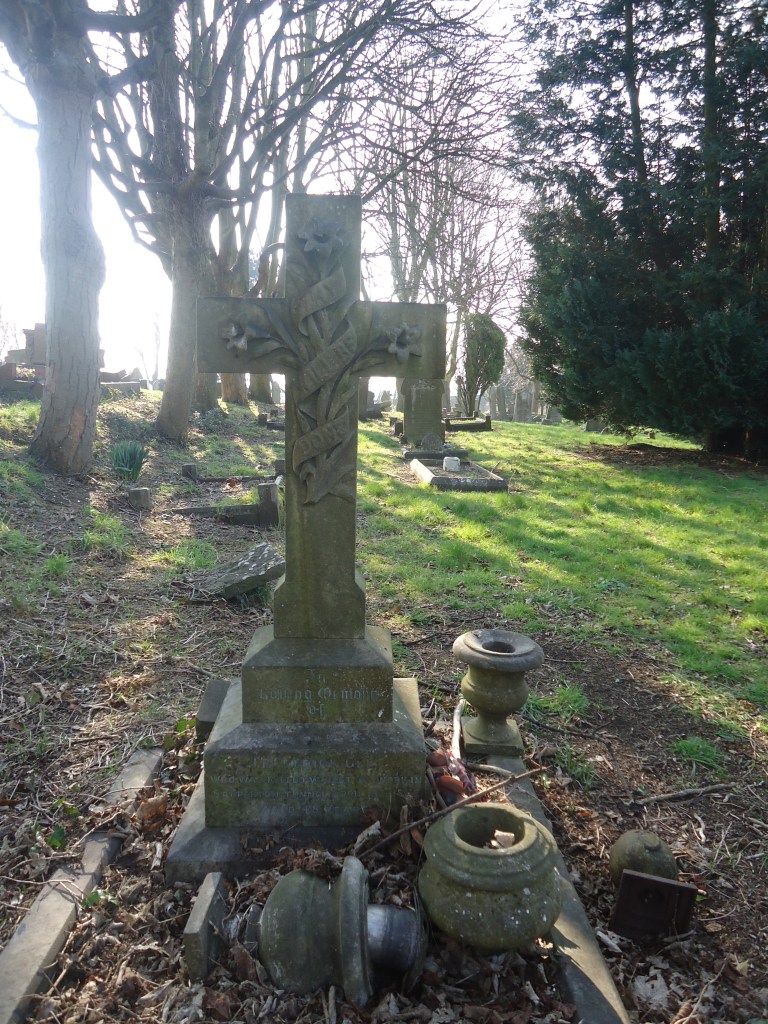
Herbert was buried in Radnor Street Cemetery in grave plot B1592, a public grave. He is buried with three other unrelated persons.
Fatal Railway Accidents Near Swindon – Between twelve and one o’clock on Saturday morning the stoker on a goods engine passing the Rifle Butts, between Swindon and Purton, saw what he thought to be the body of a man lying by the side of the rails. On search being made the body of a man named Frank Pinniger, a boilersmith in the Great Western Railway Works, but living at Purton, was found. He had been in Swindon shopping on the previous night, and left Rodbourn Lane about eleven o’clock to walk to his home down the line. The night was rough and windy, and it is supposed he was struck by the 11.20 mail train from Swindon. His body was removed to the mortuary at Swindon to await an inquest. Deceased was between 40 and 50 years of age, and leaves a wife and eight children.
The Stroud News and Gloucestershire Advertiser Friday, December 24, 1880.
Frank was buried on December 24, in St. Mark’s graveyard ‘by Coroner’s Order.’
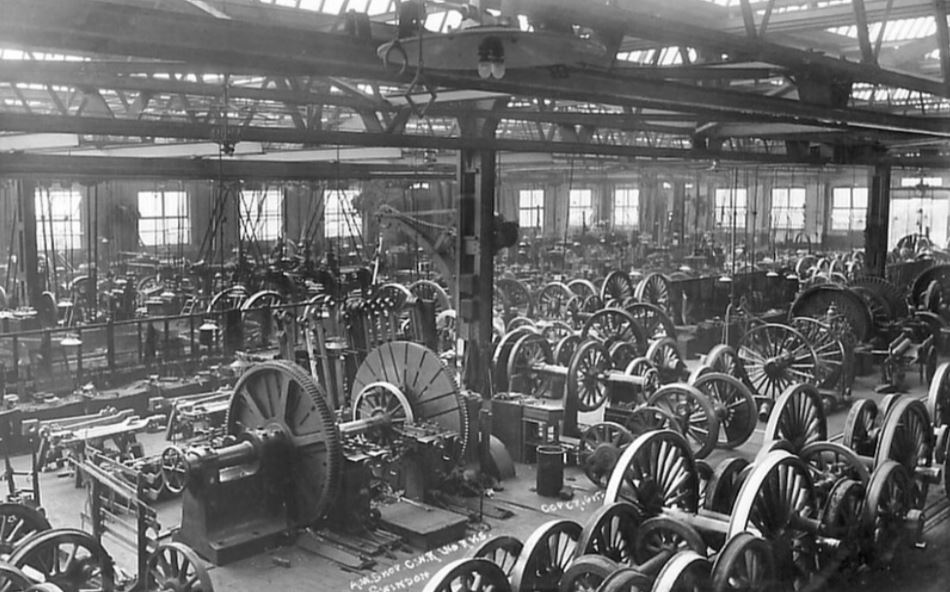
A William Hooper image of A W Shop taken in 1907 and published courtesy of Local Studies, Swindon Central Library.
Distressing Accident – On Monday an inquest was held at the Castle inn, Swindon, on the body of Clara Ada, aged 15, daughter of John Rumming, 4, Dover-street, New Swindon, striker in the Great Western Railway Works. The evidence went to show that the mother left the deceased at home with other children about eleven o’clock on the 27th of October. About four o’clock the deceased must (as she stated to a neighbour) have prepared to clean up the grate, when she became giddy. On recovering she found her clothes in flames, and having unsuccessfully attempted to extinguish them under a water tap, ran out, when they were put out by some neighbours, who, with oil dressed the burns she had sustained. Dr. Howse attended the deceased, but she died on Sunday last from exhaustion, consequent upon the injuries received. All the lower parts of the body were burnt more or less. The jury returned a verdict of “Accidental death.”
Trowbridge Chronicle, Saturday, November 12, 1881.
Ada was buried on November 9, 1881 only the 56th burial in the new cemetery. She was buried in an unmarked public grave, plot A460 where she lay alone for more than 20 years. In 1902 Elizabeth Painter, a 52 year old widow from Ponting Street was buried with her in this public grave and in 1916 they were joined by Walter William Palmer.
Walter William Palmer joined the Coldstream Guards, later transfering to the Grenadier Guards and served from 1894 for 12 years. As a former soldier Walter was called up as a reservist at the outbreak of the Great War. He enlisted with his old regiment on September 12, 1914 and left for France as part of the Expeditionary Force on November 11.
In 1917 Major General Sir Fabian Ware founded the Imperial War Graves Commission (now known as the Commonwealth War Graves Commission) and a programme of installing a headstone on the graves of the war dead was begun. Walter William Palmer had died as a result of his military service and was awarded an official headstone in recognition of his sacrifice.
Unfortunately, the names of those buried with him in the public grave are not recorded on this headstone, but if you visit the grave of Walter William Palmer please spare a thought for young Clara Ada Rumming (and Elizabeth Painter) who are buried with him.
Do you have a 15 year old son? Maybe you have a 15 year old grandson. He’s probably still in bed as you read this or perhaps, he’s playing some online computer game with his mates.
On Tuesday May 7, 1895 15 year old Ben Lawson Hook was at work in the R Shop (Loco Department) at the GWR Works. He was 18 months into a 6 and a half year Fitters apprenticeship. But that day he was mucking about, as 15 year olds are wont to do. A witness at the inquest said the boy ‘had no business to be swinging on the tyre’(the metal wheel or tyre weighed 9cwt 15lbs and was in the yard outside the shop).
Ben Lawson Hook was born on June 8, 1879 one of Frederick and Elizabeth Hook’s large family. Frederick was from Eastbourne and the family lived in Bexhill for sometime before moving to Swindon in the late 1870s. Elizabeth died in 1892 and Frederick in 1894. By the time of the 1901 census 17 year old Sidney was recorded as head of the household, living with his sisters Millie 30, housekeeper, Caroline 28, tailoress, Katie 23, laundress and 9 year old Norah. But this was more than five years after the tragic events of that day in May, 1895.
At the inquest held in the Cricketers Arms on Thursday May 9, 1895 the jury returned a verdict of “Accidental death.” No blame being attached to anyone.- Mr J. Fordyce Stephenson was present to watch the case on behalf of the GWR authorities. The boy was buried the next day.
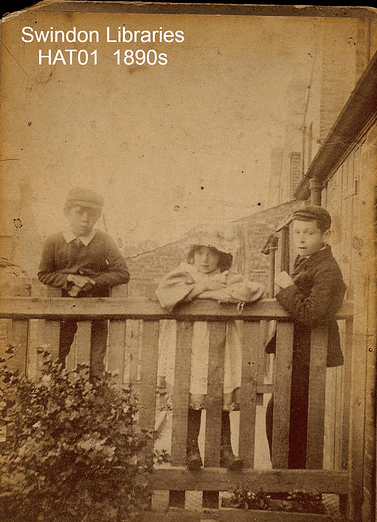
Image published courtesy of S.C. Hatt Local Studies, Swindon Central Library.
Fatal Accident to a Boy in the GWR Works – On Thursday afternoon, Mr W.E.N. Browne, County Coroner, held an inquest at the “Cricketers’” Arms, New Swindon, on the body of Lawson Hook, aged 15 years, of Maxwell street, New Swindon, who was killed on Tuesday last.
Deceased was employed in the R Shop (Loco Department) of the GWR Works. It appears that deceased and two other boys were amusing themselves in various ways, and deceased swung himself on to a large wheel, weighing over nine cwt., which over balanced and fell on him, inflicting such serious injuries that he died three hours later.
Mr Alfred Adams was chosen foreman of the jury, and after viewing the body, which was lying at the GWR Medical Fund Hospital, the following evidence was taken. Mr. Frank Apted produced a plan of the place where the accident occurred, and a sketch showing how it happened. – Robert Hook, brother of the deceased, identified the body.
David Turnbull was the next witness. He said he saw the boy swinging on a large wheel or tyre – one of 34 which were resting against the wall. He saw the wheel overbalancing, and shouted out, “Good gracious, that boy will be killed.” The wheel fell across deceased’s thighs, and he immediately hurried to his assistance. With assistance he removed the tyre, and deceased was at once taken to the hospital. Deceased had no business to be swinging on the tyre; it weighed 9cwt 15lbs, and was in the yard outside the shop.
Wm. H. Green, an apprentice in the GWR Works, said he saw deceased swinging on the wheels or tyres. Just after witness left him the accident happened, and witness heard deceased groaning. Witness went back and tried to lift the tyre off deceased, but could not do so, and Mr Turnbull and three or four other men came up at the time.
Dr Crowther, assistant to Dr Swinhoe, said he was called to the hospital to see deceased. He was suffering from collapse, and died three hours later from shock to the system.
The jury returned a verdict of “Accidental death.” No blame being attached to anyone.- Mr J. Fordyce Stephenson was present to watch the case on behalf of the GWR authorities.
The Swindon Advertiser, Saturday, May 11, 1895.
Lawson Hook was buried in a public grave in Radnor Street Cemetery on May 10, 1895. He shares the grave with his two sisters. Clara Hook who died in November 1897, aged 15 years old. Millie Hook, who held the family together after the truly awful 1890s, and died in March 1909 aged 38.
Frederick and Elizabeth Hook are buried in a public grave, plot B1711 with their daughter Nora who died aged 16 years of age in the Stratton Infirmary, also in March 1909.
This is the sad and shocking story of Arthur James who died from alcohol poisoning aged just 7 years old. We learn how 5 year old George Ockwell was called to give evidence at the inquest and how his mother, Emily Ockwell, had walked past the stricken boy who was vomitting and unable to stand or speak. And then we hear how his 14 year old sister Anne James arrived on the scene and picked up her brother. An unnamed man came to the girl’s assistance and carried her brother home where he died the following day.
More than 130 years later this story still shocks and saddens the reader.
Death from drinking spirits – An inquest was held on Monday morning, by Mr. Coroner Baker, at the Clifton Hotel, Clifton Street, New Swindon, on the body of Arthur James, aged 7, son of Simeon James, of 17 Kingshill Cottages, Swindon, who died on Friday afternoon from convulsions caused by drinking spirits which he obtained by forcibly entering a pavilion at the Ranger Cricket ground, Old Swindon.
Mr W.E. Morris was chosen foreman of the jury. Mr W.H. Kinneir and Mr E. Smith were present as representing the Ranger Cricket Club, and Mr. E.G. Lay, of Wood Street, Swindon, was also present.
George Ockwell, aged five years, son of Walter Ockwell, was called before the Coroner, and from him was elicited the information that the deceased, with the witness and another juvenile, were in the Ranger cricket field Thursday morning. The deceased entered the window of the pavilion and got out two bottles of spirits. With these the trio went down Lansdowne Road, and witness stated James drunk the contents of the bottles. After doing this he lay down, and the other boys left him, taking one of the empty bottles with them home. One of the bottles was now produced and also broken pieces of the other (found near the deceased by his father). From these it appeared that their contents were spirits.
Emily Ockwell, mother of the first witness, stated that on Thursday about two o’clock she was going to work along Lansdown Road, with her son, who had been with the deceased, when she found James in Vickery’s field. A lad was trying to hold him up, but he was insensible and could not stand or speak. Witness, understanding that deceased’s sister was coming to take him away, left him lying there. Whilst there he vomited a little, and had vomited a great deal before she arrived. He smelt strongly of spirits.
Anne James, deceased’s sister, stated that on Thursday, about 2.30 p.m., she found her brother lying in Vickery’s field, insensible. She picked him up, and he opened his eyes once. She carried him a short distance, and a man carried him the rest of the way. He told her that deceased was in a fit. He vomited after reaching home, and smelt strongly of spirits. He died on Friday afternoon, about half past three o’clock.
Dr. J.B. Fry deposed that on Thursday, about 4.30 p.m., he saw the deceased lad. He was then in a state of insensibility; his skin was cold and pale. The pupils of the eyes were very widely dilated, and insensible to light. Deceased was also in convulsions, which continued until his death. There was a bruise about the size of a pigeon’s egg on his forehead, and also a bruise on the right temple, which might have been caused by his falling. He could detect no smell of spirits either in the breath on on the clothes, and there was then no vomiting. From the history of the case it was probable that the convulsions were the result of an overdose of alcohol.
The Coroner, in summing up, said there was little doubt that the deceased got hold of the bottles of spirits, and through drinking too much of the spirit convulsion resulted, which caused death.
Before the jury gave their verdict, Mr. E.G. Lay stated that he had the management of the pavilion in the Ranger cricket ground. Two bottles, with some brandy and whisky in them, and a whole bottle of rum had been left in the pavilion, which he believed were securely fastened. The three bottles were missed on Thursday evening. An entrance had been effected into the pavilion, and then through an inner window into his compartment.
The jury returned a verdict of death from convulsions due to alcoholic poisoning.
The North Wilts Herald, Friday, September 17, 1886.
Arthur James, seven years old, of 17 Kingshill was buried on September 14, 1886 in a public grave plot A659. The following day a 5 month old baby, Ethel Maud Tilley was buried in the same plot.
In May 2024 I attended the Friends of Swindon Railway Museum’s monthly lecture, entitled ‘Into the Jaws of Death – working and dying on Britain’s railways 1900-1939,’ delivered by Mike Esbester from the University of Portsmouth. The subject was the danger railwaymen faced on a daily basis whether working on the trackside or in railway factories such as Swindon Works.
One of the facts Mike raised was that saftey both on the line and in the factories was considered by the railway companies to be largely a matter of personal responsibility. Despite the incredibly dangerous nature of the work, employees were expected to look out for themselves.
The following account records the extreme stoicism of Charles Edmonds, a shunter, who stepped between the buffers to couple up two engines. Despite his injuries he walked to the accident hospital and then home to Princes Street, a distance of approximately a mile.
Fatal Accident at the GWR Works
Mr J.B. Baker, coroner, held an inquest at the Red Cow Princes-street, on the body of Charles Edmonds, 48, shunter, who resided at 51, Princes-street, and who died on the previous Saturday night from injuries received whilst following his usual employ, which he had been engaged in many years, at the west yard of the GWR Works, on the 11th inst. It appeared to be generally admitted that death was the result of a pure accident.
The jury, of whom Mr W.E. Morris was foreman, having viewed the body, proceeded to hear the following evidence:- Felix Hale, 52, Bath-street, engine driver, said he knew the deceased, who was employed as a shunter in the GWR. On the morning of the 12th of October, at 9-45, they were engaged together shunting some engines. The deceased got in between the buffers to hook them on. When he had done so the engines rebounded and thus caused a space between the buffers. The deceased attempted to pass through these, thinking there was time, but the chains suddenly tightening the engines rebounded and he was caught. Witness said he did not know for certain that deceased was caught, as he saw him put his hands up. He remarked to his mate on the engine “Well, if Charley was not caught then he had a narrow escape.” As deceased did not come out witness got off his engine to go and see for him, and found him leaning against the coupling. He asked him how he came to try and pass through the buffers like that, and he answered that he thought he had time. With assistance deceased walked to the hospital and home.
By the Jury: There were hooks for shunters on the line, but not for engine shunters, the couplings being different. If deceased had stopped instead of trying to go between the buffers he would have escaped. Deceased was a man of experience.
John Hunt, Brunel-street, foreman of the “A” Shop, GWR Works, said Brown, the fireman for the last witness, told him of the accident and he went and found deceased sitting in the watchman’s cabin. He asked him if he was hurt very bad, to which he replied that he did not think he was. He asked him how it happened, to which deceased replied that he got between the engines to couple them, when one touched the other and sent it the length of the chain, thus leaving room for him to pass out, but as he was doing so the engine rebounded and caught him, but only for a moment, as he was instantly released. Deceased declined the use of a chair to go to the hospital, preferring to walk.
In answer to the Foreman, witness said there was no appliance for coupling engines without going between, as there was with trucks. In the Works they had so many classes of engines and tenders that they were bound to connect them by hand. It would have been all right if deceased had stooped under the buffer.
Dr. C. Spackman (Messrs. Swinhoe, Howse, and Bromley) said he saw the deceased when he came to the hospital on the morning of the accident. He said he had been “nipped” by the buffers, but did not appear to be in much pain. There was no abrasions or broken bones. He gave him a little stimulant, and deceased said he could walk home. Dr. Bromley saw him later in the day, but could find no sign of injury. It was impossible now to say the exact cause of death; there was no doubt internal injuries, and also injuries to the spine, as paralysis of the legs followed in a few days. He, however, rallied once or twice, and it was thought he would recover. He could take all kinds of food.
The Jury at once Returned a verdict of “Accidental death.” As it was said he had left a family of eight children, the Jury made a collection for the widow.
Swindon Advertiser, Saturday, October 31, 1885.
Charles Edmonds was buried on October 30, 1885 in an unmarked, public grave plot number A151 with three other unrelated persons.
Pollux – Hawthorn Class 2-4-0 built in Swindon Works in 1866.
Photograph published courtesy of P.A. Williams and Local Studies, Swindon Central Library.
Laudanum was the 19th century go-to drug for – well, pretty much anything really. The opium tincture was used to relieve everything from diarrhoea and the common cold to heart disease. It was a pain suppressant, induced sleep and was very, very addictive.
It was also very popular in Victorian artistic circles. One of the many victims of laudanum addiction was Elizabeth Siddal (1829-1862) a talented artist in her own right but better known as the muse, mistress and eventual wife of Pre-Raphaelite artist Dante Gabriel Rossetti. Lizzie died of a suspected overdose of laudanum following the birth of her stillborn daughter.
Laudanum was readily available, cheaper than a bottle of gin and in Swindon in 1888 could be bought over the counter by a 14-year-old girl, apparently.
This is the story of Henry Simpson who also died from an overdose of laudanum taken to relieve back pain.
Henry Simpson was born in Lechlade in about 1837, the son of plasterer John Simpson and his wife Sarah. Henry married Ellen Clifford in 1857 and throughout his life worked as a slater and plasterer, eventually adding grocer to his list of occupations, so obviously a hardworking man. The couple had two children, a daughter Lydia and a son William. In 1861 the family were living in Kempsford. By 1871 they had moved to Poulton in Wiltshire and by 1881 they had arrived in Swindon and were living at 21 Oriel Street, described on the census returns of that year as a Grocer Shop.
Death Through an Over-dose of Laudanum at New Swindon
Yesterday (Friday) Mr W.E.N. Browne (Coroner for North Wilts) held enquiry at the “Whale” Inn, Princes-street, New Swindon, touching the death of Henry Simpson, plasterer, who was found dead in bed on Thursday morning at his residence in Oriel-street. Mr. J. Maylott was chosen foreman of the jury.
After viewing the body, the first witness called was Richard James Page, who stated that he had lodged with deceased for 10 years. Deceased was at work on Wednesday last, but went home in the afternoon, complaining of pains in his back. He had been suffering all the week. On the previous Saturday someone recommended deceased to take a dose of laudanum to ease the pain. Deceased obtained a bottle, and on Sunday evening he took 30 drops in some water. Witness counted the drops. Deceased then went to bed, and got up as usual on Monday morning. He took about the same quantity of laudanum again on Monday night. Witness did not see the bottle again until Thursday. It was then empty, but was quite full when deceased bought it.
Minnie Browning, 14, a young girl residing in Oriel-street, proved going to Mr Smith, chemist, of New Swindon, and obtaining a bottle of laudanum and some opodeldoc, for which she paid 1s, and told the chemist it was for Mr. Simpson.
Hannah Browning gave evidence, stating that she was called to deceased’s house on Thursday morning about 11 o’clock, and between twelve and one she was asked to go and call deceased, as he had not got up. She did so but received no answer. She went half an hour afterwards and went into the room, and saw deceased in bed. She felt his hand and found it quite warm, but stiff. She then sent for some one, and she felt sure he was dead.
Dr Arnold, MB, FRCS, LRCP, stated that he was called to see deceased about three o’clock on Thursday afternoon. He found him dead, lying in the position of natural sleep. He examined the body of deceased, but found no marks of violence. In his opinion deceased had taken an over-dose of laudanum. The bottle produced would hold about eight drachms. Two drachms would be sufficient to kill a man who was not used to taking it.
The jury returned a verdict that deceased came by his death through taking an overdose of laudanum.
The Swindon Advertiser, Saturday, July 21, 1888.
From the evidence given at the inquest by Richard Page it was stated that Henry was suffering from back pain, causing him to take to his bed. Perhaps today the verdict arrived at by the jury might have been a more empathetic ‘accidental overdose.’
Henry was buried in grave plot B1575 on July 23, 1888. This was most probably a public grave at the time of his death but was subsequently purchased in 1948 for the burial of Edward Richard Green and his wife Emma Selina who died in 1952.
Administration of Henry’s will was granted to Ellen and his personal effects were valued at £147 6s 9d. Ellen moved to Chester after Henry’s death where she lived with her daughter Lydia and son-in-law Charles Arthur White. She died at their home on June 14, 1890 and was buried in Overleigh Old Cemetery, Chester.
For those of you interested in the story of Elizabeth Siddal you can read more here. This is one of the many portraits Rossetti painted of her.
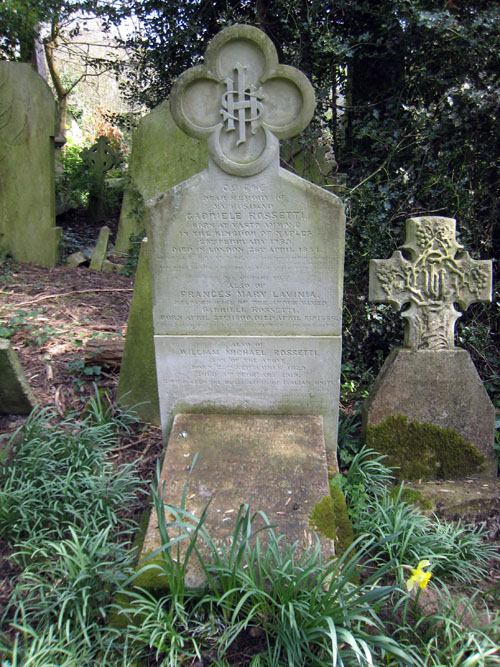
Elizabeth was buried in the Rossetti family plot in Highgate Cemetery.
Sometimes the details are too scant to piece together the before and after stories.
This is the tragic story of a little girl who died in a wash tub in a back garden at 8 Thomas Street, Rodbourne. Sadly, even her name is incorrectly reported – she is Rose Morris, not Morse.
Her father, Charles James Morris, a 36 year old Engine Fitter, died three years later.
What happened to the bereaved wife and mother Hannah Morris?
Even Swindon
Death of a Child. – A little girl named Rose Morse, aged two years, daughter of Charles Morse, fitter in the GWR Works, New Swindon, and residing at 189 Rodbourne Road, met with a sad death on Easter Monday. She was playing with other children in a back garden at 8 Thomas Street, Even Swindon, when she was all at once lost sight of. One of the other children went into the house and asked a lad named Clifford where the lost girl was. He went out and searched for her, and noticing that a piece of sacking was removed from off the top of a wash tub which was “let into” the ground. The tub contained a small quantity of liquid and some grains. Clifford on looking into the tub, saw the poor little child, suspended from the top of the tub, head downwards, quite dead. He at once raised the alarm, and medical aid was sought. Dr. Bromley (Messrs Swinhoe, Howse and Bromley) quickly attended, but pronounced life to be extinct. – On Wednesday, an inquest was held on the body at the Dolphin Inn, by Coroner Browne. After hearing the evidence, the jury, of whom Mr Jonah Hawkins was foreman, returned a “death from suffocation,” and recommended that a proper covering should be placed firm on such tubs as deceased fell into when placed on the ground.
Swindon Advertiser, Saturday, April 27, 1889.
Rose Ethel Morris was buried in plot B1207, an unmarked public grave, on April 27, 1889. She is buried with three other children; two month old George Mills who was buried the previous day and 4 year old Phyllis Holmes and 2 year old Flora Maude Barnes who both died in 1922.
Charles James Morris died in February 1892 and was buried in plot A875, another unmarked public grave, with three other unrelated persons.
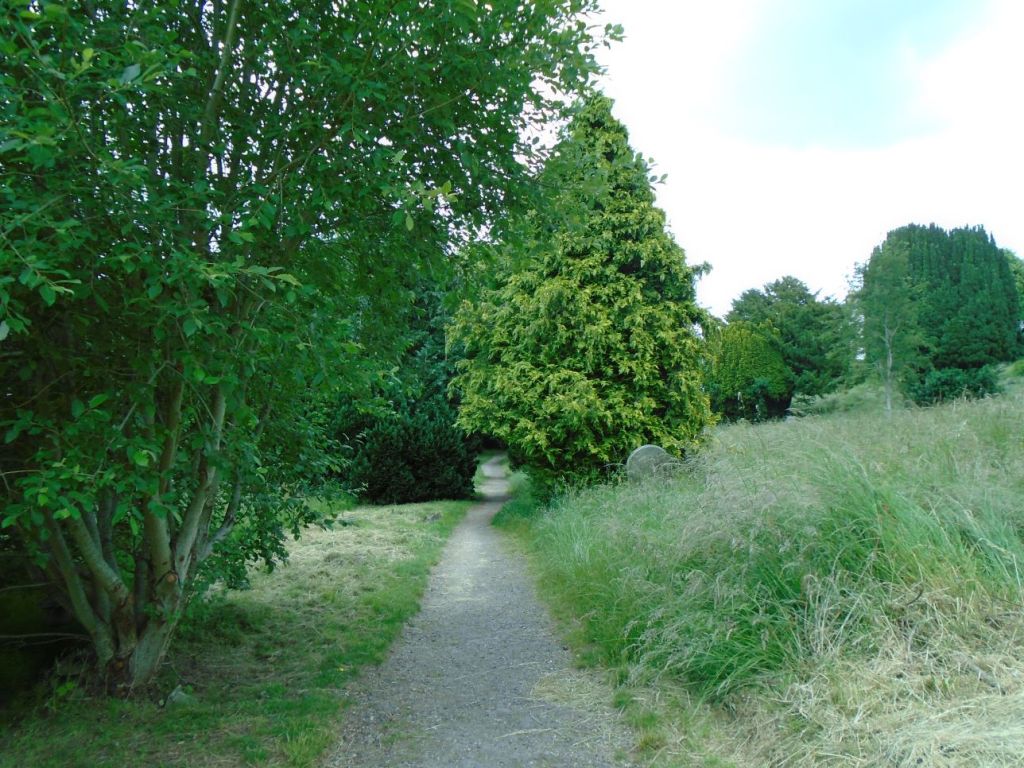
Looking towards the Kent Road gate – Section A to the left and Section E to the right.
Working in the GWR factory was a dangerous affair. Serious injuries were commonplace and even fatal accidents occurred such as the one that highlighted poor safety practise in the works in 1896.
Fifteen-year-old Matthew William Fox Burton had been working as a rivet boy for just seven weeks when he was involved in an horrific accident early one Tuesday morning. Matthew – known as William – was the second son of Matthew and Mahalah Maud Burton. He was baptised at St. Mark’s Church on August 9, 1880 when his father’s occupation was given as Engine Fitter. And like just about every other boy living in New Swindon at that time, William followed his father into a job in the railway works.
His duties as a rivet boy included cleaning out the rivet forge when on that morning an hydraulic pressure riveter weighing 35 cwt, suspended by chains from an overhead crane capsized.
published courtesy of Local Studies, Swindon Central Library.
Men working nearby carried William to the Medical Fund Hospital.
“But it is feared that he has sustained very serious internal injuries and that he will not recover,” reported the Advertiser.
William died in the hospital five days later; the cause of death was shock following the injuries he had sustained.
An inquest attended by Works Manager G.J. Churchward held at the Cricketer’s Arms on Monday March 2, 1896 heard how the accident in V1 (Boiler) Shop happened just after the men returned to work at 9 a.m.
Mr R.L. Dyer, the foreman of the shop, suggested that a very slight leak in the valves could have caused the machine to drop to the ground when the water was turned off while the men were at breakfast. The subsequent slackness in the chain may have caused it to slip from one of the two hooks that supported it.
The coroner adjourned the proceedings in order to inform the Inspector of Factories.
When the inquest reconvened on Wednesday afternoon the jury heard how as the machine was lifted off the boy it slipped again, landing on him for a second time.
Dr Simms, the assistant to GWR medical officer Dr Swinhoe, said the boy had a fracture of the upper jaw and left arm and extensive bruising of the chest and back.
The jury asked to examine the machine and the inquest was adjourned for a second time, much to the consternation of Mr Churchward.
When asked when the machine had last been officially inspected, Churchward replied that Mr Dyer and himself “would see it each time they passed it.” It became apparent that inspections were done on an ad hoc basis. Mr Maitland, the Inspector of Factories, said there was no definite period for examination or visits to factories.
The jury returned a verdict of accidental death but recommended greater precautions should be taken to prevent accidents with machines of this kind.
William’s funeral service was held on March 5 at St Mark’s, the church where he had been baptised. He was buried in grave plot C771, an unmarked public grave, with four other unrelated people.
My thanks to Debra and Peter Melsom who first brought this story to my attention. The story of Matthew Burton was originally published in the Swindon Advertiser on April 1, 2011.
‘Mother always said there was nothing I could have done to help, but I never believed her. Today I can still hear the cries of the men, although mother said that wasn’t possible, they were too deep in the tunnel and I was too far away. But I wasn’t.
What she didn’t know was that I was there, by the mouth of the tunnel as the ballast train screeched through. I was the first person on the scene, a 10-year-old boy walking home from school across the railway line.
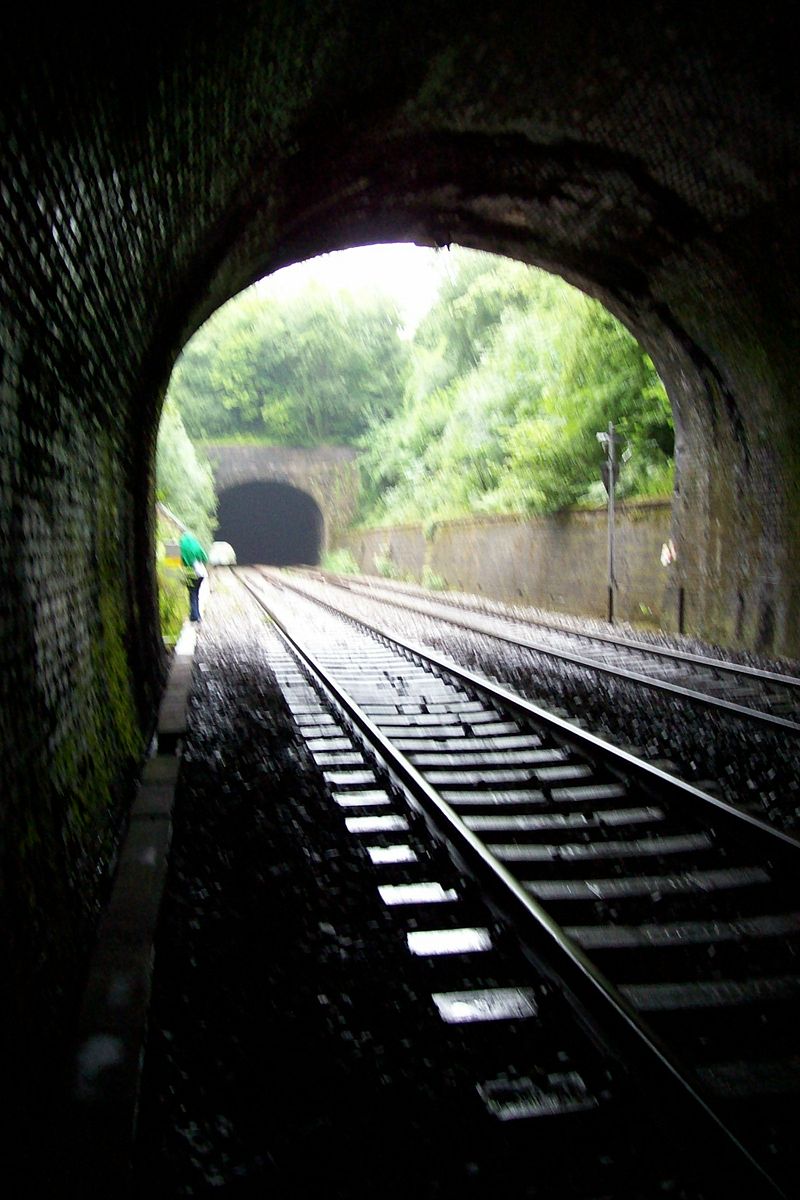
I knew the platelayers were at work in the Sapperton tunnel that day in April 1896. I had seen them arrive with their truck and their tools while I was about my early morning tasks on the farm. A section of the tunnel was under repair and I wished I could see inside.
The tunnel was a feat of engineering carved beneath the Cotswold escarpment and a source of wonderment to this 10-year-old boy. By the end of that day in April 1896 the Sapperton tunnel would be the stuff of nightmares, a scene that would haunt me for years.
For weeks afterwards it was all anyone talked about in the village. How the gang of five men had been warned of the approach of a down train and had stepped out of the way on to the other set of metals. They did not notice that an up ballast train had entered the tunnel. Two men were killed instantly, their bodies mutilated in a shocking manner.
And I saw it all. At first I thought all were dead, but then came the moaning and the cries as the two who were less severely injured began to move.
I crept closer. In the light of their lantern I could see a man still lying on the track, his arm wrenched from his body, blood seeping from his head.
Sapperton Railway Tunnel
Help was slow in coming. The three surviving men were eventually picked up by a passenger train passing through the tunnel half an hour after the accident. At Stroud they were taken from the railway station to the hospital, causing a painful sensation in the town.
The men who died were named as H. Ballard and E. Greenaway. Another, J. Hillsley sustained concussion of the brain, scalp wounds and bruised limbs while W. Pointer was sent home from hospital during the course of that evening. The man with the severed arm died on the way to hospital. His name was Frederick Gee.
Mother said there was nothing I could have done to help, but I never believed her.’
The facts …
Platelayer – a man employed in laying and maintaining the railway track. The poorest of any railway employee with little or no opportunity for promotion or advancement. ‘The most neglected man in the service.’ (Will Thorne, Victorian platelayer).
Ganger Frederick Gee 47 was married to Mary Ann nee Willis and left seven children, five under the age of 10 years including a baby son just a few months old, when he died working in the Sapperton tunnel in April 1896. Frederick was buried in Radnor Street Cemetery where in 1900 the couple’s sixteen-year-old daughter Rosa Ethel was buried alongside him and four years later their son Harry Howard, aged 21.
In just a few short years Mary Ann lost her husband and two of her children, but she was made of stern stuff.
On March 14, 1907 Mary Ann set sail from Liverpool on board the SS Cymric with her four youngest sons Sidney 17, Ernest 15, Frank 13 and eleven-year-old Wilfred, to begin a new life in the United States of America.
The family arrived in Boston, Massachusetts on March 25 and in the 1910 US census they can be found living in Forest Dale, Salt Lake City, Utah.
In 1917 Mary Ann, then aged 62, married William A. Tolman. William Augustus Tolman was 69, a widower and a member of a prominent pioneering family in the Church of Jesus Christ of Latter Day Saints (the Mormons). William’s father Cyrus had arrived in Salt Lake City, Utah in 1848 with Brigham Young’s second company.
Theirs was a brief marriage. William died from smallpox in 1920. He was buried in the family plot at Oakley Cemetery, Cassia County, Idaho with his first wife Marintha.
Mary Ann died in 1929 aged 71. She had survived the death of two husbands, two sons and a daughter.
We could all see that the tram was travelling too fast and people on the street began to move, clearing a path. When the accident happened, it was as if in slow motion; until the screech of metal on metal and the screams of the passengers plunged the scene into sharp and noisy relief.
As the tram swerved and toppled over some of those travelling on the open top were thrown to the ground. Surely, they could not hope to survive.
The visitors to the Bath and West Show who thronged down Victoria Road stood in shocked disbelief. For a split second there was a silence, a nothingness and then onlookers surged forward to help.
I was just returning to the studio from an assignment and had my camera with me. I briefly considered taking photographs of the scene, but just as quickly decided against it. I left my equipment in the foyer at the Empire Theatre and joined those helping to rescue the trapped and injured passengers.
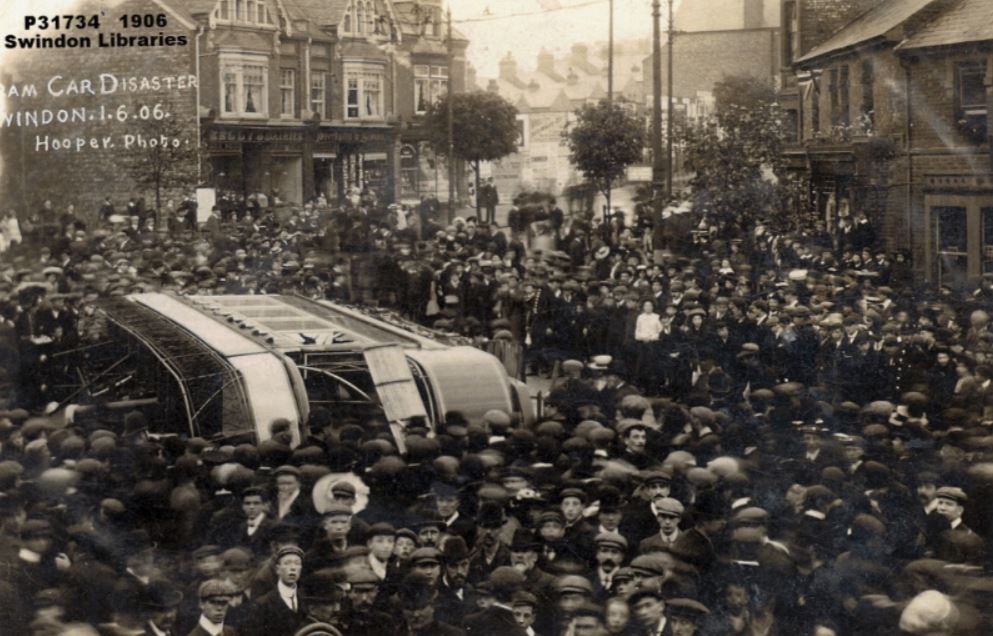
Local photographer William Hooper published a postcard photograph of the crash scene that same day. I knew then that I didn’t have what it took to be a commercial photographer and I resigned from my position before my employer had an opportunity to dismiss me.
I took up a clerical job in the Works soon after. When I retired forty years later my colleagues presented me with a camera!
The facts …
Runaway Tram Car
Dashes Down a Swindon Hill and Overturns
Four Passengers Killed and 30 injured
Somerset Farmer loses his life
Dorchester People Injured
A serious tram accident occurred at Swindon on Thursday evening. In consequence of the Bath and West of England Agricultural Show, the electric cars, which are Corporation property, were very heavily laden, and No 11 car, which is registered to carry 56 passengers, was descending Victoria road, a steep decline connecting the old and new parts of Swindon, with a load of between seventy and eighty people. Midway down the hill, the car got beyond control and at the foot of the hill ran on to the uprails at a crossing, and overturned.
The passengers on the top were precipitated into the road like stones out of a catapult, some being thrown a considerable distance. There were a great many people about at the time, and for some moments the greatest consternation prevailed. A few cool heads were soon on the spot to render assistance. The shrieks and groans of the injured filled the air, and one spectator says that blood ran into the gutter in streams. Scarcely a single passenger escaped without injury, although one or two who saw their danger had jumped off before it was too late.
Dr. Lavery, who lives close by, came on the scene, and was soon followed by Drs. Waiters. Dalea Gordon, Ducane, and the officials from the Great Western Surgery. Dazed and unconscious, the victims lay strewn about the roadway for many yards. The doctors and ambulance men rendered first aid to the more serious cases, and conveyances were summoned and the victims conveyed to the Victoria Hospital.
All the injured were transferred to the Victoria Hospital where they were given further treatment. Unhappily, the injuries in two cases proved fatal. Mr Edwin H. Croad, proprietor of the Railway Hotel, Swindon died on the way to the hospital while Mr Harry Dyke, brewer’s agent, of Swindon succumbed to his injuries shortly after admission. Two other victims died later. The roll of injured contains the names of about 30 persons, and others who were merely bruised or shaken went direct to their homes.
William Hooper photograph published courtesy of P.A. Williams and Local Studies, Swindon Central Library
The Dead
Harry Dyke, brewer’s agent, Goddard-avenue, Swindon.
E.H. Croad, Railway Inn, Newport Street, Swindon.
Rowland J. Dunford, Nables’ Farm, Draycot Cerne, Chippenham.
Charles Phippen, farmer, Weston Bampfylde, Sparkford Bath.
The two first names died soon after admission. In all cases death is supposed to be due to fracture of the skull.
How the Accident happened
General comment is that the car was carrying far too many passengers; indeed, eye witnesses and many of the passengers declare that it was grossly overcrowded. In descending Victoria road, the brakes either did not act, or were overpowered, and the momentum acquired in descending this steep thoroughfare hurried it along at a pace which convinced passing pedestrians, and even the passengers themselves, that an accident was inevitable. Whatever the feelings of the passengers were, no panic was displayed.
There was an absence of screaming, one and all awaiting with a grim quietness the denouement which all felt was bound to come. The car kept to the rails going down the hill. At the bottom is a sharp curve into Regent circus. On reaching the bend, it ran on to the up line, rocked heavily, and then fell over on its side with great force. It was exceedingly fortunate that there was no car on the up line or the loss of life must have been much great.
Lyons, the driver, stuck to his car to the last. He is said to have been an experienced motor man. He received some slight injuries to his side, but soon recovered. The conductor, who was on top of the car, was picked up in a dazed condition, but he pulled himself together in a few minutes. Lyons declares that he put on his brakes on reaching the hill, and applied them as hard as he could. He never let go of these until the car toppled over, and did all that he could to avert the disaster.
The trams belong to the Corporation of Swindon, and there is no doubt that the matter of compensation will have to be faced by the town authorities. The overcrowding allegations give a further serious aspect to the matters. Passengers are booked on a way bill, similar to the system followed in Bristol, the deviation being that the bill, instead of being placed in a prominent position within the car, is kept in portfolio form, and checked by the inspector whenever he mounts the platform. This way bill doubtless will be produced when required at the official enquiries which will be held, and, if accurately entered up, should show the exact number of persons who were riding. This can be further checked by the number of punched tickets issued.
This is not the first mishap which has occurred at the foot of Victoria road, although, fortunately, the previous accident was not attended with serious consequences. Warnings have more than once been uttered emphasising the necessity for special care being exercised in the descent of the hill, and at the annual dinner of the Chamber of Commerce, Mr A.E. Withey, a prominent local solicitor, expressed strong views on the question.
Taunton Courier and Western Advertiser 6th June 1906 (extracts)
Edwin Herbert Croad, the 60-year-old proprietor at the Railway Hotel, Newport Street, Swindon was buried in plot E8374 in Radnor Street Cemetery on June 6. William Hooper got a photo of the funeral as well.
Swindon Corporation was found liable for more than £7,000 compensation and costs and was forced to increase the rates for three years to pay the bill.
William Hooper photograph published courtesy of P.A. Williams and Local StudiesSwindon Central Library.








 Radnor Street Cemetery