This is the story of two boys born 20 years apart – William Batley Pitts, the natural son of Robert and Elizabeth Pitts, the other Archibald Kenneth Poulton, their adopted son.
Today railway safety is heavily promoted and Network Rail has a series of safety campaign videos on their website aimed at everyone from the very young to the distracted commuter.
You might expect railway safety to have been a priority in Swindon of all places, but perhaps it wasn’t so in 1893.
On September 1, 1893, a group of boys were playing on the level foot crossing close to the residence of William Dean, Chief Locomotive Superintendent at the GWR Works. The horrific accident was described in great detail during the inquest held at the Cricketer’s Arms the following day.
Shocking Accident on the GWR at New Swindon – On Friday evening, the 1st inst., about six o’clock, a shocking accident occurred on the GWR at the level foot crossing near the subway close to Major Dean’s house. The victim was a lad 12 years of age, name William Batley Pitts, son of Robert Pitts, of 19 Clifton Street, Swindon. It appears that the lad had been at play with others near the foot crossing close to the residence of Mr Dean, the chief locomotive superintendent. A goods train passed on the down line, and as soon as he thought the line was clear the boy attempted to run his hoop across the line when he was struck by the up Cornish express, of the approach of which he was not apparently aware. The poor lad was cut to pieces and the train carried his body 23 yards before throwing it off the line. When picked up the boy was terribly mutilated. A lad named Smith witnessed the sad occurrence, and rushed to Major Dean’s house, close by, for assistance. Dr. Pearman and PC Pinchen were soon on the spot, and had the scattered portions of the poor child’s body collected and conveyed to the GWR Medical Fund Hospital. The Coroner was communicated with, and the inquest was held this morning at the Cricketer’s Arms, a verdict of accidental death being returned by the jury.
Swindon Advertiser Saturday, September 2, 1893.
William was buried on September 5, 1893 in plot B2193, a privately purchased grave. Thirty years later he was joined by Archibald Kenneth Poulton, the boy his parents adopted long after William’s death.
At the beginning of the 20th century adoption was frequently an informal affair. Perhaps he was related in some way, a nephew, maybe a grandson. It is now not possible to trace how little Archibald ended up with the Pitts family. He died in 1924 and was buried with William in grave plot B2193 on April 22.
On Wednesday January 14, 1925 Sampson Birkby bought half an ounce of tobacco, a box of matches and half a pint of bitter at the Carpenter’s Arms, Gorse Hill. At 2.30 pm he left the pub and was never seen alive again.
Five days later the Advertiser published an account of his disappearance. Described as 62 years of age, 5ft 6ins tall with a pale complexion and a grey moustache, Sampson Birkby was a charge hand coach body maker at the GWR Works.
On the day of his disappearance he had returned home for lunch at 76 Dean Street where he lived with his wife Alice, his married daughter, son in law and young grandson.
Sampson called in at the Baker’s Arms near the GWR factor entrance on his way back to work. Reminded that he would be late, he hurried out, but as was later revealed, he did not clock in, but instead walked to the Carpenter’s Arms at Gorse Hill.
Later that evening one of his workmates called in on Alice Birkby to tell her Sampson had not checked in for work. The worried family immediately reported him missing.
Nearly four weeks later Sampson’s body was pulled out of the river at Buscot Weir by Samuel Kemble, a lock keeper employed by the Thames Conservancy at St. John’s Lock, Lechlade.
How did Sampson Birkby, described as being of a happy disposition and without any financial worries, end up drowned in the river at Lechlade?
Sampson was born in Hunslet, Yorkshire in 1862. By 1891 he had moved to 47 Cambria Place, Swindon and a job in the railway works. Ten years later he and Alice were living at 37 George Street with their two year old daughter Edith and 14 year old May Beswick, described as ‘adopted.’
Evidence suggested that Sampson, although not especially talkative, was a social man. A member of the High Street Workingman’s Club, he was an enthusiastic amateur photographer and a keen fisherman.
Giving evidence at the inquest, his son in law, George Bridgeman told how Sampson had been suffering from giddy fits during which he staggered and fell if someone did not support him.
Mr A.P. Ross Ormiston, the Coroner for North Berkshire, supposed that finding himself late for work, Sampson had decided to catch the bus to Lechlade and plan the fishing trip he had previously discussed with his son in law.
Summing up, the Coroner suggested that Sampson had suffered one of these giddy fits whilst walking along the tow path and had fallen into the river. He returned a verdict of ‘Found drowned’ and expressed his sympathy with the relatives of the deceased.
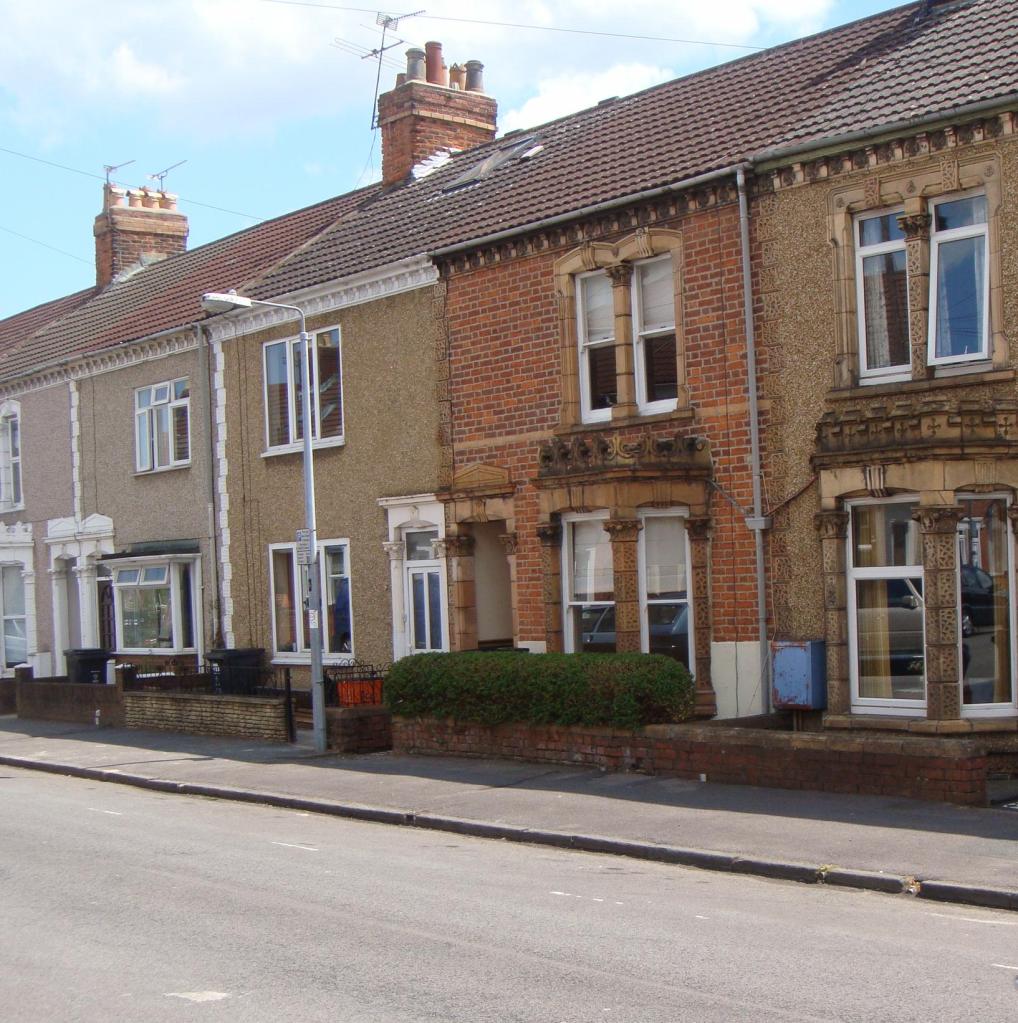
Houses on Dean Street
Sampson Birkby was buried on February 14, 1925 in grave plot D892. His wife Alice died just seven months later and was buried with him. The cremated remains of their son-in-law George were buried with them following his death in 1983 and their daughter Edith Annie when she died in 1986.
This Saturday you’ll find Rodbourne a busy place, as it is most Saturdays. The big attraction is the McArthur Glen Designer Outlet Village housed in the former railway works building. Rodbourne was a busy place back in the day as well and in this account of a fatal accident on the railway line you get a glimpse of the area as it was nearly 100 years ago.
Mr G. Brown, district organiser for the NUR, tried to establish if a shortage of manpower had contributed to the accident, but David Wirrell did not grasp this lifeline. You can’t help but wonder how the poor man coped in the aftermath of the accident.
Knocked Down By An Engine.
Swindon Man Dies From His Injuries.
Leg Severed
A verdict of accidental death was returned at the inquest on Tuesday attending the death of Stephen Amor, 63 of 101 Linslade Street, Swindon, a GWR employee, who was knocked down by an engine near the Rodbourne Road siding, and who died shortly afterwards in the Medical Fund Hospital.
The jury returned a rider that David Wirrell, who was with deceased at the time of the accident and who was acting as “look-out” man, committed an error of judgment in using his brook instead of devoting all his time to “looking out.”
Mr G. Brown, district organiser for the NUR watched the proceedings on behalf of the local branch of the Union, and Mr A.T. Tyrrell was present with Mr Hannington representing the GWR Co.
Mrs Isabella Amor widow of the deceased, said he had been in good health during the past 39 years.
Henry Harold Greenwood, chief surgeon at the GWR Medical Hospital at Swindon, said when admitted he found deceased was suffering from haemorrhage and compound fracture of the right ankle. Amor was taken to the hospital immediately after the accident.
In the course of his evidence, Mr Greenwood paid a very warm tribute to the St. John Ambulance Association for their valuable assistance in rendering first aid.
A Marvellous Escape
David Wirrell, switch cleaner, living at Devonshire Villas, Rodbourne Cheney, said that on Saturday morning he started work at 7.30 with Amor. He first got his tools and started cleaning switches.
“I was the look-out,” he continued, “and proceeded as far as the third compound, which is nearly opposite Rodbourne Road Signal Cabin. We were proceeding from one point to the other, and I looked up to see if anything was coming from the factory, from where most of the traffic comes in the morning.
“There was nothing close to us in that direction, and so I stepped over into the road and gave a few strokes with the broom looking out at the same time.
“When I looked round in the opposite direction to the factor I saw an engine was close upon us, within about four feet. I tried to give the alarm, but the engine pushed me down and ran over me, without causing injury.
“I got up, ran to my mate Amor and found him badly injured. I spoke to him, but he never answered.”
Witness said that he had been about 20 years in his occupation, and always worked towards Swindon Station.
The Coroner: Are you always the look-out man? – No. Every other day. It is my turn on Saturdays.
Don’t you look out both ways? Yes, I do.
Witness explained that Saturday’s incident occurred in a minute or so, and he was not quick enough in looking behind.
There were always two men on the job and sometimes three, but the third man had been ill for some weeks.
Heard No Whistle
Replying to the Coroner, he said that he heard no whistle.
The Coroner: Was a train passing? I believe one had previously passed along the main side.
As a general rule witness looked one way first, but the engine came from another and it all happened in a minute or two.
Mr Brown (who was representing the NUR): As a look-out man, shouldn’t you confine yourself to looking-out? – Yes.
Mr Brown: Is there a signal at that point? – Yes.
Did you observe the signal? No. I can’t say whether it was on or not.
Witness added that the points in question were worked by a lever, and the signals were not of much use to them.
Mr Brown: Did the fact that there were only two men cause you to do additional work?
Witness: No, that made not a bit of difference to looking out.
He heard no warning from the driver of the train.
Mr Brown: Had there been three men would the look out man have to do more work? No.
John Thomas Thorpe of 5, Deacon Street said that at about 8.15 he was standing on the engine line at the siding opposite the Rodbourne Road cabin when he saw an engine approaching the compound or double-switch. He then saw two men either knocked down or fall under the engine.
He ran to where Amor lay and found his leg severed. Hen then went to the AE Shop for the ambulance men.
In answer to the coroner, witness said the men had their backs to the engine.
A Slow Speed
Edward Price, 15 Beatrice Street, locomotive driver, said he was driving a crane engine from the subway to the loco yard in the factory sidings. About 8.15 he was informed that he had run over two men in the compound near Rodbourne Road signal box. There was a signal post with a loop signal, and that was off for him to proceed. He was going at two miles an hour, and at that pace he could have stopped instantly if he had seen anyone on the line.
The Coroner: When shunting, who gives you orders to proceed?
Witness said that he was given orders at the subway. He was also guided by the signal. He touched his whistle just before or as he passed the signals. He was in charge of the engine. When shunting he was given orders by the shunter, but in the present case he was not shunting.
There was a fireman and a shunter in the engine besides himself, but he went across the footplate and looked at the signal.
The Coroner: You did not see anybody on the line?
Witness: No, I saw no sign. He could see nothing from his side, he added.
The Coroner: When people are cleaning points you know that they are guarded – I know they are supposed to be guarded.
Mr. Brown. You were working round a curve? Yes.
Was there anything on the next set of rails? Yes, a number of tenders.
Heard People Shouting.
Herbert Arthur Nash, 173 Rodbourne Road, fireman to Driver Price, said that when they were approaching Rodbourne Road signal box they were keeping a sharp look-out for signals in case they were put at danger against them. Traffic was clear as far as he could see. The driver blew his whistle and went on to the compound. He saw no-one, and was not aware anyone had been knocked down until he heard someone shouting to them to stop. They stopped immediately.
The Coroner: Were you going slowly? – About 2 miles an hour – we were going at a slow walking pace.
Albert William Dew, 6 Spring Gardens, a shunter, said he was in charge of shunting on an engine and crane. He was riding on the left-hand footplate, and was looking out, but saw no-one in the road, as they came round the left-hand curve.
Summing up, the Coroner said that the man who had been killed was working with another man whom they had had as a witness. The man who was not run over was supposed to have been on the look-out for his mate, who was cleaning points. According to his own evidence he was not carrying a flag or horn as he should have done. The cleaners were supposed to be guarded by “look-outs” and the jury would have to determine whether the man was guilty of criminal negligence. His duty was to obey the rules.
Mr R.G. Hannington, manager of the locomotive department, expressed, on behalf of the GWR Company, his very deep sympathy with Mrs. Amor and relatives and his very great regret at the occurrence.
North Wilts Herald Friday April 30, 1926
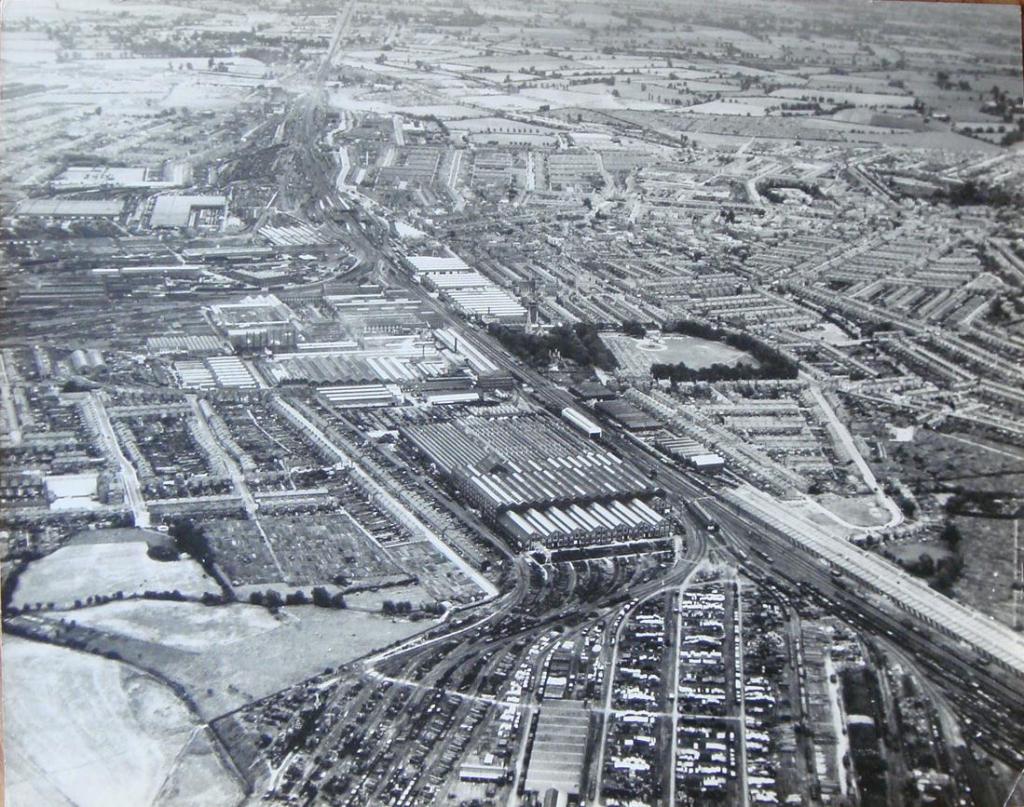
Rodbourne and the Swindon railway works
Stephen Amor, aged 63 years, of 101 Linslade Street and killed on the GWR Line, was buried on April 29, 1926 in grave plot D819. Isabella Amor died 10 years later. She was buried with her husband on April 25, 1936.
On August 26, 1891 Frederick and Louisa Say(e) took their baby son to be baptised at the Primitive Methodist Church in Regent Street when the seven week old baby received the rather grand name of Montague Frederick William Say.
Frederick was a blacksmith’s striker in the GWR Works and Louisa had been a needlewoman before her marriage. After the christening the little family returned to their home in West End Terrace, Westcott Place but just four months later a great tragedy struck.
In December 1891 Louisa, Frederick and baby Montague Frederick William were living at 13 George Street. Before she went to bed on the night of Wednesday December 21, 1891 Louisa hung her washing up on a line in the kitchen to dry over-night. But suddenly, the line gave way and as the washing collapsed the clothes knocked over an oil filled lamp setting Louisa alight. Louisa was dreadfully burned, and died that same night.
Louisa was buried in Radnor Street cemetery on December 26 in grave plot B1675, a public grave, where she lies with three other unrelated persons. She was 29 years old.
What happened to five month old Montague Frederick William? On the 1901 census he is aged 9 years old when he was living in Trowbridge with his paternal grandparents William, a woollen cloth dresser and Martha. His father was lodging with George and Mary Taylor at 6 Theobald Street, Swindon. In 1904 Frederick married widow Ada Maria Thomas and moved into her house in 101 Dean Street. By 1905 Montague, aged 14, was back in Swindon living with his father and step-mother. That same year he began a 7 year boiler making apprenticeship in the Works.
Frederick Say died in 1929 aged 64 and was buried in grave plot D98 with his second with Ada who died in 1923.
The little boy who lost his mother at just five months old went on to marry and have his own family. Montague was living in Kent in 1916 when he married Lilian Deeks. He died in Cosham, Hampshire in 1958 aged 67.
The New Ship Hotel more usually known as the Ship Inn published courtesy of Local Studies, Swindon Central Library.
Sad Death From Burning – Mr W.E.N. Browne, Coroner for North Wilts, held an inquest at the New Ship Hotel, New Swindon, on Thursday in last week on the body of Louisa Saye, wife of Frederick Saye, living at 13 George St., New Swindon. The evidence went to show that on Dec. 21st. about 9.30 p.m., deceased was hang some clothes on a line in the kitchen of her own house, when one of the nails to which the cord was attached gave way. The clothes in falling overturned a lamp on the table, with the result that the oil ignited, and the deceased’s wearing apparel was set on fire. Her cries for help attracted the attention of her husband, who was in bed at the time, and he ran down and with some difficulty succeeded in extinguishing the flames. Medical aid was obtained, but Dr Jones (assistant to Messrs Swinhoe, Howse and Bromley), pronounced the case hopeless, and the woman, who was dreadfully burned, expired on Wednesday night in great agony. After hearing the evidence the jury returned a verdict of “Death from shock to the system,” and, on the suggestion of the foreman, Mr. A. Webb, gave their fees to the husband.
I am grateful for a lot of things, and like most of us I sometimes need to be reminded to stop moaning and reflect upon them.
Two of my children suffered an appendicitis in their early teens. It was a painful experience for them and an anxious time for me, but thanks to modern medicine and our marvellous NHS they both recovered.
Little Ella Saunders was not so fortunate.
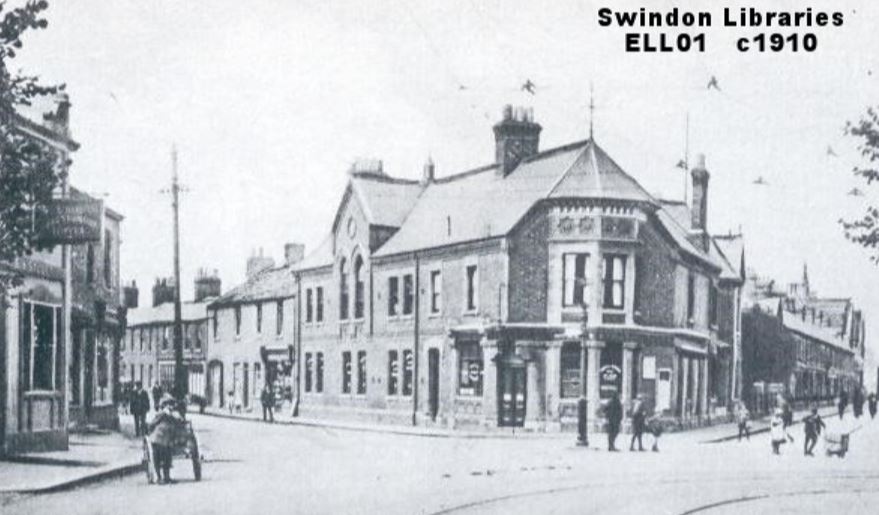
Ella’s father was a Pork Butcher. The family business was a shop next to the Rolleston Arms pictured in this postcard view of Commercial Road. The 1911 census tells us that William and Maria had been married for 12 years and had four children, Ethel 10, Edna 8, Ella 5 and two year old Erica. The four girls were baptised together on May 1, 1911 at St. Mark’s Church.
Obituary – Much sympathy will be felt with Mr and Mrs W.T. Saunders, of 72 Commercial Road, Swindon, in the loss which they have sustained by the death of their six years old daughter, Ella. The child was operated upon for appendicitis at the Victoria Hospital, but died after a only six days’ illness. The interment took place at Swindon Cemetery on Good Friday amid many manifestations of sorrow, a very touching feature being the presence of a number of the deceased child’s fellow scholars.
The service was conducted by the Rev. E.F. Winnington-Ingram. There were a large number of beautiful floral tributes including one “With deepest sympathy from the staff, College Street Infant School” and “In loving memory to Ella from teachers and scholars, St. Mark’s Sunday School ‘Jesus called little children to Him’”.
North Wilts Herald April 12, 1912.
Image published courtesy of Local Studies, Swindon Central Library
Ella was buried on April 9, 1912 in grave plot B2938. William died in 1928 and Maria in 1953 and were both buried with her.
During September I frequently travelled by train from Swindon to Gloucester. It is a relatively short journey, some 45 minutes, through attractive Gloucestershire countryside stopping off at the small stations of Kemble, Stroud and Stonehouse and passing through the Sapperton tunnel.
Sapperton tunnel is, in fact, two tunnels separated by a short gap. Work began in 1839, a difficult building project not finished until 1845. Maintenance work was (and continues to be) ongoing. Back in the day a terrifying place in which to work with poor visibility on a busy rail route.
In 1896 an accident occurred resulting in four fatalities. Was this the accident William Beames witnessed, the effects of which caused his own tragic death later that same year?
This newspaper report contains some disturbing descriptions.
A Suicide’s Death – Tired of Life
Shortly after the above, Mr Browne held an inquest at the Carpenter’s Arms, Gorse Hill Swindon, on the body of William Beames, aged 48 years, a platelayer on the GWR Works, of 86 Bright Street, Gorse Hill. Deceased, it may be remembered, attempted to commit suicide by cutting his throat with a pocket knife at Wootton Bassett, in August last, and although the wound healed up he died on Saturday last from other complaints, after lingering for upwards of three months, his death being accelerated by his own rash act. Mr A. Bowker was chosen foreman of the jury, and the following evidence was taken:
P.S. Goddard, stationed at Wootton Basset, said that on the 17th August last, at about a quarter to seven o’clock in the morning, deceased came to his house and made motions to go into his house. He could not speak. Witness removed an handkerchief he was wearing, and then saw a tremendous gash in his throat. Dr Wride happened to be passing at the time, and witness called him in. The doctor dressed the wound, and gave him some warm milk with a little whisky in it, afterwards telling witness to take the man to the hospital. He (witness) obtained a brougham, and conveyed Beames to Swindon Victoria Hospital, where he was refused admission. Witness then took the sufferer to his home at Gorse Hill. He had previously asked him where he lived, but Beames could not speak, and therefore wrote his name and address on a piece of paper. Witness asked him why he did such a foolish thing, and Beames replied, “Because I am tired of this world.” Afterwards deceased was taken to the hospital at Stratton Workhouse. Witness went the next day to a field where Beames said he had been when he cut his throat, and there saw a large quantity of congealed blood. Witness found a pocket knife in his pocket, which he now produced.
Sarah Beames, wife of deceased, who appeared to be very ill, said her husband had been in a low depressed state since his father’s death in June last. Deceased was a platelayer in the GWR Works. Deceased was also troubled about a platelayer who was killed on the line at Stroud some time ago; he worked in the same gang. Deceased left home on Friday, the 14th August, and she heard no more of him until he was brought home on the following Tuesday. He was in the Workhouse Hospital eleven weeks, and then he was brought home where he was attended by a doctor.
Mr Thomas Hartigan, assistant to Dr Rattray, said he attended deceased up to the time of his death. Previous to that he had been attended by Drs. Wride, Pearmen, and Muir, alternately. He was suffering from a wound in the throat, and bronchitis. He died of dilated heart caused by the bronchitis, accelerated by the injury to his throat. The wound in the throat had quite healed up. The immediate cause of death was heart disease.
The jury returned a verdict accordingly.
Swindon Advertiser Saturday December 19, 1896.
William Beames was 48 years old. He was buried on December 17, 1896 in grave plot C199. This is a public grave. He was buried with five other unrelated persons.
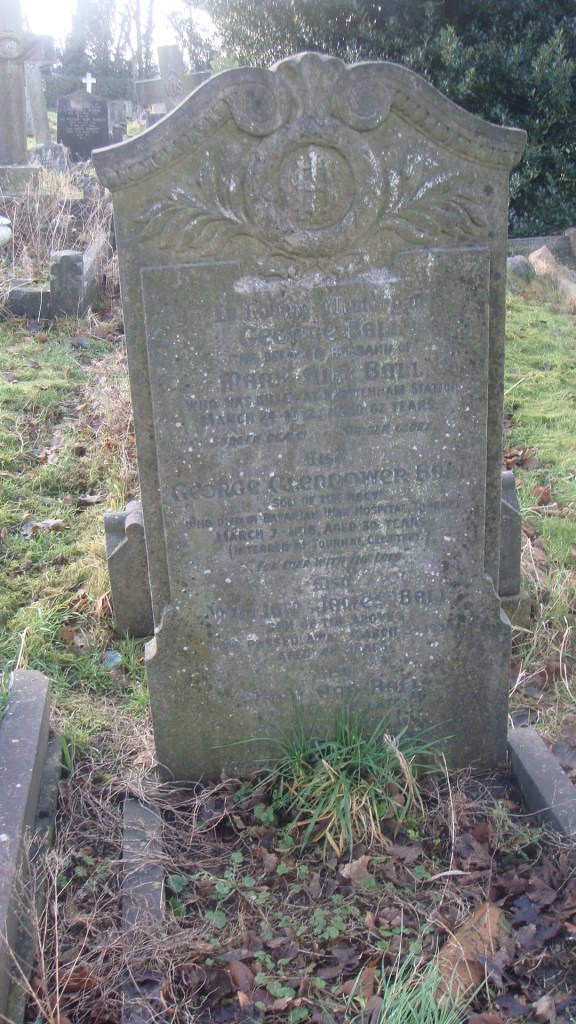
George Ball was the proprietor of the Victorian Temperance Hotel in Station Road for 30 years. At the time of his death in 1922 he was retired and he and his wife lived with their married daughter at 36 Cheltenham Street.
Although retired George remained a very active man and on the day in question had taken the 9.20 train from Swindon to Shrivenham on a visit to his wife who was staying with her sister at Somerset Farm, Hinton and also to take care of some business matters. Apparently George made this journey regularly as the Advertiser reported “on leaving the train at Shrivenham it was Mr Ball’s habit to cross the line in the direction of Bourton.”
However, on this day an upstopping train in the station obscured the view of William Herbert Ody, the driver of a train travelling in the opposite direction.
Mr Ody told the coroner’s court that as the stopping train passed him he saw a man walking across the level crossing. He shouted as loudly as possible and plied the steam brake at once, but it was too late. Mr Ball was killed outright. The line was perfectly straight and if it had not been for the train in the station he could easily have seen the man and the man him, he said.
The Coroner returned a verdict of accidental death and expressed his deepest sympathy.
Mr Ball’s son Samuel had told the court that his father had good eyesight but that his hearing was failing. Following the verdict Samuel suggested that a footbridge should be built across the line, as what had befallen his father might happen to anyone else.
George Ball died aged 62 years old. He was buried on March 29, 1922 in grave plot D1305 which he shares with his wife Mary Ann and his son William who both died in 1948.
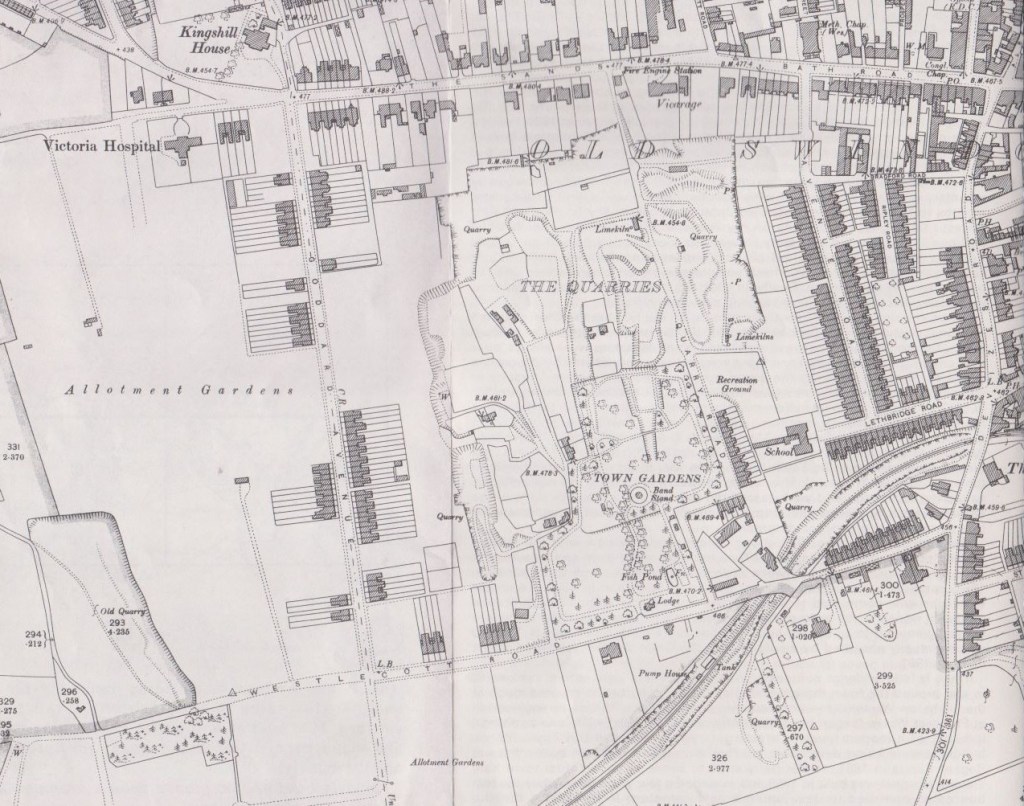
The 1900 map of Swindon reveals a number of quarries in the area of Old Town. Town Gardens was laid out on worked out quarries but the area behind it is possibly still being quarried in 1900. Then there is an Old Quarry at the end of Westlecott Road and smaller outcrops either side of the railway line.
But given that the inquest took place in the Globe Tavern on the corner of North Street I’m guessing that Lott’s fatal accident took place in the sand and gravel pit in the area that is now Savernake Street and play park. (At this time inquests usually took place in a public building close to the site of the accident, most frequently in a public house).
Lott King was born in Castle Eaton and during his lifetime was employed in a variety of jobs, for example, a carter, a labourer and, this his last job, a labourer in a stone quarry. He married widow Leah Matthews in 1870 and raised three step children as well as the couple’s own four children. In 1896 Lott and Leah were living at 4 Eastcott Hill, a short walk to Lott’s place of work.
On Monday afternoon last Mr W E N Browne, County Coroner, held an inquest at the Globe Tavern, Swindon, on the body of Lot King, a labourer, aged 51 years, who was killed in a sandpit on the Rolleston Estate by the fall of a massive stone, weighing nearly three tons, on Saturday last, about noon. Mr T H Williams was chosen foreman of the jury, Mr A. E. Withy was present to represent Messrs Bishop and Pritchett, the lessees of the sand quarry. The jury having viewed the body, the follow evidence was taken:-
James Telling said he was working with deceased on Saturday. They were breaking stone. Asked how the accident happened, witness said he expected it was owing to the heavy rain of the previous night. The whole depth of the quarry was 40ft., but not at the spot where they were working. The stone which fell weighed between two and three ton. The stone did not project, and they did not see any danger of the stone falling, so they continued with their work. The sand slipped from underneath the stone, and it fell quite suddenly, striking deceased on the head, or he would have been buried beneath it. Deceased had no time to get out of the way. At the time of the accident there was only deceased and witness working in the sandpit.
By Mr Withy: He had been working in the quarry some 18 months, and only the day before the accident he got up on the stone to examine it. Witness had ascertained since the accident that there was a joint in the stone and it was that which caused the one portion to fall.
Henry Trueman, a young man in the employ of the New Swindon Urban District Council, said he was drawing stone from the quarry when the accident happened, about noon on Saturday. The stone suddenly gave way, and fell, hitting deceased on the head. Deceased lived for about a quarter of an hour after the doctor’s arrival.
Dr Muir, of Stratton, said he happened to be at Dr Rattray’s on Saturday when a messenger came, and witness went to the sand quarry. Deceased was dying when he arrived. He was internally injured, but the cause of death was the blow on the head. Death was due to shock and concussion of the brain.
Richard Albert Page, the working foreman on the Rolleston Estate said he had employed five men at the quarry but there were only two there on Saturday. The pit was full of sand, with some great boulder stones. Deceased had previously let down some other stones near, which he considered dangerous.
By Mr Withy: The stone fell over, due, he believed, to rain of the previous night getting into the joint.
The Coroner, said it appeared there was no blame to be attached to anyone.
The jury concurred and returned a verdict of ‘Accidental death,’ They passed a vote of condolence with the widow and family of deceased.
The jury, and three of the witnesses gave their fees to the deceased’s widow, the sum total being 11s 3d.
Swindon Advertiser Saturday December 19, 1896
Savernake Street play park in 1984 published courtesy of Carter Collectables.
Lott was buried on December 16, 1896 in grave plot C352. My guess is that this was possibly a public grave. The jurors gave their fee to the family, which suggests they were in dire straits following the death of the breadwinner. The grave was later purchased by the Theobald family.
Untangling the Knights family history has proved to be a bit confusing. My research began with the account of George Samuel Knights death in 1908.
The report in the Swindon Advertiser states – For many years Mr Knights acted as local and district agent for Messrs Brown and Plummer, wine and spirit merchants, and he was in charge of the branchshop in Faringdon Street. In fact, Mr Knights and his late father had been sole agents in New Swindon and District for some forty years, and they were both held in the highest esteem by the firm, and by all with whom they had business transactions. However, at the end of the account a disclaimer is added We are asked to state, in order to correct a misapprehension which has apparently got about, that Messrs Brown and Plummer were in no way connected with the late Mr. G.S. Knights as a wine and spirit merchant.
All very confusing. So, what do we actually know about George? Well, we know about the circumstances of his death.
Swindonian’s Tragic Death
Cycling Fatality at Hannington
Mr Geo. S. Knights killed by a Fall
General regret will be felt in Swindon and district at the news of the tragic death of Mr. George S. Knights of Faringdon Street, Swindon.
For many years Mr Knights acted as local and district agent for Messrs Brown and Plummer, wine and spirit merchants, and he was in charge of the branchshop in Faringdon Street. In fact, Mr Knights and his late father had been sole agents in New Swindon and District for some forty years, and they were both held in the highest esteem by the firm, and by all with whom they had business transactions.
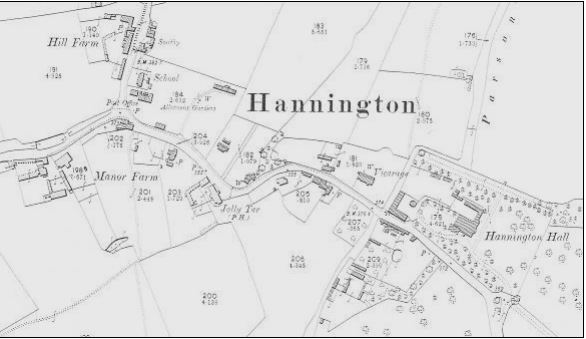
It was while out cycling near Hannington last Tuesday afternoon that the accident, which so suddenly terminated his life, happened. He was riding a bicycle to Hannington, and as far as can be ascertained in Swindon, had arrived at the top of what is known as Nell Hill, just outside Hannington. While on the brow of the hill, and on the point of descending, a sudden gust of wind blew off Mr Knights’ hat. In attempting to catch the hat, Mr Knights lost control of his machine, and overbalanced, with the result that he fell heavily to the ground. How long he lay by the roadside is not definitely known, but it is clear that he was so severely hurt that he was unable to help himself, and it was not until a little boy passed along and saw him that assistance was procured. A doctor was as soon as possible summoned, but in the meantime Mr Knights had succumbed to his injuries, which, it is stated, were chiefly confined to the spine. The body was removed to the “Jolly Tar” Inn, Hannington.
Mr Knights’ untimely end will be deeply deplored by his many friends in Swindon. The deceased was a highly respected townsman. For some time he has been Churchwarden at St. Mark’s Church, where he was held in the warmest esteem, and had been for many years a devoted worker. He was 49 years of age, and leaves a wife and a grown up family of three – two sons and one daughter, for whom the keenest sympathy will be felt.
The funeral will probably take place on Saturday.
The Jolly Tar, Hannington published courtesy of Arkells and Local Studies, Swindon Central Library.
Inquest at Hannington
On Wednesday afternoon, Mr. A.L. Forrester, Coroner for North Wilts, held an inquiry at the “Jolly Tar” Inn, Hannington, into the circumstances of the death of the late Mr. George S. Knights, wine and spirit merchant, of 39 Faringdon Street, Swindon.
Mr E. Tytherleigh was chosen foreman of the jury, and the following evidence was taken:-
George Robert Knights, of 84 Dixon Street, Swindon, son of the deceased, identified the deceased as his father, George Samuel Knights, aged 49 years, wine and spirit dealer, lately residing at 39 Faringdon Street, Swindon. Witness last saw his father alive on Saturday night.
The Coroner: Then you know nothing about the accident. We are all very sorry for you and desire to express our sympathy with you.
John Henry Payne, a lad of 13 years, residing at Hannington, said that at the time of the accident he was at work on the Hannington Wick Road, between Hannington and Kempsford. He saw a bicycle coming down the hill (Nell Hill) in the afternoon.
The Coroner: What did you see?
Witness: I saw him fall off his bicycle. It was nearly at the bottom of the hill.
The Coroner: Did you watch him go down the hill?
Witness: Yes.
The Coroner: Did you see a straw hat or something?
Witness: No. He was wearing a black bowler hat, and it would have fallen off if he had not put his hand to it.
The Coroner: Was that at the bottom of the hill?
Witness: Nearly at the bottom. The bicycle got shaky, and he fell off sideways. Witness added that he told the man he was with and they went down to the man’s assistance.
Joseph Hedges, of Hannington, the man who accompanied the previous witness, deposed to going up Nell Hill about 3.50 p.m. on Tuesday afternoon. He saw the gentleman going down the hill on a bicycle. He was waring a bowler hat. Witness saw nothing amiss until the boy Payne told him the man had fallen off his machine. Witness went to his assistance, and found him lying on his face, bleeding, and in an unconscious condition. The bicycle was on the other side of the road. There was a rim brake on the front wheel.
Dr. J. Powell (Highworth) said that about 5.30 p.m. he received a telegraphic message, in response to which he proceeded to Hannington Wick Hill, and there saw the man now identified as George Knights, lying dead by the side of the road. Witness examined him and found he was bleeding freely from the nose and ears, evidently caused by a fracture of the base of the skull. The injury was probably caused by the deceased falling off the bicycle.
The jury returned a verdict in accordance with the medical testimony, and expressed their sympathy with deceased’s relatives.
Extracts from The Swindon Advertiser Friday July 24, 1908.
The Late Mr G.S. Knights
Impressive Funeral
On Saturday afternoon the remains of the late Mr George S. Knights, whose tragic death as the result of an accident whilst cycling was reported in these columns, were laid to rest in the Swindon Cemetery amid very many manifestations of sincere sympathy and unfeigned regret.
The funeral cortege left the residence of the deceased gentleman, 39 Faringdon Street, Swindon, Shortly before half past twelve, and proceeded to St. Mark’s Church, where Mr. Knights was an esteemed churchwarden.
Other organisations associated with the Church represented in the procession were the General Purposes Committee of St Mark’s parish, the Sunday School teachers and among the representatives of the CFTS was Mr A. Cross, the Secretary.
Several of the deceased’s old shopmates in the GWR Works also followed. Mr Knights being formerly in the Carpenters’ Shop under Mr Abell. Among those who followed were Mr G. Hutchings, foreman of the Wagon Shop; Mr Smith, foreman of the Carpenters’ Shop; Mr Nevill, under-foreman of the Carpenters’ Shop; Mr Hayward, under-foreman of the Saw Mills and others.
The large congregation in the Church included many others to whom Mr Knights was known, and by whom he was warmly respected. The service, though short, was of a most impressive character, and was fully choral. Among the clergy present were the Vicar, the Rev. A.G.G. Ross, M.A., the Rev. H.R.B. Morgan, B.A., in charge of St. Luke’s’ Rev. H.C. Brocklehurst, M.A., in charge of St. Saviour’s; Rev. K.M.S. Graeme, M.A. , Rev. C.E. Prior, and the Rev. E.F. Winnington-Ingram.
As the solemnprocession entered the Church they hymn, “Brief life is here our portion,” was sung, after which the 90th Psalm was chanted. The Rev. H.R.B. Morgan read the lesson from I. Corinthians, 15th chapter, and then the hymn. “On the Resurrection Morn,” was sung. As the procession left the Church, the organist, Mr. John Newton, played the “Dead March” in Saul, the congregation standing meanwhile.
The mournful procession was added to by many sympathizing friends as it proceeded to the Cemetery, where it was joined by a further assembly, and where the second portion of the solemn rite at the graveside was conducted by the Rev. A.G.G. Ross.
The remains were enclosed in an elm shell within an elm coffin with brass furnishings, the breastplate bearing the following inscription: “George Samuel Knights died July 21st 1908, aged 49 years.”
The funeral arrangements were carried out by Messrs. H. Smith and Son, Gordon Road, Swindon.
We are asked to state, in order to correct a misapprehension which has apparently got about, that Messrs Brown and Plummer were in no way connected with the late Mr. G.S. Knights as a wine and spirit merchant.
The Swindon Advertiser Friday July 31, 1908
George was baptised at Holy Trinity Church, Mile End Road and consistently states on census returns that his birth place was Tower Hamlets. Some family historians researching the Knights family make a link to Haddiscoe in Norfolk. However, at the time of his marriage to Marion Emily Ellen Timpson in 1884 George was living in Swindon where he was employed as a carpenter. The couple were married at St. Stephen’s Church, Paddington on February 23, 1884 and at the time of the 1891 census they were living at 48 Radnor Street with their two young sons George and Arthur. A daughter Gertrude was born the following year.
George was buried on July 25, 1908 in grave plot C1997. His wife Marion Emily Ellen died in 1932 and was buried with him on January 26. Their son George Robert died in 1941 and was buried with them on April 2. On July 13, 1946 Joan Lloyd Wyndham Rawlings was buried in the Knights family grave. Whether Joan had any connection to George and his family has yet to be established.
What were the events that led up to that fateful Tuesday morning in April 1938? Was Nellie frazzled with four young children under her feet as she tried to get on with her housework? Had she shooed Harold out of the house.
“For goodness sake Harry, get out from under my feet.”
Or had the boy taken advantage of the noise and busyness of the house to sneak out before his mother found him a job to do or an errand to run.
Perhaps Nellie didn’t even notice he had gone until there came a knock on the door.
Hawkins Street in Rodbourne
Swindon Boy Drowned
Fell Into Water Fishing for “Tiddlers”
Nine year old Harold Wall, of 13 Hawkins street, Swindon, went fishing for “tiddlers” in the Great Western Pump House Butts, alongside the Gloucester branch line at Rodbourne, Swindon, just after lunch on Tuesday*. He had not been there long when he fell in the water and was drowned. The water is well over six feet deep at the spot.
Shouts of other youngsters near by attracted the attention of some men working on allotments, and they rushed to the scene. At first they could not find the lad’s body, but eventually grappling irons were brought into use and his body was recovered.
A doctor and the police were quickly on the scene and Chief Officer T.W. Abrahams of the Swindon Fire Brigade, rushed to the field where Harold’s body lay with the oxygen resuscitation apparatus, but the doctor had already pronounced life extinct.
Mr Abrahams responded to a telephone call from Mr S.A. Shaw, of 28 Hawkins street Swindon.
Harold is the son of Mr and Mrs E.F. Wall and it is thought that he fell through the hedge which grows on the very edge of the water and was quickly submerged in deep water.
He was fishing quite near the pumping station at the far end of the Butts.
When the men from the allotments reached the spot where the boy had fallen through a narrow gap at the base of the thick hedge they could not force a way through, and valuable time was lost owing to the need for making a detour round the Pump House.
Mr Wall, the boy’s father, has been employed on the G.W.R. coal wharf.
At the inquest held at Gorse Hill Police Station last night, by the Wiltshire Coroner (Mr Harold Dale) the jury returned a verdict of “Accidental death.” They added that no blame attached to anyone.
North Wilts Herald, Friday, 22 April, 1938.
Harold Charles Wall was born in the December quarter of 1928, the eldest of Ernest Frederick and Nellie Wall’s large family. He was buried on April 22, 1938 in a public grave plot C632 with four others.
*Easter Sunday fell on April 17 in 1938. It is likely the children were on a school holiday the following week.



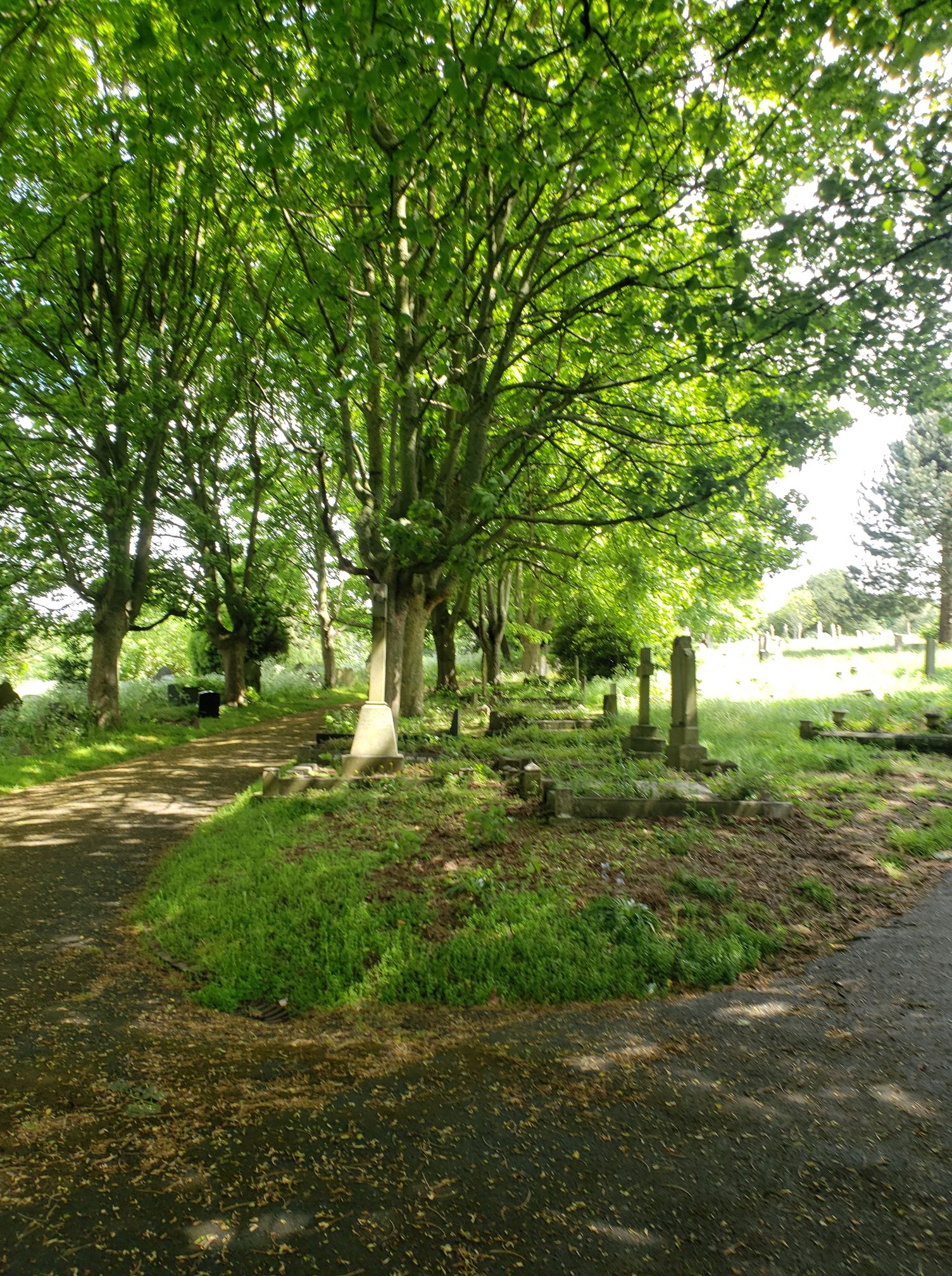




 Radnor Street Cemetery